
Field hockey betting tips: how a value bet is built, and what the bookmaker keeps
 Available in US
Snapshot current as of 26 October 2026 and verified against the Gambling Commission’s public register of remote operating licences for Great Britain.

Field hockey is a niche within a niche. It has a global competition structure and a small core of televised tournaments, yet it sits far down most bookmakers’ sportsbooks, well behind football, tennis and horse racing. That position shapes the page that follows. Where football and tennis compete for the punter’s attention with hundreds of pre-match and in-play markets, field hockey usually offers a thin set of match-result lines, a handful of totals, and a few outright and tournament-winner markets. Thin markets mean wider bookmaker margins and fewer reference prices, and that has direct consequences for the kind of tip a punter can act on. A field hockey betting tip is not a prediction dressed as a sure thing. It is a price comparison against a true probability, weighted by the form of two sides, the way the match is set up, and the margin the bookmaker has already taken from the odds. This guide is about that arithmetic and the licence frame it sits inside: a bookmaker serving customers in Great Britain needs a Gambling Commission remote licence wherever it is based, and a check of the public register is the whole test of who holds one. No tip survives a bookmaker that does not.
The pages that follow take one stance throughout. A field hockey tip is the output of a process, not a piece of news, and the process has a price: the margin baked into the odds, the time spent on form and line-ups, the bankroll rule that stops a single loss from setting the punter back, and the verification step that confirms the bookmaker is licensed. The bookmakers reviewed here are listed in the order research presents them, and each is a holder of a Gambling Commission remote licence for general betting on real events.
The licence frame every tip sits inside
The legal test for a field hockey bet in Great Britain is the Gambling Act 2005, and the body that administers it is the Gambling Commission. The Act covers England, Scotland and Wales; Northern Ireland sits outside it under older law, and a GB-issued licence does not regulate the Northern Irish market. Since the Gambling (Licensing and Advertising) Act 2014 came into force, an operator whose remote facilities are used in Great Britain must hold a Commission licence wherever the company itself is based. A Curaçao, Maltese or Gibraltar licence is not a substitute. For a punter the practical consequence is short: the only place to confirm a brand is licensed for GB customers is the Commission’s public register, which can be searched by business name, trading name, domain or account number. The domain itself proves nothing — licensed operators use both .co.uk and .com, and an unlicensed site can carry a .com address just as easily.

The register is the whole test. A match between an operator’s claim and a row in the register is a green light; a brand that says “UK-licensed” but does not appear in the register, or appears under a different trading name, is not. The categories on the register that matter for sports betting are remote general betting standard (real events) and remote general betting standard (virtual events); a field hockey bet at a real match sits under the first. The exchange licence (betting intermediary) is separate, and so is pool betting. A single licence can cover multiple brands, which is why a comparison may list Ladbrokes and Coral, or Paddy Power and Betfair, as separate platforms while the register shows one licensee behind both.
The minimum age is 18. Since 7 May 2019 every licensed remote bookmaker has had to verify the customer’s name, address and date of birth before the first deposit, and a free bet or a bonus does not exempt a customer from that check. Anonymous play is not available at a licensed site. Credit cards are banned for gambling in Great Britain since 14 April 2020, and that ban extends to credit-card-funded payments through an e-wallet; debit cards and bank-based methods are not covered. Whether a brand accepts cryptocurrency is a question of its own terms: no British rule either permits or forbids it as a matter of statute, and each operator’s banking page is the answer.
A field hockey tip without a licensed bookmaker is a piece of advice with no complaints route behind it. That is the practical shape of “licensed = checks, limits, GAMSTOP, bonus cap” and “unlicensed = none of those protections and possible loss of funds”. The arithmetic below only matters at a brand that the register confirms; otherwise the punter has no recourse when a withdrawal is delayed or a market is voided in suspicious circumstances.
Responsible gambling at a licensed bookmaker
Gambling harm is not the subject of this page, but the frame around the tips is. A bookmaker’s safer-gambling tools, and the wider British support network, are part of the cost of taking a tip, and they are the part a punter is most likely to skip reading. A short, plain summary: a licensed bookmaker must take part in GAMSTOP, the national multi-operator self-exclusion scheme. Registration is for six months, one year, five years, or five years with auto-renewal, and after the minimum period the exclusion stays in place for a further seven years unless the customer asks GAMSTOP to remove it. The scheme covers online sites and apps; high-street betting shops run a separate service. Once registered, the customer is blocked at every participating online operator for the chosen period — that is the design, and it works across the whole licensed set.
Licensed bookmakers must also offer deposit limits under the Commission’s Remote Technical Standards, with a phased rollout: the first changes have applied since 31 October 2025 and a second phase was postponed to 30 September 2026. Whether the second phase is in force at any given moment is not established; a punter who wants to set a limit today can do so at any licensed site regardless. There is no state-set deposit or loss ceiling. The decision is the customer’s.
A financial vulnerability check has been in force since 30 August 2024 and applies once a customer’s deposits minus withdrawals exceed £150 in a rolling 30 days (since 28 February 2025). It is a public-record check — bankruptcy, county court judgments, similar — not an income check and not a credit reference check. The wider “financial risk assessments” that the press has called affordability checks have been announced in stages, with a Commission article of 7 July 2026 setting out the plan and no start date, so the correct line is “announced, staged, no start date” rather than “in force”. The help available outside the operator sits with GamCare, the National Gambling Helpline, GambleAware, NHS gambling clinics and Gamblers Anonymous — a list, not a hierarchy, and any of them is a starting point.
A punter who bets on field hockey has the same access to these tools as a punter who bets on football. That is the point of writing them into this page: a tip and the frame around it arrive in the same transaction.
What a bookmaker’s welcome offer is actually worth
Field hockey betting offers and field hockey betting promotions are short, and the welcome packages for British customers live in the racing and football space rather than the hockey one. The Spreadex new-customer offer is £60 in free bets for a £10 fixed-odds bet, with the free bets usable across fixed odds and spread betting, and the qualifying bet must be placed within 28 days of opening the account. Sky Bet’s welcome offer is £30 in free bets, credited as three £10 free bet tokens after a deposit of at least £5 and a first single or each-way bet of at least 5p at odds of 1/1 or greater. BoyleSports Acca Insurance is not a welcome bonus but a product feature: it requires opt-in, a minimum stake of £5, minimum odds of 1/2 and pays a maximum refund of £20 as a free bet that expires in 7 days, with bets placed and settled on the same day. BetGoodwin pays Best Odds Guaranteed on all UK and Irish horse and greyhound racing, up to £1,000; Copybet pays Best Odds Guaranteed all day, every day on all UK and Irish racing and pays first past the post on horse racing even if the winner is later disqualified; BetVictor offers Best Odds Guaranteed on UK and Irish horse racing. None of those are field hockey offers in the marketing sense, and the punter who treats them as such will be reading the wrong small print.
Two general rules apply to all of them, and they matter more than the headline figure. First, since 19 January 2026 wagering requirements on bonuses are capped at 10x: a £10 bonus at 50x, which would have required £500 of qualifying bets, can no longer be set at that level under the cap — under the cap, the requirement cannot exceed £100 of qualifying bets at the headline bonus. Mixed-product promotions, where a single offer requires gambling on two or more product types — for example “bet on football to get free spins” — are banned. The cap and the ban sit with the ASA-administered advertising codes and the Commission’s LCCP marketing conditions. Second, a “free bet” is rarely a refund in money. The stake is usually not paid back with a win, so a winning free bet returns only the profit. A free £10 bet at decimal odds of 4.00 returns £30 of profit and £0 of stake, not £40. That distinction is the single most common cause of “the offer was smaller than I expected” reactions at a bookmaker, and it has nothing to do with field hockey and everything to do with how the offer is written.
A bonus or a free-bet headline is not a tip. It is a price the punter pays in turnover and minimum odds to claim, and the only honest way to compare two is to write the qualifying conditions side by side, not the £60 or the £30 in the title.
Live betting and cash out on a four-quarter sport
Live field hockey betting is the form of the market that has grown most in the last few years, and the in-play book changes the kind of tip that makes sense. Since 2017 field hockey matches have been played in four 15-minute periods (60 minutes), with a 2-minute break after periods and a 15-minute half-time, and the team with more goals after 60 minutes wins. A tied match may stand, go to extra time, or be decided by a penalty shoot-out depending on the competition, and since March 2013 FIH regulations send tied classification matches directly to a shoot-out. The four-period structure is a feature, not a quirk: the short quarter length means momentum swings are quicker and more visible than in a football match, and the price on the match-result market can move several points in the space of one quarter if a side concedes a corner rush or a green card.
A field hockey betting in-play book is usually narrower than the pre-match one. Match result (regulation time or 60 minutes, depending on the operator’s rules), next goal, totals over a set number of goals, and a small set of player markets are the typical shape; outrights settle before the match and disappear from the in-play book at kick-off. The cash-out feature is offered at most licensed bookmakers and is, in effect, a live buy-back of the original bet at a price the bookmaker sets. The cash-out price is the operator’s, not the market’s, and that gives the operator the discretion to suspend cash-out during a passage of play — a penalty corner, a green card, a video referral. A punter who depends on cash-out as a risk-management tool should know that a suspended cash-out is a feature of the product, not a glitch.
Live streaming is the other in-play draw. Operators with a streaming offer show the feed inside the app or the in-play page, often gated by an account balance or a recent bet. The stream is not a tip, but it is the single biggest improvement to in-play tipping on a niche sport: the punter sees the press, the press-ups, the circle entries, and the substitutions live, and a price on a next-goal market that was set without that information is a different price. A punter who bets in-play on field hockey without watching the match is reading a price that was set for someone who is.
How a field hockey tip is built
A field hockey bet today, a field hockey best bet, a betting tip, a forecast: every form the search takes lands on the same kind of answer, and the answer has a fixed structure. Form, line-ups, schedule, conditions, the market’s own price, and the bookmaker’s margin are the six inputs, and a tip is the output of running them through a probability estimate. The arithmetic is the same whether the punter is backing the favourite to win, laying the underdog on the totals, or pricing a tournament-winner outright. The work is in the inputs.
Form is the first input, and it is the most expensive to ignore. A side that has won five of its last six is not the same side as a side that has won five of its last six against weaker opposition, and the schedule tells the difference. International hockey runs in blocks, and a side that played a Test the day before a tournament match is not the same side as one that has had a week to recover. Travel and altitude matter in the Hockey Pro League and at the back end of an FIH calendar. The form reading has to take those into account, and the form table that does not is a table that is selecting for the wrong things.
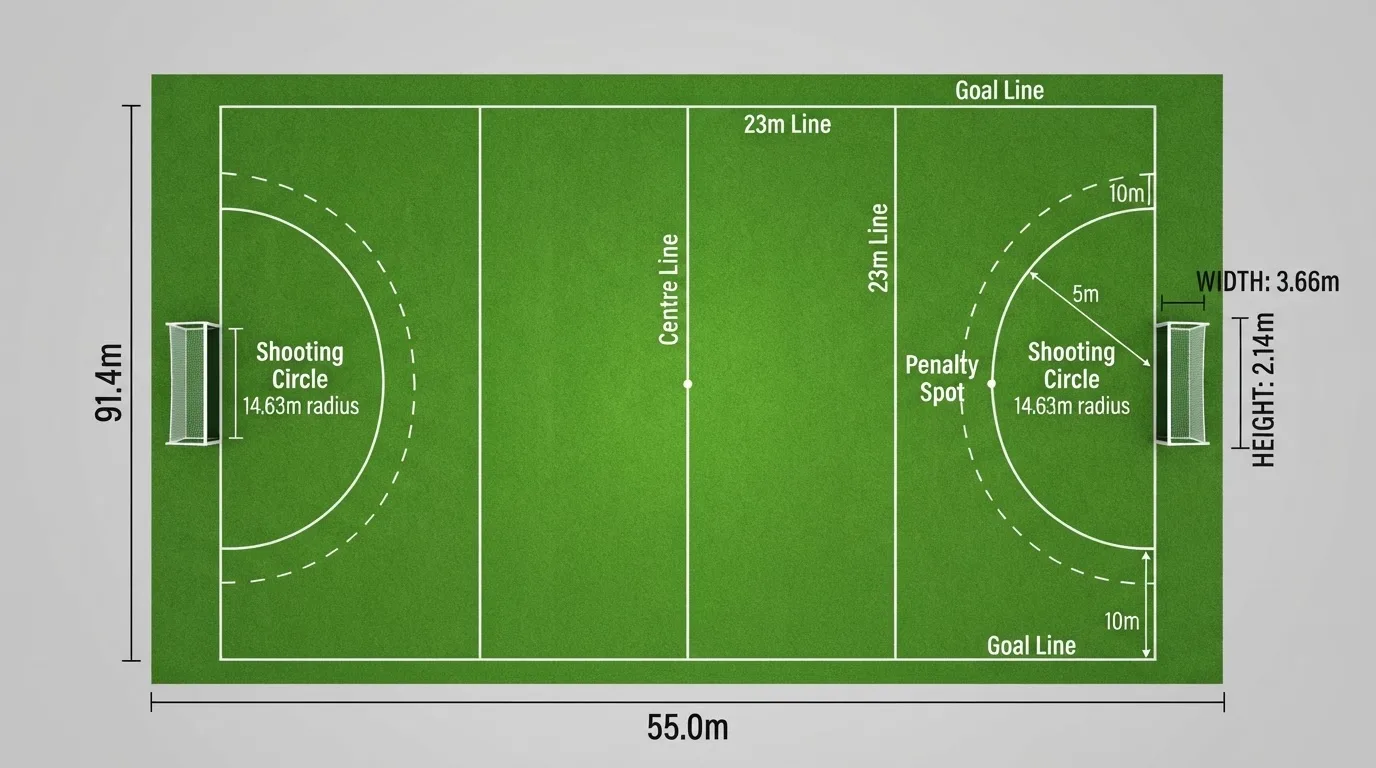
Line-ups are the second input, and field hockey’s small squad sizes mean a single absence swings the price. A field hockey side fields 10 field players and one goalkeeper, so each team has eleven players on the pitch. The first-choice goalkeeper out, the captain suspended, two of the regular drag-flickers rested: each of those is a price move, and the punter who reads the team sheet at the standard time is paying for information the bookmaker has had longer. The third input is the conditions. A water-based pitch, a sand-based pitch, the weather, the time of day, the length of the grass: each of these affects the bounce and the circle-entry rate, and a forecast of rain on a sand-based pitch moves the totals market before kick-off.
The market’s own price is the fourth input, and this is the one that turns a form view into a bet. A price of 1.80 on the favourite is, in decimal terms, an implied probability of 55.6 per cent before margin (1 ÷ 1.80). If the punter’s estimate of the true probability is 60 per cent, the bet is a value bet at that price: the edge is the gap between the two, scaled by the stake. If the estimate is 52 per cent, the bet is not a value bet at that price, and a smaller price earlier in the day might have been. A tip that does not state its own probability estimate is not a tip; it is a preference. The fifth input is the bookmaker’s margin, and it is taken out of every price the bookmaker offers, on every market, at every level of the sport. Field hockey sits deep in the book and the margin is usually wider than on a Premier League match: 7-10 per cent on the 1X2 is common where football sits closer to 4-6 per cent. The wider margin means a price that looks “fair” is more often the price the bookmaker wants the punter to take, and the value edge has to be wider to clear it.
Bankroll discipline is the sixth input, and it is the one a tip sheet is least likely to mention. A bankroll is the amount set aside for field hockey, and a stake is a fixed percentage of it — 1-2 per cent is the standard range for a punter who wants to survive a losing run. A tip is a single bet on a single match on a single market; a tipster who offers three “best bets” a day is, in effect, asking the punter to stake 3-6 per cent of bankroll on a single day’s results. The punter who follows that schedule without setting a bankroll rule is not following tips, they are paying to spin a wheel.
The seventh input is the licence check. A punter with a price, a probability estimate, a bankroll and a staking rule is missing the last step until the bookmaker is on the register. The price, the probability, the stake: none of it matters at a site the Commission has not licensed. That is the order a tip is built in, and the order is what makes a “tip” the kind of claim it is.
Value, margin and what a winning bet returns
A value bet is a price that is higher than the true probability once the bookmaker’s margin is taken out. That is the formal definition, and it is the only one. “Value” used as a marketing word means the bookmaker thinks the price is good for the punter; “value” used as an analytical word means the punter’s probability estimate is higher than the price implies. The two are not the same. The marketing word costs the punter a margin and a minimum stake; the analytical word pays the punter when the price is right, and asks them to leave the bet alone when it is not.
The bookmaker’s margin is the share of every pound bet on a market that the bookmaker keeps, on average over a large number of bets. It is calculated as 1 minus the payout share, and the payout share is the sum of 1 divided by each decimal price across all outcomes of the market. Take a two-way market at 1.90 and 1.90. The payout share is 1 ÷ 1.90 plus 1 ÷ 1.90, which is 0.5263 plus 0.5263, or 1.0526. A payout share above 1 is the bookmaker’s overround; the margin is 1 minus 1.0526, or minus 5.26 per cent — a margin that takes roughly 5p of every pound bet on the market, before the result is known. A two-way market priced at 1.85 and 1.85 carries a margin of 1 minus (1 ÷ 1.85 plus 1 ÷ 1.85), or 1 minus 1.0811, or 8.11 per cent. A two-way market at 1.80 and 1.80 carries a margin of 1 minus (1 ÷ 1.80 plus 1 ÷ 1.80), or 1 minus 1.1111, or 11.11 per cent. The two-way field hockey market is, in practice, a single match-result market with a draw price attached — three prices, three outcomes — and the margin is the same calculation across three terms. The bookmaker’s margin sits inside every price on every market; it is what makes a price higher than the true probability on the favourite and lower than the true probability on the underdog, and it is the single number a punter should look for before reading the form.
The return on a winning bet is stake times the decimal odds. A £10 bet at decimal odds of 2.50 returns £25; the profit is £15. A £10 each-way bet at 2.50 is two bets of £10 — £20 in total — and returns the win portion (£25) plus the place portion (a fraction of the win price, set by the operator) depending on the place terms. A field hockey match does not run each-way in the way a horse race does, so the each-way stake is rarely a relevant option; the most common use is in outright and tournament markets, where the place terms depend on the number of runners. The point that holds across both: a winning bet pays the stake times the price, and a losing bet pays nothing. The arithmetic is the only honest answer to “what does this bet pay back”, and the price the punter is offered is the only one that matters.
An example at the bookmaker’s margin. Suppose a two-way field hockey market at the kind of prices that come up regularly in the book. At decimal prices 1.90 and 1.90 the margin is 5.26 per cent. At 1.85 and 1.85 the margin is 8.11 per cent. At 1.80 and 1.80 the margin is 11.11 per cent. That is a band — roughly 5 to 11 per cent on a typical two-way field hockey market — and a punter who sees a price of 1.70 on a market that is otherwise at 1.85 has either been offered a price boost, or has been offered a price that already contains a wide margin before the boost. The condition on the band is the price spread: tighter prices mean a thinner margin, wider prices mean a thicker one, and the band is a way of asking what the price the punter is looking at is actually doing for them. Stated as a band, the margin on a standard two-way field hockey market sits between roughly 5 per cent (very tight) and 11 per cent (the wider end of niche-sport pricing), with most outright and tournament markets sitting at the wider end of that range. That is the arithmetic, and it is the kind of statement the punter needs to read before taking a tip.
Reading the field hockey sportsbook
Field hockey betting odds and field hockey betting lines look thin because they are. The standard book at a mainstream British operator covers the men’s and women’s FIH Pro League, the Hockey Champions Trophy events, the Hockey World Cup, the EuroHockey Championships, the Commonwealth Games hockey event, the Olympic hockey tournament and a handful of domestic leagues (the English Premier Division, the Hoofdklasse, the Bundesliga). A typical pre-match market set is: match result (60 minutes, or 80 minutes, depending on the operator’s house rules), double chance, draw no bet, both teams to score, totals over a set number of goals (usually 2.5, 3.5, 4.5), Asian handicap, and a small set of player markets (first goalscorer, anytime goalscorer) where the operator has priced them. Outrights run on the major tournaments: World Cup winner, Pro League winner, EuroHockey Championship winner, Olympic gold, and the equivalent women’s outrights. Field hockey betting accumulators are a separate question and a separate risk: the more legs, the higher the combined odds and the wider the compounded margin. A five-leg field hockey acca at 1.85, 1.85, 1.80, 1.90, 1.90 carries a compounded margin well above the 8-12 per cent band the single match sits in, and the punter who is paying that compounded margin is paying it on five matches at once.
Field hockey tonight betting odds is a phrase that turns up in the search, and the honest answer is that field hockey is rarely the headline evening sport at a British bookmaker. Evening field hockey does exist: the FIH Pro League runs evening matches in European time zones, and a top-table match in the English Premier Division can sit in the late afternoon. The punter looking for tonight’s odds is more often looking at a tomorrow, a weekend, or a tournament block; the in-play book is the right answer for a price that updates through the match. The same is true of best field hockey betting odds: the bookmaker offering the best price on the favourite is usually one of the larger operators, and the gap between two prices on the same match is a few points, not the kind of gap that turns a losing bet into a winning one.
Reading the book is the part the marketing does not cover. The bookmaker presents a market with three prices; the punter reads the margin the three prices imply, decides whether the favourite price is value against the probability estimate, and either places the bet or does not. The bookmaker’s welcome offer, the acca insurance, the price boost — these sit on top of the book, and they cost the punter the same as the margin does: in qualifying conditions, in minimum odds, in expiry, in cap. The book and the offer are the two layers a field hockey punter pays for, and the offer is the more expensive one to read badly.
Where the field hockey calendar delivers the matches
A field hockey punter follows a calendar, not a season. The four-year Olympic cycle is the headline: men’s field hockey was played at the 1908 and 1920 Olympics, was dropped in 1924 and reinstated in 1928, and women’s hockey was added in 1980. The Hockey World Cup runs on its own cycle, and the FIH Pro League runs as an annual home-and-away competition with a final. The EuroHockey Championships run every two years for men and women. The Commonwealth Games hockey event runs on the four-year cycle of the Games. Each of those carries outright and tournament-winner markets in the months before it, and each carries a daily match-result book in the weeks of the event.
The men’s and women’s Pro League are the year-round supply. The matches come in blocks, with national-team windows of one to two weeks, and the bookmaker’s price moves with the squad news. The punter who treats field hockey as a calendar rather than a season is the punter who catches the outright market at the right time — typically four to six months out from a World Cup or an Olympics, when the bookmaker has priced the favourites but the team sheets are still a guess. The same calendar also has the effect of making form reading harder: a side that played a Test in early January is not the same side that played in late February after a long injury lay-off, and the form table is a snapshot rather than a trend.
India’s record in Olympic hockey is the kind of historical reference a bookmaker might quote in a tournament preview. India won all five games at the 1928 Olympic hockey tournament without conceding a goal, and won men’s gold in 1932-1956, 1964 and 1980. The same records give a sense of the competitive depth: a small number of countries have won Olympic gold, and the same names come up across the World Cup, the Pro League and the continental championships. The outright market is shaped by that depth. The punter reading the price on a longshot is reading a price that already takes a thin field into account; the value edge on the favourite is often harder to find at the top of the market than on a player market lower down.
The bookmakers reviewed here, and what each is set up to do
The ten operators below are listed in the order research presents them. Every one is a holder of a Gambling Commission remote licence for general betting on real events, and every one is searchable on the public register by its business name, trading name or domain. None is “the only” licensed brand, and a place in this list is not a recommendation. The point of writing ten up is to give the punter the comparison each operator’s own terms offer, in the punter’s own time.
BetGoodwin — a racing-led book with a Best Odds Guaranteed ceiling
BetGoodwin pays Best Odds Guaranteed on all UK and Irish horse and greyhound racing, up to £1,000. That is the headline product. The licence on the register sits with Goodwin Racing Limited under Commission account 2927, with the brand operating from a domain that the register lists. The book on field hockey is present but not the focus: BetGoodwin’s own pages lead with racing and the racing product is the centre of gravity, with the rest of the sportsbook built around it. A punter who bets on field hockey at BetGoodwin is using a racing-led bookmaker for a non-racing sport, and the question for that punter is whether the field hockey book carries enough markets to justify the visit.
The Best Odds Guaranteed is a ceiling: the operator pays the bigger of the price taken and the starting price, capped at £1,000. It is not a free bet, and it does not change the price on a non-racing market. For the field hockey punter it is background, not a draw, and the draw is the rest of the book — the match result, the totals, the outrights, the in-play markets, and the form of the in-play product when the sport is live. Where BetGoodwin sits is a niche-racing bookmaker with a full Commission licence; the punter’s task is to read the field hockey book and decide whether it carries what they want.
The verdict: a competent bookmaker for racing-first punters who want a field hockey price on a quiet weekend, and an expensive one for a punter whose main interest is the in-play hockey product. The Best Odds Guaranteed is the wrong reason to take a field hockey bet at the brand.
Sky Bet — a mainstream book with a £30 free-bet welcome
Sky Bet’s welcome offer for new customers is £30 in free bets, credited as three £10 free bet tokens after a deposit of at least £5 and a first single or each-way bet of at least 5p at odds of 1/1 or greater. The licence on the register sits with SBG Sports Limited under Commission account 67370. Sky Bet is a mainstream British bookmaker, with the depth of markets and the kind of in-play product a punter expects from a brand of that size, and the field hockey book sits inside a larger sportsbook that covers most of the British calendar.
The £30 in free bets is the headline offer, and the headline masks the usual qualifying conditions: a first bet at 1/1 or greater, a stake as small as 5p to qualify, and the free bets split into three tokens rather than paid as one. The punter who claims the offer is paying for it in the qualifying bet, and the qualifying bet has to be a bet the punter would have placed anyway for the offer to be worth claiming. A field hockey punter can claim the offer on a football bet or a racing bet and use the free bets on a hockey match later, and the order does not matter for the value of the claim.
The verdict: a mainstream British bookmaker with a Commission licence, a free-bet welcome that pays back the £30 in three tokens, and a field hockey book that is most useful in the in-play markets rather than the outrights. The right punter is one who bets on football and racing as well as hockey, and who will use the free bet tokens on a market they would have backed anyway.
10bet — football, tennis and racing, with Cash out, Bet Builder and Live Streaming
10bet’s sportsbook covers football, tennis and horse racing, with Cash out, Bet Builder and Live Streaming. The licence on the register sits with Blue Star Planet Limited under Commission account 43173. The brand’s centre of gravity is the mainstream sports, and the feature set — cash out, bet builder, live streaming — is the mainstream feature set. A field hockey punter at 10bet is a punter using a mainstream bookmaker on a niche sport, and the question is the depth of the hockey book rather than the depth of the feature set.
A bet builder on a field hockey match is, in practice, a small set of selections: match result, both teams to score, totals, and a player market where the operator has priced it. The deeper bet builders sit with football, and the hockey bet builder is a thin version of the football product. The cash-out feature is the mainstream product and works the same way: a live buy-back of the original bet at a price the bookmaker sets, suspended during a passage of play at the operator’s discretion. The live streaming is on the events the operator has paid for, and field hockey streams are rare at the mainstream bookmakers.
The verdict: a mainstream bookmaker for a punter who bets on football and tennis as well as hockey, and a thin field hockey book for a punter who bets on hockey alone. The right punter is one who wants a Bet Builder on a hockey match as part of a wider betting card, and who treats the cash-out as a risk-management tool rather than a daily habit.
bet365 — in-play, live streaming, and a stack of follow-the-bet features
bet365 offers in-play betting and live streaming of events worldwide, plus Bet Track, Match Live and a Live Golf Tracker for following bets in play. The licence on the register sits with Hillside (UK Sports) ENC under Commission account 55148. The brand is one of the largest in the British market, and the feature set is the deep end of the in-play product: in-play betting, live streaming across the events the operator has the rights to, and the supporting tools that follow a bet through the match.
A field hockey punter at bet365 is using the brand’s in-play product on a niche sport, and the in-play product is the most likely reason a punter picks bet365 over a thinner book. The live streaming is the bigger draw: a feed inside the app or the in-play page, with the match running and the prices updating. A punter who wants to bet in-play on a field hockey match and watch the match at the same time is a punter who has found a small set of operators offering both, and bet365 is one of them. The Bet Track and Match Live features are the supporting tools: a way to follow the bets in play with a visual layer that includes the corner count, the green cards and the press, depending on the operator’s data.
The verdict: the deep end of the in-play product, and the right operator for a punter who wants the stream and the live book on the same screen. The price is the mainstream price, the margin is the mainstream margin for a niche sport, and the feature set is the reason a punter picks bet365 over a thinner book. Hockey alone is thin reason to sign up here, yet inside a wider in-play routine the stream earns its place.
Copybet — Best Odds Guaranteed on racing and a tipster model
Copybet offers Best Odds Guaranteed all day, every day on all UK and Irish racing, and pays first past the post on horse racing even if the winner is later disqualified. The licence on the register sits with Copybet UK Limited under Commission account 53774. The brand is a tipster-led bookmaker, and the model is that the punter can follow tipsters whose bets are placed through the platform, with the tipster taking a share of the net winnings. The Best Odds Guaranteed is the racing product, the tipster model is the wider product, and the field hockey book sits in the standard sportsbook.
A field hockey punter at Copybet is a punter who has either followed a tipster into a hockey bet, or has used the standard sportsbook to back a hockey match. The brand’s edge on racing does not transfer to hockey: the field hockey book is the same mainstream book, and the same margin band applies. The tipster model is the feature that does not appear at most other operators, and a punter who has a tipster they trust is the punter for whom the model is the right draw.
The verdict: a tipster-led bookmaker with a Commission licence, a Best Odds Guaranteed on racing that does not change the hockey book, and a field hockey book that sits in the standard sportsbook. The right punter is one who follows tipsters, and who treats the hockey book as one part of a wider betting card. The only real draw for hockey is a tipster whose record on the sport you trust.
BoyleSports — Acca Insurance with a £20 cap
BoyleSports Acca Insurance requires opt-in, a minimum stake of £5, minimum odds of 1/2 and pays a maximum refund of £20 as a free bet that expires in 7 days; bets must be placed and settled on the same day. The licence on the register sits with Boylesports Enterprise under Commission account 39469. The Acca Insurance is the headline product, and it sits on the same accumulator book the brand runs across football, racing and the smaller sports. The cap is the cap: a £20 refund is a £20 refund, regardless of the stake the punter has placed.
A field hockey acca at BoyleSports is a small set of legs on a small book, and the compounded margin is the cost the punter pays before the insurance kicks in. The insurance is a refund on a losing acca, paid as a free bet that expires in 7 days, and the cap means the punter’s hedge is limited to £20 no matter how big the stake. The right punter for the insurance is a small-stake acca punter, and the wrong punter is a high-stake acca punter who has read the cap as a per-stake refund.
The verdict: an Acca Insurance product with a £20 cap, a Commission licence, and a field hockey book that is most useful in the football-style accumulator rather than the in-play hockey market. The right punter is a small-stake acca punter who has read the cap, and who treats the insurance as a hedge rather than a profit centre.
Betmaster — a Maltese-registered book with a UK remote licence
Betmaster is operated by BM Solutions GB Ltd, registered in Malta, and states it holds Gambling Commission account number 65699. The licence on the register sits with the same entity under the same account number, with the site listed against the brand. A Maltese-registered bookmaker with a UK remote licence is a bookmaker that meets the point-of-consumption rule: a Commission licence is required wherever the company is based, and a Maltese registration is consistent with a Commission licence as long as the operator is on the register. The brand’s own pages cite the account number, which is the right reference for the punter’s check.
A field hockey punter at Betmaster is a punter using a Malta-registered brand on a UK-licensed book, and the book is the standard sportsbook. The depth of the hockey market is the same kind of book the punter would see at other operators in this list, and the feature set is the standard set. The punter’s task is to read the field hockey book and decide whether it carries what they want, with the licence check already done.
The verdict: a Malta-registered bookmaker with a UK remote licence, a field hockey book in the standard sportsbook, and a feature set that does not stand out. The right punter is one who has checked the register, found Betmaster on it, and is comparing the field hockey book with the books at the larger operators. Treat it as one entry in a price comparison across the smaller set of operators, not as a destination.
VBet — Bet Builder, in-play, live streaming, and a live calendar
The Vbet app is published by SCGO Limited and offers Bet Builder, pre-match and in-play betting, live streaming and a live calendar with results and stats. The licence on the register sits with SCGO Limited under Commission account 44662. The brand is a full-feature sportsbook, with the live calendar and the stats layer that supports the in-play product. A field hockey punter at VBet is a punter using a full-feature book on a niche sport, and the depth of the hockey book is the depth the operator has priced.
A Bet Builder on a field hockey match at VBet is, in practice, the same kind of small builder the punter would see at 10bet: a handful of selections, with the deeper builders sitting with football. The live streaming is on the events the operator has paid for, and the live calendar is the supporting tool — a way to see the day’s matches, the kick-off times, and the in-play price moves through the day. The in-play product is the operator’s standard in-play product, and the suspension rules are the same kind of operator discretion the punter sees at the other brands.
The verdict: a full-feature bookmaker with a Commission licence, a Bet Builder, a live calendar, and a field hockey book in the standard sportsbook. The right punter is one who wants a full-feature book and is comparing the field hockey book with the books at the other operators. What tips the balance is the live calendar and the live stats, not the hockey prices.
BetVictor — Best Odds Guaranteed on racing and Smart Stats
BetVictor offers Best Odds Guaranteed on UK and Irish horse racing, enhanced live race streaming and a BetFinder feature for finding racing bets, alongside Smart Stats. The licence on the register sits with BV Gaming Limited under Commission account 39576. The brand’s centre of gravity is racing, with the BetFinder and the Smart Stats as the supporting tools. A field hockey punter at BetVictor is a punter using a racing-led bookmaker on a non-racing sport, and the question is the depth of the hockey book rather than the depth of the racing product.
The Best Odds Guaranteed is the racing product, the BetFinder is the racing product, the Smart Stats is the racing product, and the field hockey book sits in the standard sportsbook. The punter’s task is to read the hockey book and decide whether it carries what they want, with the licence check already done. The brand’s racing edge does not transfer to hockey: the hockey book is the standard book, and the same margin band applies.
The verdict: a racing-led bookmaker with a Commission licence, a Best Odds Guaranteed on racing that does not change the hockey book, and a field hockey book in the standard sportsbook. The right punter is one who bets on racing as well as hockey, and who treats the hockey book as one part of a wider betting card. Hockey is the side dish here; Smart Stats on a racing bet is the main course.
Spreadex — spread betting and fixed odds, with a £60 free-bet welcome
Spreadex is regulated by the FCA for spread betting and by the Gambling Commission for fixed-odds betting, and states that spread betting losses can exceed the deposit. The new-customer offer is £60 in free bets for a £10 fixed-odds bet, with the free bets usable across fixed odds and spread betting; the qualifying bet must be placed within 28 days of opening the account. The licence on the register sits with Spreadex Limited under Commission account 8835, with the FCA regulating the spread-betting arm. A punter who takes the £60 in free bets on a fixed-odds book has a Commission-licensed product; a punter who moves into the spread-betting book has an FCA-regulated product, and the two regulators’ rules do not line up in every respect.
The £60 in free bets is the headline, and the qualifying condition is a £10 fixed-odds bet. The punter who claims the offer is paying for it in the qualifying bet, and the qualifying bet has to be a bet the punter would have placed anyway for the offer to be worth claiming. A field hockey punter can claim the offer on a football bet, a racing bet or a hockey bet, and the qualifying bet’s sport does not matter for the value of the claim. The 28-day qualifying window is wider than the 7-day and 14-day windows at some other operators, and the punter who uses the full window has the time to find a qualifying bet at a price they are happy to take.
The verdict: a Commission-licensed fixed-odds bookmaker with a £60 free-bet welcome, an FCA-regulated spread-betting arm, and a field hockey book in the standard fixed-odds sportsbook. The right punter is one who bets on football and racing as well as hockey, and who has read the FCA-regulated spread-betting line — losses can exceed the deposit, and the FCA’s consumer protection framework is not the same as the Commission’s. The £60 free-bet welcome is worth weighing only if you will use it across a wider betting card.
How the ten bookmakers compare on the headline product
The table below sets each operator’s licence reference, the holder named on the register, and a short statement of what the operator’s own terms say on the headline product. The licence reference is the account number a punter reads on the Commission’s public register; the holder is the legal entity the licence sits with; the headline statement is what the operator says about the product on its own pages. A cell that does not carry a figure or a feature is left blank; a cell that lists a figure carries the exact figure research gives.
| Brand | Gambling Commission remote licence and holder | What the operator’s own terms state on the headline product |
|---|---|---|
| BetGoodwin | Account 2927, Goodwin Racing Limited | Best Odds Guaranteed on UK and Irish horse and greyhound racing, up to £1,000 |
| Sky Bet | Account 67370, SBG Sports Limited | Welcome offer: £30 in free bets as three £10 tokens after a £5 deposit and a first bet of at least 5p at odds of 1/1 or greater |
| 10bet | Account 43173, Blue Star Planet Limited | Sportsbook covers football, tennis and horse racing, with Cash out, Bet Builder and Live Streaming |
| bet365 | Account 55148, Hillside (UK Sports) ENC | In-play betting and live streaming of events worldwide, plus Bet Track, Match Live and a Live Golf Tracker |
| Copybet | Account 53774, Copybet UK Limited | Best Odds Guaranteed all day, every day on all UK and Irish racing; pays first past the post on horse racing even if the winner is later disqualified |
| BoyleSports | Account 39469, Boylesports Enterprise | Acca Insurance requires opt-in, a £5 minimum stake, minimum odds of 1/2, a £20 maximum refund as a free bet that expires in 7 days; bets must be placed and settled on the same day |
| Betmaster | Account 65699, BM Solutions GB Ltd | Stated on the operator’s own pages; field hockey book sits in the standard sportsbook |
| VBet | Account 44662, SCGO Limited | Bet Builder, pre-match and in-play betting, live streaming and a live calendar with results and stats |
| BetVictor | Account 39576, BV Gaming Limited | Best Odds Guaranteed on UK and Irish horse racing, enhanced live race streaming, BetFinder and Smart Stats |
| Spreadex | Account 8835, Spreadex Limited | FCA-regulated spread betting (losses can exceed the deposit) and Commission-regulated fixed-odds betting; £60 in free bets for a £10 fixed-odds bet, qualifying bet within 28 days |
A few things to read off the table before any single cell. The licence references are the account numbers a punter reads on the public register, and the holder is the legal entity the licence sits with. The headline statement is the operator’s own claim about the product, and the punter who wants to verify any of it has the operator’s own pages, the Commission’s public register, and the ASA-administered advertising codes as the three places to look. The fields that say “field hockey book sits in the standard sportsbook” are honest about the brand’s product mix: the operator is not leading with a field hockey feature, and the punter is reading the standard book.
The three pairs that change the picture: BetGoodwin, Copybet and BetVictor are racing-led bookmakers with a Best Odds Guaranteed that does not transfer to field hockey; Sky Bet, 10bet and Spreadex are mainstream fixed-odds bookmakers with a free-bet welcome; BoyleSports, bet365 and VBet are the operators with a feature-led product (Acca Insurance, in-play and live streaming, Bet Builder and a live calendar). A punter whose betting card is racing should start at the first group; a punter whose card is a mainstream multi-sport card should start at the second; a punter whose card is in-play should start at the third. None of the three pairs is the only answer for a field hockey punter, and a punter who has read the table and not the book is reading the wrong one.
How a tip ages, and what a punter does with one
A field hockey tip ages in three windows. The first is the long window — the four to six months before a World Cup or an Olympics, when the outright market is set and the team sheets are still a guess. The punter in this window is reading form, squad announcements and tournament preparation, and the price is a price that the bookmaker has set against a field the bookmaker is also guessing. The second is the medium window — the week before a tournament or a Pro League block, when the team sheets are mostly set, the venue is confirmed, and the bookmaker is repricing. The punter in this window is reading the price move against the team-sheet news, and the value edge is the gap between the punter’s probability estimate and the new price. The third is the short window — the day of the match, when the line-ups are confirmed and the bookmaker is finalising. The punter in this window is reading the final price, and the value edge is the smallest of the three windows.
The bookmaker’s margin sits across all three windows, and the wider the margin the more of the punter’s edge the bookmaker takes. A field hockey tip with a 5 per cent edge at a 5 per cent margin is a 0 per cent tip in the long run; a field hockey tip with a 5 per cent edge at an 11 per cent margin is a negative-edge tip. That is the arithmetic the punter runs before claiming the tip, and the answer is not always “take the bet”. A tip is a bet when the price clears the margin, a tip is a pass when it does not, and a tipster who does not say which is which is selling the punter a price without a number.
What the licence means at the betting slip
The Commission’s public register is the punter’s reference at the betting slip. A punter who has read the table above, found the brand on the register, and placed the bet has a Commission-licensed bookmaker; a punter who has read the table above and not found the brand on the register has not. The register is the whole test, and the test is the only one that does not depend on the brand’s own marketing. The fields a punter reads at the register: the business name, the trading name, the domain, the account number, the licence categories. A match between the brand and the row in the register is the green light. The licence categories that matter for a field hockey bet at a real match are remote general betting standard (real events); a brand on the register under a different category is not licensed for the bet the punter is about to place.
A field hockey punter who has read the licence and the book has done the work the tip sheet does not do. A field hockey punter who has not has bought a price without a number, and the number is the only thing the page above is trying to put on the page.
What this page does not do
This page is a guide, not a tip sheet. It does not name a winner, predict a result, or print a price for a specific match; the search “field hockey bets today” returns a tip sheet, and the tip sheet is a different product. A tip sheet names a price, a stake and an outcome, and a tip sheet is wrong about a third of the matches it names even when the form reading is right; a guide names the arithmetic and the licence frame and lets the punter run the rest. The licence frame is the part the tip sheet leaves out, and the licence frame is the part the punter most often skips.
The page also does not print a bonus code or a promo code. A welcome offer is described in terms, in the headline figure, in the qualifying conditions, and in the headline product. The punter who wants the code has the operator’s own pages for that, and the punter who claims the offer on the operator’s own pages has the offer at the price the operator is willing to pay it. The page does not rate the offer; the offer is what the operator’s terms say it is, and the qualifying conditions are the cost the punter pays to claim it.
The page does not promise a win. A bet is a price against a probability, the price is the bookmaker’s, the probability is the punter’s, and the result is the result. A punter who follows a tip sheet, a guide, or a tipster without setting a bankroll rule is paying for the tip sheet, the guide or the tipster with the bankroll, and that is a price a punter cannot afford to pay.
Frequently asked questions
What is a value bet and why is no tip ever certain?
A value bet is a price that is higher than the punter’s probability estimate, after the bookmaker’s margin is taken out. No tip is ever certain because the price is a price the bookmaker has set against a probability the bookmaker has estimated, and the punter’s estimate is the punter’s, and the two estimates are not the same. A tip is a bet when the punter’s edge clears the margin; a tip is a pass when it does not. The certainty a tip sheet sells is not the certainty a tip offers.
What is the bookmaker’s margin and how can it be seen in the odds?
The bookmaker’s margin is the share of every pound bet on a market that the bookmaker keeps, on average over a large number of bets. It is calculated as 1 minus the sum of 1 divided by each decimal price across all outcomes of a market. A two-way market at 1.90 and 1.90 carries a margin of 1 minus (1 ÷ 1.90 plus 1 ÷ 1.90), or about 5.26 per cent; the same market at 1.80 and 1.80 carries a margin of about 11.11 per cent. The wider the margin, the more the price is a price the bookmaker wants the punter to take.
How is the return on a bet worked out from the stake and the odds?
The return on a winning bet is the stake multiplied by the decimal odds; the profit is the stake multiplied by the decimal odds minus the stake. A £10 bet at decimal odds of 2.50 returns £25 and pays £15 of profit. A losing bet returns the stake minus the stake, or nothing. A free bet is a special case: the stake is usually not paid back with a win, so a winning £10 free bet at 2.50 returns £15 of profit, not £25.
How can it be checked that a bookmaker holds a Gambling Commission licence?
The Commission’s public register can be searched by business name, trading name, domain or account number. A punter enters one of those and reads the row in the register. The licence categories on the register that matter for a sports bet are remote general betting standard (real events) and remote general betting standard (virtual events); a brand on the register under a different category is not licensed for the bet. The domain itself proves nothing; a brand with a .co.uk domain is no more licensed than a brand with a .com domain.
Which tools for controlling play does a licensed bookmaker have to offer?
A licensed bookmaker must take part in GAMSTOP, the national multi-operator self-exclusion scheme, with periods of six months, one year, five years, or five years with auto-renewal. The bookmaker must offer deposit limits, and a financial vulnerability check applies once a customer’s deposits minus withdrawals exceed £150 in a rolling 30 days. Help sits with GamCare, the National Gambling Helpline, GambleAware, NHS gambling clinics and Gamblers Anonymous. The tools are part of the licence; the punter who wants them on can switch them on at any licensed site.
How do fractional odds such as 5/1 convert to decimal odds such as 6.00?
A fractional price of a divided by b converts to a decimal price of a divided by b plus 1. A fractional price of 5/1 is 5 divided by 1 plus 1, or 6.00 in decimal. A fractional price of evens (1/1) is 1 divided by 1 plus 1, or 2.00 in decimal. A fractional price of 11/4 is 11 divided by 4 plus 1, or 3.75 in decimal. The conversion is mechanical; the part the punter reads is the price the bookmaker has offered, and the price is the same in either format.
US & other team sports – Accumulator
Content created by the «Accumulator» team
