
Boxing Betting Odds 2026 — How the Price Is Set, Where the Edge Sits
 Available in US
Boxing sits in an odd corner of a sportsbook. The fights are scheduled months ahead, the rulebook is short and the in-running action is genuinely physical, so the same fixture asks different questions of the odds at different moments. This page walks through how prices are quoted in Britain, what the betting menu looks like for a typical card, what the margin inside the numbers actually costs, and which of the ten UK-licensed bookmakers reviewed below are worth opening for a boxing slip. The check on every licence and the odds discussed cited here was verified against the Gambling Commission’s public register as of 26 October 2026.
What a boxing odds line actually says
Decimal and fractional prices in plain English
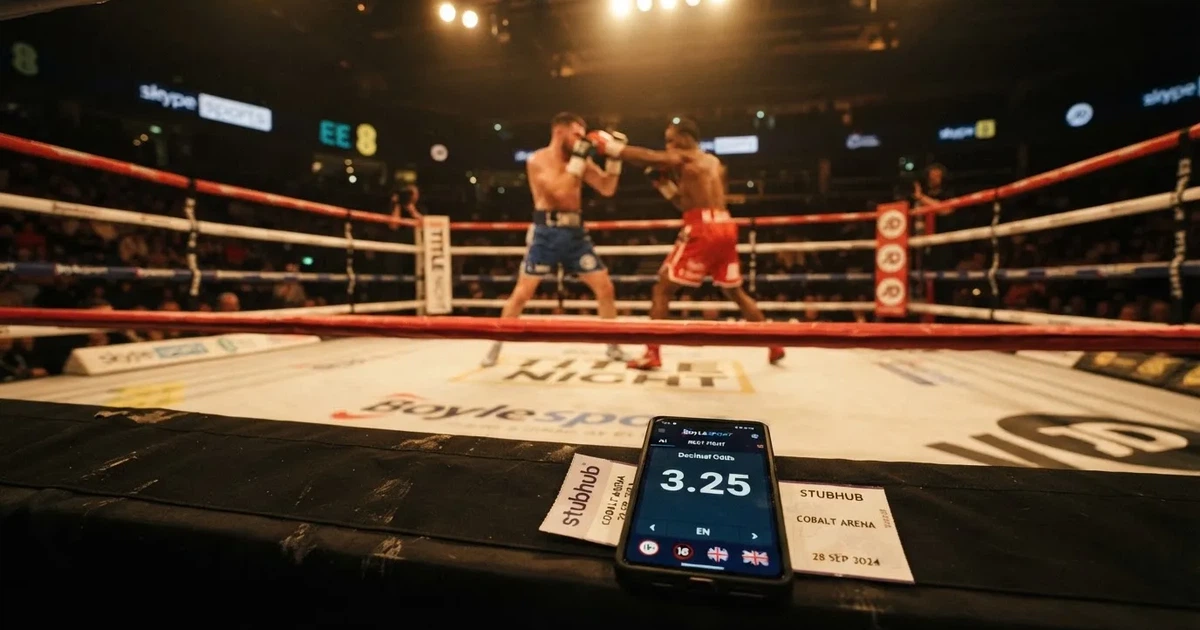
British bookmakers show two prices side by side: the decimal form (2.50, 1.91) that is the unit you multiply a stake by to get a return, and the fractional form (6/4, 10/11) that says how much profit a unit of stake yields. A favourite at 2/5 pays £2 profit for every £5 staked — short, ugly, and almost always the right read on a clear talent gap. An outsider at 10/1 returns £100 profit on a £10 stake. Both forms describe the same line: in decimal, a price of 1.40 is the same as 2/5; a price of 11.00 is the same as 10/1. Conversion is a single division — a fraction a/b becomes decimal a ÷ b + 1, so 9/10 becomes 1.90 and 11/4 becomes 3.75.
A bookmaker does not set one price on a fight. It sets a price on every outcome the market lists — fighter A to win, fighter B to win, the draw — and the relationship between those prices is what reveals the margin. A price is never “right” on its own. A 1.91 line on the favourite looks fine until the underdog is also at 1.91; then the two prices, combined with the draw, are doing a job that is not about either fighter.
Two-way and three-way lines, and why the draw matters
A boxing bout is not a coin toss. Judges can split cards, draw a majority verdict, or score a fight even, and bookmakers therefore price a third outcome — the draw — alongside the two fighters. The draw is rarely the favourite, but it is rarely a long shot either: in a competitive match-up it can sit anywhere from 8.0 to 14.0 (7/1 to 13/1) depending on the styles, and ignoring it is one of the more expensive habits a beginner can build. A three-way market is harder to beat than a two-way one precisely because the third outcome is a real risk.
Some bookmakers offer a “win only” market that removes the draw and returns the stake if the fight goes the distance as a draw. That sounds generous, but the prices are adjusted: the favourite shortens further, the underdog drifts, and the price the customer sees already accounts for the void on a draw. Whether the price is better or worse than the three-way line depends on the bout — for a clear favourite it is usually worse, for a tight match-up with a credible draw probability it can be better. Read the market before choosing the form.
Method of victory and the round groups
A method-of-victory market asks a sharper question. Knockout, technical knockout (corner stoppage, doctor stoppage, referee stoppage), decision on the scorecards, and disqualification are the four ways a fight ends, and bookmakers price each against each fighter. A power puncher who has stopped his last six opponents will be shortest in the KO band; a technician who has never been stopped will be shortest in the decision band. The round or round group — under 4.5 rounds, 5–8 rounds, over 8.5 rounds — is the same kind of bet, sliced finer. These markets can be more interesting than the moneyline because the price reflects a real read on style, but the menu is thinner at smaller cards and most British bookmakers only open the full method-of-victory board on televised events.

Going the distance and “will it go”
A “to go the distance” line is the inverse of a stoppage market. A favourite to win on points is, almost by definition, a favourite to go the distance; an underdog priced for a stoppage is the same thing read backwards. These markets are useful when the punt is on the style of the fight rather than the outcome — when both fighters are durable and the model says points, but the favourite’s price on the points decision is unattractive, a “yes” on the distance market at a comparable price can carry the same view with a different margin profile.
The overround — what the margin costs
Every market carries one. The overround, also called the margin or the vig, is the cut the bookmaker keeps of every pound bet on that market. On a two-outcome market with both sides at 1.90, the implied probabilities sum to 1 ÷ 1.90 + 1 ÷ 1.90 = 1.053, or 105.3 %. The 5.3 % above 100 % is the bookmaker’s margin on this market. A three-way market at 1.50 / 4.50 / 6.00 sums to 1 ÷ 1.50 + 1 ÷ 4.50 + 1 ÷ 6.00 = 0.667 + 0.222 + 0.167 = 1.056, or about 5.6 % overround. Higher-margin markets are not “better” markets — they are markets where the price gives the bookmaker more of every stake. Boxing sits roughly in line with football and tennis on margin: well-run books price a major fight around the 5–8 % band, less-run books price wider.
This matters because the price a customer sees is never the true probability of the outcome — it is the true probability multiplied by 1 + margin. A 60/40 fight, fair prices1.67 / 2.50, becomes1.61 / 2.38 at a 5 % margin and 1.54 / 2.27 at a 10 % margin. The favourite shortens less than the underdog lengthens, which is why margin punishes the long price more than the short one. Reading a single price is not enough: read the margin, because that is what the bettor actually pays.
The fights themselves — schedule, sanctioning bodies and round structure
Professional and amateur formats, and the round count
Professional title fights usually run twelve three-minute rounds for men, ten rounds for women, with a one-minute rest between rounds. Four-rounders are common at the development end of the sport, six- and eight-rounders are the rung between prospect and contender, and ten- and twelve-rounders are reserved for championship and elite-level bouts. Each round lasts three minutes; each rest one. The number of rounds scheduled matters for the round-group markets — a six-round fight cannot pay out on round 9 — and for any “will it go the distance” price.
Amateur boxing, by contrast, runs three rounds of three minutes for men and four rounds of two minutes for women at the senior international level, with scoring on a points-per-round basis rather than a ten-point must system. Olympic boxing, Commonwealth Games boxing and World Championships boxing use the amateur format. The schedule and the rulebook are different enough that most British bookmakers treat them as separate sports on the betting menu — the markets for an Olympic qualifier are smaller, the in-play offering is thinner, and the prices can move more on news than on form.
Sanctioning bodies and why the belts matter
Four bodies sanction world championship fights in men’s professional boxing: the WBA (World Boxing Association), the WBC (World Boxing Council), the IBF (International Boxing Federation) and the WBO (World Boxing Organization). Each keeps its own rankings and orders its own mandatories, and a champion holding two or more of the four belts is called an undisputed champion. A fighter holding one belt at a particular weight is a world champion in that title only. The belts matter at the betting menu because the most expensive cards — undisputed fights, heavyweight title unifications — get the deepest market coverage, and the long tail of regional and interim title fights gets the thinnest. The number of sanctioning bodies is also why a so-called “world title fight” can carry a low profile: a WBA “regular” champion and the IBF champion of the same weight can be fighting on different continents in the same month.
Outcomes on the night
A boxing bout ends in one of four ways. A knockout is a count-out after a knockdown, with the standing fighter failing to beat the ten count. A technical knockout is a stoppage by the referee, the ringside doctor or the fighter’s corner; it is not the same as a knockdown, and bookmakers settle method-of-victory markets accordingly. A decision is what the judges’ scorecards say after the scheduled rounds, and it can be unanimous (all three in agreement), split (two for one fighter, one for the other) or majority (two for one, one a draw). A disqualification is a stoppage for fouls, and it is treated as a fighter win — the disqualified fighter loses, and the winner is paid as on any stoppage. A draw, scored as an even card by all three judges, is a third result distinct from any fighter win, and it is the result that catches money-line punters most often when they assume a bout cannot end level.
Boxing betting markets at a UK bookmaker
Moneyline, draw no bet and double chance
The three-way moneyline is the base market — pick the winner or the draw. “Draw no bet” is the two-way version where a draw refunds the stake. “Double chance” is the same idea expressed as a bet on two of the three outcomes at once (fighter A or draw, fighter B or draw, fighter A or fighter B). The double chance prices are the cheapest of the three forms because two outcomes have to land; the draw no bet prices are roughly the average of the two fighter prices; the three-way moneyline is the most expensive on each outcome but pays only on the result chosen. None of these forms is “free” — the margin is in every line, and the question is which form gives the cleanest price for the view the punter wants to take.
Over/under rounds
An over/under rounds market sets a line — under 4.5 rounds, over 8.5 rounds — and prices yes or no. A line of 8.5 rounds pays out on a stoppage before round nine starts. A line of 4.5 rounds pays out on a stoppage before round five starts. The market is the cleanest expression of a view on fight shape — if the model says early stoppage, the under 4.5 line is the cheapest bet; if the model says a long, technical fight, the over 8.5 line is. Rounds-group markets, where the book is broken into 1–4, 5–8 and 9–12, are a finer version of the same view with three prices.
Method of victory
The full method-of-victory market opens four options per fighter — KO/TKO, decision, and disqualification, with the draw as a separate line. A short-form version collapses KO and TKO into a single “stoppage” band. The margin on method markets is wider than on the moneyline because the outcomes are rarer, and a single upset stoppage in a card’s history moves the price noticeably. Method markets are most useful on fights where one fighter has a clear stoppage record and the other does not — that is where the punt is on style rather than on talent, and where the book has less information.
Round betting
Round betting asks which round the fight ends in, with each round priced individually and “draw” or “decision” priced as a separate line. A 12-round title fight therefore carries12 round lines per fighter plus a decision line plus a draw line — 26 prices for one market. The margin on each is wider still. Round betting pays large prices on early-round stoppages and short prices on late-round stoppages, and the long tail of round lines is rarely sharp. The view that the price expresses — “this fight ends in round 4” — is rarely well-priced because so few fights do.
Will it go the distance
A binary line on whether the fight runs all scheduled rounds. A “yes” pays on a decision of any kind (unanimous, split, majority) and a “no” pays on any stoppage. The price reflects the bookmaker’s read on durability — two fighters who have never been stopped will price the “yes” side short; a fight featuring a known finisher will price it longer. The market is essentially a derivative of the method and rounds lines and should be priced consistently with them; large differences between a “yes” on the distance market and the implied probability from the method-of-victory board are a sign the bookmaker has mispriced one of the two.
Accumulators, bet builders and same-game multis
A pre-match accumulator (or “acca”) combines two or more selections across different fights or different sports. A bet builder, sometimes called a same-game multi or same-game acca, combines two or more selections from one event into a single price — favourite to win plus under 8.5 rounds plus over 4.5 rounds, say. The bet builder’s per-leg prices are typically wider than the standalone market, because combining legs introduces correlation the bookmaker cannot price cleanly. The price is therefore lower than the product of the standalone legs, and the customer is paying for the convenience of one slip.
An accumulator across fights or across sports prices closer to the product of the legs but still with a margin on each. A four-fold acca on four fights at 2.00 / 2.00 / 2.00 / 2.00 standalone would price to 16.00 if the markets were fair; with a 5 % margin on each leg, the standalone is 1.91 / 1.91 / 1.91 / 1.91 and the four-fold is about 13.3, almost 17 % short of the fair price. The longer the accumulator, the more the margin compounds; a 10-fold at2.00 legs prices to about 8.6, a fair 102.4, an effective compounded margin of more than 90 %.
Each-way bets and outright tournaments
An each-way bet is two equal-stake bets on the same selection — one on the win, one on the place — and is most commonly used in horse racing. In boxing, the place terms vary by operator and by market; some bookmakers pay a quarter of the win odds on a method-of-victory place, others do not offer each-way on boxing at all. Tournament outrights — bet on the winner of a four-fight card, or on the boxer of the year market — are a similar each-way-friendly structure, with the place price paying a fraction of the win price for any fighter who reaches the final. The total stake is double the unit stake on an each-way bet.
How in-play boxing betting works
Markets available mid-fight
The base in-play menu on a televised bout is the same as the pre-match menu — moneyline, draw, method of victory, over/under rounds — with prices moving in real time as punches land and the fight takes shape. A knockdown changes every price on the menu at once: the fighter who dropped shortens sharply on the moneyline and lengthens on the stoppage market, the other fighter drifts on both, and the draw line shortens because a long-count comeback narrows the judges’ margin. Bookmakers suspend the market during the count and reopen it a few seconds after the fight resumes; a market that does not suspend during a knockdown is offering a stale price, and that is rarely a customer-friendly price.
A bet builder on the live menu is rarer. Most books disable the builder in-play because the correlation between live legs is too tight to price reliably; some larger books keep the builder open on the bigger fights with the live legs priced wider. In-play cash out — closing a bet before the fight ends — is universally available on the main markets and is the cleanest expression of a view that has changed mid-fight.
Live streaming, trackers and data feeds
Several of the bookmakers reviewed here offer live streaming of boxing on the app, usually restricted to customers with a funded account or a bet on the fight in question. The streaming is typically licensed from the broadcaster — Sky Sports, TNT Sports, DAZN — so the geographic availability varies. A tracker (a punch count, a judge-by-judge live card, a connect percentage) gives the customer more to trade on than the video alone. The bookmaker’s own data feed is rarely as deep as a dedicated boxing stats site, but the difference matters less on boxing than on team sports: the fight is short, the data points are sparse, and most of the action is in the eye.
Suspension rules and the moment the price disappears
A boxing market suspends more often than a football market. The book closes the price during a knockdown count, during a clinch that lasts long enough to invite a referee break, between rounds, and during the ringside doctor examination that may follow a cut. The customer who wants to bet in-play on the round-of-stoppage market needs to accept that the window between the price opening and the price closing is short — sometimes a single second of trading after a knockdown. Reading the suspension rules matters because the price on a suspended market is not the price the customer gets if they click: the bet is held until the market reopens or is voided, and the new price is whatever the book sets at that point.
Cash out and the value of closing early
What cash out pays
A cash out closes a bet before the fight ends and pays the current value of the bet at the live price. A back bet on fighter A at 2.50 pre-fight, with fighter A ahead on the cards after six rounds, might cash out at1.40 (a small loss) or 1.80 (a small profit) depending on how dominant the lead looks. The cash out price is set by the bookmaker at its discretion and is typically worse than the customer’s estimate of fair value — the bookmaker knows the customer is leaving and prices accordingly. A bet that is hard to replace in the live market — a four-fold acca on three already-settled legs — will cash out at a worse price still, because the bookmaker cannot easily hedge it.
When cash out is the right move
A cash out makes sense when the value of certainty exceeds the value of waiting. A punter who needs the stake back before the last fight of the card, who wants to lock in a small profit on a multi-leg acca that has three legs to go, or who has a strong read that the lead will not hold will close early. A punter who simply does not want to watch the last round of a fight they have already won is paying a premium for that comfort — and the premium is the difference between the cash out price and the value of letting the bet ride.
Predictions, pre-fight analysis and the limits of a tip
What a tip is and what it is not
A pre-fight tip is a forecast — a prediction of who will win and how. It is a view, not a guarantee, and the price of the bet reflects a market-wide distribution of views. A tip that agrees with the favourite is not adding information; it is restating the consensus. A tip that disagrees with the favourite is interesting only if the tipster has a reason the market has missed — a known hand problem, a camp rumour, a stylistic mismatch that suggests the favourite’s price is wrong.
The honest framing: nobody can predict a knockout, a cut stoppage or a judges’ decision. A model can assign probabilities; the probabilities are wrong more often than not because the fight is short and the variance is high. A 60/40 favourite wins about 60 % of the time, which means a 60/40 favourite loses about 40 % of the time. A punter who acts on the prediction as if it were a forecast of certainty loses on the 40 %.
What the data can and cannot show
Punch stats — landed punches per round, connect percentage, jab-to-power ratio — are useful on a long record and noisy on a short one. A four-fight record of knockouts is not a basis for a model; a ten-fight record is the bare minimum. Common-opponent analysis — how did fighter A and fighter B fare against the same opponents — is the most useful single tool, because it controls for opposition quality, but it fails when the shared opponents were at different points of their own career. The bookmaker has the same data; the question is which side has priced it more accurately.
Bankroll, stake sizing and the discipline of the bet
A bankroll is the amount a punter has set aside for betting and is willing to lose. A stake is the unit placed on a single bet. A staking plan — flat stakes, percentage stakes, Kelly stakes — sizes each bet as a fraction of the bankroll and prevents one bad night from ending the betting. The most common beginner mistake is to scale the stake with confidence: the punter is “sure” of an 8/1 shot, places a quarter of the bankroll, and loses. The professional discipline is the opposite — the stake reflects the edge, not the conviction. A 1.50 favourite with a real 60 % probability is a flat-stake bet, not a five-unit bet.
The honest limit of strategy: discipline improves the variance, not the expected value. A punter with no edge loses money at any stake size; a punter with a small edge needs volume to realise it. Strategy is the price of admission, not a system that wins.
How the UK regulates boxing betting
The Gambling Commission and the public register
The Gambling Commission licenses the British commercial gambling market under the Gambling Act 2005, covering Great Britain (England, Scotland and Wales). Northern Ireland runs under its own older law and is not covered by the Act. Since the Gambling (Licensing and Advertising) Act 2014, an operator whose remote facilities are used in Great Britain needs a Commission licence wherever it is based — a Curaça, Malta or Gibraltar licence is not a substitute. The Commission’s public register is searchable by business name, trading name, domain or account number, and is the only test of whether a brand holds a licence. The licence types relevant to boxing betting are remote general betting standard (real events) and remote betting intermediary (for exchanges); both are listed on the register against every featured operator below.
A single brand name can run under a licence held by a parent company. Ladbrokes and Coral, for example, both run under LC International Limited’s licence; Paddy Power and Betfair both run under Flutter’s. The brand on the website and the company on the licence are different things, and the register is what reconciles them. The licence number is on the operator’s terms page, usually at the foot of the homepage.
Verification before the first bet
Since 7 May 2019, a customer at a GB-licensed operator must pass name, address and date-of-birth verification before the first deposit or bet, including with a free bet or bonus. There is no anonymous play at a licensed site. A financial vulnerability check (LCCP condition 3.4.4, in force since 30 August 2024) applies once a customer’s deposits minus withdrawals exceed £150 in a rolling 30 days; it is a public-record check (bankruptcy, county court judgments), not an income check. Financial risk assessments — the press’s “affordability checks” — are announced in a staged plan with no start date; do not describe them as live.
GAMSTOP, deposit limits and the player-protection toolkit
GAMSTOP is the national multi-operator self-exclusion scheme and a mandatory licence condition for online operators since 31 March 2020. Periods are six months, one year, five years, or five years with auto-renewal, and after the minimum period the exclusion stays in place for a further seven years unless the customer asks GAMSTOP to remove it. Online operators must offer a gross deposit limit on a fixed time frame; a first phase has applied since 31 October 2025, a second phase was postponed to 30 September 2026, and whether it is live is not established. There is no state-set ceiling on stakes or deposits for betting — limits are the customer’s choice.
Help is available through GamCare (the National Gambling Helpline), GambleAware, the NHS gambling clinics network, and Gamblers Anonymous. The bookmakers reviewed below link to one or more of these services; the section on responsible gambling below covers what each operator publishes.
Bonuses and the 10x cap
Wagering requirements on bonuses are capped at 10x as of 19 January 2026 — a £10 bonus with a 50x requirement would need £500 of qualifying bets, but under the cap no bonus can carry more than 10x. Mixed-product promotions — an offer that requires gambling on two or more product types — are banned in the same rule change. Whether the cap applies to free bets with no wagering condition, and any cap on the money value of a bonus, are not established. The cap is on the operator, not on the customer, and it is enforced through the Commission’s Licence Conditions and Codes of Practice.
Credit cards and the payment-method rules
Credit cards are banned for gambling in Great Britain since 14 April 2020, including credit-card-funded payments through an e-wallet. Debit cards and bank-based payments are not covered. Cryptocurrency is not banned, but the verification-before-deposit rule means a licensed site cannot accept crypto without knowing who the customer is — and most licensed operators do not list crypto among their deposit methods. Anonymous play is not available at a licensed site.
The player pays no tax on betting winnings in Great Britain. General Betting Duty is the operator’s tax on gross profits —15 % at present, rising to a 25 % remote rate from 1 April 2027 while pool betting and in-person betting stay at 15 %. Whether operators pass duty on through odds is not established; the customer’s stake and return are not reduced by the duty.
Offshore and unlicensed sites
A GB licence is compulsory at the point of consumption. Providing gambling facilities in Great Britain without the licence the Act requires is an offence under section 33 of the Gambling Act 2005 — on summary conviction up to 51 weeks’ imprisonment, a fine up to level 5, or both (six months in Scotland). The offence is aimed at the operator, not at the customer who merely bets on an unlicensed site; the honest framing for a customer is that an unlicensed site offers no GAMSTOP coverage, no Commission complaints route, no approved dispute-resolution body, no British consumer redress if funds are withheld, and is not bound by the 10x bonus cap or the £150 vulnerability check. Enforcement is disruption, not blocking — cease-and-desist notices, payment-provider work, search-engine referrals, and DNS blocking powers the Commission has been given or is about to receive. Never write that ISP blocking is in operation.
Responsible gambling at a boxing betting site
Safer-gambling tools every UK bookmaker offers
Every GB-licensed operator offers a baseline set of safer-gambling tools: deposit limits (daily, weekly, monthly), time-outs (24 hours to six weeks), self-exclusion (six months to five years), reality checks (a pop-up reminder of time and net spend on the site), and access to account history. The baseline is enforced by the LCCP and is the same across operators; the difference between brands is in how prominent the tools are, how easy they are to set, and how many of them the customer has to opt back into after a time-out ends. A site that makes deposit limits a three-click process is doing the minimum the licence requires; a site that lets the customer set a loss limit as well as a deposit limit is doing slightly more.
GAMSTOP and the multi-operator self-exclusion
GAMSTOP is the only multi-operator self-exclusion that covers the full GB-licensed online market. A six-month exclusion removes the customer from every online operator for six months; a five-year exclusion does the same for five years. The exclusion cannot be reversed early. After the minimum period the customer can ask GAMSTOP to remove them, but the request is held for seven years. The scheme is the bluntest tool in the safer-gambling kit and is the right one for someone who has stopped enjoying the betting. A punter who wants a break, but not a six-month one, should use a single-operator time-out first.
Help when gambling stops being fun
GamCare runs the National Gambling Helpline, free and confidential, 24 hours a day. GambleAware funds treatment, education and the National Gambling Treatment Service. The NHS operates gambling clinics in several regions. Gamblers Anonymous runs local meetings across the country. The bookmakers reviewed below link to one or more of these services; the help is independent of the operator and free at the point of use.
Crypto and the limits on anonymous play
What crypto changes in the deposit process
A cryptocurrency deposit is, in principle, pseudonymous: the wallet address is public but the holder is not named. A GB-licensed operator must verify name, address and date of birth before the first deposit, including with a free bet or bonus, so the crypto path at a licensed operator is the same KYC path as a debit card path — the deposit is in coin, but the account holder is identified. An unlicensed site that takes crypto is offering the anonymity the licensed site cannot, but is also offering none of the protections the licensed site must: no GAMSTOP coverage, no Commission complaints route, no £150 vulnerability check, no 10x bonus cap, no enforced safer-gambling tools, no British recourse if funds are withheld. The honest framing for a punter is that crypto at a licensed site gives the speed and the verification together, while crypto at an unlicensed site gives the anonymity and none of the recourse.
What the register says about crypto deposits
The Commission does not maintain a list of permitted or prohibited payment methods beyond the credit-card ban. A licensed operator can list crypto among its deposit methods at its own discretion; most do not, because the verification-before-deposit rule already defeats the anonymity case for the customer. Where the licensed operator does list crypto, the deposit is in the same regulated account as a debit-card deposit and the same safer-gambling tools apply.
Bonuses and free bets on boxing — how to read the offer
The shape of a sports welcome offer
A sports welcome offer at the bookmakers below takes one of three shapes. The first is a matched free bet — bet £20, get £40 in free bets (Unibet, Coral); the qualifying bet is at minimum odds, the free bet has its own expiry, and the free-bet stake is not returned with a win. The second is a stake-back free bet — deposit £10 by card, get your stake back as a free bet of up to £30 on a first qualifying losing accumulator (Hollywoodbets); the qualifying acca has a minimum leg count, a minimum odds threshold and a settlement deadline, and the refund is a free bet, not cash. The third is a fixed-amount free bet — £20 in free bets when a £10 bet is placed (BoyleSports). The shape is the operator’s choice; the substance is the qualifying terms, the free-bet expiry, and what happens to the stake on a winning free bet.
The terms that matter
Three terms separate a generous offer from a stingy one. The wagering requirement — how many times the bonus must be turned over before withdrawal — is capped at 10x under the 19 January 2026 rules; an offer carrying more is in breach of the licence conditions. The minimum odds on the qualifying bet —1/1 (2.00) on Unibet and Coral, 4/1 on Hollywoodbets’ qualifying acca — set the bar the qualifying bet must clear, and the higher the bar, the harder the offer is to clear. The expiry on the free bet — 7 days from issue on Unibet and Coral, settled within 7 days on Hollywoodbets — sets the deadline, and shorter placements risk forfeiting the free bet if the punter does not get to it. Read the terms before any of the three.
The arithmetic behind the headline
The headline “bet £20, get £40” sounds generous, but the qualifying bet of £20 at minimum odds 1/1 must be placed first; if it loses, the £20 is gone and the £40 in free bets has no value if not used. The free bet itself settles at its winnings only — a winning £40 free bet at 3.00 returns £80 profit (the £40 stake is not returned), for an expected value that depends on the market margin on the chosen selection. A punter who uses a free bet on a short-priced favourite at 1.20 is taking 20 % of expected return for the privilege of using the offer; a punter who uses it on a 5.00 shot is taking 80 % of expected return. The free bet is worth more on the longer price, but the longer price is also the less likely winner. The expected value of the free bet is the long-price probability times the long-price winnings, summed across all uses, and the formula the bookmaker uses to price the offer in the first place.
What the bonus cap means for the customer
The 10x cap is on the operator, not the customer. The customer sees an offer with a 10x maximum rollover, which is the cheapest the British market has ever been. The cap removes the offers that used to ask for 50x or 80x turnover — the offers where the customer had to bet a month’s salary to clear a £10 bonus — and replaces them with offers that ask for a tenth of that. The cap does not make every offer worth taking. A 10x rollover on a £40 free bet is still £400 of qualifying bets; a 10x rollover on a £10 cash bonus is £100 of qualifying bets. The lower the bonus, the less the rollover costs; the higher the bonus, the more the rollover asks.
Mobile and app boxing betting
What a betting app needs to do for boxing
A boxing betting app needs four things and is forgiven for not having a fifth. It needs an in-play interface that survives a long count — the market suspension on a knockdown has to come back clean and the bet slip has to hold the bet while the market reopens. It needs a bet builder or same-game multi on the bigger fights; the correlation between live legs is too tight for the bookmaker to price reliably, but the customer wants the slip. It needs a cash out button on every leg of every multi-leg accumulator, because the customer who is watching three already-settled legs wants to close before the last one starts. It needs push notifications for the fights the customer has bet on or followed. The fifth — live streaming of every televised bout — is not a baseline; it is a perk that comes with a funded account and a bet on the fight.
The cost of the app in storage and battery
A modern sportsbook app is 80–200 MB on iOS and Android, and the live-tracker features and live-streaming window push that higher. The app is not the kind of thing that runs in the background indefinitely; the live in-play markets need an open session, and a Saturday night card can drain a phone battery in three hours. A punted bet on a four-fight card using the in-play menu on each fight is a heavier phone session than a punted pre-match accumulator, and a punter who plans to bet live should plan to charge.
Live betting and cash out — how the two interact
Cash out as a closing tool, not a money-maker
A cash out is a closing tool. The customer closes a bet to lock in a profit or limit a loss; the bookmaker pays the current value of the bet at a price the bookmaker sets. The cash out price is worse than the fair value because the bookmaker knows the customer is leaving and prices accordingly; the difference is the cost of the certainty. The honest framing of cash out is that it is a fee for closing the bet, not a discount on it.
When the cash out is suspended
A cash out is suspended when the underlying market is suspended — during a knockdown count, between rounds, during a referee examination. The suspension lasts a few seconds to a minute; the customer who clicks cash out during the suspension is held until the market reopens, and the new cash out price is whatever the book sets at that point. A punted in-play bet on the round-of-stoppage market at a knockdown is the most exposed to a cash out suspension, because the suspension is longest at the moment the price is moving most.
Top-10 UK-licensed boxing bookmakers
The ten bookmakers below are holders of a Gambling Commission remote licence for real-event betting in Great Britain, listed in the order research has placed them. Each carries the licence account number, the licence holder as it appears on the register, and what the operator’s own terms state on boxing, in-play, bet builders and welcome offers. The comparison is not a ranking — every brand here is licensed, every brand here is reviewed, and the verdict below each block is the page’s own judgement, not the register’s.
| Brand | Gambling Commission licence (holder) | Terms on boxing, in-play, builders and welcome offers |
|---|---|---|
| BoyleSports | 039469-R-319383-025 (Boylesports Enterprise) | Sports welcome: £20 in free bets when a £10 bet is placed (€30 in free bets for a €10 bet for Irish players). |
| Hollywoodbets | 053028-R-330019-013 (Hollywoodbets International UK Limited) | Sports welcome: stake back as a free bet of up to £30 on a first qualifying losing accumulator (stake £10+, 3+ legs, odds4/1+, settled within 7 days); one free bet per customer. |
| Bet600 | 044731-R-323941-016 (Tyche Tech Limited) | Best Odds Guaranteed on horse racing: if the SP is bigger than the early or show price, the bet is paid at the SP. |
| Tote | 054779-R-331321-008 (TDCO Limited) | Best Odds Guaranteed on UK and Irish racing (operator-licensed pool betting — distinct from fixed-odds coverage elsewhere on this page). |
| Unibet | 045322-R-324275-019 (Platinum Gaming Limited, Gibraltar) | Operated since 1999. Sports welcome: £40 in free bets when a £20 bet is placed at minimum odds 2.0 (1/1), free bets expire within 7 days of issue, new GB customers only, debit card or instant bank transfer. |
| Coral | 054743-R-330863-014 (LC International Limited) | Remote betting intermediary as well as remote general betting standard (real events). Sports welcome: £40 in free bets when a £20 bet is placed at minimum odds 2.0 (1/1), free bets expire 7 days after issue, new GB customers who opt in. |
| DragonBet | 064908-R-339041-003 (DragonBet Ltd) | App features Welsh football and rugby markets, racing, American football, in-play betting and bet builder markets. |
| DAZN Bet | 048756-R-327274-019 (DZBT Limited) | Deposits start at £5 by debit card, Apple Pay, Paysafecard, Trustly and Skrill, and at £20 by PayPal, with no processing fees. |
| Matchbook | 039504-R-319407-024 (Triplebet Limited) | Remote betting intermediary as well as remote general betting standard (real events). Betting exchange — customers bet against other users, with Bet Builder, multiples, in-play betting and live streaming of horse racing and greyhounds. |
| Betfred | 039544-R-319290-010 (Petfre (Gibraltar) Limited) | App covers 21 sports plus over 2,000 casino-style games. |
BoyleSports
BoyleSports runs on a Boylesports Enterprise licence and offers a sports welcome of £20 in free bets when a £10 bet is placed, with a parallel €30 free-bet structure for Irish customers. The welcome is short, flat, and easy to clear: one qualifying bet at the minimum stake, a single settlement, and a £20 free bet whose stake is not returned on a win. The boxing menu at BoyleSports is built around the televised card: full moneyline, draw, method of victory and round groups on the bigger fights, with the in-play menu scaling down as the card loses broadcast coverage. The brand is strongest for the customer who wants a clean welcome and a full menu on the major fights, and is weakest for the customer who wants a deep bet-builder product or a same-game multi on a six-round prelim.
The verdict: a solid all-rounder for the major televised cards, where the welcome’s low qualifying stake is a real advantage for the casual punter.
Hollywoodbets
Hollywoodbets runs on a Hollywoodbets International UK Limited licence and offers a stake-back welcome of up to £30 on a first qualifying losing accumulator — stake £10+, three or more legs, each leg at 4/1 or greater, settled within seven days, one free bet per customer. The welcome is an accumulator-shaped refund, and the qualifying bar is high: a treble at minimum 4/1 per leg is a 64/1 accumulator at minimum, which is not a casual slip. The refund is a free bet, not cash. The boxing menu is built for the televised bout and the high-end acca: the bigger cards carry the full market set, the in-play menu is solid on the broadcast fights, and the bet builder is reasonable. The brand suits the punter who already builds the skeleton, not the punter who wants to clear the welcome with a single.
The verdict: the welcome favours the multi-leg acca punter, where the 4/1 minimum and three-leg requirement carve out a clear use case; the casual single-bet customer is paying for a refund they will not use.
Bet600
Bet600 runs on a Tyche Tech Limited licence and offers Best Odds Guaranteed on horse racing — if the starting price is bigger than the price taken, the bet is paid at the SP. The brand is a smaller-scale GB-licensed bookmaker with a racing-led menu; the boxing menu is thinner than the majors, the in-play offering is functional, and the welcome terms are not the headline feature. The BOG on racing is the brand’s clearest edge, and the boxing punt will be served by the menu but not by the kind of welcome offer the bigger books run.
The verdict: a brand for the racing-led punter who wants a BOG on a Saturday card; a secondary choice for the boxing-only customer.
Tote
Tote runs on a TDCO Limited licence and operates as a pool-betting-led bookmaker, with Best Odds Guaranteed on UK and Irish racing as the headline term. Pool betting is a distinct structure: the dividend is set by the pool after the race closes, and the price is not fixed at the time of the bet. The boxing product is a smaller part of the menu than at the majors and the welcome terms are racing-shaped. The brand suits the customer who already bets into pools and wants BOG on the racing, not the customer whose interest is the televised fight.
The verdict: a strong racing product in a different licence category from the box-moneyline bookmakers; boxing is a secondary menu and the welcome will not be the reason a customer opens the account.
Unibet
Unibet has operated since 1999 and runs on a Platinum Gaming Limited licence out of Gibraltar. The sports welcome is £40 in free bets when a £20 bet is placed at minimum odds 2.0 (1/1), with free bets expiring within7 days of issue for new GB customers using a debit card or instant bank transfer. The boxing menu at Unibet is broad: moneyline, draw, method of victory, round groups, over/under rounds, and a live in-play menu with cash out on the bigger fights. The bet builder is available on the marquee bouts and the live menu is functional. The brand suits the customer who wants a wide boxing menu, a clean welcome, and a long-established operator, and is weakest on the smaller cards where the in-play offering thins.
The verdict: a serious boxing menu backed by a clean welcome — the strongest all-rounder for the televised card punter who already has an account.
Coral
Coral runs on an LC International Limited licence that covers both remote general betting standard (real events) and remote betting intermediary — the second category is the licence for betting exchanges, and the same parent holds the Ladbrokes licence. The sports welcome is £40 in free bets when a £20 bet is placed at minimum odds 2.0 (1/1), with £40 in free bets issued within 7 days and expiring 7 days after issue, for new GB customers who opt in. The boxing menu at Coral is built for the major cards and the in-play offering is solid; the brand has the long history of a high-street bookmaker and the app is mature.
The verdict: the same welcome shape as Unibet, the same broad boxing menu, and the exchange licence means the brand can layer in exchange-shaped products on the same account — a clear edge for the customer who wants both the fixed-odds card and the exchange on the same licence.
DragonBet
DragonBet runs on a DragonBet Ltd licence and offers a sports app with Welsh football and rugby markets, racing, American football, in-play betting and bet builder markets. The brand is a regional GB-licensed bookmaker with a strong Welsh-focus and a broader menu outside the regional core. The boxing product is functional rather than headline: moneyline, draw, and method of victory on the televised cards, with a bet builder on the marquee bouts. The welcome terms will be the deciding factor for a punter whose interest is the boxing menu specifically, and the regional spine is the brand’s strongest identity.
The verdict: a regional GB-licensed bookmaker with a clear identity; the boxing product is a secondary strength and the brand suits a Welsh-interest customer more than a boxing-first one.
DAZN Bet
DAZN Bet runs on a DZBT Limited licence and offers deposits from £5 by debit card, Apple Pay, Paysafecard, Trustly and Skrill, and from £20 by PayPal, with no processing fees. The low deposit floor and the payment-method breadth are the brand’s clearest edges for the smaller-stake customer. The boxing menu is built around the DAZN broadcast — the televised DAZN schedule drives the deep market on those fights, and the menu is thinner on non-DAZN broadcasts. The welcome terms are the deciding factor for the punted customer, and the deposit floor is the deciding factor for the casual customer.
The verdict: the deposit floor and the payment-method breadth are real edges for the smaller-stake customer; the boxing product is strong on DAZN-broadcast fights and secondary on the rest.
Matchbook
Matchbook runs on a Triplebet Limited licence covering remote general betting standard (real events) and remote betting intermediary, and operates as a betting exchange — customers bet against other users rather than against the bookmaker. The exchange shape means the margin is the commission on winning bets, not the overround in the price; back and lay prices are both available; and the Bet Builder, multiples, in-play and live streaming (horse racing and greyhounds) are layered on top. Boxing markets at an exchange run thinner than at a fixed-odds bookmaker because the customer base is smaller, but the price on a televised bout is often sharper and the lay side lets the customer take the position a fixed-odds book will not offer.
The verdict: the only GB-licensed betting exchange on the page, and the sharpest price on the bigger cards; the upside is the price and the lay side, the cost is the thinner menu on smaller cards.
Betfred
Betfred runs on a Petfre (Gibraltar) Limited licence and offers a sports, casino and games app covering 21 sports plus over 2,000 casino-style games. The boxing menu is built around the televised card: full moneyline, draw, method of victory, round groups, and an in-play offering on the bigger fights. The brand is a long-established GB-licensed bookmaker with a high-street history and a mature app, and the welcome terms are a deciding factor for a new-account customer. The breadth of the casino-style offering on the same licence is a feature for the customer who wants both, and a noise for the customer who wants boxing only.
The verdict: a serious boxing menu on a long-established licence, with the casino-style offering on the same licence as a feature for the multi-product punter and a non-feature for the boxing-only one.
The arithmetic of a price — a worked example
A two-way market at 1.90 / 1.90
A two-way market at decimal odds of 1.90 on each outcome (fractional 9/10) implies a probability of 1 ÷ 1.90 = 0.5263, or 52.63 %, on each side. The two probabilities sum to 105.26 %, and the overround — the amount above 100 % — is 5.26 %. In a market at 1.91 / 1.91 the implied probabilities are 52.36 % on each side, summing to 104.71 %, an overround of 4.71 %. In a market at 1.95 / 1.95 the implied probabilities are 51.28 % on each side, summing to 102.56 %, an overround of 2.56 %. The price the customer sees is the implied probability multiplied by 1 + overround. The higher the overround, the more the bookmaker keeps of every stake and the less the customer gets back on every winning bet. As a band, well-run British boxing books price a major fight in the 5–8 % margin range on the moneyline; less-run books price wider, sometimes 10 % or more on the smaller cards.
What this means for the punter
A 5 % margin on a £100 stake across both sides returns £100 × 1 ÷ 1.05 = £95.24 in expectation across both outcomes combined. The bookmaker keeps £4.76 of every £100 staked on the market. A 10 % margin returns £90.91 in expectation and keeps £9.09. The difference between a sharp book and a wide book is the difference between the punter keeping 95 pence in the pound and the punter keeping 90 pence in the pound, before any read on the fight.
A three-way market at 1.50 / 4.50 / 6.00
A three-way market at 1.50 / 4.50 / 6.00 implies probabilities of 1 ÷ 1.50 = 66.67 % on the favourite, 1 ÷ 4.50 = 22.22 % on the underdog, and 1 ÷ 6.00 = 16.67 % on the draw. The three sum to 105.56 %, a margin of 5.56 %. The favourite’s implied probability is closest to the true probability; the draw is over-priced relative to the favourite. Whether the punter should take the favourite, the underdog or the draw depends on the punter’s read of the fight — the margin is the cost the punter pays for the bet, not the answer to the bet.
How to check a UK bookmaker’s licence
The Gambling Commission’s public register is searchable by business name, trading name, domain or licence account number, and is the whole test of whether a brand holds a licence. Every featured operator above is on the register; every licence account number, holder name and category listed above is taken from the register. The licence categories relevant to boxing betting are remote general betting standard (real events) for fixed-odds books and remote betting intermediary for betting exchanges. A licence in one category does not cover activity in another. Financial spread betting on contracts for difference is regulated by the Financial Conduct Authority, not the Commission — Spreadex is the example here, regulated by the FCA for spread betting and by the Commission for fixed-odds betting, and stating that spread-betting losses can exceed deposits. A licence for spread betting is not a substitute for a licence for fixed-odds betting, and the customer should check both.
The honest use of the register: a licence is not a quality mark. Every featured operator here holds one; the difference between them is in the menu, the welcome, the in-play offering, the bet builder and the app, not in the licence. The register answers “is this brand licensed?” and not “is this brand any good?”
Working out a return from a stake and a price
A return on a winning bet is the stake multiplied by the decimal odds. A £10 stake at 2.50 returns £25.00 (the £10 stake plus £15 profit). A £10 stake at 1.91 returns £19.10 (the £10 stake plus £9.10 profit). A £10 stake at 10.00 returns £100 (the £10 stake plus £90 profit). The profit is the stake multiplied by (odds − 1); the total return is the stake multiplied by odds. For an accumulator, the legs’ odds multiply into one combined price — a four-fold at 2.00 / 2.00 / 2.00 / 2.00 standalone prices to 16.00 in a fair market, and the stake multiplies against the 16.00 combined price. The combined price is rarely the product of the standalone prices because each leg carries its own margin and the margins compound.
The honest use of the formula: it works out the return on a winning bet, not the probability of the bet winning. A £10 stake at 10.00 returns £100 if the bet wins; the bet wins about 10 % of the time at a fair price. The formula answers “what does this bet pay back when it wins?” and not “will this bet win?”
The bookmaker’s margin and where to see it
The bookmaker’s margin is the cut the bookmaker keeps of every unit bet on a market. On a two-outcome market at 1.90 / 1.90 the overround is 5.26 % and the margin is 5.0 %; on the three-way example noted above, the overround is 5.56 %; on an accumulator it compounds across the legs. The margin is in every price on every market and is the cost the punter pays for the bet. The way to see the margin is to convert every price to an implied probability and add the probabilities: a sum of 105 % is a 5 % margin; a sum of 110 % is a 10 % margin. The bookmaker’s terms do not state the margin in numbers, but they state every price on every market, and the price is the only number the punter needs.
The honest use of the margin: it is the cost, not the outcome. A punter who knows the margin on a market and the punter’s own probability of each outcome can work out whether the bet is worth taking; a punter who knows neither is gambling. The margin is the price of admission; the read on the fight is the bet.
Frequently asked questions
How does one place a bet on a boxing match?
A bet is placed at a UK-licensed bookmaker in three steps. Open an account at a brand on the Gambling Commission’s register (every featured brand on this page is on it); pass the name, address and date-of-birth verification the Commission requires before the first deposit; deposit by debit card or another non-credit payment method, choose a fight, choose a market, and confirm the stake. The bet is held on the account and settled after the fight ends according to the bookmaker’s settlement rules and the official result.
How does boxing betting work in Great Britain?
Boxing betting in Great Britain is licensed by the Gambling Commission under the Gambling Act 2005. The customer chooses a brand on the Commission’s public register, verifies their identity before the first deposit, and places a bet under the brand’s own terms. Bonuses carry a 10x maximum wagering requirement as of 19 January 2026; mixed-product promotions are banned; credit cards are banned. The customer pays no tax on winnings; the operator pays General Betting Duty on its gross profits. The bookmaker sets its own maximum stakes, its own margin and its own menu.
How does a punter bet on boxing online?
Online boxing betting uses a desktop site or an app at a UK-licensed bookmaker. The same KYC rules apply — verification before the first deposit — and the same menu structure: pre-match moneyline, draw, method of victory, round groups, over/under rounds; in-play markets during the fight; bet builders on the marquee bouts; cash out on the main markets; live streaming on the bigger cards at some brands. The in-play menu suspends during a knockdown count and reopens a few seconds after the fight resumes; the cash out price is suspended at the same moments.
How is a Gambling Commission licence checked?
The Gambling Commission’s public register is searched by business name, trading name, domain or account number. A licence in the remote general betting standard (real events) category covers fixed-odds boxing betting; a licence in the remote betting intermediary category covers betting exchanges. A brand that does not appear on the register against one of these categories is not licensed for that activity; a brand that does appear is licensed, but the licence is not a quality mark on the menu or the welcome. The register is the only test of whether a brand holds a licence; the categories determine what the licence covers.
How is the return on a bet worked out from the stake and the odds?
The return on a winning bet is the stake multiplied by the decimal odds. A £10 stake at 2.50 returns £25.00 — the £10 stake plus £15 profit. A £10 stake at 1.91 returns £19.10 — the £10 stake plus £9.10 profit. Profit alone is the stake multiplied by (odds − 1). For an accumulator the legs’ odds multiply into one combined price, and the stake multiplies against the combined price; the combined price is rarely the product of the standalone prices because each leg carries its own margin.
What is the bookmaker’s margin and how is it visible in the odds?
The margin is the cut the bookmaker keeps of every unit bet on a market. It is visible in the odds by converting every price to an implied probability (1 ÷ decimal odds) and adding the probabilities together. A sum of 105 % is a 5 % margin; a sum of 110 % is a 10 % margin. A market at 1.90 / 1.90 has a margin of about 5.26 %; a market at 1.50 / 4.50 / 6.00 has a margin of about 5.56 %. The margin is in every price on every market and is the cost the punter pays for the bet.
Combat & motorsport – Accumulator
Content created by the «Accumulator» team
