
Where the maximum stake actually sits, and what it costs
 Available in US
The phrase “high limit” sells a feeling rather than a product. A bookmaker willing to take a £25,000 wager on a Premier League match is not, on its own, a high-limit site — what makes the limit high is the spread between the ceiling the operator publishes and the ceiling the slip shows when an actual bettor adds an actual selection. Both are real. They differ, and the gap is where the subject sits.
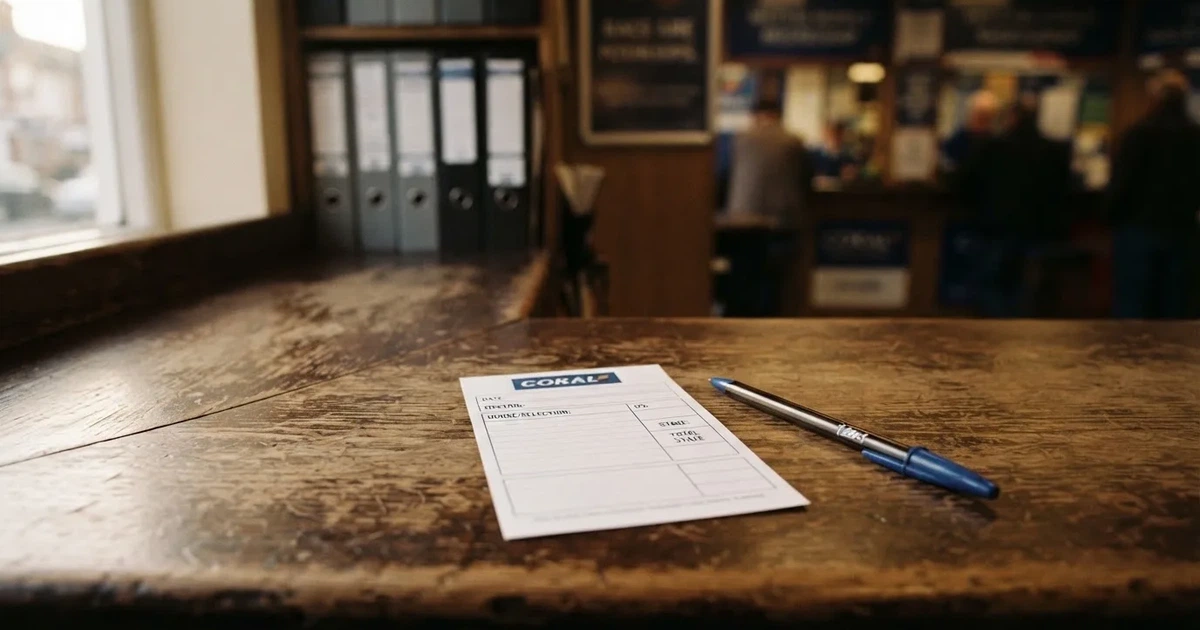
Every bookmaker licensed to serve customers in Great Britain sets its own maximum stake on every market, on every event, and revises it as a fixture approaches. A headline “£100,000 maximum” on a Champions League final is not £100,000 on a League Two Tuesday game in the rain. The ceiling the page shows is the ceiling for that event at that moment, and the ceiling that matters is the one the betting slip actually displays once a customer logs in. Pricing sits inside that ceiling. A high-limit brand is one whose published ceiling on the events a high-staking bettor wants to wager on stays close to the slip ceiling — and one whose stake restriction does not arrive the morning after a winning week.
This page walks through the mechanism in plain terms, then closes with the ten brands the comparison is built on, what their own terms state on maximum stakes, and the rules every one of them sits under.
Current data as of 26 October 2026, checked against the Gambling Commission’s public register of remote operating licences and each operator’s published terms.
How a maximum-stake rule works
A bookmaker’s limit is a position the operator is willing to leave open against a customer on a given outcome, before adjusting the price or closing the bet. The size of that position depends on the bookmaker’s book on the event, on the type of bet (single, each-way, accumulator), and on the customer’s own betting history with the firm. Most limits rise as kick-off approaches and fall again once the event is live; the published ceiling is the highest the operator will print on its site, not the price the slip displays in the final ten minutes.

Three layers sit underneath that headline figure. The first is the category ceiling, the operator’s maximum across all soccer, by bet type. The second is the event ceiling, the size of the book the firm is willing to write on this match, race or fight — almost always smaller than the category ceiling. The third is the customer ceiling, the size of the position the firm is willing to leave with this account. A new account, an account that has just won, and an account that has never deposited above £200 do not sit at the same line, even on the same event with the same bookmaker.
Why bookmakers limit
A bookmaker is not a custodian. It is a counterparty that prices a market, accepts bets, and pays out winners from losers. When one side of a market attracts more money than the firm wants to hold — at the price it printed — it has three levers: move the price, cut the stake it will accept on the heavy side, or stop taking bets on that outcome altogether. Stake limits are the lever that does not advertise itself. A bookmaker raising the price on Manchester City from 1.85 to 1.65 makes the limit news; a bookmaker capping the maximum on that price at £47 when the customer wanted £500 does not.

Limiting is a consequence of taking the other side of bets the market would otherwise clear. Sharp bettors — customers whose prices are tighter than the firm’s own — get capped or closed because each additional pound they wager leaves the book exposed on a price the firm has already mispriced. Recreational customers with a long losing run get capped less often. The asymmetry is the point: limiting is a defence of the book, not a punishment of the bettor.
How the limit is set
The category ceiling is policy. It is the figure the firm’s trading manual writes down, and it is usually the number the press quotes. The event ceiling is judgement. It depends on the liquidity of the market, the time to the off, the bookmaker’s position on the event across the rest of its business, and the cost of hedging at the prices other firms are quoting. The customer ceiling is history. It depends on what the account has done, what it has won, what it has lost, and what kind of activity the firm’s risk team has flagged. None of these three figures is published. A high-limit site is one whose category ceiling is generous, whose event ceiling on the markets a bettor cares about does not collapse to a few hundred pounds once the bet is logged, and whose customer ceiling does not get cut the morning after the account wins.
How a limit shows up on a slip
The slip tells the bettor only the ceiling for that selection, at that moment, on that account. A book that publishes “up to £250,000 on the World Cup final” will still cap a £10,000 wager on Wigan Athletic v Bolton in the third round of the Carabao Cup, and will cap a £10,000 wager on the World Cup final to £47 if the firm has already taken £200,000 on the other side. The slip is the contract; the marketing is the brochure. A high-staking bettor reads the slip, not the brochure.
Top 10 high-limit betting sites reviewed
The ten operators below each hold a remote operating licence from the Gambling Commission for real-event betting in Great Britain, and each appears on the Commission’s public register against the licence number the table gives. Every GB-licensed online operator is a member of GAMSTOP, the multi-operator self-exclusion scheme run as a condition of licence. The set is not a ranking. A licence is permission to take bets in Great Britain, not a rating on how much stake a careful bettor will actually find accepted; that figure is set by each firm, on each event, and shows up only on the slip.
The verdicts name what each brand’s own terms state about high-stake wagering — the published ceilings the firm lists, the product features that lift or cap exposure (bet builders, accumulators with insurer legs, Best Odds Guaranteed, cash out during a race), and the licence categories the firm holds on the Commission’s register. The reader checks the firm’s site on the day; the figures the firm publishes on Monday may differ from the ones it published on Friday.
Landscape of the comparison
| Brand | Gambling Commission account | Licence holder | What the operator’s own terms say on high-stake wagering |
|---|---|---|---|
| Bet600 | 44731 | Tyche Tech Limited | Pays Best Odds Guaranteed on horse racing: a starting price bigger than the price taken pays at the SP |
| VBet | 44662 | SCGO Limited | Offers Bet Builder, in-play markets and live streaming with a live calendar of results and stats |
| Swifty Sports | 58957 | Swifty Global (UK) Ltd | Offers Best Odds Guaranteed, Cash Out on horse racing and football, daily price boosts and live streaming; Bet Builder is listed as coming soon |
| Betmaster | 65699 | BM Solutions GB Ltd | Holds a remote general betting standard (real events) licence on the Commission’s register |
| Fafabet | 57385 | Taichi Tech Limited | Pays Best Odds Guaranteed on UK and Irish racing from 9 am on race days, win and each-way bets |
| DragonBet | 64908 | DragonBet Ltd | Markets Welsh football and rugby, racing, American football, in-play and Bet Builder markets |
| Dabble | 65677 | Dabble Sports UK Ltd | Welcome offer is a £10 free bet credited on a first £10 wager at the published minimum price, with a 7-day expiry and the stake not returned |
| Betboro | 44181 | Webmedia Development N.V. | Offers in-play markets and cash-out on football, racing and tennis, boosted odds on selected singles from £10 stakes |
| DAZN Bet | 48756 | DZBT Limited | Offers Cash Out, Bet Builder, daily bet boosts and in-play betting; cash-out availability is not guaranteed |
| Betway | 39372 | Betway Limited | Welcome offer is £40 in free bet tokens on settlement of a first qualifying bet at minimum odds 2.0, with a 7-day token expiry and debit-card deposits only |
Each row is a snapshot of the operator’s own published terms and the licence the Commission’s register shows against that operator on the access date. A row that lists Best Odds Guaranteed does not state the ceiling the firm will accept on a given race — Best Odds Guaranteed governs the price, not the stake.
Bet600 — Best Odds Guaranteed for the racing bettor
Tyche Tech Limited operates Bet600 under Gambling Commission account 44731. The brand’s signature offer on British and Irish racing is Best Odds Guaranteed: a starting price bigger than the price the bettor took pays at the bigger figure. For a bettor whose maximum is set by the price rather than the stake — a customer who backs one horse, one meeting, at the published ceiling — BOG guarantees the upside without raising the ceiling. The maximum stake on a given race is set by the firm and shown on the slip; BOG governs the odds, not the position size.
Worth it, and for whom: Bet600 suits the racing bettor who backs singles on the bigger meetings at the firm’s published ceiling and wants the SP if it goes up overnight. The maximum on a handicap at a small-yard Tuesday is the figure that tells the story; check the slip before staking.
VBet — Bet Builder, live streaming and the in-play ceiling
SCGO Limited operates VBet under Gambling Commission account 44662. The brand combines pre-match and in-play markets, a Bet Builder that pulls selections from one event into a single slip, free live streaming of selected events and a results-and-stats calendar inside the app. The Bet Builder is the relevant feature for a high-stake bettor: a builder caps stake below the standard match-result ceiling because the firm is taking correlated risk on a single fixture rather than independent risk across separate events. The ceiling on a builder leg is the figure that decides how much a high-staking customer can lay on the same fixture without breaking the bet into separate singles.
Worth it, and for whom: VBet suits the in-play customer who wants a builder alongside live pictures and stats. The builder ceiling is the figure to check on the day.
Swifty Sports — price boosts, cash-out and an upcoming builder
Swifty Global (UK) Ltd operates Swifty Sports under Gambling Commission account 58957. The brand publishes Best Odds Guaranteed, Cash Out on horse racing and football markets, daily price boosts on selected selections, live streaming of selected events and an in-play product; a Bet Builder is listed as coming soon. A price-boosted selection usually carries a separate ceiling — the boosted odds do not extend the firm’s standard stake ceiling on the underlying market, and many boost prices are capped at a small fixed maximum precisely because the firm has shortened its own liability at a higher price. Cash Out during a race lets a bettor take a position before the off and lock in part of the return mid-race; the firm decides whether the cash-out figure is offered, and it is not offered on every market.
Worth it, and for whom: Swifty Sports suits the customer who trades price boosts on singles and uses Cash Out to manage exposure during a race. Read the boost terms for the ceiling before staking.
Betmaster — a remote general betting standard licence, plain
BM Solutions GB Ltd operates Betmaster under Gambling Commission account 65699, with a remote general betting standard (real events) category on the register. The brand is a straightforward sportsbook under the licence category that most GB-facing operators hold; the published ceilings are the firm’s, and they vary by event and market in the usual way.
Worth it, and for whom: Betmaster suits the bettor who wants a standard bookmaker under a real-event licence and is happy to read the slip on the day. The category is set; the ceiling is the slip.
Fafabet — Best Odds Guaranteed from 9 am on UK and Irish racing
Taichi Tech Limited operates Fafabet under Gambling Commission account 57385. The brand pays Best Odds Guaranteed on UK and Irish horse racing win and each-way bets from 9 am on race days: a starting price bigger than the price taken pays at the bigger figure. For a customer staking on the morning shows and the bigger afternoon cards, Fafabet’s window is the standard 9 am one — earlier than some, later than others. The maximum stake on a given race is the slip’s business; the firm’s published terms on BOG govern the price.
Worth it, and for whom: Fafabet suits the racing bettor who backs from mid-morning and wants the SP if the market drifts.
DragonBet — Welsh football, rugby and the regional book
DragonBet Ltd operates DragonBet under Gambling Commission account 64908. The brand’s product leans into Welsh football and rugby, alongside racing, American football, in-play markets and Bet Builder markets. A regional book on a niche league does not always carry a high event ceiling; the firm is taking price-sensitive risk on a market other firms quote wider, and a stake the slip refuses at one firm may be acceptable at another. A high-staking bettor on Welsh football is a narrow customer; the ceiling on that market is the figure that tells the story.
Worth it, and for whom: DragonBet suits the customer whose interest is Welsh football and rugby and who wants the regional markets a national bookmaker does not price as tightly. Read the slip on the niche market; it is the figure that bites.
Dabble — £10 free bet on a first £10 wager, stake not returned
Dabble Sports UK Ltd operates Dabble under Gambling Commission account 65677. The brand’s welcome offer is a £10 free bet credited on settlement of a first wager of at least £10 at the published minimum odds, with a 7-day free-bet expiry and the stake not returned. The “stake not returned” line is the one that matters for any free-bet arithmetic: a £10 free bet at odds of 3.0 pays £20 in profit, not £30, and the difference is the stake the firm keeps. The ceiling on the free bet is set by the firm and shown on the slip; the ceiling on the qualifying wager is the standard stake ceiling for that market.
Worth it, and for whom: Dabble suits the new customer who wants the £10 free bet to use on a single wager at the firm’s standard minimum. The arithmetic on what a free bet is worth on average is the section’s free-bet-value calculation; the slip on the day is the size that actually pays.
Betboro — boosted odds from £10 stakes and cash-out on the bigger sports
Webmedia Development N.V. operates Betboro under Gambling Commission account 44181. The brand offers in-play markets and cash-out on football, racing and tennis, boosted odds on selected singles from £10 stakes and the safer-gambling tools (deposit limits, reality checks, self-exclusion) the Commission’s licence conditions require. A boosted-odds selection carries its own ceiling, which is usually lower than the standard ceiling on the underlying market; the firm has shortened its own liability at a higher price.
Worth it, and for whom: Betboro suits the customer who wants boosted odds on football, racing and tennis singles from £10 and the option to cash out during a match. The boosted-odds ceiling is the figure that decides the size of the wager.
DAZN Bet — Cash Out availability is not guaranteed
DZBT Limited operates DAZN Bet under Gambling Commission account 48756. The brand offers Cash Out, Bet Builder, daily bet boosts and in-play betting; cash-out availability is not guaranteed and bets stand if it is unavailable. A bettor staking on the assumption that a position can be traded out mid-event reads “not guaranteed” as the relevant line: a wager on a market whose cash-out button does not appear during the match is a wager the bettor cannot exit, and the slip ceiling is the only ceiling that matters.
Worth it, and for whom: DAZN Bet suits the in-play customer who wants a builder and daily boosts and accepts that Cash Out is a feature the firm offers when it offers it. The slip ceiling is the figure that sets the size of the wager.
Betway — £40 in free bet tokens on a £10 first bet at minimum odds 2.0
Betway Limited operates Betway under Gambling Commission account 39372. The brand’s welcome offer for new UK and Ireland customers is £40 in free bet tokens (4 x £10) credited on settlement of a first wager of at least £10 at minimum odds 2.0, with a 7-day token expiry and debit-card deposits only. The minimum-odds line is the relevant one for the qualifying wager; a wager at shorter odds does not qualify. The ceiling on the free-bet token is the firm’s, and the slip shows the size.
Worth it, and for whom: Betway suits the new customer who backs a first wager at minimum odds 2.0 in cash and wants £40 in free-bet tokens on settlement. The minimum-odds line is the one that decides whether the qualifying wager counts; the slip on the day is the size that pays.
The legal frame: who is allowed to take the bet
A bookmaker taking bets from customers in Great Britain needs a Gambling Commission operating licence. Since the Gambling (Licensing and Advertising) Act 2014 the test is where the customer is, not where the firm is based, so a Curaçao, Maltese or Gibraltar licence is not a substitute for a Commission licence. The Commission is a non-departmental public body sponsored by the Department for Culture, Media and Sport, and the legal frame is the Gambling Act 2005 — which covers England, Scotland and Wales; Northern Ireland runs under its own older law, so a “GB licence” does not regulate Northern Ireland. Every brand in the comparison above holds a remote operating licence listed on the Commission’s public register; the register is searchable by business name, trading name, domain or account number, and a brand on it is the only test of who holds a GB licence.
The licence categories that matter for a high-limit sports bet are remote general betting standard (real events) — the category every operator in the comparison holds — and remote betting intermediary, the category a betting exchange runs under. Pool betting on horse and dog racing is a separate licence; financial spread betting is regulated by the Financial Conduct Authority, not the Commission. There is no statutory cap on stakes in sports betting; operators set their own maximum and may restrict customers. There is no state-set list of permitted markets either — an operator offers markets under its licence and its own rules, and the Licence Conditions and Codes of Practice (LCCP) is the framework the Commission enforces those rules under.
Identity verification has been compulsory at the first deposit since 7 May 2019, and a free bet or bonus counts as gambling for the test. Name, address and date of birth are verified before a customer can deposit or wager at a licensed site. Anonymous play is not available at a GB-licensed operator; an offshore site that does not verify is not licensed in Great Britain, and the customer’s protection — a Commission complaints route, an approved dispute-resolution body, GAMSTOP coverage, the £150 vulnerability check, the 10x bonus cap — does not extend to it. The honest framing is that a GB licence is the test of who is licensed, not a guarantee that the customer’s wager will be accepted at the ceiling the firm publishes.
Responsible gambling and the rules that cap the bettor
A licence is not only a permission to take bets. It is a set of duties the operator owes the customer, and the duties are the reason the ceiling the firm publishes sits inside a frame the customer cannot see.
Self-exclusion. GAMSTOP is the national multi-operator online self-exclusion scheme and a mandatory licence condition for online operators since 31 March 2020. Self-exclusion periods are six months, one year, five years, or five years with auto-renewal, and after the minimum period the exclusion stays in place for a further seven years unless the customer asks GAMSTOP to remove it. GAMSTOP covers online sites and apps; the betting shops run a separate scheme.
Financial vulnerability check. Since 28 February 2025 a public-record check applies to licensed remote betting when a customer’s deposits minus withdrawals exceed £150 in a rolling 30 days. The check looks at public records (bankruptcy, county court judgments), not at income and not at credit reference. Financial risk assessments — the “affordability checks” of the press — are announced in a staged plan (Commission article of 7 July 2026), with no start date. The check is a friction at higher spend; it is not a state-set ceiling on what a customer may wager.
Deposit limits. Operators must offer a gross deposit limit on a fixed time frame under the Remote Technical Standards; the first changes have applied since 31 October 2025 and a second phase was postponed to 30 September 2026. Whether the second phase is live is not established. There is no state-set ceiling on deposits or losses — the limit is the customer’s choice, set against the operator’s safer-gambling tools.
Advertising and promotions. Marketing runs through the ASA under the CAP Code (non-broadcast) and BCAP Code (broadcast), alongside the LCCP’s marketing conditions. CAP Code section 16 requires marketing to be socially responsible, of no strong appeal to under-18s, and to feature no one who is or seems to be under 25 (with an exception for marketing placed where a bet can be made directly). Promotion rules in force since 19 January 2026 cap wagering requirements on bonuses at 10x and ban mixed-product promotions — offers that require gambling on two or more product types, such as “bet on football to get free spins”. The cap applies to bonus wagering conditions, not necessarily to free bets with no wagering condition.
Help. GamCare runs the National Gambling Helpline, GambleAware funds treatment and education, NHS gambling clinics run in several regions, and Gamblers Anonymous runs peer-support meetings. The brands in the comparison all link to these services; the Commission’s register lists them as safer-gambling tools the firm offers.
A high-limit bettor reads the licence duties as well as the published ceiling. The licence duties are what stop the slip from showing a figure that the firm should not have offered in the first place.
Bet types, odds and the ceiling that actually applies
The price on a slip is one of three formats: fractional (5/1, 11/4, evens), decimal (6.00, 3.75) or, in a few cases, American. British operators publish fractional on the racing product and decimal on the football product, and conversion is straightforward (a/b → a ÷ b + 1). Every price carries the bookmaker’s margin — the slice of every pound wagered the firm expects to retain on that market across the long run. A market priced at 1.90 / 1.90 carries a higher margin than a market priced at 1.95 / 1.95, because a thinner margin pays a bigger share of every pound back to winning customers.
The bookmaker’s margin on a two-way market is calculated from the prices of all outcomes. The arithmetic is: take each price, divide 1 by it, and sum the results across every outcome on the market — that gives the payout share, the proportion of every pound the book returns to winning customers on average. The margin is 1 minus the payout share. For an illustrative two-way market at decimal odds 1.90 / 1.90, the payout share is 1 ÷ (1/1.90 + 1/1.90) = 1 ÷ (0.5263 + 0.5263) = 1 ÷ 1.0526 = 0.9500, so the margin is 1 − 0.9500 = 0.0500, or about 5%. The margin of one market is not the margin of another — the margin on a 1X2 soccer match is not the margin on totals, on handicaps, or on a builder leg. The figure is a band rather than a single point because the prices a firm publishes on a given market vary from selection to selection and from minute to minute; the 5% on the 1.90 / 1.90 example is the floor on a competitive market, and a market priced at 1.85 / 1.85 carries roughly 8% instead.
The return on a bet is stake × odds. A £10 single at decimal odds 3.75 returns £37.50; the net profit is £27.50. For a combination bet, the odds of the legs multiply into one price — a treble at 2.00, 3.00 and 4.00 carries combined odds of 24.00, and a £10 stake returns £240 if all three legs win. The stake is the firm’s business, and the slip ceiling on each leg is the figure that decides the maximum.
The bet-builder product is the high-stake bettor’s specific friction. A builder combines markets that are correlated — a builder on “home win, over 2.5 goals, Mbappé to score” prices three outcomes that move together when the firm gets the match wrong. Builders are capped below the standard match-result ceiling for that reason; the firm is taking correlated risk on a single fixture rather than independent risk across separate events, and the ceiling on a builder leg is the figure that decides the size of the wager.
Best Odds Guaranteed (BOG) governs the price, not the stake. The operator promises to pay the starting price if it is bigger than the price the bettor took. The slip ceiling on the race is the firm’s, and BOG does not extend it.
Cash Out is a feature, not a guarantee. The firm decides whether to offer the cash-out figure, and the firm’s help pages may say so explicitly. A wager placed on the assumption that the position can be traded out mid-event is a wager the customer cannot exit if the button does not appear.
Accumulator insurance is the brand’s terms, not a market feature. The brand refunds the stake as a free bet if one leg of an accumulator lets the bet down; the refunded free bet carries the firm’s free-bet terms (expiry, stake-not-returned, minimum odds). The ceiling on the refund is the firm’s.
Bet Builders, accumulators and price boosts all carry their own ceilings. The brand’s terms usually say so; the slip shows the size. A high-stake bettor reads the terms before staking, and reads the slip before confirming.
Sports and tournaments: where the ceiling holds
The event ceiling is the figure that decides whether a high-limit site is high-limit in practice. The categories that matter to a high-staking bettor are the ones the firm will quote at a price and accept a position on: the Premier League, the Champions League, the Grand Slam tennis events, the Champion Hurdle and the Gold Cup at Cheltenham, the Grand National, the major fights. A firm willing to take £50,000 on a Champions League final is not, on its own, a high-limit site on League Two.
British and Irish racing. Every operator in the comparison above offers Best Odds Guaranteed on UK and Irish racing. The window is the firm’s: from 9 am on race days at Fafabet, from 8 am on race days at William Hill, from earlier at some firms. The maximum stake on a Class 6 handicap at a small-yard Tuesday is the figure that decides the size. BOG does not extend the ceiling; it governs the price.
Football. The Premier League and the Champions League carry the deepest books on the comparison and the largest event ceilings. The Championship, the Scottish Premiership and the bigger European leagues carry the next-deepest books. The EFL, the Welsh leagues, the Irish league and the regional divisions carry thinner books, and the slip ceiling on a League Two Tuesday is the figure that tells the story. Bet Builders are standard on Premier League and Championship fixtures, and the builder ceiling is lower than the standard match-result ceiling.
Tennis. The Grand Slams carry the deepest books and the largest event ceilings. The ATP and WTA tour events carry thinner books; Challenger events carry thinner still.
Boxing and the UFC. A major fight carries a deeper book than a routine bout, and a bout with a late rule change or a late withdrawal carries a thinner book. The ceiling on the slip is the firm’s, and the firm may restrict the ceiling to a fraction of the published figure.
Golf. The majors carry deeper books than the weekly PGA and European Tour events. The ceiling on a player the firm has taken a position against is the figure that bites.
Esports. Esports are treated as a real event for the licence category, and the books are thinner than on the major football leagues. A bettor staking on a Counter-Strike final reads the slip.
American football, baseball, basketball. The NFL carries deeper books than the NBA, which carries deeper books than MLB, which carries deeper books than college. The ceiling on a Sunday slate is the firm’s.
Pool betting on horse and dog racing is a separate licence and a separate duty; it is not the licence the comparison brands hold. The brands in the comparison hold a remote general betting standard (real events) licence and offer fixed-odds and in-play betting.
The honest framing is that the ceiling on the event the bettor wants to stake on is the ceiling that matters, and the brand that wins on the Champions League final may lose on the League Two Tuesday.
The bookmaker’s margin in the odds
A two-way market priced at 1.90 / 1.90 carries a 5% margin. The arithmetic is the section’s: 1 ÷ (1/1.90 + 1/1.90) gives a payout share of about 0.9500, and 1 − 0.9500 gives the margin. The 5% is the floor on a competitive market; a market priced at 1.85 / 1.85 carries roughly 8%, and a market priced at 1.95 / 1.95 carries roughly 2.5%.
The margin is a property of the market, not of the bet. A bet at 1.90 / 1.90 returns £19 on a £10 stake if it wins, and the £19 is the same whether the margin is 5% or 8% — the margin is what the firm keeps of every pound wagered across the market as a whole, averaged over many bets. A bettor who wins £19 has not paid the margin on this bet; the bettor has paid the price. The margin is paid by the bettors on the other side of the market, and over the long run the firm keeps 5% of every pound wagered.
The margin is a band rather than a single point because the prices a firm publishes vary by market and by minute. A pre-match Premier League 1X2 market carries a tighter margin than a live in-play market; an each-way horse race carries a different margin from a win-only race; an ante-post race carries a different margin from an on-the-day race. The 5% on the 1.90 / 1.90 example is the illustration, not the average on every market.
Open alternatives outside the comparison
The comparison covers ten operators holding a remote general betting standard (real events) licence from the Gambling Commission. Other GB-licensed brands sit outside the comparison: William Hill, bet365, Betfair, Coral, BetVictor, Paddy Power, Ladbrokes, Sky Bet, BetUK and a long tail of smaller firms. Each holds a Commission licence on the public register, and each sets its own maximum stake on its own events. Several of them are the names a bettor’s slip ceiling will be highest on — the firms that price the deepest book on the Premier League and the Champion Hurdle, and that accept positions on the markets the comparison firms will not. The comparison is a sample, not a list of the only licensed brands, and no brand on the comparison is the only brand a high-stake bettor can stake with.
Offshore brands sit outside the comparison on purpose. A Curaçao, Maltese or Gibraltar licence does not substitute for a Commission licence for a customer in Great Britain, and an offshore brand does not offer the Commission’s complaints route, the £150 vulnerability check, the GAMSTOP coverage or the 10x bonus cap. The honest framing is that an offshore brand is not “illegal to use” but is not protected in the way a licensed brand is.
Frequently asked questions
Which bookmakers do not limit?
Every bookmaker limits; the question is by how much and on which markets. A bookmaker willing to take £25,000 on a Premier League match may cap a £500 wager on League Two; a bookmaker capping a £10 wager on a Champions League final may have taken the firm’s full event position on the other side. The comparison above lists ten GB-licensed operators and the features each publishes; the slip ceiling on the event the bettor wants is the figure that matters.
Why do sportsbooks limit winning bettors?
Limiting is a defence of the book, not a punishment of the bettor. A bookmaker that has taken more money on one side of a market than it is willing to hold at the printed price has three levers: move the price, cut the stake, or stop taking bets on the heavy side. Cutting the stake is the lever that does not advertise itself. A bettor who has won a series of wagers at prices tighter than the firm’s own prices is the customer the firm’s risk team looks at first.
Why do sportsbooks limit sharp bettors?
A sharp bettor is a customer whose prices are tighter than the firm’s own. Each additional pound the firm takes from a sharp customer leaves the book exposed on a price the firm has already mispriced, and the firm has priced the rest of the book on the assumption the sharp customer is not in it. The firm caps the position or closes the account because each additional pound worsens the exposure, not because the bettor has done anything wrong.
How can it be checked that a bookmaker holds a Gambling Commission licence?
The Commission’s public register is searchable by business name, trading name, domain or account number, and the comparison above lists the account number each brand is published under. A brand on the register is the only test of who holds a GB licence. The register does not record a brand’s maximum stake on any market.
How is the return on a bet worked out from the stake and the odds?
The return is stake × odds. A £10 single at decimal odds 3.75 returns £37.50; the net profit is £27.50. For a combination bet the odds of the legs multiply: a treble at 2.00, 3.00 and 4.00 carries combined odds of 24.00, and a £10 stake returns £240 if all three legs win.
What is the bookmaker’s margin and how can it be seen in the odds?
The margin is the slice of every pound wagered the firm keeps across the long run on a given market. On a two-way market it is calculated as 1 minus the payout share (the sum of 1 divided by each price across every outcome). On an illustrative 1.90 / 1.90 market the payout share is about 0.9500 and the margin is about 5%; on a 1.85 / 1.85 market the margin is closer to 8%. The margin of one market is not the margin of another — the margin on a 1X2 is not the margin on a builder leg, and the margin on a Premier League match is not the margin on League Two.
Betting sites & exchanges – Accumulator
Content created by the «Accumulator» team
