
Where Cycling Can Be Bet On and What Each Market Actually Costs
 Available in US
Road cycling is not a sport that lends itself to a list of bullet markets. A Grand Tour stage produces twenty riders crossing a line inside the same second, and a bookmaker’s odds on the General Classification can move by a third before the flamme rouge has gone out. That is the first thing a punter notices when looking at online cycling betting in 2026: the markets and the prices behind them behave nothing like a Premier League match, and the cost of a bet here is built differently.
Last checked: 26 October 2026 against the Gambling Commission’s public register and each operator’s published terms.
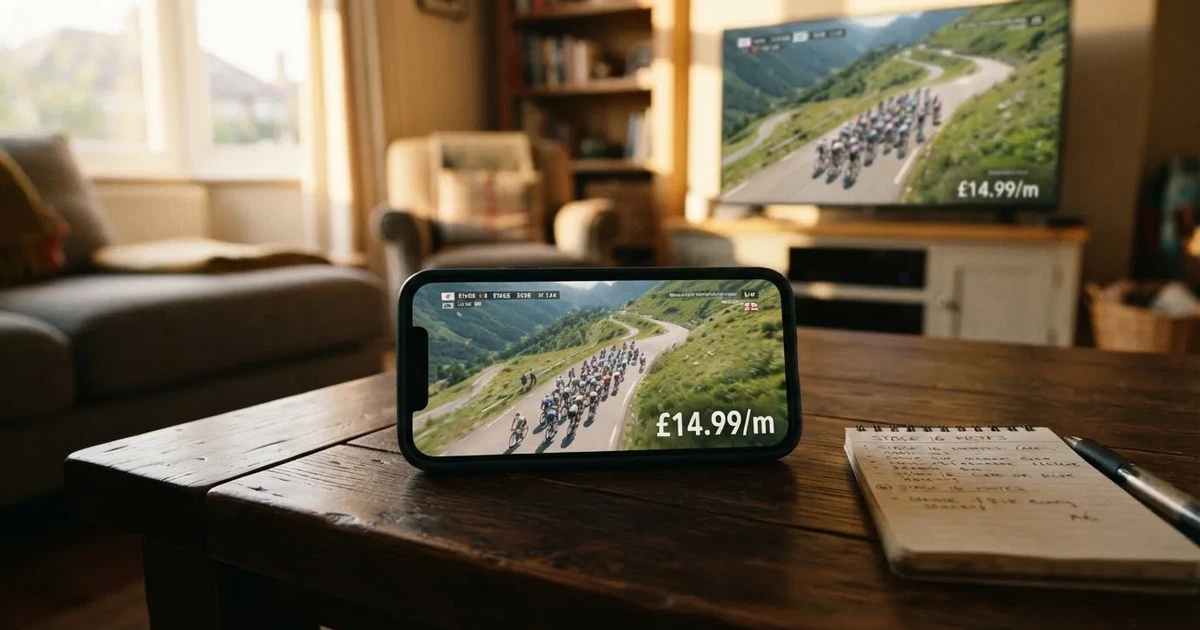
Three things shape every number on this page. First, the calendar: the Giro d’Italia (first held 1909), the Tour de France (1903) and the Vuelta a España (1935) run for 15 to 23 days each, with the leaders’ jerseys pink, yellow and red respectively, and stage results that are largely decided by breakaways rather than favourites. Second, the framework: every fixed-odds price on a licensed GB site carries an overround, and the size of that overround is the single biggest difference between a serious cycling book and a token one. Third, the regulation: no UK statute sets a permitted list of sports, but a Gambling Commission remote licence is required to take a single bet from a customer in Great Britain, and that licence does work in the background that a punt never sees — name and date-of-birth verification before deposit, GAMSTOP enforced across every app, and a 10x cap on bonus wagering since 19 January 2026.
The guide below ranks ten GB-licensed bookmakers on what each one offers a cycling punter, then walks through the regulation that holds the line above them, the markets and tournaments that fill a stage, the responsibility rules a cyclist’s bankroll is bound by, and the mathematics that decides what a winning bet pays back. The angle is cost — what a market, a bonus and a price actually take out of the bettor’s pocket — because in cycling that is the part most easily misread.
Cycling bookmakers ranked for 2026: who covers the sport best
The ten names below are licensed under a Gambling Commission remote operating licence for general betting on real events in Great Britain. Each is described by what it offers a cycling punter specifically, not by its overall brand pitch. A “no-data” entry in any cell means the cycling-specific figure is not stated on the operator’s own published terms; you are told how to verify it yourself rather than handed a guess. Compare the table, then read the individual reviews for the full picture.
| Brand | Gambling Commission remote licence | Terms position on cycling coverage |
|---|---|---|
| Bet365 | 55369 — bet365 Group Limited | Full Grand Tour and WorldTour coverage, Bet Builder+, Super Boosts, live streaming and in-play trackers across every cycling event listed |
| Unibet | 45322 — Platinum Gaming Limited, Gibraltar | Established cycling bookmaker operating since 1999; Grand Tour and WorldTour coverage under standard LCCP categories |
| 888sport | 39028 — 888 UK Limited | Full pre-match and in-play menu with Cash Out and Bet Builder; cycling markets confirmed but stage-level depth not documented |
| BoyleSports | 39469 — Boylesports Enterprise | Established sports book with Grand Tour coverage; cycling-specific market depth not documented on the operator’s terms |
| Betfair Exchange / Matchbook | 39504 — Triplebet Limited (remote betting intermediary) | Exchange-only model: punters price each other rather than taking a book; available for back and lay cycling markets where liquidity allows |
| DAZN Bet | 48756 — DZBT Limited | Deposits from £5 by debit card and selected e-wallets, no processing fees; cycling markets under standard licence categories |
| Midnite | 101839 — Midnite Limited | In-play, acca builder, popular accas and price boosts with stated max-stake limits; cycling markets listed at category level |
| Bet Ahoy | 100094 — Bet Ahoy Ltd | Established bookmaker; cycling-specific market depth not documented on the operator’s terms |
| Sporting Index | 27343 — Sporting Index Limited | Spread and fixed-odds book on the same platform; cycling spread markets subject to financial-spread-betting risk disclosure |
| Spreadex | 45843 — Spreadex Limited | FCA-regulated spread betting and Gambling Commission fixed-odds betting; cycling spread markets carry the spread-bet caveat that losses can exceed deposits |
Each operator’s cycling offer is the LCCP-defined menu under its general-betting standard licence. None of these brands is licensed solely for cycling; the Commission register lists each under categories (“remote general betting standard (real events)”), and cycling is then listed inside the operator’s own sportsbook when offered. A name that does not appear in the table is either unlicensed in Great Britain or not licensed for general betting on real events.
The page that follows works through the table; the reviews run in the same order.
Bet365 — depth, streaming and the deepest cycling in-play book
bet365’s standing in UK cycling comes from the depth of its menu across the three Grand Tours and the WorldTour, and from the operational features it layers over them. Bet Builder+ lets a punter combine two or more markets from one stage into a single bet, available pre-match and in-play; Super Boosts and daily Bet Boosts raise selected prices on specific outcomes; Winnings Boosts lift the return on selected Bet Builders and singles. The cycling markets inside that menu are stage-winner, GC outright, jersey markets, head-to-head and team classifications, plus live in-play pricing that settles in stages and a tracker that follows each rider’s position and gap second by second.
The cost question on a bookmaker of this size is rarely the headline margin — large fixed-odds books operate on tight overrounds on Grand Tour outright markets and looser ones on stage H2H props — and more often the stake ceiling in an in-play window. Where Bet Builder+ routes legs into a single bet, the combined overround is harder to read from the slip, and the published 10x cap on wagering applies to any attached bonus, not to a single Bet Builder+ stake.
Verdict: depth of cycling markets and live tracking make bet365 the most complete cycling book for a punter who is funding more than one stage at a time. The cost question is hidden in the compound price of a Bet Builder+ rather than the overround on a single market.
Unibet — long-established European sportsbook, standard GB licence
Unibet states that it has operated since 1999, and its UK site is operated by Platinum Gaming Limited in Gibraltar under Gambling Commission account 45322. The brand’s cycling offer is the established European cycling book: pre-match outrights on the Giro, Tour and Vuelta, stage markets, head-to-head and Grand Tour jersey markets, with in-play updated as the race sits. The licence categories on the Commission’s public register are general-betting standard (real events), the same scope as the rest of the table.
What Unibet does not publish is the overround on a specific cycling market, only a generic range across its sportsbook. A punter looking at the price that matters — the GC outright on the first Tuesday of the Tour — should read the price on the slip itself, not infer it from the brand’s general reputation.
Verdict: a credible cycling book for a punter used to European pricing and a GB-licensed account. The cost of an Unibet cycling bet is held within its published odds; the trade-off is a less layered in-play product than bet365’s tracker-led book.
888sport — full sportsbook with Cash Out and Bet Builder
888sport lists pre-match and in-play betting, Cash Out, Bet Builder, racing streams, BetFinder form tools, a live bet feed and daily boosted odds on its GB-licensed UK app. The cycling menu covers the three Grand Tours and selected WorldTour stage races, with the same general-betting standard licence category as every other operator in the ranking.
The published cycling-market depth is at category level (Grand Tour outright, stage-winner, jersey) rather than at stage-prop level, and Cash Out availability on a market is operator-state-dependent. A punter who sees the betting slip list “Cash Out” beneath a price is sitting in front of the operator’s live decision, not a guaranteed feature.
Verdict: a competent Grand Tour sportsbook for a punter who values the Cash Out and Bet Builder features more than cycling-specific market depth. The cost is set by the published odds rather than by the brand’s gesture on cycling.
BoyleSports — established UK and Irish bookmaker, Grand Tour coverage
BoyleSports’ GB-licensed sportsbook offers Grand Tour outrights and stage markets under general-betting standard (real events) licensing, and the brand’s UK customer offer — £20 in free bets on a £10 qualifying stake — is the kind of headline that earns a second look on the slip, not from the cycling menu. Cycling-specific market depth at stage-prop level is not documented in the operator’s terms.
Verdict: an established sports book that lists the three Grand Tours and Stage Race outskirts; a punter after stage-level H2H depth would read more carefully before placing.
Matchbook — exchange-only with back and lay on cycling
Matchbook is a betting exchange where customers bet against each other under a remote betting intermediary licence (a separate licence category from a standard book), with Bet Builder, multiples, in-play and live streaming of horse racing and greyhounds. The price a punter sees on a Matchbook cycling market is the lay side of another customer or the back side laid against the field, so the overround is whatever the market’s customers have built into their layers — there is no house margin in the same sense as a fixed-odds book, only the platform commission on net winnings.
A punter who has never used an exchange will find a different interface: back and lay prices that can be paused, unmatched bets that sit in the order book until a counter-party appears, and a commission on profits rather than a margin built into the price. Matchbook’s value on a cycling market comes from being able to “lay” — bet against — an outcome, which is the same trade as the bookmaker’s risk on a favourite and is not available on a fixed-odds book at all.
Verdict: a credible route for a cycling punter who already thinks in back-and-lay, and the only route to lay a rider to lose outright.
DAZN Bet — new-entrant sportsbook, focused deposit stack
DAZN Bet takes deposits from £5 by debit card, Apple Pay, Paysafecard, Trustly and Skrill, and from £20 by PayPal, with no stated processing fees. The cycling menu is set under the standard remote general-betting licence held by DZBT Limited (account 48756), the same scope as the rest of the table. The deposit minimum is the published headline rather than the cycling-specific offer, which the operator publishes at category level only.
Verdict: a recent-licence sportsbook whose cycling markets are best treated as the same menu as elsewhere, with the deposit method list being the clearest of its published cost lines.
Midnite — in-play acca builder, price boosts with stated caps
Midnite’s site cites Gambling Commission licence 101839, shows in-play events, an acca builder, popular accas and price boosts with stated maximum-stake limits. The welcome offer is the one every betting page notices: new customers who bet £5 or more on pre-match odds of EVS (2.0) or greater within 14 days of sign-up receive £25 in free bets and 50 free spins, valid for 7 days. The free-bet stake is not paid back on a winning free bet, and the 10x wagering cap on bonus funds applies across the new promotion rules in force since 19 January 2026.
Verdict: a cycling menu published at category level but strengthened by an in-play acca builder and a stated-maximum price boost; the cost trade-off is the £5 minimum qualifying odds (2.0) on the welcome bet and the 7-day free-bet expiry.
Bet Ahoy — established bookmaker with documented welcome offer
Bet Ahoy’s welcome offer — a £5 sports bet and a £5 acca on a £10 qualifying stake — is the kind of headline the operator’s app page lists openly. The cycling menu is the standard general-betting category on Commission account 100094 (Bet Ahoy Ltd), and stage-prop depth is not published.
Verdict: a bookmaker whose welcome is published, whose cycling depth is at standard-book level; cost is set by the published odds and the bonus-terms expiry, with the 10x wagering cap now statutory.
Sporting Index — spread and fixed-odds on the same platform
Sporting Index lets a customer switch between fixed-odds and spread betting, with in-play betting, a Bet Builder for football, auto cash-out and Multi-Markets on its GB-licensed app. On a cycling market a spread book quotes a spread for the rider’s stage time, the GC gap or another parameter; a position taken “long” wins if the rider beats the spread and loses if not, with no fixed ceiling on losses to the position size. Sporting Index’s published financial-spread caveat applies even on a cycling spread: losses can be larger than the deposit that funded them, which is the same wording Spreadex publishes for its FCA-regulated financial spread products.
Verdict: an established operator for a punter interested in the spread side of cycling markets; the cost framing is different from a fixed-odds book, because a spread position does not cap at stake.
Spreadex — fixed-odds and FCA-regulated spread on the same platform
Spreadex is regulated by the FCA for spread betting and by the Gambling Commission for fixed-odds betting under Commission account 45843; the FCA-regulated spread side carries the published statement that spread-betting losses can exceed the deposit. A cycling punter choosing Spreadex decides between a fixed-odds Grand Tour outright and a spread price on the same event, and the published FCA caveat is the operator’s own terms rather than editorial commentary.
Verdict: a credible combined-platform bookmaker for a cycling punter mixing fixed-odds outrights with spread positions; the cycling-specific cost story is the spread-bet loss ceiling, which is not the same ceiling as a fixed-odds stake.
How cycling markets work, and what they cost
A road cycling stage is not a Premier League match, and a cycling bet is not a football bet in slow motion. Three structural facts make the difference, and the cost of a cycling market sits inside each one.
The first is calendar density. A Grand Tour runs 21 stages over 23 days, with two rest days inside the window. A bookmaker’s outright market on the General Classification opens before Stage 1 and does not settle until Stage 21, and a punt placed at the prologue is exposed to 20 stages of withdrawal, crash and weather. The overround at the head of the GC market on the day before Stage 1 is the largest of the year, because the field is at its longest; it narrows as withdrawals shorten it. A punt placed late, after three of the favourites have abandoned, will look at smaller markets with overrounds that look like football rather than cycling.
The second is the three-bet minimum. Inside a fixed-odds bookmaker’s Grand Tour product, the typical layout for a serious cycling punter is three simultaneous books: a “stage winner” slip for today’s stage, a “GC top three” slip for tomorrow’s assault on yellow, and a “jersey” book that has been opened since the first rest day. Each one carries its own overround, and combining them into a multiple does not multiply the price but it does multiply the overround of the underlying legs. A Grand Tour acca that strings four stage winners together is exposed to four overrounds and four unrelated withdrawals, and a punter who treats a single stage as a fresh market is closer to the way the bookmaker’s been built.
The third is head-to-head construction. A stage “match” — Primoz Roglic vs Jonas Vingegaard at 1.90/1.90 — sits at a decimal pair that produces a specific overround. Taking that same pair as an example, the calculation the house runs in the background is: payout share = 1 ÷ (1/1.90 + 1/1.90) = 1 ÷ (0.5263 + 0.5263) = 1 ÷ 1.0526 = 0.9501, and the margin is 1 − 0.9501 = 0.0499, or about 5% of the stake. The 5% margin is the cost of taking either side of that H2H. A 10% margin on the same market is 1 − 1/1.111 each way, and the published numbers on a slip sit somewhere inside that range. A 5% margin is published as “payout share 95%” on an audit, and what a cycling punter watches for on a stage H2H is a margin above 6%, not a margin at all — the question is whether the published price is inside or outside what the rest of the field is charging.
A two-way market at 1.90/1.90 is a band on cost: it earns the bookmaker roughly 5p on every £1 staked, give or take a tenth, and that band is the closest the operator’s pricing comes to a statement of what cycling markets cost. Other cycling markets sit wider — a four-way outright on a GC top finish, a ten-rider stage-winner field, an evens-priced head-to-head on a Team time-trial — and the published overround rises with the field size. Stage-winner markets on a flat sprint stage routinely overrun beyond 110%, where the cost per £1 staked rises above 10p; Grand Tour GC outright overrounds typically sit between 105% and 115% in the week of the race. These are ranges the punter reads from the slip itself; no operator publishes its cycling market margining as a number.
Regulation in Great Britain: what the framework actually requires
The legal frame around online cycling betting in Great Britain is the same frame around any online betting, but the cycling market exposes some of it in sharper detail because the calendar is long and the markets are layered.
The Gambling Commission, the Gambling Act 2005, and the requirement at the point of consumption
The Gambling Commission is the regulator of the commercial gambling market in Great Britain under the Gambling Act 2005, which covers England, Scotland and Wales. Northern Ireland sits outside the Act under its own older law, and a GB-licensed operator does not, by virtue of the licence, regulate Northern Ireland; “GB-licensed” or “Great Britain licence” is the only accurate wording on this page. Since the Gambling (Licensing and Advertising) Act 2014 an operator whose remote facilities are used in Great Britain needs a Commission licence wherever it is based; an offshore licence is not a substitute, and a Curaçao, Maltese or Gibraltar corporate base does not change the requirement. The Commission’s public register — searchable by business name, trading name, domain or Commission account number — is the whole test of whether a brand holds a GB licence. No Commission-published count of “currently licensed operators” should be quoted without an access date, because the figure moves weekly.
The licence categories that cover a GB-licensed cycling book are remote general betting standard (real events) for a fixed-odds book, and remote betting intermediary for an exchange. Spread betting that falls inside financial regulation is licensed by the Financial Conduct Authority, not the Commission, and a customer taking a spread position at a dual-platform book sits under FCA rules for the spread side and Commission rules for the fixed-odds side.
What the licence does at the bettor’s end
The requirements a GB-licensed cycling book must run are mostly invisible on the slip and load-bearing on the punt’s safety. Name, address and date of birth are verified before the first deposit, and a customer who fails the check cannot deposit or gamble, including with a free bet or bonus. GAMSTOP, the national multi-operator online self-exclusion scheme, has been a mandatory licence condition for online operators since 31 March 2020 and applies across every brand in the ranking; minimum exclusion periods are six months, one year, five years, or five years with auto-renewal, and the period continues for seven further years after the minimum unless the customer asks GAMSTOP to lift it. Credit cards are banned for gambling in Great Britain since 14 April 2020, including e-wallet top-ups that source from a credit card, with debit cards and bank-based payment providers not covered by that ban.
The 10x wagering cap on bonuses has been in force since 19 January 2026. A £10 bonus with 50x wagering would have required £500 of qualifying bets; under the cap no more than £100 is required. Mixed-product promotions — offers that require gambling on two or more product types to claim the value — are banned under the same set of changes. Whether the cap or the product-mix rule applies to a free bet with no wagering condition is not established, and a free-bet value calculation in the FAQ treats the stake as not-paid-back on a winning free bet rather than as a bonus.
A financial vulnerability check (LCCP condition 3.4.4, in force since 30 August 2024) applies to licensed remote betting when a customer’s deposits minus withdrawals exceed £150 in a rolling 30 days (since 28 February 2025). It is a public-record check (bankruptcy, county court judgments), not an income check and not a credit reference check. Financial risk assessments (the “affordability checks”) are announced in a staged plan (Commission article of 7 July 2026) with no start date; “announced, staged, no start date” is the accurate framing.
Tax, duty and what the operator’s tax does to the price
The player pays no tax on betting winnings in Great Britain. That is general information rather than tax advice, and a professional punter who depends on the income should ask HMRC or an adviser. General Betting Duty is the operator’s tax on gross profits, currently 15%; from 1 April 2027 a new remote betting rate of 25% applies within it, while remote bets on UK horse racing, bets on self-service betting terminals, pool betting and in-person betting stay at 15%. Until 1 April 2027 the remote rate is 15%, and whether operators pass the duty change on to customers through lower odds is not established; the price the slip shows is the price the slip shows.
The point of going offshore, and why it costs the reader
An unlicensed online cycling book takes bets from customers in Great Britain and runs on its own house rules. The session has access to none of the protections a GB-licensed book has to carry: no GAMSTOP coverage, no Commission complaints route, no approved dispute-resolution body, no British consumer redress if funds are withheld. The 10x bonus cap and the £150 vulnerability check do not apply, which is sometimes held out as a benefit, and a customer who bans themselves with GAMSTOP across the eight licensed books still has the offshore book open in their pocket. The verbal trade is “more bonus, less protection”, and the cost is the punter’s, on the wrong side of an enforcement action.
Help lines and where a punter looks when the bet has stopped being fun
GamCare (National Gambling Helpline) and the NHS gambling clinics are the public-health routes for a cycling punter who has crossed that line; GambleAware funds harm prevention research and treatment services and links across the sector; Gamblers Anonymous runs peer-support meetings. The fitzwilliamsports home page, by way of example, links GambleAware, GAMSTOP and Gamblers Anonymous in its safer-gambling footer — that pattern is more or less universal across GB-licensed books.
The tournaments a cycling bettor follows in 2026
Cycling has a tighter calendar than most sports: three Grand Tours per year, the WorldTour underneath them, and the classics that lead into each Tour. The 2026 Tour de France ran from 4 to 26 July 2026, starting with a team time trial in Barcelona and finishing on the Champs-Élysées in Paris, over 21 stages and 3,245 km, with 23 teams; Tadej Pogačar (UAE Team Emirates, Slovenia) won for the fifth time. A reader of this guide on a date after 26 July 2026 is reading about a Tour that has finished; a reader on a date before 4 July 2026 is reading about a Tour that has not started. The arithmetic of a monthly tour guide is not one the page can sidestep.
The stage races underneath the three Grand Tours — Paris-Nice, Tirreno-Adriatico, the Dauphiné, the Tour de Suisse, the Volta a Catalunya — sit on the UCI WorldTour calendar, which was created in 2005 as the ProTour and renamed the WorldTour in 2011. Their markets sit under the same remote general-betting standard (real events) licence category as the Grand Tours, and a bookmaker’s “cycling” tab on a Tuesday in March lists them.
The three Grand Tours themselves are the Giro d’Italia (first held 1909), the Tour de France (1903) and the Vuelta a España (1935); UCI rules let a Grand Tour last between 15 and 23 days, and the leader’s jerseys are pink (Giro), yellow (Tour) and red (Vuelta). Each Grand Tour sits inside its own three-week window, and the day-rest-day rhythm is fixed. Outside the road season, the World Championships sit in their late-summer slot, and a one-day classic every Sunday from late February to mid-October slots between stages.
The Tour de France in particular produces a punt volume that no other three-week event in any sport can match, and a bookmaker’s Tour pricing gets tighter (smaller overrounds) the deeper the calendar pulls. Stage-one overrounds on a Tour outright are widest, GC overrounds tighten as the field shortens, and a punt in the third week is trading against a market the operator has already moved. A cycling punter who treats the Tour as a fresh book each week is closer to the bettor’s edge than one who opens a single slip in Stage 1 and waits for the podium in Paris.
Responsible gambling on a cycling calendar
A cycling calendar is longer than most punts admit. A Grand Tour runs 21 stages over 23 days with two rest days, and a punt who enters Stage 1 thinking about a single stake often enters Stage 7 with a multi-stage acca growing on the slip.
The protectives the licence builds around the bet are aimed at the calendar, not the sport. GAMSTOP is the cross-operator online self-exclusion mechanism, and a six-month period covers a cycling year. A deposit limit set by the customer against a rolling 30-day window catches a calendar, not a Sunday morning race. The financial vulnerability check at a £150 deposits-minus-withdrawals threshold is the regulator’s load-bearing customer-protection line, and a customer who crosses it on Day 11 of the Tour is the regulatory target the rule was built to see.
The schedule the regulator has published beyond the £150 check is a staged set of further affordability checks (the “financial risk assessments” of the press), announced with no start date as of 7 July 2026. State “announced, staged, no start date” and not “in force”. Deposit limits set by the regulator’s Remote Technical Standards (RTS 12) have had a first phase since 31 October 2025; a second phase was postponed to 30 September 2026, and whether it is live in 2026 is not established. State “postponed to 30 September 2026” as the published timeline.
Helplines: GamCare (National Gambling Helpline), GambleAware, NHS gambling clinics, Gamblers Anonymous. The pattern across GB-licensed sites is to link these in the safer-gambling footer — that link and that footer are the legal minimum a licensed book is required to carry on every page.
Markets and how each one prices
Cycling markets inside a GB-licensed bookmaker’s product read across the same menu. The defaults are: stage winner on today’s stage; General Classification outright (the rider leading the race after Stage 21); points classification outright (the rider leading the points standings); King of the Mountains outright; young rider classification; team classification; head-to-head on a Stage (Roglic vs Vingegaard); head-to-head H2H on the GC (three-pointer match); and jersey markets (which rider wears yellow tonight).
In-play cycling pricing has tightened noticeably across the past five years, in part because the tracking data has tightened. A bookmaker’s live book now updates after each summit finish within seconds rather than minutes, and a stage-winner market that runs from 110% overround at the gun to sub-105% as the break forms is now a normal stage. The cost story on an in-play cycling book is the liquidity around the favourites: a flat sprint stage has tight overrounds because the field is small and the favourites obvious; a mountainous stage has wider overrounds because the field is large and the favourites no longer obvious.
The bet-builder layer on cycling is the operator-state of the art. Bet365’s Bet Builder+ combines markets from one event into a single bet; 888sport’s Bet Builder sits inside the same product space. The cost of the feature is the compound overround: a builder whose price looks competitive on the slip is built from at least two underlying markets, each with its own margin, and the compounded margin is what a serious punter reads on the slip rather than the headline price.
Outside the road season, track cycling, cyclo-cross and BMX sit on the same general-betting standard (real events) licence category at the operators who choose to list them. Most GB-licensed books do not list them at a meaningful depth; a cycling punter looking for a specific track event should check the operator’s cycling tab rather than trust a “cycling” book heading.
Promotional offers and what a cycling punt should read first
A welcome offer on a cycling book reads the same way as a welcome offer on any book. Midnite’s £25 in free bets on a £5 qualifying pre-match stake at minimum odds of 2.0 inside 14 days, valid for 7 days; Bet Ahoy’s £10 in free bets split across a £5 sports bet and a £5 acca on a £10 stake; BoyleSports’ £20 in free bets on a £10 stake for UK customers. The shape is consistent: a small qualifying stake at a defined minimum price, a fixed total free-bet value, and a defined expiry.
What to read first is the 10x wagering cap on bonus funds in force since 19 January 2026. A £10 bonus at 50x would have needed £500 of qualifying bets; under the cap no more than £100 is needed. The shape matters because a cycling punter faced with a bonus faces two costs: the deposit that funds the qualifying stake and the wagering that wears the bonus down through the rollover. A punt who bets on cycling markets at 1.30 prices to clear 30x turnover is closer to the £100 worst-case on the cap than a punt who bets on cycling markets at 1.85 prices; both routes turn the bonus back into balance, but the cost to the punt is the expected loss over the rollover, not the headline value of the free bets.
The mixed-product promotion rule — banning offers that require gambling on two or more product types to claim the value — closes the “bet on cycling, get free spins” type of bundle. A cycling-only welcome is now the only legal shape on a GB-licensed book.
How a Grand Tour bet is built and what it costs at the slip
A cycling punt on the GC outright of a Grand Tour, read end-to-end, looks like five steps and one cost.
The punt opens an account at a GB-licensed bookmaker with a Commission-licensed category that covers “remote general betting standard (real events)”, verifies name, address and date of birth before the first deposit, and confirms GAMSTOP is not active. A credit card is not an option under the LCCP; debit cards, bank transfers, Apple Pay, Trustly and Skrill are the typical payment stack at operators like DAZN Bet.
The punt sees the GC outright market opened at the team presentation, reads prices on a slip that may publish overrounds anywhere between 105% and 115% depending on the field. A specific overround is a calculation, not a published number; a punt who reads overrounds knows the calculation: payout share is the inverse sum of decimal odds, margin is 1 minus payout share.
A specific case: a two-way head-to-head at 1.90/1.90 produces payout share = 1 ÷ (0.5263 + 0.5263) ≈ 0.9501, margin ≈ 0.0499, or about 5%. The 5% is the cost on every £1 staked on either side; a punt who moves that pair to 1.85/1.85 reads margin = 1 ÷ (0.5405 + 0.5405) ≈ 0.9250, margin ≈ 0.0750, or about 7.5%. The narrower pair cost the punt less, even though neither side picked; the operator earned more.
The punt places a single bet at the slip: stake × decimal odds = return (the winnings plus the stake returned), stake × (odds − 1) = net profit. A £10 stake at 4.00 returns £40, profit £30; a £10 stake at 6.00 returns £60, profit £50. Decimal odds do not have separate place or each-way semantics; an each-way bet on a non-cycling sport, where the place terms are stated as a fraction of the win, is two equal-stake bets and the stake doubles.
The cost resolves against the slip. A winning bet returns the stake plus the winnings on the slip; the published overround is already inside the price and is not refunded. A losing bet costs the stake and nothing else. There is no “payout for choosing the wrong side” on a fixed-odds single.
The bonus conditions, where the bet was funded by a bonus, run on the published 10x cap and the standard expiry. A free-bet value on a winning free bet is not paid back; a winning free bet at 4.00 with a £5 stake returns £20 in profit, not £25 (which the bonus promised), and the bonus’s monetary value on this particular bet is £5 × (4.00 − 1) ÷ 4.00 × (the market’s payout share), accounting for the overround the market already carries.
A short reading guide for the cycling bookmaker ranking
The ten names above are not all built for the same punter. The cycling punter who backs an outright on the first rest day of the Giro is a different punter from the one who lays a rider to lose on a Tour stage at an exchange, and the table’s third column is the operator’s terms statement on cycling coverage rather than a judgment of which operator is best.
The cycling punter’s three practical reads on a ranking like this are:
The bet depth on the calendar they fund. A bookmaker who lists the Giro, the Tour, the Vuelta and a handful of WorldTour stage races covers the season; one who lists only the three Grand Tours covers only the peaks. Stage-prop depth at H2H level is the next layer down, and the operator’s terms do not publish that depth; the slip is the test.
The bet-builder shape on the sport. Bet365’s Bet Builder+ is published; the rest of the table has Bet Builder at generic feature level. A cycling punt who builds tour-stage combinations should check the bet-builder menu before opening the qualifying deposit for a welcome offer.
The exchange-style book for laying. Matchbook is the only exchange in the table, and laying is the only way a fixed-odds punter can match the bookmaker’s risk on a favourite. The commission-on-net-winnings pricing is built into Matchbook’s terms rather than into the displayed price, which is the reverse of how a fixed-odds book reads.
A punter who notices a cycling-specific cost buried inside the ranking should look first at the operator’s “safer gambling” footer — GAMSTOP, GambleAware, GamCare, Gamblers Anonymous — and at the Commission’s public register for the account number and the “remote general betting standard (real events)” licence category. The two together tell the customer the operator’s road has been audited, and that the framework around the bet is the framework Great Britain has built.
Five points the cycling punter should keep
A betting guide that does not know what the bettor is using the guide for is not a betting guide. Five specific points that recur across cycling markets and across the ten operators above:
A Grand Tour outright is a long-term book. A punt who enters at Stage 1 and waits for the podium in Paris is trading against 20 days of withdrawal, crash and weather. The overround at the start is wider; the field later is shorter; the price at Stage 7 is not the price at Stage 1.
A two-way H2H is the cheapest cycling market on a slip. The mathematical band on cost is around 5% to 7.5% margin at 1.90 and 1.85 respectively; the wider the overround, the more the operator earns on the slip. A punt who reads overrounds knows which operators price H2H matches tighter than the rest.
A Bet Builder multiplies overrounds, not prices. A Bet Builder+ on a stage combining stage-winner and first-Young-Rider-Overall combines two underlying overrounds, and the compounded margin is closer to a sum than a product. The compounded cost is what the punt pays in expected loss over a Rollover.
A credit card is not an option at a GB-licensed book. The LCCP closed that route on 14 April 2020, and a debit card, bank transfer or e-wallet funds the deposit. A punt who finds an unlicensed book accepts a credit card can do so; the same punt also gives up GAMSTOP coverage and the Commission’s dispute route.
A welcome offer is a cost-and-rollover trade, not a free bet. The free-bet stake is not paid back on a winning free bet, the 10x bonus cap has been in force since 19 January 2026, and a punt who reads “£25 in free bets” reads 50% of it in expected-overround cost across the wagering turnover.
Frequently asked questions
How does a return on a cycling bet work?
The return on a fixed-odds cycling single is stake × decimal odds, with the stake included. A £10 stake at decimal odds of 4.00 returns £40, with £30 in net profit. Decimal odds convert from British fractional odds as a/b → a ÷ b + 1; the British 5/1 becomes 5 ÷ 1 + 1 = 6.00 in decimal. A combination bet multiplies the decimal odds of each leg into one price, and the stake multiplies the combined price.
Can a cycling bet be placed on every Grand Tour and WorldTour stage race?
Yes, at every GB-licensed bookmaker in this ranking under the standard remote general-betting (real events) licence. The market depth at stage-prop level varies; the headline list of Giro, Tour, Vuelta and the WorldTour stage races is published, but H2H match listings on a specific stage are at the operator’s discretion and the slip is the test.
How does a bettor check whether a bookmaker holds a Gambling Commission licence?
The Commission’s public register is searchable by business name, trading name, domain or account number. A GB-licensed cycling book appears under the categories “remote general betting standard (real events)” or, for an exchange, “remote betting intermediary”, with the licence number and the licence holder’s full corporate name listed against it. The register is the whole test; no “list of GB-licensed bookmakers” is published separately by the Commission, and no number of currently licensed operators should be quoted without an access date.
What does the bookmaker’s margin look like in the odds?
A two-way market with decimal odds of 1.90 on each side has an overround of about 5% (1 ÷ (1/1.90 + 1/1.90) ≈ 0.9501 payout share, leaving a margin of about 0.0499). The margin is what the operator earns on every £1 staked. A 1.85/1.85 pair produces a margin near 7.5%; a 1.70/1.70 pair near 12%. The narrower the price, the closer to the operator’s cost, and the larger the field on a multi-runner market, the wider the margin the operator builds.
How do 5/1 fractional odds become 6.00 in decimal?
The British fractional price a/b becomes decimal odds of (a ÷ b) + 1. The 5/1 of a stage winner becomes 5/1 + 1 = 6.00; the 11/4 of a head-to-head becomes (11 ÷ 4) + 1 = 2.75 + 1 = 3.75; the evens (1/1) of a tight match becomes (1 ÷ 1) + 1 = 2.00. A British odds-on (shorter than evens) price produces a decimal odds under 2.00; a decimal of 1.50 corresponds to 1/2, the kind of price that a short-priced favourite carries on a sprint stage.
Combat & motorsport – Accumulator
Content created by the «Accumulator» team
