
What Is a Super Heinz Bet? The 120-Line Accumulator Explained
 Available in US
A Super Heinz is one of the heaviest full-cover bets a bookmaker accepts without any singles in the mix. Pick seven outcomes across seven events and you are on the hook for 120 separate bets at once: 21 doubles through to the single seven-fold accumulator. Every leg has to win for the seven-fold to pay out, but the smaller combinations provide a partial return when one or two selections let you down. The structure rewards breadth — the more winners you collect, the larger the multiplier applied to surviving lines — and it punishes the unwary, because the total stake multiplies by 120 before a ball is kicked or a horse is loaded.
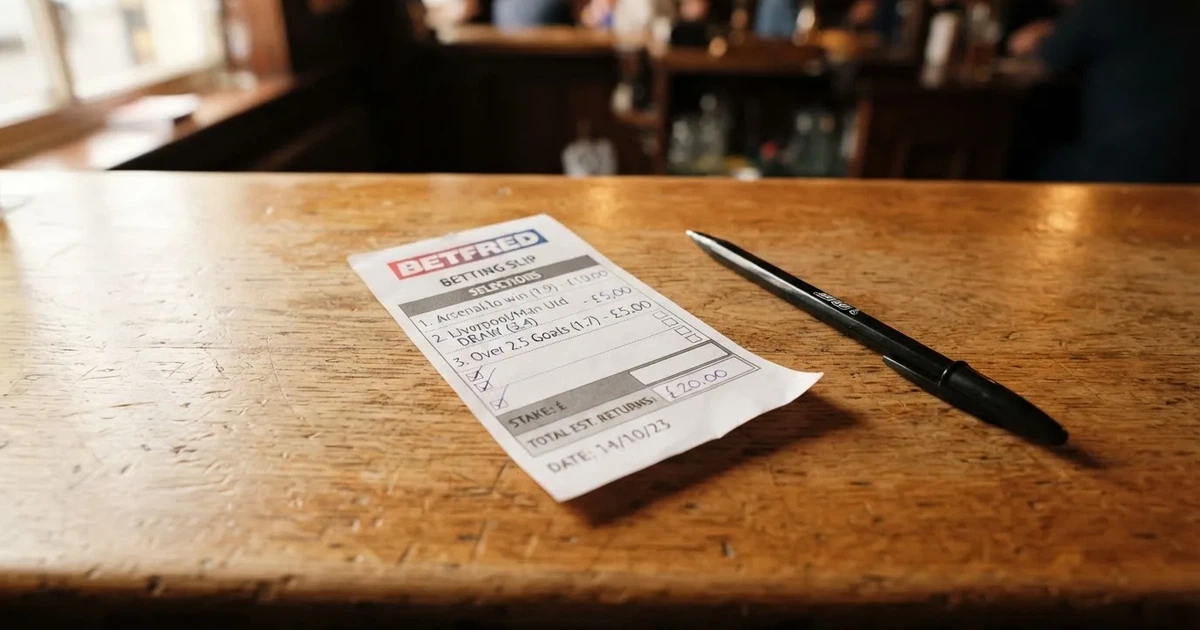
This page works the consequences of that structure. A punter who comes in cold on a Super Heinz sees a number with three zeroes and a marketing line that calls the bet “exciting”; what follows puts a price on every line, names the points where bookmakers differ on how a void selection is treated, and shows where the value sits once the bookmaker’s margin is stripped out. The licensed operators reviewed below all hold a Gambling Commission remote licence, and their terms on this bet type are summarised alongside the headline numbers. The UK side of the market — fractional odds in the betting shop, decimal on the app, no tax on winnings for the player — frames every comparison that follows.
Data current as of 26 October 2026 and checked against the Gambling Commission’s public register of remote operating licences.
How a Super Heinz Bet Is Built
A Super Heinz takes seven selections and treats every combination of two or more as a separate bet. The 120 figure is fixed: it is the number of distinct multiples of size two through seven that can be drawn from a set of seven.
Anatomy of the 120 Lines
The breakdown matters because the cost scales with it and so does the payout profile. The 21 doubles are the most resilient part of the structure: pick seven short-priced favourites and even two or three winners pay something through a double. The 35 four-folds and 35 trebles are the middle ground — these are the lines that pay the bulk of a typical return when four or five selections win. The single seven-fold at the top of the pile is a long shot by construction; with seven legs that need to land, it pays the headline-grabbing figure when it does and zeroes out in most cards.
The mix is also what makes the Super Heinz heavier than a Heinz and lighter than a Goliath. A Heinz covers six selections and produces 57 lines. A Goliath covers eight and produces 247. The Super Heinz lands in between as the standard “serious bettor” full-cover wager, the kind a price-sensitive punter reaches for when they want exposure to several events without tying the whole stake to one accumulator that has to win outright. The licence holder you choose to place it with does not change the structure — the 120 lines are arithmetic — but the settlement rules around voids, non-runners and Rule 4 deductions differ from bookmaker to bookmaker, and those differences show up in what you actually get paid.

What Happens When a Selection Fails or Is Voided
Every operator settles the 120 lines individually, so a single loser reduces the return to whatever lines it sat on. Three losers typically leave a handful of doubles paying out, which can return a fraction of the original outlay or even fall short of it. Five losers leave only one or two doubles standing, and the bet becomes a question of whether those two lines paid enough to clear the £120-per-unit outlay. The maths of the structure means that the Super Heinz relies on a hit rate that is unusual in accumulators — bookmakers and tipsters who track records report that an average punter needs at least five of seven selections to win for the bet to show a meaningful profit, and four out of seven is generally break-even at best.
Void selections behave differently from losers across the licensed set. The standard approach is that a void leg is treated as a winning selection at odds of 1.00 (decimal), which knocks the bet down a tier. A Super Heinz with one void becomes the equivalent of a 120-line bet on six selections, with all the lines that included the void settled at the reduced odds. A treble in the original structure becomes a double if one of the three legs is voided, and an accumulator settles on whatever number of selections remain once voids are stripped out. That is the rule in normal commercial terms at the major UK bookmakers and the rule the pages of those operators state plainly: voids do not cancel the bet, they downgrade it. Non-runner rules are separately published and are most relevant on horse racing, where a horse that comes under starter’s orders and is then withdrawn triggers the rule; an ante-post withdrawal does not.
Rule 4 deductions apply when a horse withdraws from a race in the moments before the off, leaving the bookmaker with a market that no longer reflects the field. The deduction is taken from the gross winning odds of every horse in the affected race, and the rate is published in tiers tied to the withdrawn horse’s price. The licensed bookmakers reviewed here all use the same Rule 4 table, though the moment at which a withdrawal triggers the deduction can vary — the safest practice is to check the operator’s terms page before placing a horse-racing leg.
Why the Structure Beats a Straight Accumulator on Hit Rate, and Loses on Stake
A standard seven-fold accumulator pays the most per pound staked because the entire stake rides on every leg winning. A Super Heinz pays less per pound because the £120 of unit stakes is split across 120 lines, but it pays on more outcomes. A punter who is confident about four or five legs but unsure about the others has a structural reason to prefer the full-cover bet: the four-fold lines and five-fold lines pay out without needing the seventh leg to land, and that cushion is what the straight seven-fold cannot offer. The cost is a unit stake that is ten times larger for the same headline return when all seven win, because 119 of the 120 lines have paid out before the seven-fold settles.
For readers used to Lucky 15s and Yankees, the Super Heinz is the natural escalation: more selections, more combinations, a much higher cost, and a different shape of payout curve. The Lucky 15 includes four singles and pays something on every event; the Super Heinz has no singles and pays nothing on a card with zero winners. That distinction matters when sizing the bet. A punter who has been running £1 Lucky 15s at a £15 total stake cannot simply scale up to £1 units on a Super Heinz — the £120 total outlay is a different kind of commitment, and the marketing line that calls a £1 Super Heinz “only £120” is the kind of phrase that lands a reader in trouble when the seven-fold fails.
A Worked Example: Payout on a £2-Per-Line Super Heinz
Numbers on this page are illustrations, not quoted prices. The selections and prices below are picked to make the structure easy to read; they are not predictions, not tips and not what any one of the operators reviewed will price at the time of reading.
Take seven football selections at illustrative decimal odds of 1.50, 2.00 and 2.50 (research gives these as the band that research treats as illustrative, alongside evens at 2.00 and 6/4 at 2.50). Staking £2 on each of the 120 lines, the total outlay is £240. The return on any single line is the unit stake multiplied by the decimal odds of that line: a double on the 1.50 and 2.00 legs returns £2 × 3.00 = £6 if both win, and a treble that adds the 2.50 leg returns £2 × 7.50 = £15. The seven-fold at the top of the pile is the product of every leg: in a hypothetical card where all seven legs return 1.50/1, the seven-fold pays £2 × 17.09 = £34.17 from that single line, with the rest of the return built from the smaller combinations.
The £10 accumulator alternative sits beside this for comparison. Staking £10 on a straight seven-fold at the same illustrative odds gives a return of £10 × (1.50 × 2.00 × 2.50 × …) — the product of seven legs. If the average leg in a varied card comes in around 2.00, the seven-fold returns £10 × 128 = £1,280 on a winning card, against a £10 outlay. The same card as a Super Heinz at £2 per line returns far less per pound staked on the seven-fold but pays on six-folds, five-folds and lower combinations too — and that is the trade-off in one sentence. The straight accumulator is a lottery ticket; the Super Heinz is a structured bet whose return depends on the number of winners. Both are valid products; the question is which shape of curve a punter wants to buy. What the seven-fold pays back on a win is the only number the marketing line ever quotes, and it is the one number that is least informative about how the bet actually performs in practice.
The exact return on a winning bet is stake × odds for any single line. The net profit is stake × (odds − 1) for that line. For a combination bet the odds of the legs multiply into one price, and the unit stake is multiplied by that combined price for the line’s return. The reader who carries those three relations off the page can rebuild any return calculation a betting slip or a bookmaker’s own calculator shows, and that independence from the operator’s own tools is what the rest of this page builds towards.
The Bookmaker’s Margin and Why It Matters for a Super Heinz
Every price a bookmaker offers is built backwards from a payout share. A 1X2 market with decimal odds of 1.91/3.41/4.50 on a football match pays out the equivalent of about 95% of the stakes on a winning card across all outcomes — and keeps the other 5%. That 5% is the overround, also called the margin or the vig. It sits inside every line of the bet, which is why the Super Heinz compounds it: a 5% margin into each leg means the seven-fold, which is the product of seven margins, carries an effective margin well above 5% even when the individual markets look competitive.
Reading the Margin Out of the Odds
The mechanical test is straightforward. Take all the decimal odds on one market — the home win, the draw and the away win — and compute the payout share as 1 ÷ (1/odds₁ + 1/odds₂ + 1/odds₃). The margin is 1 minus that share. On a market with odds of 1.91, 3.41 and 4.50, the payout share is 1 ÷ (0.5236 + 0.2933 + 0.2222) = 1 ÷ 1.0391 = 0.9624, and the margin is 3.76%. On a less competitive market at 1.80, 3.20 and 5.00, the share is 1 ÷ (0.5556 + 0.3125 + 0.2000) = 1 ÷ 1.0681 = 0.9362, and the margin is 6.38%. The number is invisible on the betting slip; the maths makes it visible, and the difference between a 3.76% margin and a 6.38% margin is the difference between a sharp bookmaker and a soft one.
The compounding effect on a Super Heinz is what turns a 5% margin into something that bites. A seven-fold of markets with a 5% margin does not have a 5% margin on the seven-fold; it has an effective margin closer to 1 − 0.95⁷ = 30.2% on the seven-fold alone, before any bonus or concession is layered in. The Super Heinz is mathematically a worse proposition than the average of its legs because of this compounding. The punter who picks seven legs at average odds of 2.00 across the board pays the bookmaker roughly 30% of the expected stake in margin if the seven-fold wins, before considering the smaller combinations. That is the price of the full-cover structure, and it is the reason no tipster can responsibly promise a steady return.
What a “Boosted Odds” Offer Really Does
The licensed operators reviewed below all run some form of price boost or enhanced odds on accumulators. The marketing language calls it “free” or “extra” value; the arithmetic is the same shape as every margin: the bookmaker is offering a price above the true market price and taking the difference back through the rest of the bet, through the cap on the stake, through the eligibility rules that exclude certain markets or combinations. A Super Heinz is rarely eligible for a single-leg price boost, but it can be eligible for an accumulator-style boost applied across the smaller combinations. The reader who takes a boost without checking which lines are included is buying back at the bookmaker’s preferred margin, not the market’s. The reader who checks the terms and runs the boost against the underlying margin sees the picture clearly.
Where the Value Sits on a Super Heinz
The honest answer is that the value is uneven across the 120 lines, and the unevenness is what determines what the bet pays. The doubles and trebles at the base of the structure carry margins closer to the per-market margin — five-ish percent on a competitive market — because they are short combinations. The seven-fold carries a compounded margin of 30% and up on a standard card. The punter who picks seven strong favourites and prices them carefully finds their value in the lower combinations, not in the headline seven-fold payout. The punter who picks seven long shots hopes for the seven-fold and accepts that most cards will pay nothing — a legitimate way to bet, but one that requires a bankroll that can absorb a long losing run.
The relationship between margin and stake size is what this page comes back to. A £2-per-line Super Heinz is a £240 commitment that pays the bookmaker roughly 5% of every line on average. A £1-per-line Super Heinz is a £120 commitment at the same percentage. The percentage does not change with stake; the absolute amount the bookmaker keeps does. That is the most useful sentence on this page for a reader who is sizing their first full-cover bet.
Top UK Bookmakers for Super Heinz Bets
The comparison below covers ten operators licensed by the Gambling Commission for remote betting in Great Britain. Each holds an account number on the Commission’s public register, which is the test of who a licensed bettor can place money with under the Gambling Act 2005. The table is followed by a per-operator write-up of what the licensed operator’s own terms state on this bet type — a non-runner rule, an each-way place fraction, a stake cap — and a verdict on who the operator suits.
Super Heinz Coverage Across the Licensed Set
| Brand | Licence holder & account | Position on Super Heinz settlement |
|---|---|---|
| Ladbrokes | LC International Limited · account 54743 | Full-cover multiple bet available on the standard seven-line structure |
| BetMGM | LeoVegas Gaming PLC · account 39198 | Multiples offered through the sports app with a Bet Builder for same-game selections |
| Fitzdares | Fitzdares Limited · account 400 | Premium full-cover product on racing, football and American sports with in-play live odds |
| Kwiff | Eaton Gate Gaming Limited · account 44448 | Multi bets eligible for the Supercharge boost with stake caps |
| Matchbook | Triplebet Limited · account 39504 | Exchange-style multiples and Bet Builder on the back-and-lay model |
| Betfred | Petfre (Gibraltar) Limited · account 39544 | Bet Builder plus multiples on football, racing and a broad sportsbook |
| QuinnBet | QuinnBet (Gibraltar) Limited · account 61011 | Multiples accepted; free-bet terms exclude Trixies, Patents and Yankees but not the Super Heinz |
| NetBet | Netbet Enterprises Limited · account 39170 | Bet Builder with dynamic odds and multiples on the standard sportsbook |
| Octobet | Octopus Game Limited · account 62545 | Multiples supported on racing and football with Best Odds Guaranteed on UK and Irish racing |
| Fitzwilliam Sports | SBKI Limited · account 48760 | Multiples priced off Oddschecker averages on a streamlined racing-and-football product |
Ladbrokes
Ladbrokes operates the Ladbrokes brand out of LC International Limited, a single licensee that also runs Coral; the two are not independent operators and their sites share infrastructure. The remote licence is account 54743 on the Gambling Commission’s public register. The standard Super Heinz is offered on the seven-selection full-cover structure, with multiples settled line-by-line and each-way betting available on the racing and greyhound sports where the each-way element is meaningful. Best Odds Guaranteed applies on UK and Irish horse racing, which is a concession that pays out at the bigger of the price taken and the starting price if the horse wins. Acca Boosts and odds boosts on horse and greyhound bets are layered over the multiples in a way the licensed operator describes on the promotions page, and a punters should treat those offers as concessions with terms attached, not as value-added extras without cost.
The Super Heinz is one of the heavier full-cover bets on the platform and the licensed operator settles it under its published multiple-bet terms. A void selection knocks the bet down a tier in the standard commercial way, and the licensed operator’s terms page is the place to confirm the current rule on Rule 4 deductions on horse racing. Ladbrokes suits a bettor who wants a full sportsbook with a strong racing product, a Bet Builder for same-game multiples, and the convenience of a large licensed operator that has been on the UK high street for decades.
BetMGM
BetMGM in the UK runs under LeoVegas Gaming PLC, account 39198 on the Commission’s public register. The sportsbook sits alongside an online casino under the same licence, and the Bet Builder feature is built into the football product specifically. Multiples are accepted on the standard seven-line full-cover structure, and the licensed operator settles voids and non-runners under its published terms, which are consistent with the rest of the UK market.
BetMGM suits a bettor who wants a polished mobile app, a deep Bet Builder for football and a casino tab in the same pocket, and who is comfortable with the standard commercial settlement rules on multiples. The operator settles Super Heinz bets as standard combinations under its published remote-betting terms, consistent with the wider market approach.
Fitzdares
Fitzdares is a premium product positioned on racing, football, tennis, rugby, cricket, golf and American football, with cash out, accumulators, Lucky 15s and ante-post markets, plus in-play live odds. The licence holder is Fitzdares Limited under account 400 on the Commission’s public register — one of the older remote licences in the UK and one of the smaller operator footprints. The Super Heinz is settled as a standard seven-line full-cover bet; voids and non-runners are handled under the published terms, and the racing-heavy product means Rule 4 deductions are a real consideration for any horse-racing leg.
Fitzdares suits a bettor who wants a smaller, premium bookmaker with strong ante-post racing, a curated sportsbook rather than a wall of markets, and a willingness to pay a slightly sharper price for the privilege. The licensed operator does not chase the price-boost model; it prices on the underlying market.
Kwiff
Kwiff is operated by Spryme Ltd, a separate commercial entity from the licence holder Eaton Gate Gaming Limited under account 44448 on the Commission’s public register. The brand’s distinctive feature is “Supercharge”, a mechanism that boosts the odds on a bet after it has been placed — for example, a bet struck at 2/1 can come back as a Supercharged 20/1, on singles or multi bets across any sport, with stake caps that the licensed operator states on the Supercharge terms page. A Super Heinz struck under Supercharge is one of the more interesting value propositions in the UK licensed set, because the boost applies to the entire bet including the smaller combinations.
Kwiff suits a bettor who is comfortable with a randomly-applied boost and the stake caps that come with it, who wants a clean mobile-first product and who reads the terms page for the boost before relying on it. The licensed operator’s published terms are the test of which selections and which multiples are eligible.
Matchbook
Matchbook is a betting exchange, which means customers bet against each other rather than against the bookmaker. The licence is a remote betting intermediary licence, account 39504 on the Commission’s public register, held by Triplebet Limited. A betting exchange is structurally different from a fixed-odds bookmaker: there is no single house margin, because each backer’s price is matched against a layer’s price, and the exchange’s commission is taken on net winnings rather than baked into the odds. The Super Heinz on an exchange is built from the same 120 combinations, but each line is matched against another customer rather than priced by the house.
Matchbook suits a bettor who wants exchange-style prices on the multiples, who understands the back-and-lay model and who is willing to accept that not every line will be matched at the price they want. The exchange model handles each of the 120 lines individually, meaning settlement is consistent but the price discovery differs from a traditional bookmaker.
Betfred
Betfred operates under Petfre (Gibraltar) Limited, account 39544 on the Commission’s public register, with a sportsbook that includes Bet Builder, Sub Switch (substituting the slot in a Bet Builder), Racing Post data, Extra Places on racing, live casino and bingo on the same app. The Super Heinz is offered as a standard seven-line full-cover multiple, with Bet Builder legs admissible under the licensed operator’s published terms where the underlying selections are eligible.
Betfred suits a bettor who wants a high-street bookmaker with a Bet Builder, an Extra Places concession on racing and a deep sportsbook across football, racing, greyhounds and the major US sports. The licensed operator’s position on multiple-bet settlement is the standard commercial one and is consistent with the rest of the UK market.
QuinnBet
QuinnBet operates under QuinnBet (Gibraltar) Limited, account 61011 on the Commission’s public register. The free-bet terms on the platform are unusually explicit: free bets are valid for seven days from credit, can be used on any market at decimal odds of 1.50 or greater, are capped at maximum odds of 50/1, and explicitly exclude Trixies, Patents and Yankees — but not the Super Heinz. The Super Heinz is therefore a permitted market on free-bet stakes, and the minimum price applies leg by leg as on every other licensed operator. Stakes are settled under the standard commercial rule for multiples.
QuinnBet suits a bettor who wants clear free-bet terms, who plans to use free bets on multiples and who accepts that Trixies, Patents and Yankees are off the menu even though a Super Heinz is not. The licensed operator’s published free-bet terms are among the most clearly written in the UK licensed set, which is the operator’s most useful feature on this product.
NetBet
NetBet operates under Netbet Enterprises Limited, account 39170 on the Commission’s public register, with a sportsbook that offers Daily Boosts, Profit Boosts and free bet offers, a Bet Builder with instant dynamic odds and sports stats for the major leagues. The Super Heinz is offered as a standard seven-line full-cover multiple, with multiples eligible for the boost mechanisms the licensed operator describes on the promotions page.
NetBet suits a bettor who wants a Bet Builder with dynamic odds, who is comfortable with daily price boosts and who reads the terms page for the boost before relying on it. The licensed operator’s position on multiple-bet settlement is the standard commercial one.
Octobet
Octobet operates under Octopus Game Limited, account 62545 on the Commission’s public register, with Best Odds Guaranteed on UK and Irish horse racing up to £150 per customer per race, which is a stake cap that a bettor should note before staking a Super Heinz that includes racing legs. Multiples are accepted on the standard seven-line full-cover structure, and voids and non-runners are settled under the published terms.
Octobet suits a bettor who wants Best Odds Guaranteed on racing with a £150-per-race cap and a clean sportsbook on football and the major US sports. The licensed operator’s racing product is its distinguishing feature, and a Super Heinz with a racing leg is settled under the racing terms rather than the football terms.
Fitzwilliam Sports
Fitzwilliam Sports operates under SBKI Limited, account 48760 on the Commission’s public register, with prices based on Oddschecker’s average price for each selection and Apple and Google mobile apps. The streamlined product is built around racing and football, with a small operator footprint and a willingness to price on the underlying market rather than build a margin.
Fitzwilliam Sports suits a bettor who wants Oddschecker-average pricing, a small operator footprint and a streamlined product that does not pretend to be a full sportsbook. The Super Heinz is settled under the standard commercial rules, and the licensed operator’s position on multiples is the standard one.
Legality, Regulation and Consumer Protection in Great Britain
The Super Heinz sits inside a regulated market. Every operator reviewed above holds a Gambling Commission remote licence for general betting standard (real events), and Matchbook additionally holds a betting intermediary licence for the exchange model. The Gambling Commission is a non-departmental public body sponsored by the Department for Culture, Media and Sport, and it licenses the whole commercial market under the Gambling Act 2005, which covers Great Britain (England, Scotland and Wales). Northern Ireland is outside the Act and runs under its own older legislation, so a GB licence does not regulate a customer betting from Belfast, and an operator that takes bets from a Northern Ireland address is doing so under the Northern Ireland framework rather than the GB one.
How to Verify a Licence in Five Minutes
The Gambling Commission’s public register can be searched by business name, trading name, domain or account number, and it is the whole test of whether a brand holds a licence. The audit is straightforward: enter the operator’s name or domain in the search box, confirm the licence categories include the relevant remote betting activity, and check the trading name on the register entry against the brand on the betting site. The register entry shows the operating licence number, the personal management licence holders, the trading names registered against the licence and the licensed activities, and a check that takes five minutes at the start of an account is the single best protection a bettor has.
The remote licence categories that matter here are remote general betting standard (real events), remote general betting standard (virtual events), remote general betting limited, remote pool betting and remote betting intermediary (the licence for betting exchanges). All ten operators reviewed above hold remote general betting standard (real events), and Matchbook additionally holds remote betting intermediary. The Commission’s register is the test, and the check belongs in the bettor’s routine.
What the Licence Buys a Bettor
A Gambling Commission licence carries a set of consumer protections that an unlicensed operator does not provide. Identity verification is mandatory before the first deposit or bet, including with a free bet or bonus, and that means no anonymous play at a licensed site. Credit cards have been banned for gambling in Great Britain since 14 April 2020, including credit-card-funded payments through an e-wallet, though debit cards and bank-based payments are not covered by that ban. GAMSTOP, the national multi-operator online self-exclusion scheme, is a mandatory licence condition for online operators since 31 March 2020; every licensed operator takes part in it, and the periods are six months, one year, five years, or five years with auto-renewal. After the minimum period the exclusion stays in place for a further seven years unless the customer asks GAMSTOP to remove it.
A financial vulnerability check applies under LCCP condition 3.4.4, in force since 30 August 2024: when a customer’s deposits minus withdrawals exceed £150 in a rolling 30 days, the licensed operator runs a public-record check (bankruptcy, county court judgments and similar) — not an income check, not a credit reference check. Financial risk assessments (the “affordability checks” of the press) are announced in a staged plan with no start date, so write “announced, staged, no start date” rather than “in force”. Deposit limits under RTS 12 are part of the technical standards; the first changes applied from 31 October 2025, a second phase was postponed to 30 September 2026, and whether that second phase is live is not established. None of these checks imposes a state-set deposit or loss ceiling; the limits remain the customer’s choice.
The licensed set also gives the bettor a route for complaints: the Commission operates an approved dispute-resolution process through which unresolved disputes can be escalated, and an operator’s response is binding under its licence conditions. That route is not available to a customer of an unlicensed operator, which is the practical reason the licence matters beyond the headline “licensed” status.
What an Offshore Operator Means for the Punter
Providing gambling facilities in Great Britain without the licence the Act requires is an offence under section 33 of the Gambling Act 2005, with the operator facing up to 51 weeks’ imprisonment, a fine up to level 5, or both on summary conviction (six months in Scotland). The offence is aimed at the operator; no offence aimed at a customer who merely bets on an unlicensed site was found in research. The honest framing for a bettor weighing an unlicensed site is that the protections described above — GAMSTOP, the vulnerability check, the dispute-resolution route, the bonus cap, the credit-card ban — are not in force, and the customer has no British consumer redress if funds are withheld.
Enforcement against unlicensed operators is disruption rather than blocking: cease-and-desist notices, search-engine referrals, work with registrars, hosts and payment providers. The Commission has been given, or is about to receive, court-order DNS blocking powers — but it would be wrong to write that ISP blocking is in operation today. The practical advice is straightforward: the public register check that takes five minutes is the same check that confirms an operator’s protections, and an operator that fails the check is one that the bettor should walk away from.
Tax and Pricing
The player pays no tax on betting winnings in Great Britain, which is general information rather than tax advice; a professional gambler should ask HMRC or an adviser. General Betting Duty is the operator’s tax on gross profits at 15%, and from 1 April 2027 a new remote betting rate of 25% applies within it, while remote bets on UK horse racing, bets on self-self-service betting terminals in licensed premises, pool betting and in-person betting stay at 15%. Until 1 April 2027 the remote rate is 15%, and whether operators pass duty on through odds is not established — never write that the player is charged duty.
Responsible Gambling and Player Protection
A Super Heinz is a high-volume bet by construction, and the structure rewards longer sessions than a single accumulator. The licensed operators reviewed above are bound by the Commission’s social responsibility code and the LCCP, and every licensed site takes part in GAMSTOP. The mechanics of those protections matter as much as their existence, and the mechanics are described below.
Self-Exclusion and the National Register
GAMSTOP is the national multi-operator online self-exclusion scheme, mandatory for every online licensed operator since 31 March 2020. A bettor who registers with GAMSTOP is excluded from every UK-licensed online operator for the period they choose: six months, one year, five years, or five years with auto-renewal. The exclusion covers online and apps; the separate multi-operator self-exclusion scheme for betting shops is the betting-shop equivalent. The minimum period is binding, and after the minimum period the exclusion stays in place for a further seven years unless the customer asks GAMSTOP to remove it.
A Super Heinz struck while self-excluded is a void bet at the licensed operator, the stake is returned and the licensed operator reports the attempt to the Commission. The licensed operator’s terms on attempted self-exclusion breaches are not a contractual curiosity — they are a licence condition, and the bettor who has self-excluded cannot bet through a workaround on a licensed site. The unlicensed set has no GAMSTOP coverage, which is the practical reason self-exclusion is one of the most useful tools a bettor has and one of the most useful protections a licence buys.
Vulnerability Checks and Safer Gambling Tools
The financial vulnerability check under LCCP 3.4.4 is a public-record check that applies when deposits minus withdrawals exceed £150 in a rolling 30 days since 28 February 2025. The check is not an income check and not a credit reference check; it is a check against the public record for markers of financial distress (bankruptcy, county court judgments). A bettor who passes the check continues normally; a bettor who flags on the check goes into a tailored safer-gambling interaction. The licensed operator’s customer-protection team uses the flag to set a deposit limit, ask further questions or signpost to support services.
Financial risk assessments (the “affordability checks” of the press) are announced in a staged plan with no start date; the Commission’s article of 7 July 2026 sets out the framework but does not commit to a date. Until the framework is in force, the vulnerability check is the test that applies, and the £150 threshold is the rolling-30-day figure the licensed operator uses. Deposit limits under RTS 12 are a separate provision: the licensed operator must offer a gross deposit limit on a fixed time frame; the first changes have applied from 31 October 2025, and a second phase was postponed to 30 September 2026, with whether it is live not established. None of these provisions imposes a state-set ceiling; the limit remains the customer’s choice.
Where to Get Help
GamCare runs the National Gambling Helpline. GambleAware funds treatment and research. NHS gambling clinics provide specialist treatment in the regions. Gamblers Anonymous runs peer-support meetings. The licensed operators link to all of them from their safer-gambling pages. A bettor who is concerned about their play can self-exclude through the GAMSTOP website, set deposit limits on the licensed operator’s site, or contact one of the support services directly. The route off a Super Heinz run is the same route off any other bet: contact a support service, self-exclude, talk to someone.
Bonuses, Free Bets and What the Offer Actually Costs
Every licensed operator reviewed above runs some kind of welcome offer, free bet or boost mechanism, and the marketing language treats these as a gift to the bettor. The arithmetic is rarely that simple, and a Super Heinz struck on a free-bet stake is settled differently from one struck on cash in ways the licensed operator’s terms page makes plain.
Free Bets, Bet Credits and the Stake Return
A free bet is a stake the licensed operator credits to a customer, which can be used to back a selection but whose stake is not paid back with a winning return. The stake is the licensed operator’s contribution; the winnings are the bettor’s, and the licensed operator keeps its contribution regardless of the outcome. The distinction matters on a Super Heinz because the 120-line structure amplifies the asymmetry: every line settled on a free-bet stake pays winnings without the original free-bet stake, and the licensed operator’s contribution is effectively the total free-bet amount. The effective price on a free-bet line is therefore lower than the same line at cash.
The licensed operator’s published free-bet terms set the rules on minimum price, expiry, eligible markets and stake caps. QuinnBet’s terms, for example, run free bets for seven days from credit, set a minimum decimal odds of 1.50, cap the maximum odds at 50/1 and exclude Trixies, Patents and Yankees from the eligible-markets list — the Super Heinz is not on the excluded list. A free bet used on a Super Heinz leg is therefore subject to the minimum-price rule leg by leg and the cap on maximum odds on the seven-fold, both of which are conditions a bettor checks before staking.
Welcome Offers and the Wagering Cap
Since 19 January 2026, the licensed operator’s bonuses carry a wagering cap of 10x the bonus — a £10 bonus at 50x turnover is no longer allowed; under the cap no more than £100 of bets can be required to clear a £10 bonus. The cap applies to wagering requirements on bonuses, and mixed-product promotions that bundle betting with casino, bingo or lottery are banned. The cap does not apply to a free bet with no wagering condition — the licensed operator simply credits the free bet and pays the winnings, without a turnover requirement. Whether the cap applies to a free bet with a wagering condition is not established.
A Super Heinz with a free bet as the stake is not a bonus with a wagering requirement in the usual sense; the free bet is the stake, and the winnings are paid without a turnover multiplier. The cap therefore does not affect a Super Heinz struck on a free bet at a licensed operator. A Super Heinz struck on a deposit bonus that requires the stake to be turned over multiple times is a different proposition, and the cap on wagering requirements applies. A bettor who takes a deposit bonus and places a Super Heinz should check whether the Super Heinz counts toward the wagering requirement at all — some licensed operators exclude certain multiples, some count them at full stake, some count them at zero on the basis that the structure makes wagering trivial to circumvent.
Price Boosts, Acca Insurance and Cashback
Price boosts (also called enhanced odds) raise the price above the underlying market and apply to single selections, accumulators or both. Acca insurance refunds a stake as a free bet or bet credit if one leg of an accumulator lets the bettor down, usually subject to a minimum number of legs. Cashback returns a percentage of net losses over a period, usually credited as a free bet or bet credit rather than cash. Each of these is a concession with terms attached, and the terms are where the licensed operator’s offer is most accurately read.
The Super Heinz sits awkwardly with each of these. A price boost rarely applies to a single leg of a Super Heinz on its own; it tends to apply to the seven-fold or to the bet as a whole. Acca insurance typically refunds as a free bet if one leg of a multi lets you down, which on a Super Heinz pays out only on the smallest affected combination (the doubles), not on the seven-fold. Cashback is a percentage of net losses, which on a Super Heinz means a percentage of the £240-or-more total outlay. A bettor who understands the offer terms before placing the bet sees the offer clearly; a bettor who reads only the marketing line is buying back at the licensed operator’s preferred margin rather than at the market’s.
The Spreadex Caveat
One operator outside the licensed set of ten — Spreadex — is regulated by the Financial Conduct Authority for spread betting and by the Gambling Commission for fixed-odds betting, and Spreadex’s own published material states that spread betting losses can exceed the deposit. The Super Heinz is a fixed-odds product, not a spread-bet product, and Spreadex’s fixed-odds arm is licensed under the same regime as the rest of the UK licensed set. The caveat matters for a bettor who uses Spreadex for both fixed-odds and spread betting: the spread-betting product carries a different risk profile and a different regulatory backstop, and the FCA is the regulator rather than the Commission on the spread-bet side. The fixed-odds Super Heinz at Spreadex sits inside the Commission’s regime; the spread bet does not.
Strategy, Predictions and What a Tipster Cannot Promise
The Super Heinz is a popular product with tipsters, who sell selections as “a Super Heinz for Saturday” or “a Super Heinz acca” in social channels and on subscription services. The honest framing of these products is that a tipster cannot predict outcomes, and the structure of the bet compounds the bookmaker’s margin in a way that makes a long-term profit harder to win than a single accumulator. The arithmetic is the same as in the section above; the application to a tipster’s selections is what follows.
Why a Tipster’s Record Needs Reading Carefully
A tipster’s published record is a sample of past outcomes, and the sample is what a prospective subscriber sees. The sample needs three checks before it tells the subscriber anything useful. The first check is whether the tipster publishes a complete record or a selection of wins — a tipster who publishes only winning multiples is selling survivorship bias, and the subscriber pays for a service that does not exist. The second check is whether the odds in the record are the odds at which the tipster claims to have placed the bet — early prices, industry-standard prices, or the best price across the licensed operators, with the difference between them real money on a Super Heinz. The third check is whether the record is to a stake of one unit or to a flat stake, and whether the multiplier used to convert a Super Heinz return to “tipster units” is consistent across the sample.
A tipster who claims a return of 50% per month from Super Heinz selections has either discovered a market inefficiency or is publishing a record that does not survive these three tests. There is no third option. The licensed operators reviewed above all carry a margin on every leg, and a tipster’s edge would have to clear the margin and the compounding that comes from the Super Heinz structure to deliver a 50% return. That is a high bar, and the record that delivers it has to be auditable.
Bankroll Management and the Cost of the Structure
The Super Heinz’s £120-per-unit outlay at £1 per line is the budget headline. A punter who runs a £1 Super Heinz every weekend for a year commits £6,240 in stakes; the same punter running £2 per line commits £12,480; £5 per line commits £31,200. The bankroll behind those stakes needs to be sized to absorb the losing weeks, because a Super Heinz with one or two winners typically returns less than the £120 outlay at £1 per line. A punter who has a £500 bankroll cannot safely run a £5-per-line card every weekend; the bankroll disappears in a bad month.
The standard advice from safer-gambling services is to set a deposit limit that reflects the punter’s discretionary budget, not the licensed operator’s marketing. A weekly limit of £120 covers a £1 Super Heinz per week and leaves headroom for singles and other multiples; a weekly limit of £240 covers a £2 Super Heinz; a weekly limit of £600 covers a £5 card. These are not the limits the licensed operator imposes; they are the limits the punter chooses to set, and the safer-gambling tools on the licensed operator’s site are where they are set.
What the Reading Suggests
The Super Heinz is a structured bet whose return depends on the number of winners, whose value sits in the smaller combinations rather than the seven-fold, and whose cost is the bookmaker’s margin compounded across seven legs. The licensed operators reviewed above all carry the standard commercial margin, and the differences between them are in the boost mechanisms, the free-bet terms and the racing concessions — not in the underlying margin on a Super Heinz. A punter who prices the seven legs at the best available odds across the licensed set, who checks the void and non-runner rules before staking, who sizes the stake to a budget they can absorb losing and who uses the safer-gambling tools to enforce the limit gives themselves the best chance of a long-term edge. A punter who follows a tipster’s selections without checking the record’s three tests pays for entertainment, not for an edge.
The licensed operator’s position on the Super Heinz specifically is consistent across the ten reviewed: every combination accepted, settled line-by-line under the published terms. The differences are in the surrounding product — a Bet Builder here, an acca insurance there, a free-bet minimum price somewhere else — and a punter who treats the licensed operators as substitutable on the bet and differentiable on the surrounding product gets the structure right.
Glossary and Quick Reference
A short reference for the terms used above, written in the British gambling vocabulary.
Accumulator (acca). A single bet on four or more selections where every leg must win for the bet to pay out. A seven-fold accumulator is the top of the Super Heinz structure.
Each-way. Two bets of equal stake: one on the win, one on the place, so the stake doubles. Place terms vary by race and operator; a Super Heinz struck each-way is 240 bets at £1 each, not 120.
Full-cover bet. A bet covering every combination of two or more selections from a set. The Super Heinz is a full-cover bet on seven selections; a Heinz is on six; a Goliath is on eight.
Margin (overround, vig). The percentage of every unit staked that the bookmaker keeps on average. Computed as 1 minus the payout share (1 divided by the sum of 1/odds across all outcomes). The margin compounds across a Super Heinz, and the seven-fold carries an effective margin well above 5% on a standard card.
Multiple. A bet on more than one selection. Doubles, trebles, four-folds, five-folds, six-folds and seven-folds are the multiples that make up a Super Heinz.
Rule 4 deduction. A bookmaker’s rule applied when a horse withdraws from a race close to the off; the deduction reduces the gross winning odds on the affected race.
Stake. The amount risked on a single line. A Super Heinz’s unit stake is the amount risked on each of the 120 lines; the total stake is 120 times the unit stake.
Void. A selection that is cancelled after the bet is placed. A void leg is settled at decimal odds of 1.00, knocking the bet down a tier.
Frequently Asked Questions
What is a Super Heinz bet?
A Super Heinz is a full-cover bet on seven selections, with no singles in the structure. It is built from every combination of two or more of the seven, producing 120 bets in total: 21 doubles, 35 trebles, 35 four-folds, 21 five-folds, 7 six-folds and 1 seven-fold. The unit stake is risked on each of the 120 lines, so a £1 Super Heinz is a £120 total outlay.
What is a Heinz bet?
A Heinz is the same kind of full-cover bet on six selections rather than seven. It produces 57 bets in total: 15 doubles, 20 trebles, 15 four-folds, 6 five-folds and 1 six-fold, with no singles. The Super Heinz is the natural step up from a Heinz: one more selection and 63 more lines, with a £1 Heinz costing £57 and a £1 Super Heinz costing £120.
How many bets are in a Super Heinz?
A Super Heinz contains exactly 120 bets, with the count fixed by the arithmetic of combinations. No operator offers a Super Heinz with a different count. The bet is described on Sky Bet’s support pages and on the relevant Wikipedia entry as a standard full-cover bet on seven selections.
How can I check a bookmaker holds a Gambling Commission licence?
The Gambling Commission’s public register is searchable by business name, trading name, domain or account number, and is the whole test of who holds a licence. Open the register, enter the operator’s name or website, confirm the licence categories include remote general betting standard (real events) for a fixed-odds bookmaker (or remote betting intermediary for an exchange), and check the trading name on the entry against the brand on the betting site. The check takes five minutes and is the single best protection a bettor has.
How is the return on a bet worked out from the stake and the odds?
For any single line the return is the stake multiplied by the decimal odds. The net profit is the stake multiplied by (odds − 1). For a combination bet the odds of the legs multiply into one price, and the unit stake is multiplied by that combined price. A treble at decimal odds of 2.00, 3.00 and 4.00 has combined odds of 24.00; a £2 treble returns £48 if all three win, with a net profit of £46.
What is the bookmaker’s margin and how can I see it in the odds?
The margin is the percentage of every unit staked that the bookmaker keeps on average. To compute it, take the decimal odds on every outcome of one market (home, draw and away on a 1X2 football market, or win and place on a two-outcome horse race) and compute 1 ÷ (1/odds₁ + 1/odds₂ + …). That is the payout share. The margin is 1 minus that share. A market at 1.91, 3.41 and 4.50 has a payout share of about 96% and a margin of about 4%. The margin sits inside every line of the Super Heinz and compounds across the seven legs, which is why the seven-fold carries a higher effective margin than the per-market figure.
Bet types & in-play – Accumulator
Content created by the «Accumulator» team
