
Where to bet on chess online in 2026
 Available in US
Chess sits in an unusual corner of the sportsbook. It is not a fixture list the way football is, the season runs on titles rather than matchdays, and draws are not a quirk but the spine of the game’s betting appeal. A UK bettor who searches for online chess betting lands here and finds something narrower than the search suggests: there are no national leagues to scroll through, no weekly televised slate, no relegation picture to follow. What there is, is a small set of tournaments, a handful of outright markets at the bigger bookmakers, and a body of regulation that governs every operator a reader in Great Britain can place a bet with.
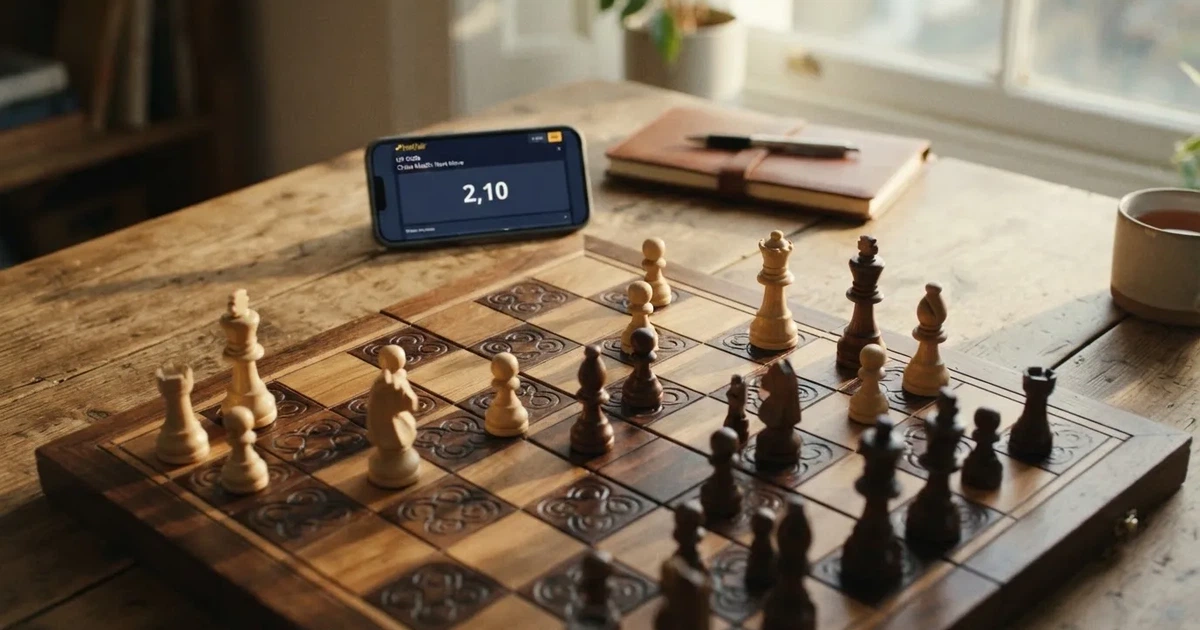
Current as of 26 October 2026 · Licence data checked against the Gambling Commission public register.
How Great Britain regulates online chess betting
The Gambling Commission is the regulator that matters for every site in this comparison. Its framework comes from the Gambling Act 2005 and the Gambling (Licensing and Advertising) Act 2014, the latter closing the offshore loophole so that any operator taking remote bets from customers in Great Britain needs a Commission licence wherever the operator itself is based. A Curaçao or Malta registration does not substitute for one. There is no state monopoly and no statutory cap on the number of licences; the test is whether the brand appears on the public register, searchable by trading name or domain, and whether the licence category covers the bet a customer is placing. For chess that category is remote general betting standard (real events) — the standard remote sportsbook licence. Spread betting on financial instruments is a different regime under the Financial Conduct Authority and is not part of this picture.

The test is not whether the site looks professional or whether it accepts a £5 debit-card deposit. It is whether the Commission has issued a remote operating licence to the named licensee behind the brand. One bookmaker that markets as a financial spread-betting brand spells this out itself: it is regulated by the FCA for spread betting and by the Gambling Commission for fixed-odds betting, and it warns that spread-betting losses can exceed deposits. Two regulators, two sets of rules, and the difference matters to a customer who crosses from one product to the other.
No statutory list of permitted events exists. A licensed bookmaker offers what its licence and its own trading team permit, and what the Gambling Commission has approved under the Licence Conditions and Codes of Practice. Chess fits comfortably within real events betting — the matches are scheduled, the outcomes are settled by the governing body, and the markets are settled in money. Esports is treated similarly; politics and novelty markets sit in the same general category. The Commission’s role is to license the activity, not to curate the fixture list.
One consequence follows: the bookmaker’s trading desk, not Parliament, decides which chess tournaments appear on the site. The Candidates Tournament and the World Chess Championship cycle reach outright and match markets at most large bookmakers. Week-long Opens and regional Zonal events reach a narrower set, and many do not appear at all. A reader who wants to bet on every rated tournament will not find that bookmaker.
Age and identity are verified before the first deposit or bet, and the rule has been in force since May 2019. A licensed operator cannot let a customer deposit, claim a bonus or place a bet without confirming name, address and date of birth. The free-bet and bonus routes run through the same checks; there is no anonymous play at a GB-licensed site. That cuts both ways. It blocks underage gambling at the door, but it also means a reader signing up for the first time will not be betting inside five minutes, and that a reader with an unusual name or address may be sent for further documents.
What safer gambling tools come with a GB licence
A GB-licensed bookmaker is a member of GAMSTOP, the national multi-operator self-exclusion scheme that has been a mandatory licence condition for online operators since March 2020. Self-exclusion periods run six months, a year, five years, or five years with auto-renewal. After the minimum period, the exclusion continues for a further seven years unless the customer asks GAMSTOP to remove it. GAMSTOP covers online sites and apps; betting shops in Great Britain use a separate in-shop self-exclusion.
Two further safeguards arrived in the last two years. A financial vulnerability check, in force since August 2024 and applied to remote betting from February 2025, is a public-record check that triggers when a customer’s deposits minus withdrawals exceed £150 in a rolling 30-day period. It is a check against bankruptcy or county-court judgments — not an income check, not a credit-reference search. Staged affordability checks, the kind the press has called “affordability checks”, were announced by the Commission in a July 2026 article but have no start date; the plan is staged and nothing is in force yet.
Deposit limits are a customer-set choice, not a state ceiling. The Commission’s Remote Technical Standards require operators to offer a gross deposit limit on a fixed time frame, with the first changes live since October 2025 and a second phase postponed to September 2026; whether that second phase has gone live by the time of writing is not established. The only state-set limit in this space is the 14 April 2020 ban on credit cards for gambling, including credit-card-funded e-wallet top-ups. A debit card or a bank transfer is not affected.
Help is one click away on every licensed site: GamCare runs the National Gambling Helpline, GambleAware funds treatment and education, NHS clinics handle the most serious cases, and Gamblers Anonymous runs local meetings. Fitzwilliam Sports is one example of a brand that lists GamCare, GAMSTOP and Gamblers Anonymous on its responsible-gambling page; the pattern is industry-wide among licensed operators.
Where licensing protects the reader, and where it does not
Two consequences follow from the framework above. A licensed brand comes with identity checks before play, GAMSTOP coverage, the bonus and vulnerability-check safeguards above, and a route to the Commission if things go wrong. An unlicensed brand offers none of those. The Commission does not say an unlicensed site is “illegal to use” — its enforcement powers target the operator, not the customer — but the practical loss is real: no Commission complaints route, no approved dispute-resolution body, no protection if funds are withheld, and no involvement in GAMSTOP. The framing the page takes is honest on both sides: licensed comes with friction at sign-up and protection in dispute; unlicensed comes with faster sign-up and no protection. Neither is “the safe choice” by default.
The chess betting app question: browser versus native
The mobile picture for chess betting is thinner than for mainstream sports, and the reason is straightforward. Football, horse racing and tennis have weekly fixture lists that justify a native app’s overhead: in-play markets, push notifications, accumulated bet slips, fast cash-out. Chess has none of that on a Tuesday afternoon. Most chess markets at UK bookmakers are outright winner, tournament winner, sometimes a match-result or a handicap on the number of games. The betting volume does not justify a dedicated chess app, and there is no such thing in a store.
What there is, is the standard sportsbook app. Every brand in the ranking below publishes a sportsbook app for iOS and Android, and several of them describe their own app in strong terms. bet365 publishes one that is described as the most downloaded sports betting app in the UK; Betfred describes its app as covering 21 sports plus over 2,000 casino-style games; BetMGM and NetBet describe their apps in similar terms. These are the same apps a reader would use for football in-play — they sit in a sportsbook tab alongside football, tennis, horse racing and everything else.
For a reader who places the occasional outright bet on a Candidates field, the practical question is whether the operator’s main app is well-built. The chess betting is inside it. Push notifications for a specific tournament are unusual; if a reader wants to know when outright chess markets open, an email alert or a manual check of the outright page is the route. Live alerts are football-shaped, not chess-shaped.
Bet Builder, cash out and live streaming for chess
A bet builder bundles markets from one event into a single price; it is now standard on football at major operators and is offered pre-match and in-play at one or two brands in this comparison. A reader looking for chess bet builders will not find them. The markets chess produces — tournament winner, match result, sometimes a games handicap — do not combine cleanly, and a bet builder is a football-shaped product. Cash out works the same way: it needs a market with a live price that moves during the event, and chess moves from “no live price” to “no live price”. Live streaming covers thousands of football, tennis and basketball events at some operators, plus horse racing; chess is not among the streamed sports.
The consequence is that a reader whose sportsbook habits revolve around in-play and Bet Builder will not find those for chess. A reader whose chess betting is outright and pre-match, with a touch of tournament match markets, will be well served by the sportsbook apps listed below. The product is plain, and it suits a sport that does not move between kickoff and fulltime.
Live chess betting: what is on offer and what is not
In-play betting covers sports where the odds move during the event — football at 1-0, tennis at break point, basketball in the fourth quarter. Chess does not produce the same rhythm. A game runs for hours, the score moves from 0-0 through drawn and won, and the decisive moment is often a single move. A bookmaker’s in-play team can stream a feed of moves, but pricing odds move-by-move is a different product — and one that has not generally been built for chess at UK bookmakers.
What a reader finds instead is pre-match outright and match markets on marquee chess events, with markets open in the days and weeks before the event starts. A game-by-game in-running product is not a settled offering. The exception some readers look for, the World Chess Championship match itself, has at times been priced game-by-game with markets settling on the day’s result, but this depends on the operator and the season — it is not a guaranteed product.
The cash-out situation follows. Cash out is the option to settle a bet before the event has finished, at a price the bookmaker quotes. It depends on a live market with a price that moves, which chess markets rarely have. A pre-match outright winner market sits open for weeks; there is nothing for cash out to grab at. If live betting and cash out are the headline features a reader opens an account for, chess is not where they will find them.
Predictions, strategy and the limits of chess analysis
Chess sits closer to the betting-friendly end of skill sports than most. The wider the rating gap, the more one-sided the betting line; the closer the rating gap, the more the game turns on preparation, opening choice and the clock. Tournament chess adds a layer: a 14-player round-robin favours the highest-rated player on paper, but fatigue, form and the draw shape carry real weight.
What follows is what a reader can and cannot take from analysis. Engine evaluations, the running numbers a chess engine prints out move by move, are a guide to who is better in the position — they do not predict the result. A player can be objectively worse and still win a single game on time-pressure mistakes. Tournament odds, the prices a bookmaker posts on the Candidates field, reflect ratings, recent form and the market’s view of preparation depth; the lines move when big-name backers place bets, and that movement is information in itself.
Where analysis runs into a wall is the betting bankroll. A reader who watches chess closely has an edge on a casual bettor on outright markets, because the lines at GB bookmakers are not as sharp as the football Premier League lines. That edge is real but it is small, and the bookmaker’s margin — the cut built into every price — sits across the gap. The edge has to be large enough to overcome that margin and the variance of a small sample, which a season’s worth of outright bets is. A reader who treats chess betting as a testbed for a “system” will lose the way a reader would on any sport: the system does not exist, and a sample of thirty bets does not establish one.
The honest angle: chess analysis is valuable for choosing which side of an outright line to back, and the sport rewards readers who have watched the players involved. It does not produce guaranteed picks. The bookmaker’s job is to price the field correctly, and their trading desk has more information about the betting public than the reader does.
Bet types and odds in chess betting
Three bet types sit at the core of online chess betting, and they are the only ones a reader will find at every licensed bookmaker in this comparison. Match result markets on the Championship or Candidates matches use the 1-0, 0-1, ½-½ scoring notation: 1 is the side rated first, 2 is the rated second, and the draw is the third outcome. Outright winner markets on a multi-player tournament list every player in the field with their own price, and a stake on the winner returns stake × odds.
A third market appears at the bigger operators: handicap on games won, which is a way to back a stronger player to win by a margin and to back a weaker player at better odds with a games cushion. Both the match result and the outright markets settle in money; the games handicap carries the same result-format but pays if the favourite wins by the stated games margin or more. Each-way is unusual on outright chess markets because the place terms are not clearly defined the way they are in horse racing, where the bookmaker publishes place terms for each race.
Odds formats a UK reader meets
British bookmakers display fractional odds by default, with decimal odds available on request. A 5/1 shot returns five times the stake as profit plus the stake back; the same price in decimal is 6.00. An odds-on shot, anything shorter than evens (1/1), is shown as a fraction smaller than 1 — 4/6 means a £6 stake returns £4 of profit. An “evens” bet, written 1/1 or EVS, returns the stake in profit and the stake back: a £10 bet at EVS returns £20. The conversion from fractional a/b to decimal is a ÷ b + 1: 11/4 is 2.75 + 1 = 3.75, 5/1 is 5 + 1 = 6.00.
The conversion is exact, and a reader who sees 6.00 in decimal and 5/1 in fractional can be sure they are looking at the same price. The bookmaker publishes both because readers bet in different formats, not because the prices differ.
What the margin looks like in the odds
The margin sits inside every set of odds a bookmaker publishes, and chess markets are no exception. For a two-way market priced 1.90 / 1.90, the calculation is straightforward: the implied probability from each side is 1 ÷ 1.90 ≈ 0.5263, or 52.63% — and the two sides together sum to 105.26%. The payout share is 1 ÷ 1.053 ≈ 0.95, or 95%, and the margin is the remaining 5%.
That 5% is the bookmaker’s cut across the entire market: for every pound bet on this two-way outcome, the bookmaker keeps about 5p on average, and 95p is returned to winning customers in proportion to their stakes. Two-way markets with a draw, like a chess match at 1-0 / 0-1 / ½-½, carry three prices and a margin that runs higher — typically 6% to 8% at the larger bookmakers — because the draw is harder to balance. Outright tournament winner markets carry the highest margins of all, often 10% or more, because the bookmaker has to balance many independent runners on the same event and the favourites’ prices are compressed against a long tail of outsiders.
The same arithmetic runs the other way: a 95% payout share and a 5% margin describe the same market. A reader who sees a “payout share of 95%” on a comparison table is reading the same number from the customer’s side; a bookmaker’s marketing line that calls 95% a “return to player” rate is the same 5% margin in different clothes.
A worked example
For the illustrative market at 1.90 / 1.90 above — a £10 stake on either side at 1.90 — a winning bet returns £10 × 1.90 = £19 (the original £10 stake plus £9 of profit). For a 50/50 two-way market priced this fairly, the expected profit over a large sample of bets is roughly £19 × 0.5 − £10 = −£0.50, which is the 5% margin working as expected. A £10 accumulator of two such selections, both at 1.90, multiplies the prices: 1.90 × 1.90 = 3.61. A winning £10 acca returns £36.10, but the margin on the combined bet is closer to 10% than 5% — the legs multiply, and so does the bookmaker’s cut.
Chess as a betting market: the sport and its tournaments
FIDE — the International Chess Federation — is the world governing body and publishes the rules in its Handbook. The game is played on an 8×8 board of 64 squares, with each player controlling 16 pieces. Results are recorded as 1–0 for a White win, 0–1 for a Black win, and ½–½ for a draw. Under FIDE rules a game is drawn by stalemate, by agreement, or by claim of threefold repetition or the fifty-move rule; since 2014 fivefold repetition and a 75-move rule end the game automatically.
The competitive calendar runs on title cycles rather than seasons. The World Chess Championship is the headline event and the one bookmakers’ outright markets turn on: Wilhelm Steinitz claimed the first universally recognised title in 1886, and Gukesh Dommaraju won the title in 2024. The Candidates Tournament decides the challenger, and a Grand Prix series and the World Cup contribute rating spots into the cycle. Below the top of the cycle sit week-long Opens and Zonal events where a reader may find match markets at a smaller bookmaker but rarely a full outright field.
Two consequences follow for a chess bettor. First, the betting calendar is event-shaped, not week-shaped: a reader who logs in on a Tuesday will often see one or two live chess markets and a handful of outrights, not a fixture list. Second, the betting window for each market is long by sportsbook standards: an outright on the Candidates field opens weeks before the tournament and stays open until the first round starts, with prices drifting as the field narrows.
Why draws matter to the betting line
Chess produces more draws than most betting customers expect at first. The grandmaster elite draw roughly half their classical games, and elite match play in the World Championship cycle produces long streaks of ½–½ before a deciding game decides the title. A match-result line that prices White at 1.80, Black at 2.40 and the draw at 3.00 reflects a market that expects at least one drawn game — and the bettor is pricing the probability that the match ends tied at that score, not that any one game is drawn.
The draw sits at the centre of any chess betting line because chess lines without draws, common in tournament standings where ties are broken by tiebreaks, are not chess betting markets in the sense this page discusses. A reader who backs the favourite on a chess match at 1.80 needs to understand that the favourite’s price already prices in a meaningful probability of draws — and that the bet loses if the match ends in a tie.
Comparing the ten reviewed bookmakers
The table below covers every operator in the ranking. Licences are taken from the Gambling Commission’s public register, and each licence is a remote general betting standard licence for real events — the category that covers chess. The third column carries the operator’s own terms on the points where research found a relevant statement; where research does not cover a point, the cell carries the marker the article language uses for absence.
| Bookmaker | Gambling Commission remote licence and licensee | What the operator’s terms state |
|---|---|---|
| Midnite | Account 101839; licensee Midnite Limited | Sports welcome offer for new customers; in-play, acca builder, popular accas and price boosts with maximum-stake limits |
| Tote | Account 54779; licensee TDCO Limited | Pool-betting heritage; UK and Irish racing focus |
| BetGoodwin | Account 2927; licensee Goodwin Racing Limited | Sports welcome offer with a £5 acca and a £5 Sub-Cover component |
| Sky Bet | Account 67370; licensee SBG Sports Limited | Free bets expire 30 days after crediting; single or each-way only; non-withdrawable; stake not returned |
| Unibet | Account 45322; licensee Platinum Gaming Limited | Operating since 1999; sports welcome offer with a £20 qualifying bet |
| bet365 | Account 55148; licensee Hillside (UK Sports) ENC | Most downloaded UK sports betting app; official UEFA Champions League partner; Bet Builder+ with Super Boosts and Winnings Boosts |
| 10bet | Account 43173; licensee Blue Star Planet Limited | Sportsbook with Cash out, Bet Builder and Live Streaming |
| Betfred | Account 39544; licensee Petfre (Gibraltar) Limited | App covers 21 sports and over 2,000 casino-style games |
| BetMGM | Account 39198; licensee LeoVegas Gaming PLC | Sports welcome offer with four £10 free bets, valid 7 days |
| NetBet | Account 39170; licensee Netbet Enterprises Limited | Daily Boosts, Profit Boosts, free bet offers; Bet Builder with instant dynamic odds |
The licence lines are not interchangeable. Several of the operators above run under a Gibraltar-headquartered licensee — Unibet under Platinum Gaming Limited, Betfred under Petfre (Gibraltar) Limited — and that is normal under the post-2014 framework, in which the operator can be based anywhere so long as it holds a Commission licence for serving customers in Great Britain. The Commission’s public register is the test; the licence number above each row is the row to confirm there.
The brand-name column notes where several retail brands run under one licensee. Ladbrokes and Coral share a parent company, and Paddy Power and Betfair share a parent — a reader who treats them as independent operators is mistaken, even when their marketing is distinct.
How each bookmaker treats chess markets
The honest answer is that no bookmaker in this comparison publishes a chess-dedicated page in the way football and horse racing get. Chess sits inside the “other sports” tab or a search for “chess” reveals what is open. The picture that emerges from the licences and the operator terms is this:
- Midnite runs an in-play product across mainstream sports and lists price boosts, popular accas and an acca builder. Chess outrights appear around the marquee events.
- Tote is a pool-betting heritage brand built around horse racing; its wider sportsbook is more limited than the bigger operators, and outright chess markets are a smaller part of its offering.
- BetGoodwin runs a sportsbook with a Sub-Cover-style welcome offer and a £5 acca component; chess appears inside the standard sportsbook.
- Sky Bet runs free bets that expire 30 days after crediting, single or each-way only, and the stake does not return with winnings — a standard set of terms for the brand’s free-bet product.
- Unibet has operated since 1999 and is one of the longer-running brands in the European online market; its sportsbook is broad, and chess is one of the outright markets it offers around title events.
- bet365 runs the heaviest product on this list — Bet Builder+ with Super Boosts and Winnings Boosts, daily Bet Boosts, in-play and live streaming — though none of that product maps directly to chess.
- 10bet runs Cash out, Bet Builder and Live Streaming as headline features; the actual chess offering is at the standard sportsbook level.
- Betfred publishes an app that covers 21 sports and over 2,000 casino-style games; chess sits in the sportsbook.
- BetMGM runs a sports welcome offer structured as four £10 free bets with a 7-day validity; chess is one of the books the free bets apply to in line with the brand’s general terms.
- NetBet runs Daily Boosts and Profit Boosts alongside a Bet Builder with instant dynamic odds; chess gets the standard sportsbook treatment.
What a reader should take from that is that the betting lines themselves, not the app features, are where chess betting is won or lost. The Championship outright at one brand may be 4/1 on the favourite; at another, 5/1. The shapes of the field price differ. A reader who wants the sharpest lines should compare the outrights at three or four operators before placing — particularly on long-shot runners whose price swings are wider.
The fundamentals of online chess betting in 2026
A reader arriving at the page with no background on chess betting can work from a few fundamentals.
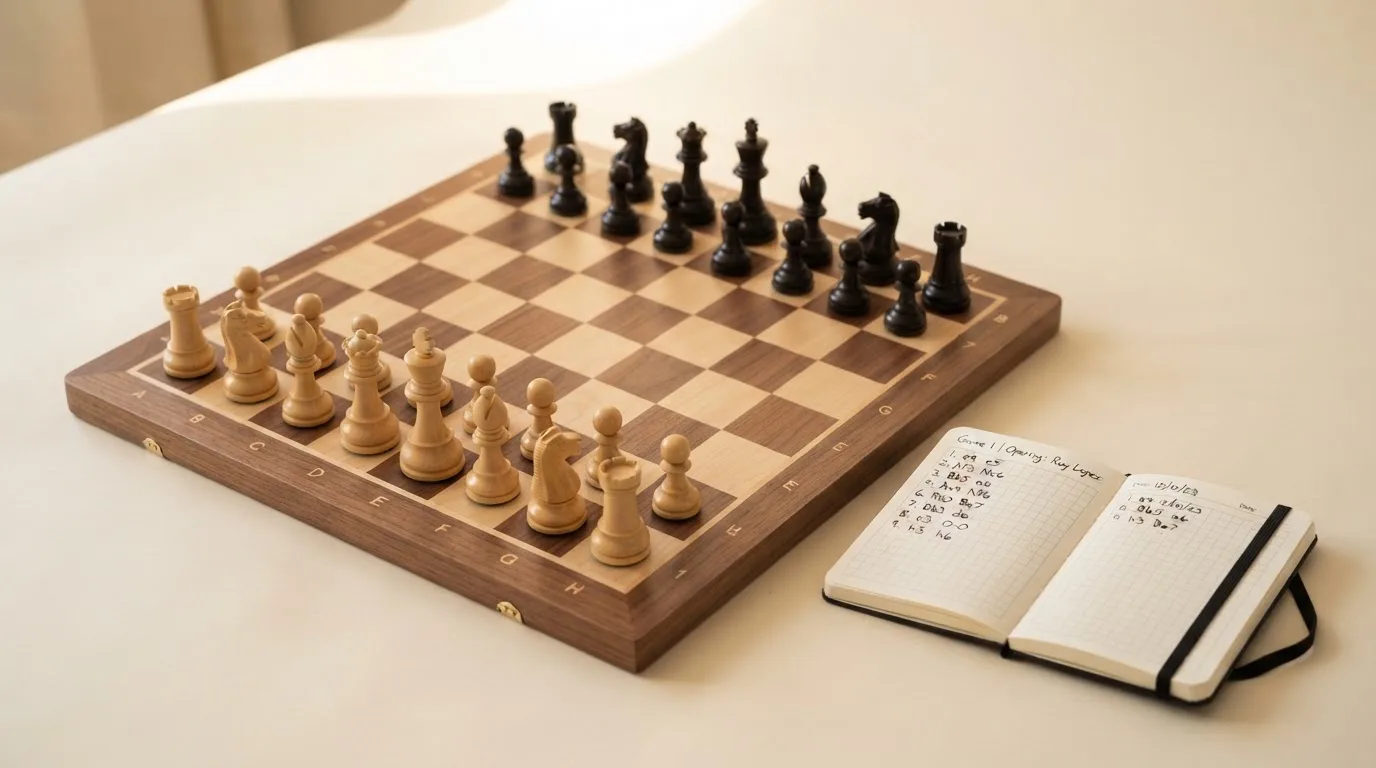
The first is that chess betting is a tournament-and-match market. The two product categories are outright winner on a multi-player tournament, and match result on a World Championship or Candidates match. Tournament outrights are the most numerous markets; match-result markets on a Championship fixture are the highest-turnover markets. Games handicap markets appear at some bookmakers but are not universal.
The second is that the draw sits at the centre of chess lines. A match-result line for a World Chess Championship game prices White, Black and the draw as three outcomes, and the draw price is the third column of the line — not a curiosity. A bettor who backs a side at 1.80 needs to understand that the price already discounts a meaningful draw probability and that the bet loses if the game is drawn. Tournament outrights price a winner, and a draw in any given round does not directly settle the outright — the bet runs until a player is eliminated or the field reaches a final.
The third is that the bookmaker’s margin is wider on chess than on football. The headline Premier League match at a major UK bookmaker carries a margin in the 2% to 5% range; a chess match-result market carries a margin in the 6% to 8% range, and outrights on a multi-player tournament carry 10% or more. The cut is part of the price of a niche sport with limited liquidity, and it is reflected in the headline odds.
The fourth is the verification regime. A GB-licensed bookmaker verifies name, address and date of birth before the first deposit or bet, runs GAMSTOP enrolment at sign-up, and applies a financial vulnerability check at the deposit thresholds in the Commission’s rules. A reader who wants those safeguards accepts some sign-up friction. A reader who wants faster sign-up at an unlicensed site gives them up.
The fifth is the calendar. Chess markets cluster around title events — World Chess Championship cycles, the Candidates Tournament, the World Cup, the Grand Prix — and they sit at low-volume weeks between those events. A reader betting on outright chess plans around the calendar, not the week.
How the bonus rules interact with chess betting
A regulatory rule that came into force in January 2026 caps wagering requirements on bonuses at 10x — a £10 bonus at 50x would have required £500 of qualifying bets; under the cap, no more than £100. The rule applies to bonuses with wagering conditions, and whether it applies to free bets without a wagering condition is not established. It runs alongside a ban on mixed-product promotions — an offer that requires the customer to bet on two or more product types such as sports, casino, bingo or lottery, for example a “bet on football to get free spins” structure. Chess betting inside a sports-only bonus is not a mixed-product promotion; chess betting inside a sports-and-casino bonus would be.
The bonus cap is a customer-protection rule. The principle is that a £10 bonus should not require £500 of qualifying bets before it can be withdrawn. The mechanism is the cap. A reader who reads a bonus offer with a 10x wagering requirement now knows that figure is at the cap and not negotiable downwards.
Settlement, results and disputes
Chess results are published by FIDE and the relevant tournament organiser. GB-licensed bookmakers settle chess markets on the official result and do not generally enter into disputes over individual moves. Where a dispute does arise — a player forfeits, a tournament is shortened, a result is overturned — the operator’s own rules apply, and the Commission’s approved dispute-resolution service is the route for an unresolved complaint. The Commission itself handles complaints about operator conduct rather than individual bet disputes, but it is the body that takes a regulator’s view when an operator’s pattern of disputes is consistent with breaches of the LCCP.
Payment methods at licensed bookmakers
Debit cards and bank transfers are accepted at every operator on this page. Credit cards for gambling are banned in Great Britain since April 2020, including credit-card-funded e-wallet top-ups. E-wallets such as PayPal and Skrill appear at some operators, and instant bank transfer via Open Banking is increasingly common. Cryptocurrency deposits are not standard at UK-licensed bookmakers, and the Commission’s framework does not rule them in or out; a reader who wants crypto deposits has crossed into the offshore market, which the licence language above describes. Identity verification before the first deposit means a customer cannot move money in anonymously.
The promise and the limitation of a free bet
A sports welcome offer is described by each operator’s own terms in this ranking, and a closer reading pays. A free bet whose stake is not returned with winnings is the standard structure, and the value of a free bet to a customer is the stake multiplied by the edge above the market’s payout share. A £10 free bet at 1.90 on a market with a 95% payout share is worth about £4.50 in expected terms — not £10. The free bet is part of a marketing pitch; the value of the offer is the terms, not the headline figure.
A 30-day expiry is a working window for a free bet. A 7-day expiry is tight. A 7-day expiry on a market a customer has not yet settled is the marketing constraint that punishes the reader who waits. The Market does not change; the customer’s free bet expires if the customer’s account does not place one in time.
Frequently asked questions about online chess betting
Where to bet on chess?
At UK-licensed bookmakers with a remote general betting standard licence for real events — the operators covered in the comparison above all hold one. The bookmakers’ outrights on the World Chess Championship, Candidates Tournament and other marquee events are where chess betting reaches the largest markets. Markets outside the headline cycle are thinner, and smaller regional Opens may not appear at any licensed UK bookmaker.
Can you bet on chess?
Yes, at any UK-licensed bookmaker that offers chess markets — and the bigger operators do, particularly around title events. Chess is treated like any other sport under a remote general betting standard licence; no statutory list of permitted events exists, and the trading desk decides what markets to offer. Betting on chess at an unlicensed offshore site removes the Commission’s consumer protections and the GAMSTOP coverage that comes with a GB licence.
How to bet on chess?
Place an outright on the tournament winner — the most common chess market — by selecting the player, the stake and confirming the bet. Match-result markets on World Championship fixtures let a customer back White, Black or the draw on each game. Settled markets pay stake × odds (in fractional form, a/b returns stake × a/b plus the stake). Identity verification runs before the first deposit at every GB-licensed bookmaker, so an account is not anonymous.
How can it be checked that a bookmaker holds a Gambling Commission licence?
Search the Commission’s public register by the trading name, the licensee name, the licence number from the operator’s terms, or the domain. The licence categories appear beside the operator entry, and a remote general betting standard licence for real events is the relevant category for chess. The age of the entry, the operating status and any conditions appear on the register page. The Commission’s register is the whole test — a brand’s marketing material is not.
How is the return on a bet worked out from the stake and the odds?
Return = stake × odds (decimal) or stake × (a ÷ b + 1). Profit = stake × (odds − 1) in decimal form, or stake × a ÷ b in fractional form. A £10 stake at 5/1 returns £60 (£50 profit plus the £10 stake back). A combination bet multiplies the prices — a two-leg accumulator at 2.00 and 3.00 carries a combined price of 6.00, and a £10 stake returns £60 on a win. The stake is paid back only if the odds imply it; a free bet generally does not return the stake.
Tennis, darts & cue sports – Accumulator
Content created by the «Accumulator» team
