
Football accumulator bets: the price behind every leg
 Available in US
An accumulator links two or more selections into one bet. Every leg must win for the bet to pay; one loser takes the stake down with it. The odds of each leg multiply into one price, so a four-fold at four odds-on prices pays better than any of them alone — and a four-fold at four short prices costs more in expected losses than the same stake laid as four singles. That second fact is the one a “build your acca” page usually skips past, and it is the first thing a sharp reader in 2026 needs to know before the price is even picked.
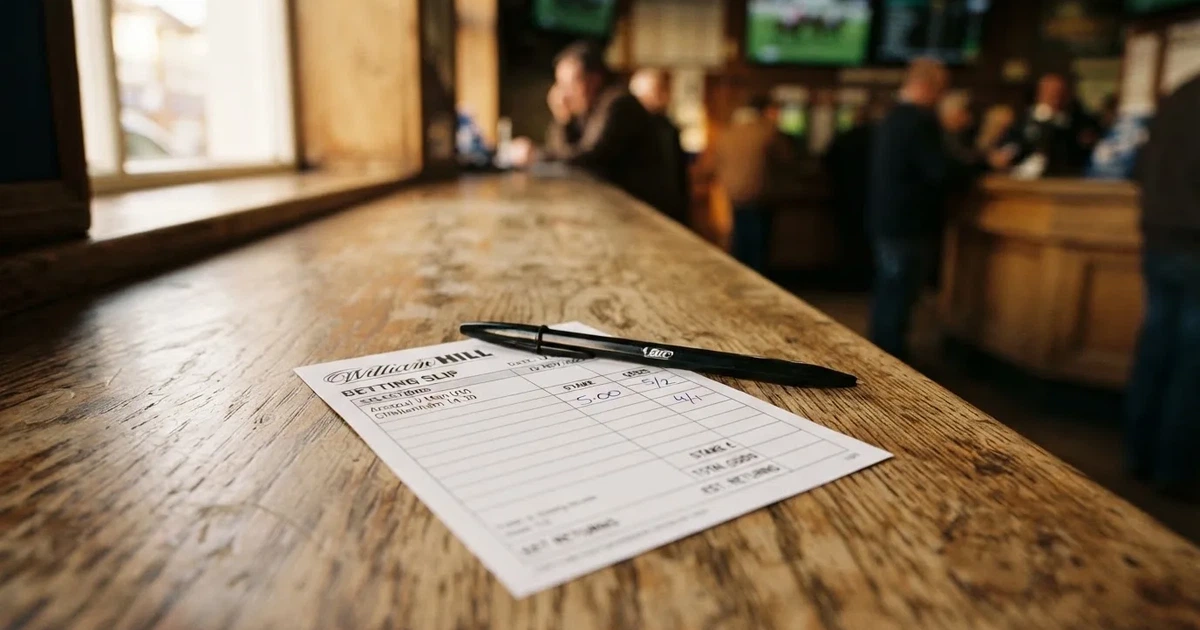
This page walks through what an accumulator really costs, which UK-licensed bookmakers handle it cleanly, and how the wagering requirement on the welcome offers that sit beside it cuts into anything that looks like “free” money. The odds used in the worked example below are an illustrative set, not a quoted price: research gives no single match snapshot to anchor the page to, and what carries forward is the arithmetic, not the figure.
Data current as of 26 October 2026 · verified against the Gambling Commission’s public register.
How Great Britain regulates an accumulator bet
A football accumulator is not separately regulated as a market. What the Gambling Commission licenses is the *operator*, under the Gambling Act 2005, in one of a small set of categories. For a real-world sports book running accumulator bets to customers in England, Scotland or Wales, the relevant licence is the remote general betting standard (real events) licence. A brand that operates an exchange takes the remote betting intermediary licence instead. Spread betting that is not on a financial instrument is a separate General Betting Duty case; financial spread betting is regulated by the Financial Conduct Authority, not the Commission — that distinction sits inside the licence for some of the names reviewed below.

Two consequences follow for the punter. There is no statutory ceiling on a stake, no statutory list of permitted markets, and no statutory minimum price on a leg: each bookmaker sets its own book and its own limits, and the Commission’s role is to police the operator’s compliance with its licence conditions and codes of practice, not to second-guess the price. And a brand licensed in Curaçao, Malta or Gibraltar is not licensed to serve customers in Great Britain; under the Gambling (Licensing and Advertising) Act 2014 a remote operator needs a Commission licence wherever it is incorporated if its facilities are used in Great Britain. A non-GB licence is no substitute.
The Commission’s public register is the whole test of who holds a licence. It is searchable by business name, trading name, domain or account number, and it is the page that answers the question “is this brand licensed?” — without it, no comparison is sound. Every name in the ranking below has been checked against that register for the licences shown. The licence number alone is not the licence; the licence is the entry as it sits on the register on the day of the check.
Northern Ireland sits outside the Gambling Act 2005 and has its own older law, so a “GB licence” regulates Great Britain only. A customer in Belfast betting on a site licensed by the Commission is on a GB-regulated site, not a Northern-Ireland-regulated one — the distinction matters less than it sounds, but it matters.
What may and may not be bet on
No statutory list of permitted bets or markets exists. An operator holds a licence for a category and offers markets under its own rules and the Licence Conditions and Codes of Practice. In-play football markets are offered by every UK-licensed bookmaker on the page; that offering is the operator’s choice under its licence, not a permission the Commission has separately granted. Esports are treated like any other real event; virtual events sit under a different licence category and a different market. Betting on politics, novelty markets and TV shows is offered by UK bookmakers and no statutory prohibition was found. The point to take away is that the licence gives the operator a permission and the operator draws the menu, not the other way round.

What the bookmaker’s own rules look like
Operators set stake limits, restrict customers, settle void selections by their own rules and write the small print that decides whether an abandoned match is paid out or settled on the next leg. The standard convention — a void leg drops out and the bet settles on the remaining legs at the reduced price — is the industry’s, not the statute’s. Rule 4 deductions on horse racing, each-way terms that vary by race and operator, ante-post non-runner rules, and the way a bookmaker settles a corner-count market after an abandoned half are all house rules a punter reads on the betting site’s terms page before staking, because the Commission does not write them.
What happens off-shore
A brand without a GB licence that takes a bet from a customer in Manchester is committing an offence under section 33 of the Gambling Act 2005, punishable on summary conviction by up to 51 weeks’ imprisonment, a fine up to level 5, or both (six months in Scotland). No offence aimed at the customer who merely bets was found. The practical consequence is the loss of protections: no GAMSTOP coverage, no Commission complaints route, no approved dispute-resolution body, no British consumer redress if funds are withheld, and not bound by the 10x bonus cap or the £150 vulnerability check described below. The Commission’s enforcement is disruption, not blocking — cease-and-desist notices, search-engine referrals, work with registrars, hosts and payment providers. ISP-level blocking powers have been granted or are about to be, but it is not in operation. “Unlicensed” is therefore not a legal risk for the punter in the criminal sense; it is a consumer risk, and the punter pays for it in lost recourse rather than in lost freedom.
Safer gambling and what the licence now requires of a bookmaker
Every licence condition below is the operator’s, not the punter’s choice — but it shapes the page the punter sees when they open the betting app.
Age and identity. Minimum age 18. Name, address and date of birth are verified before a customer can deposit or gamble — in force since 7 May 2019 — including with a free bet or bonus. Anonymous play at a licensed site is over.
GAMSTOP. A mandatory licence condition for online operators since 31 March 2020. Self-exclusion periods are six months, one year, five years, or five years with auto-renewal. After the minimum period the exclusion stays in place for a further seven years unless the customer asks GAMSTOP to remove it. The scheme covers online sites and apps; betting shops use a separate service.
Financial vulnerability check. LCCP condition 3.4.4, in force since 30 August 2024, applies to licensed remote betting when a customer’s deposits minus withdrawals exceed £150 in a rolling 30 days — the threshold has applied since 28 February 2025. It is a public-record check (bankruptcy, county court judgments), not an income check and not a credit reference check. Financial risk assessments — the affordability checks of the press — were announced in a staged plan (Commission article of 7 July 2026) with no start date.
Deposit limits. Operators must offer a gross deposit limit on a fixed time frame; the first changes have applied since 31 October 2025, a second phase was postponed to 30 September 2026. Whether it is live is not established. There is no state-set ceiling: what a punter can deposit is the punter’s choice within the operator’s framework.
Bonuses. Promotion rules in force since 19 January 2026 cap wagering requirements on bonuses at 10x (a £10 bonus at 50x needs £500 of bets; under the cap no more than £100). Mixed-product promotions — an offer that requires gambling on two or more product types such as betting, casino, bingo and lottery, for example “bet on football to get free spins” — are banned. Whether the cap applies to free bets with no wagering condition, and any cap on the money value of a bonus, are not established.
Credit cards. Banned for gambling in Great Britain since 14 April 2020, including credit-card-funded payments through an e-wallet. Debit cards and bank-based payments are not covered by the ban.
Help. GamCare (the National Gambling Helpline), GambleAware, NHS gambling clinics and Gamblers Anonymous. The page for someone who has stopped enjoying it is the same page regardless of which bookmaker took the bet.
Bankroll, forecasts and the strategy that survives the margin
Strategy is the part of an accumulator page that mostly talks past itself. The bookmaker’s margin sits inside every price, so an accumulator built from a dozen legs is not a dozen edges stacked — it is a dozen opportunities for the house to take its cut, multiplied. The strategy that survives is the one that respects that.
The bankroll. Decide the unit before the first leg — what is the largest loss a bad Saturday is allowed to inflict, expressed as a fraction of what the punter can spare, not what is in the current account. A four-fold at four odds-on prices is the most expensive bet per unit stake on the page, in expected terms, because short odds carry the highest margin. The arithmetic below makes that concrete.
The forecast. Picking the legs is the part the punter cannot do without information; everything else on this page is what happens to those picks afterwards. A punter who follows a tipster pays for the tip in two ways — the subscription and the margin the tipster does not know is in the price. A tipster who posts a 1.80 pick has paid 5% to 7% of stake to the bookmaker before the bet is even placed. The price on the slip is the price on the slip.
The analytical frame. An accumulator wins only if every one of its linked selections wins; a losing leg loses the whole bet. That is the feature, not the bug — the high price is the fee for taking the all-or-nothing risk. The bet is also where one leg ties (a push): the leg is removed and the price reduces to match the remaining selections. That is the industry convention; it is not guaranteed across every bookmaker and is worth a glance at the terms before staking on a market where pushes are common.
The discipline. A bettor who treats the accumulator as a small-stake lottery ticket has priced the bet correctly; a bettor who treats it as a serious investment is on a different page. The arithmetic below does not say “don’t place the bet” — it says “this is what the bet costs you per pound staked on average, and here is the number of bets of that size you would need to clear the bonus attached to it”.
The bankroll is the only part of strategy that compounds. A 4-fold at average margin 6% costs about 22% of stake in expected losses — that is the same 22% whether the punter stakes £1 or £100, and it is the same 22% on a Tuesday and on a Saturday with ten picks shortlisted. The way the cost comes down is not by finding a bookmaker with no margin; it is by staking less per acca, by acca-ing fewer legs, and by taking the welcome offers apart to see what they really cost.
Bet types, odds and what an accumulator pays
The shape of the bet
An accumulator — also called a parlay, acca, combo bet or multi — is a single bet that links two or more individual wagers. Two selections make a double; three a treble; four or more is the accumulator proper. The price is the product of the leg prices, which is why decimal odds suit the format. In fractional form a 5/1, 3/1 and evens treble pays 5 × 3 × 2 = 30/1, or decimal 31.00; in decimal form it is 6.00 × 4.00 × 2.00 = 48.00, which is the same bet written differently. The bookmaker’s own payout rule is the product, regardless of how the price is written.
Singles, doubles, trebles and full-cover bets
A single is one selection. A double is two. A treble is three. An accumulator is four or more. A full-cover bet packages several accumulators across the same set of selections so that not every leg has to win for the bet to return something. The numbers worth knowing are these:
- Trixie — 3 selections, 4 bets (3 doubles + 1 treble).
- Patent — 3 selections, 7 bets (3 singles + 3 doubles + 1 treble).
- Yankee — 4 selections, 11 bets (6 doubles + 4 trebles + 1 four-fold).
- Lucky 15 — 4 selections, 15 bets (4 singles + 6 doubles + 4 trebles + 1 four-fold).
- Super Yankee / Canadian — 5 selections, 26 bets.
- Heinz — 6 selections, 57 bets.
- Super Heinz — 7 selections, 120 bets.
- Goliath — 8 selections, 247 bets.
For a full-cover bet the total stake is the unit stake times the number of bets. A Lucky 15 at £1 per line costs £15; a Goliath at £1 per line costs £247. That is what the slip asks for before any of the legs have been settled.
Settlement
An accumulator settles in one of three ways. Win: every leg wins, the price is the product, the return is stake times price. Lose: any leg loses, the stake is forfeit. Push: any leg ties. The convention is to remove the leg and reduce the price to match the remaining selections. A four-fold with one push becomes a treble at the product of the surviving three prices. Whether a bookmaker follows this convention on every market — it is standard on match result and most major markets, less standard on player-prop and exotic markets — is in the terms.
Each-way
An each-way bet is two bets of equal stake: one on the win, one on the place. The stake doubles. Place terms vary by race and operator for horse racing, and for football the each-way market is usually offered on outright tournament winner and on some season-long markets, where the place fraction (1/2, 1/4, 1/5) is set by the bookmaker. A £10 each-way on a 6/1 shot at 1/4 the odds for three places stakes £20 and pays out on the win and the place leg separately. For an accumulator, an each-way component carries the place leg through every combination: an each-way Lucky 15 is a 30-bet package, not 15.
Worked example — what an acca pays back
Take three illustrative selections: one at 1/2 (decimal 1.50), one at evens (decimal 2.00) and one at 6/4 (decimal 2.50). A straight accumulator on all three at a £10 stake is priced at 1.50 × 2.00 × 2.50 = decimal 7.50. A winning bet returns £10 × 7.50 = £75, made up of £65 profit and the £10 stake. A losing bet returns £0. There is no third outcome in a straight accumulator.
For comparison, the same three selections at the same £10 stake, but as three doubles and a treble — a Trixie at £2 per line — stakes £8 in total. The doubles win if any two of the three selections win; the treble wins only on the all-three combination. The four bets have prices 3.00 (1.50 × 2.00), 3.75 (1.50 × 2.50), 5.00 (2.00 × 2.50) and 7.50 (1.50 × 2.00 × 2.50). The four returns on a £2 line are £6, £7.50, £10 and £15 respectively; the total return on the Trixie at all three winning is £38.50, which is less than the straight treble’s £75 — the price of the cover bet is that some of the stake is on bets the punter did not need. That is what each-way and full-cover bets trade: some stake on combinations the punter did not pick, in exchange for a payout on something short of all-three winning.
For comparison again, singles at £10 each stake £30 in total and pay £15, £20 and £25 if the corresponding selection wins. Three winning singles return £60 in profit (£30 stake recovered). A winning accumulator on the same three legs returns £65 profit on £10 stake. The accumulator pays more for the same picks, on the same bookmaker, on the same day — and it does so on the all-or-nothing condition the punter has already accepted by picking it.
The worked example above shows how the accumulator price builds from the legs. In practice, the prices vary with the market; what remains constant is the multiplication rule for an accumulator’s price and the all-or-nothing settlement. The punter’s return is the stake multiplied by that product, provided every leg wins.
Cash out, acca insurance and the small print that moves the price
Three features reshape an accumulator’s price in flight, and each is worth a sentence.
Cash out lets the punter settle the bet before the last leg is decided, at a price the bookmaker quotes in the app. The price is the bookmaker’s, not the punter’s: it is calculated from the current prices of the unsettled legs and the bookmaker’s margin on cash-out markets. DAZN Bet’s own help page notes that cash out availability is not guaranteed and bets stand if it is unavailable — that caveat is on every bookmaker that offers cash out, whether it is printed or not.
Acca insurance refunds the stake as a free bet (not cash) if one leg lets the punter down. The stake is the free bet, not the cash. The free bet expires on a deadline the offer sets; the stake is not returned on a winning free bet. Treat it as a coupon, not a refund.
Enhanced odds / acca boost / price boost lifts the price of a specific accumulator (sometimes a specific leg) for a window. The boost is the bookmaker’s; the underlying price is the underlying price; the wagering terms on a free bet that comes with the boost are the offer’s terms. Boosted odds that come with a max stake of £5 and a 7-day free-bet expiry are not the gift the headline implies.
Where the margin sits in the price
A bookmaker’s margin is the cut the operator keeps on every market, calculated as 1 minus the payout share (the sum of 1/odds for every outcome). A fair two-outcome market at evens has a payout share of 1.0, meaning the margin is zero; a market priced 1.91 / 1.91 has a payout share of about 1.047, representing an overround of 4.7% and a bookmaker margin of about 4.5%. The margin on a 1X2 football market in the Premier League typically runs from 4% to 8%. Because margins multiply across legs, an accumulator’s overall margin is higher than any individual leg’s margin; a four-fold at 6% per leg has an overall margin of roughly 22%. This represents the cost in expected losses per pound staked.
The audit on a real price is a single sentence. Take the price the bookmaker offers, do the calculation, and the answer is the margin in percent. Where the price is not on the page, write what research gives and never the figure in the punter’s head — the arithmetic is the page’s job, not the punt’s.
The ten bookmakers, ranked by what the acca terms actually say
Each entry below carries the operator’s licence as it sits on the Commission’s public register, the holder of the licence (which is often a parent or sister company rather than the trading brand), and what the operator’s own terms and app page say about football accumulators. The order is editorial: the trade-off that costs the least in expected losses comes first; the brand with the weakest fit for an acca-only bettor comes last. Several brands run under one licensee; that is not an error, it is the structure of the UK market.
The table is a comparison of what each operator’s own terms say about the key subject — an accumulator on football. It is not a ranking by margin (research does not give a margin row for one brand), and it is not a recommendation. The columns are the operator, the Gambling Commission licence number and holder, and what the operator’s own terms state about the acca subject.
| Brand | Gambling Commission licence (account no., holder) | What the operator’s own terms say about football accumulators |
|---|---|---|
| Betfred | 39544 — Petfre (Gibraltar) Limited | Bet Builder, Extra Places, Acca Boosts on selected accumulators; the app exposes Racing Post data and Sub Switch but neither replaces the price on an acca leg |
| Lottoland | 38991 — EU Lotto Limited | Sportsbook folded into a casino, lottery betting and scratchcards app; acca is offered inside the sportsbook tab, not as the front-of-app product |
| Sporting Index | 27343 — Sporting Index Limited | New-customer offer converts a £10 qualifying fixed-odds bet into three £10 fixed-odds free bets and a small spread-bet bundle; the qualifying bet cannot be placed in play or cashed out early |
| Swifty Sports | 58957 — Swifty Global (UK) Ltd | Best Odds Guaranteed, Cash Out, daily price boosts, live streaming and in-play betting on football; Bet Builder listed as coming soon rather than live |
| BetMGM | 39198 — LeoVegas Gaming PLC | Welcome offer pays four £10 free bets (two on football accas of 4+ legs, two on sports multiples of 2+); 7-day expiry, minimum odds apply, opt-in required, stake not returned on free bet |
| Fafabet | 57385 — Taichi Tech Limited | Best Odds Guaranteed on UK and Irish horse racing from 9am on race days; football acca covered under the standard sportsbook accumulators rather than a BOG-style promotion |
| Ladbrokes | 54743 — LC International Limited | Odds boosts on horse and greyhound, Best Odds Guaranteed on UK and Irish racing, in-play and Acca Boosts on selected football accumulators |
| DAZN Bet | 48756 — DZBT Limited | Cash Out, Bet Builder, daily bet boosts, in-play; cash out availability is not guaranteed and the bet stands if cash out is not offered at the moment the punter wants it |
| Dabble | 65677 — Dabble Sports UK Ltd | Welcome offer is a £10 free bet on a £10 first deposit at minimum odds, 7-day free-bet expiry, stake not returned |
| Fitzwilliam Sports | 48760 — SBKI Limited | Prices set to Oddschecker’s average price per selection; mobile apps on iOS and Android; acca is the standard format and there is no operator-specific acca feature on the app page |
Betfred — full-feature sportsbook, acca is one product among many
Betfred’s UK remote licence is account 39544, held by Petfre (Gibraltar) Limited. The app exposes Bet Builder, Sub Switch, Racing Post data, Extra Places, live casino and bingo; the football accumulator is one of the products on the app rather than the headline. Acca Boosts on selected accumulators run in the sportsbook tab, and the price on a boosted acca is the price on the slip. The trade-off for a punter who wants Bet Builder and the Racing Post form side-by-side is that the acca is not the front-of-app product, and the boost on the acca is the bookmaker’s, not the punter’s. For an acca-first bettor the choice is between Betfred’s full feature set and a thinner bookmaker that puts the acca leg-first on the home screen.
Lottoland — sportsbook folded into a lottery product
Lottoland UK’s app combines casino, lottery betting, sports betting and scratchcards, and is licensed by the Commission under account 38991, held by EU Lotto Limited. The football acca sits inside the sportsbook tab of an app whose headline products are lottery and scratchcard; that is the trade-off. A punter who plays the lottery once a week and wants to add a Saturday acca on the same app pays for the convenience in product clutter, not in licence or in price. The licence is clean; the sportsbook is a tab.
Sporting Index — spread betting plus a fixed-odds welcome
Sporting Index’s new-customer offer converts a £10 qualifying fixed-odds bet at minimum odds of 1/2 into three £10 fixed-odds free bets, three £5 Total Goals spread bets, three £5 Winning Favourites spread bets and a £1 Race Index spread bet. The qualifying bet cannot be placed in play or cashed out early. The licence is account 27343, held by Sporting Index Limited. For a punter who wants a fixed-odds acca on football the offer converts one football acca into a fixed-odds acca and a small spread-bet bundle; spread betting losses can exceed the deposit. The relevant licence on the spread side is Sporting Index’s; the financial-spread-bet licence is the FCA’s. A punter who places the spread component of the offer has accepted a different product on a different regulator’s terms.
Swifty Sports — best odds guaranteed on racing, acca coming
Swifty Sports, licensed under account 58957 by Swifty Global (UK) Ltd, offers Best Odds Guaranteed, Cash Out, daily price boosts, live streaming and in-play betting; Bet Builder is listed as coming soon. The football acca is offered under the standard sportsbook accumulator product; the app’s distinguishing feature is Best Odds Guaranteed, which on the football side means SP-conversion on selected markets rather than the racing-only BOG offered by Fafabet and Ladbrokes. The trade-off for the punter who wants Bet Builder today is that Swifty does not have it today; the trade-off for the punter who wants BOG on racing and a clean sportsbook is that Swifty has both.
BetMGM — welcome offer split across accas and multiples
BetMGM’s UK remote licence is account 39198, held by LeoVegas Gaming PLC. The sports welcome offer for new UK customers who deposit £10 or more and place a sports bet within 7 days pays four £10 free bets: two football accumulators of 4+ selections and two sports multiples of 2+. The free bets are valid for 7 days, minimum odds apply, opt-in is required and the stake is not returned on a winning free bet. For a punter whose acca habit is the 4+ format, the welcome is two acca-shaped free bets out of four; the other two are smaller multiples. The 7-day expiry and minimum-odds clause are the conditions the punter reads before opting in. The app exposes Cash Out, Bet Builder, daily bet boosts and in-play; cash out availability is not guaranteed and the bet stands if it is not offered at the moment the punter wants it. The offer is deposit-gated, not stake-gated — the qualifying deposit is £10, the qualifying bet is a separate bet on the same account.
Fafabet — BOG on racing, acca on football under the standard
Fafabet, licensed under account 57385 by Taichi Tech Limited, pays Best Odds Guaranteed on UK and Irish horse racing win and each-way bets from 9am on race days; if the starting price is bigger than the original price, the bigger odds are paid. The football acca is offered under the standard sportsbook accumulator rather than a BOG-style promotion; BOG is a racing-side feature, and the punter who plays the racing and the football on the same account gets BOG on one and not the other. The trade-off for a racing-and-football punter is that Fafabet does the racing side cleanly; the football side is a standard bookmaker’s product.
Ladbrokes — full-feature sportsbook, acca is the headline
Ladbrokes’ UK remote licence is account 54743, held by LC International Limited; the licence is remote general betting standard (real events) plus remote betting intermediary, so the app exposes the sportsbook and the betting exchange on the same licence. The app offers odds boosts on horse and greyhound bets, Best Odds Guaranteed on UK and Irish horse races, in-play betting and Acca Boosts on selected accumulators. For a punter whose acca is the headline product, Ladbrokes puts the acca at the front of the app, with Acca Boosts on top, and pairs the racing side with the BOG convention. The trade-off is the legacy operator’s product spread — casino, bingo, poker, exchange — and the larger app surface that comes with it. A punter who wants a thin acca-only bookmaker does not pick Ladbrokes; a punter who wants the full feature set with the acca at the front of it does.
DAZN Bet — cash out with the caveat, acca under the standard
DAZN Bet, licensed under account 48756 by DZBT Limited, offers Cash Out, Bet Builder, daily bet boosts and in-play; cash out availability is not guaranteed and the bet stands if cash out is not offered at the moment the punter wants it. The football acca is offered under the standard sportsbook accumulator; the distinguishing feature on the acca side is Cash Out, and the caveat is printed on the operator’s own help page. The trade-off for the punter who wants Cash Out on a Saturday afternoon is that DAZN Bet offers it; the trade-off for the punter who wants Cash Out as a guaranteed settlement option is that no bookmaker offers it as such.
Dabble — small welcome offer, short expiry
Dabble’s UK remote licence is account 65677, held by Dabble Sports UK Ltd. The welcome offer is a £10 free bet on a £10 first deposit at minimum odds, with a 7-day free-bet expiry and the stake not returned. For a punter who wants to test a bookmaker with a £10 qualifying bet and a £10 free bet on the same stake, the offer is one free bet at the same value; for a punter who wants a 4-fold acca on the free bet, the minimum-odds clause is the constraint. The trade-off is the small size of the offer and the 7-day clock. A punter who takes a 7-day free bet on a 4-fold acca has one weekend to clear it.
Fitzwilliam Sports — Oddschecker-priced bookmaker with no operator-specific acca feature
Fitzwilliam Sports, licensed under account 48760 by SBKI Limited, bases prices on Oddschecker’s average price for each selection and provides iOS and Android apps. The acca is the standard sportsbook format; the distinguishing feature is the price-source, not the acca-specific product. A punter who uses Oddschecker as the price benchmark reads Fitzwilliam’s price as the average rather than as the bookmaker’s own line. The trade-off for the punter who wants the average price on every leg is that the average is the average — sometimes the bookmaker’s own line is bigger, sometimes smaller, and the punter who wants the operator’s own price does not pick Fitzwilliam.
The accumulator landscape in Great Britain
Ten brands is not the whole market. The Commission’s public register lists far more, and a punter who is comparing what the operator’s own terms say on the acca subject finds the table above is a shortlist rather than a census. The wider market has the same shape: a handful of legacy operators with full-feature apps (Ladbrokes, Betfred), a similar handful of mid-size operators with a thin acca product and a strong racing or lottery side (Lottoland, Sporting Index, Fafabet), a smaller handful of newer operators with a clean acca product and a welcome offer that splits the free bet across accas and multiples (BetMGM, Dabble, DAZN Bet, Swifty Sports), and at least one operator whose distinguishing feature is the price-source rather than the acca product (Fitzwilliam Sports). Every operator in the table is licensed; every operator offers football accumulators; the differences are in the welcome offer, in the racing-side feature, in the app surface and in the cash-out caveat.
A licence is not a recommendation. A place in a table is not a licence. Several brands run under one licensee; the table above does not present them as independent operators. The audit the punter does is the licence check on the Commission’s public register, which is what the licence numbers above are pointers into.
Frequently asked questions
How do football accumulator bets work?
An accumulator links two or more selections into a single bet, with the price being the product of the leg prices. Every leg must win for the bet to pay out; one loser forfeits the stake. A tied leg is removed and the price reduces to match the remaining selections. Settlement is on the operator’s own terms; the multiplication rule and the all-or-nothing condition are the features, not the bugs.
Where can a punter place football accumulator bets in Great Britain?
At any online bookmaker licensed by the Gambling Commission under the remote general betting standard (real events) licence, or at a betting shop. The Commission’s public register is searchable by business name, trading name, domain or account number and is the page that answers the question “is this brand licensed?”. Every brand in the ranking above has been checked against that register; the licence numbers are pointers into it, not the licences themselves.
How does an accumulator differ from a single bet?
A single is one selection. An accumulator is two or more selections in one bet, with the price being the product of the leg prices. The bet wins only if every leg wins; the price is larger than any single leg’s price; the expected loss to the bookmaker’s margin is larger than any single leg’s expected loss. The all-or-nothing condition is the trade for the higher price; it is not a feature a punter can opt out of without an unwind into singles.
How can a punter check that a bookmaker holds a Gambling Commission licence?
Open the Commission’s public register and search by business name, trading name, domain or account number. The entry on the register, on the day of the check, is the licence. The licence number on the app is a pointer; the entry on the register is the test. Where the entry is not there, the brand is not licensed to serve customers in Great Britain, and the punter pays for the absence in lost recourse rather than in lost freedom.
How is the return on a bet worked out from the stake and the odds?
The return is the stake multiplied by the decimal odds. For a £10 stake at decimal odds of 7.50 the return is £75, made up of £65 profit and the £10 stake. For an accumulator the odds are the product of the leg odds, so the return on a winning accumulator is the stake multiplied by the product. A losing leg forfeits the stake. The bookmaker’s own settlement rule is the rule that applies; the multiplication rule above is the convention.
What is the bookmaker’s margin and how can it be seen in the odds?
The margin is the operator’s cut on a market, calculated as 1 minus the payout share (the sum of 1/odds for all outcomes). A market priced 1.91 / 1.91 has a payout share of about 1.047, which represents an overround of 4.7% and a margin of about 4.5%. Because margins multiply across legs, an accumulator’s overall margin is higher than any single leg’s margin; a four-fold at 6% per leg has an overall margin of roughly 22% — the average cost in expected losses per pound staked. The price on the slip includes this margin; it is the cost the punter pays to place the bet.
Bet types & in-play – Accumulator
Content created by the «Accumulator» team
