
The best GB-licensed bookmakers for accumulator betting
 Available in US
A £10 accumulator on three short-priced football results returns £37.50 if every leg wins. On the same three results priced as singles, the same £30 outlay returns £38.75. The single-line approach wins by £1.25 over the accumulator — yet most punters still prefer the multi. That single number is the small print behind the entire market: an accumulator is a worse price on paper, and punters pay that premium because one stake can clear a five-figure return. The page that follows is built around choosing which bookmaker charges the smallest premium for that trade-off, then working out the rest of the cost: the bonus cap on free bets, the identity check before the first deposit, the requirement that every leg carries a minimum price, and the deal the bettor reaches with their own wallet before a wager is even placed.
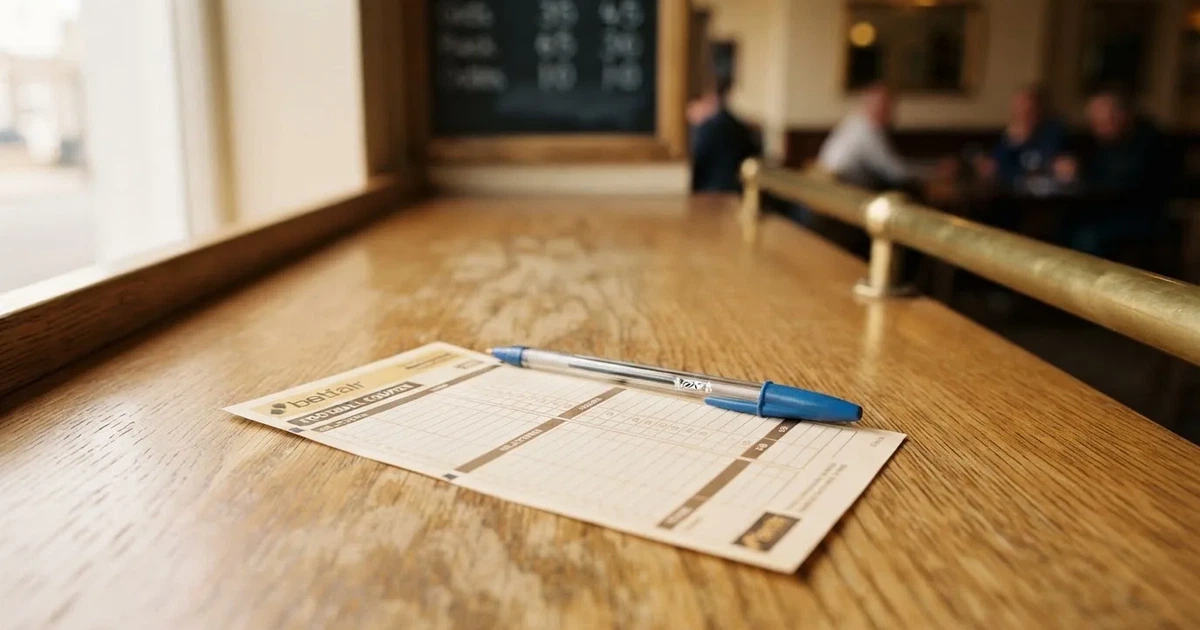
What carries the day in Great Britain. An acca is a single bet that links two or more selections — every leg must win, push or void rules apply, and the decimal odds of every leg multiply into one price. A licensed bookmaker in Great Britain holds a Gambling Commission operating licence, offers this product under its own house rules, and grants no anonymity at the point of deposit. Operators without that licence can be reached from a British address; using one means no GAMSTOP cover, no Commission complaints route, no approved dispute-resolution body, no bonus cap and no automatic identity check. The deals on the rest of this page sit inside the first group, the licensed one.
Current as of 26 October 2026. Licence status verified against the Gambling Commission’s public register.
Selection, settle and stake: how a bookmaker turns your list into one ticket
An accumulator is not a product the bookmaker invents for football Saturdays. It is the arithmetic identity that any number of decimal prices can be multiplied together, and the bettor is offered a single slip rather than a stack of them. From the punter’s side the slip promises a long return for a small outlay; from the bookmaker’s side it is a parlay that an entire stake is exposed to across every leg. Both views are honest, and both belong to the same bet.

The mechanic, from the punter’s side
The bettor picks two or more outcomes — three is the smallest number that most operators treat as a “multi” rather than a double — and adds them to a betting slip. The slip shows a combined price that is the product of every leg’s decimal odds: a treble at 1.50, 2.00 and 2.50 multiplies into a price of 7.50. A £10 stake at that price returns £75 if every leg wins; the punter keeps £65 of profit because the £10 stake is paid back with the winning return. A losing leg voids the whole bet, regardless of how the other legs landed. That is the deal in plain print, and it is the deal that every licensed UK bookmaker offers, with the variations above — push rules, void rules, minimum-leg counts — sitting in the small print of each one.
Decimal odds suit this product because they multiply cleanly. Fractional odds describe the same proportion — 1/2 is 1.50, evens is 2.00, 6/4 is 2.50 — but they have to be converted to decimals before a combined price can be read. This page uses decimal odds throughout, with the fractional figure in parentheses where the market format expects it.

The mechanic, from the bookmaker’s side
The combined price looks generous because the punter is multiplying two-or-more percentages together; the bookmaker is multiplying two-or-more margins together and keeping the result. A 5% margin on a three-leg treble does not compound to 15% on the punter’s slip in the way percentage points would, but every leg carries its own slice, and the price the punter sees is the joint product of those slices. A two-leg double pays a little under the two singles would have paid together; a six-fold pays well under six singles would have paid together. There is no arbitrage against the singles because the bookmaker prices every line itself; the discount is real, and the punter pays for the format by trading per-leg value for one-ticket simplicity. That trade is the heart of an accumulator, and a punters’ choice between singles and a multi on the same three results is the trade they are making.
Where the bet can stumble:
- One leg voids. Football matches abandon, horses are pulled, players retire mid-game. The legs that are still live keep their odds; the voided leg drops to 1.00 for the purposes of the combined price.
- One leg loses. The whole bet is lost, whatever the other legs did. That is the single rule that turns the multi from a parlay of independent propositions into one proposition of its own.
- A “cash out” button appears. The bookmaker offers to settle the bet early at a price it sets. That price is the bookmaker’s quote, not a market quote, and the punter’s choice is whether to lock in a profit or cut a loss at the operator’s number.
What a winning accumulator pays back
A winning trebles at decimal prices of 1.50, 2.00 and 2.50 multiplies into a combined price of 7.50; a £10 stake returns £75, of which £65 is profit. The same three legs as singles would cost £30 (£10 on each) and return a different total: £15 + £20 + £25 = £60. The accumulator on those three results costs £10, returns £75, and the punter has paid the £10–£7.50 spread as the premium for taking one ticket. The comparison is not a uniform finding — it depends on the price of every leg and on what each leg’s bookmaker’s margin is — and it is the reason a punter running a six-fold over six short-priced favourites is paying a larger premium than a punter running a four-fold where two legs are outsiders at evens or longer.
The page’s own worked example appears in the closing math, below. For now: every leg costs a margin, the multi compounds them, and the punter judges whether one ticket is worth more than several.
The variations sitting on top of the same idea
A full-cover bet is an accumulator with a built-in safety net. A Trixie covers three selections in four bets (three doubles plus one treble), a Yankee covers four in eleven, and a Lucky 15 covers four in fifteen — every combination of doubles, trebles and a four-fold plus four singles. A Heinz covers six in 57 bets; a Super Heinz covers seven in 120. A Goliath on eight selections runs 247 bets and every combination of two, three, four, five, six, seven and eight selections. The total stake is the unit stake multiplied by the number of bets; a 50p Lucky 15 costs £7.50, a £2 Trixie costs £8, and a 25p Goliath costs £61.75. These are not accumulator “deals” — they are full-cover packages the bookmaker builds so the punter pays a fixed sum to be in every combination at once, and they cost more per line than a plain multi would. The trade is the same trade: a higher per-line cost for a one-ticket format that pays across several combinations.
The phrase “acca insurance” comes up at most GB bookmakers: a free bet back, usually capped, if one leg of a named multi loses. The headline says “your stake back”; the small print says “as a free bet, not cash; min price per leg 1/2 (1.50); max refund £/amount X; free bet expires in seven days; one insurance claim per customer per day, on selected markets”. This is a separate cost — the insurance itself is a marketing expense, the conditions below it are the real deal — and it is covered in the bonus and free-bet section, below.
Selecting the legs
A multi is a single bet on every leg winning, so every leg is one independent decision. Football is the most heavily-picked leg because football markets are deep — 1X2, both teams to score, over/under, anytime goalscorer, corners, cards — and a number of GB bookmakers publish “popular accas” on a Saturday morning as a curated starting point. Horse racing is the second heaviest, both because Best Odds Guaranteed applies (so the punter gets the bigger of the morning price and the SP) and because non-runner rules convert voided legs into 1.00 prices cleanly. Tennis, basketball, American sports and outright markets round out the menu.
There is no edge in picking the right legs. A multi pays only if every leg wins; the punter is paying a per-leg margin compounded across the slip, and the legs are independent events. The bookmaker does not need any particular leg to lose — it needs only one of the legs to lose, and any single losing leg costs the whole ticket.
Building the slip
Most GB bookmakers offer a “Bet Builder” feature that combines markets from a single event into one price — over 2.5 goals, both teams to score and a corner count, for instance — and that single-event builder sits beside the multi-leg accumulator as a separate feature. Where a multi combines events, a Bet Builder combines markets inside one event; Bet Builder+ at bet365, for example, extends that to markets from one event in-play as well as pre-match. The pricing is the operator’s own.
A punter who likes the multi for its simplicity will not use a Bet Builder, and a punter who likes correlated outcomes inside one event will not use a multi. The features serve different reader habits.
Settling the slip
A winning multi settles at the combined decimal price, and the operator credits the return (stake plus profit). A losing multi settles as a loss. A partially-voided multi settles at the multiplied price of the live legs only, with the voided legs dropping to 1.00. A push is the vocabulary for a tied selection (a handicap level, a player scored exactly the line) and is treated as a void by most bookmakers. A “dead heat” rule is a partial-payout rule for place markets where two or more selections tie at the same finishing position; the payout is reduced by the proportion of the dead heat, not voided.
The “cash out” button is a settlement feature, not a market feature. It is the bookmaker offering to buy the slip back at a price the operator sets, available on selected markets and selected sports. Cash out is the punter’s chance to lock in a profit or cut a loss before the final leg; it is also a quote the punter cannot verify against any third party, because the price is the operator’s own.
Ranking the GB-licensed bookmakers, with what each one charges
A bookmaker’s place on a list is not a licence and not a recommendation. The ranking is a shortlist of brands the Gambling Commission’s public register confirms as licensed for remote general betting (real events) in Great Britain, each of which offers the accumulator product the page is about. Every licence below is verified against the register; every entry is one operator, one set of terms. What differs is the product offering, the bonus structure, and the small print.
The headline measure for a bookmaker’s multi product is the published margin on the events the multi is built from, the small print on the bonus that is meant to fund the first bet, and the minimum-stake and minimum-odds limits that decide whether a free bet can clear at all. Nothing on the licence tells the reader what the operator’s own terms state on those three things — the licence grants permission, the rules below state the deal.
| Bookmaker | Gambling Commission remote licence | House position on acca clearing |
|---|---|---|
| bet365 | 055148-R-331498-002 (Hillside (UK Sports) ENC) | Bet Builder+ for single events; Super Boosts and daily Bet Boosts on multi prices |
| Geoff Banks | 054095-R-330366-010 (GB Sports Advisors Limited) | Ante-post and in-play pricing on racing and football |
| Kwiff | 044448-R-323408-017 (Eaton Gate Gaming Limited) | Supercharge boosting combined price of accas and singles |
| Fitzwilliam Sports | 048760-R-335434-009 (SBKI Limited) | Prices tied to Oddschecker average price per selection |
| Dabble | 065677-R-340363-005 (Dabble Sports UK Ltd) | Welcome free bets on a first deposit |
| Swifty Sports | 058957-R-334734-006 (Swifty Global (UK) Ltd) | Best Odds Guaranteed, Cash Out and Bet Builder in development |
| Octobet | 062545-R-337248-006 (Octopus Game Limited) | Best Odds Guaranteed on UK and Irish racing up to £150 per race |
| BetGoodwin | 002927-R-327985-008 (Goodwin Racing Limited) | Welcome free bets include a £5 acca and a £5 Sub-Cover bet |
| Betfred | 039544-R-319290-010 (Petfre (Gibraltar) Limited) | Bet Builder, Sub Switch and Extra Places on racing |
| BetUK | 039198-R-319450-029 (LeoVegas Gaming PLC) | Free bets exclude virtuals, esports and non-UK/IE racing |
bet365 — the depth bet
The deepest market depth and the most-in-play coverage of any GB bookmaker — and the product set to match. Bet Builder+ lets the punter combine markets from one event (over 2.5 goals, both teams to score, a corner count) into a single bet, in pre-match and in-play. Super Boosts on selected events raise the published price, daily Bet Boosts are available across a smaller set, and Winnings Boosts apply to selected singles and Bet Builders. The acca offering is a standard multi, with terms and qualifying conditions consistent with the wider bonus structure.
Geoff Banks — the racing-and-football house
A smaller trading book with a racing and football focus. Ante-post pricing on future events runs alongside in-play pricing on selected events, and the slip is a plain multi. The brand’s depth is narrower than the larger houses, but the price on the markets it does cover is competitive against the multi-leg competition.
Kwiff — the boosted-price bet
Supercharge is the headline mechanic. Kwiff’s published example boosts a 2/1 (3.00 decimal) selection to 20/1 (21.00 decimal) — a random boost on a multi or a single on any sport. The product is the same plain multi priced to the operator’s margin, with the boost applying on top. Supercharge is the hook; the underlying margin is the deal.
Fitzwilliam Sports — the price-taker
Pricing is tied to Oddschecker’s average price per selection across GB bookmakers — meaning Fitzwilliam does not set its own margin, it follows an average. For a multi that is a useful feature; the punter is buying a multi priced to the average of competitor prices rather than a margin the operator chose. Apple and Google mobile apps support the slip.
Dabble — the free-bet-funded first bet
Dabble’s welcome mechanic offers free bets of a fixed amount against a first qualifying bet at minimum odds, with a seven-day expiry and the stake not returned on the free bet. This is the operator’s version of a standard multi; the welcome offer is credited separately against the first qualifying bet.
Swifty Sports — the BOG-rail house
Best Odds Guaranteed on racing, Cash Out on horse racing and football, daily price boosts and live streaming on selected events — and a Bet Builder listed as coming soon. The BOG feature pays the bigger of the morning price and the SP; for an accumulator with a racing leg the punter gets the better of the two without asking. The accumulator product here functions as a standard multi, managed according to the house margin and the BOG racing terms.
Octobet — the BOG horse-racing house
Best Odds Guaranteed on UK and Irish horse racing, capped at £150 per customer per race. Same deal as the wider market on the BOG feature, with the cap as the headline limitation. The rest of the slip is the plain multi.
BetGoodwin — the racing-and-football, free-bet-funded house
A racing-leaning house whose welcome offer includes a £5 sports bet, a £5 acca and a £5 Sub-Cover bet against a £10 qualifying bet. The “Sub-Cover” mechanic is the sport-specific feature here, and a Sub-Cover bet on a horse race substitutes the named horse for another runner at the same starting price. The acca mechanic is the plain multi.
Betfred — the established high-street name
Betfred’s app offers Bet Builder across a wide set of events, Sub Switch on racing, Racing Post data on cards, Extra Places on selected racing events, and live casino and bingo alongside the sportsbook. The betting slip operates as a typical multi, with odds derived from the house margin and boosted via the operator’s promotional features.
BetUK — the LeoVegas-mobile house
BetUK is the GB-facing sportsbook within the LeoVegas group. The brand’s app emphasises mobile-first betting, and the welcome free-bet package excludes virtual sports, esports and non-UK/IE horse racing, with minimum odds applying to the qualifying bet. This is a straightforward multi, with the free-bet package structured to reward mobile play.
Where the table falls short, and how to read it
The licence column is verification of what every brand on the list already states — that it holds a Gambling Commission operating licence for remote general betting (real events) in Great Britain. The “house position” column is what each operator’s own terms state on the question the page is about: the operator’s position on acca clearing. It is not a recommendation. It is a starting point: the brand’s own small print, named in full so the punter reads it before staking.
The figures a reader needs to compare (margin per leg, free-bet value, bonus cap) are not in the table because they vary per market, per offer and per customer. The punter compares those in the bonus and free-bet section, below. The licence and the small print are stable; the bonus terms are not.
What “GB-licensed” means in practice, and what falls outside it
Britain’s online betting market runs on a single licence. The Gambling Act 2005 governs Great Britain (England, Scotland and Wales); Northern Ireland sits under older law and is not covered by a GB licence. Since the Gambling (Licensing and Advertising) Act 2014 an operator needs a Gambling Commission remote licence wherever it is based if its remote facilities are used in Great Britain — sections 33 and 36 of the 2005 Act as amended. A Curaçao, Maltese or Gibraltar licence is not a substitute for the GB licence.
The Commission’s public register is the test of who holds one. The register can be searched by business name, trading name, domain or account number, and every licence holder named on it has stated an address for service, a trading name, and a category of licence. A bet published from a brand whose name is not on the register is unlawful under section 33 — aimed at the operator, with a fine or imprisonment available on summary conviction. The customer is not prosecuted, but the customer loses every protection the licence grants.
What the licence grants:
- A mandatory GAMSTOP membership (since 31 March 2020) — the multi-operator self-exclusion scheme every licensed online operator joins. A customer who self-excludes is barred across every licensed brand.
- A financial vulnerability check (LCCP condition 3.4.4, in force since 30 August 2024) — a public-record check applied when a customer’s deposits minus withdrawals exceed £150 in a rolling 30 days, from 28 February 2025. Income and credit-reference checks are separate, announced in a staged plan with no start date.
- A bonus cap on wagering (in force since 19 January 2026) — wagering requirements on bonuses capped at 10x. A £10 bonus at 50x requires £500 of qualifying bets; under the cap it requires no more than £100 of qualifying bets. Mixed-product promotions are banned outright.
- An identity check before the first deposit (since 7 May 2019) — name, address and date of birth verified, including for a free bet. No anonymous play at a licensed site.
- A credit-card ban (since 14 April 2020) — credit cards and credit-card-funded payments through e-wallets are not accepted for gambling.
What the licence does not grant:
- A list of permitted bets. There is no statutory list of sports, events, or outcomes. An operator offers markets under its own rules and the LCCP.
- A cap on stakes. Operators set their own maximum stakes and may restrict a customer account on a case-by-case basis. The state does not cap the size of a wager.
- A cap on losses. There is no state-set loss limit. The customer sets the limit; the operator makes the limit available.
What falls outside the licence:
- A brand on an offshore licence is reached from a British address. It is unlawful for that operator to provide gambling facilities in Great Britain without a Commission licence. The customer is not prosecuted, but the customer loses every protection listed above — no GAMSTOP, no Commission complaints route, no approved dispute-resolution body, no British consumer redress if funds are withheld, no bonus cap, no vulnerability check. Honest framing: licensed comes with the package above; unlicensed does not. Neither is “safe” by default; the licensed choice is the protected choice.
The register entry the punter trusts. The licence the table names is the register’s record at the most recent verification. Operators can change licence holders, and a punter checks the register before placing a bet, not after a dispute.
What the Commission expects of a licensed bookmaker, and what the punter does in response
The bookmaker is licensed. The bookmaker is also obligated — under the Licence Conditions and Codes of Practice, the social responsibility code, and the Consumer Rights Act — to extend the protections named above to every customer. The punter engages those protections as part of placing a bet, not after a loss.
The deposit-limit requirement is a duty on the operator, not a limit on the bet. The RTS 12 changes (first phase from 31 October 2025, second phase postponed to 30 September 2026) require operators to offer a gross deposit limit on a fixed time frame; the customer sets it, the operator enforces it. The state imposes no cap; the customer imposes their own. The change is in the offer, not in the ceiling.
The financial vulnerability check is a public-record check above the £150 net-deposit threshold. The operator asks; the customer answers; the operator may pause the account or apply further checks. The financial risk assessment — the “affordability check” of the press — is announced in a staged plan with no start date. The punter is not presently asked for income; the punter may be asked for income from a future date.
GAMSTOP is a self-imposed bar, not an external one. The customer applies, the operator is notified, and the bar applies across every GAMSTOP-registered brand. Periods are six months, one year, five years, or five years with auto-renewal; a minimum-period exclusion stays in place for seven further years unless the customer asks GAMSTOP to remove it. Help is available through GamCare (the National Gambling Helpline), GambleAware, NHS gambling clinics and Gamblers Anonymous.
The Commission does not license advertising. Advertising runs through the CAP Code (non-broadcast) and BCAP Code (broadcast), enforced by the ASA, alongside the LCCP marketing conditions. CAP Code section 16: marketing must be socially responsible, must not be of strong appeal to under-18s, and no one who is or seems to be under 25 may be featured gambling (with an exception for marketing placed where a bet can be made directly). The whistle-to-whistle ban on TV ads five minutes before to five minutes after a live sports event is an industry code, in force since 1 August 2019 (horse and greyhound racing excluded). Operators are responsible for marketing by their affiliates.
The Premier League clubs’ voluntary withdrawal of gambling sponsorship from the front of matchday shirts (from 2026/27) is voluntary, not law. It bears on what appears on a kit; it does not bear on the bookmaker’s licence.
The bonuses and free bets that fund a multi, and what they cost the punter
The “100% bonus” headline means double the deposit as a betting credit, with conditions. The conditions are where the deal lives, and they are where this section spends its words. A bonus is described in three parts: the headline figure, the qualifying action, and the wagering condition. The punter judges whether the deal is worth the qualifying action and the wagering condition; the headline figure on its own does not.
Free bets, the form most multi offers take
A free bet is a fixed-amount betting credit the operator credits to the customer’s account. The stake is not returned on a winning free bet — only the profit is paid out, at the bet’s decimal price minus 1, multiplied by the free-bet amount. A £10 free bet at a price of 7.50 returns £65 in profit, not £75 in return, because the £10 stake is the operator’s money. That is the shape of the offer the page describes.
Wagering conditions used to multiply the cost. A 50x wagering requirement on a £10 bonus used to require £500 of qualifying bets — a heavy demand on the customer. The 10x cap in force since 19 January 2026 cuts the ceiling: a £10 bonus may require no more than £100 of qualifying bets. The cap is a direct reduction in the cost of clearing. It does not eliminate the cost.
Mixed-product promotions are banned outright in the same rule. An offer that asks the customer to bet on football in order to claim free spins is no longer permitted. A free bet on a football multi is permitted; a free bet that ties football play to casino play is not.
The other conditions the punter reads:
- Minimum odds per leg. The free bet must be used on selections at or above a stated minimum price; 1/2 (1.50) is a common floor. A multi with every leg at 1.45 is not a qualifying multi.
- Free-bet expiry. Seven days is common. Unused free bets expire.
- Cap on free-bet winnings. A free bet may be capped on its payout — the headline does not always show the cap. Dabble’s terms carry one. BetGoodwin’s welcome package carries a £5 acca free bet. A cap reads as an editorial note, not a marketing line.
- Stake not returned. A free bet that returned the stake would be a stake refund, not a free bet; that distinction is the one most easily misread.
- One claim per customer per day. On acca insurance offers, a common condition.
- Excluded markets. BetUK’s free bets exclude virtual sports, esports and non-UK/IE horse racing. Other operators carry narrower or wider exclusions.
Acca insurance, and the same mechanic in different packaging
Acca insurance is a refund — usually as a free bet, usually capped — if one leg of a named multi loses. The headline reads “money back if one leg lets you down”; the small print reads “free bet up to £/amount X, min price per leg, min number of legs, free-bet expiry seven days, selected markets, one claim per customer per day”. The deal is a free-bet refund against a losing multi; the conditions shape the deal. A cap reads as the headline; a minimum-leg count of four or five reads as the deal’s floor. A free bet back, capped, on a multi of four legs or more, at min price 1/2, with a seven-day expiry on the free bet — that is the typical acca insurance headline resolved to its small print.
The bookmaker’s marketing word, punctured
“Boosted odds” means a higher price on a named selection, available for a limited time and to a limited stake. The price is the operator’s choice; the punter judges it against the same selection’s price at a competitor. “Best odds guaranteed” is the racing-specific feature: the punter gets the bigger of the morning price and the starting price, no conditions beyond taking the morning price. “Risk-free” bet is a refund — usually as a free bet, usually capped — if the first bet loses; the headline reads “no risk”; the small print reads “free bet, max refund £/amount, min odds on the qualifying bet, free-bet expiry”. “Free bet” is itself the condition; the punter who reads “risk-free” as “no risk” is reading the headline instead of the deal.
Where the bonus fails the punter it was meant to fund
The bonus is the marketing line; the deal is the qualifier. A 10x cap makes a £10 bonus clearable in no more than £100 of qualifying bets. That is still a real churn — the punter places ten £10 bets at min odds 1.50 to clear a £10 bonus, exposing the bankroll to the operator’s house margin on every bet. The expected cost is the turnover multiplied by the market’s margin. A £100 turnover at a 5% market margin carries an expected cost of £5 — half the bonus. The punter clears the bonus and gives back half of it to the house. That is the deal at the cleared end.
Two routes: the bonus route and the no-bonus route
The bonus route funds the first slip at the cost of the wagering condition. The no-bonus route skips the bonus and pays the operator’s house margin on the qualifying slip with no free-bet credit to offset it. The trade between them is not a uniform finding — it depends on the bonus figure, the wagering multiple and the operator’s margin. The punter reaches a deal by reading the small print, not the headline.
Predictions, tips and what they cannot deliver
The page does not name winners, and it does not name “sure” bets. Nobody can name an outcome before the game, and a punter who acts on a predicted one loses real money on this page’s word. The honest content is what published “tips” and “predictions” actually do.
What a tipster sells
A tipster is a paid or free source of selections. The selections may be reasoned (form, head-to-head, injuries, venue) or statistical (a model’s probability output). The product is the selection. The product is not a guarantee; the customer pays for the source’s view, not for the team’s win. A punter using a tipster pays the source’s subscription and still pays the bookmaker’s margin on the price they receive; the punter also bears the variance of a small sample. A tipster with a 10% edge on a 5% margin market returns 5% over the long run on average — and 10% minus a margin is not always a positive number.
What an “acca of the day” is, in plain print
An “acca of the day” is a bookmaker-curated list of selections for a fixture set, often sponsored with a price boost and acca insurance attached. The selections are the bookmaker’s choices; the boost and insurance are marketing. A punter who takes the curated list pays the house’s chosen price, takes the house’s chosen insurance conditions, and bears the same variance as every other multi. The curated list is not a prediction of outcome and is not a “sure” thing.
The statistical reality of the multi
Every leg of a multi carries the house margin; the multi compounds the margins across the slip. The punter faces two costs: the compounded margin across every leg and the variance of every leg being independent. The compounded margin is the bookmaker’s cut; the variance is the punter’s cut. A multi that prices six favourites at 1.50, 1.60, 1.40, 1.55, 1.45 and 1.50 multiplies to a price of about 16.30 and pays a £10 stake at £163 if every leg wins. The six singles at the same prices would have paid a different total; the multi on its own costs the punter the per-line margin compounded across six legs. That is the deal. No selection strategy overcomes the compounded margin; no research service delivers a sure outcome; the punter’s edge is the size of the bank’s discipline, not the size of the price.
Why the punter uses a multi anyway
The punter uses a multi because a small stake can clear a long return on six independent propositions where every leg must win. The same six singles would cost six times the stake to clear a smaller return; the multi costs one stake to clear the longer return. The premium paid is the compounded margin; the prize is the single ticket. The trade is the same trade the page opens with, and the maths is what the next section shows.
The math behind a winning accumulator
The page’s own worked example, computed below. The inputs are illustrative; the arithmetic is fixed. The conclusion is a band, not a single figure, because the price of every leg and the margin of every market are the punters’ actual inputs.
The treble (3 legs, £10 stake):
- Leg 1: 1/2 (1.50 decimal)
- Leg 2: evens (2.00 decimal)
- Leg 3: 6/4 (2.50 decimal)
- Combined price: 1.50 × 2.00 × 2.50 = 7.50
- Stake: £10
- Return: £10 × 7.50 = £75 if every leg wins
- Profit: £75 − £10 = £65
The same three legs as singles (£10 each, £30 outlay):
- Leg 1 return: £15
- Leg 2 return: £20
- Leg 3 return: £25
- Total return: £60
- Profit: £30 (the outlay is £30, not £10)
The multi on those three results returns £15 more than the singles, on a third of the outlay. The multi is the better deal on this exact set of prices. The multi is not the better deal on every set of prices — the price of every leg and the margin of every market decide the comparison, leg by leg and slip by slip.
Band: on short-priced football selections, the multi pays more than the singles because the per-line savings on the smaller stake outweigh the compounded margin. On long-priced selections where one leg is an outsider, the multi’s compounded margin can wipe out the per-line savings and leave the punter worse off than running singles. The price and the count of legs decide the comparison; the deal changes slip by slip.
The punters’ check before they commit the slip: what does each leg carry at the competitor? If a competitor is consistently a fraction higher, the multi at this bookmaker is buying the same selection at a compounded margin the competitor would not charge. If a competitor is consistently a fraction lower, the multi here is the right product for the wrong house.
A worked full-cover bet (for reference)
A Trixie covers three selections in four bets: three doubles and one treble. The unit stake times four is the total stake. A 50p Trixie on three short-priced football results at 1.50, 2.00 and 2.50 costs £2 in total and pays if any two of the three legs win, with the full return on the treble where every leg wins.
- Double 1+2: 1.50 × 2.00 = 3.00
- Double 1+3: 1.50 × 2.50 = 3.75
- Double 2+3: 2.00 × 2.50 = 5.00
- Treble 1+2+3: 1.50 × 2.00 × 2.50 = 7.50
A winning Trixie (£2 stake) on this set: doubles each return their stake × their combined price and the treble returns its stake × 7.50. The full-cover’s cost is its four-line outlay; its benefit is that the punter is “live” on several combinations at once.
This is illustrative. The same Trixie at competitive prices at most bookmakers pays roughly what the arithmetic above says, and a punter uses the calculator at the bookmaker’s own slip to verify the math before placing the bet.
The bonus route, computed
The bonus cap is 10x since 19 January 2026. A £10 bonus at minimum odds 1.50 and a market margin around 5%:
- Required turnover: £10 × 10 = £100
- Bets needed at £10 each: 10
- Expected cost of clearing: £100 × 5% = £5
The punter clears a £10 bonus for an expected £5 cost — half the bonus returned to the house. The 10x cap has cut that cost sharply against a 50x historical multiple that would have produced an expected £25 cost on the same turnover framing. The cap is the Commission’s work; the deal is still the deal.
The honest framing
Every calculation above is an average over many bets under the stated assumptions, not a guaranteed outcome for any single punter. The treble pays £75 if every leg wins; it pays £0 if any one leg loses. The market margin is the bookmaker’s average edge, not the price the punter pays on any single bet. The bonus clear is an expected cost of £5 averaged over the population of bonus-clearing bets, not a sum the punter can plan to spend. The arithmetic is real. The bet is still a bet.
Closing on the trade the punter actually makes
The accumulator is the bookmaker’s oldest parlay: a single slip that compounds a margin across every leg and pays a long return for a small outlay. The maths show the deal plainly — a treble at three short prices returns more than the singles on the same legs, and a full-cover Trixie gives the punter several combinations for the cost of four bets. The maths also show the cost — the compounded margin on a six-fold is the per-line margin on six legs, and a bonus clear at the new 10x ceiling still returns half the bonus to the house on average.
The licensed bookmaker is the only place in Great Britain where that deal runs under the Commission’s supervision — every one of the brands above holds a remote general betting standard (real events) licence, every one of them runs GAMSTOP, every one of them will check the customer’s identity before the first deposit. None of them is “the only” licensed brand; the register lists many more. A punter choosing among them chooses on margin, free-bet terms, minimum-odds floors and the small print that turns the headline into the deal.
The deal is what the page leaves on the table.
Where the punter checks the licence before placing the bet
The Gambling Commission’s public register is the test. A punter types the brand’s name, the domain or the account number into the register’s search box and confirms the licence status — the holder, the categories, the trading address. The licence numbers named in the table above are the register’s records; the punter trusts those records and not the brand’s own page. A brand without a register entry is operating outside the GB licence framework, and a punters’ protection is the package the licence grants, not the marketing line.
Frequently asked questions on accumulator betting
What is an accumulator?
A single bet that links two or more selections across different events (or across markets in one event, with a Bet Builder). Every leg must win for the bet to win; any losing leg loses the whole bet. The combined decimal price is the product of every leg’s decimal price. A push (a tied selection) drops to a price of 1.00 for the purposes of the combined price. An accumulator is also called a parlay, acca, combo bet or multi. The term used most often in British betting is “acca”.
How does an accumulator work?
The punter adds two or more selections to a slip and stakes a single amount against the combined price. If every leg wins, the slip pays stake × combined price; if any leg loses, the slip pays zero. A void or push reduces the combined price to the live legs only. The decimal prices multiply; fractional odds are converted to decimal first. A Bet Builder combines markets inside one event; a multi combines events across a slip.
Can acca freeze be used on free bets?
Acca freeze (also called edit acca, edit-my-bet, or acca edit) is a feature that lets a punter substitute a leg on a settled or unsettled multi for the same event at a substitute selection. The feature is offered by some operators on selected markets and is not universally available. Whether the feature applies to free bets is set by each operator’s own terms; some operators do allow it and others do not. A punter using acca freeze on a free bet should check the operator’s own page for the condition.
How is a bookmaker’s GB licence verified?
The Gambling Commission publishes a public register that can be searched by business name, trading name, domain or account number. Each licence entry shows the holder, the categories, and the trading address. The register is the test: a brand whose name does not appear is operating outside the GB licence framework, and a punter’s protection is the package the licence grants, not the marketing claim. A brand on the register is licensed; a brand off the register is not.
How is the return on a bet worked out?
The return on a winning bet is the stake multiplied by the decimal price (or, in fractional odds, the stake multiplied by the fractional price plus one). For an accumulator the decimal price is the product of every leg’s decimal price; for a single it is the leg’s decimal price. Profit is the return minus the stake. A £10 treble at 1.50, 2.00 and 2.50 has a combined price of 7.50, returns £75 and pays a profit of £65. The arithmetic is fixed; the prices are the punters’ own inputs.
What is the bookmaker’s margin?
The bookmaker’s margin is the slice of every unit staked that the operator keeps on average. Across a market with three or more outcomes (the 1X2 of a football match, for example) the margin is 1 minus the payout share, where the payout share is 1 divided by the sum of 1 over every outcome’s decimal price. A 5% margin means the operator keeps about 5p of every £1 staked across the market on average. The margin sits inside every price; the punter pays it every bet. A multi compounds the margin across every leg, and the compounded margin is what the multi costs the punter on every winning bet.
Bet types & in-play – Accumulator
Content created by the «Accumulator» team
