
Online motorsport betting in Great Britain: who is licensed, how the odds work, and what the bookmaker keeps
 Available in US
Snapshot is current as of 26 October 2026, checked against the Gambling Commission’s public register. Every operator named here holds a remote general betting licence at the access date above; the licences below carry the Commission’s own account numbers, so a reader can repeat the check in under a minute.
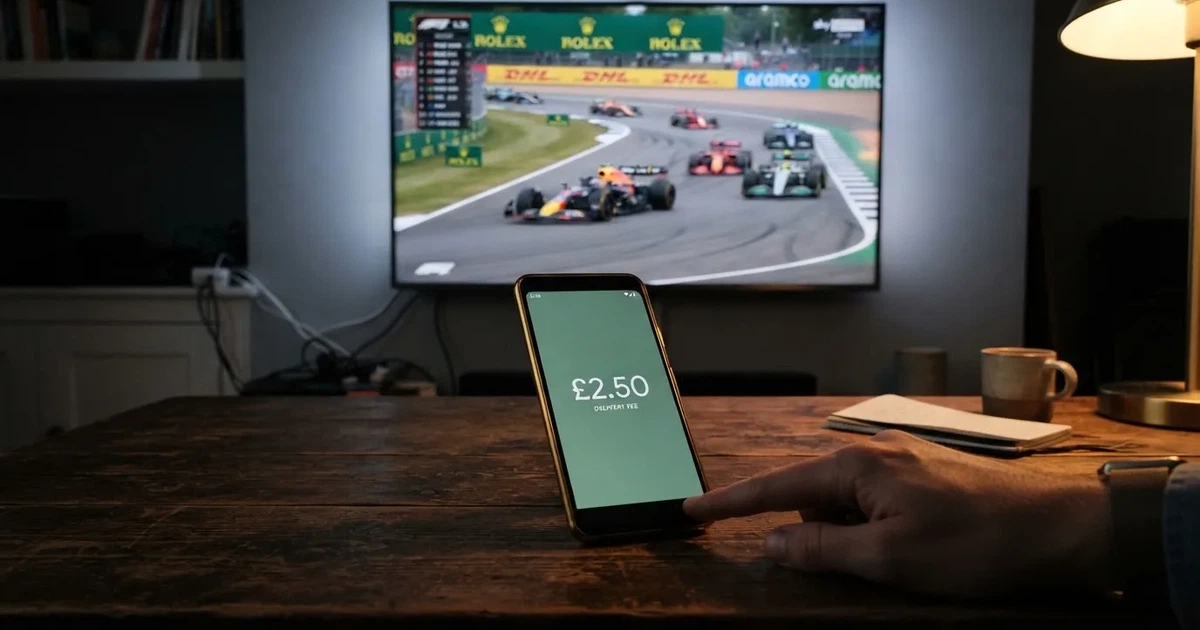
Motorsport is one of the less crowded betting shelves in Great Britain. Football dominates the slip; horse racing gets the front of the page; motorsport sits a couple of shelves down with Formula One at the front and a long tail of touring car, endurance, rallying and motorcycle racing behind it. That does not make it a niche without a margin — every price a bookmaker quotes already has one baked in — and it does not make it a niche without rules. A punt on a Formula One race or a World Rally Championship round in Great Britain sits inside the same licensing regime as a punt on the Premier League, with the same identity checks, the same self-exclusion routes and the same 10x cap on bonus wagering. What changes between motorsport and the football pages is not the law; it is the depth of the market menu, the speed at which prices move in-play, and the patience a bettor needs.
This page sets out what the menu actually contains in 2026 — which series are running, how many Grands Prix sit on the Formula One calendar, what an in-play price on a safety car looks like — and then runs the maths a reader needs to make sense of the odds. The two outcomes that matter for a bettor are the return on a winning bet and the slice the bookmaker keeps on every market. The first is arithmetic; the second is the margin. Both are calculable from the prices the screen shows, and the worked example below uses a two-way market at 1.90 / 1.90 to show what a price that looks fair really costs.
The bookmakers are ten Gambling Commission-licensed operators selected for what each brings to motorsport — a price-boost shop, a Best Odds Guaranteed concession on horse racing, an acca builder that handles same-race Formula One markets, a Dublin-based bookmaker that answers the phone. The brands below do not exhaust the licensed market and the order is not a ranking of safety. It is a shortlist assembled for a motorsport reader who already knows the difference between a pole-position bet and a fastest-lap bet and wants to know where to place it.
The shape of motorsport in 2026
Motorsport is older than most of its governing bodies’ names suggest. The FIA — the Fédération Internationale de l’Automobile — was formed in 1904 and remains the oldest and most prominent international governing body for vehicles with four or more wheels; the FIM does the same job for motorcycle sport. Both bodies sanction the series that British bookmakers price up week in, week out, and both sit behind a calendar that is rarely the same shape two years running.
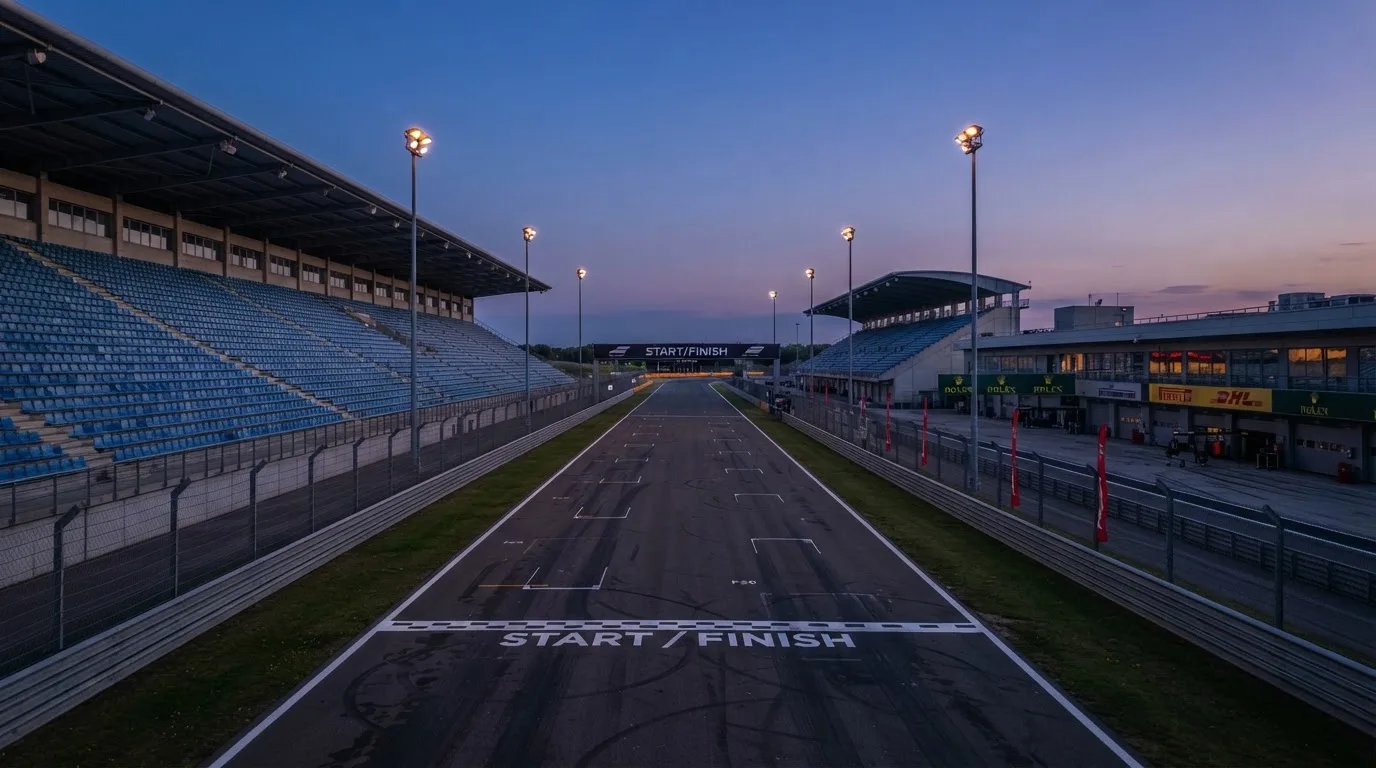
The categories a British reader can bet on split into a handful of broad shapes. Open-wheel racing sits at the top of the price menu: Formula One, Formula E and IndyCar each run their own championship, with Formula One by a margin the most heavily priced. Touring car championships — the British Touring Car Championship and the DTM among them — produce dense season-long markets and short three-race weekends. Endurance racing runs through the 24 Hours of Le Mans each June in France, part of the FIA World Endurance Championship, alongside the 12-hour and 6-hour rounds at Spa, Sebring and Bahrain. Rallying covers the World Rally Championship, with stages priced individually and an outright market that settles on a Sunday afternoon. Motorcycle racing brings MotoGP, World Superbikes and the Isle of Man TT into the same app. None of those categories needs the reader to do anything different at the betting screen; the menus differ, the maths does not.
Formula One in 2026 runs a 23-round calendar. The opening round at Albert Park in Australia is on 8 March 2026; the closing round at Yas Marina in Abu Dhabi is scheduled for 6 December 2026. Eleven teams sit on the grid, with Cadillac as the new entrant and Audi entering as a works team after its takeover of Sauber. The 2026 team cost cap is 215 million US dollars. The 2026 regulations drop the MGU-H, raise MGU-K output to 470 bhp (350 kW), and replace DRS with an active-aerodynamics package that includes an overtake mode available within one second of the car ahead — the kind of detail that shows up in a fastest-lap or a margin-of-victory market. Lando Norris is the reigning Drivers’ Champion going into 2026.
Three things follow from a calendar that long and a category that broad. First, the menu on a motorsport bookmaker is wider in the second half of the season than the first, because the back end of the Formula One calendar overlaps with MotoGP’s flyaways and the World Rally Championship’s closing rounds. Second, in-play pricing on a Grand Prix weekend is the densest in motorsport — every safety car, every pit window and every virtual safety car neutralisation resets the board. Third, outright markets on the World Drivers’ Championship move with every race result and stay priced between rounds, which is where the long-shot value sits if it sits anywhere at all.
The ten licensed bookmakers at a glance
The ten operators reviewed below hold a remote general betting licence from the Gambling Commission. The comparison table sets out the licence number, the licence holder named on the Commission’s public register, and the terms the operator states on motorsport. Every licence was verified against the register at the access date above; the licences are remote general betting standard (real events), which is the licence category that covers a Formula One race, a MotoGP round and a World Rally Championship stage.

| Brand | Licence account and holder | What the operator’s terms state on motorsport |
|---|---|---|
| NetBet | 39170 — Netbet Enterprises Limited | Daily Boosts, Profit Boosts and free bet offers; Bet Builder with instant dynamic odds; sports stats for major leagues. |
| Star Sports | 9177 — Star Racing Limited | Trader-led service; account opening, bet placement and customer queries handled by phone (08000 521 321) and email. |
| DragonBet | 64908 — DragonBet Ltd | Welsh football and rugby markets, racing, American football, in-play betting and bet builder markets. |
| William Hill | 39225 — WHG (International) Limited | Best Odds Guaranteed on UK and Irish horse racing from 8 AM on the day of the race; singles and multiples; ante-post and pool bets excluded. |
| DAZN Bet | 48756 — DZBT Limited | Deposits from £5 by debit card, Apple Pay, Paysafecard, Trustly and Skrill; from £20 by PayPal; no processing fees. |
| Fafabet | 57385 — Taichi Tech Limited | Best Odds Guaranteed on UK and Irish horse racing win and each-way bets from 9 AM on race days; bigger of original price and starting price is paid. |
| BoyleSports | 39469 — Boylesports Enterprise | Sports welcome offer for UK players: a £10 qualifying bet returns £20 in free bets (€10 returns €30 for Irish players). |
| BetTom | 64959 — Bet Tom Limited | Sports welcome: 50% back as a free bet of up to £50, with a matching 50% back up to £50 as free slot funds for casino play. |
| Fitzwilliam Sports | 48760 — SBKI Limited | Dublin bookmaker with capped membership; instant deposits, fast withdrawals, timeouts and deposit limits; “High Stakes Welcome” subject to compliance criteria. |
| BetGoodwin | 2927 — Goodwin Racing Limited | Sports welcome: a £10 bet returns £15 in free bets, split across a £5 sports bet, a £5 acca and a £5 Sub-Cover bet. |
Every brand above is one of several brands the licence holder may run. A licence is not a brand: a single account on the Commission’s register can cover several trading names, and the public register is the place to confirm which is which before a deposit. Two of the brands above — NetBet and BoyleSports — run under separate licence holders but operate from the same wider group structure as brands not listed here. That does not make them safer or less safe. It means the test of who is licensed is the register, not the trading name on the slip.
NetBet
NetBet sits on the Commission’s register under account 39170, with Netbet Enterprises Limited as the named licence holder. The sportsbook runs Daily Boosts, Profit Boosts and free bet offers, a Bet Builder with instant dynamic odds, and a stats section for major leagues. The Boost shop is the part of the menu a motorsport reader is most likely to land on — Daily Boosts are usually priced up the morning of a Grand Prix, with a stake cap that varies by event.
The Bet Builder is what makes NetBet worth a place on a motorsport shortlist. The instant dynamic odds on combined markets mean the price updates as the legs are added, which matters on a same-race Formula One bet where fastest lap, podium finish and winning margin have a non-trivial interaction. The price is not a true joint probability and the builder carries a margin, but the dynamic update means a reader sees what each leg costs before the slip is locked.
A Boost-heavy shop for the reader who prefers building same-race bets over single-event wagers; keep the Daily Boost stake cap in mind.
Star Sports
Star Racing Limited holds account 9177 on the Commission’s register. Star Sports runs a trader-led service: the public number is 08000 521 321, the support inbox is [email protected], and a customer can open an account, place a bet or query a settlement by speaking to a person rather than navigating a chat widget. That is unusual in a market where most customer service has moved to bots and FAQ pages, and it is the single reason Star Sports stays on a shortlist of this shape.
The motorsport menu is what the listings describe — a research source for this page recorded no operator-side statement of motorsport-specific markets. That gap does not mean the menu is empty; it means this page did not find a written claim to lean on. A call to the trader before a Grand Prix weekend is the way to find out what is on the slip and what the maximum stake is on the outright markets.
Verdict: for the reader who wants a person on the other end of the line when a bet is in dispute or a market is missing, and who is willing to make that call.
DragonBet
DragonBet Ltd holds account 64908 on the Commission’s register. The brand’s app leads with Welsh football and rugby, then expands into racing, American football, in-play and bet builder markets. The bet builder covers pre-match and in-play combination markets.
Motorsport sits inside the in-play menu rather than as a top-level tab — the kind of placement a reader notices when looking for Formula One on a Saturday afternoon. The Welsh-league focus does not exclude motorsport; it just means the brand’s identity is regional. A reader who wants the same-race builder on a MotoGP round needs to check the menu before kick-off rather than assume it is there.
A regional specialist with a functional in-play builder, particularly relevant for Welsh punters, though the motorsport depth is secondary to the football and rugby markets.
William Hill
WHG (International) Limited holds account 39225 on the Commission’s register. William Hill pays Best Odds Guaranteed on UK and Irish horse racing from 8 AM on the day of the race, on single and multiple bets, with ante-post, pool and pari-mutuel bets excluded. The concession is horse-racing specific and does not extend to Formula One or MotoGP, but the brand’s motorsport menu is wide enough that a reader placing a racing bet and a motorsport bet in the same app has one place to do both.
The motorsport menu at William Hill runs to outright markets, race-by-race podium and win markets, qualifying and fastest-lap markets on Formula One, and a builder that handles same-race combinations. The Best Odds Guaranteed rule does not touch those markets, but the rest of the trading operation does: the stake limits, the in-play delay, the withdrawal times. A reader using William Hill for motorsport is using the same trading infrastructure as a horse racing customer, which is more than many of the smaller brands can promise.
Ideal for the racing bettor who already holds a William Hill account and wants to consolidate motorsport bets into the same app.
DAZN Bet
DZBT Limited holds account 48756 on the Commission’s register. The deposit menu is the part of the terms a reader notices first: deposits start at £5 by debit card, Apple Pay, Paysafecard, Trustly and Skrill, and at £20 by PayPal, with no processing fees. The low minimum on five of the six methods matters for a reader who wants to keep the first deposit small while testing the menu.
DAZN Bet carries the wider DAZN sports brand, and the motorsport menu follows the broadcast rights the wider brand holds. The menu on any given weekend depends on what DAZN is showing; the outright markets on the World Drivers’ Championship are usually priced through the season. The deposit menu is the headline; the motorsport menu is the part a reader checks before the first deposit.
The payment-friendly option for anyone prioritising Apple Pay or Trustly at a £5 entry, with a menu linked to the brand’s broadcast calendar.
Fafabet
Taichi Tech Limited holds account 57385 on the Commission’s register. Fafabet pays Best Odds Guaranteed on UK and Irish horse racing win and each-way bets from 9 AM on race days, paying the bigger of the original price and the starting price. The 9 AM trigger is one hour later than William Hill’s 8 AM and is the kind of detail that matters on a morning when the betting market moves early.
The motorsport menu at Fafabet is what the listings describe — a research source recorded Best Odds Guaranteed on racing but no operator-side statement of motorsport-specific markets. That gap is the same shape as Star Sports: the menu is not empty, it is just not stated in writing in a place this page could verify. A reader using Fafabet for motorsport needs to check the racing-weekend menu on a Friday afternoon rather than assume the same-race builder is on the screen.
Verdict: the Best Odds Guaranteed trigger time is the headline — a reader who bets early on race mornings and wants the bigger of the two prices paid, with a motorsport menu to be confirmed in-app.
BoyleSports
Boylesports Enterprise holds account 39469 on the Commission’s register. BoyleSports’ sports welcome offer for UK players is £20 in free bets when a £10 bet is placed; the Irish version pays €30 in free bets for a €10 qualifying bet. The free bet is the headline; the welcome terms carry the conditions a reader reads before claiming.
The motorsport menu runs to Formula One, MotoGP and the World Rally Championship, with outright and race markets and a same-race builder on the bigger events. The free-bet stake is not usually returned with a winning free bet, so the value of the offer is the free-bet amount multiplied by the price-margin adjustment, not the headline number. BoyleSports is one of the bigger high-street bookmakers in Ireland and the motorsport menu is the wider operation’s menu in a smaller wrapper.
Best suited to the punter seeking a sizeable free bet against a modest qualifying stake; checking the specific free-bet payout terms is recommended.
BetTom
Bet Tom Limited holds account 64959 on the Commission’s register. BetTom’s sports welcome offer is 50% back as a free bet of up to £50, with a matching 50% back up to £50 as free slot funds for casino play. The split between a sports free bet and a casino slot fund is the kind of structure the 10x bonus cap and the mixed-product promotion ban interact with — a reader who only wants the sports side is paying for the casino side whether they use it or not.
The motorsport menu is what the listings describe — the App Store page recorded no motorsport-specific terms beyond the welcome. A reader using BetTom for motorsport needs to confirm the menu before the first qualifying bet, since the welcome is the part of the terms the operator has stated in writing.
Verdict: the welcome structure is the headline, and a reader taking it on needs to know which half of the offer they actually want before placing the qualifying bet.
Fitzwilliam Sports
SBKI Limited holds account 48760 on the Commission’s register. Fitzwilliam Sports describes itself as a Dublin bookmaker with capped membership, and the welcome is a “High Stakes Welcome” subject to compliance criteria. The capped membership is the headline: this is not a bookmaker that takes every reader who turns up, and the criteria for joining are not stated in writing.
The safer-gambling terms are stated: instant deposits, fast withdrawals, timeouts and deposit limits, and links to GambleAware, GamStop and Gamblers Anonymous. The motorsport menu is what the listings describe — no operator-side statement of motorsport-specific terms was found in research. A reader who wants in needs to ask first, and a reader who gets in finds a Dublin bookmaker with the standard safer-gambling surface.
Verdict: a niche bookmaker with a gated front door and a Dublin identity; for the reader who already knows the brand and qualifies, not for the reader who wants to open an account in five minutes.
BetGoodwin
Goodwin Racing Limited holds account 2927 on the Commission’s register. BetGoodwin’s sports welcome offer is “Bet £10 & Get £15 in Free Bets”, split across a £5 sports bet, a £5 acca and a £5 Sub-Cover bet. The structure is the headline — three free bets of £5 each rather than one free bet of £15 — and the split is the part the reader reads before claiming.
The motorsport menu is what the listings describe — the App Store page recorded no motorsport-specific terms beyond the welcome. The three-part free bet is the kind of structure that forces a reader to find three motorsport markets to use the welcome, and the menu needs to support that before the qualifying bet is placed.
Verdict: the right pick for a reader who wants a three-part free bet and has three motorsport markets to place it on, with the menu to be confirmed in-app.
What the licence means and what it does not
A Gambling Commission remote licence is a permission to provide remote betting facilities to customers in Great Britain. The framework is the Gambling Act 2005, which covers England, Scotland and Wales; Northern Ireland has its own older law and is outside the Act. Since the Gambling (Licensing and Advertising) Act 2014 an operator whose remote facilities are used in Great Britain needs a Commission licence wherever it is based, so a Curaçao, Maltese or Gibraltar licence is not a substitute. Sections 33 and 36 of the 2005 Act, as amended, are the operative provisions.
The Commission’s register lists the licence category on each entry. The categories that cover a motorsport bet are remote general betting standard (real events), remote general betting standard (virtual events), remote general betting limited, remote pool betting and remote betting intermediary — the last is the licence for a betting exchange. Every operator on the shortlist above holds the first: remote general betting standard (real events), which covers betting on a Formula One race, a MotoGP round, a World Rally Championship stage or a 24-hour endurance race. Virtual events — simulated races, esports motorsport, computer-generated greyhounds — are a separate licence category, and a brand licensed only for virtual events cannot legally take a bet on a real race.
The register can be searched by business name, trading name, domain or account number. It is the whole test of who holds a licence, and a count of “how many licensed bookmakers are there in Great Britain” is meaningless without an access date — the number moves as licences are issued, surrendered and revoked. A licence is also not a safety ranking. Two brands can sit on the same register entry as separate trading names of the same licence holder; that does not make them independent. Equally, ten separate brands on ten separate operating companies is not ten independent licences — it is ten licences issued to ten companies in one group.
The test a reader runs is the same in every case: open the Commission’s public register, type the brand name or the domain, and confirm the licence category and the licence holder. That takes under a minute, and it is the only check that means anything in the licensing test. A .co.uk domain proves nothing — licensed operators use .com as well as .co.uk. A brand name in an advertisement proves nothing — operators are responsible for marketing by their affiliates, and an affiliate page is not the register.
There is no statutory list of permitted bets or markets. An operator holds a licence for a category and offers markets under its own rules and the Licence Conditions and Codes of Practice (LCCP). In-play betting is offered by GB bookmakers and the controls are the operator’s licence conditions and customer-protection duties; the law does not characterise in-play as unrestricted, and the page does not either. Spread betting on a financial product is regulated by the Financial Conduct Authority, not the Commission — a fact that matters for the small set of spread-betting brands that also offer fixed-odds motorsport.
Player protection and what a licensed operator has to provide
A licensed bookmaker has to provide a set of safer-gambling tools that an unlicensed one does not. The list is not optional. GAMSTOP — the national multi-operator online self-exclusion scheme — has been a mandatory licence condition for online operators since 31 March 2020. A reader who registers with GAMSTOP is excluded from every GB-licensed online operator for the period they choose; the periods are six months, one year, five years, or five years with auto-renewal. After the minimum period the exclusion stays in place for a further seven years unless the customer asks GAMSTOP to remove it. GAMSTOP covers online sites and apps; betting shops use a separate service.
A financial vulnerability check has applied to licensed remote betting since 30 August 2024 under LCCP condition 3.4.4; the threshold — deposits minus withdrawals exceeding £150 in a rolling 30 days — has applied since 28 February 2025. The check is a public-record check (bankruptcy, county court judgments and the like), not an income check and not a credit reference check. Financial risk assessments — the affordability checks of the press coverage — were announced by the Commission in a staged plan on 7 July 2026 with no start date, so the right framing is “announced, staged, no start date” rather than “in force”. A deposit limit under RTS 12 is also required: the first changes have applied since 31 October 2025 and a second phase was postponed to 30 September 2026; whether the second phase is live is not established.
The minimum age is 18. Name, address and date of birth are verified before a customer can deposit or gamble, including with a free bet or a bonus. The verification has been in place since 7 May 2019, and it means there is no anonymous play at a licensed site. Credit cards are banned for gambling in Great Britain under LCCP condition 6.1.2 since 14 April 2020, including credit-card-funded payments through an e-wallet; debit cards and bank-based payments are not covered by that ban.
Help is signposted inside every licensed app. GamCare runs the National Gambling Helpline; GambleAware funds treatment and education; NHS gambling clinics run in several regions; Gamblers Anonymous runs peer-support meetings. The links are not a marketing flourish — they are the route a reader takes when the safer-gambling tools inside the app are not enough.
Bonuses and free bets in motorsport: what they cost
A welcome offer is a marketing product, not a gift. The shape varies by operator — a free bet, a deposit match, a risk-free first bet — and the cost varies with the conditions attached. Three rules apply across the whole market in Great Britain.
Wagering requirements on bonuses are capped at 10x. A £10 bonus with a 50x wagering requirement needs £500 of qualifying bets; under the cap, no more than £100 of qualifying bets needs to be placed. The cap took effect on 19 January 2026 and applies to every licensed operator. The cap does not apply to free bets with no wagering condition — that case is not established, so a reader should read the operator’s terms before claiming.
Mixed-product promotions are banned. An offer that requires gambling on two or more product types — betting, casino, bingo and lottery — is a mixed-product promotion; the example in the Commission’s rule is “bet on football to get free spins”. A welcome that gives a sports free bet alongside a casino slot fund is not, on its face, a mixed-product promotion if the two sides are independent; the test is whether claiming one requires the other. BetTom’s welcome offer — 50% back as a free bet up to £50 with a matching 50% back up to £50 as free slot funds — is the closest structure on this shortlist to that boundary, and a reader claiming it reads the small print to confirm which half is which.
No promo code is needed and none is printed on this page. The bonuses themselves are described qualitatively in the operator write-ups above; the token that unlocks them is the operator’s own current promotion, not a code that lives on a guide page.
The two terms that cost a bettor the most are the minimum odds for a qualifying bet and the cap on free-bet winnings. A free bet whose stake is not paid back with a win is worth the free-bet amount multiplied by (odds − 1) ÷ odds, adjusted by the market’s payout share. A free bet at 5/1 (6.00 decimal) on a market with a 95% payout share is worth £4 of expected value per £5 of free bet — £1 less than the headline because the stake is not returned. A £30 free bet at the same price and the same market is worth about £24 of expected value. A cap on free-bet winnings — a £30 free bet capped at £200 of winnings, for instance — eats the value when the price is short and the win is large; it costs less when the price is long and the win is small. The terms to read are the minimum odds, the cap and the deadline; the headline is the last thing to look at.
Bet types, odds and the bookmaker’s slice
A bet on motorsport is the same arithmetic as a bet on football, with the same margin and the same return formula. The categories of bet differ; the maths does not.
A single bet pays the stake multiplied by the decimal odds. A £10 bet at 6.00 returns £60, of which £50 is profit; a £10 bet at 1.50 returns £15, of which £5 is profit. A combination bet — a double, a treble, an accumulator — multiplies the legs together. A £10 treble at 2.00 / 3.00 / 4.00 is at 24.00 and returns £240, of which £230 is profit. The same arithmetic applies to a same-game builder on a Formula One race: fastest lap, podium finish and winning margin at 1.80 / 2.50 / 3.00 are at 13.50, and a £10 stake returns £135.
A bet builder is one bet, not a combination of independent bets. The legs interact — a car on pole is more likely to win, which makes the podium finish leg more likely and the winning margin leg smaller — and the price the builder quotes is a joint probability adjusted for the interaction. The instant dynamic odds at NetBet and the Bet Builder+ at bet365 update as each leg is added, so a reader sees the joint price rather than the product of three independent prices. The dynamic price is still a price, and the margin is still in it.
Cash out settles a bet before the event has finished. The cash-out value is the price the bookmaker quotes at the time of the request, not the price the bet was placed at, and the bookmaker’s margin is in the cash-out price as well as the original price. A bet that was 6.00 at placement and is showing 2.00 with five laps to go will cash out at less than the £50 of paper profit on a £10 stake; the gap is the bookmaker’s slice of the in-play price.
The bookmaker’s margin is the slice of every market the bookmaker keeps. On a two-way market with two outcomes the formula is straightforward. The payout share — the proportion of every pound bet that the market returns across all outcomes — is 1 ÷ (1/odds₁ + 1/odds₂) for a two-way market, and the margin is 1 minus the payout share. On a three-way market — the podium finish market with three drivers priced up, the podium position market with three positions — the formula extends to 1 ÷ (1/odds₁ + 1/odds₂ + 1/odds₃). The accumulator market is a one-way market in the technical sense: every leg has to win for the accumulator to win, and the margin compounds across the legs.
A worked example is the clearest way to see the margin in a price. Take a two-way market at 1.90 / 1.90 — a price that looks fair because the two outcomes are priced the same. The payout share is 1 ÷ (1/1.90 + 1/1.90) = 1 ÷ (0.5263 + 0.5263) = 1 ÷ 1.0526 = 0.9501 — about 95.0%. The bookmaker’s margin is 1 minus 0.9501 = 0.0499, or about 5.0% of every pound bet on this market. A £100 stake split evenly between the two outcomes returns £95.01 across both outcomes if both outcomes win exactly their share of stake; the £4.99 gap is the bookmaker’s take.
That 5.0% is the cost a reader pays on a market priced at 1.90 / 1.90. The same calculation at 1.85 / 1.85 gives a payout share of 1 ÷ (0.5405 + 0.5405) = 0.9250 and a margin of 7.5%. At 1.95 / 1.95 the payout share is 1 ÷ (0.5128 + 0.5128) = 0.9750 and the margin is 2.5%. The shorter the price, the tighter the margin a bookmaker needs to make a market — and the wider the margin a bookmaker takes when the price is at the short end. The “best odds” claim on a banner is the price at which the margin is smallest, not the price at which the bet is free.
The result on this page is stated as a band rather than a single number. The 5.0% margin on the 1.90 / 1.90 example is the margin on that market at that snapshot; a different market, a different snapshot, a different bookmaker, or a different leg of a combination bet gives a different number. The point is the formula, not the figure: a reader who can plug two prices into 1 ÷ (1/odds₁ + 1/odds₂) sees the margin on any two-way market on the screen, and the same calculation extended to three prices gives the margin on a three-way market like the podium finish.
Fractional odds are the British form. A price of 5/1 means a £1 stake returns £6 (£5 profit + £1 stake); 11/4 means £2.75 profit on a £1 stake plus the £1 stake back. The conversion to decimal is fractional ÷ fractional + 1 — 5/1 becomes 6.00, 11/4 becomes 3.75, evens (1/1) becomes 2.00. A bet at 5/1 fractional is the same bet as a bet at 6.00 decimal; the form does not change the arithmetic. A bet at shorter than evens — “odds-on” in British usage — is at decimal odds less than 2.00; a price of 4/6 is at 1.67 decimal.
The starting price (SP) is the price the runner — or the car — is at when the event starts, set independently by the betting market. Best Odds Guaranteed (BOG) is a concession on horse racing only: if the starting price is bigger than the price the bet was placed at, the bigger odds are paid. William Hill’s BOG starts at 8 AM on race days; Fafabet’s starts at 9 AM. The concession is on UK and Irish horse racing only; it does not apply to Formula One, MotoGP, the World Rally Championship or any other motorsport category on this page.
What a winning bet pays back
The return on a winning bet is stake × decimal odds. The profit is stake × (decimal odds − 1). The stake is paid back with a winning single, a winning combination bet or a winning builder. A £10 single at 6.00 returns £60; a £10 double at 2.00 and 3.00 is at 6.00 and returns £60; a £10 treble at 2.00, 3.00 and 4.00 is at 24.00 and returns £240.
A free bet is the same arithmetic with a different return. The stake is not paid back with a winning free bet at most operators, so the return is stake × (decimal odds − 1) and the profit is stake × (decimal odds − 1). A £10 free bet at 6.00 returns £50; a £30 free bet at 5.00 returns £120. The headline free-bet amount is not the headline value; the value is the free bet multiplied by (odds − 1), adjusted for the market’s payout share.
The stake on a combination bet is multiplied by every leg. A £10 accumulator at four legs of 2.00, 3.00, 4.00 and 5.00 is at 120.00 and returns £1,200. A £1 Lucky 15 — 15 bets covering four selections in singles, doubles, trebles and a four-fold accumulator — costs £15 in total stake and pays back whatever the combined bets pay, from a single winner upwards. A £1 Heinz at six selections is 57 bets and costs £57; a £1 Goliath at eight is 247 bets and costs £247. The total stake is the unit stake multiplied by the number of bets, and a reader who plans a Lucky 15 budget plans a unit stake × 15.
Each-way betting is two bets of equal stake: a win bet and a place bet. The place terms — quarter the odds, a fifth the odds, a quarter for bigger fields — vary by race and operator; the place part of an each-way bet pays the place fraction of the win odds. A £10 each-way bet at 5/1 (6.00) with a quarter-the-odds place pays the win side at 6.00 and the place side at 2.25 (a quarter of 5 plus 1) — so the total stake is £20, the win returns £100 if the selection wins, and the place returns £32.50 if the selection places. The each-way structure doubles the stake; the place part hedges the win part.
In-play motorsport: the menu and the maths
In-play betting on motorsport is the densest part of the menu on a Grand Prix weekend. The reasons are the structure of a race and the structure of the in-play screen. A Formula One race runs for around 90 minutes, with pit windows, safety cars and weather changes that reset the board several times a race; the in-play market on a race has more pricing opportunities than the in-play market on a football match, which is why the prices move faster.
The categories on an in-play motorsport menu split into the usual shapes. The race-winner market is priced throughout, with the price shortening as the laps tick down. The podium market — driver to finish in the top three — is priced alongside it, with the price shortening earlier in the race as the order settles. The next-lap fastest market is a short-form market that pays on a single lap. The safety car market is a yes/no market that pays if the safety car is deployed before the chequered flag. The winning margin market is a band — under five seconds, five to ten, over ten — that settles when the race finishes.
The cash-out menu mirrors the pre-match menu. The cash-out value is the price the bookmaker quotes at the time of the request, with the bookmaker’s margin baked in. A bet placed at 6.00 on a driver to win the race and showing 2.00 with ten laps to go is a paper profit of £50 on a £10 stake; the cash-out value is less than £50 because the cash-out price is not the true price of the bet at that point. The gap is the bookmaker’s slice of the in-play price.
The in-play delay is the second the bet takes to register after the button is pressed, and it varies by operator. The delay exists to manage the latency between the broadcast feed and the betting screen, and a reader placing an in-play bet on a fast market — the safety car market, the next-lap fastest market — reads the operator’s delay before betting. A reader using an app with a longer delay is at a disadvantage on a market that moves inside a second.
Payment methods, deposits and withdrawals
The payment menu at a licensed motorsport bookmaker runs through debit cards, bank transfers, e-wallets and a small set of newer methods. Apple Pay, Trustly, Paysafecard and Skrill are the e-wallets and instant-bank methods on DAZN Bet’s deposit menu; PayPal is the outlier with a £20 minimum against the £5 minimum on the other five. Credit cards are banned under LCCP condition 6.1.2, including credit-card-funded payments through an e-wallet — a debit card or a bank-based payment is the alternative.
The deposit minimum matters more in motorsport than in some other categories. A reader who wants to bet on a Formula One qualifying session without committing to a full qualifying stake can use the £5 minimum at DAZN Bet to test the menu; a reader who wants to place a Lucky 15 on a Grand Prix weekend at a higher-stake bookmaker needs a bigger first deposit. The minimum is the floor of the menu, not the average stake.
Withdrawals are the part of the payment cycle the welcome offer usually slows down. A first withdrawal at most operators triggers an identity reverification — the same check the operator ran before the first deposit — and the reverification can take 24 to 72 hours on the first request. Subsequent withdrawals are faster, often inside 24 hours for e-wallets and one to three working days for bank transfers. The reverification is not an optional step and a licensed operator cannot waive it; the money-laundering rules require the operator to know the customer on an ongoing basis, not just at the point of first deposit.
The British named-account rule, a state list of permitted payment methods and any rule for or against cryptocurrency deposits at licensed operators are not established. A reader deposits through the operator’s payment menu and does not assume a method is permitted because the operator’s app lists it; the small print on the payment method matters.
Responsible gambling: the routes a reader takes when the menu is not enough
The safer-gambling tools inside the licensed operator’s app are the first route. Deposit limits are a customer-set ceiling on the amount that can be deposited in a fixed time frame; a reader who sets a weekly deposit limit of £100 has a hard ceiling on the menu. Timeouts are a short break from the account, from 24 hours to six weeks; self-exclusion is the longer route, from six months to five years. GAMSTOP is the route that covers every licensed operator, not just the one the reader is on.
The financial vulnerability check is the route the operator takes when a customer’s deposits minus withdrawals exceed £150 in a rolling 30 days. The check is a public-record check, not an income check and not a credit reference check; it asks for the kind of information a county court judgment or a bankruptcy record would carry. The operator’s duty under the rule is to flag a vulnerability, not to block a customer, and a reader who gets a vulnerability check is asked the questions the rule requires.
The routes outside the app are the second layer. GamCare’s National Gambling Helpline is the 24-hour route; GambleAware funds treatment and education; NHS gambling clinics run in several regions for face-to-face support; Gamblers Anonymous runs peer-support meetings. The links are signposted in every licensed app, and a reader who cannot find them inside the app is reviewing the operator’s safer-gambling page before the next session.
The routes outside the app for unlicensed operators do not exist. A reader on an unlicensed site has no GAMSTOP coverage, no Commission complaints route, no approved dispute-resolution body and no British consumer redress if funds are withheld. The same is true of the 10x bonus cap and the £150 vulnerability check. A licensed operator is not the safe choice by default — verification before the first bet, a 10x cap on bonus wagering, a hard ceiling on losses — but it is the choice that carries the routes a reader needs when the menu is not enough.
Verdict
A motorsport reader in Great Britain in 2026 has a wide enough shortlist of licensed operators to cover the menu. Formula One runs 23 rounds from 8 March to 6 December 2026, with eleven teams and a Cadillac entry on the grid; MotoGP, the World Rally Championship and the 24 Hours of Le Mans fill the calendar around it. The bookmakers named above carry a remote general betting standard (real events) licence from the Gambling Commission, with licences verified against the public register at the access date above. The menu on each bookmaker differs — a same-race builder, a Boost shop, a Best Odds Guaranteed concession on horse racing, a Dublin bookmaker with a phone number on the homepage — and the welcome offers differ with them. The maths is the same across the menu: stake × odds is the return on a winning single, the same arithmetic extended to a combination bet, and 1 ÷ (1/odds₁ + 1/odds₂) minus the payout share is the bookmaker’s margin on a two-way market.
Three things follow for the reader who acts on this page. First, the licence is the test of who can take a bet, not the test of who to bet with; the shortlist above is licensed, and a reader who prefers a brand not on the shortlist checks the Commission’s register before opening an account. Second, the welcome offer is a marketing product with a cost attached: a 10x wagering cap, a minimum-odds rule on the qualifying bet, a stake-not-returned rule on the free bet. The headline is the last thing to look at. Third, the bookmaker’s margin is in every price on the screen, and a reader who can plug two prices into the formula above sees the cost of every market they bet on.
The angles the page does not cover — the form of a Formula One team on a wet track, the tyre strategy that decides a World Rally Championship round, the brand-new MotoGP bike that resets the order — are the angles the menu prices. A reader who wants those angles reads the operator’s terms, the Commission’s register and the markets worked out the way this page sets out, and does not assume a headline is the last word.
Frequently asked questions
How can it be checked that a bookmaker holds a Gambling Commission licence?
Open the Commission’s public register, type the brand name or the domain into the search box, and confirm the licence category and the licence holder on the entry. The register can be searched by business name, trading name, domain or account number; the licence category should include “remote general betting standard (real events)” for a bookmaker taking bets on real motorsport. The check takes under a minute and is the only test that confirms a licence, because licensed operators use .com as well as .co.uk and a domain proves nothing on its own. A licence is also not a brand: one entry on the register can cover several trading names.
How is the return on a bet worked out from the stake and the odds?
The return on a winning single bet is stake multiplied by the decimal odds. A £10 stake at decimal odds 6.00 returns £60, of which £50 is profit and £10 is the stake returned. A combination bet multiplies the legs: a double at 2.00 and 3.00 is at 6.00, and a £10 stake returns £60. A bet builder is one bet with a joint price, not a combination of independent bets, and the price the builder quotes is the joint price of the legs.
What is the bookmaker’s margin and how can it be seen in the odds?
The margin is the slice of every market the bookmaker keeps, calculated as 1 minus the payout share. The payout share on a two-way market is 1 ÷ (1/odds₁ + 1/odds₂); on a three-way market it extends to 1 ÷ (1/odds₁ + 1/odds₂ + 1/odds₃). A two-way market at 1.90 / 1.90 has a payout share of about 95.0% and a margin of about 5.0%. The shorter the price, the tighter the margin a bookmaker needs to make a market.
How do fractional odds such as 5/1 convert to decimal odds such as 6.00?
The conversion is fractional ÷ fractional + 1. A price of 5/1 becomes 5 ÷ 1 + 1 = 6.00; 11/4 becomes 11 ÷ 4 + 1 = 2.75 + 1 = 3.75; evens (1/1) becomes 1 ÷ 1 + 1 = 2.00. A bet at 5/1 fractional is the same bet as a bet at 6.00 decimal — the form does not change the arithmetic, only the display. A bet at odds-on, shorter than evens, is at decimal odds less than 2.00.
Which tools for controlling play does a licensed bookmaker have to offer?
A licensed bookmaker has to offer deposit limits, timeouts and self-exclusion as standard, plus GAMSTOP coverage for the multi-operator exclusion route. A financial vulnerability check applies when deposits minus withdrawals exceed £150 in a rolling 30 days; the check is a public-record check, not an income check. Financial risk assessments have been announced in a staged plan with no start date; the deposit-limit framework’s first changes have applied since 31 October 2025, with a second phase postponed to 30 September 2026. Help is signposted to GamCare, GambleAware, NHS gambling clinics and Gamblers Anonymous.
Are betting winnings taxed in Great Britain, and who pays General Betting Duty?
The player pays no tax on betting winnings in Great Britain. General Betting Duty is the operator’s tax on gross profits and is currently 15%; from 1 April 2027 a new remote betting rate of 25% applies within it, while remote bets on UK horse racing, bets on self-service betting terminals in licensed premises, pool betting and in-person betting stay at 15%. Until 1 April 2027 the remote rate stays at 15%, and whether operators pass duty on through odds is not established. A professional gambler should ask HMRC or an adviser, because the player-side rule does not apply to a professional.
Combat & motorsport – Accumulator
Content created by the «Accumulator» team
