
Hurling betting tips 2026
 Available in US
The search for hurling betting tips usually starts the same way: someone wants to know who wins the next match. That is not what this guide offers. Nobody can tell a reader what will happen on a hurling pitch, and any page that claims otherwise is asking the reader to risk money on a guess dressed up as analysis. What this page does instead is explain how predictions are built, how the odds already contain a prediction, and what separates a price worth taking from one that looks generous and is not. The shape of the guide is the shape of the decisions: what the sport is, what the markets look like, how a bet pays, what a bookmaker offer costs, and where the limits of this gift end.

As of 26 October 2026, every licence claim on this page has been verified against the Gambling Commission’s public register for Great Britain.
Hurling welcome offers and free bets
Bookmakers serving British customers lean hard on the welcome offer. The marketing line is “free bet”, “matched bonus”, “bet £X get £Y”, and the headline number is rarely the number the offer is worth. The terms attached decide what the reader actually keeps.

A free bet is a token, not cash. Place it on a winner and the operator returns the winnings, not the stake. A £10 free bet at 5.00 returns £40 in profit (decimal odds 5.00 minus 1, multiplied by £10), not £50. That is the single most-misunderstood line in the welcome-offer market. Read the small print and the difference between “free bet” and “bonus” is the difference between risking the operator’s money and risking some of your own deposit.
A bonus is different. The matched deposit bonus credits a percentage of the first deposit as bonus funds, and those funds carry a wagering requirement. The recent rule change on bonuses in Great Britain, in force since 19 January 2026, caps the wagering requirement at 10× the bonus amount. A £10 bonus with a 50× requirement needed £500 of bets before withdrawal under the old regime; under the cap, no more than £100. That cap is on wagering requirements, not on the size of the bonus, and it does not cap the free-bet stake a bookmaker hands out as part of a promotion. The promotional terms vary: some bookmakers exclude certain bet types from clearing the wagering requirement, others insist on minimum odds for each qualifying bet, and a few restrict payment methods that qualify for the offer.
The mixed-product promotion ban, also in force since 19 January 2026, has changed the shape of welcome packages. The pattern of offering a sports free bet only on condition that the customer also takes a casino bonus, free spins, or lottery entry is now barred. A bookmaker who once offered “bet £10 on football, get 50 free spins” can no longer tie those products together. Welcome offers on sportsbooks have become simpler for it: most now offer a single sports free bet for a qualifying sports bet, or a matched bonus on the first deposit, without dragging a casino product across the line.
What does a welcome offer actually cost? A free bet at minimum qualifying odds of 1.50 (fractional 1/2) on a market with a 5% margin is worth roughly £5 of expected value for a £10 free bet: the reader’s expected profit on the free bet, averaged over many bets, is £5 minus the implied house edge. That is not a prediction. It is an average across a large sample of free bets at the same odds and on the same kind of market. A reader who takes one free bet at long odds and wins will do better; a reader who takes ten and loses will do worse. The marketing language around free bets obscures that arithmetic. The terms do not.
For the bonus: a £100 deposit at a 100% match with a 10× wagering requirement on the bonus, at minimum odds of 1.50, means £1,000 of qualifying bets. At an average margin of 5% across the markets used to clear the bonus, the expected cost of clearing is £50. The headline bonus is £100; the expected cost is £50. The headline reads “double your money”; the arithmetic reads “free at £50”.
The wagering requirement, the minimum odds, the qualifying markets, the deadline, and the cap on bonus winnings all live in the terms. They decide whether the offer is worth taking. A reader who skips the terms on a £200 bonus with a 10× requirement at minimum odds of 1.80 will find out the hard way that the expected cost of clearing is closer to £100 than £50. The market is unforgiving: a higher minimum price means a smaller set of qualifying bets, and the bets the reader does place carry the operator’s margin, which is the same margin the odds pull.
*Game conditions matter.* Dead-heat rules on hurling are uncommon (most markets settle on the head-to-head result), but each-way terms do not apply to a sport without non-runners. A bookmaker’s terms on hurling will state the settlement rule: one GB operator settles on the official result at the end of normal time including injury time, with extra time not counting unless the market specifies. The reader should know what counts as a settled match before staking.
Live betting and cash out on hurling
In-play betting on hurling is the fastest-moving product the bookmaker offers. The odds refresh on every score, and the price on the team that has just hit a point can shift within seconds. The reader holds the line.
The point of in-play is that information arrives during the match that was not available when the market opened. A red card in the first ten minutes of a championship tie changes the shape of the game; the price on the favourite moves accordingly. A weather change, a tactical switch by the manager, a key player pulled with a hamstring strain — all of these reshape the market. The bookmaker’s algorithm adjusts the odds in real time, but the algorithm is not omniscient. The reader’s edge, where it exists at all, is in spotting the gap between what the price says and what the pitch says. That gap closes quickly.
Live hurling markets cover the obvious: match result, next team to score, total points, handicap lines. Less obvious but worth checking on some books: time of first score, method of first score (goal or point), race to a total points line, and quarter-by-quarter lines on major championship matches. The depth of the menu is one of the differences between bookmakers who treat GAA as a primary product and those who list it alongside forty other sports.
Cash out is the operator’s tool for ending a bet before the match finishes. Lock in profit on a winning accumulator before the final game kicks off; cut a loss on a loser before the inevitable lands. The price the operator offers on a cash out is its own price: it contains a margin, and the price is rarely as good as the price the markets would give on the same selection after the cash out settles. A bookmaker offering cash out on every market is the structural difference; a bookmaker offering it only on selected markets forces the reader to leave positions open.
The mechanics matter. A cash out on a winning five-fold accumulator at the four-fold stage gives a lower return than letting the bet ride if the fifth leg is a heavy favourite. The cash-out price reflects the probability of the final leg landing, less the operator’s margin on that cash-out market. A sharp reader knows the fifth leg’s true probability and refuses the cash out if the price on offer is below it.
What does a live-bet margin look like? In-play margins run tighter than pre-match because the bookmaker is pricing more frequently and the odds reflect the latest information. A 5% pre-match margin might compress to 3% in-play on a major championship match. On a low-profile club fixture the market might widen rather than tighten, depending on how the bookmaker prices the action. The reader cannot see the margin in the price, but they can spot it: a price of 1.91 on a 50/50 shot is the same price as a pre-match price of 1.91 on a 50/50 shot, and the bookmaker makes the same overround.
Streaming is part of the live offering for some operators. RTE and GAAGO hold the broadcast rights to All-Ireland championship matches; a bookmaker who has sub-licensed those streams offers in-play and live video side by side. The reader should know that a bookmaker without streaming rights still offers in-play on the same fixtures, just without the video. That is a product difference, not a market difference.
Bet types and odds in hurling markets
The single bet is the foundation. Pick the winner, stake the amount, the bet pays at the odds, and the result settles at the final whistle. Everything else is a structure built on top.
The accumulator (or “acca”) strings several selections together, with all selections needing to win for the bet to pay. The odds multiply: four selections at 3.00 each combine into a price of 81.00. The payout follows the same logic: a £10 stake at 81.00 returns £810 (£800 profit plus the £10 stake). The catch is that every leg adds the bookmaker’s margin, and a four-fold carries the margin of four separate markets rather than one. A £10 stake at 81.00 on a market with an average 5% overround across the four legs is worth less than a £10 stake on a single selection at 20.25, even though the headline odds are the same. The compounding margin is the cost of the accumulator.
The each-way bet is a horse racing tradition that does not apply to hurling. There are no place terms on a head-to-head market. The reader should not be lured by bookmakers offering each-way on sports that do not have non-runners.
The handicap market gives the underdog a head start on the scoreboard. A team at +4 on the handicap starts the match, for betting purposes, four points ahead. The handicap line moves the odds: a heavy favourite giving 4 points trades at longer odds than the same team on the straight winner market. The reader who thinks the favourite will win comfortably takes the handicap; the reader who thinks the favourite will win narrowly takes the winner market.
Totals betting: over/under on the total points scored in a match. A line of 30.5 total points means the reader takes the over if they think more than 30 points will be scored, the under if they think fewer. The line is set by the bookmaker and moves based on how the action comes in. A reader who thinks a championship final between two attack-minded sides will clear 35 points takes the over; a reader who thinks a defensive tie stays under 28 takes the under.
The bet builder combines markets from a single match into one bet. Goalscorer markets do not exist on hurling the way they do on football, but a bet builder can combine match result, total points, and the team to score first into a single price. The same compounding-margin logic applies: a bet builder carries the margin of each leg.
How does the decimal odds price work? A price of 3.00 means a £10 stake returns £30 (the £10 stake plus £20 profit). A price of 1.50 means a £10 stake returns £15 (the £10 stake plus £5 profit). A price of 6.00 means a £10 stake returns £60 (£10 plus £50 profit). The fractional odds and decimal odds are interchangeable: 5/1 fractional is 6.00 decimal, 11/4 fractional is 3.75 decimal, evens (1/1 fractional) is 2.00 decimal. The conversion is divide the first number by the second and add one.
Odds on hurling tend to be wider than on football. A match between two evenly-matched teams might be priced 1.91 / 1.91 on football and 1.85 / 1.85 on hurling, depending on the operator. The wider odds carry a wider margin: at 1.85 / 1.85 the overround is 8.1%, against 4.7% at 1.91 / 1.91. The reason is liquidity — football attracts more action, and the bookmaker can run tighter margins. The reader on a hurling market pays more in margin than the reader on a football market, before either has placed a bet.
Hurling fixtures and the championship calendar
Hurling is one of two sports governed by the Gaelic Athletic Association (GAA), the other being Gaelic football. Fifteen players a side, the ball struck with a stick called a hurley, the goal above the crossbar worth three points and the ball over the crossbar worth one. Senior inter-county matches run for seventy minutes in two 35-minute halves. The sport’s heartland is the south of Ireland, with Munster and Leinster providing the bulk of the championship teams.
The All-Ireland Senior Hurling Championship is the headline competition. The provincial championships (Munster and Leinster) feed into the All-Ireland series. In the 2026 championship, Leinster ran six teams and Munster five, each in a round-robin group; the top two in each province met in the provincial final and the third-placed team went into the All-Ireland quarter-finals. Limerick beat Galway in the 2026 final at Croke Park, Dublin, on 19 July 2026. Tipperary won the 2025 title.
The championship structure matters for betting because the market is shaped by the format. A round-robin group stage produces more matches than a straight knockout, and more matches mean more markets. The All-Ireland series runs from late spring into July; the provincial championships run earlier in the year; the club championship fills the autumn and winter.
The National Hurling League runs through the early months of the year, from January into the spring. The league is a useful early-season indicator of form, but the markets are thinner than on the championship proper. The pre-season competitions (the Waterford Crystal Cup in Munster, the Walsh Cup in Leinster) give bookmakers the chance to price teams before the league starts.
Club hurling is its own market. The All-Ireland Club Hurling Championship pits the county champions against each other; the provincial club championships feed into the All-Ireland series. Club matches can be harder to price because the line-ups are less well-known to the betting public and the markets are less liquid. A reader who bets on club hurling should expect wider odds and thinner coverage than on inter-county matches.
What does the bookmaker offer on a championship weekend? Most GB-licensed bookmakers list the All-Ireland series, the provincial championships, and the National League. Live markets run on the bigger matches; pre-match only on the smaller ones. The depth of the menu is a measure of how seriously the operator treats the sport.
Top 10 hurling betting sites reviewed
The ranking below is built on the same test as the regulator’s own register: who holds a Gambling Commission remote licence for general betting on real events in Great Britain. Ten operators meet that test; this section ranks them on the second test, which is what each one offers the hurling bettor beyond the licence. The licence is the floor. Everything above it is the operator’s own product.
| Brand | Licence & Holder | Hurling Coverage |
|---|---|---|
| Kalooki Sportsbook | 057730-R-333396-005 (Kalooki Sportsbook Limited) | Championship fixtures |
| William Hill | 039225-R-319373-015 (WHG (International) Limited) | Full championship & in-play |
| Fafabet | 057385-R-333191-006 (Taichi Tech Limited) | Championship fixtures |
| Bet600 | 044731-R-323941-016 (Tyche Tech Limited) | Major championships |
| Swifty Sports | 058957-R-334734-006 (Swifty Global (UK) Ltd) | Championship & in-play |
| bet365 | 055148-R-331498-002 (Hillside (UK Sports) ENC) | Full championship & in-play |
| Paddy Power | 039439-R-319330-013 (PPB Counterparty Services Limited) | Championship & in-play |
| BoyleSports | 039469-R-319383-025 (Boylesports Enterprise) | All-Ireland, provincial & league |
| 888sport | 039028-R-319297-014 (888 UK Limited) | Championship fixtures |
| QuinnBet | 061011-R-335683-004 (QuinnBet (Gibraltar) Limited) | Major championships |
1. Kalooki Sportsbook
Kalooki Sportsbook is operated by Kalooki Sports Book Ltd, a company registered in England under number 12938274. The Gambling Commission licence is account 57730, and the operator is a GAMSTOP member. The site covers a broad sports menu with hurling among the listed sports, and the welcome offer is a sportsbook-typical free bet for a qualifying first bet. The appeal is the focused product: fewer distractions than the big-name books, fewer promos to confuse the terms, a straightforward sportsbook layout that serves the reader who wants to place a bet without being sold to.
For the hurling bettor, the test is whether Kalooki covers the championship weekends at competitive odds. Smaller operators do not always price GAA as tightly as the big names; the trade-off is a cleaner welcome offer and a less aggressive promotional cycle. A reader who places one or two bets a week on hurling and wants the licence floor without the noise will find this a sensible match.
2. William Hill
William Hill is one of the long-established names in British betting, with a Gambling Commission account of 39225 under WHG (International) Limited. The brand pays Best Odds Guaranteed on UK and Irish horse racing from 8 AM on the day of the race, on both single and multiple bets (the rule excludes ante-post, tote and pari-mutuel bets). For a hurling bettor the horse-racing BOG is irrelevant; what matters is the sportsbook menu, the in-play offering, and the Football Acca Boost, which runs until 30 May 2027 on accas of two or more legs at minimum odds of 1/5 fractional (1.20 decimal), boosting from 3% on a double to 200% on 20 or more legs, capped at £10,000 per online bet.
The hurling coverage sits inside a wider sportsbook. William Hill prices all the major GAA fixtures through the championship and offers in-play on the bigger matches. The brand’s stability is the structural advantage: the licence, the long trading history, the standard settlement rules. The drawback is the same as for every legacy bookmaker: a wider promotional calendar, more terms to read, and a less focused product on niche sports than a specialist.
3. Fafabet
Fafabet is licensed by the Gambling Commission under account 57385, held by Taichi Tech Limited. The site pays Best Odds Guaranteed on UK and Irish horse racing win and each-way bets from 9 AM on race days: if the starting price (SP) is larger than the original price, the bigger odds are paid. The brand positions itself on competitive odds and a clean sportsbook. For hurling, the reader gets a focused menu with the major championships priced, and in-play on selected matches.
The trade-off versus the bigger names is brand recognition. A reader who has not heard of Fafabet should check the licence on the Commission’s public register before placing the first bet. The licence is the test; the brand recognition is not. Fafabet passes the test.
4. Bet600
Bet600 is operated under Tyche Tech Limited with a Gambling Commission account of 44731. The brand pays Best Odds Guaranteed on horse racing: if the SP is bigger than the early or show price taken, the bet settles at the SP. The sportsbook offers a clean interface with a deep menu across football, horse racing, and a growing list of other sports. Hurling is covered on the major championships.
The appeal for the hurling bettor is the price-competition model. Bet600 prices aggressively on football and runs the same approach on the secondary menu, including GAA. A reader who compares odds across multiple books before placing a bet will sometimes find Bet600 offering the best line. The drawback is that a smaller book means thinner liquidity on niche markets; the price might be best, but the maximum stake on a hurling market might be lower than at a bigger book.
5. Swifty Sports
Swifty Sports is licensed under Swifty Global (UK) Ltd with a Gambling Commission account of 58957. The site offers Best Odds Guaranteed, Cash Out on markets including horse racing and football, daily price boosts, live streaming and in-play betting; a Bet Builder is listed as coming soon. The brand is newer to the GB market than the legacy names, and the product reflects that: a modern app, a focus on live betting, and a promotional cadence built around daily boosts.
For the hurling bettor, Swifty Sports covers the major championships and offers in-play on selected matches. The coming-soon Bet Builder is worth watching: a GAA-specific bet builder would be a differentiator on a sport where most books offer only pre-packaged markets. Until the Bet Builder lands, the reader uses the standard markets and the cash-out function for live positions.
6. bet365
bet365 holds a Gambling Commission account of 55148 under Hillside (UK Sports) ENC. The brand is the official global betting partner of the UEFA Champions League and is described as the most-downloaded sports betting app in the UK. The product is the deepest in the market: Bet Builder+ combines markets from a single event into one bet, available pre-match and in-play; Super Boosts, Winnings Boosts on Bet Builders and selected singles, and daily Bet Boosts sit alongside the standard markets.
The in-play offering is the structural advantage. bet365 offers in-play betting and live streaming of events worldwide, plus Bet Track, Match Live, and a Live Golf Tracker. For hurling, the reader gets a full menu on the championship and in-play on selected matches, with the Bet Builder allowing combination bets within a single fixture. The drawback is the promotional complexity: more terms to read, more conditions to meet, and a higher chance of a bonus-related restriction on a bet the reader wanted to place.
7. Paddy Power
Paddy Power is operated under PPB Counterparty Services Limited with a Gambling Commission account of 39439. The Paddy Power Sports Betting app covers football, horse racing, boxing, rugby, tennis, golf, darts, snooker, and F1. The brand is a household name in British and Irish betting, and the product is built around a high-volume sportsbook with a strong promotional cadence. Hurling sits inside the menu with the major championships priced and in-play on selected matches.
The trade-off versus the focused GAA product is volume and noise. Paddy Power is built for the reader who bets on many sports, not for the reader who bets only on hurling. The promotional offers are frequent, the terms are short and clear, and the odds are competitive on the bigger markets. The reader who bets weekly on championship hurling and weekly on Premier League football will find this a sensible single-wallet solution; the reader who bets only on hurling will find more menu depth on a specialist.
8. BoyleSports
BoyleSports is licensed under Boylesports Enterprise with a Gambling Commission account of 39469. The brand’s sports welcome offer for UK players is £20 in free bets when a £10 bet is placed, with an Irish-market counterpart of €30 in free bets for a €10 bet. BoyleSports is a stronger name in Irish betting than in British betting, and the product reflects that: deep coverage of GAA, competitive odds on the provincial championships, and a focused Irish sports menu.
The appeal for the hurling bettor is the GAA-specific product depth. BoyleSports prices the All-Ireland series, the provincial championships, and the National League, with in-play on selected matches. The drawback is the brand’s smaller British footprint versus the legacy names; a UK reader using the site should confirm the jurisdiction in the terms before placing a bet.
9. 888sport
888sport is operated under 888 UK Limited with a Gambling Commission account of 39028. The brand offers pre-match and in-play betting, Cash Out, Bet Builder, racing streams, BetFinder form tools, a live bet feed, and daily boosted odds. The product is a full-service sportsbook with a deep menu across football, horse racing, tennis, and a wider list that includes hurling on the major championships.
The appeal is the form tools. BetFinder gives the reader access to form data on selected sports; the live bet feed surfaces in-play action across markets. For hurling, the menu covers the championship weekends with in-play on the bigger fixtures. The trade-off is the same as for the legacy names: a wider promotional cycle, more terms, more complexity on bonus offers.
10. QuinnBet
QuinnBet is licensed under QuinnBet (Gibraltar) Limited with a Gambling Commission account of 61011. The brand’s Best Odds Guaranteed applies to Irish and UK horse racing bets from 10:00 AM daily on singles, multiples and system bets, with a maximum benefit of £150 per customer per race. The sportsbook covers a broad menu with hurling among the listed sports.
For the hurling bettor, QuinnBet prices the major championships and offers a clean sportsbook layout. The BOG cap on horse racing is a structural feature: a reader who bets heavily on racing should not expect uncapped BOG on QuinnBet. The hurling markets are not capped in the same way, but the brand’s promotional focus is on racing rather than GAA.
Hurling betting fundamentals
Hurling is fast. The ball moves from one end of the pitch to the other in seconds, scores arrive in clusters, and the momentum of a match can shift on a single play. A reader who bets on hurling should know the sport well enough to read the momentum: a team that has just conceded a goal will play differently in the next five minutes than a team that has just scored one. The odds adjust accordingly.
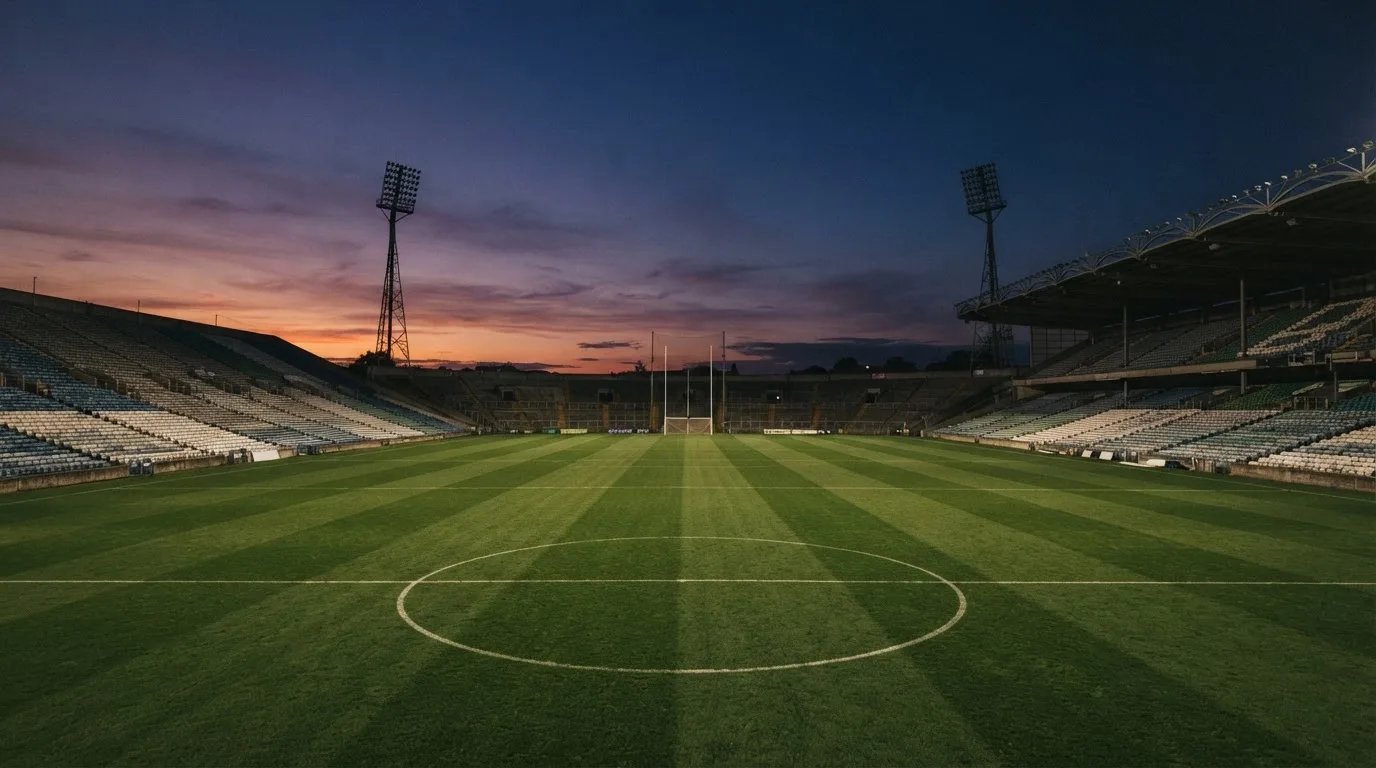
The goal is the scoring play that changes a match. A goal (the ball in the net below the crossbar) is worth three points; a point (the ball over the crossbar between the uprights) is worth one. A goal-to-point ratio of one-to-sixteen in a match means roughly one goal every sixteen points scored; the actual ratio depends on the teams and conditions. A wet, windy day in Thurles produces a different ratio than a dry summer evening in Croke Park. The reader who bets on totals or handicaps needs to read the conditions as well as the form.
Fifteen players a side. The full-back line, the half-back line, the midfield pair, the half-forward line, and the full-forward line. Substitutions are limited in hurling compared to football; the starting fifteen carries most of the minutes. A team with a strong bench has an advantage in the second half of a championship match.
The championship structure rewards consistency. A round-robin group stage punishes a bad afternoon more than a straight knockout would; the provincial final gives the top two teams a second chance to reach the All-Ireland series. The reader who bets on a championship should know the format: a team that has already qualified for the knockout might rotate its team in the final group game, and the odds on that match will reflect the rotation.
How the bookmaker’s margin works in hurling markets
The margin is what the bookmaker keeps of every pound staked. It is built into the odds, and the reader cannot see it directly, but the arithmetic is simple: take the implied probabilities of all outcomes, add them together, and the excess over 100% is the margin. A two-way market at 1.90 / 1.90 (decimal) implies probabilities of 52.63% and 52.63%, totalling 105.26%; the excess is 5.26%, the margin.
The illustration below uses an example, not a quoted price. A two-way market at decimal odds of 1.90 on each side gives a payout share of 1 ÷ (1/1.90 + 1/1.90) = 1 ÷ 1.0526 = 95.00%. The margin is 100% minus 95% = 5.00%. The reader receives 95p back for every £1 staked across both outcomes, before the individual result is known.
The same arithmetic on a wider price: a two-way market at 1.85 / 1.85 gives a payout share of 92.50% and a margin of 7.50%. The bookmaker keeps more of every pound staked, and the reader gets less back. The difference between 5% and 7.5% margin is the difference between a bookmaker pricing a major championship match with deep liquidity and a bookmaker pricing a club match with shallow liquidity. The reader on the club match pays more in margin for the same bet.
The accumulator compounds the margin. A four-fold at 3.00 / 3.00 / 3.00 / 3.00 (decimal) on each leg, with a 5% margin on each leg, gives a combined payout share of 0.95⁴ = 81.45%. The margin on the combined bet is 18.55%. A £10 stake at the combined odds of 81.00 returns £810; the bookmaker keeps £189 of every £1,000 staked across the four legs. The headline odds are striking; the margin is the cost.
What is the value bet? A value bet is a price that is higher than the true probability of the outcome, once the margin is taken out. If the reader’s estimate of the true probability of a team winning is 60%, and the bookmaker’s price implies 50%, the bet has positive expected value. The reader is paying £1 to win £2 at a price that reflects a 50% chance, when the reader’s estimate puts the chance at 60%. Over many such bets, the reader makes money. Over a single bet, anything can happen.
Finding value bets requires two things the reader cannot get from the bookmaker alone: an estimate of the true probability, and a discipline to bet only when the price exceeds it. The estimate comes from form, statistics, line-ups, conditions, and the read of the match. The discipline is the harder part. A reader who bets every match on the championship will find value bets rare, because the bookmaker has priced most matches correctly. A reader who bets selectively, only when the price looks wide, will find value bets more often — and lose money on the bets the bookmaker priced correctly and the reader skipped.
The cost of the margin is paid on every bet, win or lose. A reader with a 5% edge over the bookmaker still pays the 5% margin on every bet, so the net edge is zero. A reader with a 10% edge over the bookmaker pays the 5% margin on every bet and nets 5%. The edge must be larger than the margin for the reader to make money in the long run.
Legality and regulation of hurling betting in Great Britain
The Gambling Commission is the regulator for commercial gambling in Great Britain. Licensed under the Gambling Act 2005, the Commission licenses operators, sets the rules, and maintains the public register that is the test of who holds a licence. Since the Gambling (Licensing and Advertising) Act 2014, an operator whose remote facilities are used in Great Britain needs a Commission licence wherever it is based. A Curaçao, Maltese or Gibraltar licence is not a substitute.
The public register can be searched by business name, trading name, domain, or account number. The reader who wants to confirm that a bookmaker holds a GB licence can do so in under a minute. The register is the test; everything else is marketing. A bookmaker who claims to be licensed but does not appear on the register is not licensed.
The minimum age for betting in Great Britain is 18. Identity is verified before the first deposit or gamble, including with a free bet or bonus. A reader who cannot verify their identity cannot use it. The verification is a licence requirement, in force since 7 May 2019.
Betting credit is banned. Since 14 April 2020, the LCCP has prohibited the use of credit cards for gambling, including credit-card-funded e-wallet payments. Debit cards and bank transfers are not covered by the ban. A reader who tries to deposit with a credit card will be blocked at a licensed bookmaker.
Self-exclusion runs through GAMSTOP, a national multi-operator online self-exclusion scheme and a mandatory licence condition for online operators since 31 March 2020. A reader who self-excludes through GAMSTOP is blocked at every GB-licensed online operator for the chosen period (six months, one year, five years, or five years with auto-renewal). After the minimum period, the exclusion stays in place for a further seven years unless the customer asks GAMSTOP to remove it. Betting shops use a separate service.
Financial vulnerability checks apply at licensed remote bookmakers. The rule (LCCP condition 3.4.4, in force since 30 August 2024) requires a public-record check (for example, bankruptcy or county court judgments) when a customer’s deposits minus withdrawals exceed £150 in a rolling 30-day window. The check is in force since 28 February 2025. It is not a credit reference check; it does not look at income. Financial risk assessments (the “affordability checks” of the press) have been announced in a staged plan (Commission article of 7 July 2026), with no start date for the full implementation.
There is no state-set deposit ceiling for betting. The deposit limit rules (RTS 12) require operators to offer a gross deposit limit on a fixed time frame; the first changes applied from 31 October 2025, and a second phase was postponed to 30 September 2026. The limit is the customer’s choice, not a state-imposed cap.
The tax treatment is simple. The player pays no tax on betting winnings in Great Britain. General Betting Duty is the operator’s tax, currently 15%; from 1 April 2027 a new remote betting rate of 25% applies within it, while remote bets on UK horse racing, bets on self-service betting terminals in licensed premises, pool betting and in-person betting stay at 15%. The duty is the operator’s, not the player’s.
Offshore bookmakers without a GB licence cannot legally serve customers in Great Britain. Providing gambling facilities in Great Britain without the licence the Act requires is an offence under section 33 of the Gambling Act 2005, aimed at the operator. A customer who bets on an unlicensed site commits no offence under the Act, but loses the protections: no Commission oversight, no GAMSTOP coverage, no approved dispute resolution, no British consumer redress if funds are withheld. The unlicensed site is not bound by the 10× bonus cap or the £150 vulnerability check. The framing is “licensed = protections and obligations; unlicensed = no protections and possible loss of funds”. Neither is “the safe choice” by default.
Responsible gambling on hurling
Hurling is a fast sport and the markets move fast with it. The temptation to chase a loss with a bigger stake on the next match is the same temptation that exists on every sport, and the answer is the same: set a budget, set a stake limit, and stop when the budget is gone.
A licensed GB bookmaker offers the tools to enforce the discipline: deposit limits (daily, weekly, monthly), timeouts (24 hours to six weeks), and self-exclusion (six months to five years via GAMSTOP). The deposit limit is a customer-chosen ceiling; the operator cannot raise it without a cooling-off period. The timeout is a short break that the customer cannot reverse early; the self-exclusion is a longer break that the customer cannot undo until the period ends.
The help exists outside the bookmaker. GamCare runs the National Gambling Helpline. GambleAware funds treatment and research. NHS gambling clinics offer clinical support. Gamblers Anonymous runs peer-support meetings. A reader who feels the betting is no longer fun has somewhere to go.
The stake the reader can afford to lose is the stake the reader should bring. A staking session of zero is a session that costs nothing. The bookmaker’s welcome offer is not income; the bonus is not free money; the free bet is a token with a margin attached. The odds are not predictions; the predictions are not certainties. The match will end the way the match ends, and the stake is the price of watching it.
Reading the odds: what the price tells the reader
The decimal odds are the price. A price of 2.50 means a £10 stake returns £25 (£15 profit plus the £10 stake). A price of 1.40 means a £10 stake returns £14 (£4 profit plus the £10 stake). The lower the price, the more the bookmaker thinks the outcome is likely; the higher the price, the less likely.
The implied probability is what the price suggests. A price of 2.00 implies a 50% chance (1 ÷ 2.00 = 0.50). A price of 4.00 implies a 25% chance (1 ÷ 4.00 = 0.25). A price of 1.50 implies a 66.67% chance. The implied probability is not the bookmaker’s estimate of the true probability; it is the bookmaker’s estimate plus the margin. The reader who wants the bookmaker’s true estimate divides the implied probability by the payout share (1 minus the margin).
The fractional odds and the decimal odds say the same thing in different forms. 5/1 fractional is 6.00 decimal (5 divided by 1 plus 1). 11/4 fractional is 3.75 decimal (11 divided by 4 plus 1). Evens (1/1 fractional) is 2.00 decimal. The conversion is one-way: the reader who knows one form can work out the other. The reader who bets on British books will see fractional odds by default; the reader who bets on European books will see decimal odds. Both are saying the same thing.
What the price does not say is who wins. The price is the bookmaker’s prediction, dressed up as a number the reader can bet on. A reader who confuses the bookmaker’s prediction with the truth will lose money over time, because the bookmaker’s prediction contains a margin and the truth does not.
Frequently asked questions about hurling betting
What is a value bet and why is no tip ever certain?
A value bet is a price that exceeds the reader’s estimate of the true probability of the outcome, once the bookmaker’s margin is removed. No tip is ever certain because every match is decided on the pitch, and the form, statistics and line-ups that build a prediction do not decide the result. The bookmaker’s price contains the margin; the reader’s estimate is one of many estimates; the result is unknown until the final whistle.
What is the bookmaker’s margin and how can it be seen in the odds?
The margin is the percentage of every pound staked that the bookmaker keeps, built into the odds. It is the sum of the implied probabilities of all outcomes, minus 100%. A two-way market at 1.90 / 1.90 has implied probabilities of 52.63% and 52.63%, totalling 105.26%, an overround of 5.26% and a margin of 5.0%. A wider market at 1.85 / 1.85 totals 108.11%, with an overround of 8.11% and a margin of 7.5%. The margin is the cost of the bet; the lower the margin, the more the reader keeps on average.
How is the return on a bet worked out from the stake and the odds?
The return on a winning bet is the stake multiplied by the decimal odds. A £10 stake at 3.00 returns £30 (£20 profit plus the £10 stake). A £10 stake at 1.50 returns £15 (£5 profit plus the £10 stake). A £10 stake at 6.00 returns £60 (£50 profit plus the £10 stake). The profit is the return minus the stake. The formula is the same for singles and accumulators; the odds of an accumulator are the product of the legs.
How can it be checked that a bookmaker holds a Gambling Commission licence?
The Gambling Commission’s public register lists every licensed operator in Great Britain, searchable by business name, trading name, domain, or account number. The register is the test of who holds a licence; the marketing claims of a bookmaker are not. The reader who wants to verify a licence goes to the register and searches the operator’s name or domain. The result of the search is the final answer.
Which tools for controlling play does a licensed bookmaker have to offer?
A GB-licensed bookmaker must offer deposit limits, timeouts, and access to GAMSTOP self-exclusion. Deposit limits are customer-chosen ceilings on a fixed time frame. Timeouts are short breaks from 24 hours to six weeks. GAMSTOP self-exclusion runs from six months to five years and blocks the customer at every GB-licensed online operator. The bookmaker also offers reality checks (session-length reminders) and access to support organisations including GamCare, GambleAware and Gamblers Anonymous.
How do fractional odds such as 5/1 convert to decimal odds such as 6.00?
The conversion is divide the first number by the second and add one. 5/1 becomes 5 ÷ 1 + 1 = 6.00. 11/4 becomes 11 ÷ 4 + 1 = 3.75. Evens (1/1) becomes 1 ÷ 1 + 1 = 2.00. The formula works in both directions: the reader who knows the decimal odds can subtract one to get the fractional odds. A decimal price of 3.50 minus 1 is 2.50, expressed as 5/2 fractional.
Rugby, cricket & Gaelic – Accumulator
Content created by the «Accumulator» team
