
Where to bet on table tennis in 2026, and what each bookmaker really gives you
 Available in US
Last checked against the Gambling Commission’s public register on 26 October 2026 — every licence number in this guide is cross-checked there.

The short answer in Great Britain is that any bookmaker serving customers here must hold a Gambling Commission remote licence, and table tennis is offered by essentially all of them. The longer answer — and the one this guide is built around — is that the offering looks much the same at first glance and diverges sharply once you ask what each brand gives the punter who bets on the sport. A short match can move in three or four rallies, a single tournament runs dozens of fixtures a day, and the differences between bookmakers are not the events but the markets, the cash-out rules, the bonuses and the limits around them. Choice, in other words, is not which sportsbook shows table tennis. It picks apart once you ask which one prices it tightest, which one lets you build a same-game multi, which one pays out a winning bet fastest, and which one’s welcome offer is the marketing line versus the one that costs the punter the least to clear. The rest of this guide walks those routes.
Ten bookmakers for table tennis, and what sets each apart
A shortlist of ten licensed operators is one answer to “where can I bet on table tennis in Great Britain”, but the differences between them are not the licences — every operator here holds a Gambling Commission remote licence, every one takes part in GAMSTOP, every one verifies identity before a customer can place a bet. What sets them apart is the rest of the offering: how each bookmaker prices table tennis, which in-play markets it opens, how its cash-out behaves when a match turns in the third game, whether it runs a bet builder on a single match, what the welcome offer is worth once the wagering conditions are stripped out, and how fast a withdrawal lands.
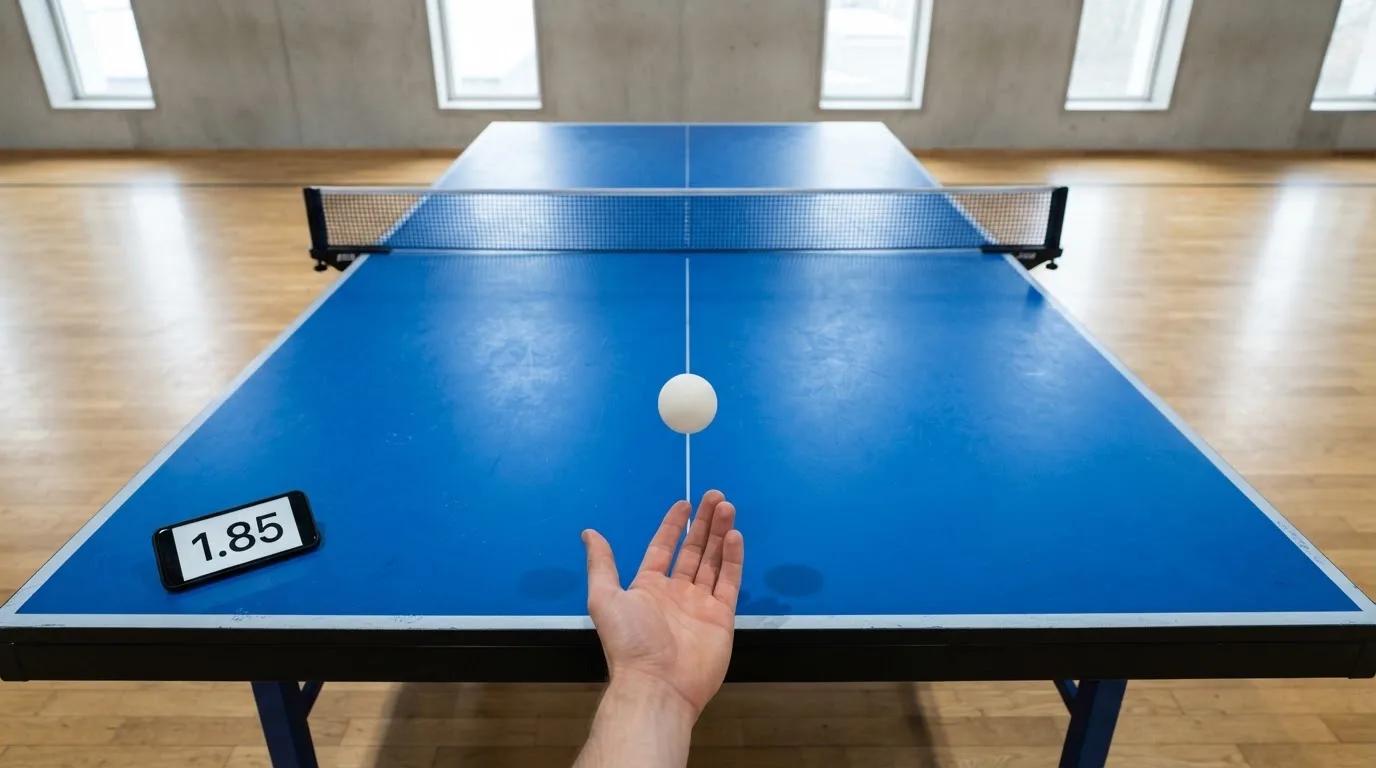
The table below is the comparison in one read. The licence number is the Gambling Commission’s own account reference for the operator; the third column is what each bookmaker’s terms say about table tennis. Operator write-ups follow, and each one closes on a verdict specific to the brand rather than the same suitability line repeated.
| Brand | Licence holder and Commission account | What the operator’s own terms say about table tennis |
|---|---|---|
| Betway | Betway Limited — account 39372 | Free Bet Club issues free bets after £25 in settled stakes; table tennis covered in pre-match and in-play |
| Dabble | Dabble Sports UK Ltd — account 65677 | Welcome offer of free bets for new customers, minimum odds apply, stake not returned |
| Spreadex | Spreadex Limited — account 8835 | Spread betting losses can exceed deposits; fixed-odds and spread in one app, with Bet Builder and cash out |
| bet365 | Hillside (UK Sports) ENC — account 55148 | Bet Builder+ across one event, in-play and live streaming, daily boosts and acca insurance-style promos |
| Smarkets | Smarkets (Malta) Limited — account 39173 | Betting intermediary (exchange) — back and lay prices on table tennis fixtures, open-bank instant deposits |
| Bet600 | Tyche Tech Limited — account 44731 | Sportsbook with daily price boosts; horse racing carries Best Odds Guaranteed |
| BoyleSports | Boylesports Enterprise — account 39469 | Welcome free-bet package for new UK customers; full sportsbook with in-play and cash out |
| Betfair | PPB Counterparty Services Limited — account 39439 | Sportsbook plus exchange on the same account; Bet Builder, live streaming, 90-Minute Payout market on football |
| NetBet | Netbet Enterprises Limited — account 39170 | Bet Builder with dynamic odds, Daily Boosts and Profit Boosts, sports stats for major leagues |
| Swifty Sports | Swifty Global (UK) Ltd — account 58957 | Best Odds Guaranteed, Cash Out, daily boosts and live streaming; Bet Builder listed as coming soon |
Betway
Betway’s UK site runs under Betway Limited, Gambling Commission account 39372, on a remote general betting standard (real events) licence. The brand is best known to a sports punter for the Free Bet Club: opt in once, stake £25 on sports in a week, and it credits £10 in free bets as two £5 tokens — repeat weekly. Table tennis sits inside the sportsbook’s standard pre-match and in-play offering rather than as a featured vertical, so the depth on a long-form tournament is what the wider market offers rather than something specific to Betway. The licensed operator takes part in GAMSTOP, and identity is verified before a first deposit.
For a punter who bets through the week across several sports and likes a recurring free-bet trickle, Betway is the sensible choice. Anyone after deep, table-tennis-specific market depth or a same-game multi on every fixture will find Betway ordinary on both counts.
Dabble
Dabble Sports UK Ltd holds Gambling Commission account 65677, on the same general betting standard licence. Its onboarding route leans social: a chat-style bet feed alongside the slip, with social features that the rest of the licensed market does not run. The welcome offer is a fixed-stake bet returning a free-bet token for new customers — minimum odds apply, the free bet expires in seven days and the stake is not returned on a win. The site takes part in GAMSTOP and verifies identity before a customer can gamble.
For a punter who finds the conventional slip-and-stake interface flat, Dabble is the route with a different shape. For the punter who prizes the deepest in-play market or the lowest margin on a table-tennis match, the social layer is decoration.
Spreadex
Spreadex Limited, Gambling Commission account 8835, runs a combined fixed-odds and spread betting book — unusual in the licensed market, where most brands run fixed odds only. Spread betting losses can exceed the deposit, and Spreadex states that explicitly. The app layers one-click, automatic and partial cash out across both products, a Bet Builder that ties fixed-odds markets into a single bet, and live streaming of UK and Irish horse racing, greyhounds, tennis, NFL and selected football. Spread betting that is a financial product sits under the Financial Conduct Authority, not the Gambling Commission — a distinction that matters when the loss can outrun the deposit.
For a punter who reads form and wants spread betting on table tennis (a market Spreadex offers selectively), the brand is the prize. For a punter who bets fixed-odds only, the spread product is a category that does not help them, and the fixed-odds side is the smaller half of the offering.
bet365
bet365 is the heavyweight in the licensed market, and the one UK pages set themselves on. The operator is Hillside (UK Sports) ENC, Gambling Commission account 55148, and the platform’s table tennis offering reflects the wider product. Bet Builder+ combines several markets from a single match into one bet — pre-match and in-play, which is the route a punter who watches a long-form tournament wants. Super Boosts, Winnings Boosts on Bet Builders and selected singles, daily Bet Boosts and Bet Track for following bets live are all built in. Live streaming runs across events worldwide, with Match Live on football and a Live Golf Tracker for following bets in play.
For a punter who wants one account for every market, every form of live betting and every boost, bet365 is the obvious answer. Anyone preferring a smaller sportsbook with a quieter inbox will find the brand’s daily promotional cadence a stream rather than a tap.
Smarkets
Smarkets is licensed as a betting intermediary — a betting exchange — under Smarkets (Malta) Limited, Gambling Commission account 39173. That licence category is different from the others on this shortlist: an exchange matches back and lay bets between users, and the platform’s commission is on net winnings, not on a margin built into the price. UK customers can deposit by open bank transfer from £10 to £10,000 instantly, withdraw £10 to £100,000 within six hours, and use a debit card up to £15,000. Table tennis fixtures are listed as exchange markets rather than sportsbook ones, and the depth depends on how many users are running a market on a given match.
For a punter who wants to lay a player as well as back one, the exchange is the only shape that lets them. For the punter who wants a same-game multi on a single table-tennis fixture, the exchange is the wrong tool.
Bet600
Bet600 runs under Tyche Tech Limited, Gambling Commission account 44731, on a remote general betting standard licence. The sportsbook stacks daily price boosts across its calendar, and horse racing carries Best Odds Guaranteed — if the starting price beats the early price taken, the bet is paid at the SP. Table tennis is offered alongside the other sports, with the usual pre-match and live markets.
For a punter who likes boosted prices across a busy sports calendar, Bet600 is the route. For the punter whose whole interest is table tennis, the operator is one of several with an ordinary sportsbook product rather than anything sport-specific.
BoyleSports
BoyleSports’ UK licence sits with Boylesports Enterprise, Gambling Commission account 39469. Irish customers and UK customers each have a separate welcome package — £20 in free bets when a £10 bet lands for UK players, €30 in free bets when a €10 bet lands for Irish players, with the usual minimum-odds and expiry conditions. The sportsbook carries the standard mix: pre-match, in-play, cash out and the promos the licensed market runs.
For a punter who likes a single welcome package across the bookmakers’ offers, BoyleSports is straightforward. For the punter who shops welcome offers across the whole licensed set, BoyleSports is one offer among the standard-comparison bookmakers.
Betfair
Betfair is a hybrid: a sportsbook and an exchange on the same account, licensed under PPB Counterparty Services Limited, Gambling Commission account 39439. The sportsbook runs Bet Builder, in-play, free live streaming of UK and Irish horse racing and football, and the 90-Minute Payout market on football — a market that pays out on the score after 90 minutes regardless of added time. The exchange runs back and lay prices across the same events. Table tennis sits in both halves of the product, with the sportsbook covering the standard markets and the exchange running an order book on the bigger matches.
For a punter who wants sportsbook and exchange on one login, Betfair is the only route on this shortlist that combines them. For a punter who wants a sportsbook without the exchange’s two-sided complexity, Betfair is one option among several standard sportsbooks.
NetBet
NetBet runs under Netbet Enterprises Limited, Gambling Commission account 39170. The sportsbook layers Daily Boosts, Profit Boosts and a Bet Builder with instant dynamic odds — the price updates as the player adds a leg, which is the shape the licensed market has moved to over the past couple of seasons. Sports stats for major leagues sit beside the betting slip.
For a punter who likes dynamic-odds Bet Builders across several sports, NetBet is in line with what the market now offers. For the punter who bets on table tennis only, the platform’s stats suite covers major leagues and table tennis sits alongside rather than at the centre.
Swifty Sports
Swifty Global (UK) Ltd holds Gambling Commission account 58957 for Swifty Sports. The brand lists Best Odds Guaranteed, Cash Out across markets including horse racing and football, daily price boosts, live streaming and in-play — with Bet Builder marked as coming soon. A “coming soon” is the honest shape for the brand today: the licensed market’s table-tennis offerings overlap heavily, and the platforms differentiate on features still in build rather than on a built-out product.
For a punter who wants a small sportsbook with the usual BOG and cash-out features, Swifty Sports is in the running. For a punter who needs Bet Builder now, the brand is on the way rather than arrived.
What table tennis is, and what “betting on it” means to a bookmaker
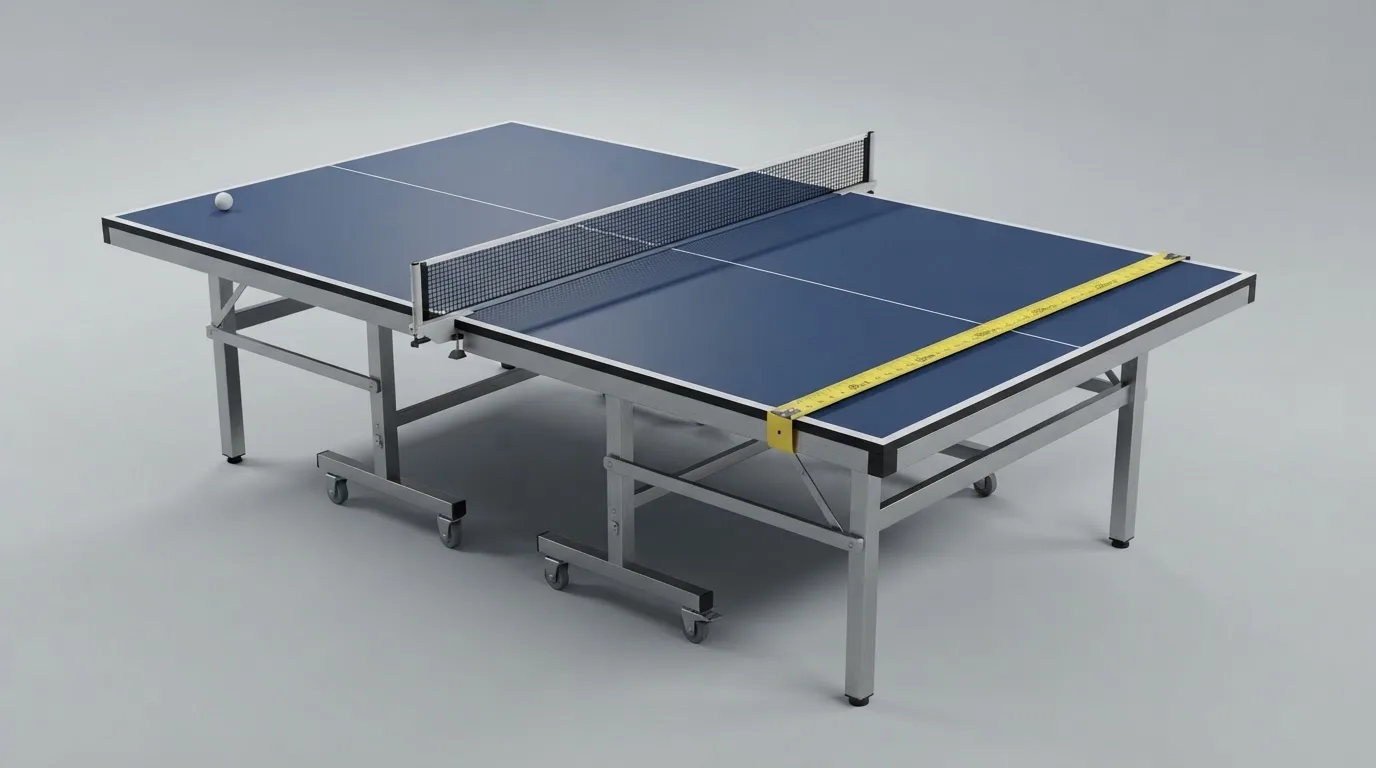
Table tennis is the simplest racket sport to explain and the most underrated to bet on. A game is won by the first player to reach 11 points; if both players reach 10, the first to lead by two takes the game. Service alternates every two points, and once both players reach 10 each player serves one point in turn. A match is the best of any odd number of games — typically best of five in the early rounds of a tournament and best of seven later on. Scoring moved from 21 points to 11 in 2001, which is why older accounts of the sport still talk about 21-point games. The table is 2.74 metres long, 1.525 metres wide and 76 centimetres high, the net 15.25 centimetres, and the ball 40 millimetres in diameter at 2.7 grams — numbers the rule book sets and the World Table Tennis tours play to.
For a punter, three features make the sport a different betting proposition from football or horse racing. The matches are short — a best-of-five can be over in twenty minutes — which means a tournament runs dozens of fixtures a day and a bookmaker can offer a long menu of in-play markets. The rallies resolve in three or four points, which means the in-play price can move several times in a single game. And the fixtures sit in a tight calendar: the World Table Tennis (WTT) tours, the ITTF World Championships, the Olympic tournament and the continental cups fill the year, with lower-tier Setka Cup and TT Cup events running almost daily.
The International Table Tennis Federation (ITTF) was founded in 1926 and table tennis has been an Olympic sport since 1988. The licensed UK market prices the sport on every event the ITTF sanctions, alongside the Setka Cup and the regional TT Cups that run year-round.
The law, and what a “licensed” bookmaker means in Great Britain
In Great Britain, a bookmaker serving customers here must hold a Gambling Commission licence wherever it is based — that has been the position since the Gambling (Licensing and Advertising) Act 2014, and it sits in sections 33 and 36 of the Gambling Act 2005 as amended. The Commission is the non-departmental public body sponsored by the Department for Culture, Media and Sport, and it licenses the whole commercial market under the 2005 Act, which covers England, Scotland and Wales. Northern Ireland is outside the Act and has its own older law; a “GB licence” regulates the operator’s business with customers in Great Britain, not customers in Northern Ireland.
The relevant licence type for an online sportsbook is a remote general betting standard (real events) licence. A betting exchange runs under a remote betting intermediary licence — the category under which Smarkets and Betfair’s exchange are licensed. There is no state monopoly and no cap on the number of licences, which is why the shortlist here has ten operators and the wider register has many more.
There is no statutory list of permitted sports or markets: a bookmaker holds a licence for a category and offers markets under its own rules and the Licence Conditions and Codes of Practice (LCCP). Esports are treated like any other event, virtual events sit on a separate licence category, and politics, TV shows and novelty markets are offered by GB bookmakers without statutory prohibition. No statutory cap on stakes exists in sports betting — operators set their own maximums and may restrict customers, and the limit a punter sees on a stake is the operator’s, not the regulator’s.
What a licence means in practice: a customer at a licensed bookmaker is verified before the first deposit (since 7 May 2019), even if the first bet is a free bet or bonus, and the operator takes part in GAMSTOP, the national multi-operator online self-exclusion scheme that has been a mandatory licence condition since 31 March 2020. Credit cards are banned for gambling in Great Britain since 14 April 2020 (LCCP condition 6.1.2), including credit-card-funded e-wallet top-ups. The minimum age is 18. A financial vulnerability check (LCCP condition 3.4.4, in force since 30 August 2024) applies to a customer whose deposits minus withdrawals exceed £150 in a rolling 30 days (since 28 February 2025): it is a public-record check (bankruptcy, county court judgments), not an income check. Deposit limits (RTS 12) — operators must offer a gross deposit limit on a fixed time frame, with the first changes applied since 31 October 2025 and a second phase postponed to 30 September 2026. The punter pays no tax on betting winnings in Great Britain; General Betting Duty is the operator’s tax on gross profits at 15% until 1 April 2027, when a new remote betting rate of 25% applies within it (HM Government policy paper of 26 November 2025), with remote bets on UK horse racing, self-service betting terminal bets, pool betting and in-person betting staying at 15%. Spread betting has its own rates — 3% financial, 10% other.
What it means for a bookmaker to be unlicensed: providing gambling facilities in Great Britain without the licence the Act requires is an offence under section 33 (on summary conviction up to 51 weeks’ imprisonment, a fine up to level 5, or both; six months in Scotland), aimed at the operator. No offence aimed at a customer who merely bets on an unlicensed site was found. The cost of using an unlicensed bookmaker is the loss of protection — no GAMSTOP coverage, no Commission complaints route, no approved dispute-resolution body, no British consumer redress if funds are withheld, not bound by the £150 vulnerability check or the 10x bonus cap. The Commission enforces by disruption — cease-and-desist notices, search-engine referrals, work with registrars, hosts and payment providers — and the operator’s site is taken down rather than blocked at the ISP. The honest framing is that licensed means checks, limits, GAMSTOP and the bonus cap, with verification before the first bet; unlicensed means none of those and possible loss of funds.
Safer gambling, and the routes a punter has if the betting stops being fun
The licensed market’s safer-gambling architecture is not a marketing line — it sits in the licence conditions and the codes the operators work under. GAMSTOP is the mandatory multi-operator self-exclusion scheme and a condition of every remote licence: a customer can register for six months, one year, five years, or five years with auto-renewal, and after the minimum period the exclusion stays in place for a further seven years unless the customer asks GAMSTOP to remove it. GAMSTOP covers online sites and apps; betting shops use a separate service. A punter who has self-excluded cannot open a new account at any licensed operator during the exclusion, and the operator’s verification checks before the first deposit would catch a self-excluded customer attempting to register with a different identity.
The financial vulnerability check is the route the licensed market has chosen for early intervention. When a customer’s deposits minus withdrawals exceed £150 in a rolling 30 days (since 28 February 2025), the operator runs a public-record check — bankruptcy, county court judgments — to identify a customer in financial distress. This is a marker for the operator to ask further questions or apply a deposit limit, not an automatic refusal of bets. The financial risk assessments (the press’s “affordability checks”) are announced in a staged plan with no start date — “announced, staged, no start date” is the honest framing, not “in force”.
Help is available outside the operators. GamCare runs the National Gambling Helpline, and GambleAware funds treatment and support across Great Britain. The NHS runs gambling clinics in several regions. Gamblers Anonymous runs peer-led meetings. A punter who feels the betting is moving from a hobby into a habit can self-exclude through GAMSTOP, set a deposit limit with the operator, or call GamCare.
A punt is a punt; the structure above is what catches a punter whose betting stops being a choice. The route a punter does not need today still works when a punter does need it tomorrow.
Crypto and anonymity — what a UK punter can and cannot do
No licensed UK operator runs an anonymous route. Identity is verified before the first deposit — name, address and date of birth — and the verification runs even when the first bet is a free bet or a bonus, a condition that has held since 7 May 2019. A British named-account rule, a state list of permitted payment methods and any rule for or against cryptocurrency deposits at licensed operators are not established: every licensed operator takes deposits by debit card and bank transfer, and a few take e-wallets, but no licensed operator runs an anonymous or crypto-first sign-up.
The crypto routes a search engine returns — “table tennis betting with bitcoin”, “table tennis betting with crypto”, “blockchain table tennis betting” — sit at offshore operators licensed outside Great Britain. Those operators do not hold a Gambling Commission licence, do not verify a customer before the first bet in the same way, and do not bind themselves to the LCCP’s protection framework. A British punter who uses one loses the protection of the licensed market: no GAMSTOP, no Commission complaints route, no British consumer redress if funds are withheld, no bound on the wagering requirement. The customer-side route is not the legal risk — the operator providing facilities in Great Britain without a licence is the offence — but the loss-of-protection risk is real.
The honest framing: a licensed bookmaker does not run an anonymous route. An unlicensed bookmaker does. Neither is “the safe choice” by default — licensed means identity-verified, GAMSTOP and the bonus cap; unlicensed means no British protection, possible loss of funds, and an operator whose business does not run through the Gambling Commission’s register.
Bonuses, free bets and the wagering cost behind them
Every bookmaker on the shortlist runs a welcome offer; several run ongoing promotions. The marketing line is “£X in free bets”, and the cost the punter pays is the wagering condition, the minimum odds, the expiry and the stake-not-returned rule. A free bet is a token whose stake is not paid back on a win; the winnings are credited, but the original £10 free bet is not added to the return. A “risk-free” bet refunded as a free bet is the same shape, and a “100% bonus” requiring 10x wagering means the punter bets £100 of bonus money before any withdrawal.
The rules the licensed market runs under since 19 January 2026: wagering requirements on bonuses are capped at 10x — a £10 bonus at 50x wagering is no longer allowed under the cap, and under the cap no more than £100 in bonus needs to be wagered at any single offer — and mixed-product promotions (an offer requiring gambling on two or more product types such as betting, casino, bingo and lottery) are banned. Whether the cap applies to free bets with no wagering condition, and any cap on the money value of a bonus, are not established in the rules. “Risk-free”, “free bet”, “boosted odds” — the marketing words travel further than the conditions the offer sits behind, and a punter who reads the small print walks away with a different number than a punter who reads the headline.
What a bonus really costs
The arithmetic of a bonus is the same as the arithmetic of any other promotion: the bonus base multiplied by the wagering factor gives the required turnover, the turnover divided by the stake per bet gives the number of bets, and each bet is paid at odds above the minimum the bonus allows. For a £10 free bet at a 10x wagering factor with a minimum odds of 1.50 (1/2) and a £5 stake per bet, the required turnover is £100, the number of bets is 20, and the bonus is paid only on the bets above 1.50.
The cost is the turnover multiplied by the margin of the market the punter bets on. A £100 turnover on a market with a 5% margin costs £5 in expected loss. The free bet’s stake is not returned on a win, which means the value of a £10 free bet at odds 2.00 is £10 × (2.00 − 1) ÷ 2.00 × 0.95 = £4.75 — the expected value of the free bet, not its headline value, and a number the marketing line does not quote.
What the offers on this shortlist really say
Betway’s Free Bet Club gives up to £10 in free bets every week after opt-in; spending £25 or more on sports earns 2 x £5 free bets. The shape is a recurring trickle rather than a one-off, and the wagering conditions are the Free Bet Club terms rather than a single welcome offer.
Dabble’s welcome offer is “Bet £10, Get £10 in Free Bets” on a first deposit for new customers, with minimum odds applying, a 7-day free bet expiry and the stake not returned. A £10 free bet at odds 2.00 with the stake not returned is worth £4.75 on a market with a 5% margin — half the headline.
bet365’s daily Bet Boosts, Super Boosts and Winnings Boosts run on selected singles and Bet Builders rather than as a single welcome offer. The shape is a stream of small promotions rather than a one-off headline, and the conditions sit on each promotion’s terms page rather than in a single document.
Smarkets and Betfair, as betting exchanges, do not run welcome offers in the same shape as the sportsbooks — the platform’s revenue is commission on net winnings rather than a margin built into the price. A punter who wants a welcome offer looks at the sportsbook side; a punter who wants the lowest price looks at the exchange.
Swifty Sports, Bet600, BoyleSports and NetBet each run their own welcome and ongoing promotions; the marketing line is the headline, and the cost the punter pays sits on the terms page. A punter who bets once and withdraws once reads the welcome offer; a punter who bets every week reads the recurring promotions.
The honest framing: a welcome offer is a marketing line, and the cost is the wagering condition behind it. A punter who treats the offer as a reason to sign up pays more than a punter who treats the offer as a small adjustment to a sportsbook they would use anyway.
Live betting, cash out and the markets that move with the match
Table tennis is one of the licensed market’s strongest live-betting sports, for the reasons the earlier section named: matches are short, the in-play price can move several times in a game, and a tournament runs dozens of fixtures a day. The licensed bookmakers on the shortlist open in-play markets on every match the operator has priced pre-match, and the markets run to the same shape: match winner, game winner, total games, handicap, correct score.
Cash out is the route the punter has when the in-play price has moved in their favour and the original bet can be settled before the match finishes. The licensed market offers three shapes: full cash out (settle the bet at the current price), partial cash out (settle a portion of the stake and leave the rest running) and automatic cash out (a trigger the punter sets — close the bet at odds 1.80, for instance, and the bookmaker does it). The bookmaker’s terms say which shape runs on which market, and the punter who wants automatic cash out looks at the platform that offers it.
Live streaming is the third leg. bet365, Spreadex, Betfair and Swifty Sports each offer live streaming of selected events; the list varies and the punters in West Africa and the licensed UK market see different streams. A punter who watches the match in the app and bets on it from the same screen is the route live streaming is built for.
Bet Builder is the route the punter has when one match carries several markets the punter wants to combine. Bet Builder+ on bet365, the dynamic-odds Bet Builder on NetBet and the Bet Builder on Spreadex and BoyleSports tie several markets from one event into a single bet. The price updates as the punter adds a leg, and the final price is the product of the legs. The wagering on a Bet Builder is the same as on any other multi — the price is the combined price, and the margin sits inside each leg.
The honest framing: table tennis is a live-betting sport, the licensed market covers it well, and the route the punter has is the bookmaker that runs the markets the punter wants in the shape the punter wants. The choice is not “live betting or not” — every licensed bookmaker on the shortlist runs in-play. The choice is which bookmaker’s live product the punter uses.
Tips, predictions and the strategies that do not pay
A punter who searches for “table tennis betting tips” or “best table tennis betting tips” is met with tipsters, prediction sites and a marketplace of bets that trade on a punter’s belief that someone knows who will win. The honest answer is that nobody knows who will win — table tennis is a sport of three- or four-point rallies in a single game, the form book is shorter than football’s, and a player seeded outside the top ten can take a set off a seeded top-three player at any tournament. A punter who acts on a “sure” bet or a system that wins loses real money on the tipster’s word.
What a punter can do is build a bankroll discipline: a unit stake as a fixed percentage of the bankroll, a stake per bet at the same unit, and a record of every bet settled. The arithmetic behind the discipline is plain: a punter betting at level stakes on a 5% margin market loses 5p per £1 staked over time; a punter betting at level stakes on a 10% margin market loses 10p per £1 staked. The difference is the bookmaker’s choice, not the punter’s.
What the licensed market offers is the odds, the markets and the in-play product. What the licensed market does not offer is a system that wins. A tipster’s record is the tipster’s record, not the punter’s, and a tipster who charges for picks on top of a margin the punter pays is the punter paying twice — once at the price and once at the tipster’s subscription. The honest framing: the bankroll discipline and the choice of bookmaker are the only strategies the punter can carry with confidence.
Bet types, odds and the meaning of a price
A table-tennis betting slip takes several shapes, and the markets the licensed bookmakers run are the standard set the wider sport follows.
Match winner — back one of two players to win the match. The price is a decimal (1.50, 2.00, 3.75) or a fractional (1/2, 1/1, 11/4) equivalent, and the conversion is a/b → a ÷ b + 1.
Game winner — back one player to win a specific game in a best-of-five or best-of-seven match. The price moves faster than the match-winner price and is the route the punter has when the in-play read is on a single game rather than the whole match.
Total games — back the total number of games in a match to be over or under a line. A best-of-five match has a total-games line of 3.5: over means four or five games, under means three.
Handicap — back one player to win after a game handicap is applied. A -1.5 handicap on a best-of-five means the player must win 3-0; a +1.5 handicap means the player can lose 2-3 and still win the handicap bet.
Correct score — back the exact score of the match. A 3-1 correct-score bet in a best-of-five pays more than the match-winner bet but is harder to land.
Bet Builder / same-game multi — combine several markets from one match into one bet. The price is the product of the legs, and the wagering is on the combined price.
Spread betting (Spreadex only on this shortlist) — back one player to win by more or less than the bookmaker’s predicted margin. Spread betting losses can exceed the deposit; the cost of a losing spread bet is not capped at the stake.
Each-way — two equal-stake bets: one on the win, one on the place. Common on horse racing, rarer on table tennis.
Accumulator (“acca”) — combine several selections from several matches into one bet. The price multiplies, and the punter needs every selection to win.
A “free bet” is a token whose stake is not returned on a win; the winnings are credited, and the punter’s net is the winnings only.
A “price boost” is an enhanced price on a selection — a higher decimal odds than the same selection would show on the standard board. The bookmaker’s terms say which selections are boosted and for how long.
The honest framing: the markets are the markets, the prices carry the bookmaker’s margin, and the punter’s job is to read both. A price boost on one match does not change the bookmaker’s margin on the rest of the book.
How the bookmaker’s margin sits in the price
A bookmaker’s margin is the slice of every unit staked on a market the bookmaker keeps on average, regardless of the result. The way it shows up in the price is straightforward: for a two-way market with both outcomes priced at 1.90, the implied probabilities are 1/1.90 + 1/1.90 = 0.526 + 0.526 = 1.053, which means the book is paying out 1.053 units for every 1 unit staked — a payout share of 1 ÷ 1.053 = 0.950, and a margin of 1 − 0.950 = 0.05, or 5%.
That is the standard shape of a tight book. A two-way match-winner market on a table-tennis fixture at 1.90 / 1.90 carries roughly a 5% margin — a band rather than a single figure, because different bookmakers run at different prices and the same bookmaker prices different matches at different margins. A market priced at 1.80 / 1.80 has a higher margin (1/1.80 + 1/1.80 = 1.111, payout share 0.900, margin 10%); a market priced at 2.00 / 2.00 has no margin at all, which is what an exchange sits at when the back and lay prices balance exactly.
The same calculation runs across a three-way market (a typical football 1/X/2): 1/odds₁ + 1/odds₂ + 1/odds₃ gives the implied probabilities, the sum is greater than 1 by the bookmaker’s margin, and the margin is 1 minus the reciprocal of the sum. A typical Premier League 1/X/2 might run at a 6-8% margin; a typical lower-tier match runs higher, because the bookmaker takes more risk on a market the punters bet less.
The honest framing: a price is a price, a margin sits inside it, and the punter’s job is to choose the bookmaker whose margin is the lowest for the markets the punter bets on. The bookmaker who quotes 1.90 / 1.90 on a match-winner market keeps less of the punter’s stake than the bookmaker who quotes 1.80 / 1.80.
Tournaments, fixtures and the year-round calendar
Table tennis runs fixtures almost every day of the year, and the calendar divides into three streams.
The ITTF and WTT tour — the top tier. World Championships, World Cup, the WTT tour events (WTT Champions, WTT Star Contender, WTT Contender), the ITTF Finals and the Olympic tournament. These are the events the licensed bookmakers price to the deepest markets and the longest pre-match menu. The Olympic tournament sits inside the ITTF stream and has been part of the programme since 1988.
The continental championships — the European Championships, the Asian Championships, the African Championships, the Pan American Championships. Each is a stand-alone event with a short fixture list, and the licensed bookmakers price the matches the calendar names.
The lower-tier streams — the Setka Cup, the TT Cup, the WTT Youth events, the regional leagues. These run almost daily and the licensed bookmakers offer them on the standard market menu with the depth the operators’ pricing teams cover. The Setka Cup and TT Cup, in particular, are streams the licensed bookmakers price into the in-play product because the fixtures are short and frequent.
A punter’s calendar depends on the markets the punter bets. A punter who bets match-winner on the WTT tour watches the WTT fixtures; a punter who bets in-play on short matches runs through the Setka Cup and TT Cup calendars. The licensed bookmaker covers every tier, and the depth on each tier is what the bookmaker’s pricing covers.
The honest framing: the calendar is the calendar, and the punter’s match-list is the punter’s match-list. A bookmaker who quotes every Setka Cup fixture offers more markets than a bookmaker who quotes only the WTT events, but the margin on the long tail is not the margin on the head.
A worked margin at the odds a reader actually meets
Take an illustrative two-way market at decimal odds 1.90 / 1.90 (fractional 9/10). The implied probabilities are 1/1.90 + 1/1.90 = 0.526 + 0.526 = 1.053, the payout share is 1 ÷ 1.053 = 0.950, and the margin is 1 − 0.950 = 0.05 — 5%.
That is the band’s lower edge on a tight book. A typical licensed bookmaker on a table-tennis match-winner market runs at 1.85 / 1.85 to 1.90 / 1.90 — a margin band of roughly 5% to 8% depending on the fixture and the operator. A market priced at 1.80 / 1.80 sits at a higher margin (roughly 10%); a market at 2.00 / 2.00 sits at zero. The band is the honest framing because the same bookmaker prices different matches at different margins, and different bookmakers price the same match at different margins. The punter’s job is to read the price the bookmaker actually quotes on the match the punter bets.
The headline number a marketing page quotes — “5% margin” — is not the whole story. A bookmaker with a 5% margin on match-winner may run a 10% margin on correct-score and a 7% margin on handicap; the punter who bets match-winner more than the other markets pays the 5% margin, and the punter who bets correct-score pays the 10%. The honest framing: a book’s margin is a band, and the punter’s margin is the markets the punter bets on.
What a bet pays back when it lands
A winning bet pays the stake multiplied by the odds; the net profit is the stake multiplied by (odds − 1). For a £10 single at odds 2.00, the return is £20 and the profit is £10. For a £10 treble with legs at 2.00, 2.00 and 2.00, the combined odds are 8.00, the return is £80 and the profit is £70. The decimal-odds form is the only form the licensed market uses in the bet slip; the fractional form is the form the betting public grew up with, and the conversion a/b → a ÷ b + 1 is the one a punter who reads both forms carries in their head.
The same arithmetic runs across a Bet Builder: each leg multiplies into the next, and the final price is the product. The punter who builds a match-winner + total games + handicap on a single table-tennis match sees the price update as the legs are added, and the final price is the product of the legs at the time the bet is placed.
The honest framing: a payout answers what a winning bet returns, not how likely it is to win. A £10 single at odds 2.00 returns £20 on a win — and the chance of the win is the implied probability of the odds, 50%. The price is one input; the result is the other.
What a free bet is worth when it lands
A free bet is a token whose stake is not returned on a win; the winnings are credited, but the original £10 free bet is not added to the return. The expected value of a £10 free bet at odds 2.00 is £10 × (2.00 − 1) ÷ 2.00 × payout share, where the payout share is the share the match would pay at the implied probability.
For a market with a 5% margin (payout share 0.95), a £10 free bet at odds 2.00 is worth £10 × 1.00 ÷ 2.00 × 0.95 = £4.75. The same free bet at odds 3.00 is worth £10 × 2.00 ÷ 3.00 × 0.95 = £6.33. The free bet at odds 1.50 is worth £10 × 0.50 ÷ 1.50 × 0.95 = £3.17. The shape is a curve that rises with the odds until the implied probability falls low enough to offset the winnings, then turns over.
The honest framing: a free bet is worth a fraction of its headline, and the fraction depends on the odds the punter takes and the margin of the market the punter bets on. A £10 free bet at odds 2.00 on a 5% margin market is worth £4.75 — half the headline. The marketing line says “£10 in free bets”. The arithmetic says £4.75.
What clearing a bonus really costs
The arithmetic of a bonus is the same as the arithmetic of any other promotion: the bonus base multiplied by the wagering factor gives the required turnover, the turnover divided by the stake per bet gives the number of bets, and the cost is the turnover multiplied by the margin of the market the punter bets on.
For a £10 bonus at a 10x wagering factor on a market with a 5% margin and a £5 stake per bet, the required turnover is £100, the number of bets is 20, and the cost is £100 × 0.05 = £5. The free-bet value is £4.75, the cost is £5, and the bonus is a worse-than-fair trade.
The honest framing: a bonus is a worse-than-fair trade when the cost exceeds the value, and a fair trade when the cost equals the value. The licensed market’s 10x cap is the rule that bounds the wagering factor; the punter’s margin on the markets the punter bets is the rule that bounds the cost.
Verdict on the shortlist
For a punter who wants a sportsbook with the deepest market depth and the broadest feature set — Bet Builder+, in-play, live streaming, daily boosts — bet365 is the route. For a punter who wants a sportsbook and an exchange on the same account, Betfair is the only shape on the shortlist that combines them. For a punter who wants the lowest price on the markets the punter bets, the exchange at Smarkets or Betfair’s exchange is the tool. For a punter who reads form and wants spread betting on table tennis, Spreadex is the route — and a route that carries the spread-bet risk of losses exceeding the deposit. For a punter who wants a recurring free-bet trickle rather than a one-off welcome offer, Betway’s Free Bet Club is the shape. For a punter who wants a chat-style social layer alongside the betting slip, Dabble is the only route on the shortlist that runs one. For a punter who wants Best Odds Guaranteed on horse racing alongside an ordinary sportsbook, Bet600 and William Hill (outside this shortlist) are the routes. For a punter who wants a small sportsbook with BOG, cash out and live streaming, Swifty Sports is in the running. For a punter who wants a Bet Builder with dynamic odds across several sports, NetBet is in line with the market. For a punter who wants the standard mix and an Irish/UK welcome package, BoyleSports is straightforward.
The honest framing: every bookmaker on the shortlist is licensed, every one takes part in GAMSTOP, every one verifies identity before the first bet. The differences are the products on top. A punter who reads the products before signing up walks away with the right account.
The routes a punter leaves this guide with
A punter who reads the sections above and lands on a bookmaker walks away with three things: a brand whose licence sits on the Gambling Commission’s register, a product that fits the markets the punter bets, and a read on the margin and the bonus cost the punter pays. The rest — the bet slip, the in-play price, the tournament calendar — is the punter’s work, not the bookmaker’s. The licensed market covers table tennis from the WTT tour to the Setka Cup; the choice is not which sportsbook shows the sport. It picks apart once the punter asks the questions the sections above answered.
Frequently asked questions
How does a punter win at table tennis betting?
Nobody wins at table tennis betting in the sense of knowing who will win a match — the sport is a sequence of three- or four-point rallies inside a single game, the form book is short, and a player seeded outside the top ten can take a set off a top-three player at any tournament. What a punter can do is build a bankroll discipline: a unit stake as a fixed percentage of the bankroll, a stake per bet at the same unit, and a record of every bet settled. The bookmaker’s choice is the other lever — a bookmaker with a 5% margin on match-winner keeps less of the punter’s stake than a bookmaker with a 10% margin. The honest framing is that the bankroll discipline and the choice of bookmaker are the only strategies the punter can carry with confidence.
How does a punter place a bet on table tennis?
A punter opens an account at a bookmaker licensed by the Gambling Commission, verifies identity (name, address, date of birth), deposits by debit card or bank transfer — credit cards are banned for gambling in Great Britain since 14 April 2020 — and selects a match from the bookmaker’s table-tennis menu. The bet slip takes a stake and an odds line, the bet is confirmed in the slip, and the bet is settled when the match finishes. In-play betting runs the same shape with the price updating during the match, and cash out lets the punter settle before the match finishes. A Bet Builder combines several markets from one match into a single bet, and the price updates as the legs are added.
How does the punter work out the return on a winning bet?
The return on a winning bet is the stake multiplied by the decimal odds; the net profit is the stake multiplied by (odds − 1). For a £10 single at odds 2.00, the return is £20 and the profit is £10. For a £10 treble with legs at 2.00, 2.00 and 2.00, the combined odds are 8.00, the return is £80 and the profit is £70. A Bet Builder combines several markets from one match into a single bet, and the price is the product of the legs. The decimal-odds form is the form the licensed market uses in the bet slip; the fractional form is the form the betting public grew up with, and the conversion a/b → a ÷ b + 1 is the one a punter who reads both forms carries in their head.
How does the punter check that a bookmaker holds a Gambling Commission licence?
The Gambling Commission’s public register at the Commission’s website can be searched by business name, trading name, domain or account number. The register lists every licensed operator, the licence type, the licence holder and the account reference. The licence types that cover an online sportsbook are remote general betting standard (real events) for a sportsbook and remote betting intermediary for a betting exchange. The register is the whole test of whether a brand holds a licence; the domain proves nothing because licensed operators use both .com and .co.uk. A punter who cannot find a brand on the register is looking at an operator that is not licensed to serve customers in Great Britain.
What is the bookmaker’s margin and how does it show up in the odds?
The bookmaker’s margin is the slice of every unit staked on a market the bookmaker keeps on average, regardless of the result. The way it shows up in the price is straightforward: for a two-way market with both outcomes priced at 1.90, the implied probabilities are 1/1.90 + 1/1.90 = 1.053, the payout share is 1 ÷ 1.053 = 0.95, and the margin is 5%. The same arithmetic runs across a three-way market — the implied probabilities sum to 1 plus the margin, and the margin is 1 minus the reciprocal of the sum. A bookmaker with a 5% margin keeps 5p of every £1 staked over time; a bookmaker with a 10% margin keeps 10p. The punter’s job is to read the price the bookmaker actually quotes on the match the punter bets.
Tennis, darts & cue sports – Accumulator
Content created by the «Accumulator» team
