
Ante post betting in 2026: how future-race markets actually work
 Available in US
This is the long version of a short question. Searchers of “ante post betting” want to know what an ante-post wager actually is, how it is settled when a horse pulls out or a race moves, and which of the licensed bookmakers in Great Britain take the bet in the first place. The page works through those questions in that order, in the language a British punter would use to ask them, and arrives at a shortlist of the licensed brands that offer ante-post markets alongside a measured view of what those markets cost.
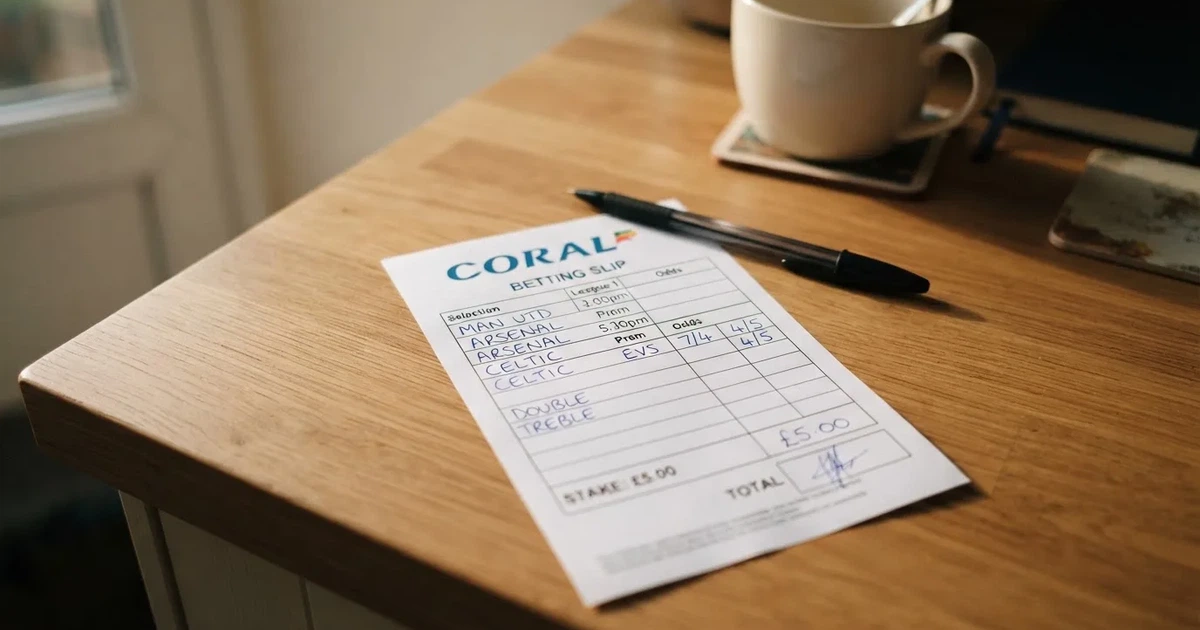
The figures and licence numbers below were checked against the Gambling Commission’s public register and the operators’ UK pages as of 26 October 2026.
Ante-post markets, in plain English
An ante-post bet is a wager placed on a future event — most often a horse race that is days, weeks or months away, but also a major football tournament, a Grand Slam tennis title or a Champion League outright. The defining feature is timing: the bet is struck before the day’s runners are confirmed, and at a price that may move sharply as the event approaches.

Sky Bet’s help pages put the rule plainly. Any horse racing bet placed more than a day before the race is treated as ante-post, and unless the bookmaker states otherwise, a selection that does not run loses its stake. That single clause — stake lost on a non-runner — is what separates ante-post from on-the-day betting, and the page returns to it whenever a corner of the market gets explained.
The rest of this section sets out what an ante-post market looks like, what it is for, and why the price you take today is rarely the price you would get tomorrow.
What an ante-post market is
A bookmaker’s ante-post book on, say, the Cheltenham Gold Cup opens months in advance. Each runner carries a price — a fractional or decimal number that says what a unit stake returns if that runner wins. The pool is the bookmaker’s, not the public’s: a single firm quotes, takes the bets, and pays out the winners out of its own book. That makes the price a counter-offer rather than a market-clearing figure, and explains why two bookmakers can show the same favourite at 5/1 and 6/1 at the same minute.

For the punter, ante-post serves two purposes. First, it lets a backer lock in a price on a horse whose odds are expected to shorten — a Champion Hurdle favourite at 10/1 in November may trade at 5/1 by the Festival in March if the horse stays in form. Second, it lets a backer take a position on a race that is too far away for a same-day book: there is no daily market on the Derby three weeks out, so ante-post is the only way to back a fancy that early.
What the price tells you
Every price carries the bookmaker’s margin. A “fair” two-runner market at decimal odds of 2.00 on each outcome would return exactly the stake to backers of the winner and return nothing to backers of the loser — a market without profit for either side. Bookmakers do not offer that market. They quote each side shorter than the true probability implies, so that across all outcomes the implied probabilities add up to more than 100%, and the surplus is the margin.
The calculation the page works through sits here. Take an illustrative two-way market at decimal odds of 1.90 / 1.90. The implied probability of each side is 1 ÷ 1.90, or about 52.63%. Across both sides that gives a total implied probability of about 105.26%, and the payout share — the share of every pound bet that the market returns to winners — is the reciprocal of that, or about 95.00%. The margin — the share of every pound that the bookmaker keeps on this market — is 100% minus 95.00%, or 5.00%. Stated as a band, the margin sits between roughly 5% and 5.5% for a market of this shape; the precise figure depends on how the implied probabilities round.
A 5% margin sounds modest until you do the multiplication. Over a season, a £10 single at a 5% margin loses an average of 50p before the bet is even struck; over a thousand such bets the expected loss runs into hundreds of pounds. The margin is the price of being able to bet at all, and the bettor who wants to beat it has to find genuine value — prices longer than the true probability warrants — not just winners.
Why ante-post prices move
Three forces move an ante-post price. The first is the form and wellbeing of the horse: a published workout, a reported schooling session or a stable whisper can shorten or lengthen a price by a point or two overnight. The second is the betting volume itself: a heavily backed favourite shortens; a horse that takes no money drifts, sometimes by design. The third is field composition — which horses declare, which are supplemented at the final stage, which come out of the race at the overnight declaration. A field of eight becomes a field of five and the favourite shortens accordingly, even if nothing about the favourite itself has changed.
Because the price moves, the price the punter takes at the moment of placing the bet is the price that counts. Sky Bet’s rules state that ante-post bets are settled at the price available when placed. A backer who takes 10/1 in November and finds the same horse 5/1 in March has won the bet at 10/1, regardless of where the price is now. Equally, a backer who takes 5/1 in March and finds the horse 10/1 in November has lost that edge in retrospect, but the bet is still settled at the taken price. The market’s movement is the punter’s risk; the settlement price is the punter’s reward.
How an ante-post bet is settled
Settlement is where ante-post becomes its own trade in size. Three rules govern it — non-runner, Rule 4 and race status — and each one can change a winning ticket into a losing one.
Non-runners and the lost-stake rule
In ordinary on-the-day betting, a horse that does not run usually makes the bet void, and the stake is returned. Ante-post is different: a selection that does not run loses its stake, unless the bookmaker’s own rules say otherwise. The reasoning is contractual. The punter has accepted a price based on a specific field, and the bookmaker has reserved money against that field. When the field changes, the bet does not automatically follow it, and the punter who wants protection against non-runners pays for it elsewhere — through each-way terms, through place markets, or by waiting until the day.
For an accumulator with several ante-post legs, the rule adapts rather than collapsing the whole bet. Sky Bet’s help pages put the position this way: in ante-post accumulators, a selection balloted out or eliminated leaves the bet running on the remaining legs at original prices, so a treble becomes a double, and a double becomes a single. A single ante-post bet on the same eliminated selection is void. The legs the punter has already taken stand; the leg that drops is removed and the bet is recalculated.
Rule 4 and the deduction
Rule 4 is the bookmaker’s adjustment when a horse is withdrawn from a race after the betting has formed. The rule applies to on-the-day markets and, in some bookmakers’ terms, to ante-post markets in a modified form. The mechanism is a deduction from the winnings, calculated as a fraction of a pound per pound staked, scaled by the odds of the withdrawn horse. A 5/1 shot withdrawn in a small field attracts a small deduction; a 50/1 outsider withdrawn from a five-runner race attracts a much larger one.
The ante-post twist is that Rule 4 is rarely applied before the final declarations. In the months before a race, withdrawals are common, and to deduct on every one would erode the price the punter took. Most bookmakers reserve Rule 4 for the close-to-off period and apply it in line with their own published tables. The punter seeking clarity on specific withdrawals consults the operator’s Rule 4 table, as provided in their help pages.
Abandoned and moved races
If the race is abandoned, or moved to a different track, the ante-post bet is void and the stake is returned. Sky Bet’s rules state both. The voiding applies to single bets and to accumulators alike: an abandoned race unwinds that leg of the accumulator, and the bet is recalculated on the remaining legs at original prices.
The moved-to-a-different-track rule is the more interesting of the two. A race transferred from Ascot to Haydock, for example, is a materially different contest — different ground, different draw, different pace map — and the bet that looked fair at Ascot may not look fair at Haydock. Voiding restores the punter to the position before the bet, and the bookmaker to the position before the bet, and the question is settled without either side losing on a race that was not, in the end, the race they bet on.
Bets that are not accepted
Not every market structure is available ante-post. Place-only bets, conditional bets and forecast bets are not accepted on ante-post markets, and a punter who wants a place-only position on a future race waits until the day. The restriction is technical: place terms vary by race, by bookmaker and by number of runners, and quoting a place-only ante-post price before the field is known forces the bookmaker to commit to a place structure that may not match the actual race. The same logic keeps forecast bets off the ante-post board: a forecast is a bet on the first two finishers in named order, and quoting one before the field is known is the same kind of guess.
What an ante-post bet costs the punter
The price the punter sees is the price the punter pays. There is no premium for taking the bet early, no fee for being on the ante-post board rather than the day-of board, and no rebate for waiting. The cost is in the margin and in the rules the punter signs up to when placing the bet.
The margin is the easier cost to see. The calculation above gives about 5% on a two-way market at 1.90 / 1.90. Horse racing markets carry more, often between 8% and 20% depending on the race and the bookmaker, because the field is wider and the favourites shorter. Football outrights — a Premier League title winner, a Champions League outright — carry margins in the same range, with the favourite shorter than 2.00 and the longshots filling the back of the book. The punter who wants to find value compares the margin across bookmakers for the same market, and chooses the one whose margin is tightest.
The harder cost is the rules. A non-runner takes the stake; an abandoned race gives it back; a Rule 4 deduction trims the winnings. None of these appear on the betting slip, and the punter learns them only by reading the operator’s help pages. The page returns to the Rule 4 and non-runner mechanics in the betting-tips section, because the strategies that take ante-post prices seriously all rest on the same foundation: the punter knows which deductions apply and to which markets.
The ten licensed bookmakers reviewed
The ten brands below are the ones the Gambling Commission’s public register lists against a remote general betting standard (real events) licence for Great Britain at the time of writing. The order follows the plan, not a ranking: no single brand is “the only” licensed one, and a place in this list is not a recommendation. Each write-up carries the brand’s licence account, the operator that runs the UK site, and the terms the operator publishes on ante-post where the help pages are explicit.
Fitzdares — premium betting with a deep ante-post book
Fitzdares holds Gambling Commission remote licence 000400-R-103839-030 under account 400, held by Fitzdares Limited. The Fitzdares app offers cash out, accumulators, Lucky 15s, specials and ante-post markets on horse racing, football, tennis, rugby, cricket, golf and American football, with in-play prices once the event starts.
The ante-post offering is unusually broad for a brand that pitches itself at higher-stakes punters: horse racing sits alongside outrights on the major football leagues and the tennis slams, and the specials board covers some of the niche markets that mass-market books leave to others. The trade-off is that the brand’s interface and minimum stakes sit above what a small-stake punter expects, and the in-play prices are a thinner section of the app than the ante-post board.
Recommended for the punter looking for a broad ante-post book who is comfortable with the brand’s minimum stakes; it is less ideal for those who focus on small-stake singles and deep in-play markets.
Tote — pool betting and the on-course tradition
Tote holds Gambling Commission remote licence 054779-R-331321-008 under account 54779, held by TDCO Limited. Tote runs the pool-betting operation historically present at British racecourses, and the Tote site takes bets into its pools rather than against a fixed-odds book.
The ante-post offering on Tote is pool-driven rather than fixed-odds, which makes settlement a function of pool size rather than the price taken at the time of betting. For a punter used to fixed-odds ante-post, the difference is meaningful: a winning pool dividend can be larger or smaller than the equivalent fixed-odds return, depending on how the rest of the pool shaped up. Tote does not publish fixed-odds ante-post prices in the same way a bookmaker does, and the help pages reflect that.
A solid choice for those seeking pool betting on major meetings with dividend-based returns; it is less of a fit for the punter aiming to lock in a fixed price months in advance.
Geoff Banks — boutique sports book with published ante-post prices
Geoff Banks holds Gambling Commission remote licence 054095-R-330366-010 under account 54095, held by GB Sports Advisors Limited. The Geoff Banks app offers live in-play prices and ante-post prices on future events.
The brand is a smaller operator with a published ante-post board across horse racing and a number of football outrights, and the app’s age rating and positioning suggest a brand aimed at the more engaged punter rather than the casual one. The ante-post selection is narrower than the largest books on this list, but the prices are published and the help pages are written in plain terms.
A reliable pick for the punter seeking a smaller bookmaker with published ante-post prices and straightforward help pages; those needing market-leading depth might look elsewhere.
Lottoland — lottery-led brand with a sportsbook attached
Lottoland holds Gambling Commission remote licence 038991-R-319408-020 under account 38991, held by EU Lotto Limited. Lottoland’s app combines casino, lottery betting, scratchcards and a sportsbook, and it states it is licensed by the Gambling Commission for customers in Great Britain.
The sportsbook is a smaller section of the product than at the dedicated books, and the ante-post offering reflects that: lottery products are the core, with sports betting as a complement. The punter who lands on Lottoland for an ante-post bet will find a workable horse racing section and a thinner football outright board.
A good option for customers combining lottery and sports in a single account; pure ante-post specialists will generally find more specialized racing books elsewhere.
Betmaster — sportsbook operated from Malta
Betmaster holds Gambling Commission remote licence 065699-R-339929-002 under account 65699, held by BM Solutions GB Ltd, registered in Malta. The Betmaster site states it holds Gambling Commission account number 65699.
The brand’s licence line is the same as the others on this list — a Gambling Commission remote licence is the entry condition for taking bets from customers in Great Britain — but the operator is registered in Malta, and the operating company line is the place where the punter checks who they are dealing with. The ante-post book is a working section of the site rather than the headline feature.
A functional option for the punter who needs a licensed sportsbook with a basic ante-post board; it is not tailored to be a definitive racing guide.
10bet — sportsbook with cash out, bet builder and live streaming
10bet holds Gambling Commission remote licence 043173-R-322899-023 under account 43173, held by Blue Star Planet Limited. The 10bet app is published by 10bet Limited and states that 10bet.co.uk is licensed by the Great Britain Gambling Commission under licence 43173. The sportsbook covers football, tennis and horse racing, with cash out, bet builder and live streaming.
The ante-post offering sits inside the horse racing and football sections. The brand’s broader feature set — bet builder, cash out, live streaming — sits around the ante-post markets rather than inside them, and the punter who wants to combine an ante-post leg with a same-game acca on the day will find the bet builder available where appropriate.
A strong candidate for punters seeking cash out and bet builder tools alongside their ante-post interests; those whose sole focus is maximum ante-post depth may prefer other books.
bet365 — the headline feature set with ante-post on the side
bet365 holds Gambling Commission remote licence 354755-R-331498-002 under account 55148, held by Hillside (UK Sports) ENC. The bet365 app offers Bet Builder+, which combines markets from one event into a single bet pre-match and in-play, Super Boosts, winnings boosts on bet builders and selected singles, and daily bet boosts.
The ante-post book on bet365 is a deep section of the horse racing and football products. The brand’s wider feature set — bet builder, boosts, in-play — sits around the ante-post markets rather than inside them, and the punter who takes an ante-post price on the Champion Hurdle and then wants to build a same-race multi on the day has the tools for the same player.
A comprehensive hub for punters seeking a deep ante-post book paired with a wide feature set; users should note that the volume of features can sometimes obscure the board.
Copybet — Best Odds Guaranteed all day, with a published ante-post book
Copybet holds Gambling Commission remote licence 053774-R-330743-010 under account 53774, held by Copybet UK Limited. Copybet offers Best Odds Guaranteed all day, every day, on all UK and Irish racing, and pays first past the post on horse racing even if the winner is later disqualified.
The Best Odds Guaranteed offer is the brand’s headline feature, and it is worth reading closely: BOG pays the bigger of the price taken and the starting price, on UK and Irish racing, on every day of the week. William Hill’s BOG, for comparison, runs from 8 AM on the day of the race and excludes ante-post, tote and pari-mutuel bets; Copybet’s all-day framing means the offer is on from the moment the price is published, which puts an ante-post price at 10/1 that drifts to 8/1 by the morning of the race on a BOG-paying footing. The punter should still check whether the offer applies to ante-post specifically — BOG is most often a day-of feature, and an ante-post bet taken months out may not be covered.
Worth it for the punter who wants BOG framing and a published ante-post book on UK and Irish racing; the trade-off is to read the BOG terms carefully before assuming ante-post is covered.
London Bet — sportsbook with a 17+ age rating and an in-play product
London Bet holds Gambling Commission remote licence 066162-R-340278-004 under account 66162, held by Thistle Bet Limited. The London Bet app states it is licensed and regulated in the UK and carries a 17+ age rating on the App Store.
The brand’s licence is on the public register and the app is published by a UK-incorporated operator. The ante-post book is a working section of the horse racing and football products rather than the headline feature, and the punter who lands on London Bet for the ante-post board will find a workable offering without the breadth of the largest books on this list.
A solid option for the punter seeking a licensed UK bookmaker with a consistent ante-post board; it offers a standard experience without claiming market-leading depth.
BetMGM — sports welcome offer alongside an ante-post book
BetMGM holds Gambling Commission remote licence 039198-R-319450-029 under account 39198, held by LeoVegas Gaming PLC. The BetMGM UK app lists Gambling Commission account number 39198. The sports welcome offer for new UK customers who deposit £10 or more and place a sports bet within seven days is four £10 free bets — two football accumulators of four or more selections and two sports multiples of two or more — valid for seven days, with minimum odds and opt-in required.
The welcome structure is paid alongside the ante-post book rather than inside it, and a punter who wants to use free bets on ante-post markets should check the offer’s minimum odds and market restrictions before staking. The ante-post book is a working section of the horse racing and football products, and the brand’s broader feature set sits around it.
Worth it for the punter who wants a sports welcome offer alongside a licensed ante-post book; the trade-off is the seven-day window on the free bets and the minimum-odds restriction on qualifying bets.
How ante-post betting is regulated in Great Britain
The Gambling Commission licenses the whole commercial market in Great Britain under the Gambling Act 2005. Since the Gambling (Licensing and Advertising) Act 2014 an operator whose remote facilities are used in Great Britain needs a Commission licence wherever it is based; a Curaçao, Maltese or Gibraltar licence is not a substitute, and operating without the licence the Act sets out is an offence under section 33 of the 2005 Act, aimed at the operator. The Commission’s public register can be searched by business name, trading name, domain or account number, and is the whole test of whether a brand holds a licence; quote no count without its access date.
What the licence covers
The remote general betting standard (real events) licence is the relevant category for the brands reviewed above. The licence covers bets on real sporting events — horse racing, football, tennis, golf and the rest — and is the licence the Commission’s register lists against each of the ten brands. Other categories exist for virtual events, betting intermediaries (exchanges), pool betting and betting on the high street, and the register distinguishes between them.
A licence holder is not licensed by the Commission for advertising. Advertising is regulated through the CAP Code (non-broadcast) and BCAP Code (broadcast), enforced by the ASA, alongside the Commission’s own marketing conditions. The CAP Code’s section 16 sets the social responsibility standard, the under-25 appearance rule, and the rule that no marketing may be of strong appeal to under-18s.
What the rules forbid and require
Three rules sit above everything else. First, credit cards are banned for gambling in Great Britain (since 14 April 2020), including credit-card-funded payments through an e-wallet; debit cards and bank transfers are not covered by that ban. Second, name, address and date of birth are verified before a customer can deposit or gamble, including with a free bet or bonus, and source-of-funds questions at higher spend are normal under the money-laundering rules. Third, no anonymous play is possible at a licensed site, and the verification step is the price of being able to bet at all under a Gambling Commission licence.
Northern Ireland is outside the Gambling Act 2005 and has its own older law, so a “GB-licensed” or “Great Britain-licensed” brand is licensed for England, Scotland and Wales, not for Northern Ireland. The punters on this page are British by current lawful terminology, and the page writes about Great Britain throughout.
What an ante-post punter should check
Two checks sit above the rest. The first is the licence: the brand’s name, account number and licence category should be on the Commission’s public register, and the punter who cannot find it should not deposit themselves. The second is the operator’s own ante-post rules: the help pages should state what happens to a non-runner, whether Rule 4 applies and on what scale, and what happens on an abandoned or moved race. The brands reviewed above publish help pages; the punter who reads them before placing the bet is the punter who avoids the surprise at settlement.
Safer gambling around ante-post markets
Ante-post betting carries a specific set of safer-gambling pressures. The bet is struck weeks or months before the event, the punter has time to place another, and the result is known only on the day. That combination — a long horizon, an immediate repeat option, a deferred result — is the one that gambling-harm services flag for attention.
The national framework
GAMSTOP is the national multi-operator online self-exclusion scheme, mandatory for licensed online operators since 31 March 2020. Exclusion periods are six months, one year, five years, or five years with auto-renewal, and after the minimum period the exclusion stays in place for a further seven years unless the customer asks GAMSTOP to remove it. GAMSTOP covers online sites and apps; betting shops use a separate service, and the punter who wants full coverage registers with both.
The financial vulnerability check (LCCP condition 3.4.4, in force since 30 August 2024) applies to licensed remote betting when a customer’s deposits minus withdrawals exceed £150 in a rolling 30 days (since 28 February 2025). It is a public-record check — bankruptcy, county court judgments, IVAs — not an income check and not a credit reference check. Financial risk assessments — the “affordability checks” of the press — are announced in a staged plan (Commission article of 7 July 2026), with no start date; for current requirements, the punter reviews the operator’s safer-gambling pages.
What the punter can do
Three measures sit in the punter’s hands. First, a deposit limit: every licensed operator offers a gross deposit limit on a fixed time frame, and the punter who wants a hard ceiling sets one before placing the first bet. The first changes have applied since 31 October 2025, a second phase was postponed to 30 September 2026, and whether it is live is not established; the punter who wants a limit sets it through the operator’s safer-gambling tools regardless of the regulatory phase. Second, a time limit: a session timer or a deposit window that closes at a fixed hour is a tool the punter can set themselves. Third, a self-exclusion: GAMSTOP for online, the multi-operator self-exclusion scheme for betting shops, and the operator’s own exclusion for a single brand.
Help is available outside the operators: GamCare runs the National Gambling Helpline, GambleAware signposts to services, NHS gambling clinics run in several regions, and Gamblers Anonymous runs meetings across the country. The punter who wants help asks for it before the bet is the problem; the operators and the services are set up for the ask, not the crisis.
Strategy and forecast: how ante-post prices are read
The word “strategy” sits uneasily on a page about gambling. There is no system that wins, no pattern the punter expects, no tipster’s formula that pays out at the end of the season. What there is, is a way to read prices: a method of comparing the ante-post book to the on-the-day book, of sizing the stake against the bankroll, and of writing down the bet before the bet is placed.
Compare the ante-post price to the on-the-day price
The first comparison is the one between the price the punter takes and the price the horse is available at on the day. If the ante-post price is materially longer than the on-the-day price the punter expects to see, the bet has value; if the ante-post price is already shorter, the value is in the market rather than in the bet. The arithmetic is the same as the calculation above: implied probability, margin, value. The punter who takes 10/1 on a horse they think is a 4/1 shot has found a 4% edge before the bet is placed; conversely, the punter who takes 4/1 on that same horse has found no value at all.
Size the stake against the bankroll
The second comparison is between the stake and the bankroll. A rule of thumb in the betting literature is to stake no more than 2% of the bank on a single bet, and no more than 5% on an ante-post position that may sit for months. The rule is not a system that wins; it is a method of surviving the runs that lose. An ante-post book that wins 20% of bets at an average price of 6/1 still loses money in a bad month, and the bankroll that survives the bad month is the bankroll that sees the good one.
Write down the bet before the bet is placed
The third discipline is the record. The punter who keeps a log of every ante-post bet — the price taken, the stake, the horse, the race, the result — has a database of their own value detection. Over a season, the log shows whether the punter’s reading of price is sharper than the market’s reading of price, or whether the punter is paying the margin without finding the edge. The log is not a tipster; it is a mirror.
What the strategy does not do
The strategy does not predict winners. It does not name the horse that will win the Cheltenham Gold Cup, the Derby that will need the trip, or the favourite that will shorten in the spring. The market prices forecast that, the market moves on it, and the punter who bets on the forecast has bought a position in someone else’s reading of the form. The punters who beat the market do this, after taking the position, by reading the price better than the next punter did.
The bet types and odds around ante-post
Ante-post bets come in the same shapes as on-the-day bets, with the same settlement rules modified by the non-runner and Rule 4 mechanics. The shapes and their costs are worth knowing before the betting slip is opened.
The single ante-post bet
A single is a wager on one selection. The settlement is at the price taken; a non-runner loses the stake; an abandoned race returns the stake; a moved race returns the stake. The arithmetic is the simplest on the page: return = stake × decimal odds, so a £10 single at 6.00 returns £60, of which £50 is profit.
The ante-post accumulator
An accumulator is a wager on two or more selections, all of which must win. The odds of the legs multiply into one price, so a double at 3.00 and 4.00 is a 12.00 accumulator. A non-runner on one leg does not collapse the bet; Sky Bet’s rules state that the bet runs on the remaining legs at original prices, so a treble becomes a double, and a double becomes a single. The punter who takes a four-fold ante-post acca on the Festival and finds one horse balloted out at the declarations has a treble, not a void bet.
The Rule 4 mechanic on accumulators is more involved. A deduction applies to the winnings on the affected leg, scaled by the odds of the withdrawn horse; the rest of the acca stands. The punter can consult the operator’s Rule 4 table to see how specific deductions are handled.
The each-way ante-post bet
An each-way bet is two bets of equal stake — one on the win, one on the place — so a £10 each-way at 10/1 is a £20 total stake, £10 on the win and £10 on the place. The place terms depend on the race and the bookmaker: typically a quarter of the win odds for handicaps with more than a set number of runners, a fifth of the win odds for non-handicaps and shorter fields. Each-way ante-post bets follow the same Rule 4 and non-runner mechanics as win singles, applied to both the win and the place legs.
The forecast and the tricast
Forecast (first two in order) and tricast (first three in order) bets are not accepted ante-post at most major bookmakers, and the punter who wants to take a forecast position waits until the race is closer and the field is known. Sky Bet’s rules confirm the restriction; the reasoning is technical and was set out in the previous section.
How the odds are displayed
British bookmakers offer fractional odds (5/1, 11/4, evens) and decimal odds (6.00, 3.75, 2.00). The two formats are interchangeable: a fractional price a/b is the decimal a ÷ b + 1, so 5/1 is 6.00 and 11/4 is 3.75. The Commission does not require one format over the other; the punter chooses the format they can read fastest. The page uses decimal odds in the worked examples and notes fractional odds beside them where the betting literature uses fractions.
The starting price and Best Odds Guaranteed
The starting price (SP) is the price the on-course bookmakers settle at, set at the off. Best Odds Guaranteed (BOG) pays the bigger of the price the punter took and the SP, and most major bookmakers run a BOG offer on UK and Irish racing. William Hill pays BOG from 8 AM on the day of the race, on single and multiple bets, and the offer excludes ante-post, tote and pari-mutuel bets. Copybet offers BOG all day, every day, on UK and Irish racing; whether the all-day framing covers ante-post specifically depends on the brand’s terms and the punter who wants to assume it does should not.
The arithmetic of BOG is simple: a punter who takes 6/1 and the SP returns 8/1 wins at 8/1. The arithmetic of a BOG that excludes ante-post is also simple: a punter who took 6/1 ante-post three months out has the bet at 6/1, regardless of where the SP lands. The trade-off — and the punter’s edge — is between taking the ante-post price and waiting for BOG.
The cost in numbers
The arithmetic the page has been pointing at, in plain prose. A two-way market at decimal odds of 1.90 / 1.90. The implied probability of each side is 1 ÷ 1.90, about 52.63%. Across both sides the total implied probability is about 105.26%, and the payout share — the share of every pound that the market returns to winners — is the reciprocal of that, about 95.00%. The margin — the share of every pound that the bookmaker keeps — is about 5.00%.
Stated as a band, the margin sits between roughly 5% and 5.5% for a market of this shape, depending on how the implied probabilities round. A £10 single at a 5% margin loses an average of 50p before the bet is struck; a £10 single at a 5.5% margin loses an average of 55p. The difference is small on a single bet, and it accumulates across a season.
For horse racing, the margin is higher: most ante-post books on a major race carry between 8% and 20% margin, because the field is wider and the favourites shorter. For football outrights, the margin sits in a similar range, with the favourite priced shorter than 2.00 and the longshots filling the back of the book. The punter who wants to find value compares margins across bookmakers for the same market, and chooses the brand whose margin is tightest.
The calculation is a statistical estimate, an average over many bets under the stated assumptions. It promises no win, no payout and no return on any single bet.
Looking at the market side by side
The table below sits where the operator write-ups end, and it pulls out the fields the plan asked to compare: the brand, the Gambling Commission licence account and holder, and the ante-post terms the operator publishes. The columns are the matters the page carries; the rows are the ten brands reviewed.
| Brand | Gambling Commission remote licence and holder | Ante-post position on the operator’s own terms |
|---|---|---|
| Fitzdares | Account 400, held by Fitzdares Limited | Published ante-post book on horse racing, football, tennis, rugby, cricket, golf and American football |
| Tote | Account 54779, held by TDCO Limited | Pool-driven ante-post product on the major meetings; dividends settle rather than fixed prices |
| Geoff Banks | Account 54095, held by GB Sports Advisors Limited | Published ante-post prices on future events; live in-play once the event starts |
| Lottoland | Account 38991, held by EU Lotto Limited | Sportsbook attached to a lottery-led product; workable horse racing section |
| Betmaster | Account 65699, held by BM Solutions GB Ltd (Malta) | Working ante-post section rather than the headline feature |
| 10bet | Account 43173, held by Blue Star Planet Limited | Horse racing and football ante-post inside a sportsbook with cash out, bet builder and live streaming |
| bet365 | Account 55148, held by Hillside (UK Sports) ENC | Deep ante-post book on horse racing and football alongside bet builder and boosts |
| Copybet | Account 53774, held by Copybet UK Limited | BOG all day, every day, on UK and Irish racing; ante-post coverage depends on the BOG terms |
| London Bet | Account 66162, held by Thistle Bet Limited | Working ante-post section on horse racing and football |
| BetMGM | Account 39198, held by LeoVegas Gaming PLC | Working ante-post book alongside the sports welcome offer |
The licence numbers above are the unique account numbers on the Commission’s public register; they sit beside the operator that holds the licence, which is the entity the register lists as the licence holder. The ante-post column carries what each operator’s own help pages or app description say about the market; where a brand does not publish a clear ante-post position, the cell says so rather than guessing.
Putting it together for the punter
The page so far has worked through what ante-post betting is, how it settles, what it costs the bra punter, who offers it under a Gambling Commission licence, what the regulation looks like, what safer-gambling measures sit around it, what a strategy can and can’t do, what bet types apply, and what the arithmetic looks like. The section that follows gathers the questions a searcher is most likely to land on.
A short synthesis for the punter who has read this far. The ante-post market is the bookmaker’s book on future races, settled at the price taken, with a non-runner rule that loses the stake unless the brand says otherwise. The margin is in every price, and the calculation above gives a 5% band on a two-way market; horse racing carries more. The brands reviewed above are licensed under the Commission’s remote general betting standard (real events) licence, and the register is the test. The safer-gambling tools sit in the punter’s hands: deposit limit, time limit, self-exclusion. The strategy compares the price taken to the on-the-day price the punter expects, sizes the stake against the bankroll, and writes the bet down. None of this wins by itself; all of it puts the punter in the position to find value when value appears.
Frequently asked questions about ante-post betting
What is an ante post bet?
An ante-post bet is a wager placed on a future event — most often a horse race that is days or months away — at a price that is set now and settled at the price taken. The defining rule is the non-runner: unless the bookmaker states otherwise, a selection that does not run loses its stake. The bet sits until the race is run, abandoned or moved; settlement follows the operator’s published terms.
What is ante post betting?
Ante-post betting is the wider market of those wagers, offered by most licensed bookmakers on horse racing and on football, tennis and golf outrights. The market opens well before the event, the prices move as the form and the field change, and the bookmaker’s margin sits inside every price. The ante-post book is separate from the on-the-day book, with different rules on non-runners and Rule 4.
Does Rule 4 apply to ante-post bets?
Rule 4 applies in a modified form on ante-post markets, depending on the bookmaker. Most major operators reserve the full deduction for close-to-off periods and apply a smaller or no deduction in the months before the race. The punter who wants to know whether Rule 4 applies to a specific withdrawal reads the operator’s Rule 4 table, which every licensed bookmaker publishes in its help pages.
How can it be checked that a bookmaker holds a Gambling Commission licence?
The Commission’s public register can be searched by business name, trading name, domain or account number, and is the whole test of whether a brand holds a licence. The punter searches the register, confirms the brand is listed against a remote general betting standard (real events) licence, and notes the account number. The brands reviewed on this page are listed in the table above; the punter who cannot find a brand should not deposit with that brand.
How is the return on a bet worked out from the stake and the odds?
The return is the stake multiplied by the decimal odds, so a £10 single at 6.00 returns £60, of which £50 is profit. For a combination bet the odds of the legs multiply into one price, so a double at 3.00 and 4.00 is a 12.00 accumulator. The arithmetic is the same on ante-post markets as on on-the-day markets, with the additional rule that an ante-post non-runner loses the stake.
What is the bookmaker’s margin and how can it be seen in the odds?
The margin is the share of every pound bet that the bookmaker keeps, and it sits inside every price. To see it, take the implied probability of each outcome — 1 ÷ decimal odds — and add them up; the total is more than 100%, and the surplus is the margin. A two-way market at 1.90 / 1.90 carries about a 5% margin. Horse racing markets carry more, often between 8% and 20% on major races.
Bet types & in-play – Accumulator
Content created by the «Accumulator» team
