
Futsal betting in Great Britain: how the licensed market shapes up in 2026
 Available in US
26 October 2026 · Verified against the Gambling Commission’s public register of remote operating licences

Futsal has its own rhythm. Twenty-minute halves, a clock that stops at dead balls, a court the size of a basketball floor and a ball that refuses to bounce the way a football does. For British punters it is also one of the smaller markets on the major sportsbooks, sitting somewhere between the headline sports and the outright niches. The licensed bookmakers do not all cover it; the ones that do usually do so through the same engine they use for football, which means the bet types, the in-play markets and the cash-out buttons all behave in the way a regular football bettor would recognise. The differences are at the margins — literally, in the form of the overround built into the prices — and in the gaps between competitions, where one tournament gets thirty-eight pre-match markets and another gets four.
The picture for 2026 is shaped by three things. The Gambling Commission’s framework, which decides who may lawfully take a bet from a customer in Great Britain and what those operators must put on the table in return. The tournament calendar, which moves between the FIFA Futsal World Cup cycle, the continental championships and a thick layer of regional leagues. And the offer structures that licensed brands use to draw in new accounts — free bets, profit boosts and deposit matches that, once the small print is read, turn out to be a sequence of staking conditions rather than a gift. That is what this page works through: where futsal betting is licensed, who holds one, how the odds are built and what the welcome offers actually cost in turnover before anything can be withdrawn.
Statute and jurisdiction — the framework a British futsal bettor sits inside
There is no list of permitted sports or permitted bets in British gambling law. The Gambling Act 2005 and its amendments do not name futsal and do not exclude it; the Act sets the licence categories, and a bookmaker working under one of those categories may offer markets on real sporting events as its own product team decides. That is why one operator’s futsal page lists a dozen leagues and another’s does not list the sport at all: the menu is a commercial decision taken inside a legal permission, not the working out of a statute.

The licence itself sits with the Gambling Commission, the regulator sponsored by the Department for Culture, Media and Sport. To take bets from customers in Great Britain an operator needs a remote operating licence, regardless of where it is incorporated. The remote licence has categories, and the relevant one for futsal is the *remote general betting standard (real events)* licence — the same category a bookmaker holds for football, tennis or any other real sport. Several of the brands reviewed further down the page sit on licences issued to a parent group: Ladbrokes and Coral share LC International Limited as their licence holder, and Paddy Power and Betfair likewise share theirs, so the trading name is the storefront, not the legal entity.
What the licence buys the customer is a set of standards the Commission enforces: identity verification before the first deposit, GAMSTOP self-exclusion across every online operator in Great Britain, the social responsibility code, the advertising codes, the Remote Technical Standards and a duty route if a dispute cannot be settled with the operator. None of that is true of an offshore site. A Curaçao or Malta-licensed brand may lawfully take bets from jurisdictions that recognise its licence; it does not lawfully take bets from Great Britain without a Commission licence, and a customer using one gives up the protections the Commission enforces — the GAMSTOP coverage, the complaints route, the bonus cap and the financial vulnerability check described below. The honest framing on either side is simple: a licence means checks, limits and a route to redress, but it also means identity verification before the first bet; an unlicensed site means none of those things, and the customer carries the loss if funds are withheld.
Identity checks have been compulsory since 7 May 2019, so no licensed British bookmaker accepts an anonymous deposit, a free bet or a bonus without verifying the customer’s name, address and date of birth. The minimum age is 18. A financial vulnerability check has applied since 30 August 2024, triggered once a customer’s net deposits cross £150 in a rolling 30 days (in force since 28 February 2025): it is a public-record check looking at county court judgments, bankruptcies and the like, not a credit reference search and not an income check. Wider affordability checks — what the press has called “financial risk assessments” — sit on a staged timetable the Commission set out on 7 July 2026; they are announced, with no start date, and a futsal bettor does not yet face them on a routine basis.
The tax side is the operator’s problem, not the punter’s. A winning bet in Great Britain carries no tax on the customer, and a professional gambler is a question for HMRC rather than for the bookmaker. General Betting Duty is the operator’s levy at 15% on gross profits, and from 1 April 2027 a separate remote betting rate of 25% will sit within it for online operators, while remote bets on UK horse racing, pool betting, self-service terminal bets and in-person bets stay at 15%. Whether any of that passes through into the odds offered on a futsal match is not something the bookmakers publish, so a bettor cannot see the tax in a price — only the margin, which is the next section’s territory.
Safeguards, self-exclusion and where help is found
GAMSTOP is the centre of the player-protection side of the British model. It is a free multi-operator self-exclusion scheme, mandatory for every GB-licensed online operator since 31 March 2020, and signing up blocks new account creation and login at every participating site and app for the chosen period. The minimum exclusion is six months, and the available windows are six months, one year, five years, or five years with auto-renewal. When the minimum period ends the exclusion remains in force for a further seven years unless the customer asks GAMSTOP to remove it. GAMSTOP covers online only; the betting shops run on a separate retail self-exclusion scheme.
Deposit limits are the other front. The Commission’s Remote Technical Standards require operators to offer a gross deposit limit on a fixed time frame — the customer sets the ceiling, the operator enforces it. The first phase of those rules has applied since 31 October 2025, and a second phase was postponed to 30 September 2026; whether the second phase is now live is not established. What is established is the principle: no state-set deposit or loss ceiling exists in British sports betting, so the limit is the customer’s choice, and the operator must build the technical scaffolding to honour it.
A stake limit, where one exists, is set by the operator and may be specific to a customer, a market or a price band. The Commission does not cap stakes by statute. A futsal market for which a bookmaker sets a maximum stake of, say, £500 on the match result is the bookmaker’s call, and the same bookmaker may cap a same-game multi at a lower number because the risk compounds with each leg. A punter who plans to stake large on a niche sport reads the betting slip’s own limit rather than relying on what the headline offer page says.
Help is straightforward to reach. GamCare runs the National Gambling Helpline. GambleAware funds treatment and research. The NHS runs gambling clinics across the regions. Gamblers Anonymous runs meetings in person and online. Most licensed operators link to these from a footer or a safer-gambling page — Fitzwilliam Sports, for example, links to GambleAware, GamStop and Gamblers Anonymous from its home page, and the same trio tends to appear across the licensed set. None of these are alternatives to the limits a punter can set themselves; they are the route to take when the limits have not been enough.
What an offer actually pays out — bonuses, profit boosts and free bets
Welcome offers in futsal betting look like gifts and behave like sequences of conditions. A “free bet” credits the winnings but not the stake. A “deposit match” hands back a percentage as bonus funds that must be wagered before withdrawal. A “profit boost” raises the price on a chosen selection, often once, sometimes on a recurring weekly basis. A “bet builder boost” raises the price on a same-game multi. Each of those shapes is legal and each of them is honest in the way it works — the small print carries the cost, and the cost is the staking volume the customer must put through before any winnings from the offer become withdrawable.
The cap on wagering came in on 19 January 2026: a bonus at any licensed British operator must carry no more than 10x wagering, and mixed-product promotions — those that demand a football bet to unlock free spins, or a sportsbook stake to unlock casino credit — are banned. The cap is on the wagering multiple, not on the size of a free bet, and the money value of a bonus is not capped by the rules in force. What it means in practice is that a £10 bonus at 50x wagering, which would have required £500 of qualifying stakes, can no longer be offered; a £10 bonus at 10x needs £100 of qualifying stakes before any winnings become cash. A free bet whose stake is not returned is not technically a wagering condition at all — the cap on wagering multiple does not apply to it — but its economic value is closer to the stake multiplied by (odds − 1) ÷ odds than to the stake itself, and the section on bet types below does the arithmetic.
The welcome offers carried by the brands reviewed on this page are stated by each operator in the way its own terms state them, not in the marketing shape they appear in on a banner. Coral runs a £20-stake, £40-free-bets offer for new customers, with the free bets issued within seven days and expiring seven days after issue, on minimum odds of 2.0 (1/1). BetUK splits four £10 free bets across two football accumulators of four plus legs and two multiples of two plus, all valid for seven days from issue. BetTom and Octobet both offer 50% back as a free bet up to £50, with BetTom adding parallel free slot funds for casino play and Octobet a £10 casino bonus for new customers. Betway runs a recurring Free Bet Club: opt in, stake £25 or more on sports, and earn 2 × £5 free bets weekly. The shape of each offer is in the operator’s own terms — the wagering factor, the minimum odds, the expiry and the qualifying stake are the figures that decide what each offer costs.
What an offer costs in real terms is the turnover multiplied by the margin of the market the qualifying bets are placed on. A £100 turnover requirement placed entirely on a two-way market with a 5.3% overround carries a margin of about 5.0% — the bookmaker keeps roughly £5.00 of every £100 wagered, on average, across a large volume of bets at that price. A market with a wider spread — decimal odds of 1.85 / 1.85, say — carries an overround of about 8.1% and a margin of 7.5%. The narrower the spread, the closer the margin is to the floor the operator can reasonably run, and the more of the stake returns to the punter in the long run. That is the practical link between the offer page and the bet types section further down: the turnover is the bet, the bet is the price, the price carries the margin.
A “risk-free” shape on an offer page is normally a free bet in disguise, not a refund in cash. Read it for the form of the refund before treating it as insurance. An acca insurance that returns a free bet if one leg lets you down is a free bet, not a cash refund; a price boost is a one-off price enhancement on a chosen market, not a permanent change to the odds. The audit of any offer is a small exercise: read the wagering multiple, the minimum odds, the expiry, the qualifying stake, the form of any refund and the cap on free-bet winnings. If any of those are not stated, the offer is incomplete; if any of them are steep, the offer is expensive.
Live betting and cash out on a small, stop-start game
Futsal’s structure — short halves, a clock that stops at dead balls, frequent substitutions — makes it unusually well-suited to in-play betting. The clock stops, the punter has time to read the next phase, and the in-play market resets. The trade-off is liquidity: the live markets on a futsal friendly in a regional league are thin even at the larger operators, and a price offered in-play may carry a wider overround than the pre-match equivalent because the bookmaker has less time and less information to lay it off against.
In-play on a real sporting event is offered by GB bookmakers under their standard remote licence, with the controls set by the operator’s licence conditions and the social responsibility code rather than by a separate statute. A bookmaker that takes an in-play bet on a Premier League football match takes an in-play bet on a futsal match the same way: the same trading screen, the same suspend/resume mechanism, the same settlement rules. What changes is the menu. A live futsal match at a major brand typically carries the match result, the next goal, the next ten-minute interval, the total and, where the bookmaker has invested in the feed, handicap lines and player markets. A live futsal match at a niche brand may carry only the match result and the next goal.
Cash out is the feature that turns in-play into a tradable position. The bookmaker offers to buy the bet back at a price derived from the live market and the current state of play; the punter accepts and the bet is settled at that price. On a fast-moving futsal match a cash-out price can shift several times in a single possession, and the offer may be suspended while the bookmaker re-prices the underlying market. Not every market is cash-out-enabled. Same-game multis, in particular, are often excluded because the bookmaker cannot decompose the multi into a single price quickly enough. The practical effect is that a futsal punter who relies on cash out is best served by the major match-result and total-goals markets, where the bookmaker’s pricing engine is fast enough to keep up.
The features that ride alongside live betting — Bet Builder, Super Boosts, acca insurances, partial cash-outs — vary by operator. Bet Builder on the larger brands combines markets from one event into a single bet, often available pre-match and in-play. Super Boosts are one-off enhanced prices on a small selection of markets. Acca insurance refunds a stake as a free bet if one leg of a qualifying accumulator lets the punter down. None of these are unique to futsal; they are features of the sportsbook that show up on whatever market the customer navigates to. A punter who wants in-play on a small market effectively wants the operator whose trading team has chosen to price it.
Predictions, models and the difference between information and advice
Futsal is statistically thin compared with football. Public form tables exist for the bigger leagues, the FIFA Futsal World Cup cycle and a handful of continental championships, but the per-match event data — shot locations, expected goals in futsal’s own form, pass networks — sits with national federations and tournament organisers rather than the open feeds that football analytics draws on. That makes the predictive side of the market both more important and more limited: more important because the price set by a bookmaker may rest on less information than the equivalent football price, and more limited because the data a punter can pull on is less granular.
A “futsal betting tip” is a forecast about an outcome, not a guarantee of one. A betting model is a system of assumptions and weights, and its edge depends on whether those assumptions hold. Patterns worth taking seriously — a team’s record at home, a goalkeeper’s save rate, a side’s discipline record from the sixth foul onwards — are public-record patterns, and the punter who runs them through a model has done something the bookmaker’s traders have also done. The punter’s edge is in the assumption the trader has not weighted the same way: a defensive line’s tendency to concede early in the second half, a set-piece routine at the second penalty mark, a side’s record when playing its second match in three days. None of that is a sure thing; it is a probabilistic input into a price the bookmaker has also built.
Software and statistical services have a role, and the larger British bookmakers carry them on their sites and apps for the major sports. NetBet Sport, for example, exposes sports stats for major leagues through its app. For futsal specifically, the data layer is thinner; what a punter can usefully do is to keep a private record of results, score lines and starting fives for the leagues they follow, and to treat the bookmaker’s stats section as a starting point rather than an answer. The honest position on tipsters is the same as on models: a tipster is one source of one view, and a punter who pays for tips is paying for the view, not for a winning system — no system wins in the long run without an edge the bookmaker has not priced, and that edge is the punter’s own work.
Bankroll management is the part of the strategy side that matters regardless of the sport. A flat unit — the same percentage of bank on every selection — keeps a punter in the game through losing runs. A staking plan that escalates after losses (a martingale or a Fibonacci ladder) collapses on the first run that exceeds the punter’s reserve, and a futsal punter chasing a losing in-play position is exactly the punter the margin is built against. The arithmetic in the next section is the edge of the bookmaker’s knife, and the bankroll discipline is the only thing a punter can set against it.
Bet types, odds and how a price is built
The basic bet types in futsal are the same as in football: the single, the accumulator (the “acca”), the each-way and a family of multiples — the Patent, the Yankee, the Lucky 15, the Heinz and so on — that combine selections from different events into one ticket. The single is the simplest: one selection, win or lose, at the price quoted. The accumulator multiplies the odds of the legs into one price and pays out only if every leg wins. The each-way is two bets of equal stake: one on the outright, one on the place. In a tournament outright market the place terms are set by the bookmaker; in a single match the each-way bet is unusual and tends not to be offered.
The bet builder — the same-game multi — has become the default way to bet on a single match. LiveScore Bet’s Bet Builder, for example, allows up to ten selections and covers match result, both teams to score, corners, total goals, player scoring and card markets. Bet365’s Bet Builder+ combines markets from one event into a single bet, available pre-match and in-play. The builder’s price is built live as the punter adds selections, and the margin expands with each leg because the bookmaker’s edge compounds. A builder with two legs is a thinner margin than a builder with five; a builder with one leg is just a single, and a builder that crosses markets the bookmaker has trouble pricing — a combination of cards and corners, say — may carry a wider margin than the same-builder trades come back as singles.
The odds themselves come in two forms in British practice: fractional and decimal. Fractional odds of 5/1 mean a £1 stake returns £5 in profit, plus the £1 stake back, so the total return is £6; decimal odds of 6.00 mean the same thing, with the stake built in. The conversion is straightforward: a/b in fractional terms is a ÷ b + 1 in decimal terms, so 5/1 → 5 ÷ 1 + 1 = 6.00, 11/4 → 11 ÷ 4 + 1 = 3.75, evens (1/1) → 1 ÷ 1 + 1 = 2.00. A price shorter than evens is “odds-on” — 4/6, for example, which is 4 ÷ 6 + 1 = 1.67 in decimal terms — and the stake is larger than the profit. The starting price (SP) is the industry phrase for the price the runner ultimately starts at on a race; it matters less in futsal, where most bets are taken at the price on the screen rather than at SP, but the term comes up in any broader accumulator bettor’s vocabulary.
The bookmaker’s margin is the share of every pound wagered that the bookmaker keeps on average across a market, and the overround is the excess over 100% of the sum of the implied probabilities. Take a two-way market priced at decimal odds of 1.90 each side: the implied probability of each outcome is 1 ÷ 1.90, or 52.63%, and the two probabilities add up to 105.26%. The excess over 100% — the 5.26% — is the overround, and the margin (the bookmaker’s edge) is 5.0% of every unit wagered. Widen the spread to 1.85 / 1.85: each implied probability is 54.05%, the total is 108.11%, the overround is 8.11%, and the margin is 7.5%. Narrow the spread to 1.95 / 1.95: each implied probability is 51.28%, the total is 102.56%, the overround is 2.56%, and the margin is 2.5%. The narrower the spread, the lower the margin, and the closer the book is to its theoretical floor.
The arithmetic matters because it is the only edge the bookmaker has that is visible in the price. On a 1X2 football match result the margin is often in the 5-8% band at the major bookmakers on a competitive fixture; on a futsal match result the margin can be higher because the book has fewer inputs and less liquidity to lay off against. A punter who compares prices across bookmakers is doing the same arithmetic the bookmaker did when setting them, and the brand whose overround is lowest on the market they care about is the brand whose price will return the most in the long run. The next subsection does the calculation explicitly for the kind of two-way market that a futsal match result resembles.
Worked example: the margin of an even two-way market at 1.90
The prescribed calculation on this page is the margin of an illustrative two-way market priced at decimal odds of 1.90 each side. The implied probability of each outcome is 1 ÷ 1.90 = 52.63%, so the two implied probabilities add up to 105.26%, the overround is 5.26%, and the margin is 5.0%. As a band, the margin sits between roughly 5% and 6% depending on rounding, and that is the gap between what the punters collectively stake and what the bookmaker returns to them in winnings. On a £100 turnover of qualifying bets at this price the bookmaker keeps about £5.00 on average — the expected cost of clearing the wagering on a £100 turnover requirement at this market.
The band matters more than the single figure because no live market ever prices at exactly 1.90 each side. A real futsal match result priced at 1.91 / 1.91 would carry a margin of about 4.7%; at 1.88 / 1.88 the margin is about 6.4%; at 1.95 / 1.95 it falls to 2.6%. A punter reading the price sees the implied edge the trader has chosen to charge, and the trader has chosen it from the inputs available to the trading desk. The narrower the spread, the harder the trader has worked, and the more the trader expects to keep in the long run.
Sports, tournaments and what the calendar looks like
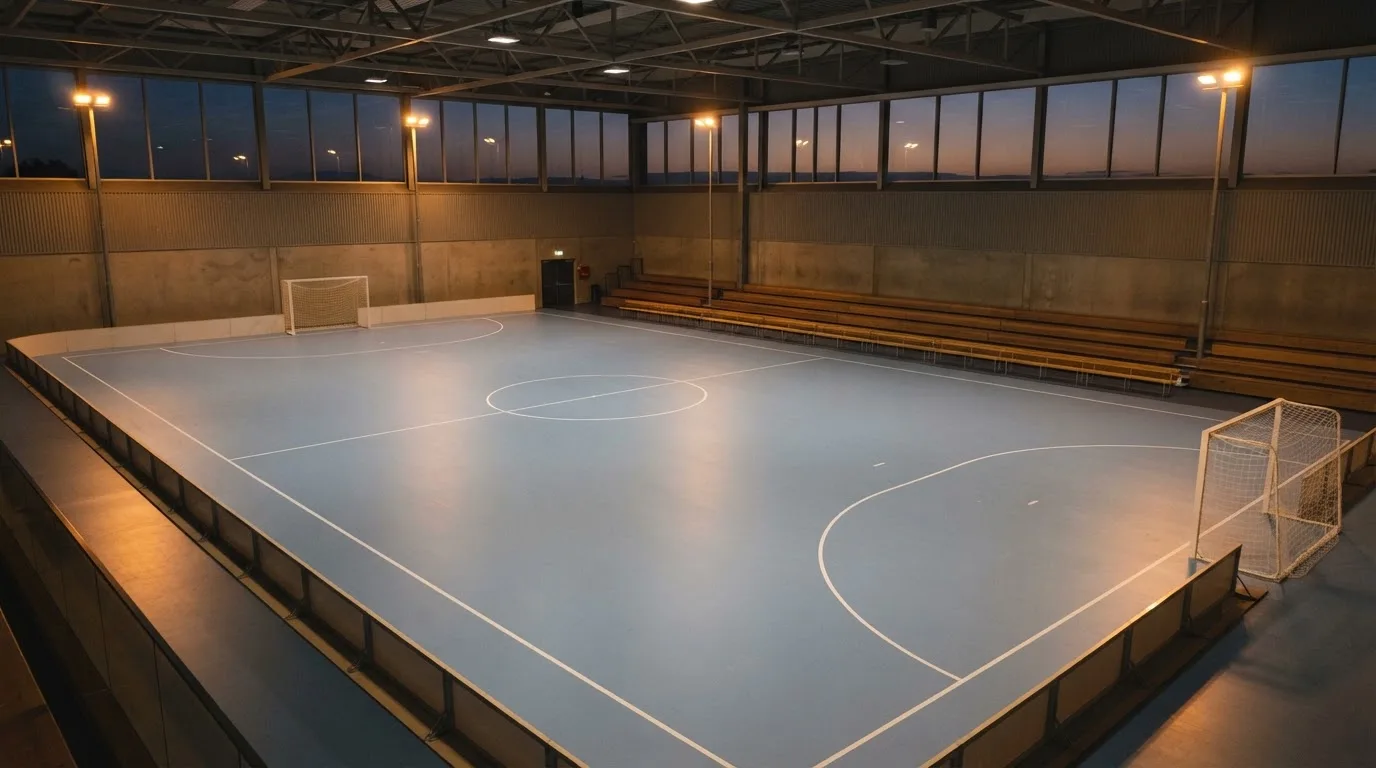
Futsal originated in 1930 in Montevideo, Uruguay, where Juan Carlos Ceriani devised the game for the city’s YMCA network, and FIFA is now its highest governing body. The international game is played between two teams of five — one of them a goalkeeper — with up to nine substitutes and unlimited substitutions, on a court 40 metres by 20 metres, with a size 4 ball that is smaller and heavier than a football and bounces lower. A match is two 20-minute periods with the clock stopping at dead balls, and each team has a one-minute timeout per period. From the sixth accumulated foul in a period the opposing team is awarded a direct free kick from the second penalty mark, ten metres from goal, with no wall permitted. Those are the rules the market prices, and the rhythm of those rules is what the in-play markets read.
The tournament calendar is anchored by the FIFA Futsal World Cup, first held in 1989 and held every four years since. The inaugural FIFA Futsal Women’s World Cup was held in the Philippines in 2025. Around the World Cup the calendar carries continental championships — the UEFA Futsal Championship, the AFC Futsal Championship, the CONMEBOL Copa América de Futsal, the CAF Futsal Africa Cup of Nations and so on — and a dense layer of regional leagues in South America, the Iberian peninsula and parts of East and South-East Asia. A British punter who follows the calendar for 2026 is reading fixtures across most of these layers, with the heaviest concentration in the European and South American leagues through the autumn and winter.
What is offered on each fixture depends on the operator. A FIFA Futsal World Cup match at a major bookmaker will carry the full menu: match result, total goals, handicap, both teams to score, next goal, interval result, correct score, player markets where the data is deep enough. A friendly in a regional league may carry only the match result and the next goal. A punter who wants to bet on a specific fixture checks the betting slip before staking anything else: a market that does not exist on the slip cannot be bet on, and a market that exists but is suspended is one the trader has paused for a reason. The big events are well covered; the smaller ones are spotty. There is no statutory reason for the difference, only the trading desk’s appetite for the volume a market is likely to attract.
A point worth naming on the calendar: the game has its own statistics vocabulary, and the trader’s job is to map it onto the markets the bookmaker offers. “Sixth accumulated foul” is a rule change inside the match, not a market on its own; “second penalty mark” is a venue change, not a bet; “timeouts” are a tactical event with no price. A punter reading the in-play markets learns to read them as snapshots of the same game the trader is watching, and the markets they price are the markets the punter can bet on.
The ten licensed British bookmakers, ranked for futsal
The table below sets out the ten featured operators on this page. Each is a brand whose domain appears on the Gambling Commission’s public register against a remote operating licence for Great Britain in the *remote general betting standard (real events)* category. Each licence entry names the licence holder as the legal entity, the trading name as the storefront, and the Commission’s account number as the reference to check on the register. The fourth column carries what the operator’s own terms state on futsal coverage; where no information is stated, the cell is left empty rather than guessed. The ranked judgement on futsal fit is the verdict that follows the table.
| Brand | Licence holder (Gambling Commission account) | Remote licence | Futsal coverage in the operator’s own terms |
|---|---|---|---|
| NetBet | Netbet Enterprises Limited (39170) | 039170-R-319343-032 | Offers a Bet Builder with instant dynamic odds and sports stats for major leagues; futsal-specific market depth not established |
| Kwiff | Eaton Gate Gaming Limited (44448) | 044448-R-323408-017 | Operates as a UKGC-licensed trademark of Spryme Ltd; market depth by sport not established |
| LiveScore Bet | LiveScore Betting and Gaming (Gibraltar) Limited (56859) | 056859-R-332720-005 | Bet Builder allows up to 10 selections across match result, BTTS, corners, totals, player scoring and cards |
| BetTom | Bet Tom Limited (64959) | 064959-R-339314-003 | Sports welcome offer of 50% back as a free bet up to £50; futsal market depth not established |
| Octobet | Octopus Game Limited (62545) | 062545-R-337248-006 | Sportsbook welcome offer of 50% back as a free bet up to £50 plus a £10 casino bonus; futsal market depth not established |
| Betway | Betway Limited (39372) | 039372-R-319367-029 | Free Bet Club: up to £10 in free bets weekly after opt-in, earned on £25+ of qualifying sports stakes |
| Coral | LC International Limited (54743) | 054743-R-330863-014 | New-customer offer of £40 in free bets on a £20 qualifying sports bet at minimum odds 2.0, valid 7 days from issue |
| Betfred | Petfre (Gibraltar) Limited (39544) | 039544-R-319290-010 | Sports, Casino & Games app covering 21 sports plus 2,000+ casino games; futsal market depth not established |
| BetUK | LeoVegas Gaming PLC (39198) | 039198-R-319450-029 | New-customer offer: four £10 free bets (2 × football accas of 4+ legs, 2 × multiples of 2+), valid 7 days from issue |
| DAZN Bet | DZBT Limited (48756) | 048756-R-327274-019 | Deposits from £5 by debit card, Apple Pay, Paysafecard, Trustly and Skrill; from £20 by PayPal; no processing fees |
A few cross-brand points the table does not carry. Coral and BetUK sit on the same parent group — LC International Limited and LeoVegas Gaming PLC are separate licence holders but both sit inside the wider Entain and LeoVegas stable respectively — and the trading names on the Commission’s register share the licence holder’s identity, so the brand on the punter’s screen is the storefront, not the legal entity. Several of the brands run an acca-builder product on football and offer the same builder on futsal where the underlying data feed carries the markets the builder needs. None of the brands publish a public futsal-only margin study, and a punter who wants to compare margins across operators has to take a price screen on a named fixture and do the arithmetic by hand.
NetBet — breadth of features, middling on niche sports
NetBet is a long-established European brand with a Gambling Commission remote licence held by Netbet Enterprises Limited and a product surface that includes a Bet Builder with instant dynamic odds and sports stats for major leagues. The welcome offer shape varies by market and by territory; on the GB app it includes Daily Boosts, Profit Boosts and free bet offers alongside the sportsbook. For a futsal punter the relevant question is whether the brand’s trading desk has priced the fixtures the punter wants to bet on; on the major European leagues and the FIFA Futsal World Cup cycle the coverage is plausible, on a regional futsal league in a lower-profile territory it is not. The verdict: a useful option for a punter whose betting menu sits on the sports NetBet’s desk already covers, and a thinner option for a punter whose menu is futsal-heavy.
Kwiff — supercharged odds pitch, thin on visible sports depth
Kwiff markets itself around the “supercharged” odds idea — a price on a chosen market that, if the punter’s bet qualifies, is upgraded to a higher payout than the price on the screen suggested. The mechanics vary by promotion, and the Gambling Commission licence is held by Eaton Gate Gaming Limited for the UK market, with the brand a trademark of Spryme Ltd. Futsal coverage depth is not established in the public materials, and a punter whose betting menu is futsal-heavy would check the betting slip for the specific tournaments before relying on Kwiff as a primary book. The verdict: an interesting option for the punter who follows a small number of well-covered fixtures and wants the supercharge mechanic available, less so for the punter who wants a deep menu on the smaller leagues.
LiveScore Bet — deep Bet Builder, football-shaped product
LiveScore Bet is the betting arm of the LiveScore scores service, and its product is built around the football menu the scores app already supports. The Bet Builder allows up to ten selections across match result, both teams to score, corners, total goals, player scoring and cards, which is the broadest menu on this list and the one a futsal punter with a builder-shaped habit will recognise. The licence sits with LiveScore Betting and Gaming (Gibraltar) Limited. The shape of the product carries a clear implication: a brand whose strength is football-shaped betting is at its best where the data feed is football-shaped, and futsal markets tend to ride that same feed. The verdict: the strongest builder-shaped option on this list for a punter who bets on the football-shaped menu in both sports.
BetTom — modest welcome offer, untested on niche depth
BetTom’s welcome offer is a split 50% match on sports and casino funds, as detailed in its terms. The licence is held by Bet Tom Limited. Futsal-specific market depth is not established in the public materials, and the product surface in the GB app is a standard sportsbook. The verdict: a sensible option for a punter whose betting menu is mainstream and whose primary interest is the welcome offer, with futsal coverage to be checked on the betting slip before staking.
Octobet — modest welcome offer, product surface still building
Octobet’s GB sportsbook welcome offer is 50% back as a free bet up to £50 plus a £10 casino bonus for new customers. The licence is held by Octopus Game Limited. The brand’s product surface in the GB market is a standard sportsbook with the casino attached; futsal coverage depth is not established. The verdict: a viable choice for a punter who wants a combined account for sports and casino play, with the specific futsal fixtures to be verified in the betting slip before placing a stake.
Betway — recurring free-bet club, broad market surface
Betway has operated since 1999 and runs a broad market surface with a recurring free-bet mechanic: opt into the Free Bet Club, stake £25 or more on sports, and earn 2 × £5 free bets weekly. The licence is held by Betway Limited for the UK market. The recurring offer is the brand’s distinguishing feature for a punter who bets regularly rather than for one chasing a single welcome bonus. The verdict: a strong option for a regular punter who values the weekly free-bet mechanic and wants a deep menu, with futsal coverage worth checking on the major tournaments.
Coral — headline welcome offer, deep menu
Coral’s headline GB sports welcome offer is “Get £40 in Free Bets when you bet £20”, with the £40 issued within seven days and expiring seven days after issue, on a minimum odds requirement of 2.0 (1/1), for new GB customers who opt in. The licence is held by LC International Limited (the same licence holder as Ladbrokes). The product surface is one of the broader ones on the GB market. The verdict: a deep-menu alternative for a punter prioritising the headline offer, noting that futsal availability varies by league and should be checked before committing the qualifying stake.
Betfred — long-established bookmaker, broad product
Betfred is one of the longest-established British bookmakers, with the Sports, Casino & Games app published by Done Brothers (Cash Betting) Ltd covering 21 sports and over 2,000 casino-style games. The remote licence is held by Petfre (Gibraltar) Limited. The product surface is broad and the brand has a deep football menu; futsal coverage is plausible on the major tournaments and worth checking on the smaller leagues. The verdict: a classic choice for a punter who appreciates a long-standing bookmaker, provided the specific futsal leagues required are available on the fixture list.
BetUK — split free-bets welcome offer
BetUK’s GB sports welcome offer splits the welcome into four £10 free bets — two football accumulators of four-plus legs and two multiples of two-plus — each valid for seven days from issue, on a £10 qualifying deposit and a sports bet placed within seven days of registering, with opt-in required. The licence is held by LeoVegas Gaming PLC. The split shape of the offer is its distinguishing feature, and the four free bets are a structure that rewards a punter who plans their first week of staking across both accumulator shapes.
Calculation revisited — the expected cost of clearing an offer
The arithmetic from the bet types section carries over directly into the welcome offer. A £100 turnover requirement placed on a market with a 5% margin costs the punter, on average, £5 of the £100 in expected loss to the bookmaker’s edge. A £100 turnover requirement placed on a market with an 8% margin costs £8. The same £100 turnover at a 3% margin costs £3. The lower the margin of the market the qualifying bets are placed on, the cheaper the offer is to clear; the higher the margin, the more expensive. The narrowest spread a bookmaker offers on a two-way market the punter can find is the cheapest place to put the turnover.
A few practical corollaries. The turnover must be placed on markets that count under the offer’s terms — minimum number of selections, minimum odds per selection, minimum stake per bet — and a bet that fails to qualify is not a bet against the turnover, it is a bet that does not count. A free bet whose stake is not returned is worth, on average, the free-bet amount × (odds − 1) ÷ odds × the payout share of the market, which is roughly the stake multiplied by the implied edge of the market. A £10 free bet at decimal odds of 3.00 on a market with a 95% payout share is worth roughly £6.33 on average — the £10 stake is not returned, the £20 profit is the upside, and the 95% payout share is the discount. That is the shape of every “free bet” the table above describes: a credit on the winnings side, not a refund on the stake side.
The cap on wagering at 10x, in force since 19 January 2026, is the most important change to the offer economics on this page. A £10 bonus at 50x wagering — once a common shape on aggressive welcome offers — can no longer be offered at a GB-licensed brand. The cap does not change the shape of a free bet, but it changes the shape of every deposit-match bonus: a £50 bonus at 10x wagering now requires £500 of qualifying stakes rather than the £2500 a 50x factor would have demanded. The punter’s expected cost of clearing that £500 turnover depends on the margin of the market the stakes are placed on, and that is the link from the offer page to the bet types section back to the prescribed calculation.
Landscape — the wider British market beyond the ten
The ten operators above are the brands the Gambling Commission’s public register features against the relevant licence categories, and they are the brands this page reviews. The wider GB-licensed market is much larger than ten: the Commission’s register lists remote betting licences for hundreds of brands, with several large groups — Flutter (Paddy Power, Betfair, Sky Betting & Gaming), Entain (Ladbrokes, Coral, Gala, Betdaq), Bet365 Group, William Hill — running multiple storefronts on a single licence. None of those are ranked separately from the storefronts already in the table because the licence holder is the legal entity, not the trading name.
The shape of the wider market is worth a paragraph. The big four groups (Flutter, Entain, Bet365, Sky Betting & Gaming) carry the broadest sports menus, the deepest in-play trading desks and the most aggressive welcome offer budgets. The mid-tier brands in the table above carry narrower menus but distinctive features — the Free Bet Club at Betway, the deep Bet Builder at LiveScore Bet, the supercharged odds at Kwiff. The smaller licensed brands carry the leanest menus and the most modest offers, with the trade-off that they sometimes price niche sports more aggressively because their volume targets are lower. A futsal punter who finds the major brands’ margins wide on a small fixture may find a smaller licensed brand’s margin tighter on the same fixture, and the same punter may also find the smaller brand’s menu shallower on the next fixture they want to bet on. The choice is between menu depth and fixture depth, and the right balance depends on which side of that trade the punter’s betting sits.
Outside the licensed set sits the offshore market. A brand licensed in Curaçao, Malta, Gibraltar (without a GB remote licence) or any other jurisdiction may lawfully take bets from customers in those jurisdictions, and may not lawfully take bets from customers in Great Britain without a Commission licence. The Commission’s enforcement is disruption rather than blocking: cease-and-desist notices, search-engine referrals, registrar and payment-provider work, and the court-order DNS blocking powers the Commission has been given or is about to receive. A British customer using one loses the GAMSTOP registration, the financial vulnerability check, the bonus cap, the complaints route and the approved dispute-resolution body, and has no British consumer redress if funds are withheld. The honest framing: licensed means checks, limits, GAMSTOP and a route to redress, but identity verification before the first bet; unlicensed means none of those things and the customer carries the loss.
Reading the welcome offer — what to check before opting in
Five practical checks on any GB-licensed welcome offer before a futsal punter opts in. First, the wagering multiple — the cap is 10x as of 19 January 2026, and anything above that is not compliant. Second, the minimum odds per qualifying bet — a 1.80 minimum is cheaper to clear than a 2.50 minimum because the wider menu of available markets includes the lower-margin ones. Third, the qualifying stake and the qualifying period — a £10 qualifying stake within seven days is cheaper to clear than a £20 qualifying stake within three days because the punter has more time to choose the market. Fourth, the form of any refund — a free bet is not a cash refund, and the stake is not returned with a free-bet win. Fifth, the cap on free-bet winnings — a free bet whose winnings are capped at, say, £500 is a different offer from one whose winnings are uncapped, and the cap is often the figure that decides whether the offer is worth opting into.
Beyond those five, the punter’s job is to check the betting slip on the specific fixtures they want to bet on. A welcome offer that prices cleanly on the major football leagues is no use to a punter whose betting menu is futsal-heavy if the brand’s futsal market depth is thin. A welcome offer that prices cleanly on futsal on the major tournaments is no use to a punter whose menu is regional leagues if the brand does not price the regional leagues at all. The cheapest welcome offer on the page is the one the punter can actually clear on the markets they actually want to bet on, and the audit of that is done on the betting slip before a penny is staked.
A closing thought on offer economics. A bookmaker’s welcome offer budget is a marketing line, not a gift. The offer is funded out of the margin on the qualifying bets the punter places, and the offer’s headline value is the prompt’s price tag. A £40 free bet headline on a £20 qualifying stake is funded by the margin on the £20 stake plus the margin on the turnover that follows — the £20 stake itself is not the cost, the turnover the offer demands is the cost, and the margin on that turnover is the actual expense. The punter who reads the offer as a gift overpays for the gift; the punter who reads the offer as a sequence of staking conditions sees the price and decides whether to pay it.
Overview — bringing the threads together
The British futsal betting market in 2026 is a small but real slice of the licensed sportsbook offer, and the rules that govern it are the same rules that govern football, tennis and every other real sporting event on the Commission’s register. The bookmakers licensed to take bets from customers in Great Britain are the brands whose domains show up against a remote general betting standard (real events) licence on the Commission’s public register, and the ten featured on this page are ten such brands, each with its own licence holder, its own welcome offer and its own product surface. The market that is offered to a futsal punter is the menu that operator’s trading desk has chosen to price, and the price the operator charges is built around a margin that compounds with every leg the punter adds to a builder or an accumulator.
The principal things a futsal punter needs to keep in mind, then, are six. The licence is the route to redress and the route to identity verification before the first bet, and there is no anonymous play on a GB-licensed site. The offer is a sequence of staking conditions rather than a gift, and the wagering multiple is capped at 10x as of 19 January 2026. The margin is the bookmaker’s edge in every price, and the arithmetic of it is the audit the punter can run on every market. The tournament calendar is anchored by the FIFA Futsal World Cup cycle, and the menu a bookmaker offers depends on which tournaments the trading desk has priced. The in-play product is well-suited to futsal’s stop-start rhythm, and the cash-out feature is the tradable price the bookmaker offers to buy the bet back at. The safeguards — GAMSTOP, deposit limits, the financial vulnerability check at £150 net deposits in a rolling 30 days, GamCare, GambleAware, the NHS clinics — are the routes a punter takes when the limits they set themselves have not been enough.
The honest position on the market as a whole is that a licensed British bookmaker offers a checked, regulated product with a clear complaints route and a self-exclusion scheme; an unlicensed offshore brand offers none of those protections and the customer carries the loss if funds are withheld. Neither is “the safe choice” by default. The choice between them is the customer’s, and the choice is best made on the basis of the protections rather than the headline price.
Frequently asked questions on futsal betting in Great Britain
How does a punter bet on a futsal league?
Futsal league fixtures appear on the betting slip of a GB-licensed bookmaker the same way football fixtures do: navigate to the sport, find the league, and the markets for each match are listed under the fixture. A major European futsal league is normally covered at the bigger brands; a regional league may only be covered at a smaller book or not at all. The bet types — match result, total goals, handicap, both teams to score, bet builder — are the same as on football, and the in-play product is the same trading screen with futsal’s own stop-start clock.
How can a customer check that a bookmaker holds a Gambling Commission licence?
The Commission’s public register can be searched by business name, trading name, domain or account number. The register entry lists the licence holder, the licence category (remote general betting standard (real events) for most sportsbooks), the trading names the licence covers and the dates the licence was issued and is valid through. The register is the whole test of who holds a GB remote licence; no other document stands in for it. A punter who cannot find a brand on the register should not deposit with that brand.
How is the return on a bet worked out from the stake and the odds?
The return is the stake multiplied by the decimal odds. A £10 stake at decimal odds of 3.00 returns £30 in total, of which £20 is profit and £10 is the stake returned. A £10 stake at decimal odds of 1.50 returns £15 in total, of which £5 is profit. A combination bet multiplies the odds of the legs into one price, so a double at 3.00 and 2.00 is a 6.00 price, and the return on a £10 stake is £60. The arithmetic is the same in fractional odds once the price is converted.
What is the bookmaker’s margin and how can it be seen in the odds?
The margin is the share of every pound wagered the bookmaker keeps on average across a market, distinct from the overround. On a two-way market with decimal odds of 1.90 each side, the implied probabilities are 52.63% and 52.63%, adding to 105.26%; the overround is 5.26%, and the margin is 5.0%. The wider the spread — 1.85/1.85, 1.80/1.80 — the higher the margin. The narrower the spread — 1.95/1.95, 1.98/1.98 — the lower. The margin is the only edge the bookmaker has that is visible in the price.
How do fractional odds such as 5/1 convert to decimal odds such as 6.00?
Fractional odds of a/b convert to decimal odds of a ÷ b + 1. So 5/1 → 5 ÷ 1 + 1 = 6.00, 11/4 → 11 ÷ 4 + 1 = 3.75, and evens (1/1) → 1 ÷ 1 + 1 = 2.00. A price shorter than evens — 4/6, for example — becomes 4 ÷ 6 + 1 = 1.67 in decimal terms, and the stake is larger than the profit. The conversion is the same whichever way the punter prefers to read the price.
What tools for controlling play does a licensed British bookmaker have to offer?
GAMSTOP self-exclusion is mandatory at every GB-licensed online operator, with periods of six months, one year, five years, or five years with auto-renewal. Deposit limits are required on a fixed time frame, and the punter sets the ceiling. Timeouts, reality checks, session limits and product-blockers are standard across the licensed brands. A financial vulnerability check is triggered once net deposits cross £150 in a rolling 30 days, and the operator runs a public-record check rather than a credit search. Beyond the operator’s own tools, GamCare runs the National Gambling Helpline, GambleAware funds treatment, the NHS runs gambling clinics and Gamblers Anonymous runs meetings.
Football – Accumulator
Content created by the «Accumulator» team
