
Online floorball betting 2026: where GB punters can put a stake on the sport
 Available in US
Floorball is a minority sport on the British betting menu, and that is the first thing any punter looking to put money on it has to accept. The Swedish game — five outfielders and a goalkeeper per side, three twenty-minute periods, sudden-death overtime if the scores are level — has a World Championship every even-numbered December, and the international calendar runs around it; club leagues in Sweden, Finland and Switzerland sit underneath. None of that is hidden, and none of it gives a British bookmaker a reason to build a deep floorball coupon every week of the year. This page is about what is on the menu, what it costs, and which of ten licensed brands bookmakers cover. operators a licensed bookmaker is the more useful answer when the question is where the stake goes.

The market below 10 licensed GB bookmakers, examined on 26 October 2026, against the Commission’s public register, with each operator’s own terms read for the figure quoted. Where a brand’s own page does not give a number, the entry says so rather than inventing one.
The 2026 Men’s World Floorball Championships and the rest of the floorball calendar
The single biggest date on the floorball calendar in 2026 is the 2026 Men’s World Floorball Championships. The sixteenth edition runs from 4 to 13 December 2026 in Tampere, Finland, and sixteen national teams will contest it. Finland qualifies automatically as the host. Sweden has won the tournament ten times, most recently in 2022. The current champions, who took the 2024 title, are also Finland.

The Men’s World Floorball Championship is held every December in even-numbered years, since 2008. That gives the sport a fixed anchor in the betting calendar: the tournament falls in mid-winter, when much of the rest of the international indoor season is in mid-season form. Underneath the World Championship sits the International Floorball Federation (IFF), the world governing body founded on the Swedish rules the sport codified in 1979; the IFF had 80 members as of 2025, and the European and Asian federations organise their own continental championships in the off-years. The Women’s World Floorball Championship runs on the same even-year rhythm; the U-19 World Championships run separately and form part of the talent pipeline for the senior sides.
Club floorball in Sweden, Finland, Switzerland, the Czech Republic and a handful of other European countries fills the rest of the calendar. The Swedish Superligan is the strongest domestic men’s league; the SSL (Swiss Floorball League) and the Salibandyliiga in Finland run alongside it. None of these leagues carries the broadcast reach of football or tennis, and that fact alone shapes what a British bookmaker is prepared to build into a coupon. A World Championship year is when floorball sits in front of a betting audience; an off-year, when it does not.
That has a practical consequence. A punter who wants to bet on floorball in any given week of 2026 will, outside a World Championship window, find the in-play and pre-match floorball menu considerably thinner than the football, tennis or basketball equivalent. The same bookmaker who lists two hundred football events on a Saturday will often list a single floorball match — if that — between World Championships. Markets that are available year-round on bigger sports, such as same-game multi / bet builder, player props or outright tournament winner, are offered on floorball in clusters around the World Championship and the continental qualifiers, and are thin or absent outside those windows. A reader who plans to bet on floorball as a regular fixture will be betting on a tournament rather than on a season.
Ten licensed brands, side by side
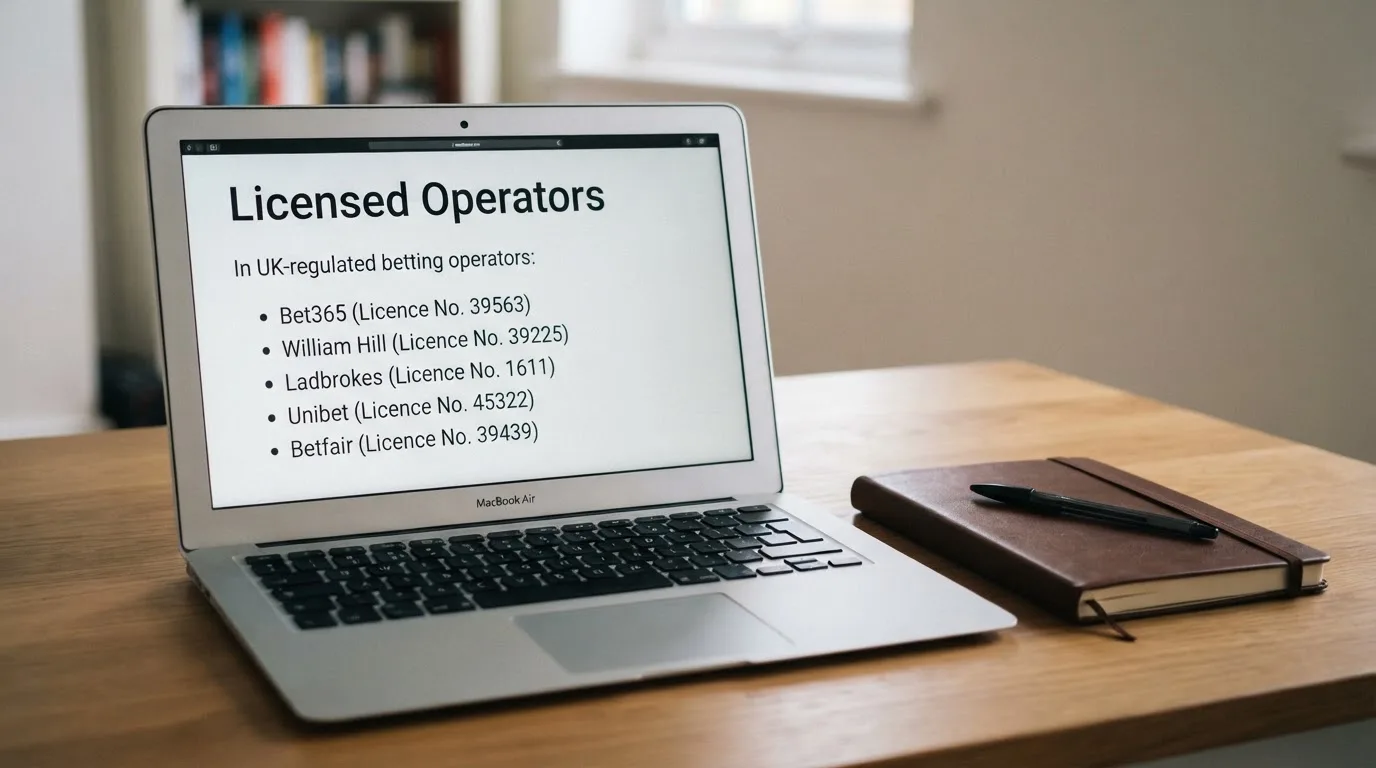
The table below is a starting point, not a verdict. The licence column is what the Gambling Commission’s public register says about the brand on 26 October 2026; the terms column is what each operator’s own page states about floorball markets, promotions and the conditions that govern them, taken on the same date. Where the operator’s own page does not address floorball in a term that can be transcribed, the cell carries a marker rather than a guess. Brand order follows research, not a ranking.
| Brand | Gambling Commission remote licence | Operator’s own terms on floorball and the conditions around it |
|---|---|---|
| Bet Ahoy | 100094-R-341742-003 (Bet Ahoy Ltd) | Welcome offer: Bet £10 & Get £10 in Free Bets, made up of a £5 sports bet and a £5 acca |
| Copybet | 053774-R-330743-010 (Copybet UK Limited) | Best Odds Guaranteed all day, every day on all UK and Irish racing; pays first past the post on horse racing even if the winner is later disqualified |
| Ladbrokes | 054743-R-330863-014 (LC International Limited) | Sports Betting App published by Entain Operations Limited; 4.66 rating from 101,255 ratings in the GB App Store |
| Bar One Racing | 056516-R-332750-007 (Bar-One Racing Limited) | Rebranded as BAR 1 Betting, an Irish independent bookmaker with shops across Ireland and horse racing sponsorships at Dundalk, Fairyhouse, Navan, The Curragh, Curraheen Park and Cork |
| Smarkets | 039173-R-319366-011 (Smarkets (Malta) Limited) | Open bank transfer deposits instant from £10 to £10,000; withdrawals processed within 6 hours from £10 to £100,000; UK debit card deposits instant from £10 to £15,000 |
| Kwiff | 044448-R-323408-017 (Eaton Gate Gaming Limited) | Licensed by the UK Gambling Commission; trademark operated by Spryme Ltd; 17+ App Store age rating |
| Betway | 039372-R-319367-029 (Betway Limited) | Free Bet Club: up to £10 in free bets every week after opt-in; spending £25 or more on sports earns 2 × £5 free bets |
| BetMGM | 039198-R-319450-029 (LeoVegas Gaming PLC) | Sports welcome offer for new UK customers depositing £10+ and placing a sports bet within 7 days: four £10 free bets (two football accumulators of 4+ selections and two sports multiples of 2+), valid 7 days, minimum odds, opt-in required |
| Betboro | 044181-R-324363-007 (Webmedia Development N.V.) | Sports welcome offer: 100% matched free bet of up to £25 on first qualifying wager; debit card deposit of at least £10; first bet £5 to £25 with at least three selections at 3/5 (1.60) or higher |
| 888sport | 039028-R-319297-014 (888 UK Limited) | Pre-match and in-play betting, Cash Out, Bet Builder, racing streams, BetFinder form tools, live bet feed, daily boosted odds |
The licence numbers above are the entries on the Commission’s public register on 26 October 2026. The register is the whole test of whether a brand holds a remote betting licence for Great Britain, and the reader’s own check on it is the only check that needs to be made. Operators use .com as well as .co.uk, so the domain proves nothing; a domain says where a brand wants to be found, not where it is licensed to operate. Several brands in any given market can run under a single licensee — for example, Ladbrokes and Coral under LC International Limited, Paddy Power and Betfair under Flutter — which is why the licence line above names the company that holds the licence rather than the brand alone. Several brands can run under one licensee, and the table treats each brand as a separate offering to the customer because that is how a customer meets them.
Two of the ten brands in this set are not in the natural conversation about floorball, and that is worth saying now. Bar One Racing is an Irish independent bookmaker with shop business and horse racing sponsorships at Dundalk, Fairyhouse, Navan, The Curragh, Curraheen Park and Cork. Its floorball coverage in 2026 is not the reason a punter opens an account with it. Smarkets is a betting exchange under the remote betting intermediary licence category rather than the general betting standard one; floorball markets on an exchange are a different shape from those on a fixed-odds book, and they appear only when somebody is prepared to lay a price on them. They are listed for completeness of the licensed set rather than as a recommendation.
Bet Ahoy
Bet Ahoy runs under Gambling Commission remote licence 100094-R-341742-003, with Bet Ahoy Ltd as the licence holder, in the remote general betting standard (real events) category. Its welcome offer, as the operator’s own terms state it, is Bet £10 & Get £10 in Free Bets, made up of a £5 sports bet and a £5 acca. Floorball is not the headline market the offer is built around — the £5 acca is a football-shaped offer at most bookmakers — and Bet Ahoy is the more useful chunk of the welcome package for a punter who already bets on football and is curious about whether the brand covers the floorball World Championship in December.
Copybet
Copybet runs under Gambling Commission remote licence 053774-R-330743-010, with Copybet UK Limited as the licence holder. Its Best Odds Guaranteed all day, every day, on all UK and Irish racing is the headline of its terms; it pays first past the post on horse racing even if the winner is later disqualified. Neither line is a floorball term, and both tell a reader what kind of book Copybet is built to be. A punter looking to bet on the World Floorball Championship in December will not find Copybet’s racing guarantee on a floorball match.
Ladbrokes
Ladbrokes runs under Gambling Commission remote licence 054743-R-330863-014, with LC International Limited as the licence holder, in the categories of remote general betting standard (real events) and remote betting intermediary. The Ladbrokes Sports Betting App is published by Entain Operations Limited and is rated 4.66 from 101,255 ratings in the GB App Store. The size of that rating count, and the depth of the underlying sportsbook that an Entain operation typically runs, make Ladbrokes the more credible of the ten as a place to find a floorball coupon during a World Championship window.
Bar One Racing
Bar One Racing runs under Gambling Commission remote licence 056516-R-332750-007, with Bar-One Racing Limited as the licence holder. It has rebranded as BAR 1 Betting, an Irish independent bookmaker with shops across Ireland and horse racing sponsorships at Dundalk, Fairyhouse, Navan, The Curragh, Curraheen Park and Cork. The brand’s racing sponsorship footprint is a better guide to where its menu is built than any inference about floorball. A punter who wants to bet on a floorball match in 2026 should check Bar One Racing’s own terms for whether the match is listed before staking anything.
Smarkets
Smarkets runs under Gambling Commission remote licence 039173-R-319366-011, with Smarkets (Malta) Limited as the licence holder, in the remote betting intermediary category. The payment terms are the clearest part of its offer for a new account: open bank transfer deposits are instant from £10 up to £10,000 and withdrawals are processed within 6 hours from £10 up to £100,000; UK debit card deposits are instant from £10 up to £15,000. Floorball is not a market the exchange is built around, and the floorball liquidity on a betting exchange outside the World Championship is thin in any case. Smarkets earns its place in the ten as a licensed exchange with a payments set worth knowing, not as a floorball bookmaker.
Kwiff
Kwiff runs under Gambling Commission remote licence 044448-R-323408-017, with Eaton Gate Gaming Limited as the licence holder. Kwiff is licensed by the UK Gambling Commission, describes itself as a trademark operated by Spryme Ltd, and the app has a 17+ App Store age rating. The Commission’s register is the licence proof, and the brand’s own description is the rest. A punter considering Kwiff for a floorball bet should look at the app’s floorball coverage during the World Championship window, because that is the only time Kwiff’s floorball depth can be checked against anything else.
Betway
Betway runs under Gambling Commission remote licence 039372-R-319367-029, with Betway Limited as the licence holder. Its Free Bet Club gives up to £10 in free bets every week after opt-in; spending £25 or more on sports earns 2 × £5 free bets. The Free Bet Club is the standing offer on the brand’s own page; it is not a floorball offer and the floorball eligibility of those free bets is a term a punter has to read on Betway’s own site. Betway is a useful pick on the licensed set because of the recurring weekly free-bet return, not because of any floorball specificity.
BetMGM
BetMGM runs under Gambling Commission remote licence 039198-R-319450-029, with LeoVegas Gaming PLC as the licence holder. The sports welcome offer for new UK customers who deposit £10 or more and place a sports bet within 7 days is four £10 free bets (two football accumulators of 4+ selections and two sports multiples of 2+), valid for 7 days, with minimum odds and opt-in required. The welcome package is built around football accumulators and sports multiples; the floorball eligibility of those free bets is a separate question. BetMGM is on the licensed set because it is licensed, not because of any floorball feature.
Betboro
Betboro runs under Gambling Commission remote licence 044181-R-324363-007, with Webmedia Development N.V. as the licence holder. The sports welcome offer is a 100% matched free bet of up to £25 on the first qualifying wager, requiring a debit card deposit of at least £10 and a first bet of £5 to £25 with at least three selections each at 3/5 (1.60) or higher. The three-selection minimum and the 1.60 floor are the conditions that govern whether the welcome bet clears at all. A punter planning to use the Betboro welcome on a floorball acca needs three selections, and three selections is not always available on a thin floorball coupon.
888sport
888sport runs under Gambling Commission remote licence 039028-R-319297-014, with 888 UK Limited as the licence holder. Its offer, as the operator’s own page states it, includes pre-match and in-play betting, Cash Out, Bet Builder, racing streams, BetFinder form tools, a live bet feed and daily boosted odds. The feature list is broad, and the relevant question for a floorball punter is which of those features are available on the floorball coupon in the World Championship window — particularly Cash Out and Bet Builder, which are the two features that affect a floorball punter most directly. A punter who plans to combine floorball selections into a single bet should confirm on 888sport’s own page that the relevant market is on the Bet Builder list before staking.
What floorball betting actually is in Britain
Floorball as a betting subject sits inside a wider British market that has been licensed, capped and audited for over twenty years. The Gambling Commission is the regulator and the public register on its site is the only proof that a brand holds a remote betting licence for Great Britain. The Commission’s licence is required wherever the operator is based — that change came in with the Gambling (Licensing and Advertising) Act 2014 — and a Curaçao, Maltese or Gibraltar licence is not a substitute. Inside that frame, there is no state list of permitted sports or markets. An operator holds a licence for a category and offers markets under its own rules and the Licence Conditions and Codes of Practice. Floorball is a permitted market under the remote general betting standard (real events) category, and ten licensed bookmakers offer it, with varying depth.
There is no statutory minimum or maximum stake on floorball. The operator sets both, and may restrict a customer on a market-by-market basis. There is no statutory list of permitted bet types on floorball, either. The single, double, treble and accumulator are all available on a typical floorball coupon during a World Championship; same-game multi / bet builder is available on some fixtures; outright tournament winner is available on the World Championship and the major continental championships. Player props on floorball exist on the larger exchanges but rarely on the fixed-odds bookmakers during a non-tournament window. None of this is a legal restriction — it is what each bookmaker is prepared to build.
A licence on the Commission’s register does not mean a brand is a good place to bet on floorball. It means the brand has passed the fit-and-proper test, holds client money in a segregated account, is bound by the social responsibility code, and is part of the GAMSTOP self-exclusion scheme. The actual depth of the floorball menu is a separate question, and the right way to find it out is the operator’s own sportsbook page during the World Championship window.
The legal frame for an online floorball bet in Great Britain
The legal frame a British punter meets is the Gambling Act 2005, the Licence Conditions and Codes of Practice (LCCP) and the Remote Technical Standards (RTS). The Act covers Great Britain — England, Scotland and Wales. Northern Ireland is outside the Act and has its own older law, so a brand licensed for Great Britain is not automatically licensed for Northern Ireland, and any Northern Irish reader should check the local position separately. The Commission is sponsored by the Department for Culture, Media and Sport and is non-departmental; it is not a competitor to the bookmaker and it does not set prices, but it is the body that decides who holds a licence.
Identity is verified before the first deposit at a GB-licensed site. Name, address and date of birth are checked against public records, and that check happens before a customer can deposit or gamble, including with a free bet or bonus. The credit-card ban for gambling in Great Britain (in force since 14 April 2020, LCCP condition 6.1.2) means a debit card or a bank transfer is the standard way to fund an account; credit-card-funded payments through an e-wallet are inside the ban.
The tax position is plain for the punter. The player pays no tax on betting winnings in Great Britain — general information, not tax advice, and a professional gambler should ask HMRC or an adviser. General Betting Duty is the operator’s tax on gross profits, currently 15%; from 1 April 2027 a new remote betting rate of 25% applies within it, while remote bets on UK horse racing, bets on self-service betting terminals in licensed premises, pool betting and in-person betting stay at 15%. Until 1 April 2027 the remote rate stays at 15%, and whether operators pass that duty on through odds is not established — never assume the punter is charged duty. The Commission’s statutory levy is a separate charge, not a tax on winnings.
A GB licence is compulsory at the point of consumption. Providing gambling facilities in Great Britain without the licence the Act requires is an offence under section 33 of the Gambling Act 2005 — aimed at the operator. There is no offence aimed at a customer who merely bets on an unlicensed site, but the customer loses them: GAMSTOP coverage, the Commission’s complaints route, an approved dispute-resolution body, British consumer redress if funds are withheld, the 10x bonus cap, the £150 vulnerability check. Honest framing: licensed means checks, limits, GAMSTOP, the bonus cap — and verification before the first bet; unlicensed means none of those protections and a real chance of not getting the money back. Neither is “the safe choice” by default. Enforcement against unlicensed operators is disruption — cease-and-desist notices, search-engine referrals, work with registrars, hosts and payment providers — not blocking; the Commission has been given, or is about to receive, court-order DNS blocking powers, but ISP blocking is not in operation.
Keeping the stake sensible — what a licensed bookmaker has to offer
The safer-gambling frame on a GB-licensed bookmaker is the LCCP, and it sets out what the customer should expect before staking anything on floorball. GAMSTOP is the national multi-operator online self-exclusion scheme and a mandatory licence condition for online operators since 31 March 2020. Exclusion periods are six months, one year, five years, or five years with auto-renewal, and after the minimum period the exclusion stays in place for a further seven years unless the customer asks GAMSTOP to remove it. GAMSTOP covers online sites and apps; betting shops use a separate service. The point of registering with GAMSTOP is that the exclusion applies across the licensed set, not just at one brand, so a punter who self-excludes through GAMSTOP does not need to repeat the process at every licensed bookmaker they use.
A licensed operator has to offer the customer a deposit limit under the LCCP, and a customer can set a fixed-time-frame gross deposit limit on their account at any time. The first changes have applied since 31 October 2025, and a second phase was postponed to 30 September 2026; whether the second phase is live is not established, and a punter who wants the deposit limit set should set it themselves rather than wait for a phase to come in. The limits set is the customer’s choice, not a state-set ceiling, and a punter who wants a tighter limit than the operator’s default can set one.
A financial vulnerability check (LCCP condition 3.4.4, in force since 30 August 2024) applies to licensed remote betting when a customer’s deposits minus withdrawals exceed £150 in a rolling 30 days (since 28 February 2025): the check is a public-record check — for example bankruptcy or county court judgments — not an income check and not a credit reference check. The £150 threshold is the trigger, not the ceiling. Financial risk assessments — the affordability checks of the press coverage — are announced in a staged plan, with no start date, and should be written as “announced, staged, no start date”, not “in force”.
Help is one search away. GamCare runs the National Gambling Helpline, GambleAware signposts treatment, the NHS runs gambling clinics in several parts of England, and Gamblers Anonymous runs peer-support meetings. A licensed bookmaker has to link to at least one of these on its safer-gambling landing page, and most of them link to several. None of these are substitutes for the LCCP controls, and none of them cost anything to use.
What a “free bet” or a “welcome offer” actually pays on floorball
A welcome offer or a free bet on a floorball bet is the same shape as the same offer on a football bet, with the same conditions attached and the same arithmetic underneath. The shape is built out of the offer’s wagering requirement, the minimum price for a qualifying bet, the deadline, and the cap on what the free bet can return.
The promotion rules in force since 19 January 2026 cap wagering requirements on bonuses at 10x. A £10 bonus at 50x needed £500 of bets; under the cap, no more than £100. A £25 bonus with a 10x wagering requirement needs £250 of bets at the operator’s minimum qualifying price. Mixed-product promotions — an offer that requires gambling on two or more product types such as betting, casino, bingo and lottery, for example “bet on football to get free spins” — are banned. Whether the cap applies to free bets with no wagering condition, and any cap on the money value of a bonus, are not established, and a punter who wants the answer reads the operator’s own terms.
The welcome offer on a typical floorball bet, where the offer is structured as a free bet, is that the free bet’s stake is not paid back with the winnings — that is, a £10 free bet at 3.00 returns £30, of which £20 is profit and the £10 stake is gone. The average value of a free bet, on a market with a 5% margin and a minimum qualifying price of 1.60, works out as the free-bet amount multiplied by the odds minus one, divided by the odds, multiplied by the market payout share. On a market of payout share 0.95, a £10 free bet at 2.00 is worth £10 × 1 ÷ 2 × 0.95 = £4.75 on average; at 3.00 it is worth £10 × 2 ÷ 3 × 0.95 = £6.33; at 5.00 it is worth £10 × 4 ÷ 5 × 0.95 = £7.60. The higher the price of the qualifying selection, the closer the free bet gets to its face value — and the lower the margin of the market, the more of the free bet’s worth is kept.
That average is an average over many bets, not a guaranteed outcome for any single punter, and the value of a free bet on a single selection is whatever the price pays at the end of the event.
A welcome offer that is structured as a matched free bet — for example, the Betboro offer of a 100% matched free bet of up to £25 on the first qualifying wager — has the same shape, with three conditions attached: a debit card deposit of at least £10, a first bet of £5 to £25, and at least three selections each at 3/5 (1.60) or higher. The minimum-selection condition is the condition that bites on a thin floorball coupon, because three selections are not always available on a floorball coupon outside the World Championship, and the punter has to lay the qualifying bet on a different sport if the floorball coupon is too thin.
A weekly free-bet offer, like the Betway Free Bet Club, has a recurring condition attached: spending £25 or more on sports earns 2 × £5 free bets. The £25 threshold is not a wagering requirement — it is the qualifying spend before the free bets unlock — and the free bets are issued as £5 fixed denominations, not as a single amount that can be split. The shape is the same on every operator that runs a Free Bet Club, and the only variable is the threshold and the denomination.
A welcome offer with a wagering requirement, like a cash bonus, has the wagering requirement as the cost-defining condition. A £10 bonus with a 10x wagering requirement at a 1.60 minimum price requires £100 of bets at 1.60 or higher to clear, and the £100 of bets is the turnover — not the deposit. The deposit can be withdrawn as soon as it is deposited, less any wagering on the bonus that has not been settled; the bonus itself becomes withdrawable once the turnover is complete. The arithmetic underneath is the same on every operator, and the only variables are the bonus amount, the wagering factor and the minimum qualifying price.
The fastest way to lose the value of a welcome offer is to use it on a market the punter does not understand. A floorball bet at 1.60 is not “safer” than a floorball bet at 3.00 just because the price is lower — the lower price is the market’s view that the outcome is more likely, and the margin is taken on both sides of that view. The way to keep the value is to bet on outcomes the punter has a reason to think are mispriced, at a price that meets the offer’s minimum, with a stake the punter can afford to lose.
The arithmetic of a floorball bet
The arithmetic of any floorball bet is the arithmetic of any other fixed-odds bet, and there are three numbers a punter needs to know before staking. The first is the decimal odds, which is the price multiplied by the stake that returns on a win. A £10 bet at decimal odds 2.50 returns £25, of which £15 is profit. A £10 bet at 1.60 returns £16, of which £6 is profit. The second is the fractional odds form, which the British bookmaker prints alongside the decimal. 5/1 is decimal 6.00; 11/4 is decimal 3.75; evens is decimal 2.00; 4/6 (a quarter is the same as odds-on) is decimal 1.67. The conversion is a divided by b plus one: a/b → a ÷ b + 1. The third is the market margin, which is the cut the bookmaker takes of every unit bet on the market.
The bookmaker’s overround is the sum of the implied probabilities of every outcome on the market minus one, and it is the number that sits inside the price. A two-way market at 1.90 / 1.90 has an implied probability of 1 ÷ 1.90 plus 1 ÷ 1.90 = 0.5263 plus 0.5263 = 1.0526 — meaning the bookmaker has built an overround of about 5.26% into the market. A two-way market at 1.85 / 1.95 has an implied probability of 0.5405 plus 0.5128 = 1.0534, an overround of about 5.34%. A three-way market (1X2) at 1.80 / 3.50 / 4.50 has an implied probability of 0.5556 plus 0.2857 plus 0.2222 = 1.0635, an overround of about 6.35%. The margin — the cut the bookmaker takes of every unit bet — is computed from the payout share (1 divided by the sum of probabilities), and on these markets it ranges from about 5.0% to 6.0%.
The book’s margin is not a tax the punter can avoid, and it is not a charge the punter can negotiate. It is built into the price before the punter sees it, and the punter’s only choice is between a market with a thin margin (around 3–4% on a major football match) and a market with a fat margin (around 8–10% on a niche in-play market or a small event). On floorball, where the depth of the market is small, the margin is on the high side of the British bookmaking average, and the punter’s only mitigation is to look at more than one bookmaker’s price on the same selection.
The margin of one market (1X2) is not the margin of another (totals, handicaps, a combination bet). One sport’s margin is not another’s. One bookmaker’s price is not another’s. The margin is stated in this page, where it is stated, for the exact market it has been computed on.
The worked example
For a two-way floorball market at decimal odds 1.90 / 1.90, the implied probabilities are 0.5263 and 0.5263, summing to 1.0526. The bookmaker’s margin is 1 minus the payout share, which is the reciprocal of the sum. The payout share is 1 ÷ 1.0526 = 0.9500, and the margin is 1 − 0.9500 = 0.0500, or about 5.0%. So the band is “around 5%, with the exact figure depending on the price the bookmaker posts”: a 1.85 / 1.95 pair yields 0.5405 + 0.5128 = 1.0534, payout share 0.9493, and a margin of about 5.07%; a 1.95 / 1.95 pair yields 0.5128 + 0.5128 = 1.0256, payout share 0.9750, and a margin of about 2.50%. The lower the prices, the lower the margin — and the lower the prices, the less value in the price. The figure is an estimate of the cut, on average, of every unit bet on the market; it is not a charge the punter pays per bet, and it does not change the return on any single winning bet.
Reading a floorball coupon
A floorball coupon on a licensed bookmaker, in the World Championship window, has more depth than the same coupon outside the window. The coupon is built out of match-result markets (1X2, where the draw is priced), totals (over/under a stated number of goals), handicaps (a stated goal-line the favourite has to cover), outright tournament winner, group winner, top scorer, and the various same-game multi / bet builder combinations the bookmaker has set up for that fixture. The match-result markets on floorball follow the same shape as match-result markets on football or ice hockey, with the draw priced because floorball can go to overtime and to a penalty shootout — a tied game goes to sudden-death overtime and, if it remains tied, to a penalty shootout.
The in-play markets on floorball are thinner than the in-play markets on football, with fewer suspensions and fewer goal-corner equivalents to bet on, and the live odds move less between events because the events inside a floorball period are fewer. The cash-out feature is available on some floorball matches at the larger bookmakers and not at others, and the bet-builder feature is built out of the markets the bookmaker has decided are combinable on that fixture. A punter who plans to use cash-out on a floorball match should confirm that the match is on the cash-out list before staking, because cash-out is not universal on the floorball coupon even at the largest operators.
A non-runner on a floorball outright is a non-runner in the way the buyer’s own terms define it, with the stake returned or the bet settled according to the rule-4 / non-runner deduction that applies. The same is true of an accumulator where one leg is a non-runner — most bookmakers settle the accumulator on the remaining legs, with the non-runner leg treated as a winner at the relevant rule-4-reduced odds, but a few settle the whole accumulator as a non-runner. The rule is in the operator’s own terms, and a punter who plans to combine floorball outrights into an accumulator should check the rule before staking.
A bet on a floorball match that is abandoned or postponed is settled under the operator’s own abandoned-or-postponed rule, which varies. Some bookmakers settle abandoned matches on the official result if the match reaches a specific point; others void all bets. The rule is in the operator’s own terms, and the punter who bets on floorball during the World Championship, where fixture dates can move, should check the rule.
The price on a floorball match moves between the time the market opens and the time the match starts, and the in-play price moves further as the match progresses. A punter who wants the price at kick-off rather than at the time of staking can lay the bet early and let the price move, or can take the price at the time of staking and accept the in-play movement. There is no “right” way; both are within the bookmaker’s terms.
What to do before placing a stake on floorball
A punter who plans to bet on floorball in 2026 should do five things before staking anything, and the order is the order that makes sense.
First, check the brand’s licence on the Commission’s public register. The register is the only place a brand’s licence can be confirmed, and the licence number on the brand’s own page should match the register’s. A mismatch is a reason to walk away, not to bet.
Second, read the operator’s own terms on the welcome offer or the free bet the punter plans to claim. The wagering requirement, the minimum qualifying price, the deadline, the cap on winnings and the eligible markets are all in the terms, and the offer is what the terms say it is — not what the marketing headline says it is.
Third, look at the floorball coupon on the brand’s site during the World Championship window. The depth of the coupon is the answer to the question of whether the brand is a useful floorball bookmaker, and the depth varies by brand and by week.
Fourth, set a deposit limit. The LCCP requires the operator to offer one, and the punter can set it themselves at any time. The punter who does not set one defaults to the operator’s maximum.
Fifth, register with GAMSTOP if the punter wants to be excluded across the licensed set, and use GamCare if a punter or a punter’s family want to talk through a concern. Both are free, both are confidential, and both are reasons the licensed market is the licensed market.
A floorball punter who does those five things before staking has done the part of the work that has to be done by the punter; everything else — the price, the in-play movement, the result — is what the bookmaker is for.
Frequently asked questions
How can it be checked that a bookmaker holds a Gambling Commission licence?
Open the Commission’s public register, search by the brand’s name, trading name, domain or account number, and read the entry against the operator’s licence line on its own site. The register is the only place a brand’s licence can be confirmed, and the entry lists the licence holder, the licence categories, and the dates the licence is in force. A licence number on a brand’s own page that does not appear on the register is a reason to walk away.
How is the return on a bet worked out from the stake and the odds?
In decimal odds, the return is the stake multiplied by the odds, and the profit is the stake multiplied by the odds minus one. A £10 bet at decimal odds 2.50 returns £25, of which £15 is profit; a £10 bet at 1.60 returns £16, of which £6 is profit. For a combination bet — a double, a treble, an accumulator — the odds of the legs multiply into one price, and the stake is multiplied by that combined price. The decimal price is what a British punter sees on most modern bookmaker sites; the fractional form, which the British bookmaker prints alongside, divides the profit by the stake.
What is the bookmaker’s margin and how can it be seen in the odds?
The margin is the cut the bookmaker takes, on average, of every unit bet on the market. It is the difference between the gross pool — what the bookmaker would keep if every outcome won exactly its share of bets — and the gross returns. It is seen by adding up the implied probabilities of every outcome on the market: each outcome’s implied probability is one divided by its decimal odds; the sum is the gross pool; one minus the sum is the margin. A two-way market at 1.90 / 1.90 has an implied probability sum of 1.0526 and a margin of about 5.0%; a three-way 1X2 at 1.80 / 3.50 / 4.50 has an implied probability sum of 1.0635 and a margin of about 6.35%.
How do fractional odds such as 5/1 convert to decimal odds such as 6.00?
The conversion is the fraction’s numerator divided by its denominator, plus one. 5/1 is 5 ÷ 1 + 1 = 6.00. 11/4 is 11 ÷ 4 + 1 = 3.75. Evens (1/1) is 1 ÷ 1 + 1 = 2.00. 4/6 (an odds-on price) is 4 ÷ 6 + 1 = 1.67. The decimal price is what the punter multiplies the stake by to get the return on a win; the fractional form is the profit over the stake. The two forms describe the same price.
Which tools for controlling play does a licensed bookmaker have to offer?
A licensed bookmaker has to offer GAMSTOP self-exclusion, a deposit limit, a time-out, reality checks, and links to GamCare, GambleAware and the NHS gambling clinics. GAMSTOP excludes the customer across the licensed online set for six months, one year, five years, or five years with auto-renewal. The deposit limit is the customer’s own choice, and a tighter limit than the operator’s default can be set at any time. A financial vulnerability check is triggered when a customer’s deposits minus withdrawals exceed £150 in a rolling 30 days, and it is a public-record check rather than an income check or a credit reference check. None of these tools cost anything to use, and all of them are reasons the licensed market is the licensed market.
Are betting winnings taxed in Great Britain, and who pays General Betting Duty?
The punter pays no tax on betting winnings in Great Britain — general information, not tax advice, and a professional gambler should ask HMRC or an adviser. General Betting Duty is the operator’s tax on gross profits, currently 15%; from 1 April 2027 a new remote betting rate of 25% applies within it, while remote bets on UK horse racing, bets on self-service betting terminals in licensed premises, pool betting and in-person betting stay at 15%. The Commission’s levy is a separate charge, not a tax on winnings. The punter’s stake and the punter’s winnings are the punter’s, before and after duty.
US & other team sports – Accumulator
Content created by the «Accumulator» team
