
Online Curling Betting in the UK – Where It Lives and What It Costs
 Available in US
Curling sits in an odd spot in British sports betting. It is a recognised Olympic sport, the winter calendar is short, and the market for it is thin on the ground compared with horse racing or Premier League football. The bookmakers that take bets on it are mostly the same large operators who cover everything else, and the welcome offers aimed at new customers make curling sound like a busy, well-served market. The reality is more modest, and the gap between the marketing and the live schedule is the single thing worth understanding before a stake goes down.

This page walks through that gap. It covers what the licensed operators actually list for curling, how a typical market is priced and what a 10x wagering cap does to the welcome offers that punters are most likely to see. The angle throughout is cost — what each offer, each licence and each market charges the reader, in time, in turnover or in the value left on the table. Where the angle is value the punters are most likely to see, it is named. Where the offer is thinner than it looks, that is named too.
*Current as of 26 October 2026. Operating data and licence numbers verified against the Gambling Commission’s public register.*
Where curling betting sits in the UK market
Curling appears in the betting menu of most large UK-licensed bookmakers, but only when the sport is actually playing. The World Curling Championship runs once a year and is the main pre-Olympic event, alongside the European Curling Championships and the World Mixed Doubles. Outside those windows the live “Curling” tab on a sportsbook is often empty, and in-play markets are sparse even during a tournament. This means that the headline curling price a punter sees is often the only curling price the operator has bothered to set that week, and the margin built into it is rarely sharpened by competition. A reader who plans to bet curling once a year during the World Championships is paying for the convenience of an account that is mostly dormant for the rest of the season.
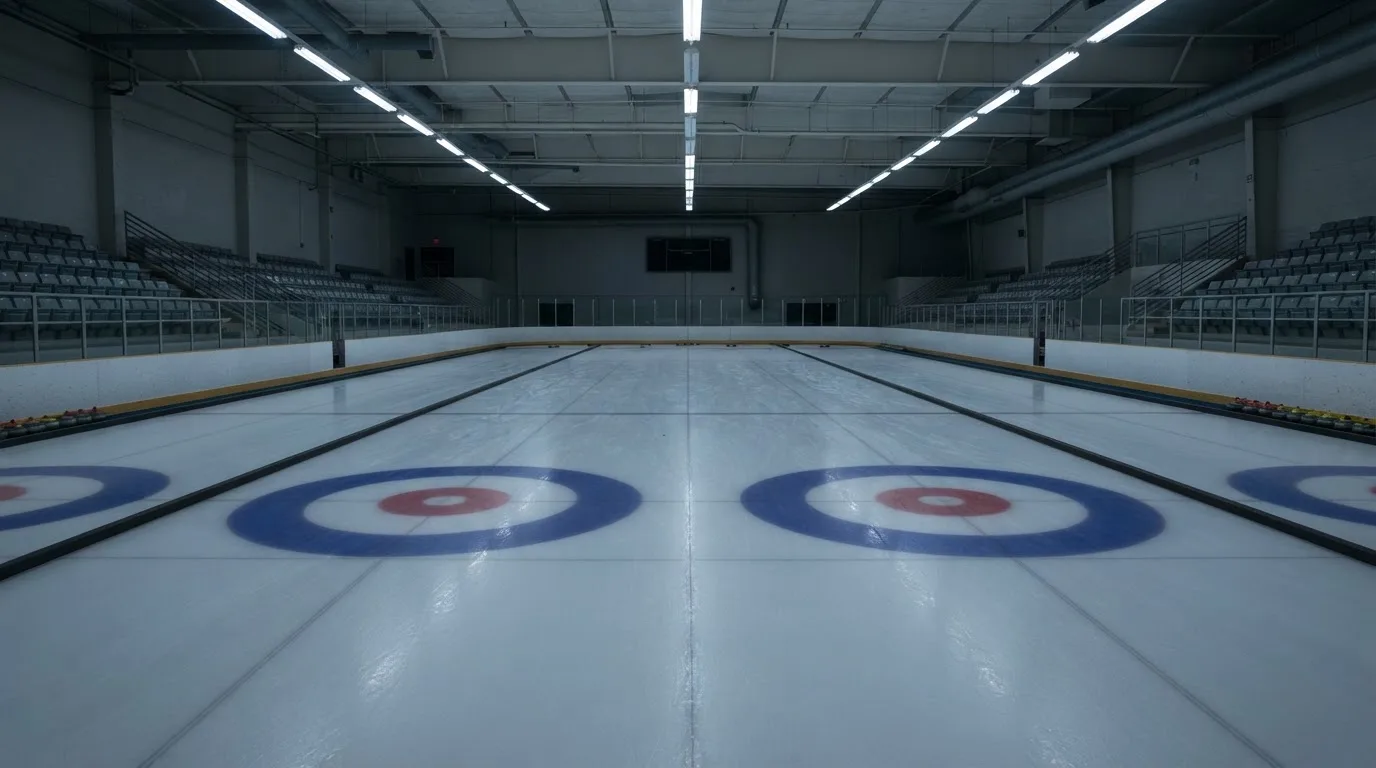
The bookmakers reviewed below all hold a remote operating licence from the Gambling Commission, which is the only legal route to take bets from customers in Great Britain. Several of them run under a parent group rather than as independent operators, and the licences sit with the parent company while the front-of-house brand changes. A punter who opens an account with any of the brands listed here is dealing with a licensed operator regardless of which trading name sits on the page, and the same GAMSTOP, deposit-limit and vulnerability check framework covers them all.
The number of licensed brands with a curling menu runs well into double figures, but a meaningful curling market — a tournament outright, a moneyline at every game of a World Championship and at least one in-play offering — is rarer than that count suggests. The ten operators in the table below are the ones most often named in punter discussions for curling coverage in 2026. None of them is “the only” licensed brand; the Commission’s register lists many more.
A short note on the rules, for anyone pricing a curling bet
The price on a curling market reflects what the bookmaker thinks will happen at the sheet, and a few quirks of the sport make the prices noisier than they look. A team has four players in the standard format, two in mixed doubles, and each player throws two of the team’s eight stones per end. Games typically run eight or ten ends, with international competition at ten. Only one point is awarded per end: the team with the stone closest to the button scores one for every stone of theirs lying closer than the opponent’s nearest. A blanked end — every stone swept out of the house — leaves the hammer with the team that already had it, which is why blanking is a deliberate defensive move late in a game. Ties go to extra ends. Stones weigh between 17.24 and 19.96 kilograms under World Curling Federation rules.
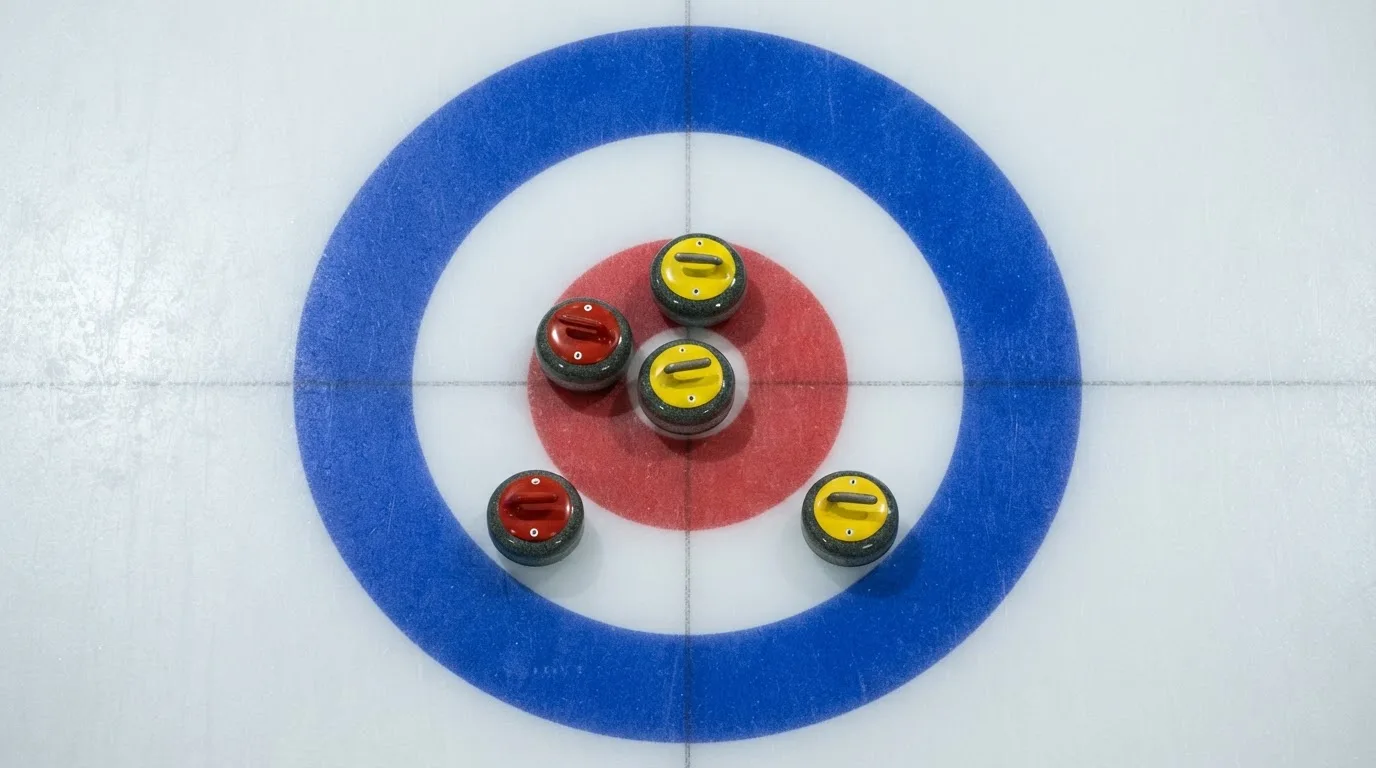
What that means for a market is that a curling game is rarely a procession. Hammer advantage flips blanks into one-point swings, leads into three- or four-point deficits and back again, and an end that looks settled can unravel over two stones. The bookmaker’s margin on a curling moneyline at decimal 1.90 / 1.90 sits around the 5% mark, which is the same band as a main-line football match but on a market where the bookmaker has less information per team. That is the cost angle: the head-to-head margin is fair compared with football, but the information advantage is thinner, and the punter pays for that asymmetry indirectly through lines that move later than they do for popular sports.
The licence check – what a GB licence actually covers
Every operator named in this guide appears on the Gambling Commission’s public register with a remote general betting standard (real events) licence, which is the category that covers sports betting of the kind this page is about. The register is searchable by business name, trading name, domain or account number, and it is the only place to confirm whether a brand is licensed. A licensed operator must also be a GAMSTOP member by licence condition, and the brand’s own site carries the responsible-gambling links that come with that obligation.
A GB licence is not the same as safe. It is a regulated framework: name, address and date of birth are verified before the first deposit or bet, and a financial vulnerability check triggers when deposits minus withdrawals cross £150 in any rolling 30 days. The 10x bonus wagering cap that came in on 19 January 2026 applies to every licensed welcome offer. None of these make a brand a “safe” choice over an unlicensed one — they make the brand a checked one. The trade-off is laid out under the offshore section further down.
| Brand | Gambling Commission licence (remote) | What its own terms state on curling |
|---|---|---|
| Fitzdares | 000400-R-103839-030 (account 400); held by Fitzdares Limited | Curling is offered in pre-match outright markets during major championships; the brand focuses heavily on horse racing and premium sports, with curling treated as a winter-season special. |
| BetMGM | 039198-R-319450-029 (account 39198); held by LeoVegas Gaming PLC | Lists curling inside its wider sportsbook menu but the live schedule is short outside the World Championships; customer terms are stated through its mobile app. |
| Kwiff | 044448-R-323408-017 (account 44448); held by Eaton Gate Gaming Limited | A general sportsbook with curling listed when tournaments run; the app’s age rating is 17+ on the UK App Store, above the 18 minimum for real-money gambling. |
| Lottoland | 038991-R-319408-020 (account 38991); held by EU Lotto Limited | Covers curling alongside a larger lottery-betting and casino product; the sportsbook is one of several verticals on the same account. |
| Midnite | 101839-R-342850-001 (account 101839); held by Midnite Limited | Lists in-play events, an acca builder, price boosts and max-stake limits; curling is present during tournament windows. |
| Octobet | 062545-R-337248-006 (account 62545); held by Octopus Game Limited | The sportsbook lists curling alongside its main sports offering; live coverage is concentrated on major championships. |
| Unibet | 045322-R-324275-019 (account 45322); held by Platinum Gaming Limited | A long-established European brand (operating since 1999) with curling as part of a deep winter sports menu; the UK site runs under the Gibraltar-registered parent. |
| Fafabet | 057385-R-333191-006 (account 57385); held by Taichi Tech Limited | A general sportsbook with curling in pre-match format for major championships; the brand is known for Best Odds Guaranteed on UK and Irish racing. |
| Bet600 | 044731-R-323941-016 (account 44731); held by Tyche Tech Limited | Curling is part of the broader sportsbook; the brand’s profile centres on football and racing with curling as a seasonal line. |
| BetGoodwin | 002927-R-327985-008 (account 2927); held by Goodwin Racing Limited | Lists curling during championships in its pre-match offering; the brand pitches itself as a racing-led bookmaker with a small winter sports extension. |
The licence numbers above are read straight off the Commission’s public register. Punters who want to check for themselves should search by account number on the Commission’s site and check that the trading name on the register matches the brand on the page. The site lists both .com and .co.uk variants for most licensed brands, and a GB-licensed operator can run a .co.uk domain that simply isn’t the only thing on the register — the licence goes with the operator, not the domain.
What a curling welcome offer actually pays back
The headline numbers on curling welcome offers look generous. The Fine Print is where the offer usually gives back what the headline gave.
A BetMGM new-customer sports welcome is four £10 free bets — two football accas and two sports multiples — issued after a £10+ deposit and a sports bet within 7 days, valid for 7 days from issue. Midnite offers £25 in free bets plus 50 free spins when a new customer bets £5+ at minimum odds of 2.0 (EVS) within 14 days of signing up, free bets valid for 7 days. Octobet’s headline is 50% back as a free bet up to £50, plus a £10 casino bonus for new customers. Unibet’s sports welcome is “£40 in free bets when you bet £20” — a £20 deposit and bet at minimum odds of 2.0, free bets expiring within 7 days. BetGoodwin’s is £15 in free bets split across a £5 sports bet, a £5 acca and a £5 Sub-Cover bet, triggered by a £10 bet.
These are free bets, not cash refunds. A £10 free bet whose stake is not returned with a win pays out only the profit: stake times odds minus one. A £10 free bet at evens pays £10 in profit, not £20. The headline “£40 in free bets” is not £40 of profit, it is four £10 free bets each of which carries an effective loss of half its face value when placed at even money. The number that matters is the free-bet value, which for a £10 free bet at odds 2.0 sits around £4.70 per £10 of free-bet credit after the bookmaker’s margin. None of the welcome offers named above pays a cash bonus; every one of them is a free-bet or a stake-restricted stake.
The wagering cap that came in on 19 January 2026 makes the cost of any cash bonus on the same shelf a hard ceiling. A 10x cap on wagering means a £10 bonus requires £100 of qualifying bets before withdrawal; that is the legal maximum and no licensed operator can push higher. For a punter, this is good news on the cap and bad news on the headline — the offers that remain are mostly free-bet formats because they sit outside the cap.
The expiry is the silent cost. Seven-day expiry on a free bet is short even for a sport with a year-round calendar; for curling it is tighter still. If the free bet lands on the day before a World Championship round starts and the punter misses the first day of play, the bet expires before the most liquid market of the tournament has even opened. Reading the expiry before claiming is the single habit that costs nothing and saves the most.
Curling markets and what the odds imply
A licensed operator with curling in its menu will, during a World Championship, usually offer at least three market types: a tournament outright (winner after the play-offs), a head-to-head moneyline on each round match and a small set of totals or handicap lines on the more popular games. Each carries its own margin, and the margin on the outright is usually the heaviest because it pools the largest information uncertainty into one bet.
The arithmetic the bookmaker uses is straightforward. For a two-way market at decimal odds 1.90 / 1.90 — the kind of even line the operators typically post on a curling head-to-head — the implied probability of each side is 1 / 1.90, or about 52.6%. Added together that comes to 105.3%, and the overround (the bookmaker’s margin) is the gap between the two: 5.3%. Of every £1 staked across both outcomes, roughly 5p is the bookmaker’s take on average; the other 95p is paid back to winning punters. The same sum at decimal 1.85 / 1.85 implies 54.1% per side, summed to 108.1%, leaving an 8.1% margin — about the worst a head-to-head gets on a curling card. Real curling cards run from roughly 5% on heavy-liquidity games to 8% or more on lighter ones, with outright markets wider still.
The punter who bets on a curling head-to-head is paying 5–8% of stake to the operator over the long run. That is in line with most mainstream sports, and there is no “curling tax” beyond the standard bookmaker margin. What curling does not offer, however, is the depth of price competition that punts in-play football or horse racing into sharper territory in real time. A curling moneyline posted on Monday morning tends to look like a curling moneyline posted on Friday afternoon, and the early price is closer to the final price than it would be on a Premier League match. The cost of that thinness is that the value the punter finds has to come from their own reading of the team, not from market corrections they can ride.
The bookmaker landscape in 2026
Ten licensed bookmakers carry a curling menu, and they split roughly into three groups based on what they are best known for and what their terms say about curling.
The big all-rounders are Unibet, BetMGM and Midnite. Unibet has run since 1999 and lists curling as part of a broad winter sports offering, with acca builders and price boosts in the same menu. BetMGM runs through its LeoVegas parent, with curling alongside the rest of its sportsbook and a four-fold £10 free bet welcome on offer. Midnite lists an acca builder, in-play events, price boosts and maximum-stake limits alongside curling, and its £25-in-free-bets welcome is the larger of the free-bet offers. All three carry the full set of GB player-protection conditions, GAMSTOP, deposit limits and the vulnerability check.
The racing-led names with a curling extension are Fitzdares and BetGoodwin. Fitzdares is a premium-priced bookmaker with cash out, accumulators, Lucky 15s, specials and antepost markets on horse racing, football, tennis, rugby, cricket, golf and American football, and curling sits in the season as an extra. BetGoodwin is racing-led with a £15 free-bet welcome that breaks down into a £5 sports, £5 acca and £5 Sub-Cover free bet. Both offer curling during major championships and treat it as part of the sportsbook rather than a specialist market.
The general sportsbooks with curling as a seasonal line are Kwiff, Lottoland, Octobet, Fafabet and Bet600. Lottoland combines sports betting with lottery, casino and scratchcards. Octobet’s welcome is a 50%-back free bet up to £50 plus a £10 casino bonus. Fafabet pays Best Odds Guaranteed on UK and Irish racing from 9am on race days. Bet600 pays Best Odds Guaranteed on horse racing too, with the bigger starting price over the early/show price. Kwiff, with a 17+ app rating, sits in the same bracket. None of these brands treats curling as a primary product; all of them list it during the season.
The trade-off across the ten is depth versus brand. The names with the deepest curling menu (Midnite, Unibet) are also the names whose main business is football, horse racing and casino — a punter whose whole betting year is curling will spend most of their account time on those brands dormant, because their curling depth is funded by everything else they do. The names with the thinnest curling menu (Fafabet, Bet600, BetGoodwin) are racing-led, and curling is on the card only when the championships are live. The cost angle: any one of these licences is fine to bet curling with; none of them is built around it.
Where the law sits on curling betting in Great Britain
There is no statutory list of permitted sports or markets for licensed bookmakers in Great Britain. The Gambling Act 2005 sets the framework, the Gambling Commission licenses the operators and the operator’s own licence category dictates what falls within its offering. A remote general betting standard (real events) licence covers sports betting of the kind discussed on this page, including curling when it appears in the operator’s programme.
The point-of-consumption rule, in place since the Gambling (Licensing and Advertising) Act 2014, means an operator whose remote facilities are reached by a customer in Great Britain needs a Commission licence wherever it is incorporated. A Curaçao, Maltese or Gibraltar licence on its own is not enough for a GB customer. Northern Ireland sits outside the 2005 Act and runs on its own older law; a GB-licensed operator is the regulated route for GB customers, and the situation in Northern Ireland is a different question.
The financial spread-betting business sits under the Financial Conduct Authority rather than the Commission, with Spreadex a known example. Spreadex’s own terms state that spread betting losses can exceed the deposit, and that is not a thing that a fixed-odds sportsbook says. Curling is a fixed-odds market on every operator listed on this page; spread betting on curling is a separate product and a separate licence category.
The player-protection framework around these licences is fixed. KYC before the first deposit has applied since 7 May 2019, the GAMSTOP self-exclusion condition has been in force since 31 March 2020, and the 10x bonus wagering cap and the mixed-product promotion ban took effect from 19 January 2026. The Commission’s deposit-limit and affordability-check framework is in a phased roll-out that runs into the back half of 2026, with no part of the customer-facing affordability regime fully in force on a fixed start date. What that means for a punter is that the basic floor (identity check, GAMSTOP, bonus cap) is live; the upper floors (deposit limits, affordability) are still being laid.
Bonuses themselves can be capped at 10x wagering under the new rule, which closes off heavy-rollover offers that used to be common on the licensed shelf. Free-bet formats survive because the cap is on wagering; a free bet with no rollover is, in the Commission’s language, not a wagering requirement in the same sense and sits outside the numerical cap. That is why the welcome shelf has shifted towards free bets at the cost of cash bonuses with a rollover.
What a punter pays in tax
Betting winnings are tax-free for the player in Great Britain. A punter who lands a curling acca at decimal odds 50.00 with a £10 stake receives £500 with no income-tax due on it. The operator pays General Betting Duty, currently 15% of its gross profit on remote bets, with a 25% remote betting rate scheduled to come in on 1 April 2027 alongside the current 15% rate that stays for UK horse racing and in-person betting. Spread betting has its own rates (3% financial, 10% other), and those do not apply to fixed-odds curling.
The tax is on the operator, and whether the operator passes it on through lower odds is not established in the public data. The point that does hold: a punter is never charged duty on a curling bet, and a licensed operator is. Nothing on the GamblinCommission site makes the duty a customer cost.
Responsible gambling and the limits that already apply
Every brand on this page is GAMSTOP-registered by licence condition, with the standard six-month, one-year, five-year or auto-renewing five-year exclusion periods, after which the minimum exclusion stays in place for a further seven years unless the punter asks GAMSTOP to lift it. The exclusion covers the GB-licensed online shelf and is the single most reliable step a punter can take when a habit slips.
The credit-card ban in force since 14 April 2020 means a punter cannot fund a curling bet with a credit card, including via an e-wallet that has been topped up from credit. Debit cards and bank-based payments are not covered by the ban and are how a GB-licensed bookmaker expects to be paid. The ban closes off one obvious route into problem debt without changing the rest of the menu.
The financial vulnerability check (LCCP condition 3.4.4) is the floor for any account with deposits-net-of-withdrawals over £150 in a rolling 30 days, in force since 28 February 2025. It is a public-record check (bankruptcy, county court judgments), not an income check and not a credit-reference check. The stage beyond it — financial risk assessments, the affordability checks that have been discussed in the press — is announced in a staged plan with no fixed start date. Punters who already cross the £150 threshold will see a public-record check; nothing more is in place on a hard date, and writing as if affordability checks are live overstates what is there.
Help is available regardless of which operator the punter bets with. GamCare runs the National Gambling Helpline, GambleAware funds treatment and the NHS runs gambling clinics. Gamblers Anonymous meetings run across the UK. None of these are part of the licensed shelf; they sit alongside it for the punter who needs them.
What an unlicensed shelf costs
A GB licence is the only route to take bets from customers in Great Britain. An unlicensed operator is committing an offence under section 33 of the Gambling Act 2005 (on summary conviction up to 51 weeks’ imprisonment, a fine up to level 5, or both; six months in Scotland); the offence is aimed at the operator, not the customer. Punters on an unlicensed site are not committing a known criminal offence but are giving up a specific set of protections:
- No GAMSTOP coverage. A punter with an active GAMSTOP exclusion can still sign up to an unlicensed site, and the unlicensed site has no obligation to check.
- No Commission complaints route. Disputes go to the operator’s own terms and the local jurisdiction the operator chooses; there is no approved dispute-resolution body a Commission licence brings.
- No £150 financial vulnerability check, no 10x bonus cap, no mixed-product promotion ban. The operator runs on its own house rules.
- No British consumer redress if funds are withheld. A punter whose account is closed with money inside it has whatever route the operator’s own terms allow, which is often little.
- Possible loss of funds. There is no ring-fenced player-fund protection in the GB-licensed sense.
The Commission’s enforcement is disruption rather than blocking: cease-and-desist notices, search-engine referrals, work with registrars, hosts and payment providers. Court-order DNS-blocking powers have been granted or are about to be granted, and ISP-level blocking is not the picture a punter should assume is in operation. The honest framing is the one the regulator itself uses: licensed means checks, limits, GAMSTOP and a complaints route, alongside the inconvenience of verification before the first bet. Unlicensed means none of those protections and the risk of losing the balance.
A practical sequence for a first curling bet
Most of the friction a new punter hits is process, and most of it is the same regardless of which of the ten brands is chosen. The steps, in order, are these.
First, pick the operator by where it actually has curling. Outrights and head-to-head markets are widely listed; live in-play curling is the rarer product. Midnite and Unibet are the brands most likely to keep an in-play card through a World Championship; the racing-led brands have a thinner live offering.
Second, verify the account. Name, address and date of birth are checked before the first deposit or bet, and the verification can take a few hours for a debit-card sign-up or up to a day for a bank-based payment. Skipping the verification is not an option; a licensed operator runs KYC as a condition of its licence.
Third, claim a welcome only if the free bet will actually be used before it expires. A £10 free bet on curling that expires in seven days during a championship week is a useable offer; the same free bet triggered six weeks before a championship with no pre-match curling available is one that will expire unused. Read the expiry before claiming. Read the minimum odds. Skip the welcome if the expiry does not fit.
Fourth, set a deposit limit before the first deposit. The Commission’s rules make it the operator’s job to offer one, and it costs nothing. A £150 rolling 30-day limit is the floor at which a vulnerability check kicks in; setting the personal deposit limit lower than that and sticking to it is the habit that keeps the punter below the public-record-check threshold.
Finally, bet the head-to-head rather than the outright unless the read on the team is firm. Outrights carry a heavier margin than the head-to-head on a single round game, and the information edge a punter can build on a team that will play four games in a week is smaller than the edge on the team they have watched play that week. The bookmaker’s edge widens with the length of the market.
Where the angle shows up most for curling
The cost angle that runs through this page lands in three places.
First, the welcome offers. Every one of the brand welcomes on the page is free-bet-only, not cash-with-wagering. The headline number is a face value, not a payout, and the punter who reads the offer as a “£40 free-bet profit” is pricing it wrong. The cost of the offer is whatever the face value is times the gap between free-bet settlement and cash settlement — usually around half. Reading the small print is the move that catches the most value, and reading the expiry is the move that catches the most.
Second, the margin in the odds. A 5–8% margin on a curling head-to-head is the same band as a main-line football match, and the punter pays it once per bet. The wider outright markets pay 15–25% margin and that is a much heavier fee for the same kind of read. Comparing a 5% match price to a 20% outright price on the same team is the comparison a punter actually makes; getting the right one is the habit.
Third, the licence framework. A GB-licensed account pays the cost of verification, deposit limits and GAMSTOP enrolment for the protections they bring. An unlicensed account pays lower friction at sign-up and loses all of them, plus the route for complaints. The cost is not just the bonus cap and the £150 vulnerability check; it is the consumer protection that vanishes when the licence does.
The bookmakers reviewed, in summary
| Brand | Verdict on curling |
|---|---|
| Fitzdares | A premium-led bookmaker where curling appears as part of a wider sports menu; the appeal is the brand’s price depth on the sports it leads with, not its curling depth. |
| BetMGM | A standard all-rounder with curling in the menu during championships; the welcome is a four-fold £10 free bet offer, which is the kind that pays less than it reads. |
| Kwiff | A general sportsbook where curling runs during the championship windows; the 17+ app rating is one detail a punter checking the App Store will see. |
| Lottoland | A multi-vertical account (lottery, casino, sports, scratchcards) with curling on the sportsbook side; the brand is not a curling specialist. |
| Midnite | One of the better-curated curling shelves on a licensed site, with acca builder and in-play listed alongside the main markets; the welcome is the largest of the free-bet offers. |
| Octobet | A straightforward sportsbook where curling sits during championships; the welcome is a 50%-back free bet with a small casino add-on. |
| Unibet | The longest-established name in the list (operating since 1999), with curling as part of a deep winter sports menu and a £40-in-free-bets welcome on the UK shelf. |
| Fafabet | Racing-led with curling as a seasonal pre-match market; BOG on racing is the brand’s known feature, not its curling coverage. |
| Bet600 | Racing-led with curling as a seasonal pre-match market; BOG on racing from the early/show price is the headline feature, not curling. |
| BetGoodwin | Racing-led with curling during championships; the welcome is a £15 free bet broken into a £5 sports, £5 acca and £5 Sub-Cover, which is short but usable. |
The verdict column sums up what each brand is for, on the curling page of this comparison. None of the ten is built around curling, and the punter whose curling interest runs the whole winter should expect to use two or three of them in rotation as the schedule moves through the season. The punter whose interest is one bet on one game can run with any of them; the differences above the welcome offer are smaller than the differences inside the welcome.
Frequently asked questions
How does a punter bet on curling in Great Britain?
Open an account with a Gambling Commission-licensed bookmaker, verify name, address and date of birth before the first deposit, and place a bet on a curling market from the operator’s sportsbook. Curling markets are listed during major championships and are sparse outside them. Markets include tournament outrights, head-to-head moneylines and, on some operators, totals and handicaps.
Is curling actually available to bet on?
Yes. Most large UK-licensed bookmakers list curling on their sportsbooks during the World Curling Championship, the European Curling Championships and the Olympic curling events. The market is seasonal and the in-play offering is thinner than for football or tennis.
How can a punter check a bookmaker’s Gambling Commission licence?
Use the Commission’s public register at its site. Search by business name, trading name, domain or account number and confirm that the licence category on the register covers remote general betting standard (real events). The licence number and the account number sit side by side on the register entry.
How is the return on a curling bet worked out from stake and odds?
Return is stake multiplied by decimal odds. Profit is stake multiplied by odds minus one. For a £10 stake at decimal odds 1.90 the return is £19 and the profit is £9. Decimal odds are the standard form on UK-licensed sites; fractional odds convert by dividing the numerator by the denominator and adding one (5/1 → 6.00; evens → 2.00).
What is the bookmaker’s margin and how does it show up in the odds?
The margin is the share of every £1 staked that the bookmaker keeps on average across all outcomes of a market. For a two-way market at decimal 1.90 / 1.90 the implied probability of each side is 52.6%, summed to 105.3% — the gap of 5.3% is the margin. A market at 1.85 / 1.85 implies 54.1% per side, summed to 108.1%, an overround of 8.1% (a margin of 7.5%). Lower margins mean the bookmaker takes less per bet.
How do fractional odds like 5/1 convert to decimal odds like 6.00?
Fractional odds a/b convert to decimal odds by dividing a by b and adding 1. 5/1 becomes 5 ÷ 1 + 1 = 6.00. 11/4 becomes 11 ÷ 4 + 1 = 3.75. Evens (1/1) becomes 2.00. Decimal odds are the default on UK-licensed sportsbooks; fractional and American formats are usually offered as a display choice.
Tennis, darts & cue sports – Accumulator
Content created by the «Accumulator» team
