
Greyhound Racing Betting Odds Compared Across Ten UK-Licensed Bookmakers
 Available in US
Greyhound racing is one of the older betting sports in Great Britain, and the prices on it sit inside the same machinery as every other fixed-odds market: a margin baked into the line, a starting price set on course, and a bookmaker who will shorten or lengthen a runner as money arrives. The sport itself is regulated by the Greyhound Board of Great Britain (GBGB), which oversees 18 licensed stadia around the country. Where punters actually place bets, though, the regulator is the Gambling Commission, and the test of who is licensed to take those bets is the Commission’s public register.
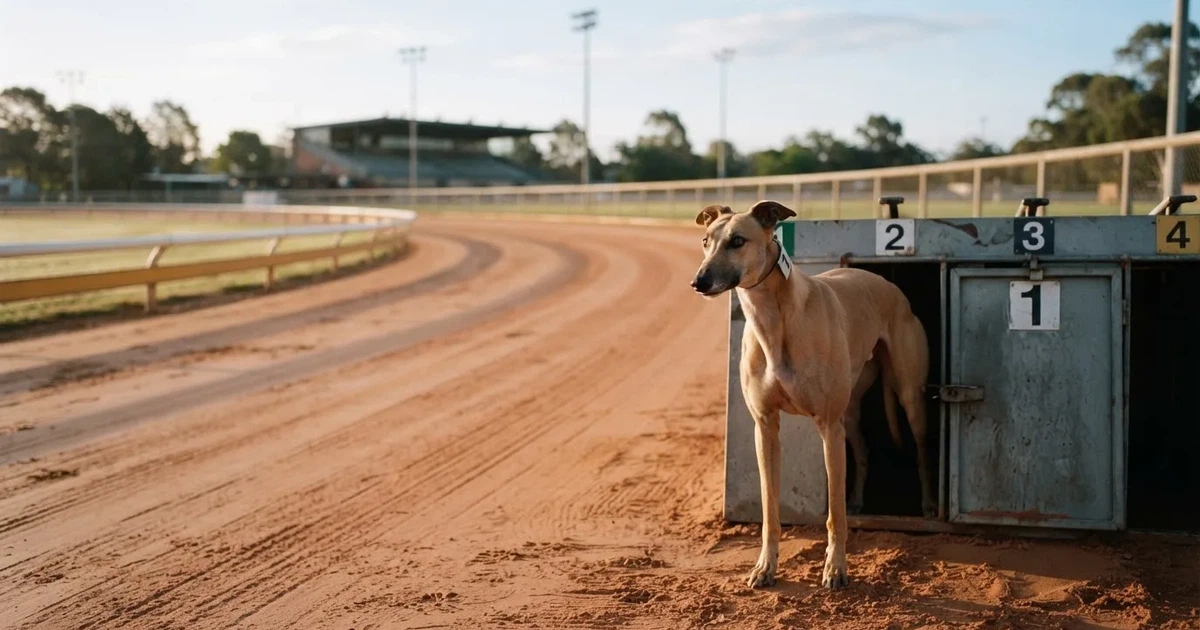
The landscape below draws on ten GB-licensed operators and the rules those operators publish in their own terms. Two calendar items sit outside that frame: greyhound racing in New Zealand was ended by statute, the Racing Industry (Closure of Greyhound Racing Industry) Amendment Act 2026, passed on 2 April 2026 with a phase-out set for 1 August 2026, on a course announced by Winston Peters on 10 December 2024. The British market is untouched by that change, but a page on greyhound betting cannot pretend the sport runs everywhere the same way it always did.
Data current as of 26 October 2026, checked against the Gambling Commission’s public register and each operator’s own published terms.
Ten UK-Licensed Bookmakers With Greyhound Racing Markets
The bookmakers below are not ranked from best to worst — the comparison sits on each operator’s own published facts, and a brand that fits one punter’s pattern can be the wrong shape for another’s. What they share is a current remote licence on the Gambling Commission’s register under the category “remote general betting standard (real events)”. Every GB-licensed online operator also takes part in GAMSTOP.

The chosen ten, in the order they are reviewed: Fitzdares, Geoff Banks, Bar One Racing, Bet Ahoy, Fitzwilliam Sports, Paddy Power, Coral, London Bet, Betmaster, Swifty Sports. The table below summarises what each operator’s licence covers and what its own terms say on the subject of greyhound racing — with the gaps left as gaps rather than filled in with guesswork.
| Bookmaker | Gambling Commission licence (account) | Licence holder | Greyhound coverage in operator’s own terms |
|---|---|---|---|
| Fitzdares | 400 | Fitzdares Limited | Greyhound racing not named in operator’s published app features; punters confirm the betting terms before wagering |
| Geoff Banks | 54095 | GB Sports Advisors Limited | Greyhound racing not named in operator’s published app features; ante-post and live in-play prices listed |
| Bar One Racing | 56516 | Bar-One Racing Limited | Greyhound racing not named in operator’s published app features; Irish on-course bookmaker with shops across Ireland |
| Bet Ahoy | 100094 | Bet Ahoy Ltd | Greyhound racing not named in operator’s published app features |
| Fitzwilliam Sports | 48760 | SBKI Limited | Greyhound racing not named in operator’s published app features; capped-membership Dublin bookmaker |
| Paddy Power | 39439 | PPB Counterparty Services Limited | Greyhound racing not named in the app’s published sport list; full sportsbook otherwise broad |
| Coral | 54743 | LC International Limited | Greyhound racing not named in operator’s published offer text; horse racing book with broad coverage |
| London Bet | 66162 | Thistle Bet Limited | Greyhound racing named in app’s sport list |
| Betmaster | 65699 | BM Solutions GB Ltd | Greyhound racing not named in app’s published sport list |
| Swifty Sports | 58957 | Swifty Global (UK) Ltd | Greyhound racing not named in app’s published features; Best Odds Guaranteed and Cash Out apply to named markets |
Several of these apps promote horse racing or football as their headline sports and name greyhounds only in passing, if at all. London Bet is the operator in the set whose app feature list names greyhound racing directly. Most others confirm the sport on their betting slip or in their racecards once a customer signs in, and a punter who only looks at the marketing page is reading a thin description of what is on offer. The licence number is the one thing that does not change — every account above can be checked on the Commission’s register by its number or by the trading name.
What Greyhound Racing Actually Is, and How the Betting Works
Greyhound races in Great Britain run on sand or grass circuits, with six runners usually in a race and a mechanically operated artificial lure running along a rail ahead of the dogs. The lure is what the dogs chase; it removes any incentive for a dog to attack another runner, and races typically last between 30 seconds and a minute. Betting on those races happens two ways: bookmaker fixed-odds betting, which is what every operator on the list above is licensed for, and on-course parimutuel betting handled by the totalisator at the track.

In bookmaker betting the punter picks a runner, picks a market, and stakes a fixed amount at a price set by the bookmaker. The price is decimal (2.50, 4.00, 9.50) or fractional (3/2, 5/1, 9/1), and the conversion from one to the other is straightforward: fractional odds *a*/*b* in decimal form is *a* ÷ *b* + 1. The bookmaker offers a starting price, sometimes called SP, which is the price on the on-course fixed-odds market when the race begins. Most bookmakers will pay out at the SP if it is bigger than the price the punter took earlier in the day. That is Best Odds Guaranteed, or BOG.
Three things change between the morning line and the off: withdrawals form on the runners (a non-runner triggers a Rule 4 deduction from winning stakes), withdrawals form on the betting public (a stream of money for one runner shortens the price), and the race conditions themselves settle late — track conditions, box draw, the identity of the reserve runner. Live in-play betting is offered by most of the licensed brands above, and it sits on top of those same markets, with prices updating as the race unfolds.
Where Greyhound Betting Stands Under UK Law
The framework is the Gambling Act 2005, which covers Great Britain — England, Scotland and Wales. Northern Ireland is outside the Act and runs on older law, so a GB licence does not regulate Northern Ireland. Since the Gambling (Licensing and Advertising) Act 2014, any operator whose remote facilities are used in Great Britain needs a Gambling Commission licence wherever it is based; a Curaçao, Maltese or Gibraltar licence is not a substitute for that.
The Commission licenses licences for separate categories: remote general betting standard (real events) is the category every bookmaker in the list above holds, and it is the one that covers greyhound racing. Remote general betting standard (virtual events) is a separate category for computer-generated events; remote general betting limited is the smaller licence for lower-stakes operators; remote pool betting covers off-course pool betting on horse and dog racing; and remote betting intermediary is the category that covers betting exchanges. Several of these categories can sit on one licence.
There is no statutory list of permitted sports or markets in Great Britain, and no statutory cap on stakes. An operator holds a licence for a category and offers markets under its own rules and the Commission’s Licence Conditions and Codes of Practice (LCCP). In-play betting is permitted and offered by GB bookmakers; the controls are the operator’s licence conditions and its customer-protection duties, not a statute. Spread betting on financial products sits with the Financial Conduct Authority, not the Commission.
Minimum age is 18. Since 7 May 2019, every licensed operator must verify a customer’s name, address and date of birth before the customer can deposit or gamble, including with a free bet or bonus. Anonymous play at a licensed site does not exist.
Credit cards have been banned for gambling in Great Britain since 14 April 2020, and the ban extends to credit-card-funded payments through an e-wallet. Debit cards and bank-based payments are not covered by that ban. Identity verification before the first deposit means the operator also runs source-of-funds questions at higher spend under money-laundering rules.
A financial vulnerability check under condition 3.4.4 of the LCCP has applied to licensed remote betting since 30 August 2024. It triggers when a customer’s deposits minus withdrawals exceed £150 in a rolling 30-day period — since 28 February 2025 — and it is a public-record check for things like bankruptcy or county court judgments, not an income check and not a credit reference check. Financial risk assessments — the affordability checks that have appeared in the press — are announced in a staged plan, with no start date as of the Commission’s 7 July 2026 statement.
Betting winnings are not taxed in Great Britain. General Betting Duty is the operator’s tax on gross profits, currently 15%; from 1 April 2027 a new remote betting rate of 25% applies within it, while remote bets on UK horse racing, bets on self-service betting terminals in licensed premises, pool betting and in-person betting stay at 15%. That is the operator’s bill, not the punter’s. The Commission’s statutory levy is a separate charge.
Responsible Gambling, the British Way
GAMSTOP is the national multi-operator online self-exclusion scheme and has been a mandatory licence condition for online operators since 31 March 2020. Self-exclusion periods are six months, one year, five years, or five years with auto-renewal, and after the minimum period the exclusion stays in place for a further seven years unless the customer asks GAMSTOP to remove it. The scheme covers online sites and apps; betting shops use a separate service.
Deposit limits sit under the Commission’s Remote Technical Standards (RTS 12). Operators must offer a gross deposit limit on a fixed time frame; the first changes have applied since 31 October 2025, and a second phase was postponed to 30 September 2026. Whether that second phase is currently live has not been confirmed. There is no state-set deposit or loss ceiling for betting in Great Britain; the limits a punter sees are the customer’s own choice.
The promotion rules that took effect on 19 January 2026 cap wagering requirements on bonuses at 10x — a £10 bonus with a 50x wagering requirement would need £500 of qualifying bets, and under the cap no more than £100. Mixed-product promotions, where an offer requires gambling on two or more product types such as betting and casino in one offer, are banned. Whether the cap applies to free bets with no wagering condition, and any cap on the money value of a bonus, are not established.
The help lines that show up at the foot of every licensed operator’s safer-gambling page are GamCare (which hosts the National Gambling Helpline), GambleAware, the NHS gambling clinics, and Gamblers Anonymous. Fitzwilliam Sports, one of the operators in the table above, links to GamCare, GamStop and Gamblers Anonymous from its home page. That is the standard pattern.
Bonuses and Free Bets on Greyhound Racing
The welcome offer that gets the most attention on a bookmaker’s homepage is rarely the offer that matters for a greyhound punter. The mechanics are almost always the same: deposit a qualifying amount, place a qualifying bet at or above a minimum price (usually evens, 1/1, or 2.00 decimal), receive a free bet or a series of free bets, and accept the conditions attached.
Coral’s sports welcome, for instance, pays £40 in free bets when a punter wagers £20 — a qualifying bet of £20 or more at minimum odds of 2.0, with the £40 in free bets issued within 7 days and expiring 7 days after issue, for new GB customers who opt in. Bet Ahoy’s welcome offers £10 in free bets for a £10 wager — split into a £5 sports bet and a £5 acca. Those structures are representative: the headline is the free-bet bundle, and the qualifier is what most punters miss.
Three terms determine what a welcome offer is actually worth: the wagering requirement, the minimum qualifying price, and the expiry. The wagering requirement is the multiple of the bonus that must be turned over in qualifying bets before winnings can be withdrawn; the minimum qualifying price is the lowest decimal odds at which a bet counts toward that turnover; and the expiry is the deadline beyond which an unused free bet is forfeit. None of those numbers is decorative. A bonus with a 10x wagering requirement and a 7-day expiry on a sport a punter does not follow is a bonus that costs more in time than it pays in value, and the audit below spells out why.
A free bet whose stake is not paid back with a win is worth less than the headline suggests. The arithmetic behind that is in the calculation later in the page. Price boosts, accumulator insurance, and Best Odds Guaranteed are different offers with different mechanics — a price boost is a one-off enhancement on a named selection, an accumulator insurance refunds a stake if one leg of an acca lets it down, and BOG upgrades the price on a winning horse or greyhound bet to the SP if the SP is bigger. Each is described as the operator’s own terms state it; the section below on bet types carries the mechanics.
Mobile Apps and the Greyhound Betting Experience
The greyhound punter in 2026 is more often on a phone than at a laptop. Every operator in the list above publishes an app, and the differences between them are mostly in three places: how the racing card is laid out, how live in-play prices update, and whether cash out is offered on the markets the punter uses.
Fitzdares’ app offers cash out, accumulators, Lucky 15s, specials and antepost markets on horse racing, football, tennis, rugby, cricket, golf and American football, with in-play live odds. Geoff Banks’ app is published by GB Sports Advisors Ltd and offers live in-play prices and ante-post prices on future events. Bar One Racing’s app — branded BAR 1 Betting — is the Irish independent’s mobile face, with shop locations and horse-racing sponsorships at Dundalk, Fairyhouse, Navan, The Curragh, Curraheen Park and Cork.
Paddy Power’s sports betting app covers football, horse racing, boxing, rugby, tennis, golf, darts, snooker and F1; greyhounds are part of Paddy Power’s broader racing product. Bet Ahoy, Fitzwilliam Sports, Coral, London Bet, Betmaster and Swifty Sports each carry their own combination of sports and in-play markets. London Bet’s app combines sports betting (football, tennis, horse racing, greyhounds, darts, golf, cricket, NFL, NBA, MLB, snooker) with Pragmatic Play casino slots and live in-play betting, and greyhounds are named in the feature list. Betmaster’s app covers football, cricket, horse racing, NFL and eSports (League of Legends, Dota 2). Swifty Sports’ app offers Best Odds Guaranteed, Cash Out on markets including horse racing and football, daily price boosts, live streaming and in-play betting, with Bet Builder listed as coming soon.
The greyhound punter looking for the deepest racing app in this set should look at London Bet’s published feature list. Punters looking for a strong Best Odds Guaranteed policy should look at Swifty Sports. Punters looking for ante-post futures markets should look at Fitzdares and Geoff Banks. There is no single “best greyhound app” — the best one is the one whose racing card the punter can read at speed and whose in-play screen updates fast enough to bet into.
Live Greyhound Racing Betting and Cash Out
Live greyhound betting is offered by most of the operators in the table. The mechanics are the same as in-play betting on any sport: the punter watches the race build, sees the odds update as the market forms, and places bets on the next race while the previous one is still in the off.
The constraint is the size of the betting screen and the speed of the price update. Greyhound races are short — 30 seconds to a minute — and the price on a runner can move several points in the seconds before the lids lift. Punters who want to bet into the in-play market on greyhounds need an app whose prices refresh quickly and whose in-play suspension rules are clearly explained. Geoff Banks’ app publishes live in-play prices; Swifty Sports’ app publishes live streaming and in-play betting with Cash Out on markets including horse racing and football. The greyhound-specific Cash Out policy is not stated for every brand.
Cash out on a greyhound bet works the same way it does on any other market: the bookmaker offers to buy the bet back at a price derived from the current state of the race and the price the punter took. If the punter took 5.00 on a runner that is now trading at 2.50 after a fast break, the cash-out price is somewhere south of the 5.00 the punter took and north of the live in-play price — the bookmaker’s margin sits inside it. Cash out is not a guarantee of profit; it is a price for getting out of the bet.
Greyhound Betting Tips, Systems, and the Honesty Problem
The honest framing on greyhound betting tips and greyhound betting systems is short. There is no system that beats the margin in the long run, no tipster service whose record survives a proper audit, and no strategy that turns a negative-expectancy market into a positive one. Anyone selling a system is selling the hope of one, and the audit below explains why the arithmetic closes that door.
The shape of the bettor’s day is what tips and systems try to flatten into a routine. The first move is the race card: a list of runners, with form figures, recent times, the box draw (trap number), the going, the trainer and the owner. The second move is the market: where the early money has gone, where the steam move came in, and which runner is drifting. The third move is the bet itself: a stake, a market, a price. None of those three moves is a system. They are a workflow, and the workflow gets sharper with practice.
Bankroll management is the strategy that does survive an audit. Staking a fixed percentage of a bank on each bet — between 1% and 5% is the conventional range — flattens the variance and keeps the punter in the game long enough for the form-reading to settle. Chasing losses with bigger stakes is the move that ends most bankrolls, and no tipster service can fix that habit because the habit is the punter’s.
Bet Types, Odds, and How Greyhound Markets Settle
The markets a licensed bookmaker offers on greyhound racing break into three groups: the simple markets, the combination markets, and the racing-specific markets. The simple markets are win (pick the winner) and place (pick a runner to finish in the places — usually first, second or third in races of six or more runners, sometimes first or second only in races of five or fewer, with the operator’s place terms applying). Each-way betting is two bets of equal stake — one on the win market, one on the place market — and the punter’s total stake doubles. Place terms vary by race and by operator.
The combination markets are forecasts (pick first and second in order), tricasts (pick first, second and third in order), and accumulators across multiple races. Forecasts and tricasts are settled on the official result; an un-named runner does not void the bet, but a non-runner reduces the field and may trigger a Rule 4 deduction from the winning dividend. Accumulators multiply the odds of the legs into one price, and the punter loses the whole bet if any one leg lets it down. Acca insurance refunds the stake if one leg loses; the conditions — minimum number of legs, minimum odds per leg — are in the operator’s terms.
The racing-specific markets are ante-post (bets placed before the final declarations are made, with the rule that the bet loses if the runner does not start), SP (starting price, settled at the on-course SP), and Best Odds Guaranteed (settled at the bigger of the price taken and the SP). Each is settled according to the operator’s rules, and the punter’s best protection is to read those rules before placing the bet.
The arithmetic the price sits on is the overround. An illustrative two-way market with each runner priced at 1.90 decimal (9/10 fractional) implies a payout share of 1 ÷ (1/1.90 + 1/1.90) — that is, the reciprocal of the sum of the reciprocals of the prices. With both sides at 1.90, that gives 1 ÷ (0.5263 + 0.5263) = 1 ÷ 1.0526 = 0.9500, or 95.0% of every pound staked returned on a fair result. The margin is the other 5.0%, and that is what the bookmaker keeps on a perfectly balanced book. As a band, an evenly priced two-way greyhound race sits somewhere around a 5% margin — the exact figure depending on how close the prices are to even. The arithmetic is the same on every market: the prices carry a margin, and the margin is the bookmaker’s edge.
Greyhound Racing Across Britain and the World
The British greyhound calendar runs year-round, with fixtures spread across 18 stadia licensed by the GBGB. The headline events are the English Greyhound Derby (held at Towcester), the Scottish Greyhound Derby (held at Shawfield), and the Category One competitions that fill the calendar between them. Smaller meetings run most evenings of the week, with the bigger cards on Saturday afternoons and evenings.
Across the world, the picture in 2026 is uneven. Greyhound racing in New Zealand was ended by the Racing Industry (Closure of Greyhound Racing Industry) Amendment Act 2026, passed on 2 April 2026, with the phase-out set for 1 August 2026. The decision was announced on 10 December 2024 by Winston Peters, then Acting Prime Minister. Before the ban, Greyhound Racing New Zealand organised seven affiliated clubs: Auckland, Waikato, Whanganui, Palmerston North, Canterbury, Otago and Southland. The closure ended that structure on a fixed date. Greyhound racing continues in Australia, Ireland and the United States, with the Irish industry centred on tracks like Shelbourne Park, Thurles, Limerick and Cork — Bar One Racing, one of the operators in the list above, sponsors race meetings at Curraheen Park and Cork.
The British punter betting on greyhounds in 2026 is betting on a domestic sport with a domestic regulator, a domestic calendar, and a domestic set of licensed bookmakers. The international calendar is part of the picture — ante-post markets on Irish Derbies and Australian features sit on most UK apps — but the day-to-day betting is on the GBGB-licensed circuit.
Fitzdares
Fitzdares runs under Gambling Commission account 400, with Fitzdares Limited as the licence holder. Its app offers cash out, accumulators, Lucky 15s, specials and antepost markets on horse racing, football, tennis, rugby, cricket, golf and American football, with in-play live odds. Greyhound racing is not named in the published app feature list, which is the part of the description a punter should not mistake for the whole product: most licensed bookmakers list racing on their betting slip rather than their marketing page.
The strength of the brand, on the published material, is the antepost product — betting on a race before the final declarations — and the specials, which are one-off markets the bookmaker prices to its own judgement. The shape suits a punter with a view on a long-odds runner weeks before a feature meeting, and who wants to lock the price before the steam move. The weakness is the greyhound coverage in the public description: a punter whose first stop is the app store page would not pick Fitzdares from the feature list, and that is a real gap in the marketing. The product behind the login is broader than the marketing suggests.
For whom: antepost punters who want a bookmaker with a specials board and the discipline to publish Lucky 15 lines. Not the best fit for a punter whose greyhound betting is purely evening-fixtures work, where the racing-specific feature set matters more.
Geoff Banks
Geoff Banks runs under Gambling Commission account 54095, with GB Sports Advisors Limited as the licence holder. Its app publishes live in-play prices and ante-post prices on future events. The brand is named for its principal — Geoff Banks, the on-course layer turned bookmaker — and the published material reflects that background.
The shape is a smaller bookmaker with a sharper book on certain events. The published feature list is two items, and both are the things a serious racing punter wants: live in-play and ante-post. The greyhound coverage is not named in the public description, and a punter looking at the app store page would again see horse racing and football dominate the marketing. The product behind the login is broader, and Geoff Banks’ reputation on the rails is for taking bets other bookmakers will not.
For whom: punters with a book that other firms have restricted, and who want a brand that will lay the bet. Not the fit for a punter who wants a deep casino bundle or a sportsbook app with twenty sports on the front page.
Bar One Racing
Bar One Racing runs under Gambling Commission account 56516, with Bar-One Racing Limited as the licence holder. The brand has rebranded to BAR 1 Betting and is an Irish independent bookmaker with shops across Ireland. Its sponsorships span horse racing at Dundalk, Fairyhouse, Navan, The Curragh, Curraheen Park and Cork.
The strength is the Irish racing product and the on-course connection. The weakness, for a GB-only greyhound punter, is that the brand is centred on Ireland — and the British greyhound punter wants British tracks. The GBGB calendar still runs, and BAR 1 takes bets on it through the app; the brand’s marketing just points at the Irish circuit.
For whom: a punter who splits time between Irish and British greyhound fixtures, and who wants a bookmaker with a stake in the on-course product. Not the brand for a British-only punter whose Saturday-night calendar is Towcester and Romford.
Bet Ahoy
Bet Ahoy runs under Gambling Commission account 100094, with Bet Ahoy Ltd as the licence holder. Its published welcome offer is “Bet £10 & Get £10 in Free Bets”, split into a £5 sports bet and a £5 acca. The structure is a simple matched-style welcome, and the small absolute numbers reflect a smaller bookmaker with a tighter budget for headline offers.
The greyhound product is not named in the public material, and the welcome is the part of the brand that gets marketed. For a punter whose betting model is one welcome a year and steady play after that, the headline numbers tell most of the story. For a punter whose greyhound betting is the centre of the bankroll, the published product set is thinner than the bigger bookmakers.
For whom: a punter who is choosing a new bookmaker for the welcome and who wants a small bookmaker’s sharper prices on second-tier football. Not the fit for a punter whose greyhound racing is the primary product and who needs a deep racing app.
Fitzwilliam Sports
Fitzwilliam Sports runs under Gambling Commission account 48760, with SBKI Limited as the licence holder. The brand is a Dublin bookmaker with capped membership, and its welcome is a “High Stakes Welcome” subject to compliance criteria. The site offers instant deposits, fast withdrawals, timeouts and deposit limits, and links to GamCare, GamStop and Gamblers Anonymous from the home page.
The shape is a high-roller brand with the kind of welcome that fits a bigger bankroll. Capped membership means new accounts are not open to everyone, and the “High Stakes Welcome” qualifier reflects the punter profile the firm is built for. The greyhound product is not named in the public material, and the safer-gambling links are the strongest part of the public-facing product set.
For whom: high-stakes punters who can get past the membership cap and who want a Dublin bookmaker with the bigger welcome. Not the brand for a punter who wants a quick signup and a deep greyhound card.
Paddy Power
Paddy Power runs under Gambling Commission account 39439, with PPB Counterparty Services Limited as the licence holder. Its sports betting app covers football, horse racing, boxing, rugby, tennis, golf, darts, snooker and F1. Greyhounds are part of the broader racing product; the published app feature list leads with the bigger sports.
The strength of the brand is its breadth, its promotions engine, and its market position — Paddy Power is one of the bigger names in UK betting, and its marketing budget reaches every channel. The greyhound product behind the login is wider than the feature list suggests, and the brand’s history of price boosts and money-back specials means a punter who likes a promotion will find more promotions here than at a smaller bookmaker.
For whom: punters who want a big brand with a wide product set and a steady flow of price boosts and money-back specials. Not the fit for a punter whose primary sport is greyhounds and who wants the racing app centred on the racecard rather than the football coupon.
Coral
Coral runs under Gambling Commission account 54743, with LC International Limited as the licence holder. Coral holds two categories on the Commission’s register — remote general betting standard (real events) and remote betting intermediary — which reflects the firm’s ownership of a betting exchange alongside its sportsbook. The sports welcome offer is “Get £40 in Free Bets when you bet £20”: a deposit and sports bet of £20 or more at minimum odds of 2.0, with £40 in free bets issued within 7 days and expiring 7 days after issue, for new GB customers who opt in.
The structure of the welcome is the standard matched-free-bet setup, with the £40 in free bets issued as a bundle rather than a single credit. The minimum odds of 2.0 are the part the punter should watch — a qualifying bet at 1.80 does not count. The 7-day expiry on the free bets is a tight clock; a punter who opens an account and forgets about the welcome has lost it within a week.
For whom: punters who want a big brand with a £40 welcome, and who can place the qualifying bet on the day they sign up. Not the fit for a punter whose greyhound betting is weekend-only and who would let the free bets expire before they used them.
London Bet
London Bet runs under Gambling Commission account 66162, with Thistle Bet Limited as the licence holder. Its app combines sports betting — football, tennis, horse racing, greyhounds, darts, golf, cricket, NFL, NBA, MLB, snooker — with Pragmatic Play casino slots and live in-play betting. Greyhound racing is named in the feature list, which makes London Bet the operator in this set whose marketing page reflects the greyhound product.
The shape suits a punter whose first stop is the app store page. Greyhounds are listed alongside the bigger sports, the casino bundle is present, and the in-play product is part of the published feature set. The weakness is the brand’s smaller footprint compared to the bigger bookmakers — fewer markets on second-tier racing, fewer promotions. The trade is gain worth making for a punter who values the racing feature list.
For whom: punters whose primary sport is greyhound racing and who want a bookmaker whose feature list reflects it. Not the fit for a punter who wants the deepest sportsbook in the set.
Betmaster
Betmaster runs under Gambling Commission account 65699, with BM Solutions GB Ltd as the licence holder. Its app covers football, cricket, horse racing, NFL and eSports (League of Legends, Dota 2). Greyhounds are not in the published feature list; the marketing leads with football, cricket and the American sports.
The shape is a football-and-eSports bookmaker with a racing section behind the login. Punters whose betting is split between Premier League, NFL and a weekend racing card will find the published feature set matches their pattern. Punters whose betting is greyhound-only will find the racing product narrower in the marketing, even if the betting slip carries greyhounds.
For whom: punters who bet on football and eSports first and greyhound racing second, and who want a brand whose marketing reflects that mix. Not the fit for a greyhound-only punter.
Swifty Sports
Swifty Sports runs under Gambling Commission account 58957, with Swifty Global (UK) Ltd as the licence holder. Its app offers Best Odds Guaranteed, Cash Out on markets including horse racing and football, daily price boosts, live streaming and in-play betting. Bet Builder is listed as coming soon.
The strength is the racing product on horse racing: Best Odds Guaranteed is the offer that pays out at the bigger of the price taken and the SP, and Cash Out gives the punter a way to settle before the off. The greyhound product is not named in the public material, and the Bet Builder feature being listed as coming soon reflects a brand in build rather than a fully stocked sportsbook.
For whom: punters whose primary sport is horse racing and who want Best Odds Guaranteed and Cash Out on a smaller platform. Not the fit for a greyhound-only punter who wants a deep racing card on day one.
How to Pick the Right Greyhound Bookmaker
Three questions narrow the choice.
The first is the punter’s pattern. A punter who bets on greyhounds three nights a week wants a bookmaker with the racing card at the front of the app, not buried under a football coupon. London Bet is the operator in this set whose feature list names greyhounds, and a punter whose pattern is greyhound-first should start there. A punter whose pattern is mixed should look at Paddy Power, Coral or Betmaster, where greyhounds are part of a wider product.
The second is the punter’s stake size. A high-stakes punter wants a bookmaker that will lay the bet without restricting the account. Geoff Banks is built for that, and Fitzwilliam Sports’ capped-membership model is built for it. A small-stake punter wants a bookmaker with a welcome that fits the bankroll and a free-bet bundle that does not expire before it can be used. Coral’s £40 welcome with a 7-day expiry fits a punter who can place the qualifying bet on day one.
The third is the punter’s appetite for promotions. Paddy Power runs the heaviest promotions engine of the set; smaller bookmakers like Bet Ahoy and Swifty Sports run lighter schedules. A punter who values a price boost or a money-back special each week should pick the brand that runs them.
There is no single “best” bookmaker. The right bookmaker is the one whose product matches the punter’s pattern, and the comparison above is meant to make that match easier to see, not to crown a winner.
What an Offer on Greyhound Racing Really Costs the Punter
The headline on a welcome offer is the gross figure: £40 in free bets, a 100% deposit match, “bet £10 get £10”. The cost the punter pays is the conditions underneath.
The first condition is the qualifying bet. A welcome that requires a £20 qualifying bet at minimum odds of 2.0 is a welcome that asks the punter to stake £20 on something with a 50/50 chance of winning — and to do it before the bonus arrives. The expected cost of that qualifying bet, on a market with a 5% margin and a runner at 2.0, is roughly £1 in the long run, but the variance is the punter’s problem, not the bookmaker’s. A punter whose first bet loses is out the £20 stake and has the free bet still to come; a punter whose first bet wins is up the winnings and has the free bet still to come. The free bet is the same either way, but the bankroll has taken a £20 hit in the losing case.
The second condition is the wagering requirement. A bonus with a 10x wagering requirement needs the punter to turn over ten times the bonus amount in qualifying bets before winnings can be withdrawn. The promotion rules that took effect on 19 January 2026 cap that multiple at 10x for licensed operators, so the requirement above the cap is no longer legal. Below the cap, the cost of clearing the bonus is the margin on the market the punter uses to clear it, multiplied by the turnover. A £10 bonus with a 10x wagering requirement and a 5% market margin costs roughly £5 in expected loss over the clearing period — half the bonus in margin, half the bonus in cleared value. The punter gets back roughly £5 on average, after the bookmaker has taken its £5 in margin.
The third condition is the expiry. A 7-day expiry on a free bet is a tight clock; a 30-day expiry is more forgiving. The punter whose calendar does not match the expiry window loses the free bet, and the headline value is forfeit.
The cost the punter pays, in plain English, is the gap between the headline value and the cleared value. That gap is the wagering requirement, the market margin, the minimum qualifying price, and the expiry, all working together. A punter who reads the small print before claiming the offer knows what the gap looks like; a punter who does not reads it after.
The Calculation: What the Margin on a Two-Way Greyhound Race Looks Like
The arithmetic the price sits on is the overround, and the margin is what the bookmaker keeps of every pound staked on the market. Take an illustrative two-way greyhound race where each runner is priced at 1.90 decimal, or 9/10 fractional. The payout share on a perfectly balanced book — the proportion of stakes returned to punters on a fair result — is 1 divided by the sum of the reciprocals of the prices. With both runners at 1.90, that is 1 ÷ (1/1.90 + 1/1.90), which is 1 ÷ 1.0526, or 0.9500. The margin is 1 minus the payout share, or 0.0500, or 5.0%.
As a band, an evenly priced two-way greyhound race sits somewhere around a 5% margin — the exact figure depending on how close the prices are to even. A race priced at 2.00 on the favourite and 2.00 on the outsider would imply a slightly tighter margin; a race priced at 1.50 and 4.00 would imply a slightly wider margin. The point is that every price the bookmaker offers carries a margin, and the margin is the bookmaker’s edge before the punter has placed a bet.
For a £10 stake at 1.90 on a winning runner, the return is £19.00 — stake times odds — and the net profit is £9.00, which is stake times (odds minus 1). The £19.00 return includes the original £10 stake. The margin sits inside the difference between that £19.00 and what a fair market would have paid: a fair market at 1.90 with no margin would have paid more, but the bookmaker’s 5% has closed the gap. The punter cannot see the margin in any single price; the punter sees it in the spread of prices across a market, and in the long-run return on a balanced book.
What Greyhound Racing Looks Like in 2026
Greyhound racing in Great Britain in 2026 is the same sport it has been for decades: 18 licensed stadia, a GBGB-licensed circuit, a year-round calendar of meetings, and a set of bookmakers whose prices the punter can read at any time of day. The regulation is the same; the licensing regime is the same; the market structure is the same. The 2026 change that matters is the closure of greyhound racing in New Zealand, effective 1 August 2026, on a course set by statute on 2 April 2026 and announced on 10 December 2024. That change is outside the British punter’s frame, but it sits in any honest description of the sport’s global state.
The change a British punter does feel is the tightening of the licensed market. The promotion rules that took effect on 19 January 2026 cap wagering requirements at 10x and ban mixed-product offers. The financial vulnerability check that took effect on 28 February 2025 triggers a public-record check at £150 of net deposits in a rolling 30 days. The remote betting duty increase from 15% to 25% on bets that are not on UK horse racing takes effect on 1 April 2027. None of these changes is a market-killer; each is a tightening of the rules around the licensed bookmaker, and each makes the licensed market a tighter, more regulated, more expensive place to operate.
Responsible Gambling, in Closing
GAMSTOP, GamCare, GambleAware, the NHS gambling clinics and Gamblers Anonymous are the public-facing help lines. GAMSTOP is the self-exclusion scheme, and every licensed operator in this set is a member. The financial vulnerability check is a public-record check, not an income check, and it triggers at £150 of net deposits in a rolling 30 days.
The honest close on this page is the same close that belongs on every page about betting: the bookmaker keeps a margin on every market, no tipster service beats that margin in the long run, and the punter who treats the betting account as entertainment rather than income is the punter whose bankroll survives. The bookmaker’s licence is a check on the operator; it is not a guarantee of profit for the punter.
Frequently Asked Questions
How does betting on greyhound racing work?
A punter picks a runner, picks a market — win, place, each-way, forecast, tricast, ante-post — and stakes a fixed sum at the front of the race. The bookmaker sets the price; the price carries a margin; the race settles the bet. Best Odds Guaranteed pays out at the bigger of the price taken and the starting price when the race begins. Live in-play betting lets the punter bet into the race as it unfolds.
How does betting on greyhound dogs differ from betting on horse racing?
The mechanics are nearly identical: same bookmaker markets, same win and place structure, same each-way betting, same starting price. The race itself is shorter — 30 seconds to a minute, six runners usually, on sand or grass tracks — and the cards are denser, with most evenings carrying multiple meetings. The British greyhound circuit is regulated by the GBGB; the British horse racing circuit is regulated by the British Horseracing Authority. Both sit on the same bookmaker apps.
Is there a strategy that wins at greyhound betting in the long run?
No system beats the bookmaker’s margin over thousands of bets. Bankroll management — staking a fixed percentage of a bank on each bet — flattens the variance and keeps the punter in the game. Form reading, market reading and discipline sharpen the workflow. None of that turns a negative-expectancy market into a positive one. Anyone selling a system that claims otherwise is selling a story the arithmetic does not support.
How can a punter check that a bookmaker holds a Gambling Commission licence?
The Commission’s public register can be searched by business name, trading name, domain or account number. The account number on a bookmaker’s terms page should match the register; if it does not, the licence does not exist. Licensed operators use .com as well as .co.uk, so the domain proves nothing on its own. Every GB-licensed online operator also takes part in GAMSTOP, which is a separate check.
How is the return on a bet worked out from the stake and the odds?
For decimal odds, the return is the stake multiplied by the odds, and the net profit is the stake multiplied by (odds minus 1). A £10 stake at 2.50 returns £25.00 — the £10 stake plus £15.00 of profit. For fractional odds *a*/*b*, the decimal equivalent is *a* ÷ *b* + 1, and the same rule applies. Each-way betting is two bets of equal stake, so the punter’s total stake doubles.
What is the bookmaker’s margin and how can it be seen in the odds?
The margin is the proportion of every pound staked that the bookmaker keeps on a balanced book. On a two-way market priced at 1.90 and 1.90, the margin is roughly 5%. On a market priced at 1.50 and 4.00, the margin is wider. The margin is the difference between the price the punter takes and the price a fair market would offer. It cannot be read from any single price; it sits in the spread of prices on every racecard.
Horse racing & greyhounds – Accumulator
Content created by the «Accumulator» team
