
Football betting tips for 2026: building a price, finding value and managing a bankroll
 Available in US
*Current as of 26 October 2026 · Licence data verified against the Gambling Commission’s public register*
The phrase “football betting tips” pulls in two kinds of reader: people looking for a pick, and people looking for a method. The first wants to know what to back; the second wants to know how the price in front of them was put together, so they can judge it next time. This page is written for the second reader, because the first one has nowhere to go: no tipster on the internet knows the outcome of a match before it is played, and anyone who claims otherwise is selling certainty that does not exist. What does exist, and what a tip is really made of, is form, statistics, line-ups, head-to-heads and the price the bookmaker has set – a price that already contains the firm’s own margin, hidden in the odds.

The package of pages across this site covers football betting from the betting slip outwards. The pages close on different shelves: the bet types and the way odds work, the competitions and tournament calendars, a comparison of UK-licensed bookmakers, the legal frame, safer gambling, payment methods, bonuses, mobile apps, live and in-play betting, and the strategy shelf where this page sits. The angle throughout is choice – which paths exist, and which path suits the reader’s situation. For a page about tips, the choice is between backing someone else’s picks and building a method of your own.
How the odds are priced and what the price already contains
Decimal prices and what they tell you before kick-off
A bookmaker’s market is a list of outcomes with a decimal number beside each one. A £10 stake at 3.00 returns £30 if it wins – the stake plus £20 of profit. A £10 stake at 1.50 returns £15 – the stake plus £5 of profit. This is the whole working definition of decimal odds: multiply the stake by the number, and that is the cash that lands in the account on a winner. Fractional odds, the British form, quote the profit rather than the return: 5/1 means a £1 stake returns £6 (£5 profit on top of the £1 stake), and the same selection at 6.00 in decimals. The conversion from fraction to decimal is a ÷ b + 1, so 9/10 becomes 1.90, 11/4 becomes 3.75, and evens (1/1) becomes 2.00.
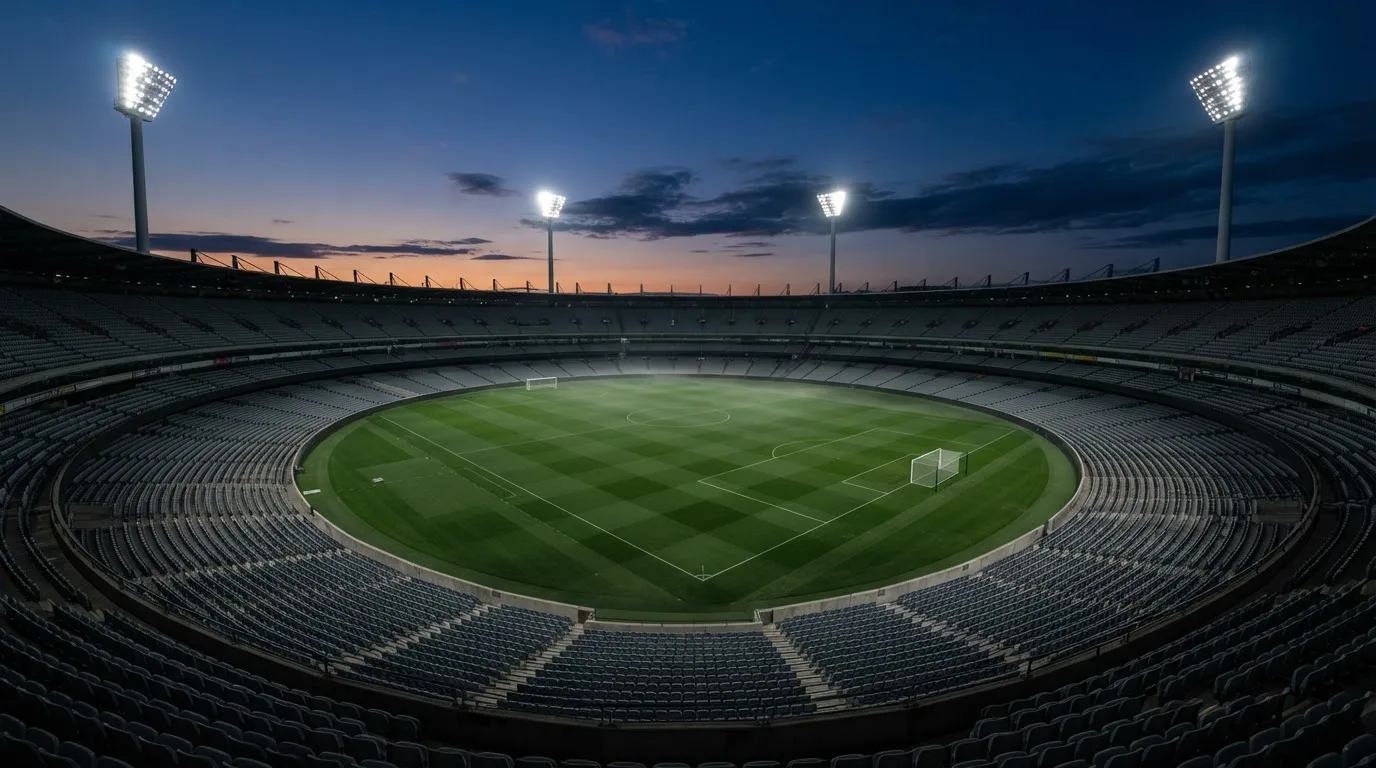
The first thing the decimal number does not show is the firm’s margin. Two outcomes cannot both be fair at the same price on the same match, because one of them must win and the bookmaker must keep a share of every unit staked to stay in business. The margin is built into every line on the coupon, and it is the reason a price labelled “fair” by a tipster still loses over time.
The margin in a two-way market and why tips can never beat it on average
A two-way market with decimal prices of 1.90 and 1.90 is a worked example, not a real fixture. The payout share on a perfectly even true probability is the reciprocal of the implied probabilities: one divided by (1 ÷ 1.90) + (1 ÷ 1.90), which gives a payout share of about 95.0%. The margin – the share of every £1 staked that the bookmaker keeps – is therefore roughly 5.0%, the gap between 100% and the payout share. At 1.85 and 1.85 the payout share drops to about 92.5% and the margin rises to about 7.5%. At 1.95 and 1.95 it lifts to about 97.5% and the margin narrows to about 2.5%.

What the numbers carry, plainly: a margin of roughly 2.5% to 7.5% is the band a two-way football market typically sits inside once the working example is widened a step in either direction. Below the band a bookmaker is giving away the market; above it the bettor is paying more than the league norm. No tip can get past that gap on average. It can win on a single match – any tip can – but over hundreds of bets the gap is what is left after the winners are paid, and a tipster who publishes picks is selling selections inside the same market the rest of the field is in. The skill the tip industry sometimes claims cannot move that arithmetic; it can only redistribute its outcomes across selections.
Why the headline number stops mattering once the margin sits beside it
A price of 100/1 on a longshot looks generous. A price of 4/6 on a favourite looks stingy. Both are advertised with two numbers – the headline and the margin of the market they sit inside – and the second one quietly determines what happens across many bets. A 100/1 shot hit once in fifty would still leave the bettor behind once the margin is paid, because the firm keeps a slice of every stake on every market. The familiar marketing word “best odds” means “best among the firms you can compare”, not “better than the market over time”. Tips can be searched, screens can be scanned – there are pages where the odds move in real time, on a desktop or a phone – and the better the screen, the smaller the gap the marketing can dress up as something else.
The competitions calendar a UK bettor moves through
The football calendar in Great Britain runs by competition, and the season is the unit that names it. The 2026–27 Premier League, for example, runs from 21 August 2026 to 30 May 2027 across 20 teams, with the promoted clubs Coventry City, Ipswich Town and Hull City joining the division and Arsenal as the defending champions. International football sits in its own windows, and major tournaments arrive in their own years: the 2026 FIFA World Cup final on 19 July 2026 saw Spain beat Argentina 1–0 after extra time. Those are the calendar rails a tip – anyone else’s or your own – sits on, and they are the rails a tipster’s picks cover when they appear to talk about anything specific.
Adult association football is two halves of 45 minutes with stoppage time at the referee’s discretion; a tied match may go into extra time of two further 15-minute periods, and some competitions – the World Cup knockout rounds, for instance – then use a penalty shoot-out. Eleven players on the pitch including the goalkeeper; a goal 7.32 m wide and 2.44 m high. Those dimensions are stable across competitions, and they are the constraints a market quotes from: the 1X2 line, the over/under on total goals, the both-teams-to-score line and the handicap markets are all products of these fixed rules, with the International Football Association Board (IFAB) maintaining the Laws of the Game since 1886.
For a reader starting out, the match calendar in front of them is the bet on offer. The Premier League runs from late summer to the following May, with a winter break and the festive fixture list compressed into a few days. The Champions League and Europa League run on European calendars, with group stages in autumn and knockout football from February. The Championship, League One and League Two stack up the English football pyramid underneath, and the Scottish Premiership runs a shorter calendar. International breaks interrupt domestic football three or four times a season, and the major international windows – the European Championship in summer 2028, the next World Cup – sit on their own two-year cycle.
A tip is shaped by the competition it is offered on. The Premier League 1X2 is one of the most efficient markets in the world, with margins typically inside the band described above; lower divisions and non-league carry thinner liquidity and wider margins, and the same tip that looks generous in a Championship match at 1.85/1.85 looks expensive at League Two. International football at major tournaments has its own bookmaker specials – top scorer, group qualifying, outright winner – which sit in a slower-shifting margin than the weekly coupon.
The match types a tip is built from
Singles, doubles and accumulators
A single is one selection, settled on one outcome. A double is two selections, both of which must win for the bet to cash. A treble is the same with three. An accumulator – an “acca” in British use – chains any number of selections, all of which must win, with the odds of each leg multiplied together into one price. The attraction of the acca is the size of the payout against a small stake; the cost is that every leg must land, and the more legs are added, the smaller the chance of all of them doing so. Each leg of an acca also carries the bookmaker’s margin, so a five-fold acca is paying five margins into the price, not one.
The combined bets the bookmaker pre-builds carry a fixed cost that the punter does not always notice. A Trixie is four bets across three selections (three doubles and a treble), a Patent is seven (three singles, three doubles, a treble), a Yankee is eleven, a Lucky 15 is fifteen, a Super Yankee or Canadian is twenty-six, a Heinz is fifty-seven and a Goliath is two hundred and forty-seven. The total stake is the unit stake multiplied by the number of bets, so a £1 Lucky 15 costs £15 – fifteen £1 bets, not one.
Each-way bets and the place terms that change with every race
Each-way betting is most familiar from horse racing but also runs on football outrights and ante-post markets. It is two bets of equal stake: one on the win, one on the place. The place terms – how many places are paid, and at what fraction of the win price – are set by the bookmaker and the competition, and they vary. Some bookmakers offer extra places on major fields; others stick to the standard terms. The stake doubles, because each-way is two bets.
Asian handicap and the handicap markets
A handicap is a head start applied to one side in the bookmaker’s count. In the Asian handicap line, the favourite starts the match a goal or a goal-and-a-half behind on the coupon, with half and quarter lines producing whole-stake refunds or partial stakes depending on the margin of victory. The line is settled on the result after that head start is applied. Handicap football is a market of its own, with the margin usually tighter than the 1X2 because the line narrows the range of outcomes the bookmaker has to price.
Over/under, both teams to score and the totals shelf
The over/under line sets a number of goals – 0.5, 1.5, 2.5, 3.5, sometimes 4.5 – and the punter backs whether the total will be over or under. Over 2.5 goals is one of the most popular lines on the Premier League coupon. Both teams to score (BTTS) is a yes/no market on whether each side scores at least once. These markets sit inside the same margin band as the 1X2, sometimes a touch wider on lower divisions where liquidity is thinner.
Bet builders and same-game multiples
A bet builder is a same-game multi: the punter combines several selections from one match – a goalscorer, a total, a BTTS line, a card market – into one price. The legs multiply, and so do the margins. A four-leg builder inside one match is paying four margins into a single ticket, which is part of the reason the headline price on a builder looks generous next to a comparable single: it is built out of selections whose combined margin is wider than any one of them.
Cash out and the in-running book
Cash out lets the punter settle a bet before the final whistle at a price the bookmaker sets at that moment. It is a feature on UK-licensed sites and it is one of the reasons mid-match betting is its own shelf. A cash-out price is a bookmaker price in its own right, with its own margin, and a tip that looked generous before kick-off can be cashed out at a fraction of its value if the match turns early. The marketing of cash out as “control” is fair; the cost of it is the margin on a market the firm is closing twice.
How a tip is actually built, and why no tip is ever certain
The four ingredients of a working model
A working football model uses form, statistics, line-ups and the price. Form is the recent record of the teams involved, weighted by the strength of the opposition. Statistics cover expected goals (xG), shots on target, possession in the final third, the league’s own numbers. Line-ups are the named players before kick-off – a key player’s absence can swing a price by 0.10 or more on a Premier League 1X2. The price is the bookmaker’s own number on each outcome; if the model’s probability of a home win is 55% and the bookmaker offers 1.80 – which implies 55.6% – the tip is no value. If the model says 55% and the price is 2.00, the tip is value: the implied probability is 50%, and the model is sitting five points above it.
The model itself does not pick a winner. It produces a probability for each outcome, and the bet is on whether the model’s number beats the implied probability in the price. The tip is value when the price overstates the model’s number; it is unvalue when the price is shorter than the model says it should be. No model is right every week. The only claim a sensible model makes is that, over many bets, it picks out the lines where the firm has mispriced the market.
The traps a tipster’s pitch hides
The tipster industry sells picks, often in packages with names that promise more than a probability can deliver. “Banker”, “lock”, “hot pick” and “accumulator of the day” all dress up a single selection as a certainty. “Value accumulator” dresses a long-shot acca as a value play. The marketing buys attention; the arithmetic underneath does not change. A banker’s job is to lose less often than a non-banker; it is not to never lose.
The same critique applies to tipster records. Many published tipster services quote a return-on-investment figure over a window – “ROI of 12% over six months” – but the figure often assumes a flat stake, ignores the margin in the prices picked, and rarely accounts for the tipping fee. The fee is taken off the top, the bookmaker’s margin is taken off every selection, and what is left is the figure the punter actually keeps. It is rarely the headline number.
A punter who wants to build their own method is in the harder seat – they cannot outsource the picks – but they keep the difference between the firm’s price and the model’s probability, which is the only edge that exists on a coupon. The alternative is to back other people’s tips and inherit the same margin everyone else is paying. Both paths cost the margin; only one keeps the model’s edge.
Why betting is not an income
A model that produces a probability does not produce an income. It produces a long-run edge that, over hundreds or thousands of bets, pays out more than the stake put in – but only if the stake size is small enough to survive the losing runs that come in between. The losing runs are not occasional; they are regular. Even a model with a 55% win rate on Premier League home wins will see sequences of four, five, six or seven losses in a row, and a stake that wipes half the bank on any one of them ends the bankroll. That is what bankroll discipline is for: a small, fixed percentage of the bank per bet, so that one loss does not end the run.
A reader who treats betting as a way to make money fast is in the wrong market. The market is set up to take a margin from every punter on every bet, and the only way to come out ahead is to find prices that overcompensate for the probabilities they imply. That is a slow, statistical activity, not an income. Anyone who promises otherwise is selling certainty that does not exist, and the page that pointed a reader to them has done that reader no favour.
How to choose a UK-licensed bookmaker for football
The Gambling Commission register is the test
Every online bookmaker serving customers in Great Britain needs a Gambling Commission licence, no matter where it is based. Since the Gambling (Licensing and Advertising) Act 2014, operators whose remote facilities are used in Great Britain need a Commission licence wherever they are based; a Curaçao, Maltese or Gibraltar licence is not a substitute for serving British customers. The Commission’s public register can be searched by business name, trading name, domain or account number, and it is the whole test of whether a brand holds a licence. The licensed set in this comparison is set out below – ten bookmakers, each holding a remote general betting standard (real events) licence, with the licence number and the licence holder named alongside.
What every brand in the licensed set must do
Identity is checked before the first deposit – name, address and date of birth – and a customer who fails that check cannot deposit or gamble, including with a free bet or bonus. Every licensed operator takes part in GAMSTOP, the national multi-operator self-exclusion scheme, and a customer who has self-excluded cannot open an account elsewhere on the register. Credit cards are banned for gambling in Great Britain, including when a credit card funds an e-wallet; debit cards and bank-based payments are not covered by that ban. Bonuses carry a wagering cap of 10x the bonus amount, so a £10 bonus needs £100 of qualifying bets before the bonus and any winnings from it can be withdrawn. Mixed-product promotions – “bet on football to get free spins” – are banned. These are the floor of the licensed market, and every brand on the list sits on it.
What the licensed set does not require
The licensed set is not a fixed menu. The Commission’s role is to license and regulate, not to recommend or rank. The list of licensed operators running today is longer than the ten brands on this comparison, and the choice between them is genuinely a reader’s call. What separates one brand from another is the price it offers, the depth of its football markets, the depth of its in-play offering, the apps it ships, the payments it accepts and the way its safer-gambling tools are surfaced. The rest of this page works through those differences and arrives at a verdict on each.
The ten licensed bookmakers in this comparison
| Bookmaker | Gambling Commission licence | Where the licence sits and what that means |
|---|---|---|
| Betway | Remote licence 039372-R-319367-029 | Betway Limited (account 39372) is the licence holder; the licence is remote general betting standard (real events) |
| BetUK | Remote licence 039198-R-319450-029 | LeoVegas Gaming PLC (account 39198) is the licence holder; the licence is remote general betting standard (real events) |
| 10bet | Remote licence 043173-R-322899-023 | Blue Star Planet Limited (account 43173) is the licence holder; the licence is remote general betting standard (real events) |
| LiveScore Bet | Remote licence 056859-R-332720-005 | LiveScore Betting and Gaming (Gibraltar) Limited (account 56859) is the licence holder; the licence is remote general betting standard (real events) |
| William Hill | Remote licence 039225-R-319373-015 | WHG (International) Limited (account 39225) is the licence holder; the licence is remote general betting standard (real events) |
| Kwiff | Remote licence 044448-R-323408-017 | Eaton Gate Gaming Limited (account 44448) is the licence holder; the licence is remote general betting standard (real events) |
| London Bet | Remote licence 066162-R-340278-004 | Thistle Bet Limited (account 66162) is the licence holder; the licence is remote general betting standard (real events) |
| Kalooki Sportsbook | Remote licence 057730-R-333396-005 | Kalooki Sportsbook Limited (account 57730) is the licence holder; the licence is remote general betting standard (real events) |
| Sporting Index | Remote licence 027343-R-308898-011 | Sporting Index Limited (account 27343) is the licence holder; the licence is remote general betting standard (real events) |
| Tote | Remote licence 054779-R-331321-008 | TDCO Limited (account 54779) is the licence holder; the licence is remote general betting standard (real events) |
Betway
Betway’s UK welcome package for new customers is a £40 free-bet bundle paid as four £10 bet tokens, credited when a first bet of at least £10 settles at minimum odds of 2.0. The bundle has a 7-day expiry on each token, and the qualifying deposit must come from a debit card. The four tokens can be split across four bets; nothing forces an acca, and the stake of a winning free bet is not returned. Betway sits on a long-established UK-licensed base and is a recognisable name on the Premier League coupon, with a sportsbook deep enough for the pre-match and in-play shelves the rest of this comparison talks about. The trade-off is the 7-day clock on each token, which can catch a punter who lets one slip unused; the sting of it is not the headline £40 but the four tidy expiries.
BetUK
BetUK’s free bets cut out virtual sports, esports and non-UK/Irish horse racing, and minimum odds apply to selections within the offer. The exclusions mean a customer whose interest is squarely in football and in the other UK-and-Ireland sports is unaffected; a customer whose interest drifts into the cut-out categories will find the tokens narrower than the headline. BetUK runs on a LeoVegas Gaming PLC licence, and the parent group ships the casino and live-dealer floor underneath the sportsbook, which is a convenience for a customer who wants both rooms on one account. The free-bet exclusions are the condition to read first; the price on the Premier League coupon is what the rest of the decision rests on.
10bet
10bet’s sportsbook covers football, tennis and horse racing, with cash out, a bet builder and live streaming in the box. The combination of cash out and a bet builder on the same wallet is the convenience the brand is sold on, and the live stream slot is what closes the gap when a fixture sits outside the major TV deals. 10bet runs on a Blue Star Planet Limited licence, and the remote general betting standard (real events) category is the licence’s working scope. The bet builder’s price is built out of margins on each leg, which is the same point to make about every builder on this comparison – a four-leg builder is paying four margins into a single price, so the headline looks generous and the long-run cost is wider than any single one of the legs.
LiveScore Bet
LiveScore Bet accepts debit cards (Visa and Mastercard), Apple Pay, PayPal, Pay by Bank via Open Banking and Revolut Pay. The set is broad for a UK-licensed sportsbook, and the inclusion of Pay by Bank and Revolut Pay is the part a customer using a non-card method will notice. LiveScore Bet runs on a LiveScore Betting and Gaming (Gibraltar) Limited licence, and the same set of football markets runs underneath the payments – pre-match and in-play, bet builder, accumulators. The payment breadth is a clear advantage for any customer prioritising specific funding methods.
London Bet
London Bet’s app combines sports betting – football, tennis, horse racing, greyhounds, darts, golf, cricket, NFL, NBA, MLB and snooker – with Pragmatic Play casino slots and live in-play betting. The combo is published by Thistle Bet Limited, and the app carries a 17+ age rating in the App Store. A customer who wants a sports and casino wallet under the same roof will find the floor covers the major sports and the major slot suppliers; a customer who wants a sportsbook without the casino slots will pay for them anyway. The combination is a choice, not a default.
Kwiff
Kwiff’s Supercharge feature boosts the odds on a bet instantly – the example on its own materials runs from 2/1 to 20/1 – and applies to single or multi bets on any sport. The marketing word for it is “surprise”, and the mechanic is a randomised boost rather than a guarantee: a £10 bet at 2/1 most of the time pays £30 on a winner, occasionally paying a great deal more. Kwiff runs on an Eaton Gate Gaming Limited licence, and the feature sits on the same licensed floor as a regular sportsbook. The Supercharge is an upside, not an edge – the boost fires on random occasions, and the cash value is what any other price would have paid on a losing bet.
William Hill
William Hill pays Best Odds Guaranteed on UK and Irish horse racing from 8 AM on the day of the race, on both single and multiple bets. The rule excludes ante-post, tote and pari-mutuel bets, and the day-of-race comparison is what the customer is paid on – if the SP is bigger than the taken price, the punter is settled at SP. BOG is a real product in horse racing; it does not extend to football, where SP is not a thing and the equivalent idea does not apply. William Hill runs on a WHG (International) Limited licence, and the brand’s football shelf is the long-established UK bookmaker offer. For a customer whose interest is largely football, William Hill is a deep sportsbook on the licensed floor; for a customer whose interest runs to horse racing, BOG is a clean feature with a clear cut.
Kalooki Sportsbook
Kalooki Sportsbook advertises instant withdrawals by bank transfer “within minutes”, Best Odds Guaranteed on UK and Irish horse racing, in-play betting, daily boosts and extra-place races. The combination is what the brand is sold on, and the speed of withdrawal by bank transfer is the line that distinguishes it – a feature many UK-licensed books now run, but a feature the brand’s own materials put at the front. Kalooki Sportsbook is operated by Kalooki Sports Book Limited (company number 12938274), runs on Gambling Commission account 57730 and is a GAMSTOP member. The welcome shape and the ongoing promotion shapes are read against the rest of the licensed floor in the operator’s own terms, and the withdrawal speed is what survives the comparison.
Sporting Index
Sporting Index runs a fixed-odds and spread-betting shop side by side, and the new-customer offer is built around both. A £10 fixed-odds bet at minimum odds of 1/2 unlocks three £10 fixed-odds free bets, three £5 Total Goals spread bets, three £5 Winning Favourites spread bets and a £1 Race Index spread bet; the qualifying bet cannot be placed in-play and cannot be cashed out early. Spread bets settle on a stake times a margin (the make-up), and a losing spread bet can lose more than the original stake – that is the regulated characteristic of spread betting and the reason the Financial Conduct Authority regulates the spread side rather than the Commission. Sporting Index runs on a Sporting Index Limited licence; the fixed-odds and the spread rooms are different products under the same operator, and a customer using both needs both sets of terms in front of them.
Tote
Tote is the pool-betting brand on this comparison, and the licence under which it operates – remote general betting standard (real events) – sits alongside the rest of the licensed floor. Pool betting differs from fixed-odds betting in one structural respect: the dividend is not known until the pool closes and the take is deducted, so the price is a function of how the rest of the field has bet. Tote is a long-established brand on UK racing, and its football floor sits under the same licence. A customer coming to Tote from a fixed-odds sportsbook will find the prices work differently on the pool side, which remains a unique characteristic of this operator.
The legal frame a UK bettor sits inside
The Gambling Commission and the Gambling Act 2005
The Gambling Commission (UKGC) is the regulator of the British commercial gambling market. It is a non-departmental public body sponsored by the Department for Culture, Media and Sport and licenses the whole market under the Gambling Act 2005, which covers Great Britain – England, Scotland and Wales. Northern Ireland is outside the 2005 Act and runs under its own older law; a GB licence is not a Northern Ireland licence. The Gambling (Licensing and Advertising) Act 2014 tightened the position: an operator whose remote facilities are used in Great Britain needs a Commission licence wherever it is based. Sections 33 and 36 of the 2005 Act, as amended, carry the relevant offences, and a Curaçao, Maltese or Gibraltar licence is not a substitute.
Betting licence types are remote general betting standard (real events), remote general betting standard (virtual events), remote general betting limited, remote pool betting and remote betting intermediary. The intermediary licence is the betting-exchange licence, and exchanges run under their own category. A GB bookmaker may hold more than one licence category; the comparison table above records the remote general betting standard (real events) category that each brand runs on.
Identity verification and the no-anonymity rule
Since 7 May 2019, a licensed operator has verified name, address and date of birth before the first deposit, including on a free bet or bonus. The rule is the no-anonymity point: no GB-licensed bookmaker takes anonymous play, and a customer who cannot pass verification cannot deposit or gamble. Source-of-funds questions at higher spend are normal under the money-laundering rules, and the verification step is the front of those questions rather than the back. For a punter used to gambling on sites licensed elsewhere, the verification step is the visible difference between a licensed brand and an unlicensed one; it is also the front of every anti-fraud and anti-money-laundering measure in the UK regime.
The 10x wagering cap and the bonus rules
Wagering requirements on bonuses are capped at 10x, in force since 19 January 2026. A £10 bonus at 50x – a common older shape – would have required £500 of qualifying bets; under the cap no more than £100 of qualifying bets are needed. Mixed-product promotions – “bet on football to get free spins”, for example, where the bonus needs turnover on two product types (betting, casino, bingo, lottery) – are banned under the same rule. The cap applies to bonuses and to free bets with a wagering condition; whether it applies to free bets with no wagering condition is not established in the rules themselves. Bonuses may be advertised by their headline; what is paid out is the bonus minus the turnover cost.
The £150 financial vulnerability check
The LCCP financial vulnerability check, condition 3.4.4, has been in force since 30 August 2024. It applies to licensed remote betting when a customer’s deposits minus withdrawals exceed £150 in a rolling 30-day window (since 28 February 2025). The check is a public-record check (bankruptcy, county court judgments), not an income check and not a credit reference check. A punter whose spend crosses the threshold sees the check run. The financial risk assessment – the affordability check of the press – has been announced on a staged plan with no start date, and is not yet in force.
The advertising rules
Betting advertisements are governed by the CAP Code (non-broadcast) and the BCAP Code (broadcast), enforced by the ASA, alongside the LCCP marketing conditions. CAP Code section 16: marketing must be socially responsible, must not be strongly appeal to under-18s, and no one who is or seems to be under 25 may be featured gambling or play a significant role in an ad, with an exception for marketing placed where a bet can be placed directly. The whistle-to-whistle ban, in force since 1 August 2019, stops betting advertising on TV from five minutes before a live sporting event to five minutes after the event, before the 9 pm watershed, with horse and greyhound racing excluded. The Premier League’s clubs’ withdrawal of gambling sponsorship from the front of matchday shirts from the 2026/27 season onwards is voluntary and not a law, with sleeves and hoardings remaining in scope. None of these rules directly restricts a punter; they restrict how the marketing can address a punter.
Tax on winnings
The punter pays no tax on betting winnings in Great Britain. The General Betting Duty is paid by the operator on gross profits, currently 15%; from 1 April 2027 a new remote betting rate of 25% applies within it, while remote bets on UK horse racing, bets on self-service betting terminals, pool betting and in-person betting stay at 15%. Spread betting has its own rates, 3% financial and 10% other. None of these is the punter’s tax. A professional gambler should ask HMRC or an adviser.
Offshore and the loss of protection
The licensing regime distinguishes a licensed brand from an unlicensed brand; the customer consequences are the first and the bigger thing to know. A licensed brand offers GAMSTOP coverage, a Commission complaints route, an approved dispute-resolution body, British consumer redress, the 10x bonus cap and the £150 vulnerability check. An unlicensed brand offers none of those; a customer using an unlicensed site has no easy route back to funds if the operator withholds them. The Commission’s enforcement is disruption rather than blocking – cease-and-desist notices, search-engine referrals, work with registrars, hosts and payment providers, and court-order DNS blocking powers either granted or about to be granted. The licensed floor is the one that gives the punter a real protection, including the inconvenience of verification.
Safer gambling in football betting
The safer-gambling shelf in a UK-licensed sportsbook is the floor of the licence, not an optional extra. The tools and the rules below sit in front of every customer, and a punter who does not pick them up before they bet is choosing not to rather than not being offered them.
Deposit limits, time-outs and self-exclusion
Every licensed operator offers a gross deposit limit on a fixed time frame – daily, weekly or monthly – and a punter can set the limit themselves at the level they want. The first changes have applied since 31 October 2025, a second phase has been postponed to 30 September 2026 and the live state is not established. A time-out is a short pause – 24 hours, a week, a month – that prevents the punter from logging in to gamble for the period. GAMSTOP is the multi-operator exclusion: a customer who registers with GAMSTOP self-excludes from every licensed online operator at once, for six months, one year, five years, or five years with auto-renewal, with a further seven-year tail unless removed on request. GAMSTOP covers online sites and apps; betting shops use a separate service.
The vulnerability check and the affordable-stake test
A punter whose deposits minus withdrawals cross £150 in a rolling 30-day window runs the financial vulnerability check – the public-record check described above. The check is automatic and does not depend on a self-assessment; it is the operator’s licence condition. The financial risk assessment – the affordability check widely discussed in the press – has been announced on a staged plan with no start date. A punter who feels their betting has gone past what they can afford should set a deposit limit and seek external support before the system flags them.
The support organisations
GamCare runs the National Gambling Helpline. GambleAware funds research, treatment and education on gambling harms. The NHS runs specialist gambling clinics in several regions. Gamblers Anonymous runs peer-support meetings, in person and online. A punter in distress can reach the National Gambling Helpline without registering anywhere, and professional support services remain available 24/7.
The line between betting and entertainment
Betting is paid for with money the punter can afford to lose. A bankroll is set as a fixed amount, and a stake is a fixed percentage of it – 1% to 5% depending on the model – so that one losing streak cannot empty the wallet. Treat the stake as the price of a seat at the match; treat the winnings, when they come, as a bonus on top. A punter who is chasing losses, raising stakes to recover, or betting to cover a non-betting expense has crossed from entertainment into something else.
Payment methods, identity and the no-anonymity floor
What the licensed floor accepts and bans
Debit cards, bank transfers, PayPal, Apple Pay, Revolut Pay and Pay by Bank via Open Banking are the methods the licensed floor accepts. Credit cards are banned for gambling in Great Britain since 14 April 2020, including when a credit card funds an e-wallet. E-wallets funded by a debit card or a bank transfer are not covered by the ban; e-wallets funded by a credit card are. Cryptocurrency deposits are not part of the licensed floor and a brand that markets them is running an unlicensed product under the GB regime. LiveScore Bet is the operator in this comparison whose published method set spans the most of the modern options: Visa, Mastercard, Apple Pay, PayPal, Pay by Bank and Revolut Pay.
The speed of withdrawals is its own shelf
Withdrawal speeds vary by method. Instant withdrawals by bank transfer are advertised on Kalooki Sportsbook; debit-card withdrawals run from a few hours to a few business days; e-wallet withdrawals are usually same-day once the operator has approved the request. Approval is the operator’s own step and can carry a pending period while identity and source-of-funds checks run. A customer who has been verified once at a brand can usually withdraw without further checks; a customer crossing a spend threshold can be asked to provide source-of-funds documentation, which is the standard rule under the money-laundering regime.
The verification step and the first deposit
The verification step is the front of the licensed experience. A customer signing up at a licensed bookmaker provides name, address and date of birth; the operator runs an electronic check against public records and may ask for documents – a passport, a driving licence, a recent utility bill – to confirm identity. The check has to clear before the first deposit or the first bet, including with a free bet or bonus. A customer who cannot pass verification cannot use the site, and the rules require the operator to keep evidence of the verification for the regulator. The bit a new customer finds slow is the part that gates the rest of the licensed floor.
Bonuses, free bets and the cost of the marketing
What a bonus is, in plain language
A bookmaker’s bonus or free bet is the firm’s money, not the customer’s. A £10 free bet at minimum odds of 1.50 is a £10 stake on the selection; the stake is not returned on a winner, so the value at minimum price is £10 × (1.50 − 1) ÷ 1.50 = £3.33 of profit. At a longer price the value is higher; at a shorter price it is lower. The headline “£40 in free bets” is a £40 pot of stake money at the prices the punters actually use, and the realised value depends on what they stake on.
The wagering condition attached to a bonus multiplies the bonus amount into turnover. A £10 bonus at 10x requires £100 of qualifying bets at minimum price before the bonus and the winnings on it can be withdrawn. The qualifier is built to be missed by a punter who takes the bonus, places one bet and forgets; the qualifier is a tax on the bonus pot, and the £10 of bonus money is a different number once the £100 of qualifying bets is paid out at the margin.
Why “free” is a marketing word
A free bet whose stake is not returned is not a free bet. It is a stake paid out at the realised price, and the realised price is what the punter gets. The marketing word “free” attaches itself to the headline number, not to the realised value, and the punter who reads the small print finds the realised value lower than the headline. The same point applies to “risk-free”: a risk-free bet is a free bet whose stake is paid back on a loser, not the recovered stake of a lost bet. The marketing says risk-free; the small print says money back as a free bet.
The cost of an offer over many bets
An offer’s true cost is the bonus pot minus the realised value, plus the margin paid on the qualifying bets. A punter who claims every bonus on the licensed floor and meets each one with a flat-stake strategy is paying the margin on the qualifying turnover as a steady draw on the bankroll. The pattern is the inverse of value betting: value betting collects the firm over many bets where the price is generous; bonus-chasing pays the firm in qualifying turnover where the marketing dressed up an offer as a gift. A punter who treats bonuses as a side-show, taking them when the terms suit and ignoring them when they do not, comes out ahead of a punter who treats bonuses as a strategy.
The bonus cap and the licensed-floor shape
The wagering cap of 10x and the ban on mixed-product promotions have reshaped the licensed floor. The previous shape – 50x wagering on a £10 bonus, a casino-floor incentive attached to a sportsbook offer – sits outside what the licensed floor is allowed to do today. A punter seeing a 50x offer is looking at an unlicensed product and the small print of a brand that has not been through the Commission’s marketing rules. The licensed floor is duller-looking than the marketing the unlicensed floor puts out; the dullness is the rule, and the rule is the protection.
Mobile apps and the in-pocket sportsbook
What a modern football betting app does
A modern football betting app carries the full sportsbook in a pocket-sized window: the pre-match coupon, the in-play shelf, the bet builder, cash out, account management, deposit and withdrawal, the safer-gambling tools. The app is a smaller version of the desktop site, refined for the touchscreen. Fingerprint login, push notifications on price boosts and on settled accas, and live-stream thumbnails in the in-play view are the front of the app’s feature set, and they are the line that distinguishes a developed sportsbook from one that has bolted an app onto a desktop site.
The OS, the data use and the polish
The same firm ships an iOS app, an Android app and a mobile browser site. The two apps share the same wallet; the browser site shares the same wallet on a smaller screen. A customer who uses both wins the convenience of a faster interface on the app and the convenience of a fuller view on the desktop. The licensed brands in this comparison each ship iOS apps on the App Store; the polish of those apps varies by brand, and a punter who lives on the app notices it.
The less-polished shelf and the under-developed features
Not every brand in this comparison ships the same feature set on mobile. Some carry cash out but not the bet builder; some carry the bet builder but not the live stream; some carry all three but lag on the live-stream thumbnail behind the desktop. A punter who values one feature over another will read the app’s feature list before they download it; a punter whose priority is the in-play shelf will look at how the in-play view is laid out and how the cash-out button is surfaced. The features are not equal across the licensed floor, and a punter’s choice on app is a real choice.
Live betting and cash out
What in-play betting is and what it costs
In-play betting is the live market – prices that move with the match, refreshed on the app or the desktop every few seconds. The market sits inside the same margin as the pre-match coupon, with the prices tightening and loosening as the firm reacts to events on the pitch. The customer pays the margin on every in-play bet, and the marketing of “live” as a free product ignores the cost. The cash-out feature on a licensed sportsbook settles a bet at a live price; the live price is the firm’s own price, with the firm’s own margin, and the customer who cashes out early is taking a price below the closing line on most tickets. The opening line is, on average, the best line.
The in-play sportsbooks in this comparison
Every bookmaker on this comparison offers in-play football betting. The depth varies. 10bet is the brand in this set whose published feature set explicitly lists cash out and live streaming in the same place. Other brands run one or the other rather than both, and the live-stream thumbnails behind the in-play view are the feature a customer moving from one brand to another tends to notice. The choice on the in-play shelf is between a brand with deep markets and a clean cash-out button and a brand with broad markets and a slower cash-out.
The risks of in-play
A punter who bets in-play is betting on a moving target, with the firm’s own margin moving with it. Cash out is a tool, not a strategy; used well it locks in a price the punter is happy with before the rest of the match plays out, and used badly it lets the punter out of a winning position at a loss. The marketing of cash out as “control” fits a customer who has a plan before they enter the in-play shelf; it does not fit a customer who cashes out of every position as the match turns.
The safer-gambling floor and where to get help
The signs that something has gone wrong
Betting more than the punter can afford to lose. Chasing a loss with a bigger stake. Borrowing to bet. Hiding the betting from family or friends. Feeling anxious or irritable when not betting. Running out of the bankroll and topping up with a credit card the credit-card ban forbids. These are the signs that the punter has crossed from entertainment into harm, and the threshold is the punter’s own call to make before it is the operator’s. A punter who sees any of these in their own behaviour should set a deposit limit at the operator, take a time-out and reach out for professional guidance.
Help organisations, in plain language
GamCare runs the National Gambling Helpline, free and confidential, 24 hours a day. GambleAware funds treatment and education. The NHS runs gambling clinics in several regions. Gamblers Anonymous runs peer-support meetings. A punter in distress does not have to register anywhere to make the first call, and the rest of the route back is built around that call. The licensed bookmakers on this comparison list the same set of organisations on their safer-gambling pages; a punter who cannot find the page can reach the support lines without the brand’s involvement.
GAMSTOP and the multi-operator exclusion
GAMSTOP is the multi-operator exclusion scheme run by the licensed online gambling industry in the UK. A customer who registers self-excludes from every licensed online operator at once, for six months, one year, five years, or five years with auto-renewal; the exclusion stays in place for a further seven years after the minimum period ends unless the customer asks GAMSTOP to remove it. The exclusion covers online sites and apps; betting shops use a separate service. A punter who excludes themselves cannot reopen an account at any licensed brand during the period, and the brand’s marketing is also suppressed during the exclusion. GAMSTOP is one of the cleanest ways to step out of the market for the time the punter needs.
Building a method rather than chasing tips
The four pillars of a working approach
The first pillar is a model: a set of inputs – form, statistics, line-ups, the bookmaker’s price – and a set of outputs, the probability for each outcome. The second pillar is a price check: a comparison between the model’s probability and the book’s price, on each market, before each bet. The third pillar is a bankroll rule: a fixed percentage of the bank per bet, regardless of how the previous bet went. The fourth pillar is a record: a written log of every bet, with the price, the model’s probability, the stake and the outcome. The four pillars together make a method, and a method is what the marketing of “tips” avoids describing.
Bankroll, stake size and the losing run
A bankroll is set as a fixed amount the punter can afford to lose. A stake is a fixed percentage of the bank – 1% to 5% is the band – so that one bad sequence does not empty the wallet. A model with a 55% win rate on Premier League home wins will see sequences of four, five, six or seven losses in a row; a stake at 5% of the bank survives a seven-loss run at -35% of the bank and keeps the punter in the game. A stake at 20% wipes the wallet in five consecutive losses. The bankroll rule is the difference between a method and a hobby.
Records and the honest number at the end of the year
A written log of every bet – the price, the model’s probability, the stake, the outcome, the date – lets the punter see the long-run edge for themselves. The honest number at the end of the year is the realised ROI: the total return minus the total stake, divided by the total stake, expressed as a percentage. A punter with a method that produces an edge over many bets is a punter whose log is positive; a punter with a method that does not is a punter whose log is negative and whose time is better spent on the model than the coupon. The log is the audit the punter runs on themselves.
The line between method and chasing
A method does not raise stakes after losses, does not chase the favourites because they are favourites, and does not double the stake on a Saturday because it is a Saturday. The line between method and chasing is the discipline of sticking to the bankroll rule. A punter who has crossed the line should stop betting, set a deposit limit and seek appropriate assistance.
Frequently asked questions
How do you bet on football tips without buying a tipster subscription?
Build a method rather than buying one. A working method uses form, statistics, line-ups and the bookmaker’s price to produce a probability for each outcome, and bets when that probability is higher than the implied probability in the price. The result is fewer bets than a tipster churns out, and a stake sized to survive a losing run. No tipster subscription, no subscription-fee drag on the bankroll, no one’s picks but the punter’s own.
How do you bet on football if you are new to it?
Pick a single competition – the Premier League is the most-covered and most-liquid market – and stick to it for the first season. Use the three-outcome 1X2 line until you can read it without looking at the words. Set a deposit limit at the operator before the first bet. Stake 1% of the bank on each selection. Keep a log. The first six months teach the model; the second six months test it. A new punter who learns one competition before they spread out is a punter whose edge compounds.
How do you bet on football online from Great Britain?
Pick a bookmaker on the Gambling Commission’s public register. Verify identity at sign-up – name, address, date of birth – and pass the check before the first deposit. Deposit by debit card, PayPal, Apple Pay, Revolut Pay or Pay by Bank. Pick a market – 1X2, over/under, both teams to score. Enter a stake within the bankroll rule. Cash out only when the punter has decided the price is right before the match ends. Read the safer-gambling page once, even if the punter does not intend to use any of it.
What is a value bet and why is no tip ever certain?
A value bet is a price whose implied probability is below the model’s probability for the outcome. A price of 2.00 implies a 50% chance of winning; a model that says the chance is 55% makes the bet value. The bet is not certain – the model’s probability is a probability, and the outcome can fall either way on any single match – and the bet is the right one because over many such bets the punter is paid more than the stake put in. A tip is value when the price is above the model’s probability; a tip is not value when the price is below it; and the same price can be value to one model and unvalue to another.
What is the bookmaker’s margin and how does it show up in the odds?
The bookmaker’s margin is the share of every £1 staked the firm keeps on a market. A two-way market at 1.90 and 1.90 has an implied probability of 52.6% on each side, totalling 105.3%; the gap of 5.3% is the margin. The gap sits inside every line on the coupon, and the only way for the punter to come out ahead is to find prices whose implied probabilities are wider than the model’s probabilities. Tips and predictions do not beat the margin; the punter’s own model can, on the lines where the firm’s price has slipped.
How is the return on a bet worked out from the stake and the odds?
Multiply the stake by the decimal odds. A £10 stake at 2.50 returns £25 on a winner: the stake plus £15 of profit. A £10 stake at 5.00 returns £50: the stake plus £40 of profit. A £10 free bet whose stake is not returned pays £15 on a winner at 2.50, not £25; the stake of a free bet is the firm’s money, not the punter’s. The arithmetic is the same; the headlining £40 of free bets is paid out at the realised prices, and the realised pot is smaller than the headline.
Football – Accumulator
Content created by the «Accumulator» team
