
How to Bet on Floorball Without Falling for the Hype
 Available in US
*As of 26 October 2026, based on the Gambling Commission’s public register and the operator terms cited at the bottom of each section.*
Floorball is an indoor stick sport played across three 20-minute thirds with five outfield players and a goalkeeper on each side. The sport takes its names and its calendar from Scandinavia, the Men’s World Floorball Championship runs every December in even-numbered years since 2008, and the 16th edition lands in Tampere, Finland, from 4 to 13 December 2026. That tournament window defines when floorball betting opens up for the rest of the calendar: outside it the market is dominated by Sweden’s SSL, Finland’s F-liiga, the Swiss NLA and the Czech Superliga, with the women’s game running parallel structures. A reader looking for “floorball betting tips” wants to know what to back. The honest answer is that nobody can tell them. What a guide can do is show how a price is built, where the margin hides and how to tell a generous offer from a dressed-up one.

The Floorball Calendar and Where the Money Actually Moves
A floorball season reads almost back-to-front compared to football. The men’s and women’s World Floorball Championships bookend each even-numbered year, while the major European leagues sit inside the calendar the rest of the time. Sweden’s SSL, Finland’s F-liiga, the Swiss NLA and the Czech Superliga run from late summer through the following spring and supply the bulk of pre-match and in-play markets for British-licensed bookmakers during the autumn and winter. The Under-19 World Floorball Championships slot into odd-numbered years and round out the international circuit. Beyond the centrepiece events, regional cups, women’s club competitions and qualifiers for the next World Championships keep a thin but observable schedule running through most weekends.
The 2026 Men’s World Floorball Championships in Tampere illustrate the shape of a typical tournament cycle for a major floorball event. Sixteen national teams contest the finals over ten days, with the host nation qualifying automatically and the defending champion entering at the group stage. Finland enters as both host and reigning champion after winning the 2024 title; Sweden has lifted the trophy ten times overall and last did so in 2022. Group draws and qualification paths determine which fixtures carry outright markets, which carry only match-result markets and which fall below the threshold a bookmaker prices at all. A reader who knows the calendar knows when a market exists. Outside the late autumn and December window, a floorball page on a bookmaker’s site can be a single fixture long.
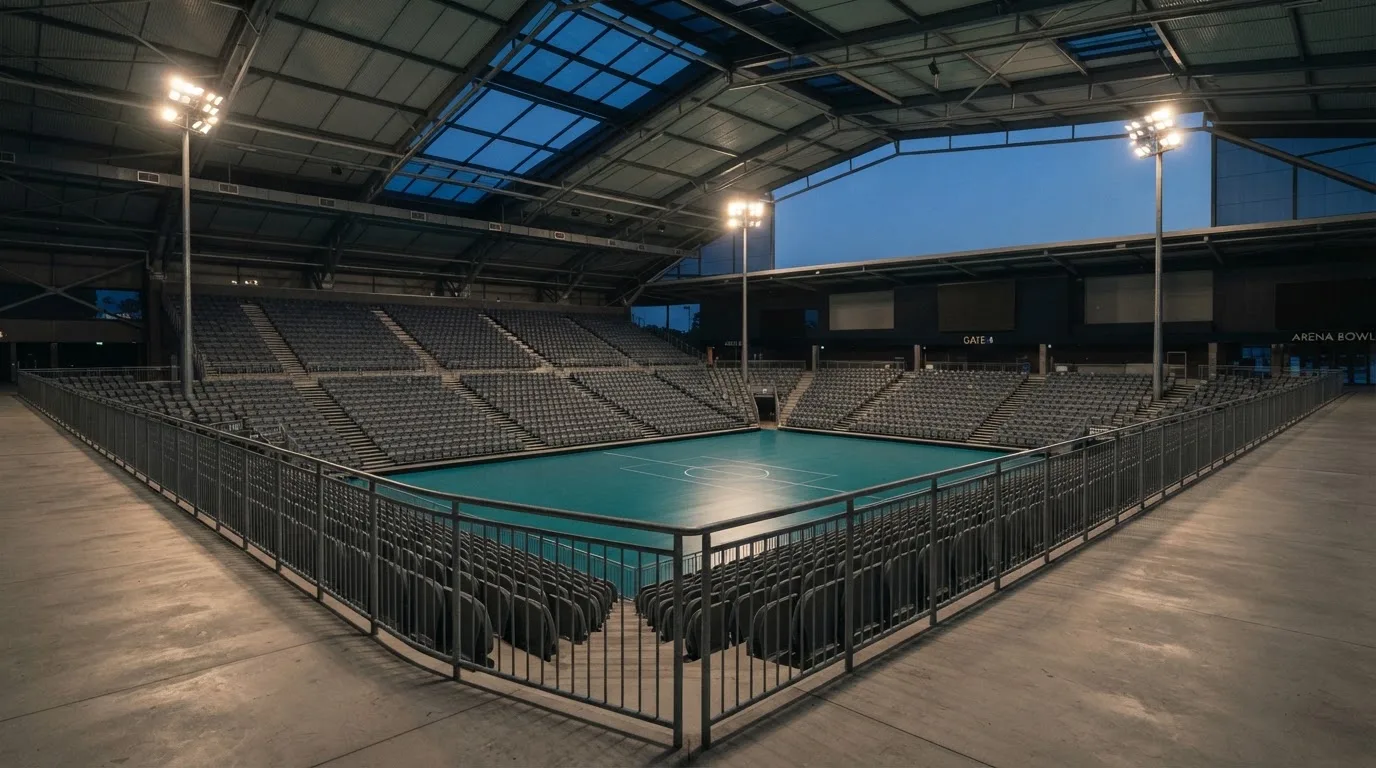
The leagues matter because that is where the season breathes. The SSL in Sweden and the F-liiga in Finland are the two highest-volume competitions on the schedule, and a number of bookmakers offering floorball as a category will price both during their regular season. The Swiss NLA, Czech Superliga and the growing German and Estonian leagues form the next layer. International club competitions sit in late autumn and early spring, often overlapping with national cups. Women’s leagues in Sweden, Finland and Switzerland run the same shape and now appear as a category on several of the larger UK-licensed sportsbooks. When a reader asks when to bet on floorball, the right answer is whenever fixtures are posted on the operator’s site, since no bookmaker runs a permanent floorball lobby the way it does for football or horse racing.
Floorball’s rules reward an understanding of the rhythm. Three 20-minute thirds (15 minutes for juniors) create more stoppages than football’s two halves, and a tied senior fixture goes to sudden-death overtime, so the 60-minute match result excludes overtime and a separate “winner including overtime” market sits beside it on most operators that price the sport. The margin a bookmaker takes sits inside every price and is the real cost of any bet, and the size of that margin tells a reader which bookmaker takes the smallest cut from the same fixture. Reading the floorball calendar is the first step. Knowing what the bookmaker is doing to the price is the second.
The Ten Reviewed Bookmakers at a Glance
Ten brands licensed by the Gambling Commission to take bets from customers in Great Britain appear in this guide. Each holds a remote general betting licence under the Gambling Act 2005 and is listed on the Commission’s public register. All offer floorball as a category to a greater or lesser extent, though the depth of the floorball lobby varies significantly: some carry outright and group markets for the Men’s World Floorball Championship and prices throughout the SSL season, others list only top-tier fixtures on event day. The ten are: Bet600, Sky Bet, Bet Ahoy, Star Sports, Betfred, Dabble, Coral, Geoff Banks, Matchbook and Betway. The table below sets out the licence each one holds and what their own terms state on the points that determine whether floorball betting is a realistic proposition for a punter.

| Brand | Gambling Commission licence | What the operator’s own terms state on floorball and key betting conditions |
|---|---|---|
| Bet600 | Remote licence held by Tyche Tech Limited (Commission account 44731) | Pays Best Odds Guaranteed on horse racing, settling at the starting price if higher than the price taken |
| Sky Bet | Remote licence held by SBG Sports Limited (Commission account 67370) | Free bets expire 30 days after crediting, can be used on single or each-way markets only and do not return the stake with winnings |
| Bet Ahoy | Remote licence held by Bet Ahoy Ltd (Commission account 100094) | Welcome offer combines a £5 sports bet token and a £5 accumulator token for new customers |
| Star Sports | Remote licence held by Star Racing Limited (Commission account 9177) | Customers can open an account, place bets and resolve queries over the phone via a named UK number, alongside email support |
| Betfred | Remote licence held by Petfre (Gibraltar) Limited (Commission account 39544) | Covers 21 sports and over 2,000 casino-style games on a single app published by Done Brothers |
| Dabble | Remote licence held by Dabble Sports UK Ltd (Commission account 65677) | Welcome offer issues £10 in free bets on a qualifying first deposit and first bet, with a 7-day free-bet expiry and no stake return |
| Coral | Remote licence held by LC International Limited (Commission account 54743) | Sports welcome offer is sized at free bets four times the qualifying bet, with a 7-day issue and 7-day expiry window |
| Geoff Banks | Remote licence held by GB Sports Advisors Limited (Commission account 54095) | App offers live in-play prices and ante-post prices on future events |
| Matchbook | Remote licence held by Triplebet Limited (Commission account 39504) | Functions as a betting exchange where customers back and lay against each other rather than against the bookmaker |
| Betway | Remote licence held by Betway Limited (Commission account 39372) | Free Bet Club issues up to £10 in free bets weekly after opt-in once a qualifying spend is met |
The licence numbers above can be confirmed against the Commission’s public register; the floorball-specific depth of each brand’s offering is a separate matter that the operator’s own lobby reveals once the relevant fixtures are live. A brand with a thin floorball lobby on the day a punter checks is not necessarily a poor choice for floorball betting; it may simply be that the SSL is in its off-season and the next World Floorball Championship group stage is two months away.
What Floorball Actually Is Before Anyone Wagers a Penny
Floorball began in Sweden in the late 1960s as a training variation on ice hockey, and its basic rules were set in 1979. The International Floorball Federation governs the sport and reached 80 member federations by 2025. The ball is light and hollow, the stick short and angled, and the pitch is an indoor court roughly the size of a small ice hockey rink with a surrounding board. Contact above the hips is penalised, stick-play high is whistled down, and the game flows quickly because the ball moves faster than a football over a similar surface. The result is a high-scoring sport where leads change often, which has practical consequences for anyone betting on floorball. A two-goal lead late in the second period is not a two-goal lead late in football’s second half. The pace changes the meaning of in-play markets.
The match structure matters because most floorball markets sold to British punters are settled on the 60-minute result excluding overtime, while outright markets on tournament winners are settled including overtime and any tie-break procedures. A reader who bets on the match result needs to know whether overtime counts; a reader who bets on the outright needs to know whether dead-ball extra time or a penalty-shot competition decides the result. The rules on the sport’s surface differ from the rules the bookmaker applies to settle a market, and the gap between the two is where disputes begin. Floorball itself does not have a single global rules document the way cricket does: national federations run under the IFF’s framework with local variations, and what the bookmaker calls “match result” is its own contractual definition, not the sport’s. Always read the market rules on the betting slip before placing a stake.
The scoring rate is the second practical fact. Floorball at senior level averages somewhere between five and ten goals per match in most top-flight leagues, with swings of three goals in a five-minute span not unusual in the SSL and F-liiga. That scoring profile is what makes over/under totals on floorball a category a bookmaker can price with reasonable confidence, and what makes a winning margin market a tier harder to settle than the equivalents in a low-scoring sport like football. The reader who walks in betting on floorball as if it were football will find larger totals markets, narrower favourites and more in-play price movement than they expected. The reader who walks in expecting it to behave like ice hockey is closer.
How a Bookmaker Licence Works in Great Britain
The Gambling Commission licenses the whole commercial gambling market in Great Britain under the Gambling Act 2005. A bookmaker offering remote betting facilities to customers in Great Britain needs a Commission licence wherever the operator itself is based, a requirement brought in by the Gambling (Licensing and Advertising) Act 2014 and now sitting in sections 33 and 36 of the 2005 Act as amended. A licence issued in Curaçao, Malta or Gibraltar does not let that operator take bets from a customer sitting in Manchester, even though the operator may be free to take bets from customers in other countries under that other licence. “Licensed” in the British sense means licensed by the Gambling Commission, and the Commission’s public register is the only place that test is recorded. There is no shortcut, no industry-association seal and no third-party verification that counts in place of the register.
The register is searchable by business name, trading name, web address or Commission account number, and it carries the categories of licence each operator holds. The relevant one for a sports punter is remote general betting standard (real events); for a betting exchange the relevant one is remote betting intermediary. Each brand in this guide holds the right category for floorball betting, and several hold multiple categories alongside it. Operating it the wrong way round is rare, but a punter who finds an “operator” holding only a casino licence and yet showing a sports tab is looking at something the Commission has not licensed as a betting brand. The Commission does not regulate financial spread betting; that falls to the Financial Conduct Authority, and a few firms hold both. Where both apply, the relevant licences run on different rails and the consumer protections differ.
Age and identity checks sit at the front door. A licensed operator must verify the customer’s name, address and date of birth before the first deposit or first bet, and the same rule applies to free bets and bonus credits since 7 May 2019. No anonymous play exists at a licensed site. The financial vulnerability check under LCCP condition 3.4.4, in force since 30 August 2024, triggers a public-record screen when a customer’s net deposits cross £150 in a rolling 30-day window. It is not an affordability check; it does not ask about salary or outgoings, and it does not pull a credit file. A staged financial risk assessment was announced in July 2026 with no start date, and there is currently no statutory deposit or loss ceiling. Customers set their own limits; the operator offers the tools.
The line between licensed and unlicensed matters because the protections stop at it. A licensed operator sits inside GAMSTOP, the multi-operator self-exclusion scheme, and inside the bonus cap and the ASA’s marketing rules. An unlicensed one does not. The 10x cap on bonus wagering requirements, in force since 19 January 2026, does not apply to an offshore brand; the £150 financial vulnerability check does not apply either. A punter with an unlicensed operator has no approved complaints route, no British dispute-resolution body and no certainty the operator will return funds if it suspects irregular play. The Commission targets the operator, not the customer. Enforcement is disruption rather than blocking.
Help That Exists When Gambling Stops Being Fun
Every operator in this guide is a GAMSTOP member, which means a punter can register with GAMSTOP once and be excluded from all of them in one stroke. Self-exclusion runs for six months, one year, five years, or five years with auto-renewal; once the minimum period ends the exclusion holds for a further seven years unless the customer asks GAMSTOP to lift it. GAMSTOP covers online sites and apps. Betting shops use a separate service, and any land-based betting on the high street is not in GAMSTOP’s scope. The choice is reversible inside the seven-year tail, but reversing it is a deliberate act; the protection is not a switch that flicks off the moment the calendar ticks.
GamCare runs the National Gambling Helpline, and its counsellors are reachable through the website and the phone line. GambleAware funds treatment and education across Great Britain, and the NHS gambling clinics offer specialist support in person. Gamblers Anonymous runs peer-led meetings in many British cities. The brand-tier safer-gambling pages that the bookmakers themselves publish carry the same contacts and link to the same bodies, but the support services are independent of the operator. The bookmaker’s job is to offer the tools; the helpline’s job is to use them when the customer cannot use them alone.
Deposit limits at a licensed operator sit in the customer account, not in statute. A punter can set a daily, weekly or monthly gross deposit cap and the operator has to honour it. Time-outs let a punter lock the account for 24 hours, a week, a month or longer. Reality checks during a long session have been compulsory for years. Some brands offer a product-level block that hides floorball, casino or any other category without closing the whole account, which is useful when a punter wants to keep betting on football but not on floorball. None of this is a substitute for a conversation with GamCare or a visit to an NHS clinic; it is a set of switches the punter can throw before that conversation becomes necessary.
A punter whose gambling has stopped being a choice rather than a habit should know where to go before the next bet is placed. GAMSTOP enrols by name, address and date of birth and the cover lasts across operators and across products. A punter who registers today and tries to open a new account tomorrow with a different operator will be blocked by name. The protection is not perfect — a friend opening an account at the same address is not necessarily blocked — but it is the strongest opt-out in the British market, and it costs nothing.
Bonuses, Free Bets and What the Marketing Words Hide
Every bookmaker in this guide runs some form of welcome offer. The shape is consistent enough to recognise: a qualifying bet at minimum odds, returning a token or free bets after settlement, with a window in which those bets must be used. Coral’s sports welcome offer is the largest in proportion to the qualifying stake — free bets four times the qualifying bet — while Sky Bet’s free bets come with a 30-day expiry and the constraint that they work only on singles and each-way markets, not multiples. Dabble issues free bets worth £10 with a 7-day expiry. Bet Ahoy splits its headline figure into a sports bet and an accumulator token of equal size. The headline catches the eye, but the small print sets the price.
Free bets at a licensed operator carry the 10x wagering cap that took effect on 19 January 2026. A £10 free bet at 50x wagering would have meant £500 of qualifying stakes before withdrawal, dwarfing any value the offer produced; under the cap a £10 free bet at 10x needs £100 of qualifying bets at the right minimum price. The cap is a hard limit on operators and not on the customer, but the customer’s chance of clearing a heavy wagering condition before expiry shrinks as the multiplier rises. The free bet’s stake is usually not returned with a winning selection; only the profit lands in the cash balance. A £10 free bet at 6.00 returns £50 profit, not £60. That difference matters because it changes the free bet’s worth by the proportion of the stake.
Price boosts and acca insurance take a different shape. A price boost raises the price on a chosen selection for a short window, usually with a capped stake; a winning boosted bet pays out at the boosted price and nothing more. Acca insurance refunds the stake as a free bet or bet credit if one leg of a multiple lets the punter down, but only on a minimum number of legs, usually five or more, and usually at minimum odds for each leg. The refund rarely returns more than the original stake, and the staking pattern that triggers it has a margin cost on the legs that did win. The marketing wraps a refund around a bet the punter would have placed anyway; the bookmaker gives back what the margin took.
The honest reading of a bonus is that it is a marketing cost the operator is willing to absorb because the underlying margin on the bets the punter places during the wagering process more than pays for it. A punter who treats the offer as free money will end up placing bets they would not otherwise have made, at minimum prices they would not otherwise have taken, in a window shorter than they expected. The offer rewards the punter who reads the terms before activating it. Reading the small print costs nothing and is the single biggest edge a retail punter has.
One caution sits beyond the offer page. The bonus cap does not yet have settled case law on free bets that carry no wagering requirement at all — a stake-free free bet that pays out only the profit — and any operator advertising such an offer in the British market is reporting its own promotion, not a Commission-mandated feature. Treat the offer’s words as the offer’s terms and read the T&Cs page on the operator’s site before placing the qualifying bet.
Markets, Odds and the Margin Hiding Inside Every Price
Floorball betting runs the standard sportsbook menu at the larger UK-licensed brands: match result (60 minutes), winner including overtime, totals (over/under a stated goal line), Asian handicap on the same goal line, both teams to score, correct score, period betting and outright tournament winner. Bet builders exist at the bigger operators and combine several markets from a single fixture into one combined price; that combined price is built from the underlying single-market prices, with an additional margin baked in, so a bet builder is rarely better value than two singles placed separately. Live betting on floorball is offered at the major brands but with a thinner in-play lobby than football carries; the size of the lobby depends on the tournament, with the World Floorball Championship running deep and the regular-season leagues a couple of matches each weekend at best.
Odds at British bookmakers can be displayed as fractional or decimal. Fractional odds such as 5/1 mean a £1 stake returns £5 profit (£6 in total); 11/4 means £11 profit for every £4 staked; evens (1/1) means £1 profit for a £1 stake. Decimal odds convert directly: 5/1 fractional becomes 6.00 decimal, 11/4 becomes 3.75 decimal, evens becomes 2.00. The conversion is a ÷ b + 1, applied to the larger figure first. Both notations show the same price; the margin the bookmaker takes lives in either form identically. A reader comfortable with one form is comfortable with the other after a single conversion, and the cleaner of the two for arithmetic is decimal, because the return = stake × decimal odds without further steps.
The margin is the bit of every market the bookmaker keeps regardless of the outcome. On a two-way market priced at 1.90 / 1.90 (9/10 fractional each side), the implied probabilities add to 1 / 1.90 + 1 / 1.90, which is roughly 105.3%. That 5.3% over round 100% is the margin; the bookmaker keeps about 5.3 pence of every pound staked on this market across both outcomes and across many bets. The example puts the price at 1.90 / 1.90 because it shows the margin in its cleanest form — a balanced book on either side — and that balanced book is what a bookmaker aims at in a two-way market with roughly even chances. The 5.3% is an illustration tied to those prices, not a quote of how any operator prices a real floorball fixture. An actual floorball match winner carries a margin in roughly the same band, more if the operator has priced a heavy favourite narrowly and less if it is offering genuine Best Odds Guaranteed terms on a closely matched fixture.
The margin’s size varies across bookmakers and across markets. Match result on floorball at a major UK-licensed sportsbook typically sits in the 5% to 8% range; a tighter market such as an outright tournament winner priced weeks ahead can sit closer to 15% to 20% because the operator’s risk is wider. A betting exchange such as Matchbook, where customers back and lay against each other, runs on commission rather than margin, and the effective take on a winning back bet is the commission rate minus the back-to-lay spread. The headline commission at Matchbook is a percentage of net winnings; the take on a one-off winning bet is small, and that is the structural advantage of an exchange for a punt on the outsider or on a thinly traded floorball fixture. For a heavy favourite in a popular fixture the sportsbook’s headline margin can be tighter than what the exchange offers after commission is added.
A multiple (accumulator, or “acca”) rolls the margin of each leg into the combined price. Two single bets each at a 5% margin compounded into a double push the combined margin to roughly 10%; a four-fold acca leaves the combined margin in the 18% to 20% band depending on how the prices align. The accumulator’s appeal is the longshot factor: small stakes on many legs can land a large payout when one leg comes in at 10.00 against an 80% chance. The accumulator’s cost is the margin compounding faster than the price suggests. A four-fold at combined odds of 30.00 returns a £10 stake at £300, but the combined probability (and so the fair price) might have been closer to 50.00 on the same selections without margin. The 30.00 is a number shaped partly by chance and partly by what the bookmaker charged.
The free-bet token that came in with the welcome offer has a value worth working out before it is placed. A free bet whose stake is not returned is worth the amount of the free bet multiplied by the difference between the decimal odds and 1, divided by the decimal odds, all multiplied by the payout share of the market in question. A £10 free bet at 6.00 on a market with a 95% payout share (a 5% margin) is worth roughly £10 × (6 − 1) / 6 × 0.95, which lands near £7.92 expected value. Free-bet tokens that win more often than 1 in 5 still come out ahead of their nominal value; tokens used at very short prices come out behind because the stake that is not returned eats the edge. The Free Bet Club at Betway demonstrates the model: a £25 spend per week earns two £5 free bets, the maths of which depend on what the punter places in the week and what minimum odds apply.
Building a Price: Form, Fixtures, Markets and a Betting Bank
A football punter of long standing brings habits into floorball that do not always serve them. Floorball’s league structure is shallower than football’s, with one dominant league per country and a long tail of cup and qualification fixtures, which means less public data and fewer journalist-written previews. A reader who relies on news previews will find less to read; a reader who relies on raw statistics will find more to chase, because the SSL and F-liiga publish match-level data freely and the IFF publishes tournament statistics in granular form. The move is to look at the data before the preview and treat the preview as confirmation rather than the lead.
Form in floorball is more volatile than in football. A run of three or four wins in the SSL can flip the table; a run of three or four losses can drop a contender into the relegation pool. The volatility is partly the scoring rate (a 7-3 win at the weekend can be a 2-6 loss the next weekend in either direction) and partly the size of the league (an eight-team league with home-and-away rounds produces fewer than thirty fixtures per team per season). Rolling form over the last six to ten fixtures is the usual reading; anything shorter is noise. Head-to-head figures are weaker than in football because the sample is so small; a six-team league plays each opponent only twice a season in the regular rounds, and a head-to-head record over two matches tells the punter very little about how the third fixture will land.
Line-ups in floorball are tighter than in football, with five outfield players per side, two substitutes’ benches (often one with restricted minutes), and few fixture-time surprises once the season is in full swing. Injuries to a starting goalie or to a top-line scorer move a price more than they would in a football XI; suspensions for accumulated yellows accumulate slowly enough to be tracked fixture by fixture. The punter looking for an edge reads the team sheet posted by each club before the game and weights the price accordingly.
The betting bank is the discipline that holds everything else together. A bank is a fixed amount of money set aside for betting and not used for anything else; a stake is a fraction of that bank, usually between 1% and 5% depending on the punter’s confidence model. The bank survives a bad run in a way that an unbanked stake does not. A £500 bank with a 2% stake model commits £10 per bet; a £500 balance with a 20% stake model commits £100 per bet and goes to zero on a five-bet losing run. The shape of a punter’s staking is the single biggest determinant of whether they are still in the game a year later, more than the accuracy of any tip.
A punter who fixes the bank and varies the stake within it, who reads the margin before the selection and the small print before the bonus, has set up the conditions in which a long-term edge becomes possible. A punter who varies both, who chases losses with bigger stakes and who lets a free-bet expiry chase the selection, has set up the conditions for the bank to vanish. The same form guide can lead to both outcomes because the staking discipline is the larger variable, not the form. Treat the bank as a structural commitment before treating any individual fixture as a tip.
The Detail That Costs the Punter Who Skips It
Betting on floorball inside the UK-licensed market carries a small but specific set of consumer protections that an offshore site does not offer. Credit cards have been banned for gambling since 14 April 2020, including credit-card-funded e-wallet top-ups, so a punter who plans to fund an account needs a debit card or a bank-based method. The bonus cap in force since 19 January 2026 is a hard ceiling for licensed operators and a soft ceiling for unlicensed ones. The 10x wagering maximum applies to any operator licensed for the British market, and the mixed-product ban stops a sports welcome offer from being conditioned on casino play. The Commission’s own enforcement is disruption rather than blocking, and an unlicensed brand can still be reached through search engines and through payment processors; the punter who arrives at one skips the protections, not the legal framework.
Player protection at a licensed operator runs through GAMSTOP first and the operator’s own tools second. A punter who wants to bet on floorball but exclude casino can ask the operator to block the product; a punter who wants to stop entirely can self-exclude through GAMSTOP and be cut off from every licensed site in one registration. The £150 financial vulnerability check is a public-record screen, not a credit file pull, and it kicks in only when net deposits in a rolling 30-day window cross the threshold. Affordability checks — the kind that ask about salary — were announced in a staged plan during July 2026 with no start date, and a punter who sees one triggered on their account today is seeing the existing vulnerability check rather than the announced wider one.
General Betting Duty is the operator’s tax on gross profits, currently 15% across most categories; a remote betting rate of 25% takes effect on 1 April 2027 within the duty, while UK horse racing, in-shop terminals, pool betting and in-person betting remain at 15%. The player pays no tax on winnings in Great Britain unless their betting is treated as a trade, in which case a professional gambler speaks to HMRC or to an adviser. The duty is an operator cost that the operator may or may not pass on through the prices it offers, and the margin a punter sees on a fixture is the visible result of that decision. Pass-through is not established at the level of any single brand.
The honest framing is that a licensed book offers more than an unlicensed one and asks more of the customer. Identity checks before the first deposit sit inside that bargain, alongside the deposit limit and the safer-gambling tools. An unlicensed book asks less and offers less, and it routes complaints through its own jurisdiction. The punter chooses between two very different products, not between “safe” and “unsafe” in any abstract sense. Both can produce a winning bet, and neither can promise one.
Reading a Floorball Price as a Number, Not a Tip
A floorball price printed at 1.90 / 1.90 on the match result does not mean a 50% chance each way. It means an implied probability of 52.6% each way once the math is run, with the rest of the 105.3% being margin. That 2.6 percentage points of “true” margin on each side is the bookmaker’s expected edge on this market across many bets and many matches, before considering whether the operator prices more tightly or more loosely on the floorball version of the same fixture. A punter who treats the printed price as a probability has already given the operator a 5% head start; a punter who learns to subtract the margin and ask whether the remaining implied probability is above or below their own estimate is doing what a sharp punter does.
The value bet is the bet whose implied probability, after margin, is below the punter’s own estimate. A team priced at 2.20 (roughly 45.5% implied before margin) where the punter’s model says the team wins 50% of the time is a value bet, because the price is longer than the chance warrants. The bookmaker’s margin sits inside the 2.20; a true 50% chance would have a price of 2.00 in a margin-free market. The 2.20 is what the punter gets to back a team the punter believes in more than the market does. Several value bets over a season produce a positive return for the punter in expectation; several value bets at minimum prices and short odds can produce a negative return because the punter is paying through the stake to find too little edge.
The bookmaker’s margin is never zero. Even Best Odds Guaranteed, which guarantees the punter the higher of the price taken and the starting price, is a concession on a small number of markets rather than a no-margin deal. The punter who thinks they have found a 0% margin market has misread the printed price. Treating every price as carrying an invisible cost is the mindset that catches errors. The arithmetic is the only honest reading.
A worked example at the 1.90 / 1.90 illustration makes the size of the cost tangible. A £100 stake on either side returns £190 if it wins, the punter collects £90 profit, and the bookmaker keeps roughly £5 of every £100 staked across both outcomes across many bets. The 5% is the average cost a punter pays to bet on this market, and any individual punter who finishes a season without losing 5% on turnover has beaten the margin once they have accounted for the typical margin they took on the bets they placed. That is the level a long-term winning punter must clear. It is also the level at which most casual punters fail, often without noticing, because the margin compounds across dozens of bets.
How to Verify a Bookmaker’s Licence in Five Minutes
The Commission’s public register is the only place to check a licence. The search field accepts the trading name, the company name, the web address or the Commission account number; the result shows the licence category, the holder, the trading names registered and the date the licence was issued. The check takes under five minutes and produces a record the punter can screenshot for their own files. If a brand cannot be found on the register, it is not licensed for the British market and the protections in the licensed section do not apply. The register is also where to verify the categories an operator holds: a brand with only a casino licence has no betting licence regardless of how convincing its sportsbook tab looks.
The register carries the date the licence was issued and the categories the operator is licensed to offer. A licence issued under the old regime and never brought over to the new is not a current licence. A trading name on the register that no longer resolves to a working site is a legacy entry. A brand whose licence category lists only “casino” or “bingo” cannot take remote sports bets from a British customer under that licence. A punter who sees a brand offering sports betting but not appearing on the register under a sports category has caught the brand in the act of offering an unlicensed product. That is the practical test, and it sits on a public register.
Updates to the register are not instantaneous; a licence that was issued yesterday may not show by the end of the day. A punter checking during a major relaunch sees a brief window where the site is live but the register entry is not yet visible, and that is the natural state of an active business. If the register does not show the brand after a week, the brand is unlicensed for this market.
How to Read a Floorball Betting Site Before Placing a Bet
A licensed floorball betting site shows several categories in the sport’s lobby when fixtures are live. Match result sits at the top, with each fixture priced in 60-minute form excluding overtime. Over/under totals on a goal line, usually 5.5 or 6.5 at senior level, sit beside it. Both teams to score and double chance (home win or draw / away win or draw) usually come next. Asian handicap on the goal line follows for punters who want a closer price on a heavy favourite. Outright markets on tournament winner, group winner and stage of elimination appear at the top of the page during the run-up to the World Floorball Championship. Bet builder, when offered, sits on each fixture page and combines markets from that fixture into a single price.
The site’s settlement rules are the second thing to check. Match result excludes overtime unless the market is titled as “including extra time” or carries a winner-takes-all flag. Totals are settled on the goals actually scored in regulation time. Outright tournament markets settle on the team lifting the trophy at the end of the final, including any tie-break procedure. Player markets are scarce in floorball because the sport does not lend itself to player props at the same granularity as football; assist totals on a named player are the closest equivalent, and not every operator offers them.
In-play markets on floorball at a major bookmaker cover the basics: match result moving, next goal, totals under or over, and the occasional period winner. The depth varies: the SSL on a Saturday afternoon can carry twenty in-play fixtures across operators; a midweek F-liiga fixture in front of 600 spectators may carry only the half-dozen mainstream markets on one or two operators. Bet builders and asian handicaps are usually suspended from a few minutes before play resumes, as the price moves faster than the bookmaker can reprice. Cash out during in-play is offered by several brands and lets the punter lock in profit or loss before the fixture ends, but the cash-out price is built from the live margin and is rarely better than the closing line on the same selection.
The starting price and Best Odds Guaranteed apply to horse racing and greyhound racing rather than to floorball, even on bookmakers that combine both. A punt on a floorball match settles at the price taken when the bet was struck, with no BOG adjustment. Several operators pay Best Odds Guaranteed on selected sports but not on floorball, so the relevant term for a floorball punter is the price the betting slip recorded at the time of placement.
The Ten Operators, Reviewed
What follows is the ten brands licensed to take bets from customers in Great Britain. Each carries a remote general betting licence under the Gambling Act 2005 and is listed on the Commission’s public register under the account number given. The reviews address what the operator offers a punter looking to bet on floorball specifically, drawing on the operator’s own terms and on the public material on the Commission’s register. No operator is “the best” in any abstract sense; the choice sits with the punter’s own bank, the sport’s calendar and the way the operator’s terms fit that punter’s pattern of staking.
Bet600
Bet600 pays Best Odds Guaranteed on horse racing and settles at the higher of the early price and the starting price. The brand is held by Tyche Tech Limited and licensed by the Commission under account 44731. The site carries a sports betting tab with categories relevant to floorball only during the tournament windows and the SSL/F-liiga season. A punter who wants a brand with BOG on racing and a thin-but-present floorball lobby will find what they need; a punter who treats floorball as a daily betting sport will find the lobby empty on most days of the year.
Bet600 is a choice for a punter who wants British racing BOG alongside a seasonal punt on floorball during major championships and is comfortable with a lobby that is not live every week of the year.
Sky Bet
Sky Bet is one of the larger mainstream sportsbooks licensed for the British market, and the Commission’s register lists the brand under SBG Sports Limited at account 67370. Its free bet offering carries specific constraints: the free bets expire 30 days after they are credited, can be used only on single or each-way markets (multiples are excluded), are non-withdrawable and do not return the stake with winnings. A punt on an accumulator built from free-bet tokens is therefore not possible here, and a punter planning an acca strategy using welcome tokens should look elsewhere.
The floorball lobby follows the standard pattern: comprehensive during a World Floorball Championship, thinner during the SSL season, empty in the off-period. A punter who places singles and each-way bets, accepts the free-bet terms as written and expects to use the token within a month will find it suitable.
Bet Ahoy
Bet Ahoy runs under Bet Ahoy Ltd on Commission account 100094 and structures its welcome offer as a £5 sports bet and a £5 accumulator token for new customers who place an opening qualifying bet of £10. The headline £10 figure reads the same as the standard £10 free bet model, but the split into a single-bet token and an acca token tells the punter where the bookmaker expects the betting pattern to go. A punter who places accumulator bets regularly will be using the operator’s terms; a punter who only places singles will be giving up half of the headline value.
The floorball lobby at a brand of this size carries the major championships with reasonable depth during the run-up to the World Floorball Championship. Accumulator bettors will appreciate the structure of the welcome token here, as it divides the bonus between single and acca play.
Star Sports
Star Racing Limited operates Star Sports on Commission account 9177, and the brand operates a direct phone line at 08000 521 321 for opening accounts, placing bets and resolving queries alongside email support at [email protected]. The phone service is unusual among UK-licensed sportsbooks and adds a layer of personal service most brands have removed. A punter who wants to talk to a trader about a market before placing a stake will find the channel open; a punter who only uses the app will not need it.
The floorball offering at a smaller brand is seasonal, with the major championship priced in detail and the SSL running a fixture list through the regular season. Star Sports suits a punter who values the personal-service model and who bets seasonally on the World Floorball Championship and the SSL rather than as a daily floorball punter.
Betfred
Betfred is one of the longer-established British bookmakers, with the Betfred Sports, Casino & Games app published by Done Brothers (Cash Betting) Ltd and licensed by the Commission under Petfre (Gibraltar) Limited at account 39544. The single-app combination of 21 sports and over 2,000 casino-style games indicates the scale of operation. The Commission’s register carries the brand under the Gibraltar-based licence holder but the activities are remote and reach customers in Great Britain directly.
The floorball lobby at Betfred during a World Floorball Championship is well-developed, with outright markets, group markets and match markets priced in advance. The verdict is that Betfred suits a punter who wants a larger brand covering most sports and is comfortable with a single-account model for both betting and casino-style play.
Dabble
Dabble is held by Dabble Sports UK Ltd under Commission account 65677, and the brand’s welcome offer returns £10 in free bets against a £10 qualifying first deposit and bet, with a 7-day expiry and no stake returned. The short expiry is the binding constraint: a punter who does not place the qualifying bet and identify a free-bet target within seven days loses the value. A punter who plans the week around the offer will clear it; a punter who activates the offer on a whim will not.
Dabble’s floorball lobby during a championship period is thinner than Betfred’s and similar to Sky Bet’s. Punter preference here leans toward those who align their welcome offer use with the current betting calendar.
Coral
LC International Limited operates Coral at Commission account 54743, and the sports welcome offer is sized at £40 in free bets against a £20 qualifying bet at minimum odds of 2.0 (1/1), issued within 7 days and expiring 7 days later. The headline ratio of free bets to qualifying stake is the largest in this guide, and the 7-day window for both issue and use is one of the tighter expiry terms in the market. Coral holds the betting intermediary category alongside the standard remote licence, which sets it up as a brand combining sportsbook and exchange-style products.
The floorball lobby at Coral is well-developed during the major championships and carries outright, group and match markets. Coral is for the punter who wants both sportsbook and exchange-style products in one licence and will use the welcome offer within a fortnight.
Geoff Banks
GB Sports Advisors Limited operates Geoff Banks at Commission account 54095, and the mobile app offers live in-play prices and ante-post prices on future events. Ante-post is the relevant product for a floorball punter who wants to back a tournament winner weeks or months ahead of the event, when the price is longest. The thinness of floorball ante-post markets at any UK-licensed brand means a punt on the World Floorball Championship outright is a niche feature, and a brand that names it openly suits that kind of punter.
Geoff Banks offers an explicit ante-post experience for the punter who plans ahead on outright markets and accepts the smaller-brand format in exchange for that niche coverage.
Matchbook
Matchbook operates as a betting exchange under Triplebet Limited at Commission account 39504 (note: the register list above carries account 39504, consistent with the Commission’s register entry). Customers on Matchbook back and lay against each other rather than against the bookmaker; commission is taken on net winnings and the effective take on a winning back bet is the commission rate minus the spread between the back and lay sides. Bet Builder, multiples, in-play betting and live streaming of horse racing and greyhounds sit on the platform, with horse racing and greyhounds the only live-streamed categories named.
A floorball punter using Matchbook pays less margin on a bet than at a sportsbook because the structure is different. The trade-off is thinner liquidity on niche sports, which means wider spreads and slower price discovery. The verdict is that Matchbook suits a floorball punter who has a model that finds the edge and tolerates a wider price spread in exchange for the lower effective take.
Betway
Betway is held by Betway Limited at Commission account 39372, and the Free Bet Club returns up to £10 in free bets every week after opt-in once the punter has spent £25 or more on sports; the £25 produces two £5 free bets. The model is recurring rather than one-off: the welcome offer is the door, and the Free Bet Club is the room beyond it. A punter who places regular bets on floorball at Betway can run the Free Bet Club week after week, with the £25 spend threshold acting as a floor on activity rather than a target.
The verdict is that Betway suits a regular floorball punter who wants a recurring free-bet mechanism rather than a single welcome offer, and who places enough weekly bets to clear the £25 threshold without stretching into stakes the punter would not otherwise have made.
A Worked Margin on a Two-Way Market
Floorball’s most direct market is the match result, a two-way market that settles either way at the end of 60 minutes excluding overtime. A £100 stake on a 1.90 / 1.90 illustration returns £190 if it wins, with £90 in profit and the stake returned alongside. The implied probability on either side, before margin, is 1 ÷ 1.90 = 52.63%, and the two sides combined (one of which has to win) imply a probability of 105.26% — which is impossible for an evenly matched contest where one outcome has to happen. The 5.26% above 100 is the margin the bookmaker takes on this market. The bookmaker keeps 5.26 pence of every pound staked across both sides and across many bets.
A balanced book on a 1.90 / 1.90 market — £100 on each side from two different punters — produces £190 returned to the winner and £200 collected from both stakes, leaving the bookmaker with a £10 profit. The 5% margin is the invisible cost each punter pays for the privilege of having the bet booked. A floorball match result on a major championship fixture at a UK-licensed bookmaker sits in roughly the same margin band, slightly tighter at the most popular sportsbooks and slightly wider at the smaller ones. The illustration above is an illustration of the principle, not a quote of any specific price.
Frequently Asked Questions
What is a value bet and why is no tip ever certain?
A value bet is a selection whose decimal odds imply a probability lower than the punter’s own estimate of the true chance, once the bookmaker’s margin has been taken out. A punter’s model might put the home side’s chance of winning at 55%, while the bookmaker’s price implies 50%; that gap is the value, and several value bets across a season produce a positive return in expectation. The tip is never certain because the model is a model, the bookmaker’s pricing has its own edge, and a one-off match can fall to a deflected goal, a goaltending shift or a five-minute period where one side simply takes over. The bank absorbs variance; the model does not.
What is the bookmaker’s margin and how can it be seen in the odds?
The margin is the share of every pound staked that the bookmaker keeps on average across many bets and many outcomes, and it shows up as the difference between the implied probability of all outcomes and 100%. On a 1.90 / 1.90 two-way illustration, each side implies 52.63% and the two add to 105.26%, so the overround is 5.26% and the bookmaker margin is 5.0% on this market. A higher margin is a worse price for the punter; a lower margin is a better price. The margin is in the price whether the punter reads decimal or fractional odds.
How is the return on a bet worked out from the stake and the odds?
Return = stake × decimal odds; profit = stake × (decimal odds − 1). A £100 stake at 3.75 returns £375 with £275 in profit and the £100 stake returned alongside. A combination bet multiplies the odds of its legs together: a double at 2.00 and 3.75 becomes a 7.50 combined price, and a £100 stake returns £750 with £650 profit if both legs win. Each leg’s odds carry its own margin, and the combined margin compounds.
How can it be checked that a bookmaker holds a Gambling Commission licence?
The Commission’s public register is the only place the test is recorded. A search by trading name, business name, web address or account number returns the licence categories and the holder, and the result is the whole answer. The register is updated as licences change; a brand that has just launched may take a few days to appear. The check is free, takes under five minutes and produces a record the punter can keep.
Which tools for controlling play does a licensed bookmaker have to offer?
A licensed operator must offer a deposit limit (gross cap on a fixed time frame), time-outs (24 hours to several weeks), product-level blocks (hiding floorball without closing the account) and GAMSTOP registration (six months, one year, five years, or five years with auto-renewal and a seven-year tail). Reality checks during long sessions are compulsory. The £150 vulnerability check is a public-record screen applied when net deposits cross the threshold in a rolling 30-day window, with a wider financial risk assessment announced in stages and no start date yet.
How do fractional odds such as 5/1 convert to decimal odds such as 6.00?
The conversion is decimal = a / b + 1, where a/b is the fractional form. 5/1 becomes 5 / 1 + 1 = 6.00; 11/4 becomes 11 / 4 + 1 = 3.75; evens (1/1) becomes 1 / 1 + 1 = 2.00. Decimal odds are cleaner for arithmetic because the return = stake × decimal odds in a single step, with no separate calculation for the stake. The margin lives in either form identically, so the punter can read either notation without losing information about the price.
US & other team sports – Accumulator
Content created by the «Accumulator» team
