
How to think about darts betting tips without chasing a tipster
 Available in US
Darts looks simple from the sofa. A player stands, throws three darts, walks back. The crowd roars or groans. The score ticks down. Yet the betting markets built around that rhythm are dense, and the gap between a hunch and a value bet is wider than most tip-sheet readers realise. This page is a guide, not a tip sheet: it walks through how a darts prediction is constructed, what bookmaker odds really contain, how a margin erodes any system, and what the licensed UK market actually looks like in 2026. No matches are picked here, no winners are named, and no win is promised.
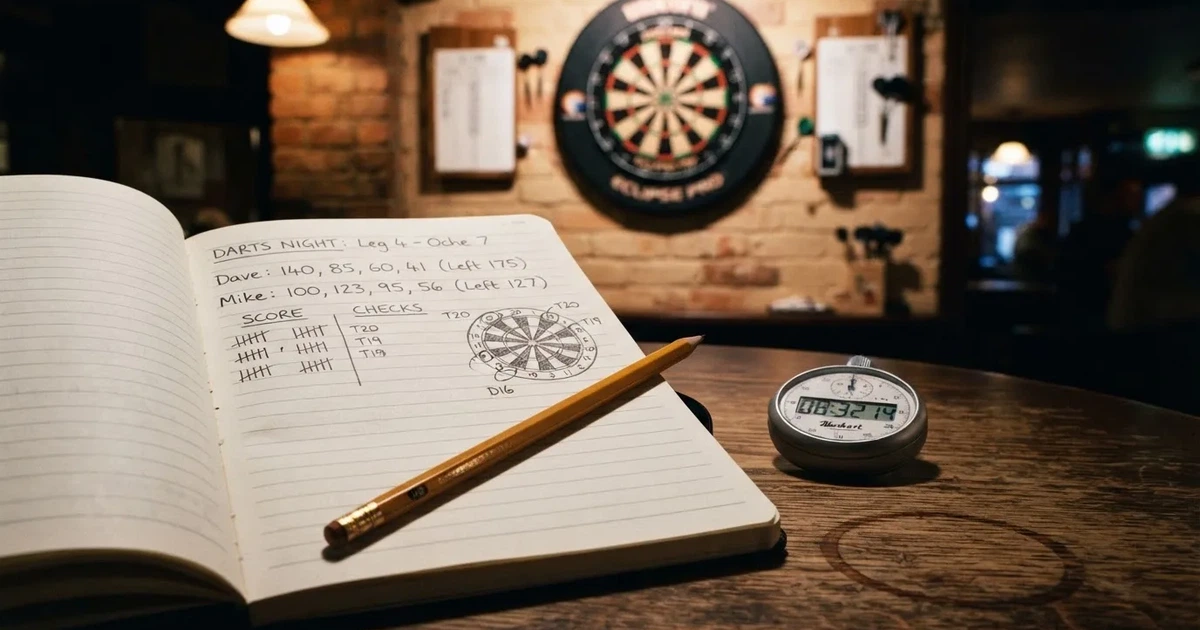
The data on this page is current as of 26 October 2026 and has been checked against the Gambling Commission’s public register for remote betting licences, the Licence Conditions and Codes of Practice (LCCP), and the operator websites listed in the comparison further down.
Where darts betting stands under UK law
Anyone offering remote betting facilities to customers in Great Britain needs a Gambling Commission licence, regardless of where the company is incorporated. That requirement has held since the Gambling (Licensing and Advertising) Act 2014 and sits in sections 33 and 36 of the Gambling Act 2005 as amended. A Curaçao, Maltese or Gibraltar licence on its own does not authorise a brand to take bets from someone in Manchester or Glasgow; only the Commission’s remote general betting standard (real events) licence does. Northern Ireland is outside the 2005 Act and runs its own older law, so a “GB-licensed” brand is just that, not licensed for Northern Ireland.
The Commission’s public register is the only test that matters. It can be searched by business name, trading name, domain or account number, and the entry tells you the licence categories, the licence holder and the trading address. Several familiar high-street chains share a single licence holder: Ladbrokes and Coral both sit under Entain, Paddy Power and Betfair both sit under PPB Counterparty Services Limited. A brand is never its own licence holder unless the holder carries that exact brand name. The register does not rank brands, does not endorse them, and a place in a comparison elsewhere is not a licence.
There is no statutory cap on stakes in sports betting, no state monopoly, and no state list of permitted payment methods for licensed betting. Operators set their own maximum stakes and may restrict individual customers. Financial spread betting sits with the Financial Conduct Authority, not the Commission: a company such as Spreadex runs two side-by-side authorisations, and its spread-betting customers can lose more than they deposited, which is a feature of the product rather than a quirk of the marketing.
What may be bet on in darts is not written into the Act. The operator offers its own markets under its licence conditions: match winner, set winner, leg winner, highest checkout, total 180s, handicap lines, and the long-tail novelty markets that crop up around the World Championship. In-play betting is offered by every GB-licensed bookmaker here, and the controls are the operator’s licence conditions rather than a separate statute.
Betting on credit is closed off. Credit cards have been banned for gambling in Great Britain since 14 April 2020, including credit-card-funded e-wallet deposits. Debit cards and bank-based payments are not covered by that ban. Identity verification is also a precondition of play, not a step that comes later: since 7 May 2019, name, address and date of birth are checked before a customer can deposit or use a free bet or bonus, and a financial vulnerability check applies once deposits minus withdrawals exceed £150 across a rolling 30 days.
Safer gambling tools and what they actually cost the bettor
The safer-gambling infrastructure around a UK-licensed darts bet is denser than the marketing pages suggest. GAMSTOP is the national multi-operator self-exclusion scheme and a mandatory licence condition for online operators since 31 March 2020; an exclusion runs for six months, one year, five years, or five years with auto-renewal, and once the chosen period ends a further seven-year minimum sits on the record unless the customer actively asks for it to come off. GAMSTOP covers sites and apps; betting shops run a separate, in-person scheme. Every brand on the comparison below is a GAMSTOP member.
Deposit limits are a customer-set feature, not a regulator-set ceiling. Operators must offer a gross deposit limit on a fixed time frame, and that limit is the bettor’s own choice. The Commission has announced a staged rollout of stronger financial checks — sometimes called affordability checks in the press — with no published start date; the language on the page is “staged, no start date”, not “in force”.
There is no tax on betting winnings for a private customer. General Betting Duty is the operator’s tax on gross profits and is currently 15%; from 1 April 2027 a new remote rate of 25% applies within it, while remote bets on UK horse racing, pool betting and in-person bets stay at 15%. The duty is the operator’s, and it is not added to the slip at the checkout; whether a particular operator eats part of it through tighter odds is a separate question, and one no public figure settles.
Help exists and is independent of any one bookmaker. GamCare runs the National Gambling Helpline, GambleAware funds treatment and the NHS runs gambling clinics across the regions, and Gamblers Anonymous runs peer-support meetings. Every licensed operator links out to at least one of these from its safer-gambling page; a brand that does not is below the LCCP bar, not above it.
What a darts offer is actually worth
Darts betting offers, like every bookmaker promotion, look generous until the terms are read. The shape that matters is not the headline figure but the workload the offer puts on the bettor before any winnings become withdrawable.
A welcome offer that returns a fixed amount in free bets has a stake-not-returned shape: the stake is not paid back with a winning free bet, only the profit is. The expected value of a free bet depends on the price it is used at and the margin of the market it is used in. A £5 free bet at odds of 3.00 on a market with a 5% margin is worth somewhere in the region of £1.90 in expected profit — that is the average across many bets, not a guaranteed payout on any single stake.
A wagering requirement puts a different workload on the customer. The cap introduced in the January 2026 promotion rules limits wagering to ten times the bonus: a £10 bonus can no longer demand £500 of qualifying bets; £100 is the ceiling. Mixed-product promotions — those that demand a bet to unlock a casino bonus or a lottery scratchcard — are banned outright. The cap does not extinguish bonuses, but it clips the worst of them.
Best Odds Guaranteed is the offer that matters most during the darts calendar’s racing-shaped gaps, when Premier League Darts shares the bill with horse and greyhound meetings. William Hill pays BOG on UK and Irish horse racing from 8 AM on the day of the race, on singles and multiples, excluding ante-post, tote and pari-mutuel pools. BetGoodwin pays BOG on the same racing, up to £1,000. The shape carries into horse racing rather than into darts, where BOG rarely applies because SP-style drift on the day is unusual.
Cash-out, the feature that lets a bettor close a bet early at a quoted price, is the other feature that turns a promotion from a headline into a cost. A cash-out price is the bookmaker’s own quote and contains its own margin. A bettor who cashes out at the first sign of trouble has paid the bookmaker twice: once via the original market margin, and once via the cash-out margin. Cashing out at the right moment is a judgement call; cashing out as a habit is a quiet drain.
Live darts betting and cash out in practice
Live darts is one of the more readable in-play products on the UK market. A set lasts long enough that the scoreboard moves several times per minute, the momentum swings are visible without specialist knowledge, and most operators refresh the match-winner market after every completed leg. The bettor who reads the form pre-match and watches the first set live can update their view on a player who has started cold, which is exactly the kind of edge the in-play market exists to offer.
The cost of that edge sits in two places. First, the in-play margin is wider than the pre-match margin: bookmakers price the suspension risk into every live quote, and the suspended period after a leg ends is when the next price is set. Second, the bettor’s reaction time is part of the price: a quote at 1.80 in-play is not the same as a quote at 1.80 pre-match because the bookmaker has had a few seconds to reprice the whole board.
Cash-out during a live darts match looks tempting when a bet is winning. The offered price reflects the current state of the board plus the bookmaker’s own margin, and the bettor who takes it up every time has turned a betting edge into a bookmaker edge. The disciplined use of cash-out is to lock in a profit when the model says the remaining risk is no longer worth the upside, and to leave the bet alone when the model says the opposite.
Streaming on the operator’s own platform closes the loop for the bettor who wants to watch and bet in the same window. PDC rights are split across Sky Sports, ITV and the operators’ own platforms during the World Championship and Premier League Darts, and a GB-licensed bookmaker’s in-play page typically carries a video player alongside the markets. Streaming quality and the depth of the in-play market are not the same thing across the comparison below, and a bettor who wants to combine the two should check both.
Predictions, value bets and the discipline that turns tips into a method
The phrase “darts betting tips” pulls searchers who want a name to back. A guide that respects the reader owes them a better answer: a tip is a prediction, a prediction is a probability, and a probability is only useful when it sits beside the price the bookmaker offers. The gap between the two is the edge.
The first input into a probability is form. Head-to-head record matters in darts because the same players meet repeatedly across the Premier League and the World Series, and a player who has won six of the last seven meetings brings more than a vague “in good form” tag. The second input is statistical profile: 180-count per leg, checkout percentage on the high doubles, average per visit, first-nine-dart average. The third is the tournament context: the World Championship at Alexandra Palace plays differently from a Premier League night in Cardiff, and a player who peaks at majors and fades on the floor brings a different shape than a floor specialist.
The fourth input is the line-up. Withdrawals reshuffle the draw before a ball is thrown, and a seed who suddenly meets a qualifier in round three has a tougher task than the seedings implied. The fifth is the odds: the price itself contains the bookmaker’s view, and a tip whose implied probability is below the price is not a value bet even when it lands.
A value bet, properly defined, is a price whose implied probability is below the bettor’s own estimate. Decimal odds of 3.00 imply a 33% chance of winning (1 ÷ 3.00 = 0.333). If the bettor’s own model puts the true chance at 40%, the difference is the edge, and the edge is what makes a bet worth taking over hundreds of bets. A bet that wins at 3.00 with a 25% true probability is not a value bet even when it pays out; it is a luck outcome.
That gap is also why no tip is ever certain. The match-fixing scandals of the early 2010s and the occasional surprise in the World Championship’s first round are reminders that the sport is human. A prediction is a probability, a probability is an estimate, and an estimate can be wrong on any given night. The bettor who treats a tip as gospel pays for it over a season; the bettor who treats a tip as one input among several has a chance.
Bankroll discipline is the other half of any method. A flat stake of 1-2% of the bank on each bet is the standard staking plan: it absorbs losing runs without bankrupting the account and it lets winning runs compound. Chasing losses by raising the stake is the single commonest path from a method to a mess. So is betting markets the bettor does not understand in pursuit of a price that looks generous.
Bet types, odds and what each market actually offers
Darts markets split into match-level, set-level and leg-level bets, with a long tail of player-props around them. Match winner on a best-of-X-sets fixture is the entry point: the price reflects the seedings, the form and the bookmaker’s margin. Set winner is the same bet one level down: the price moves every set, and the in-play market lets a bettor back the player who has just won the opening set at a price that briefly under-rewarded them.
Leg betting sits closer to the darts itself. The highest checkout market asks which player will record the highest finish in a match or a set, and the price reflects both players’ checkout range: a player whose average checkout is 130 has a different ceiling than one whose average is 95. The 180-count market asks who will score the most maximums across a match, set or leg, and the price reflects the players’ three-dart averages.
Handicap betting is the market that lets a bettor back the favourite at a shorter price or the outsider at a longer one. A player handicapped by -1.5 sets has to win by two sets or more for the bet to land; an outsider at +1.5 sets wins the bet if they take a set. The handicap is the bookmaker’s way of offering a price in a one-sided match, and the margin sits inside the handicap rather than on top of it.
Accumulators combine several selections into one bet. A double is two selections, a treble is three, an accumulator (or “acca”) is four or more; the stake is paid once, and the return multiplies the stake by the product of the odds. The trade-off is that every leg has to win, and the bookmaker’s margin compounds leg by leg. A four-fold acca at four prices of 1.80 carries a margin of roughly 10% on the combined bet, even if each leg alone carries a margin of about 5%. System bets — a Trixie (4 bets), a Patent (7), a Yankee (11), a Lucky 15, a Canadian (26), a Heinz (57) or a Goliath (247) — combine accumulators and singles so that a losing leg does not blow the whole stake, but the total stake is the unit stake multiplied by the number of bets.
Bet Builder, or same-game multi, is the feature that lets a bettor combine several markets from one match into one bet. A Bet Builder on the match winner plus total 180s plus highest checkout is one bet at one combined price; the bookmaker’s margin sits inside the combined price rather than on each leg. Midnite, Paddy Power (Bet Builder+) and others carry the feature, and the depth varies by operator.
A betting exchange runs the same markets back and lay: a back bet is the conventional punt on a selection to win, a lay bet is a bet against a selection winning. The exchange charges commission on net winnings rather than building a margin into every price, and the bettor who is willing to lay can lock in a profit on a back bet whose price has shortened. The Commission’s separate betting intermediary licence covers exchanges.
Spread betting, distinct from fixed-odds betting, is the product offered by Spreadex and Sporting Index among others. A spread is a range of outcomes — total 180s in a match might be quoted 12.5-13.5 — and the bettor buys or sells the outcome at the stake they choose. Losses can exceed the stake because the outcome can land outside the spread by more than the stake covered. The product sits with the Financial Conduct Authority when it is a financial spread bet; when it is a sports spread bet it sits with the Commission and is inside General Betting Duty.
Each-way betting, the two-bet shape more familiar from horse racing, applies in darts on outright tournament markets: an each-way bet is half on the win and half on the place, with the place terms set by the operator. The shape doubles the stake and halves the win liability, and a player who finishes third in the World Championship can still return something.
The darts calendar and the tournaments that matter for betting
The PDC World Darts Championship is the sport’s flagship event and runs annually over the Christmas and New Year period at Alexandra Palace in London. The 2026 edition ran from 11 December 2025 to 3 January 2026 with 128 players, up from 96 in prior years. The format scales with the rounds: rounds one and two were first to three sets, rounds three and four first to four, the quarter-finals first to five, the semi-finals first to six and the final first to seven. Luke Littler beat Gian van Veen 7-1 in the 2026 final; the prize fund was £5,000,000, with £1,000,000 to the winner.
Premier League Darts runs across the UK and Europe from February to May, with eight players and a nightly format that rewards consistency. The format makes outright betting tighter than the World Championship because the season is long enough that form swings matter, and the head-to-head markets are dense. The World Matchplay, the World Grand Prix, the Grand Slam of Darts and the Players Championship Finals round out the major calendar.
The BDO, the World Darts Federation’s amateur and professional streams, and the separate women’s circuit run alongside the PDC. A bettor who backs a BDO or WDF event finds thinner markets at most UK bookmakers, and the in-play offering is shorter than on a PDC night. The governing bodies sit alongside each other: the PDC is the dominant professional body, the WDF carries the amateur and international game, and the BDO’s role shifted through the 2020s.
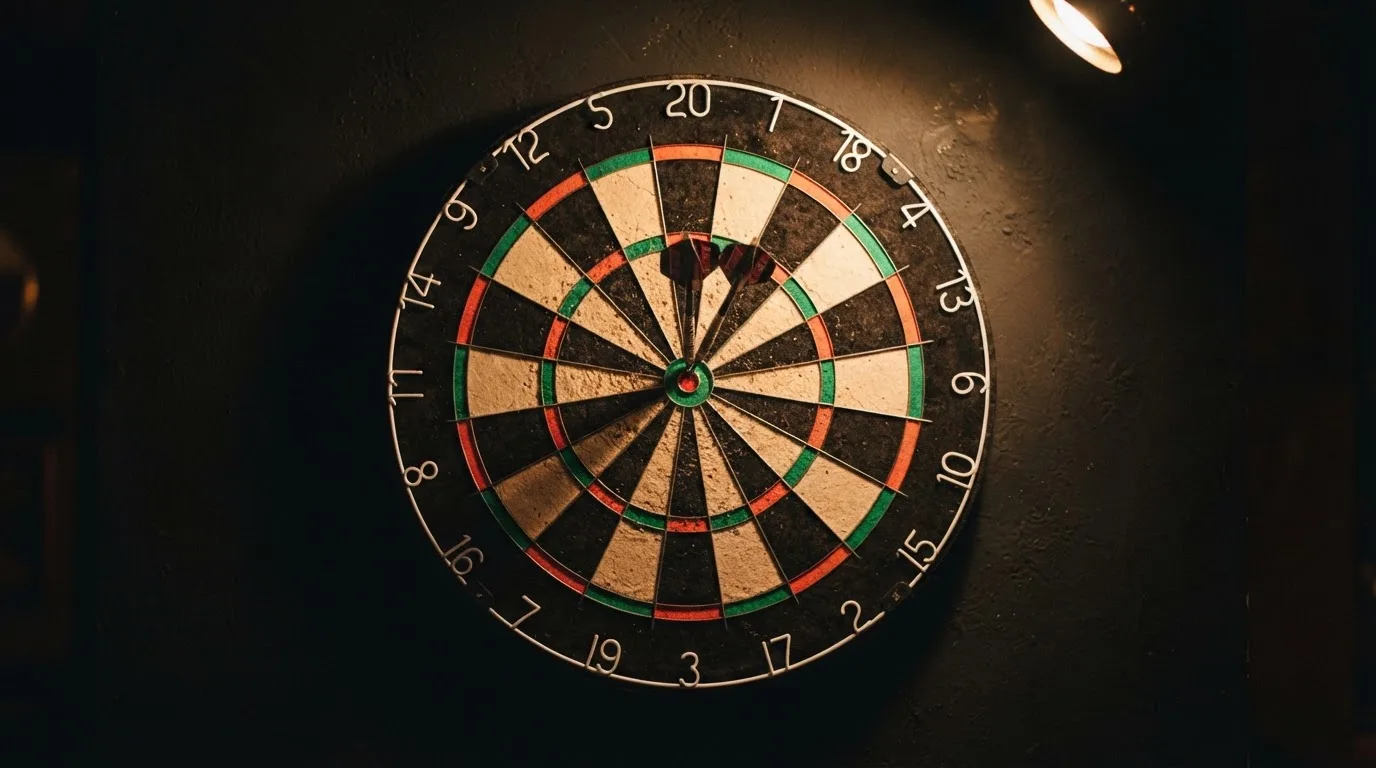
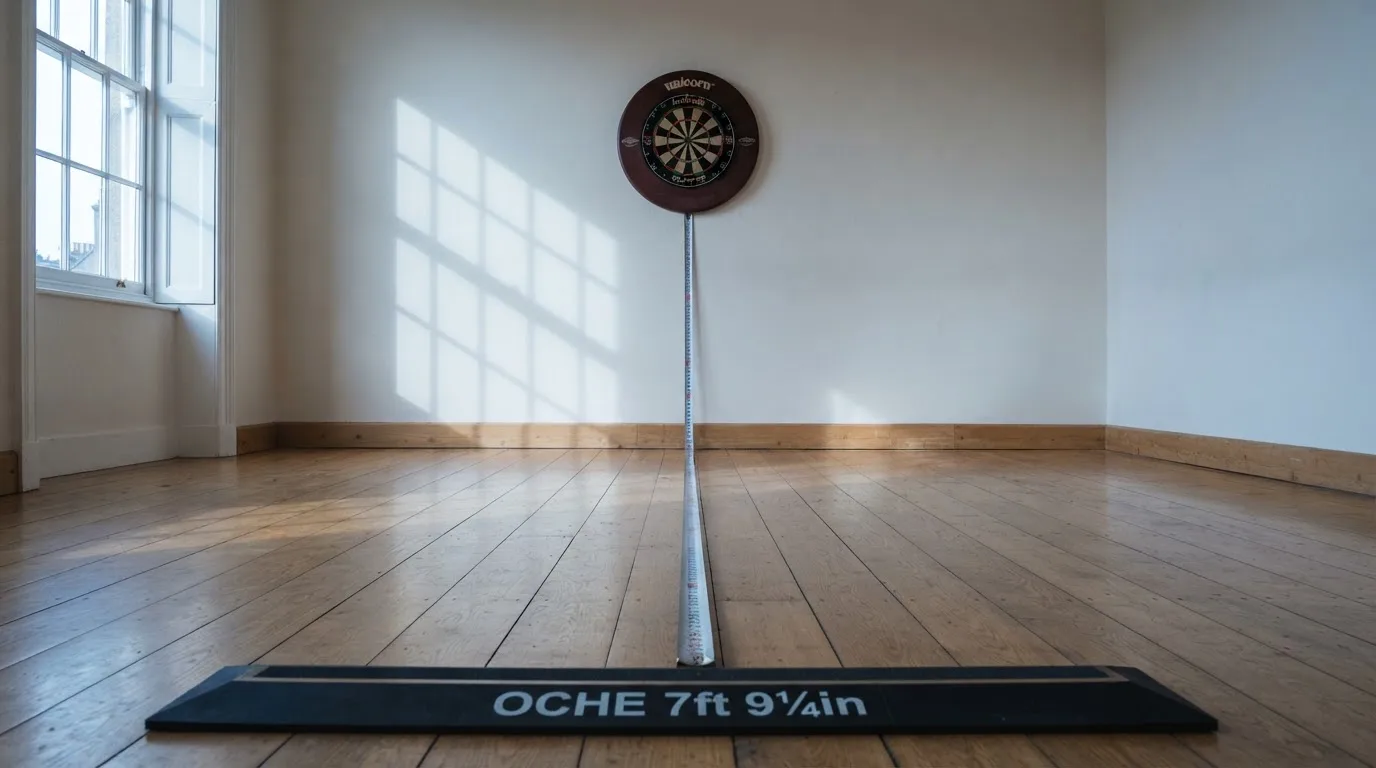
The format of darts itself is the other constant. A standard dartboard carries 20 numbered segments with single, double and treble areas, the bullseye worth 50 and the outer bull 25. The standard throw distance is 2.37 m (7 ft 9 in) and the bullseye sits 1.73 m above the floor. In 501 darts, the most common format in professional play, players start at 501 and must finish on a double or the bullseye; the highest possible three-dart finish is 170 ( treble 20, treble 20, bullseye ) and the minimum possible leg is nine darts.
What the bookmaker’s margin looks like in the odds
Every decimal price carries a margin inside it, and the margin is what the bookmaker keeps of every unit staked on the market. For a two-way market at decimal odds of 1.90 on each side, the calculation runs: payout share = 1 ÷ (1/1.90 + 1/1.90) = 1 ÷ 1.0526 = 0.9500, or 95.00%. The margin is the remainder: 1 − 0.9500 = 0.0500, or about 5.0% of every unit bet on this market.
That figure is a band rather than a single number. Different markets carry different margins within the same match: match winner typically runs tighter than correct score or highest checkout, and outright tournament markets carry wider margins than individual match markets because the outcome space is larger and the bookmaker’s risk is harder to hedge. Across the licensed UK market, darts margins on the main match-winner market tend to sit between 4% and 7% pre-match; in-play markets on the same fixtures run wider, often between 6% and 10%, because the suspension windows force the bookmaker to reprice under uncertainty.
A bettor who treats the margin as a fixed cost understands why a system of small edges compounds slowly and a system of large edges compounds faster: the 5% margin on every unit bet eats every edge below 5% before the bettor sees it, and any edge above 5% is the bettor’s actual profit. The same maths is why accumulator margins compound leg by leg: a four-fold at four prices of 1.80 carries roughly a 10% margin on the combined bet, even when each leg alone carries about a 5% margin.
A price without a snapshot date is a price the page does not print as a number. Odds and margins age faster than anything else on this page, and a tipster page that names decimal prices without dates is a page the reader cannot check. The figures on this page are illustrative.
Reviewed bookmakers for darts betting in the UK
The ten operators below are holders of a Gambling Commission remote betting licence as listed on the register at the snapshot date in the frontmatter. The order follows the comparison and is not a ranking. Each write-up covers what the operator states on its own terms, what its darts offering looks like, and where it sits in the comparison.
Paddy Power — deep in-play and the Bet Builder+ feature
Paddy Power’s UK app carries Bet Builder+, popular Bet Builders, the Super Sub feature (a bet rolls over to the replacement if a selected player is substituted), expanded Win More markets and player and ACCA stats. The combination gives the bettor a one-screen view of form, lineup and combined markets during a darts fixture. The remote licence sits with PPB Counterparty Services Limited under Commission account 39439, and the brand shares its licence holder with Betfair.
The darts offering on Paddy Power runs deep on Premier League nights and the World Championship: match winner, set winner, leg winner, highest checkout, total 180s, player 180s and several novelty markets sit alongside the standard outright. The cash-out feature covers most pre-match and in-play markets, and the price-boost token on selected legs adds a short-window higher price that pays the same way as a regular bet. The brand is a strong match for established brands and the licensed market, but a bettor who wants quiet, no-frills pricing will find the marketing noisier than the numbers behind it. The Super Sub feature is the rare mechanics-level addition to a darts bet.
Betmaster — focused sportsbook on the Commission register
Betmaster is operated by BM Solutions GB Ltd, registered in Malta, under Commission account 65699. The site positions itself as a sportsbook with a focused product rather than a casino-led offering, and the darts coverage tracks the major PDC calendar: match winner, set winner, outright winner on the World Championship, the World Matchplay, the World Grand Prix and Premier League Darts. The in-play offering carries the standard set of markets and updates after every leg. The brand is a sensible match for a bettor who wants a sportsbook rather than a casino site, and a quieter experience than the louder marketing-led brands.
The site’s quieter profile cuts both ways: depth on the long-tail novelty markets is thinner than on Paddy Power or William Hill, and the in-play suspension windows can run longer on smaller fixtures. A bettor who wants the broadest possible darts book finds the brand adequate rather than exceptional; a bettor who wants a sportsbook with a Commission licence and a focused product finds it a credible choice.
BetGoodwin — racing-led brand with BOG up to £1,000
BetGoodwin pays Best Odds Guaranteed on all UK and Irish horse and greyhound racing, up to £1,000. The brand sits on Goodwin Racing Limited under Commission account 2927, and its racing-shaped strengths carry over into the in-play product on other sports. The darts offering covers the major PDC calendar at a focused depth, with the standard match, set and outright markets. The brand is a sensible choice for a bettor whose betting calendar sits across horse racing and darts, and whose staking includes the racing-shaped weekends that share the bill with Premier League Darts.
The brand’s racing-shaped strengths are not darts-shaped strengths, and a bettor whose calendar is almost entirely darts finds a thinner product than at Paddy Power or William Hill. The BOG ceiling at £1,000 is generous within the racing product, but does not extend to darts.
Sporting Index — fixed-odds welcome with a sports spread-bet tail
Sporting Index’s new-customer offer hands a £10 fixed-odds free-bet package after a qualifying bet: a £10 fixed odds bet at minimum odds of 1/2 unlocks three £10 fixed odds free bets, three £5 Total Goals spread bets, three £5 Winning Favourites spread bets and a £1 Race Index spread bet. The qualifying bet cannot be placed in play or cashed out early. The licence sits with Sporting Index Limited under Commission account 27343.
The sports spread-bet tail on the offer is the rarer shape on the UK market, and it carries the FCA-side rule that spread-betting losses can exceed deposits. A bettor who reads the qualifying condition and the spread-bet mechanics finds a different kind of welcome package, and a sportsbook that wants to sell the spread-bet experience on top of fixed-odds betting. A bettor who wants only fixed-odds darts finds the spread-bet tail of the offer noise rather than signal, and the qualifying condition on the initial bet worth reading once before claiming.
LiveScore Bet — Open Banking and a payments-shaped product
LiveScore Bet accepts debit cards (Visa and Mastercard), Apple Pay, PayPal, Pay by Bank (Open Banking) and Revolut Pay. The payments shape is the broader part of the brand’s offering, and the Open Banking and Revolut Pay options sit alongside the more familiar methods. The licence sits with LiveScore Betting and Gaming (Gibraltar) Limited under Commission account 56859. The brand’s sports coverage tracks the major calendar at a focused depth.
The payments shape makes the brand a credible choice for a bettor who pays with Pay by Bank or Revolut Pay and wants a Commission-licensed site that takes those methods at the cashier rather than at the bonus page. A bettor who pays with a debit card alone finds the payment shape wider than needed. The darts coverage sits in the middle of the comparison: present on the major PDC fixtures and slim on the long-tail novelty markets.
Midnite — £25 free bets and the price-boost cluster
Midnite’s sports welcome offer hands £25 in free bets plus 50 free spins to new customers who bet £5 or more on pre-match odds of EVS (2.0) or greater within 14 days of sign-up; the free bets are valid for 7 days. The site also shows in-play events, an acca builder, popular accas and price boosts with maximum-stake limits. The licence sits with Midnite Limited under Commission account 101839.
The price-boost cluster, with its own maximum-stake limits, is the feature that matters on a darts night: a price boost on the match winner or the highest checkout adds a short-window higher price, and the maximum-stake limit caps how much of the boost the bettor can take. A bettor who reads the maximum-stake limit on each boost finds the cluster useful; a bettor who treats a boost as an open-ended higher price reads the terms wrong. The 14-day qualifying window is generous within the comparison, and the 7-day validity on the free bets is short.
DAZN Bet — low deposit floor and a focused payments set
DAZN Bet accepts deposits from £5 by debit card, Apple Pay, Paysafecard, Trustly and Skrill, and from £20 by PayPal, with no processing fees. The low deposit floor is the broader part of the brand’s product, and the payments set covers the methods most bettors use without a fee attached. The licence sits with DZBT Limited under Commission account 48756. The brand’s sports coverage tracks the major calendar at a focused depth.
The £5 deposit floor makes the brand a credible option for a bettor who wants to keep the bankroll in pound-amount rather than percentage-amount terms, or who pays with Skrill or Trustly. A bettor whose staking sits comfortably above £20 finds the lower floor a non-feature, and the wider payments set a small plus. The darts coverage sits in the middle of the comparison: present on the major PDC fixtures and slim on the long-tail novelty markets.
Lottoland — lottery-led site with a Commission licence
Lottoland’s UK app combines casino, lottery betting, sports betting and scratchcards, and states it is licensed by the Gambling Commission for customers in Great Britain. The licence sits with EU Lotto Limited under Commission account 38991. The brand is a lottery-led product, and the sports betting sits as a part of the broader offering rather than its centre.
The shape makes Lottoland a credible option for a bettor who already uses the brand for lottery betting and wants a Commission-licensed sportsbook in the same account. A bettor whose primary product is darts finds the brand’s lottery-shaped centre of gravity noise rather than signal, and the in-play darts coverage thinner than at the brands whose centre is sports. The Commission licence is the floor the page cares about; the depth beyond it is the operator’s call.
Fitzwilliam Sports — phone-and-live-chat shape with a long opening window
Fitzwilliam Sports offers phone and live chat with the office open 09:00 to 21:00, Monday to Sunday, with messenger replies generally within 90 seconds. The opening window covers most Premier League Darts nights and the World Championship evening sessions. The licence sits with SBKI Limited under Commission account 48760. The brand’s sports coverage is focused rather than wide.
The phone-and-live-chat shape is the rarer kind on the licensed UK market, and it matters to a bettor whose questions sit better in voice than in a chatbot. A bettor who only wants an app finds the phone-led support an extra channel rather than the main one. The darts coverage tracks the major PDC calendar at a focused depth, and the in-play offering updates after every leg.
William Hill — high-street heritage and BOG on UK and Irish racing
William Hill pays Best Odds Guaranteed on UK and Irish horse racing from 8 AM on the day of the race, on both single and multiple bets; the offer does not apply to ante-post, tote or pari-mutuel pools. The licence sits with WHG (International) Limited under Commission account 39225. The brand carries a broad sportsbook with deep darts coverage on the major PDC calendar: match winner, set winner, leg winner, highest checkout, total 180s, outright winner on the majors and a deep set of novelty markets during the World Championship.
The BOG shape is racing-shaped rather than darts-shaped, but a bettor whose calendar sits across racing and darts finds the racing-shaped generosity of one piece useful. The high-street heritage is the brand’s strongest marketing claim, and the licensed bookmaker with the broadest campaign-tale portfolio carries the broadest novelty markets. A bettor who wants the broadest possible darts book on a Commission-licensed site finds William Hill at the wider end of the comparison.
What the licensed landscape actually looks like
| Operator | Gambling Commission remote licence number and licence holder | What the operator’s own terms state on the key’s subject |
|---|---|---|
| Paddy Power | 039439-R-319330-013 — PPB Counterparty Services Limited | Bet Builder+, Super Sub, expanded Win More markets, player and ACCA stats |
| Betmaster | 065699-R-339929-002 — BM Solutions GB Ltd | Focused sportsbook product |
| BetGoodwin | 002927-R-327985-008 — Goodwin Racing Limited | Best Odds Guaranteed on UK and Irish horse and greyhound racing, up to £1,000 |
| Sporting Index | 027343-R-308898-011 — Sporting Index Limited | £10 fixed-odds welcome with fixed-odds free bets and sports spread-bet tail |
| LiveScore Bet | 056859-R-332720-005 — LiveScore Betting and Gaming (Gibraltar) Limited | Debit cards, Apple Pay, PayPal, Pay by Bank (Open Banking), Revolut Pay |
| Midnite | 101839-R-342850-001 — Midnite Limited | £25 in free bets plus 50 free spins on a £5+ qualifying bet at EVS or greater within 14 days |
| DAZN Bet | 048756-R-327274-019 — DZBT Limited | Deposits from £5 by debit card, Apple Pay, Paysafecard, Trustly, Skrill; from £20 by PayPal; no processing fees |
| Lottoland | 038991-R-319408-020 — EU Lotto Limited | Casino, lottery betting, sports betting and scratchcards in one app |
| Fitzwilliam Sports | 048760-R-335434-009 — SBKI Limited | Phone and live chat, 09:00 to 21:00, Monday to Sunday, messenger replies within 90 seconds |
| William Hill | 039225-R-319373-015 — WHG (International) Limited | Best Odds Guaranteed on UK and Irish horse racing from 8 AM on the day, singles and multiples; not ante-post, tote or pari-mutuel |
The column on the right carries only the key’s subject as each operator’s own terms state it. The breadth of the offering beyond that subject is the operator’s own choice, and the page does not extend the cell into a marketing claim.
Frequently asked questions about darts betting
How does someone bet on darts?
A bettor opens an account with a Gambling Commission-licensed operator, verifies name, address and date of birth, deposits by a permitted method (no credit card), and selects a darts market from the operator’s sportsbook. A bet is a stake on a selection at the price quoted; the stake is the risk and the return multiplies the stake by the decimal odds. In-play markets follow the same shape with the price updating as the match progresses.
What is darts betting?
Darts betting is fixed-odds wagering on the outcomes of professional darts matches and tournaments. Common markets involve predicting the winner of a match, set, or leg, as well as the highest checkout, the total 180s, handicap lines, the outright tournament winner, and a long tail of player-props. The licensed UK market operates under the Gambling Act 2005 and the LCCP, with every GB-licensed operator a GAMSTOP member and a credit-card ban in force since 2020.
How does darts handicap betting work?
A handicap line evens a one-sided match by adding or subtracting sets from a player’s tally. A player at -1.5 sets has to win by two sets or more for the bet to land; a player at +1.5 sets wins the bet if they take a set. The handicap is the bookmaker’s tool for offering a price on a one-sided matchup, and the margin sits inside the handicap rather than on top of it.
What is a value bet and why is no tip ever certain?
A value bet is a price whose implied probability is below the bettor’s own estimate of the true chance of winning. Decimal odds of 3.00 imply a 33% chance (1 ÷ 3.00); if the bettor’s own model puts the true chance at 40%, the difference is the edge. No tip is ever certain because every prediction is a probability, every probability is an estimate, and any estimate can be wrong on a given night. The edge compounds over many bets; the single result is always a luck outcome.
What is the bookmaker’s margin and how can it be seen in the odds?
The margin is the share of every unit staked that the bookmaker keeps. For a two-way market at decimal odds of 1.90 on each side, the payout share = 1 ÷ (1/1.90 + 1/1.90) = 95.00% and the margin is the remaining 5.00%. Different markets carry different margins within the same match, and in-play markets typically carry wider margins than pre-match markets because of the suspension windows the bookmaker reprices under.
How is the return on a bet worked out from the stake and the odds?
Return = stake × decimal odds. A £10 stake at decimal odds of 3.00 returns £30 (including the £10 stake); net profit is £20. For a combination bet, the odds of the legs multiply into one combined price, and the return multiplies the stake by that combined price. Each leg’s price carries its own edge, and the combination’s margin compounds leg by leg, which is why accumulators are harder to beat than singles.
Tennis, darts & cue sports – Accumulator
Content created by the «Accumulator» team
