
Cycling betting odds: what a bookmaker price actually pays on the Tour, Giro and Vuelta
 Available in US
A price on a Grand Tour stage winner is built out of two things the bookmaker cannot avoid: the chance the rider wins, and the margin the bookmaker keeps for taking the bet. The first is honest guesswork; the second is pure arithmetic, and it shows up in every line of the price list. On a sport with three-week races, hundreds of named riders and a finishing order that turns on a flat tyre or a tailwind on the Champs-Élysées, the guesswork is harder than in football and the margin is wider. That is what this page is about — not which rider wins the Tour de France, but what a price on the cycling side of a UK sportsbook really costs the punter who backs it.

A line of context the page keeps in view at all times. The licence and bonus figures below were checked on 26 October 2026 against the Gambling Commission’s public register and each operator’s own published terms. Odds age quickly; the prices printed on this page are illustrative, and the only prices worth staking on are the ones shown on the betting slip at the moment of the bet.
How the Grand Tours sit inside the UK cycling betting market
Three races carry the weight of the cycling calendar in Great Britain. The Giro d’Italia has run since 1909, the Tour de France since 1903 and the Vuelta a España since 1935 — three weeks of racing a year, each, with a winner’s jersey at the end of it (pink for the Giro, yellow for the Tour, red for the Vuelta). The Union Cycliste Internationale (UCI), based in Switzerland, has governed road cycling since 1900; its UCI WorldTour, renamed from the ProTour in 2011, sits over the Grand Tours and a handful of other major stage races, and that is the field most UK bookmakers price when they say “cycling”.
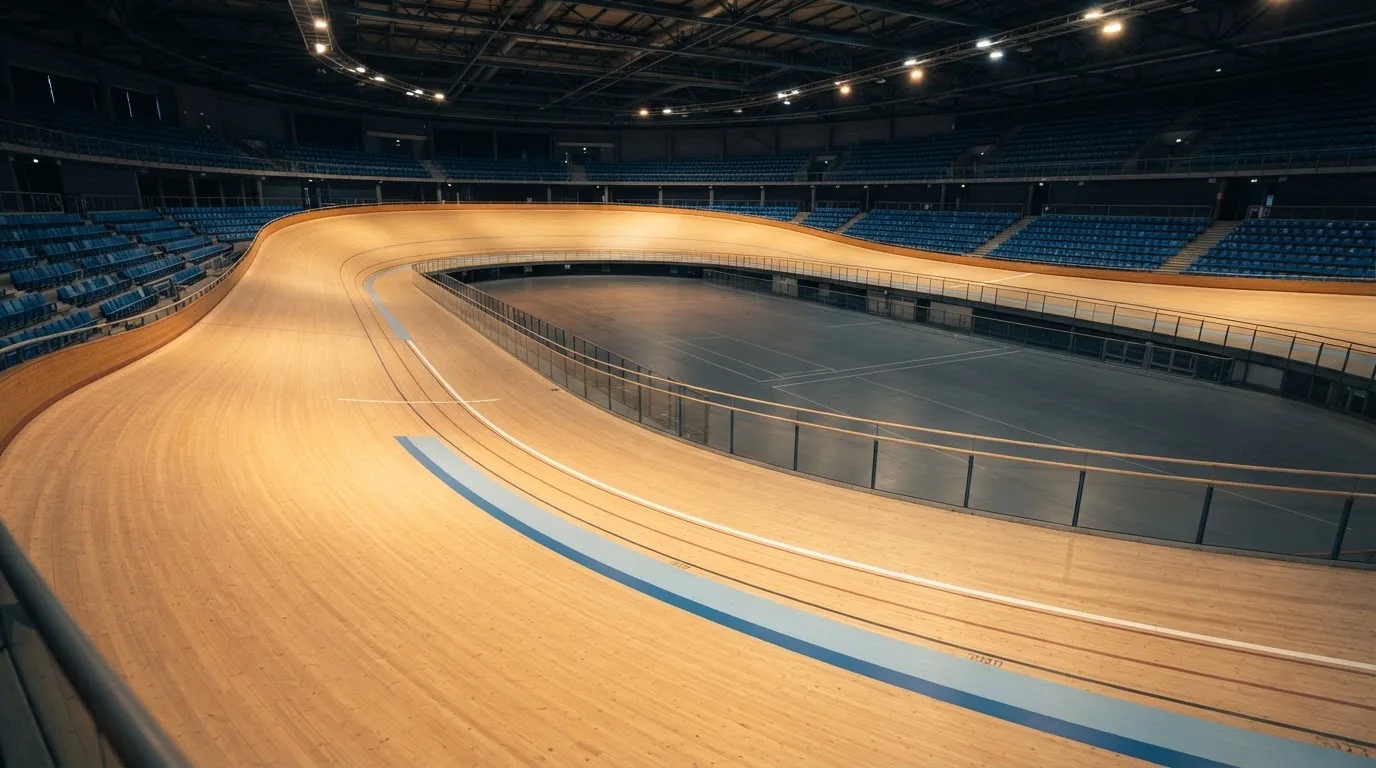
The sport is unusual in two ways a punter should notice before placing anything. First, a stage race is not a single event with a clear result: it is three weeks of small events whose outcomes stack into a final general classification, and most bookmakers offer markets on both — the stage winner, the GC winner, the points jersey, the King of the Mountains, the young rider classification, the team classification, the head-to-head between two named riders for the whole race, and combinations of all of the above. Second, the field is enormous: twenty-three teams of eight riders started the 2026 Tour de France, with twenty-one stages covering 3,245 kilometres from Barcelona to Paris, and a bookmaker’s price list for a Tour stage typically carries over a hundred names. A price list that size is not a hand-priced exercise; it is built by a feed and trimmed by traders, and that is one reason the margin is wider than in a Premier League match.
For the punter the take-away is short. Cycling is a high-margin sport, the field is more measured, and the result carries more variance per stage than a 90-minute football match does per goal. A price is therefore a wider bet to take than the same decimal number on a football match would be, and the rest of this page is mostly about how to read that and what it costs.
What a cycling price list looks like at a UK bookmaker
A pre-Tour price list from a UK bookmaker runs to several pages: outright winner, each jersey, stage winner for each stage, head-to-head match bets across stages, in-play markets from kilometre one, and a small but real set of specials (number of stages a British rider wins, whether a particular rider leads after the first time trial, whether the race ends in a sprint on the Champs-Élysées). Most of these are settled on UCI results; a small handful — the speculative specials — are settled on the bookmaker’s own wording, which is why the small print on cycling bets is worth a read.

Markets the bookmakers offer
The starting point for a punter is the outright: who wins the Tour de France in Paris on the final Sunday in July. After that comes the stage markets — twenty-one separate events from a single race — and then the classification markets. The classification markets (points, mountains, young rider) are settled by accumulated time or accumulated points across the whole three weeks, and they have their own jerseys to match. A bet on the King of the Mountains is a bet on who collects the most mountain points across twenty-plus stages, not on who wins any one mountain stage. That is the kind of distinction that turns a winning position into a losing one when the result comes in.
Below the outright and the classifications sit the head-to-heads. A head-to-head between two named riders over a whole race is a market of its own: which of the two finishes higher in the GC, decided on the final classification in Paris, with dead-heat rules if they finish on the same time. Within a stage, head-to-heads reduce to who crosses the line first of the two named riders; the rest of the field is irrelevant. These markets tend to carry the smallest margin on the price list, because they are two-way and easy for a trader to set.
Markets the punters actually bet on
A bookmaker’s price list is not the same as the markets that move the betting line. Outrights on the GC take the largest stake by a margin, because the race is a national event and a Tour winner is the bet that earns the pub conversation. Stage markets take volume too, particularly on the mountain stages, the time trials and the final stage on the Champs-Élysées (a sprinters’ stage for ninety-nine years, and a bookmaker will tell you so on the day). Classification markets take less volume than the books might hope, because the points and mountains jerseys are settled on rules a casual punter has not read. In-play markets have grown across the last decade as the live picture improved; a puntier can back a rider during a mountain stage with the race on a stream in another window, and most UK bookmakers now offer cash out on those positions.
The market that costs the most per pound staked is the one with the widest margin, and in cycling that is usually the stage winner market on a flat or sprint stage — the field is large, the form book is thin, and the favourite is rarely shorter than 3/1 (4.00). The cheapest is usually the two-way head-to-head and, on bigger races, the outright on a very short favourite: the favourite’s price has the rest of the book written around it, and the margin on that single line is often slimmer than the market as a whole.
How a bookmaker builds a cycling price
A price is a guess, and a margin. The guess says a particular rider has, say, a 25 per cent chance of winning the stage; the margin says the bookmaker wants to keep, say, 6 per cent of every pound staked on the market regardless of who wins. The two combine into a number the punter sees.
The margin is mechanical. For a two-way market, take the reciprocal of each decimal price, add them together, and the result is the share of every pound staked that the bookmaker pays back to winning punters in the long run. The rest, one minus that sum, is the margin — the slice of the pound the bookmaker keeps on every settled market. For a two-way market priced at 1.90 / 1.90, the reciprocal of each price is 1 ÷ 1.90 = 0.5263…, so the sum is roughly 1.0526. The payout share is the inverse of that, 0.9501, and the margin is 1 − 0.9501 = 0.0499, or just under five per cent. A two-way market at 1.85 / 1.85 has a wider margin, around eight per cent; a market at 1.95 / 1.95 has a tighter one, around two-and-a-half per cent. The wider the margin, the worse the price is for the punter in the long run, and the harder it is to come out ahead over hundreds of bets.
Cycling markets are not two-way, and they are rarely priced symmetrically. A stage winner market with 150 named riders carries 150 prices, and the sum of their reciprocals — across the field that has a non-trivial chance of winning — gives the book’s overround, with the rest of the names priced for fun rather than for a serious stake. The margin on the active part of a cycling stage market sits between seven and twelve per cent on most UK books, which is materially wider than the margin on a Premier League 1X2 market (typically three to six per cent) and one reason a cycling punter loses more per pound staked than a football punter over the long haul.
The guess is harder to describe. A trader’s price on Tadej Pogačar for the 2026 Tour outright at the start of the race was driven by recent form, the route, the team around him and the history of favourites in this race. That guesswork is what we mean by “the price reflects the chance the bookmaker thinks is right” — and it is worth saying that the bookmaker’s view of chance is not the same as the true chance, because the margin is already inside the price. The 4/1 (5.00) shot the bookmaker offers on a rider the trader thinks has a 20 per cent chance of winning is, in reality, a price that implies a 16.7 per cent chance after the margin — that is, a 20 per cent guess dressed as a 16.7 per cent chance so that the book keeps its cut over the long run.
Reading a cycling price in fractional and decimal
UK bookmakers write their prices in fractions: 5/1, 11/4, evens, 6/4. The convention is that the first number is the profit per unit staked, and the second is the unit stake itself. At 5/1, a stake of £1 returns £5 of profit plus the £1 stake back, a total of £6. At evens (1/1), a stake of £1 returns £1 of profit plus £1 back, total £2. At 6/4, a stake of £4 returns £6 of profit plus £4 back, total £10.
The decimal form is the same number written as a single figure, and the arithmetic to get there is one step: a/b in fractions is (a ÷ b) + 1 in decimals. So 5/1 is 5 ÷ 1 + 1 = 6.00, 11/4 is 11 ÷ 4 + 1 = 3.75, evens is 1 ÷ 1 + 1 = 2.00, and 6/4 is 6 ÷ 4 + 1 = 2.50. The decimal price is the total returned per unit staked, including the stake. To work out the return on a winning bet, multiply the stake by the decimal price. To work out the profit (the part of the return that was not your stake), multiply the stake by the decimal price minus one. A £10 stake at 6.00 returns £60, of which £50 is profit; a £10 stake at 2.50 returns £25, of which £15 is profit. The two forms describe the same price, and a punter who is comfortable in one form reads the other with a moment’s work.
Fractional prices are also written as “odds-on” (shorter than evens, so 4/6, 5/4, 10/11) and “odds-against” (longer than evens, so 6/4, 5/1, 20/1). A punter backing an odds-on favourite is staking more than they stand to win; a punter backing an outsider is staking less than they stand to win. The cycling outright market at the start of the 2026 Tour saw Tadej Pogačar go off at a short price (odds-on in the eyes of the market), and a long tail of outsiders at odds-against prices up to 500/1.
What the margin costs the punter on a cycling bet
The margin is the difference between the price the punter sees and the price they would see at a fair book — a book that pays out exactly the stake and the profit, with no commission. On a two-way market priced at 1.90 / 1.90, the punter is paying roughly five pence in every pound staked for the privilege of having the bet taken. On a cycling stage market with a typical seven-per-cent margin, the cost is roughly seven pence in the pound. Across a season of cycling bets, that is the long-run drag on the punter’s bankroll.
The cost shows up in two ways that are useful to think about. The first is on a single bet: a punter who takes a price with a seven-per-cent margin is, on average, paying seven per cent of their stake for the bet. The second is across many bets: a punter who backs a hundred £10 singles at an average price of 4/1 (5.00) on a market with a seven-per-cent margin is staking £1,000 and, if the prices are fair apart from the margin, will see roughly £930 back over the long run — a £70 loss across the hundred bets, the cost of having the bookmaker take the bets in the first place. The bettor needs an edge over the bookmaker’s traders to overcome that, and finding one on cycling is harder than finding one on football, because the form book is shorter, the in-race data is sparser, and the bookmakers themselves have grown sharper on the sport over the last five years.
The one place a punter can move the cost down is on the head-to-heads. A two-way head-to-head between two named riders is the cheapest market on a cycling price list — typically two to four per cent margin, closer to a Premier League margin than to a stage winner margin. The market is easier for the trader to set (two riders, two outcomes) and easier for the punter to read (one question: who finishes higher in the GC, or who crosses the line first). The narrower margin is one of the reasons head-to-heads are the right place to start on a cycling price list, before the outrights and the stage markets.
The legal frame: a Gambling Commission licence, what it does and what it does not
UK-facing bookmakers and betting exchanges hold a licence from the Gambling Commission under the Gambling Act 2005. Since the Gambling (Licensing and Advertising) Act 2014, an operator whose remote facilities are used in Great Britain needs a Commission licence wherever it is based; a Curaçao, Maltese or Gibraltar licence is not a substitute, and neither is a Northern Irish one (Northern Ireland is outside the 2005 Act). The Commission’s public register lists every licensee by business name, trading name, domain and account number, and the register is the whole test of whether a brand is licensed for Great Britain. A punter checks a brand by searching the register for the trading name or the domain.
The licence types are five: remote general betting standard (real events), remote general betting standard (virtual events), remote general betting limited, remote pool betting and remote betting intermediary (the licence for betting exchanges). The featured set on this page sits across the first four of those, with Matchbook holding a betting intermediary licence for its exchange. Each of the ten operators named below holds a remote licence for real-event betting against the Commission’s public register.
What the licence does. The Gambling Commission enforces a set of licence conditions and codes of practice (LCCP) on its licensees. The conditions cover customer identity verification before the first deposit (since 7 May 2019, including for free bets and bonuses), social responsibility, marketing, and complaints handling through approved dispute-resolution bodies. The minimum age to bet with a licensed operator is 18, and the operator verifies the punter’s name, address and date of birth before letting them deposit or place a bet. The credit-card ban has been in force for gambling in Great Britain since 14 April 2020 and covers credit-card-funded payments through an e-wallet; debit cards and bank-based payments are not covered. GAMSTOP, the national multi-operator self-exclusion scheme, is a mandatory licence condition for online operators since 31 March 2020.
What the licence does not do. It does not set a maximum stake on a sports bet: the Commission sets no stake cap, and operators set their own maximums and may restrict customers. It does not set a maximum bonus value or a maximum welcome package; the current bonus cap, in force since 19 January 2026, is on the wagering requirement (10x the bonus — a £10 bonus at 50x would have meant £500 of bets; under the cap no more than £100), and on mixed-product promotions (an offer that requires gambling on two or more product types, such as “bet on football to get free spins”, is banned). It does not list permitted sports or markets — there is no statutory list — so a bookmaker offering a market on the number of stages a British rider wins at the Tour is doing so under its own licence, not under a separate statutory permission. The licence does not regulate financial spread betting; the FCA regulates that, and Spreadex holds both an FCA authorisation for spread betting and a Gambling Commission licence for its fixed-odds side.
Where the bonus and promo rules bite on a cycling punter
The bonus cap of 19 January 2026 sits on the wagering requirement, not on the headline figure. A welcome offer advertised as “100% matched up to £100” can still be advertised that way; the change is what the punter has to do to clear it. Under the cap, a £100 bonus carries a £1,000 turnover requirement at most; without the cap, an aggressive operator might have asked for £5,000 of qualifying bets before the bonus funds were withdrawable. The cap is on the operator, not on the punter — but it lands on the punter, because the operators tighten or loosen their offers around it, and a punter looking at a sports welcome package in 2026 is looking at one shaped by the cap.
The mixed-product ban is the rule that matters most for the cycling punter who is also tempted by a casino side. An offer that says “deposit and bet £10 on cycling, get 50 free spins on the slots” is now banned; the operator cannot tie the cycling bet to a casino reward in that shape. The bonus on the cycling side stands on its own, and the casino side (if any) is a separate offer with its own terms. A punter who wants both should claim them separately, read each set of terms, and treat them as two independent decisions rather than one bundled product.
Free bets are not part of the wagering cap in the same way as cash bonuses, and the position on whether the cap applies to a free bet with no wagering condition is not established. What is established is the shape of the offer: a free bet whose stake is not returned with a win is the typical shape, and the value of that free bet to the punter is the free-bet amount multiplied by (the decimal odds minus one) divided by the decimal odds, scaled by the payout share of the market it is used on. A £10 free bet at 4/1 (5.00) on a market with a 95 per cent payout share is worth roughly £7.60 to the punter on average — the £50 of profit the bet would earn on a winning bet, scaled by the 80 per cent chance the bet would need to win to be fair at 5.00 (1 ÷ 5.00 = 0.20), and then scaled again by the 95 per cent payout share. The stake is not paid back on a win, and the offer is worth zero on a loss. That is what a “free bet” actually costs the reader who takes it, and it is the shape to compare across offers rather than the headline figure.
Responsible gambling: the safer gambling tools on a licensed cycling bet
A GB-licensed bookmaker runs GAMSTOP, offers a national self-exclusion option with periods of six months, one year, five years, or five years with auto-renewal, and after the minimum period the exclusion stays in place for a further seven years unless the punter asks GAMSTOP to remove it. GAMSTOP covers online sites and apps; betting shops use a separate service. The licensed operator also runs deposit limits — a gross deposit limit on a fixed time frame, with the first changes in force since 31 October 2025 and a second phase postponed to 30 September 2026 — and the punter sets those limits themselves. There is no state-set deposit or loss ceiling for betting; the limits are the punter’s choice, and a punter who wants a tighter ceiling sets one.
The financial vulnerability check is a public-record check, not an income check and not a credit reference check. It applies to licensed remote betting when a punter’s deposits minus withdrawals exceed £150 in a rolling 30 days, in force since 28 February 2025, and the operator runs a public-record check for things like a bankruptcy or a county court judgment. The “affordability checks” of the press are different: the financial risk assessments the Commission has announced, with a phased plan from 7 July 2026, and no start date. The distinction matters for the punter’s view of what the operator is doing — a public-record check at £150 of net deposits is not the same as an income check at a higher threshold, and the second has not started.
Help for a punter whose betting has stopped being fun sits outside the bookmaker. GamCare runs the National Gambling Helpline; GambleAware funds treatment and education; the NHS runs gambling clinics; Gamblers Anonymous runs meetings. A licensed bookmaker will signpost those in its safer-gambling area, and a punter who has self-excluded through GAMSTOP cannot reverse that decision for the minimum period. The point of those tools is to be used early; a punter who feels their betting is no longer under control has options that do not require telling the bookmaker first.
Cycling itself: what the punter is betting on
Cycling in the betting sense is the road calendar. The UCI governs it, the WorldTour sits over the major races, and the Grand Tours are the three that carry the betting volume. The Giro d’Italia runs in May, the Tour de France in July, the Vuelta a España in August-September. Each race lasts 15 to 23 days under UCI rules, usually with two rest days, and each finishes with a general classification winner wearing the jersey of the race. Outside the Grand Tours, the major one-week stage races (Paris-Nice, Tirreno-Adriatico, Critérium du Dauphiné, Tour de Romandie, Itzulia Basque Country, Volta a Catalunya, Tour de Suisse) carry their own price lists, as do the five Monuments of one-day racing (Milan-San Remo, Tour of Flanders, Paris-Roubaix, Liège-Bastogne-Liège, Il Lombardia). The men’s and women’s calendars are both priced by major UK books, with the women’s calendar growing across the last decade and the World Championships run separately for men and women by the UCI.
The 2026 Tour de France ran from 4 to 26 July, starting in Barcelona with a team time trial and finishing on the Champs-Élysées in Paris, over 21 stages covering 3,245 kilometres with 23 teams. Tadej Pogačar, riding for UAE Team Emirates, won for the fifth time. That was the race the UK market spent three weeks pricing; the 2026 Giro and the 2026 Vuelta bookended it, and the 2027 calendar opens with the Australian summer races in January. A punter who prices cycling as a year-round sport is pricing the Grand Tours as the centre of it, with the spring Classics and the late-summer Vuelta as the second tier.
The 2026 Tour is also the race that taught the punter one lesson about cycling betting that the form book does not teach. A leading rider in the GC is one bad day away from losing the jersey, and a rider ten minutes back is one good day away from winning it. A pre-race outright at 4/1 (5.0) on a top favourite looks generous until the race reaches the mountains, and the bookmaker’s price during the race is a different price from the one at the start. In-play markets reward the punter who has watched the race; pre-race markets reward the punter who has read the route and the form book in detail. Neither is a softer touch than the other; both carry the same margin, and both cost the punter the same in the long run.
The featured operators
The ten bookmakers and exchanges below are listed on the Gambling Commission’s public register against a remote general betting standard (real events) licence for Great Britain, and (for Matchbook) a remote betting intermediary licence. The set is not a ranking and not a recommendation; it is the licensed set the page reviews for the subject at hand. Each brand below describes an operator with a published UK-facing product; the comparison column gathers the licence number and the brand’s own published stance on cycling markets where the brand’s own terms state one. Where the brand’s terms do not address the subject, the column reads with the no-data marker rather than a guess.
| Brand | Gambling Commission remote licence and holder | Position on cycling markets from the operator’s own terms |
|---|---|---|
| DragonBet | 064908-R-339041-003 (Commission account 64908), held by DragonBet Ltd | DragonBet’s published app lists Welsh football and rugby, racing, American football, in-play and bet-builder markets; the cycling price list is not separately documented in those materials |
| Fafabet | 057385-R-333191-006 (Commission account 57385), held by Taichi Tech Limited | Fafabet’s published terms describe Best Odds Guaranteed on UK and Irish horse racing win and each-way bets from 9am on race days; the cycling price list is not separately documented in those materials |
| Betboro | 044181-R-324363-007 (Commission account 44181), held by Webmedia Development N.V. | Betboro’s published welcome offer is a 100% matched free bet of up to £25 on the first qualifying wager, requiring a debit-card deposit of at least £10 and a first bet of £5 to £25 with at least three selections each at 3/5 (1.60) or higher; cycling markets are offered under the standard real-events licence and are not separately described |
| Matchbook | 039504-R-319407-024 (Commission account 39504), held by Triplebet Limited, with a remote betting intermediary category on the register | Matchbook operates as a betting exchange where customers bet against other users, with Bet Builder, multiples, in-play betting and live streaming of horse racing and greyhounds; cycling is offered on the exchange under the standard real-events categories |
| Spreadex | 008835-R-104580-022 (Commission account 8835), held by Spreadex Limited, with separate FCA authorisation for financial spread betting | Spreadex combines fixed-odds and spread betting in one app, with one-click, auto and partial cash out, Bet Builder across fixed odds or spreads, and live streaming of UK and Irish horse racing, greyhounds, tennis, NFL and selected football; cycling is offered on the fixed-odds side and the firm states that spread betting losses can exceed the deposit |
| DAZN Bet | 048756-R-327274-019 (Commission account 48756), held by DZBT Limited | DAZN Bet’s published deposit terms start at £5 by debit card, Apple Pay, Paysafecard, Trustly and Skrill, and at £20 by PayPal, with no processing fees; the cycling price list is not separately documented in those materials |
| Bet Ahoy | 100094-R-341742-003 (Commission account 100094), held by Bet Ahoy Ltd | Bet Ahoy’s published welcome offer is “Bet £10 & Get £10 in Free Bets”, split into a £5 sports bet and a £5 acca; the cycling price list is not separately documented in those materials |
| London Bet | 066162-R-340278-004 (Commission account 66162), held by Thistle Bet Limited | London Bet’s published app combines sports betting (football, tennis, horse racing, greyhounds, darts, golf, cricket, NFL, NBA, MLB, snooker) with Pragmatic Play casino slots and live in-play betting; cycling markets are not in the published list of sports |
| 10bet | 043173-R-322899-023 (Commission account 173), held by Blue Star Planet Limited | 10bet’s published sportsbook covers football, tennis and horse racing, with Cash out, Bet Builder and Live Streaming; cycling markets are not in the published list of sports |
| Hollywoodbets | 053028-R-330019-013 (Commission account 53028), held by Hollywoodbets International UK Limited | Hollywoodbets’ published welcome offer is a stake-back free bet of up to £30 on a first qualifying losing accumulator (stake £10+, 3+ legs, odds of 4/1 or greater, settled within 7 days); cycling markets are not in the published list of sports |
The column on cycling markets reads thin because the cycling price list is the part of each operator’s product that is least likely to be documented in the same terms as the welcome package or the deposit page. A punter checks the cycling side of a brand by opening the brand’s site, navigating to the cycling tab on the sportsbook, and reading the small print on the outright and the stage markets — particularly the dead-heat rules on head-to-heads and the settlement rules on classification markets. The page above does not guess where the documentation has not landed.
What this table does and does not say
The licence column says who holds the licence against which of these on the Commission’s public register, and the holder column names the corporate entity. The register is the test; the domain column above is the address for the punter’s own check rather than for the page. The position column quotes what each operator’s own terms or app page says on the subject, and where those materials do not address cycling specifically, the column reads with the no-data marker rather than a guess. The page does not rank the brands; a licence is not a recommendation, and a cycling punter who is choosing between Betboro, Hollywoodbets and Matchbook is choosing between a matched free bet with a wagering requirement, a stake-back free bet on a losing position, and a betting exchange where they bet against other users — three different products, none of which is “the right one” without knowing how the punter wants to bet.
Cycling betting odds in 2026: what to look at before placing a bet
Three checks are worth making before any single betting on a single stage of a single Grand Tour. The first is the licence. The brand is on the Gambling Commission’s public register; the punter searches by domain or by trading name, and the entry shows the licence number and the holder. If the brand is not on the register, the punter has no GAMSTOP coverage, no Commission complaints route, no approved dispute-resolution body, and no British consumer redress if funds are withheld. The Commission’s enforcement against unlicensed operators is disruption rather than blocking, and the punter who bets with one of them is taking that bet unprotected.
The second is the price and the type of bet. The price is the decimal number the slip shows, and the type of bet is the shape of the offer on top of it. A free bet, a stake-back on a loss, a boosted odds line, and an acca-insurance line are four different products, and the cost of each is in the small print rather than the headline. A free bet whose stake is not returned on a win costs roughly the free-bet amount times (the decimal odds minus one) divided by the decimal odds, scaled by the payout share of the market — typically worth around 75 to 80 per cent of the free-bet amount at the prices most free bets are struck at. A stake-back on a loss is a refund on the loss position, not a free hit at the win position, and the cost is the value of the refund times the chance the bet loses. A boosted odds line is the headline number with the margin enabled, and the cost is the difference between the boosted price and the un-boosted price times the stake. Acca insurance is the refund of the stake if one leg of a multiple loses, with the cost calculated from the probability of that event occurring.
The third is the market the bet sits inside. The margin on a cycling stage winner market is wider than the margin on a Premier League 1X2, and the wider margin is the cost the punter is paying for having the bet taken. The cheapest market on a cycling price list is the two-way head-to-head, the most expensive is the stage winner on a flat stage with a large field, and the outright on a very short-priced favourite sits somewhere in between. A punter who is choosing where to start on a cycling price list is well advised to start on the head-to-heads, because the margin is narrower and the question is easier to read.
Frequently asked questions about cycling betting odds in Great Britain
How do you bet on cycling?
Cycling bets at a UK bookmaker sit on the cycling tab of the sportsbook and are settled on UCI results. The most common bet is the outright on the GC winner of a Grand Tour, settled on the final classification in Paris (or Rome or Madrid). The second most common is the stage winner, settled on the stage finish. Beyond those are the classification markets (points, mountains, young rider), the head-to-heads between named riders, and the specials (number of stages a nation wins, whether the race ends in a sprint on the Champs-Élysées). The bet is placed in the same way as any other sports bet: pick the market, pick the selection, type the stake, confirm the slip.
Can you bet on cycling in Great Britain?
Yes, at any bookmaker or betting exchange licensed by the Gambling Commission for Great Britain. There is no statutory list of permitted sports or markets, so cycling is offered under the standard real-events licence, and a licensed operator is free to offer a price list on any UCI-sanctioned race. A Grand Tour is the biggest market by stake volume; the WorldTour one-week stage races are the next; the women’s calendar is smaller but growing; the domestic British calendar is a small side-market. A punter who wants to confirm a brand is licensed checks the Gambling Commission’s public register for the brand’s name or domain.
How can a punter check that a bookmaker holds a Gambling Commission licence?
The Commission’s public register can be searched by business name, trading name, domain or account number. The punter types the trading name or the domain into the search field and confirms the entry shows a remote general betting standard (real events) licence (or a remote betting intermediary licence for an exchange), with the licence number, the holder’s name and the categories on the licence. If the brand is not on the register, the brand is not licensed for Great Britain, regardless of any other licence it holds. The register is the test; any other source of licence information (the brand’s own footer, an affiliate page, a comparison page) is a claim that the register can confirm or refuse.
How is the return on a bet worked out from the stake and the odds?
The return is the stake multiplied by the decimal odds. A £10 stake at decimal odds 6.00 returns £60, of which £50 is profit and £10 is the stake returned. A £10 stake at decimal odds 2.50 returns £25, of which £15 is profit and £10 is the stake returned. The decimal odds are written as a single figure (6.00, 2.50, 1.50) and the stake is written separately. The profit is the return minus the stake, and the return is the stake plus the profit. For a combination bet (a double, a treble, an accumulator) the decimal odds of the legs multiply into one price, and the stake is multiplied by that single price to give the return.
What is the bookmaker’s margin and how can it be seen in the odds?
The margin is the slice of every pound staked that the bookmaker keeps on every settled market, in the long run. It is mechanical: for a two-way market, take the reciprocal of each decimal price (1 divided by the price), add them together, and the result is the share of the pound paid back to winning punters in the long run. The margin is one minus that sum. A two-way market priced at 1.90 / 1.90 has a margin of just under five per cent; a market priced at 1.85 / 1.85 has a margin of about eight per cent; a market priced at 1.95 / 1.95 has a margin of about two-and-a-half per cent. A cycling stage winner market with 150 named riders has a margin calculated the same way, summed across the field that has a non-trivial chance of winning, and it sits between seven and twelve per cent at most UK books. The wider the margin, the more the punter is paying per pound staked.
How do fractional odds such as 5/1 convert to decimal odds such as 6.00?
Fractional odds a/b become decimal odds (a ÷ b) + 1. So 5/1 becomes 5 ÷ 1 + 1 = 6.00, 11/4 becomes 11 ÷ 4 + 1 = 3.75, evens (1/1) becomes 1 ÷ 1 + 1 = 2.00, and 6/4 becomes 6 ÷ 4 + 1 = 2.50. The decimal price is the total returned per unit staked, including the stake; the fractional price is the profit per unit staked on top of the stake. A £10 stake at 6.00 returns £60; a £10 stake at 5/1 returns £60 of which £50 is profit. The two forms describe the same price, and the conversion is the same in every direction.
Combat & motorsport – Accumulator
Content created by the «Accumulator» team
