
Curling betting odds 2026: what the price actually pays a British bettor
 Available in US
The price on a curling match is the smallest, most quoted thing on this page. The cost of taking that price sits just behind it, and on this subject the two rarely agree. Curling runs through the winter calendar in Great Britain: the World Men’s and World Women’s Championships in spring, the European Championships in the autumn, the Grand Slam events between them, and the Olympic Winter Games once every four years. Each one feeds bookmakers a week or two of outright, handicap and correct-score markets, and the prices on those markets sit on a margin that is rarely named aloud. The aim of this page is to name it, rank ten British bookmakers against it, and set out what a stake and an odds figure actually pay out — including where a price hides a cost a bettor does not see until later.
A useful comparison checks the same things across the same operators at the same moment. The current data is checked against the Gambling Commission’s public register of licence holders and operators’ own published terms as of 26 October 2026.
The ten licensed bookmakers compared
The market for curling in Great Britain is a thin shelf inside a much larger sportsbook. Not every operator prices it, and the ones that do are not equally active when the season is quiet. What sits below is the comparison that holds year-round: who holds a Gambling Commission remote licence, what category of licence they run, and what their own published terms say about markets, live betting, and pricing features that matter on a niche sport. Curling coverage is addressed inside each write-up rather than as a separate column, because no public source publishes a flat list of which bookmaker prices each tournament.
What was checked, and against what
Every brand below was checked against the Gambling Commission’s public register for a current remote general betting standard (real events) licence, and against each operator’s own terms page or app-store listing for the market, feature and offer details stated in the write-up. The Commission’s register is the only place a licence is proved or disproved: a domain alone proves nothing (licensed operators use .com and .co.uk alike), and a brand marketing itself as “UK licensed” without a register entry is making a claim the register settles. Where a brand’s app-store listing is cited, the listing is reproduced for the support and offer wording it states on the date given.
| Brand | Gambling Commission remote licence (account) and licence holder | What the operator’s own terms state on curling coverage, live betting and pricing features |
|---|---|---|
| BetMGM | 039198-R-319450-029 (account 39198) — LeoVegas Gaming PLC | Welcome structure for new UK customers on a £10+ deposit and a first sports bet within 7 days; acca-style free bets with a 7-day validity |
| Star Sports | 009177-R-104555-019 (account 9177) — Star Racing Limited | Phone-trader account opening on 08000 521 321; customer queries by phone and email |
| BetTom | 064959-R-339314-003 (account 64959) — Bet Tom Limited | Two-product welcome structure (sports and casino free funds), 50% back as a free bet of up to £50 on the sports side |
| Betboro | 044181-R-324363-007 (account 44181) — Webmedia Development N.V. | Welcome offer a 100% matched free bet up to £25 on a first qualifying wager of £5–£25, debit-card deposit ≥£10, three or more selections each at 3/5 (1.60) or higher |
| Lottoland | 038991-R-319408-020 (account 38991) — EU Lotto Limited | App combines casino, lottery betting, sports betting and scratchcards under one Gambling Commission licence |
| BetGoodwin | 002927-R-327985-008 (account 2927) — Goodwin Racing Limited | Welcome offer three £5 free bets (single, acca, Sub-Cover) on a £10 qualifying sports bet |
| Betfair | 039439-R-319330-013 (account 39439) — PPB Counterparty Services Limited | In-play, Bet Builder, free live streaming on selected UK and Irish horse racing and football; 90 Minute Payout market |
| Fitzdares | 000400-R-103839-030 (account 400) — Fitzdares Limited | Cash out, accumulators, Lucky 15s, antepost markets on horse racing, football, tennis, rugby, cricket, golf and American football; in-play live odds |
| QuinnBet | 061011-R-335683-004 (account 61011) — QuinnBet (Gibraltar) Limited | Best Odds Guaranteed on UK and Irish horse racing from 10:00 daily on singles, multiples and system bets, capped at £150 per customer per race |
| Bet Ahoy | 100094-R-341742-003 (account 100094) — Bet Ahoy Ltd | Welcome offer two £5 free bets (single and acca) on a £10 qualifying sports bet; site present in the market on a niche-heavy schedule |
How curling betting actually works
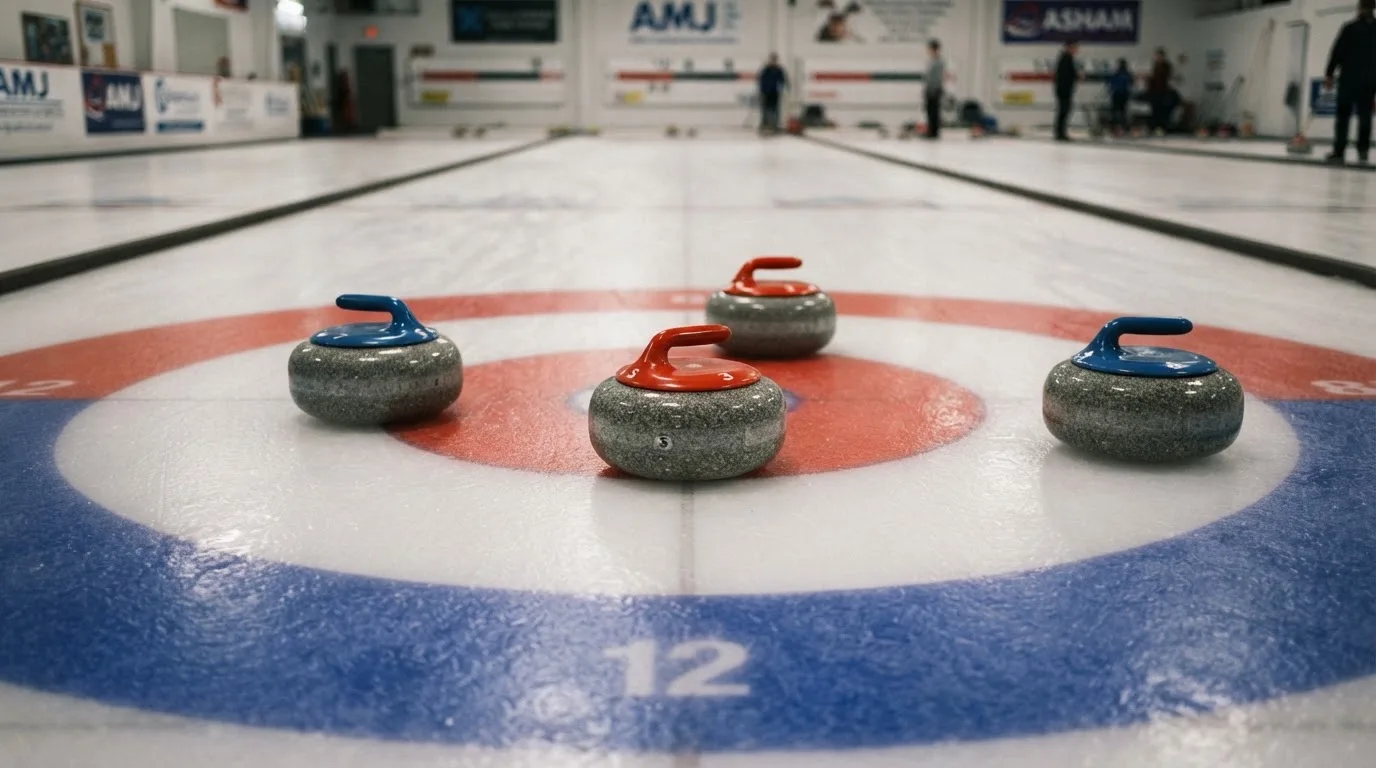
The sport is older than most of the bookmakers that price it. Four players a side, two in the doubles variant, and eight stones each; the houses are circles at the far end of the sheet, the button is the centre, and after all sixteen stones have been thrown the team with the stone nearest the button scores one point for each of its own stones that lies closer to the button than the opponent’s nearest stone — only stones inside the house count. A regulation game runs 10 ends at international level, 8 at some domestic levels, and a tied match goes to an extra end. The hammer, the prized last stone of an end, passes to the team that did not score in the previous end; a blanked end keeps the hammer where it was, which is why blanking an end in the tenth is so often a gamble rather than a default.
For a bettor that sequence produces a small but distinct set of markets. The match outright on a two-way or three-way line; the handicap on stones, where a side starts the game virtually ahead or behind; total points over or under a line set by the trader; correct score after a stated number of ends; leader after one, three, five or seven ends; and on the bigger events, outright tournament winner, group winner, reach the final, and the head-to-heads on individual games inside the bracket. The in-play market on curling runs on the same skeleton — next end winner, next-stone score, total after the next end — and the price moves end by end because the game is built of discrete events a trader can read.
What an odds figure is, on this sport
A price is set in two parts. The first is the bookmaker’s view of which side is more likely to win; the second is the cut the bookmaker keeps of every pound bet, called the margin or overround. The margin is the difference between what a balanced book would pay out and what the prices actually pay out. A balanced book on a two-way market with no margin is two prices of 2.00 decimal (evens); the bookmaker shifts each price down so that the implied probabilities inside them add up to more than 100%, and the gap is the cut.
Curling has fewer priced events than football, and the prices move further between snapshots, partly because the sample is smaller and partly because trader turnover is lower. That is not a reason to mistrust the price; it is a reason to look at the margin rather than the headline. The headline price of 1.91 on a side at 52 % is no better than 1.85 on a side at 54 %, because the price carries the probability and the probability carries the cut.
What the calculation in this page proves
The point of the calculation below is to show the margin hiding inside a price a bettor would actually see. Take an illustrative two-way market priced at 1.90 / 1.90 (9/10 each way). The implied probability of each side is 1 ÷ 1.90 = 0.5263, or 52.63%. Add the two sides and the implied probabilities sum to 105.26%. The payout share — the fraction of every pound bet that returns to winners in the long run — is 1 ÷ 1.0526 = 0.95, or 95%. The overround is 5.26%, and the bookmaker’s margin is 5%. That 5% is what the bookmaker keeps, on average, on every pound bet on this market.
A 5% margin is the lower end of what major sportsbooks charge on mainstream sports; on curling it sits comfortably inside the band a bettor should expect. A two-way price at 1.85 / 1.85 implies 54.05% per side, a payout share of 92.5% and a margin of 7.5%; a price at 1.80 / 1.80 implies 55.56% per side, a payout share of 90% and a margin of 10%. The shape of the comparison is plain: as the price shortens, the implied probability rises and so does the cut, until the cut is the price itself on odds-on favourites. A price of 1.20 / 1.20 implies 83.33% per side, a payout share of 60% and a margin of 40% — the bookmaker keeps forty pence of every pound bet because the favourite is heavy enough to absorb it. The bet on the outsider carries the same margin as the bet on the favourite, because the margin is built into every price on the market, not into one side of it.
A margin is a band, not a single figure, because the bookmaker chooses the margin event by event. The illustrative 1.90 / 1.90 above yields 5%; a 1.85 / 1.85 market on the same game yields 7.5%; a 1.91 / 1.91 yields about 4.7%. The point of stating it as a band with its condition is that no single number captures what a curling book looks like, but a band of 4.7% to 7.5% does.
Reading the price a bookmaker actually publishes
A price of 1.91 on a side and 2.10 on the other does not mean the bookmaker thinks the favourite has a 52.4% chance and the outsider a 47.6% chance; the bookmaker’s true probability lies somewhere under the headline. The relationship is the other way around: the bettor’s implied probability from 1.91 is 52.4%, but the bookmaker’s view is closer to 50%, and the gap is the margin. That gap is not a flaw in the price; it is the price. A bookmaker offering 1.95 / 1.95 on the same game is offering the same probabilities to the bettor but at a thinner margin, which is the only kind of generosity the price can carry.
What this means in practice: a comparison of bookmakers on curling should not ask which book has the highest price, because the highest price on one event can be the lowest on another. It should ask which book runs the thinnest margin on average, and whether that thinness is a habit or a price event put on for marketing. The bookmakers in the comparison below are checked for the licensing and the welcome structure, not for their margin on curling, because no public source publishes that margin event by event; the bettor checks the betting slip, not the comparison.
What the law and the regulator allow
Curling sits inside the general betting framework in Great Britain rather than inside any sport-specific carve-out. The Gambling Act 2005 creates the regime, the Gambling Commission (UKGC) runs it, and a bookmaker accepting bets from customers in Great Britain needs a Commission licence wherever the company is based. Since the Gambling (Licensing and Advertising) Act 2014 that licence has been compulsory at the point of consumption: a Curaçao, Maltese or Gibraltar licence is a corporate registration, not a substitute for a Commission licence. Several brands listed below are run from Gibraltar; the licence that matters for a British customer is the Commission’s, not the company’s home regulator’s.
The Commission’s public register is searchable by business name, trading name, domain or account number, and is the test of whether a brand holds a licence. Every brand in the ranking below was checked against it; the account numbers and licence holders are stated in the table. A licence proves eligibility to take a bet in Great Britain; it does not prove the operator prices curling, runs the markets the bettor wants, or pays out on a disputed result without complaint. Those are operator-side questions, not regulator-side ones.
What an operator may accept a bet on
There is no statutory list of permitted bets or markets in Great Britain. An operator holds a licence for a category — remote general betting standard (real events) is the one that covers curling — and offers markets under its own rules and the Licence Conditions and Codes of Practice (LCCP). In-play betting is offered under the same category; there is no statute restricting it, and the controls on it are the operator’s licence conditions and customer-protection duties. Bets on novelty, politics and entertainment markets are offered by GB bookmakers under the same category, with no statutory prohibition found.
Betting exchanges run under a separate licence category — remote betting intermediary — and a customer placing a back bet or a lay bet on a curling exchange is dealing in peer-to-peer bets inside the operator’s platform, not against the operator itself. The price on an exchange is built from the bets other customers place, with the operator’s commission taken on net winnings. For a niche sport like curling the exchange liquidity is thin, and the price on the sportsbook is usually the only price available; that is a market fact, not a legal one.
Identity, age and the first deposit
Minimum age is 18, and since 7 May 2019 a Commission-licensed remote operator must verify the customer’s name, address and date of birth before the first deposit or the first bet, including with a free bet or a bonus. That check applies to every brand in the ranking below and to every licensed remittance operator in Great Britain. The corollary is that anonymous play is not available at a licensed site; the corollary of that corollary is that an unlicensed site offering anonymous play is offering something a licensed site cannot legally offer, and the reader decides what that is worth.
The Commission has published a staged plan for financial risk assessments — the “affordability checks” of the press — and a separate financial vulnerability check that has been in force since 30 August 2024 for licensed remote betting when a customer’s deposits minus withdrawals exceed £150 in a rolling 30 days. The vulnerability check is a public-record check (bankruptcy, county court judgments and the like); it is not an income check and not a credit reference check. The risk-assessment plan is announced in stages and has no start date as of the date of this page; the page writes that as “announced, staged, no start date”, not as in force.
Credit cards, e-wallets and the payments frame
Credit cards are banned for gambling in Great Britain since 14 April 2020, including credit-card-funded payments through an e-wallet. Debit cards and bank-based payments are not covered by the ban; that is why most licensed operators push the deposit screen towards debit cards, bank transfer and a short list of e-wallets. The ban is at the operator’s payment processor, not at the customer’s bank, and it is enforced by the LCCP rather than by statute.
Whether a particular cryptocurrency is accepted at a licensed operator, and whether a named-account rule applies, are not settled by any source on this page. The page describes payments from each operator’s terms rather than from a regulator’s list, because no such list exists.
Advertising, bonuses and what does and does not appear
Advertising for gambling is not licensed by the Commission; it runs through the CAP Code (non-broadcast) and BCAP Code (broadcast), enforced by the Advertising Standards Authority. The Commission sets marketing conditions on its licence holders separately. CAP Code section 16 makes marketing socially responsible, bans strong appeal to under-18s, and bars anyone who is or seems to be under 25 from appearing as a gambler in an advertisement, with an exception for in-shop placement.
Promotion rules in force since 19 January 2026 cap wagering requirements on bonuses at 10x — a £10 bonus at 50x needs £500 of qualifying bets, and under the cap no bonus may carry more than that. Mixed-product promotions, offers that bundle betting, casino, bingo and lottery into a single qualifying requirement, are banned in the same rule. The cap applies to bonuses; whether it applies to free bets with no wagering condition, and any cap on the money value of a bonus, are not settled by any source on this page, and the page does not state either as a fact.
A welcome offer is described in this page as the operator’s own terms describe it, with the type and the headline number, and never as a recommendation. A welcome offer is not “free money”; it is a marketing line with conditions behind it, and the conditions are the comparison the bettor should make, not the headline. A 100% matched free bet up to £25 with three selections each at 1.60 or higher is a different shape from a 50% back free bet up to £50, and a 4×£10 free-bet bundle is a different shape again.
Tax: what falls on whom
The player pays no tax on betting winnings in Great Britain. General Betting Duty is the operator’s tax on gross profits, currently 15%; from 1 April 2027 a new remote betting rate of 25% applies within it, while remote bets on UK horse racing, bets on self-service betting terminals in licensed premises, pool betting and in-person betting stay at 15%. Whether operators pass that duty on through the odds is not settled by any source on this page, and the page does not state that it is. A professional gambler should ask HMRC or an adviser; that is not advice the page gives.
The offshore comparison, and what an unlicensed site costs
A GB licence is compulsory at the point of consumption. Providing gambling facilities in Great Britain without the licence the Act requires is an offence under section 33 of the Gambling Act 2005 — aimed at the operator, not the customer. The customer who bets at an unlicensed site does not commit an offence under the source consulted for this article; the customer does give up the protections a licensed site is required to provide. No GAMSTOP coverage, no Commission complaints route, no approved dispute-resolution body, no British consumer redress if funds are withheld, no obligation on the operator to follow the 10x bonus cap or the £150 vulnerability check. Honest framing: licensed means checks, limits, GAMSTOP, the bonus cap, and verification before the first bet; unlicensed means none of those protections and a real chance of losing funds if the operator decides not to pay. Neither is “the safe choice” by default; that is a phrase the page refuses to print, because neither is, in any absolute sense.
Enforcement is disruption, not blocking: cease-and-desist notices, search-engine referrals, work with registrars, hosts and payment providers; the Commission has been given, or is about to receive, court-order DNS blocking powers. The page does not write that ISP blocking is in operation, because no source confirms that it is.
Responsible gambling: what the framework actually offers
A licensed British bookmaker is required by the LCCP to participate in GAMSTOP, the national multi-operator online self-exclusion scheme, and every operator in the ranking below is a member. Self-exclusion periods are six months, one year, five years, or five years with auto-renewal; after the minimum period the exclusion stays in place for a further seven years unless the customer asks GAMSTOP to remove it. GAMSTOP covers online sites and apps; betting shops use a separate service, and the page does not describe that here.
A licensed operator must also offer a gross deposit limit on a fixed time frame under RTS 12; the first changes have applied since 31 October 2025, a second phase was postponed to 30 September 2026, and whether it is live as of the date of this page is not settled by any source on this article. State-set deposit or loss ceilings for betting do not exist in Great Britain: the limits are the customer’s choice, the operator’s tooling and the regulator’s licence conditions.
Help is available whether or not the customer has self-excluded. GamCare runs the National Gambling Helpline. GambleAware funds treatment, education and research. The NHS runs gambling clinics in several English regions. Gamblers Anonymous runs meetings. A licensed operator’s safer-gambling page links to each; that is a condition of the licence rather than a kindness.
What the user cannot read on those pages is the cost of a problem before it becomes one. The book’s margin on a curling market is the smaller of two numbers a problem gambler pays; the larger is the stake they did not intend to lose, the chasing bet they did not intend to place, the session they did not intend to extend. The framework above is what stops that second number from getting out of hand, and the bettor who reads it before they need it is the bettor who uses it.
Sports and tournaments: where the curling calendar runs
Curling has a year-round rhythm in Great Britain, even if no single month is dense. The World Men’s Curling Championship runs in the second half of April or in early May, hosted by a World Curling Federation member federation; the World Women’s runs alongside it or in a parallel window. The European Curling Championships run in the autumn, split into A and B divisions and contested over a week. The Grand Slam of Curling runs four events between autumn and spring on the World Curling Tour calendar, and the Olympic Winter Games run once every four years, with mixed doubles added to the medal programme in 2018 after curling became an official Olympic medal sport at the 1998 Winter Olympics.
For a sportsbook, the rhythm shapes which markets are open. World Championships and Olympic Games bring outrights, group markets, head-to-heads and game-by-game prices; the European Championships bring a similar but narrower set; the Grand Slam events bring outrights and game-by-game prices without a national-team angle. Off-season, the men’s and women’s pro tours, the World Mixed Doubles and the seniors’ championships fill a thinner calendar with a thinner set of markets. The bookmaker’s price on a low-tier event can be set days before the game, and that is the bettor’s signal that the market is quiet.
What an outright market looks like on curling
An outright market on a World Championship runs on the field of eight or ten teams, with one price per team and one winner. The implied probabilities on every team add to more than 100%, and the gap is the margin. A field of ten teams with prices averaging 9.00 decimal (8/1) implies 11.11% per team, sums to 111.1%, and the payout share is 1 ÷ 1.111 = 0.90, or 90%, with a margin of 10%. A field of eight teams at an average price of 7.00 (6/1) implies 14.29% per team, sums to 114.3%, and the payout share is 87.5%, with a margin of 12.5%. Outrights carry a heavier margin than game-by-game prices because the field is wider and the liquidity lower; the bettor who can find the same price on the outright and on a series of match-by-match bets should usually take the latter.
What an in-play market looks like on curling
In-play on curling runs end by end. The bookmaker’s price after a blanked first end reflects the hammer holder’s continuing edge; after a two-point end it shifts the other way; after three blanked ends the favourite’s price often shortens because the underdog has not been able to use the hammer. The bets on offer are next-end winner, leader after the next end, total points after the next end, and on some books the next-stone score from a named player. Liquidity is thinner than on football in-play, and the price moves more slowly; a bettor who knows the game and reads the sheet can sometimes find value that the trader has not priced.
What a bet builder looks like on curling
A bet builder on curling is uncommon outside the World Championships and the Olympics; the legs are limited and the markets thin. The bookmakers in the ranking below are checked for in-play, Bet Builder, Bet Builder+, accumulator insurance, acca boosts, cash out and live streaming; the headline features are stated in the write-up rather than the table, because no public source publishes a flat feature list per brand. Where a brand’s own terms describe a curling bet builder, the page describes it; where no such description is found, the page does not state that one is offered.
Stones, weight and the equipment frame
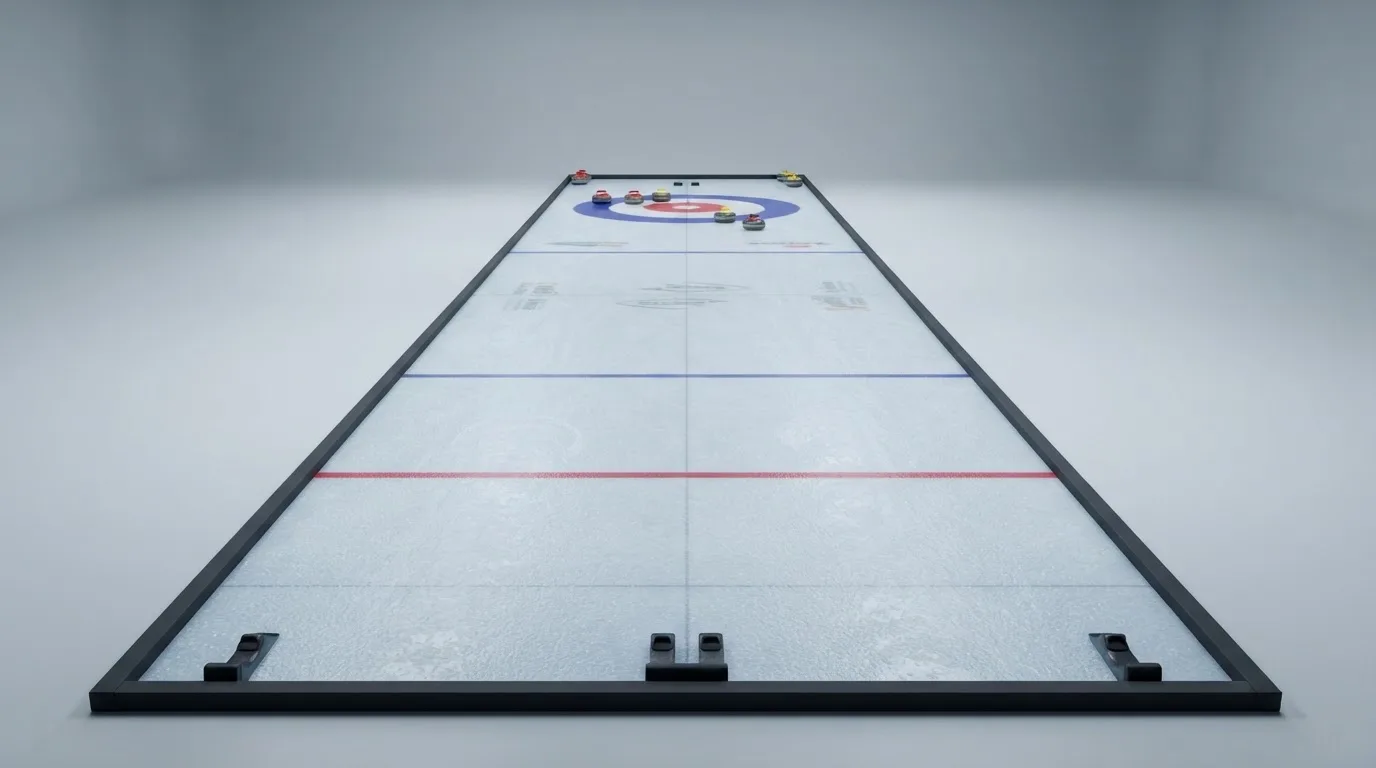
A curling stone weighs between 17.24 and 19.96 kg (38 to 44 lb) under World Curling Federation rules, with a handle on top and a striking band around the waist. The sheet is 44.5 metres long from hog to hog, the houses are concentric circles at each end, and the ice is pebbled to make the stone curl. None of that matters to the bettor except where it affects the bet: a heavily-pebbled sheet favours the team that has trained on it, and a long end-by-end match favours the team with the fresher front end. The bookmakers price the team, not the ice, and the ice is part of what the price already covers.
BetMGM: thin welcome bundle, four-leg acca shape
BetMGM’s UK site runs under LeoVegas Gaming PLC’s Gambling Commission remote licence (account 39198), and the sports welcome offer for new UK customers who deposit £10 or more and place a sports bet within seven days is four £10 free bets — two football accumulators of four or more selections and two sports multiples of two or more — each valid for seven days, with minimum odds and an opt-in required. The shape is a multi-bundle: the bettor has to place four free bets, each one has to clear its own minimum-odds condition, and each one expires inside a week. That is a reasonable structure for a customer who already bets accumulators and football; it is a poor structure for a customer who bets singles or who bets on curling, where the markets are not always four-legged and the prices do not always sit above the minimum.
On curling BetMGM does not publish a flat list of which tournaments it prices; its app and site carry the same market architecture as other sportsbooks, and the price on a World Championship game is published in the same way as on football. The welcome bundle is structured around football accumulators, and a curling bettor will need to pick curling legs into the four-leg structure or use the two-leg multiples for any curling head-to-heads they find. The price on curling is checked on the betting slip rather than on the brand’s marketing page.
What a curling bettor takes from BetMGM is a thin welcome bundle and a familiar sportsbook structure. The cost is the seven-day validity and the minimum-odds requirement, both of which force quick action on legs the bettor has not yet priced. For a bettor with a pre-priced multi in mind, that is workable; for a bettor shopping the welcome as the entry point, the seven days is short.
Star Sports: phone-trader account, niche-shaped book
Star Racing Limited is licensed in Great Britain by the Commission (account 9177) for its UK site, and the brand’s offer to customers is a phone-trader account that opens by calling 08000 521 321, with support also at the email address on the brand’s app-store listing. The shape is closer to a betting shop than a typical online sportsbook: a trader takes the bet by phone, the price is set by the trader on the bettor’s call, and the customer queries run through the same trader line. For a curling bettor that is both the brand’s appeal and its cost: the appeal is a named contact and a price the bettor can negotiate, and the cost is the time on the phone and the lack of a Bet Builder or an acca boost on curling, which the app-store listing does not advertise.
Curling coverage on Star Sports runs through the same trader line as racing, and the price on a curling head-to-head or outright is set when the bettor calls. The welcome offer is described in its own terms rather than the marketing pages; the page does not reproduce a headline number that the operator’s own terms do not state. The bettor who wants a price on curling and is willing to call for it gets a different kind of book; the bettor who wants a Bet Builder and a one-click accumulator should look elsewhere.
The verdict is the shape of the book: a phone-trader brand for a bettor who values a named contact over an in-app accumulator, and a poor fit for a bettor who shops markets on a screen and clicks a price. On curling specifically, the price is the bettor’s to negotiate, and the absence of an in-app price is the cost.
BetTom: split welcome, half sports half casino
Bet Tom Limited holds a Commission remote licence (account 64959) for its UK site, and the sports welcome offer is 50% back as a free bet of up to £50, with a matching 50% back up to £50 as free slot funds for casino play, full terms applying on the brand’s app-store listing. The shape is a two-product welcome: half the headline number is sports free bets, half is casino free funds, and the bettor has to opt into both to take the full headline. A curling bettor who never plays casino is taking the sports half and leaving the casino half behind, which means the headline number is not the number they receive.
The structure is honest about being a cross-sell: the headline is the total, the two halves are the parts, and the curling bettor pays the cost in the form of a sports free-bet amount that is half the headline they might have read. For a bettor who does play casino, the structure is fine; for a bettor who does not, the structure trims the headline. Curling markets on BetTom run through the same sportsbook as on the other brands in the ranking, and the price on a World Championship or Olympic game is published in the standard two-way or handicap format. No Bet Builder or acca insurance is described in the brand’s app-store listing for curling, and the page does not state one as offered.
The verdict on BetTom is the shape of the welcome: a sports-and-casino bundle that suits a customer who plays both, and a trimmed headline for a customer who plays only one. On curling the brand is checked against the licence and the operator’s own terms rather than against a curling-specific feature list, because no public source publishes one.
Betboro: 100% matched free bet, three-leg minimum
Webmedia Development N.V. is licensed in Great Britain by the Commission (account 44181) for its UK site, and the sports welcome offer is a 100% matched free bet of up to £25 on the first qualifying wager, requiring a debit-card deposit of at least £10 and a first bet of £5 to £25 with at least three selections each at 3/5 (1.60) or higher. The shape is a single free bet, but the qualifying bet is a treble or larger at minimum odds 1.60 per leg, which means the first deposit is committed to a multi-leg bet before the free bet is unlocked. A curling bettor who finds a World Championship game with a three-leg match-by-match combination can take the qualifying bet on the same sport; a curling bettor who wants a single-game first bet cannot.
The minimum odds of 1.60 per leg are well below the price of any curling favourite at a World Championship, so the constraint is the number of legs rather than the price. The constraint of three selections is the cost: a curling bettor with a single-game first bet has to lay three games to qualify, and the qualifying bet’s free-bet unlock is independent of whether the qualifying bet wins. The free bet stake is not paid back with a win, which is the standard free-bet shape and what the brand’s own terms describe.
The verdict on Betboro is the qualifying bet’s shape: a free bet unlocked by a three-leg first bet, suitable for a bettor who already had a curling treble in mind, and a poor fit for a bettor whose first bet is a single. On curling the price runs through the standard sportsbook, and the page does not state any curling-specific feature not in the brand’s own terms.
Lottoland: casino, lottery, sports and scratchcards in one app
EU Lotto Limited runs Lottoland’s UK app under a Commission remote licence (account 38991), and the app combines casino, lottery betting, sports betting and scratchcards under one Gambling Commission licence. The shape is a four-product bundle: a customer who downloads the app has access to all four product types, and the welcome offers run across them rather than only on the sportsbook. For a curling bettor that means a sportsbook account inside a custodial-product wallet, and a price on curling inside the same betting slip as a lottery ticket.
The price on a curling game or outright is the same set of numbers the other sportsbooks publish, because the sportsbook is the same kind of product under the same licence. What Lottoland offers that the others do not is the lottery and scratchcard lines, and what it costs the curling bettor is the attention share: an app with four entry points and a wallet that holds four balances is not the focused sportsbook a curling-only bettor wants. The brand’s app-store description does not advertise a curling-specific feature, and the page does not state one as offered.
The verdict on Lottoland is the bundle shape: a four-product app for a bettor who plays lottery and casino as well as sport, and a broader wallet than a curling-only bettor needs. On curling the price is on the sportsbook, and the comparison is to other sportsbooks, not to other lottery products.
BetGoodwin: three £5 free bets, simple shape
Goodwin Racing Limited runs BetGoodwin’s UK app under a Commission remote licence (account 2927), and the sports welcome offer is Bet £10 & Get £15 in Free Bets, made up of a £5 sports bet, a £5 acca and a £5 Sub-Cover bet. The shape is three small free bets of equal size on a £10 qualifying sports bet, with each free bet on a different bet type. A curling bettor can take the £5 sports single on a curling head-to-head, the £5 acca on a curling match-by-match treble, and the £5 Sub-Cover on the same sport if the brand publishes that market. The structure is more flexible than a four-leg bundle because each free bet stands alone and the qualifying bet is a £10 single rather than a multi.
The cost is the size: three £5 free bets on a £10 qualifying stake is a smaller headline than several other brands in the ranking, and the smaller size reflects the bettor’s lower exposure rather than a more generous margin. The qualifying bet’s free-bet unlock does not depend on a winning qualifying bet, and the free-bet stakes are not paid back with a win, which is the standard shape. Curling markets run on the same sportsbook as on other brands, and no curling-specific feature is advertised in the brand’s app-store listing.
The verdict on BetGoodwin is the size: three £5 free bets on a £10 single, simple to use, modest in headline, and a reasonable fit for a curling bettor who wants small stakes and three separate legs. On curling the price is on the standard sportsbook, and the comparison is to other welcome shapes rather than to other margins.
Betfair: in-play, Bet Builder, live streaming
PPB Counterparty Services Limited runs Betfair’s UK app under a Commission remote licence (account 39439), and the app offers in-play betting, Bet Builder, free live streaming on selected UK and Irish horse racing and football events, and a 90 Minute Payout market. The 90 Minute Payout market is football-specific and is not described here; the in-play, Bet Builder and live streaming features apply to the broader sportsbook, and the price on a curling in-play market sits inside the same architecture. The shape is a feature-heavy sportsbook with a Betfair Exchange underneath it, the exchange being the betting intermediary under a separate licence condition rather than the sportsbook itself.
Curling on Betfair runs on the sportsbook rather than on the exchange, because exchange liquidity on curling is thin; the bettor looking for a curling price checks the sportsbook first and the exchange second, and the sportsbook price is usually the only price available. The Bet Builder feature covers mainstream sports in depth and curling in less depth; the page does not state that Bet Builder covers curling, because the brand’s app-store listing does not advertise curling-specific legs for it. Live streaming covers horse racing and football in the UK and Ireland, and curling is not in that list.
The verdict on Betfair is the feature set: in-play, Bet Builder, free live streaming on the listed sports, and a separate betting exchange that does not have curling liquidity. For a curling bettor the price is on the sportsbook, and the exchange is an unused resource. The welcome offer is described in the brand’s own terms, and the page does not state a headline that the operator did not.
Fitzdares: cash out, accumulators, antepost
Fitzdares Limited runs the Fitzdares app under a Commission remote licence (account 400), and the app offers cash out, accumulators, Lucky 15s, specials and antepost markets on horse racing, football, tennis, rugby, cricket, golf and American football, with in-play live odds. Curling is not in that list, and the page does not state that curling markets are priced by Fitzdares’ app; the brand’s app-store listing is the source for the markets list, and the list does not include curling.
For a curling bettor Fitzdares is checked against the licence and the operator’s own terms, and the terms do not describe curling coverage. A bettor who places a curling bet at Fitzdares is asking the trader line for a price, the same way a Star Sports bettor does; the app’s in-app markets list is not the comparison to make. The welcome offer is described in the brand’s own terms, and the page does not state a headline that the operator did not.
The verdict on Fitzdares is the market list: a brand whose in-app markets run on horse racing, football, tennis, rugby, cricket, golf and American football, with curling outside the published list. A curling bettor who wants a price from Fitzdares asks the trader line for one. The licence is current; the markets are not.
QuinnBet: Best Odds Guaranteed on racing
QuinnBet (Gibraltar) Limited holds a Commission remote licence (account 61011) for its UK site, and the brand offers Best Odds Guaranteed on UK and Irish horse racing bets from 10:00am daily on singles, multiples and system bets, with a maximum benefit of £150 per customer per race. The feature is horse-racing-specific and does not apply to curling; a curling bettor gets the standard sportsbook price and the standard sportsbook welcome offer, and the racing feature is a different product. Curling on QuinnBet runs through the same sportsbook as on the other brands, and the price is published in the standard format. The page does not state a curling-specific feature not in the brand’s own terms.
The verdict on QuinnBet is the racing feature: a brand whose headline feature is on racing rather than on curling, and a curling bettor who chooses QuinnBet does so on the sportsbook price and the welcome shape, not on a Best Odds Guaranteed on the sport they bet. The licence is current; the racing feature does not transfer.
Bet Ahoy: £10 to £10, niche-heavy schedule
Bet Ahoy Ltd holds a Commission remote licence (account 100094) for its UK site, and the sports welcome offer is Bet £10 & Get £10 in Free Bets, made up of a £5 sports bet and a £5 acca. The shape is a smaller headline than several other brands in the ranking, and a smaller welcome than the brand’s marketing might suggest. The qualifying bet is a £10 single, and the free bets unlock without a winning qualifying bet. A curling bettor can take the £5 single on a curling head-to-head and the £5 acca on a curling match-by-match double, and the rest of the structure is the standard sportsbook.
Curling on Bet Ahoy runs through the standard sportsbook, and the brand’s app-store listing does not advertise a curling-specific feature. The licence is checked against the Commission’s public register, and the operator’s own terms describe the welcome structure. The page does not state a feature the operator did not, and the price on curling is checked on the betting slip rather than on the brand’s marketing.
The verdict on Bet Ahoy is the welcome shape: a £10 to £10 welcome with a £5 single and a £5 acca, modest in headline and simple in structure. For a curling bettor with a small budget the shape is workable, and for a bettor with a larger budget the headline is small relative to the brand’s competition. The brand is on the niche-heavy end of the comparison, and the licence is current.
What the calculation in the middle of the page is worth
The calculation above — a 5% margin on a 1.90 / 1.90 market, with a payout share of 95% and a band of 4.7% to 7.5% across reasonable price points — is the single piece of arithmetic the page writes down. Its job is to convert a price into a margin and a margin into a number a reader can compare across the ranking. A bookmaker offering 1.91 / 1.91 on a curling head-to-head is offering a margin of about 4.7%; a bookmaker offering 1.85 / 1.85 is offering about 7.5%; a bookmaker offering 1.80 / 1.80 is offering 10%. None of these is “the best” in any absolute sense, because a bookmaker with a thinner margin on one event can have a heavier one on another; the comparison is the average across events the bettor actually bets on.
The 5% figure is the lower end of the band a major sportsbook charges on curling, and a band of 4.7% to 7.5% is what a curling bettor should expect on a two-way game. The band is the comparison: a book at 1.91 / 1.91 sits at the thin end, a book at 1.85 / 1.85 sits in the middle, a book at 1.80 / 1.80 sits at the thick end. The bookmakers in the ranking above do not publish their margin on curling event by event, and the page does not state one. The bettor’s job is the betting slip.
A bet’s return on the same market, for a £10 stake at 1.90, is £10 × 1.90 = £19.00, and the net profit on a winning bet is £10 × (1.90 − 1) = £9.00. A free bet of £10 at the same odds, with the stake not paid back, is worth £10 × (1.90 − 1) ÷ 1.90 × 0.95 = £4.50 on average, where 0.95 is the market’s payout share from the calculation above. That £4.50 is what the free bet is worth on average; it is not what the free bet wins, because a free bet can lose. The free-bet shape is standard, and the number is the average over many bets at that price on that market.
Frequently asked questions about curling betting in Great Britain
How do you bet on curling?
Place a bet on a curling match or tournament through a Gambling Commission-licensed bookmaker’s app or site. The bet types are match outright on a two-way or three-way line, handicap on stones, total points over or under a line set by the trader, correct score after a stated number of ends, leader after a stated number of ends, and outright tournament winner. The price is published in decimal form (e.g. 1.90) or fractional form (e.g. 9/10), and the stake is multiplied by the price to give the return on a win.
Can you bet on curling at a UK-licensed bookmaker?
Yes. Curling is treated like any other real event under a remote general betting standard (real events) licence, and licensed operators may price it under their own rules. Coverage varies: not every bookmaker prices every tournament, and off-season the calendar is thin. Check the brand’s app or site for the events list rather than the welcome offer; the welcome offer marks the entry point, not the menu.
How can it be checked that a bookmaker holds a Gambling Commission licence?
Search the Gambling Commission’s public register by business name, trading name, domain or account number. The register is the only place a licence is proved or disproved. A brand marketing itself as “UK licensed” without a register entry is making a claim the register settles. The account number on the register matches the account number in the table on this page for every brand in the ranking.
How is the return on a bet worked out from the stake and the odds?
Return = stake × odds (decimal). Profit = stake × (odds − 1). A £10 stake at 1.90 returns £19.00 and pays £9.00 profit. A combination bet’s odds are the legs multiplied together. A free bet’s stake is usually not paid back with a win, so the value is stake × (odds − 1), not stake × odds.
What is the bookmaker’s margin and how can it be seen in the odds?
The margin is the cut the bookmaker keeps of every pound bet on a market. Add the implied probabilities of every outcome (each is 1 ÷ odds), then subtract the result from 100%. A two-way market at 1.90 / 1.90 implies 52.63% + 52.63% = 105.26%, and the overround is 5.26%, which makes the margin 5%. The thinner the margin, the more a winning bet pays in the long run.
How do fractional odds such as 5/1 convert to decimal odds such as 6.00?
Add 1 to the fractional odds’ first number divided by its second: 5/1 → 5 ÷ 1 + 1 = 6.00. 11/4 → 11 ÷ 4 + 1 = 3.75. 9/10 → 9 ÷ 10 + 1 = 1.90. The conversion holds for any pair; the decimal form is the same number the bookmaker publishes, and the fractional form is the same number written as a ratio.
Tennis, darts & cue sports – Accumulator
Content created by the «Accumulator» team
