
Betting on corners in the UK: markets, margin and the licensed sites that offer them
 Available in US
Data current as of 26 October 2026, verified against the UK Gambling Commission’s public register and the operator terms each card is taken from.
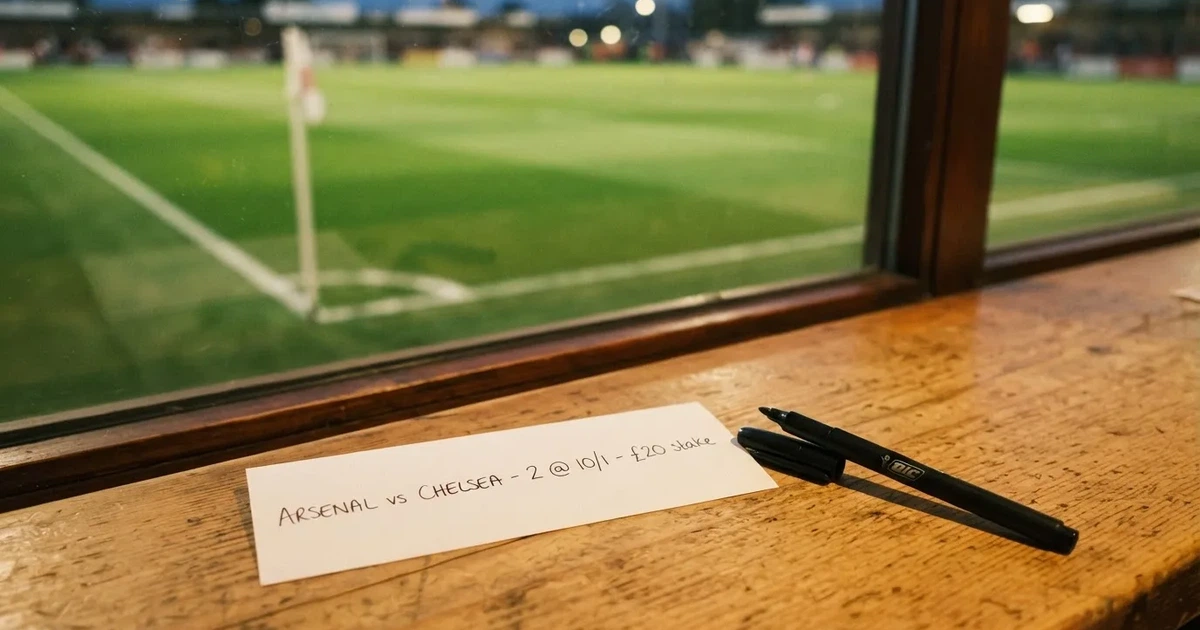
A corner kick is what you get when the ball last touches a defending player on its way over the goal line, with no deliberate touch required. It is taken from the corner arc one yard from the flag post, defenders must retreat ten yards until the ball is in play, and an attacker receiving the ball from it cannot be offside. Bookmakers have built an entire family of markets around how many of these arrive, who wins the next one, and what an in-game run of corners does to the price. This page works through what those markets settle on, what the odds quietly charge for them, and which UK-licensed sites are the ones worth comparing when the question is corner betting.
The page is written in two passes the reader can take in either order. The first pass explains how a corner bet is constructed and settled — the rules the game gives the market, the rules the bookmaker adds on top, and the margin that lives inside every decimal price. The second pass walks through ten UK-licensed bookmakers, each named on the Gambling Commission’s public register, and judges what each is worth for corner betting specifically. The angle throughout is consequence: what follows from a corner rule, what follows from a margin, what follows from a minimum odds requirement — and when those consequences show up in a real betting slip.
The legal frame: which sites are allowed to take a corner bet in Great Britain
The Gambling Commission issues every licence needed to take a remote bet from a customer in Great Britain under the Gambling Act 2005. Northern Ireland has its own law and is not part of that framework; this page is about Great Britain. Since the Gambling (Licensing and Advertising) Act 2014, an operator offering remote betting into Great Britain must hold a Commission licence wherever it is incorporated, so a Curaçao, Malta or Gibraltar registration alone is not enough. The Commission’s public register is the entire test: search by business name, trading name, domain or account number, and the operator is either on it or not.

There is no statutory list of permitted markets. A licensed bookmaker picks which events and which markets it offers inside its licence conditions, which include the social responsibility code and the Licence Conditions and Codes of Practice. Corner betting falls under the standard remote betting licence — every operator reviewed on this page sits in that category.
Two consequences matter at the point of placing a bet. The first is identification: name, address and date of birth are verified before any deposit or stake can be placed, and a customer who has not cleared that step cannot use a free bet or bonus either. The second is self-exclusion: every online operator on the register is a GAMSTOP member, so a customer who has self-excluded cannot get around the exclusion by switching brands.
The feature that does not exist, and that a corner bettor is sometimes told exists, is a “permitted market” list. If the bookmaker offers a corner market, it is permitted; if it does not, the bet cannot be placed. There is no whitelist for corners.
Responsible gambling: what follows from a corner bet being a normal bet
A corner bet is a bet like any other, and the same safer-gambling machinery applies. GAMSTOP is the national multi-operator online self-exclusion scheme and a mandatory licence condition; the minimum period is six months, and after the minimum has elapsed the exclusion stays in place for seven years unless the customer asks for it to be lifted. It covers sites and apps; high-street bookmakers operate a separate scheme. A bettor who has excluded through GAMSTOP cannot place a corner bet at any of the brands reviewed here.

Beyond GAMSTOP, a financial vulnerability check is mandatory once a customer’s net deposits cross £150 in any rolling 30-day window: it is a public-record search rather than an affordability assessment, and it is the first stop on the way to a fuller financial risk assessment. The Commission has announced a staged plan for the fuller check, with no published start date. Deposit limits on a fixed time frame are also a licence requirement; the second phase of those limits was postponed to 30 September 2026, and whether that phase is now live is not established. Limits are still the customer’s choice rather than a state-set ceiling.
Help is available outside the operators. GamCare runs the National Gambling Helpline, GambleAware funds treatment and education, the NHS runs gambling clinics, and Gamblers Anonymous runs peer support meetings. None of these is a corner-market service; they are the safety net that sits behind every bet on this page. A customer asking the operator to set a corner-by-corner limit is asking something no operator offers; a customer asking the operator to set a daily deposit limit is asking something every operator here must do.
In-play corners and cash out: how the price keeps moving until full time
Corner markets exist in two states. Pre-match, the price is set, the line is set, and the bettor accepts both at the moment of placement. In-play, the price moves with the count of corners already taken and the run of play to come. Live corner betting is the same market reshaped by what has happened in the preceding minutes: a side that has not yet won a corner is more attractive at the next-corner price than it was at kick-off, and a side that has already won six is a less attractive favourite to win the seventh than a fresh model would predict.
The in-play book is also the place where cash out becomes relevant. A cash-out offer is the bookmaker buying the bettor back out of an unsettled wager at a price it has just calculated; the bettor locks in profit or limits loss without waiting for the original bet to settle. On a corner over/under, the bettor can take a small profit if the line has moved the right way, cut a loss if the match is going the wrong way, or leave the bet to settle normally. The price the bookmaker offers is not the live market price; it is what the bookmaker is willing to pay at that instant, and it embeds the operator’s margin again. A bettor who cashes out early takes whatever the bookmaker offers in the moment, not whatever the line is worth on the open market.
A specific tactic often called live corner strategy relies on the gap between the next-corner model and the bookmaker’s offer. After a long spell without a corner, the model price of either side to win the next corner drifts down; if the bookmaker is slow to follow, the bettor has an entry. The tactic depends on a bookmaker that prices next-corner markets thinly, because the model only matters in a market where the bookmaker is actually offering one. Not every operator reviewed here publishes a next-corner market live, so the tactic is operator-specific before it is strategy-specific.
Strategy and prediction: what a forecast is worth on a corner market
Two strands run through every corner betting strategy. One tries to forecast the total number of corners in a match. The other tries to forecast the order in which they arrive.
The first strand is statistical. Some teams press higher than others, which statistically pulls corners their way; some sides defend deep and let the opposition cross, which pushes the match’s corner count up; some leagues — and within leagues, some referees — average more corners per match than others. The data behind these generalisations comes from the long-form statistics the bookmakers themselves publish, the same numbers that drive their model prices. A bettor can use them, but the bookmaker’s margin already sits inside the posted price, so the bettor is forecasting against a line that has been built to favour the house.
The second strand is sequencing. A bet on who takes the next corner is, in market terms, a bet on possession and territory over the next two or three minutes rather than the next ninety. The information available is limited: who has the ball, where play is concentrated, how far up the pitch the press is sitting. A bettor who watches the match live and reads those signals has more to work with than the model; a bettor reading off a stats sheet after the fact does not.
The honest framing of both strands is the same. There is no corner betting system with a positive expected value at the bookmaker’s margin. The bookmaker’s edge is structural; it lives in every price on every market. A strategy that wins on average is one whose edge is larger than the margin, and a corner market is not a market where the bettor’s edge is generally thought to exceed the bookmaker’s. What a strategy can do is move a bettor from random to informed: from backing matches that average four corners to backing matches that average eleven. Informed is better than random. Informed is not a guarantee of profit.
Bankroll management is the part of strategy the marketing literature underplays. A corner bettor who stakes a fixed percentage of a bankroll rather than a flat amount per bet has a cushion against the variance that corner totals run into: a 0-0 can easily finish with twelve corners, a 4-3 can finish with three. A bettor who increases stakes after losses to chase is on a slope; a bettor who increases stakes after wins is on a streak; neither is making money in expectation.
The markets themselves: over and under, match, handicap, Asian, multi-corner
The most common corner market is the total. Over/under a line — over 9.5 corners in the match, under 10.5 — pays 1.90 / 1.90 on a coin-flip line if the bookmaker is honest; the odds shift in line with the bookmaker’s model and the line shifts to balance the book on each side. The total settles on the corners awarded during the match including stoppage time, not on corners taken — a corner awarded and then retaken for a procedural offence counts once, a corner that the referee blows for before the kick is taken does not count.
A match bet is the next corner, in two- or three-way form. Two-way: which side wins the next corner. Three-way: which side wins the next corner or no corner before a named event (a goal, half-time, the next stoppage). The three-way version adds the “neither” outcome at a longer price and rebuilds the margin across three legs rather than two. The match bet settles on the corner kick that is actually taken, not on the one that is awarded and then retaken.
A handicap corner bet gives one side a head start of one, two or more corners. Side A minus one means Side A must win two more corners than Side B for the bet to win; the line moves the apparent favourite further out, lengthens the price, and gives the margin more room to hide. A handicap line on corners is built the same way as a handicap line on goals: the favourite gives away corners the same way the favourite gives away goals.
Asian corner lines split the totals market into quarter and half lines and remove or refund part of the stake. Over 9.0 / 9.25 splits the bet into two halves: one over 9.0, one over 9.25. A push on 9.0 refunds half; a push on 9.25 refunds half. Asian corners are popular among bettors who want lower variance on a totals bet — the refund on a push makes the line easier to hit than a pure over/under on the same number. The structure is mathematical rather than informational; the bettor’s edge over the line is still bounded by the margin.
A multi-corner bet stacks several corner markets onto one slip. It can be a same-game multi on a single match (next corner, total over, first half over), or it can span matches (first corner in each of three matches). Same-game multis are settled leg by leg inside the same event; in addition, an accumulator that crosses events in different matches multiplies the odds of each leg together and pays the product if every leg wins. The product is a much longer price, but every leg has its own margin, and the multiplied margin is the cumulative cost — each leg eats a small share of the price, and the multiplied price still holds the bookmaker’s edge across the slip.
Which sports and tournaments are useful to a corner bettor
Football is the sport. Corner kick is a football concept, and the markets that price them — totals, next-corner, handicap, Asian — are football products. Most UK-licensed bookmakers price EPL, Championship, the Scottish Premiership, La Liga, Serie A, Bundesliga, Ligue 1, the Champions League, the Europa League and the Europa Conference League with corner markets at minimum. World Cup, European Championship and Copa América carry the deepest markets during the tournament itself, with totals and match markets available kick-off to kick-off.
Below the top flight, the picture is uneven. National-team qualification, lower divisions, women’s football and youth internationals often have totals markets with thinner liquidity and wider margins. Some operators offer corner markets on a women’s Champions League match where others offer only match result; some offer a Championship total where others offer only a Premier League total. The tournament list is operator-specific before it is tournament-specific, so the bettor who plans to play a multi-corner strategy across, say, four leagues needs to check the operator’s catalogue rather than assume the leagues are universally covered.
Two sub-markets carry over from football into adjacent sports. MMA offers a “corner” market — which corner wins, the red corner or the blue corner — and the prices settle on the judges’ decision rather than on points scored in the ring. The market is structurally different: it is a two-outcome market with no totals and no in-play, and a corner bettor coming from football needs to reset expectations. Boxing has the same two-corner market with similar settling. A mixed strategy that mixes football corners with MMA corners is mixing two products with different margins, different markets and different in-play depth; the multiplied odds of an acca are a different number from the same-named leg in each sport.
How a corner bet actually settles, step by step
A typical corner bet follows the same path as any other bet, with corner-specific steps at the start and end. The standard sequence is:
- The customer opens an account with a UK-licensed bookmaker, completes the identity check, and makes a deposit subject to whatever payment-method rules that operator publishes.
- The customer opens the football event of interest and finds the corner market. Pre-match, this is in the match page; in-play, this is in the live event page. The market label says what is being priced — “Total Corners Over/Under”, “Match Corners”, “Corners Handicap”, “Asian Corners”, “Cornets Multi” — and the odds column shows the decimal price.
- The customer adds the selection to the bet slip. A single bet (one selection) is what it says; a multiple (two or more selections) becomes an accumulator, and the slip shows the multiplied price and the maximum return if every leg wins.
- The customer enters a stake. The minimum stake varies by operator; the maximum stake is whatever the operator has set on that market for that event. The slip shows the stake, the price, the potential return (= stake × price), and the potential profit (= return − stake).
- The customer confirms. From this point the bet is recorded and cannot be cancelled; the only way out is the operator’s cash-out price if the bet is in-play and the operator offers cash out on that market.
- The match completes. Corners are counted and settled per the operator’s rules. A push (the line lands exactly on the count) refunds the stake on that leg; an Asian-corner half-push refunds half the stake on that half-leg; a void match (abandoned before completion) refunds the stake on the unsettled market.
- Returns are paid to the customer balance. Withdrawals run on whatever method the operator has set, with whatever timing the operator states, and are subject to the operator’s verification and source-of-funds checks when applicable.
The two corners where something usually goes wrong — for the customer, not the operator — are step 5 (the bet is recorded and the customer cannot back out) and step 6 (the operator’s interpretation of a corner kick is the one that counts). A corner awarded and then taken from the wrong side is the operator’s problem; a corner awarded in the 94th minute that the operator missed is the customer’s. The settlement rule is what the operator says it is, and the only insurance is to read those rules before placing the bet.
The ten UK-licensed bookmakers reviewed for corner betting
Each entry below names the operator, the Gambling Commission account under which it is licensed, and the parent licence holder — the structure matters because several names can sit under one licence, and “which account” is how a customer checks the register. The review then takes what sets that operator apart for corner betting specifically, and ends on a verdict. Operators are presented as reviewed bookmakers, not as endorsements, and a brand appearing here is a brand reviewed in this article rather than a recommendation to use it.
The comparison table at the end of this section brings them together on licence, operating company, and what the operator’s own terms state about corner markets specifically.
Dabble — the social-feed bookmaker for casual corner punters
Dabble runs on a social-feed interface where customers chat through picks rather than filling in a slip, and its £10-in-free-bets welcome is geared to that customer — small staking, peer-visible discussion, and a straightforward seven-day expiry on the free bets. The free-bet stake is not returned with a win, so a winning free bet pays the winnings only. The £10 trigger requires £10 on a first deposit at minimum odds, which on a corner over/under is easily met by any standard line.
For corner betting specifically, Dabble is a thin book rather than a deep one. It offers the major leagues and the headline markets — totals, next-corner, handicap — without extending into the depth that specialist corner bettors sometimes want. The in-play offering exists but is not the operator’s strongest card. Where Dabble works well is the casual punter who wants to add a corner total to a Premier League multi and chat about it on the way.
The verdict: pick Dabble if you want a light staking, social experience and the major corner markets are enough. Skip it if you want an in-play book with deep liquidity on lower leagues.
Licence. Gambling Commission account 65677 (licence 065677-R-340363-005), categories remote general betting standard (real events), held by Dabble Sports UK Ltd.
Coral — the high-street heavyweight with a deep corner catalogue
Coral runs one of the longer-established British online sportsbooks, and its book of football includes corner markets across the Premier League, the EFL, the Scottish leagues, and the major European competitions. The £40-in-free-bets welcome is one of the larger headline figures on this list: a £20 qualifying bet at minimum odds 2.0 (1/1) yields £40 in free bets within seven days, which themselves expire seven days after issue. The size of the headline gift comes with the usual condition — minimum odds, expiry — and the free-bet stake is not returned.
For corner betting specifically, Coral is one of the stronger mainstream choices. The catalogue covers totals, match, handicap and Asian lines on the major leagues; the in-play offering is reasonably deep; and the cash-out availability extends to corner markets on a case-by-case basis. The depth is not as wide as Betfair’s exchange product, but for a fixed-odds corner bettor the breadth is enough.
The verdict: pick Coral for an established bookmaker with a deep enough corner book for most punters, and a generous free-bet welcome. Worth comparing cash-out availability on the specific corner market before placing a bet.
Licence. Gambling Commission account 54743 (licence 054743-R-330863-014), categories remote general betting standard (real events) and remote betting intermediary, held by LC International Limited.
10bet — the global book with Bet Builder and live streaming
10bet’s UK site sits on a global platform, with football, tennis and horse racing priced across the major competitions. The site features Cash Out, Bet Builder and Live Streaming, which together make it a strong all-round book for the corner bettor who wants to build a same-game multi or watch an in-play stream before deciding on a next-corner bet. The site is published by 10bet Limited and licensed under Commission account 43173.
For corner betting specifically, 10bet is a standard offering rather than a specialist: totals, match and handicap markets on the major leagues, with Bet Builder available for same-game multis. The Live Streaming and Cash Out combinations make it more useful in-play than some of the smaller operators on this list. The free-bet welcome, where offered, runs through standard terms.
The verdict: pick 10bet for the combination of Bet Builder, Cash Out and Live Streaming on corner matches. Skip it if you only bet pre-match.
Licence. Gambling Commission account 43173 (licence 043173-R-322899-023), Blue Star Planet Limited.
Geoff Banks — the independent book on football
Geoff Banks is published by GB Sports Advisors Ltd and offers live in-play prices and ante-post prices on future events. The offering is a smaller and more curated football book than the major high-street operators — fewer sports, deeper on the markets it does carry. The site targets a UK punter looking for an independent book rather than the corporate group experience.
For corner betting specifically, Geoff Banks is a useful supplement for the bettor who already has an account with one or two majors and is looking for a different line or a different price on a particular corner market. Smaller books sometimes offer softer lines on events where the majors have moved the market hard, although over the long run the margin levels across operators.
The verdict: pick Geoff Banks as an additional account alongside a major, not as a primary. Useful for price-shopping on individual corner events.
Licence. Gambling Commission account 54095 (licence 054095-R-330366-010), GB Sports Advisors Limited.
Paddy Power — the established name with Super Sub and Bet Builder+
Paddy Power’s UK app is one of the market’s most-featured, carrying Bet Builder+, Popular Bet Builders, Super Sub (the bet rolls over to the substitute player if the named player is replaced), expanded Win More markets, and player and ACCA stats. The features are not all relevant to corner betting, but Bet Builder+ and the Popular Bet Builders map directly onto same-game multis, which is the corner bettor’s natural product for combining corners with match result, both teams to score or player markets.
For corner betting specifically, Paddy Power is mainstream strong: a deep football book across the major leagues, in-play pricing, and Bet Builder for same-game corner combinations. Super Sub does not transfer to corner markets (there is no substitute for a corner), but it is a useful feature for the multi-sport bettor. The free-bet welcome changes regularly and is set in the operator’s terms.
The verdict: pick Paddy Power for Bet Builder+ on a same-game corner multi, and for the all-round football book. Worth comparing prices before each bet — Paddy Power is a competitive book, not always the cheapest.
Licence. Gambling Commission account 39439 (licence 039439-R-319330-013), PPB Counterparty Services Limited.
Bet Ahoy — the newcomer with a £10/£10 welcome
Bet Ahoy’s welcome splits into a £5 sports bet and a £5 acca for a £10 trigger, with the standard minimum odds and the standard seven-day expiry on the free bets. The split is unusual: a £10 trigger bets normally come as a single free bet at this size, not as two £5 bets tied to product types. The split reflects the operator’s preference for keeping a customer across sports and accas rather than locking the free bet to one product.
For corner betting specifically, Bet Ahoy is a small player with a mainstream offering. The football book covers the major leagues with corner totals, match and handicap markets. The in-play offering is functional rather than deep. The product is best suited to the casual punter with a small starting bank.
The verdict: pick Bet Ahoy for a small, simple welcome with a mainstream corner offering. Skip it for deep in-play or specialist corner markets.
Licence. Gambling Commission account 100094 (licence 100094-R-341742-003), Bet Ahoy Ltd.
LiveScore Bet — the scores-app book with a deep Bet Builder
LiveScore Bet comes from the LiveScore scores business, and its Bet Builder takes up to ten selections across match result, both teams to score, corners, total goals, player scoring and card markets. Ten legs is on the higher end for a same-game multi, and the corner leg sits inside a wider builder than most operators offer. The integration with the LiveScore app means live scores and live markets are on the same screen, which is the corner bettor’s natural workflow during an in-play session.
For corner betting specifically, LiveScore Bet is one of the best-priced Bet Builder products for a customer who wants to combine a corner leg with other match events. The maximum-ten selection limit gives scope for a complex multi, but the multiplied margin applies across every leg. The free-bet welcome varies.
The verdict: pick LiveScore Bet specifically for the Bet Builder on a corner-inclusive same-game multi. Worth checking the maximum-leg price before building the slip.
Licence. Gambling Commission account 56859 (licence 056859-R-332720-005), LiveScore Betting and Gaming (Gibraltar) Limited.
BetTom — the operator with a 50% back welcome up to £50
BetTom’s welcome is 50% back as a free bet up to £50 on the sportsbook side, with a matching 50% back up to £50 in free slot funds for the casino. The structure is a refund rather than a fixed bonus — the customer bets, then receives back a proportion of stake as a free bet. The slot-funds half is irrelevant to a corner bettor; it is the casino half of the operator’s split welcome. The free-bet stake is not returned with a win.
For corner betting specifically, BetTom runs a mainstream football book with the standard corner markets across the major leagues. The product is more useful as a sportsbook-bonus-comparison data point than as a corner-market specialist: the depth is comparable to the small-operator group rather than the high-street heavyweights.
The verdict: pick BetTom if the value is in the welcome offer structure rather than the corner book itself. The free-bet terms matter more than the catalogue at this size.
Licence. Gambling Commission account 64959 (licence 064959-R-339314-003), Bet Tom Limited.
Betfred — the high-street name with Extra Places and Bet Builder
Betfred’s app is the online arm of a long-established British bookmaker. The features carried on the app include Bet Builder, Sub Switch, Racing Post data, Extra Places, live casino and bingo. Not all of these apply to corner betting — Extra Places is a horse-racing feature, Sub Switch is a football feature for player markets, Racing Post data is racing-specific. Betfred’s football book is large, with corner markets on the major leagues plus the EFL and the Scottish divisions.
For corner betting specifically, Betfred is a comparable mainstream offering to Paddy Power or Coral in terms of catalogue breadth. The corner market depth on the smaller leagues sometimes exceeds the average, reflecting the parent company’s history as a football book. The free-bet welcome is set in the operator’s terms.
The verdict: pick Betfred for the depth on EFL and Scottish league corner markets in particular. The horse-racing and casino features do not pay for themselves on a corner-only strategy.
Licence. Gambling Commission account 39544 (licence 039544-R-319290-010), Petfre (Gibraltar) Limited.
DragonBet — the Welsh-focused book with Welsh football and rugby
DragonBet is published by DragonBet Ltd and features Welsh football and rugby markets alongside racing, American football, in-play betting and bet builder markets. The Welsh focus is unusual — most operators price Welsh Premier League football as a secondary product, and DragonBet prices it as a primary one. For a corner bettor whose market is the Welsh leagues specifically, this is a useful product; for a corner bettor whose market is the Premier League or the Championship, DragonBet offers the standard rather than the specialist.
For corner betting specifically, DragonBet is mainstream on the major leagues and deeper on the Welsh leagues. The in-play offering is functional. The product is best suited to a customer with a regional interest rather than to a customer looking for the deepest overall book.
The verdict: pick DragonBet if Welsh football is a market you specifically follow. For mainstream corner betting, the operator is comparable to the small-operator group.
Licence. Gambling Commission account 64908 (licence 064908-R-339041-003), DragonBet Ltd.
Comparison at a glance: the ten UK-licensed bookmakers for corner betting
The table brings the ten operators together on the three matters that matter most before placing a corner bet. The first column names the operator. The second carries the Gambling Commission account and the licence-holder name, because that pair is what the public register checks. The third records what the operator’s own published terms state for corner markets specifically — what is offered rather than what is generic. Cells where research did not yield a specific corner-market term are marked with a dash, not because the operator does not price the market but because research did not capture a corner-specific statement.
| Operator | Gambling Commission licence | Corner-market offering per the operator’s terms |
|---|---|---|
| Dabble | Account 65677, Dabble Sports UK Ltd | Social-feed model; mainstream corner markets on major leagues; in-play available but not deepest |
| Coral | Account 54743, LC International Limited | Deep book across EPL, EFL, Scottish leagues; totals, match, handicap, Asian lines; cash-out on a case-by-case basis |
| 10bet | Account 43173, Blue Star Planet Limited | Standard catalogue on major leagues; Bet Builder, Cash Out and Live Streaming available |
| Geoff Banks | Account 54095, GB Sports Advisors Limited | Curated football book; useful for price-shopping on individual events |
| Paddy Power | Account 39439, PPB Counterparty Services Limited | Deep football book; Bet Builder+ and Popular Bet Builders for same-game corner multis; Super Sub available on player markets only |
| Bet Ahoy | Account 100094, Bet Ahoy Ltd | Mainstream offering on major leagues; functional in-play; small-operator depth |
| LiveScore Bet | Account 56859, LiveScore Betting and Gaming (Gibraltar) Limited | Bet Builder to ten selections including corners; integrated with LiveScore scores app |
| BetTom | Account 64959, Bet Tom Limited | Mainstream football book; standard corner markets on major leagues |
| Betfred | Account 39544, Petfre (Gibraltar) Limited | Broad football book including EFL and Scottish divisions; Bet Builder available |
| DragonBet | Account 64908, DragonBet Ltd | Mainstream on major leagues; deeper on Welsh football and rugby |
The arithmetic: what the bookmaker’s margin does to a corner price
A corner market is a market like any other market, and the margin lives inside the odds. Take a simple two-way example with both sides at decimal odds 1.90 (fractional 9/10). The implied probabilities add to 1 ÷ 1.90 + 1 ÷ 1.90, which works out to roughly 105.3% — the bettor has to stake £105.30 across both outcomes to win £100 on either side, and the missing £5.30 is the bookmaker’s margin as a share of turnover. The same market seen from the other side pays out about 94.7% of every pound wagered, which is the payout share.
Stated as a band rather than a single figure — because a real market does not have to be exactly even — the illustrative two-way at 1.90/1.90 has a margin somewhere around 5%, with the true number depending on the precision of the prices. On a real corner market with three or four outcomes and a wider spread, the margin grows: a three-way next-corner market with prices near 1.90/3.40/3.40 is closer to 8 or 9% margin, and a handicap market with a wider spread can run higher. Corner markets are mainstream enough that the margin on a totals line tends to sit near the bottom of the bookmaker’s range; niche corner markets and exotic corner markets carry a wider margin.
What this means for the bettor is straightforward. The bookmaker is not pricing the bet at the true probability — it is pricing it below the true probability, and the difference is the bookmaker’s edge on that bet. The bettor’s edge, if any, has to be larger than the margin for the bet to be profitable in expectation. A £10 bet on the favourite of a coin-flip line at 1.90 pays £19 if it wins, returns £9 of profit, and carries the structural expectation of losing £10 × 5.3% ≈ 53p over the long run.
For an in-play market the margin is structurally similar but operates on faster-moving prices. The cash-out offer is calculated from the live odds minus the bookmaker’s margin for that instant, which is why the cash-out price is below the price the same selection would clear at on the open market. The bookmaker’s edge does not go away with cash out; it just becomes a single, visible number rather than a difference between two prices.
What needs to be checked before placing a corner bet at any of these sites
Three checks sit at the top of the list. First, the bookmaker is on the Gambling Commission’s public register, and the licence account number matches the one in the app or site footer. Second, the corner market is offered on the operator’s match page for the specific event — totals, match, handicap, Asian, multi — and the displayed price is what the bettor accepts. Third, the minimum stake, the maximum stake, the in-play availability and the cash-out availability are what the operator states in the terms, and any free-bet wagering requirements (subject to the 10x cap on bonuses since the 19 January 2026 promotion rules) are stated in the offer terms.
A fourth point is responsible gambling. The deposit limit is the customer’s choice, the GAMSTOP exclusion covers every online operator reviewed here, and the safer-gambling tools are inside the account. Using them is a normal part of using the account, not an exception.
The licence and the corner market exist before any bet is placed. The arithmetic above is what the bet is actually worth. The responsible-gambling machinery is what keeps the bet inside a sustainable bankroll. None of these is optional; together they are the difference between placing a corner bet and placing it with information.
Frequently asked questions
How do I place a corner bet?
Open an account with a UK-licensed bookmaker, complete identity verification, deposit funds, open the football event, find the corner market (totals, match, handicap, Asian or multi), add the selection to the bet slip, enter a stake and confirm. The bet is recorded from the moment of confirmation and the only way out before settlement is cash out if the market is in-play and the operator offers it.
What is an Asian corner bet?
An Asian corner bet splits the line into quarters and halves. Over 9.0 / 9.25 places half the stake over 9.0 corners and half over 9.25 corners; a push on 9.0 refunds the half-stake at 9.0 and settles the half-stake at 9.25, a push on 9.25 refunds the half-stake at 9.25. The structure reduces variance on totals and is popular with bettors who want to hedge against a push.
What is a corners match bet?
A corners match bet is a wager on which side wins the next corner in a match, sometimes extended to a three-way market that adds “no corner before a named event”. It settles on the next corner kick that is actually taken, not on the one awarded and retaken for a procedural offence. The two-way version has a typical margin; the three-way version rebuilds that margin across the additional “neither” leg.
How do I check that a bookmaker holds a UK Gambling Commission licence?
Search the Commission’s public register by business name, trading name, domain or account number. Every operator reviewed on this page is on the register; the licence number in the app or site footer should match the register entry exactly. A match is the test; a mismatch is a reason to contact the operator before depositing.
How is the return on a corner bet worked out?
Return is stake multiplied by decimal odds. A £10 bet at 3.50 returns £35 — £25 profit plus the £10 stake. A combination bet multiplies the odds of each leg into one price; a four-leg acca at 2.00/2.00/2.00/2.00 is a 16.00 price, and a £10 stake returns £160. The multiplied price carries the multiplied margin across every leg.
What is the bookmaker’s margin and how does it show up?
The margin is the share of every pound wagered the bookmaker keeps on average across all outcomes. It shows up as the gap between the implied probabilities of all outcomes and 100% — for example, a two-way market at 1.90/1.90 has implied probabilities adding to 105.3%, so the margin is about 5.3% and the payout share is about 94.7%. The same margin applies to a corner bet as to any other bet at the same bookmaker.
Bet types & in-play – Accumulator
Content created by the «Accumulator» team
