
What is a Heinz bet?
 Available in US
A Heinz bet sits among the full-cover multiples — a single stake spread across every combination of six selections, with no singles in the mix at all. 57 bets, 6 picks, and the only thing the bettor names is a unit stake; the rest is arithmetic the bookmaker runs before the first leg even kicks off.
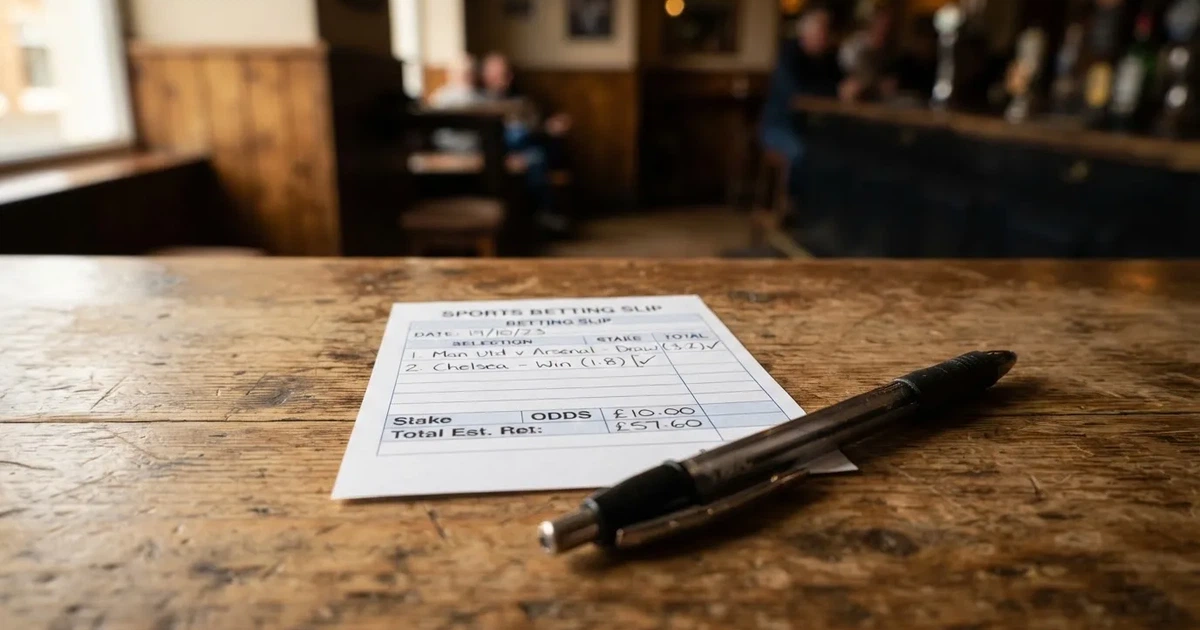
What follows is what that arithmetic actually delivers: how the bet is built, what it costs to place, where the return comes from, and where the line between a payout and a loss is drawn across the six legs. The UK market for these bets is the one defined by the Gambling Commission’s remote licence, not the offshore space, so this page reads the framework as well as the bet.
Last checked on 26 October 2026 against the Gambling Commission’s public register for remote operating licences.
How a Heinz bet is built
A Heinz is constructed mechanically. Six selections go in; 57 bets come out. The breakdown is 15 doubles, 20 trebles, 15 four-folds, 6 five-folds and 1 six-fold — the complete set of combinations you can form from six picks, taken two at a time up to all six at once.

There are no singles in a Heinz. That is the structural feature that separates it from a Lucky 15, which covers four selections across 15 bets and includes a single on each. A Heinz punter needs at least two of the six legs to win for the bet to return anything, and even then the payout is built from the doubles — the trebles and the longer combinations need every leg they touch to land.
The “Heinz” name comes from a familiar joke: 57 varieties. The bet was named for the same reason, picking up its label because the 57 combinations of six selections feel like the long way round a small kitchen cupboard. Either way, the arithmetic is identical on every site that offers it.
The structure in plain numbers
Six selections produce one combination of all six, six combinations of five, fifteen of four, twenty of three, and fifteen of two. The total runs:

| Selections | Doubles | Trebles | Four-folds | Five-folds | Six-fold | Total bets |
|---|---|---|---|---|---|---|
| 3 (Trixie) | 3 | 1 | — | — | — | 4 |
| 4 (Yankee) | 6 | 4 | 1 | — | — | 11 |
| 5 (Canadian / Super Yankee) | 10 | 10 | 5 | 1 | — | 26 |
| 6 (Heinz) | 15 | 20 | 15 | 6 | 1 | 57 |
| 7 (Super Heinz) | 21 | 35 | 35 | 21 | 7 | 120 |
| 8 (Goliath) | 28 | 56 | 70 | 56 | 28 | 247 |
The Trixie is the smallest of these full-cover bets, the Goliath the largest commonly offered. A Super Heinz takes seven selections, a Goliath eight — both still no singles, both still built entirely from multiples.
The unit stake is what the punter actually names when placing the bet. A £1 Heinz means £1 on every one of those 57 lines, so the total cash laid out is £57. A £2 Heinz costs £114. The bookmaker’s slip shows the unit, the number of bets and the total stake; the punter never picks a total figure, only a unit.
What voids do to a Heinz
When one of the six legs goes void — a non-runner, an abandoned match settled under the operator’s rules — the Heinz does not collapse. The selection drops out and the rest of the bet rolls down to the next-lower combination.
A void treble becomes a double. A void four-fold becomes a treble. The six-fold with one void leg becomes a five-fold on the five runners; if two legs void, it drops to a four-fold, and so on. Void selections are not losses, and they are not wins; they are removed from every combination they appeared in, and the bet settles on whatever remains.
This is what makes a Heinz survivable in markets where withdrawals happen. Six football matches on a Saturday, one called off in the morning — the bet is still live, just shorter than it was at placement. The punter does not get a refund on the void stake and does not lose it; it simply migrates into the next combination down.
How a Heinz is settled and paid out
The settlement arithmetic is the same arithmetic that settles any combination bet. Each line is treated independently. A win on a double pays the stake for that double times the combined odds; a loss on a treble zeroes that line and the stake for it stays with the bookmaker.
The total return is the sum of returns on every winning line, minus the stake for the losing lines. A Heinz with three winners and three losers returns whatever those three winners produced on every combination they shared — and there will be combinations they shared in any case where two or three of them ran together. A treble of the three winners pays once. The doubles, the other trebles, the four-folds that pulled in at least two winners: each one settles on its own and adds to the pile.
The total picture, then, is built line by line. There is no Heinz “odds” in the sense of a single multiplier — the bet does not have a price, because the price depends entirely on which legs win. The punter sees a maximum payout when all six selections win, and no payout at all if only one selection wins.
Worked illustration with three illustrative legs
To see what settlement looks like in practice, take three legs at odds of 1/2 (1.50), evens (2.00) and 6/4 (2.50), with a £10 total stake on a treble. That is one bet of £10, settled on one combination: 1.50 × 2.00 × 2.50 = 7.50. A winning treble pays 7.50 × £10 = £75, of which £65 is profit. Six selections at the same prices, packed into a Heinz with a £2 unit stake, would cost £114 and could return anywhere from £0 to several thousand depending on how many of the six legs landed.
That is the band the bet exists in: a small, controlled outlay against a wide range of outcomes. The £75 above is not a number any punter can lock in, because a treble is one line out of 57 and the structure only delivers its full payout when the full set lands. A more useful frame is the band — a small handful of winners may return less than the stake; most winners return more; all six returns many multiples of stake.
What happens when a leg is voided before kick-off
If a leg is voided before settlement — a non-runner in a horse race, a postponed match, an outright settled by the operator under its own rules — every combination that included it rolls down a tier. The voided selection disappears from the bet without costing or paying anything.
A six-fold with one void leg is paid as a five-fold at the same unit stake. The punter does not have to do anything; the slip recalculates automatically when the leg is marked void and the rest is settled in the normal way.
What happens when a leg is settled as a loss
A losing leg is final. The legs that did win still produce returns on the combinations they share, but every line the losing selection touched is dead.
This is why a Heinz with five winners and one loser can still pay less than the total stake. The six-fold is gone, the five-folds that included the loser are gone, most of the four-folds and many of the trebles too. The only lines that pay are the doubles, the trebles and the longer combinations that did not include the losing leg — and with five of six selections won, that is still a healthy subset. A bettor expecting a payout on five from six is rarely disappointed; a bettor expecting the maximum return needs all six.
The licence and what it actually buys
Every operator on the British market for sports betting holds a Gambling Commission remote licence for the category it operates in, or it is operating illegally. The Commission’s public register is searchable by business name, trading name, domain or account number; that register is the test of who holds a licence, and no other document is.
A licence for “remote general betting standard (real events)” permits the operator to take bets on real sporting events online. The categories also include pool betting, virtual events and the betting intermediary permit used by exchanges. From the operator’s side, this is the licence under which every Heinz bet is laid.
The framework matters for the punter because it sets what must be in place before a Heinz can be placed, and what recourse exists if something goes wrong. Identity verification before the first deposit is mandatory. Self-exclusion through GAMSTOP is mandatory for online operators. The Commission’s Licence Conditions and Codes of Practice bind how a bet can be marketed and the controls on a customer’s play.
A Curaçao or Malta licence does not substitute. Since 2014 an operator whose remote facilities are used in Great Britain needs a Commission licence wherever it is based — that is the point-of-consumption rule. An offshore bookmaker offering Heinz bets to a customer in Manchester is committing an offence under section 33 of the Gambling Act 2005; the customer is not committing an offence by using the site, but is also outside every protection the framework provides.
What the licence does not do
The Commission does not regulate the price. The bookmaker sets its own margin on every market, and the margin sits inside the decimal price or fractional price the punter sees. There is no Commission-set maximum margin, no Commission-set minimum payout, no Commission-set market for Heinz bets — full-cover bets are a product the operator offers under its own rules, the same way it offers singles and doubles.
There is also no statutory list of permitted bet types. A bookmaker that wants to offer a 57-line Heinz must decide to offer it; the framework does not require them to, and a licensed operator is allowed to refuse a Heinz or restrict stake sizes on one. The product is licensed; the offering is the operator’s choice.
How a UK bookmaker settles the return: the calculation
The arithmetic of a winning Heinz is built from the prices on the winning legs. Each combination in the bet is settled independently as if it were the only bet the punter had placed, and the total return is the sum of those settlements minus the stake for the lines that lost.
For a single combination bet, the return is stake × odds, and the profit is stake × (odds − 1). On a double at 1.50 and 2.00 with a £10 stake, the return is £10 × 1.50 × 2.00 = £30, and the profit is £30 − £10 = £20. On a treble adding 2.50 at the end, the return rises to £10 × 7.50 = £75, profit £65.
A Heinz pays the same way on every winning combination in the 57. The unit stake is what the punter put on each line, and the payout on a winning line at combined odds O is unit × O. The punter does not see the calculation as it runs — the slip settles, the account is credited, and the breakdown is what the bookmaker chooses to show.
Why a band, not a single figure, is the right frame
A Heinz’s return depends on which legs win. All six wins, the maximum; no wins, the stake is gone. The punter who plans to place a Heinz does not know which end of that range they will land in, because the bet has not been settled yet, and the system does not forecast outcomes.
The honest description of the bet’s return is therefore a band. A small handful of winners returns a small amount; a majority of winners returns more than stake; all six returns a multiple of stake determined by the prices the legs were taken at. The punter can model expected return against a probability assumption on each leg, but no model can collapse that range into one figure before the bet is settled — the bet itself is what produces the answer.
The bookmaker’s margin, sitting inside the price
Every price on every market carries the bookmaker’s overround, the share of every unit staked that the bookmaker keeps on average. The margin is built into the decimal odds or the fractional odds the punter sees; it is not an additional charge, and the punter never sees a separate “margin” line on the slip.
For a two-outcome market priced at 1.50 and 2.50, the implied probability sum is 1/1.50 + 1/2.50 = 0.667 + 0.400 = 1.067. The payout share, the proportion of every unit returned to bettors on average, is 1 ÷ 1.067 = 0.937, and the margin is 1 − 0.937 = 0.063, or 6.3%. The bigger the implied probability sum above 1.00, the bigger the margin.
For a Heinz with six two-outcome markets, the margin compounds across the legs. Each leg carries its own margin; the combination’s effective margin is higher, because the bookmaker’s edge on every leg multiplies into the position. The punter who chases a Heinz with a stake across heavily margined markets is paying the operator’s edge six times in a row on the same bet.
What that means in plain words
On a heavily margined favourite-versus-underdog market the punter is paying roughly 5–10% per leg. Across six legs the effective drag on a winning combination is in the high teens or higher. The payout is still a multiple of stake when enough legs win; the question is how much of the multiple is the bookmaker’s edge and how much is the punter’s prize. Most of the time, most of the multiple is the bookmaker’s edge.
This is why chasing favourites into Heinz bets is a thin plan. The structural payout is large; the structural cost is also large; what stays in the punter’s pocket after both is small. The bet is exciting when it lands; the math is unromantic the rest of the time.
How much it costs to place a Heinz
The total cost is unit stake × 57. A £1 Heinz is £57 out of the punter’s account at placement. A £2 Heinz is £114. The bookmaker’s slip shows the unit before the bet is confirmed, and the punter can adjust the unit to fit a budget without changing the structure.
There is no upper limit on the unit stake the operator must accept, but every bookmaker sets its own maximum. The maximum on a single bet is operator-defined and applies to the unit, not the total stake — so a £2 Heinz capped at a £1 unit means the customer must place a smaller bet, not double the unit. Customers with longer histories of betting may be offered higher limits; newer accounts may find the operator offers them a smaller ceiling.
Minimum stake and minimum price rules
The minimum stake on a Heinz is the bookmaker’s minimum bet, usually £1. Below that level the bet is refused, not silently rounded. Minimum price rules, where they apply, restrict what selections count toward bonuses or promotions; the Heinz itself does not require a minimum price on each leg, because the operator is not running a bonus that requires it.
The minimum price matters when the Heinz is being used to clear a free bet or a bonus. Many bookmakers require each leg of a qualifying multiple to be at a certain price — 1/2 (1.50), 1/5 (1.20), or evens (2.00) — before the wagering contribution counts. A Heinz of short-priced favourites may not count toward bonus clearance, even when its full payout is large.
Promotion rules and Heinz bets
A Heinz is treated by most operators as a real-money bet for promotion purposes, but a Heinz placed with free bets usually does not clear wagering requirements at all. The marketing term “free bet” describes a stake that does not return to the punter with a win, so the value the operator gives is the bonus times (odds − 1), not the bonus itself. A Heinz of free bets across 57 lines is structurally a 57-line bonus, and the operator’s clearing requirement is met on a fraction of that stake at best.
The 10x cap on wagering requirements under the 2026 promotion rules applies to bonuses. For a Heinz funded partly by a bonus, the cap on required turnover is the bonus amount times ten — a £10 bonus has a wagering ceiling of £100. Free bets with no wagering condition sit outside the cap on a strict reading, but a regulator’s interpretation is not established and operators apply their own policies.
Choosing a UK bookmaker for Heinz bets
Not every licensed operator offers Heinz bets as a named product on its slip, and not every operator that offers them lets the punter set a unit stake lower than a fixed minimum. The choice of where to place a Heinz comes down to whether the bet is supported, what the maximum stake ceiling is, and how the bookmaker settles a void leg.
The ten brands below all hold a Gambling Commission remote licence for general betting standard real events, and all are listed on the public register. The Heinz offering on each is what each operator’s own site states, not a feature the regulator certifies — Heinz bets are an operator-level product, and availability is the operator’s call.
What the table covers
| Brand | Gambling Commission licence and licensee | Heinz bet on the operator’s terms |
|---|---|---|
| Midnite | 101839; Midnite Limited | In-play, acca builder, popular accas and price boosts with maximum-stake limits |
| Smarkets | 39173; Smarkets (Malta) Limited | Exchange model; commission on eligible exchange bets from the customer’s first deposit |
| 888sport | 39028; 888 UK Limited | Cash Out, Bet Builder, racing streams, BetFinder form tools, daily boosted odds |
| BoyleSports | 39469; Boylesports Enterprise | Acca insurance on accumulator bets; opt-in, minimum stake £5, minimum odds 1/2 |
| William Hill | 39225; WHG (International) Limited | Best Odds Guaranteed on UK and Irish racing from 8 AM on the day of the race |
| LiveScore Bet | 56859; LiveScore Betting and Gaming (Gibraltar) Limited | Bet Builder up to 10 selections; match result, BTTS, corners, total goals, scorers, cards |
| Betboro | 44181; Webmedia Development N.V. | In-play football, racing and tennis; cash-out; boosted odds on singles from £10 stakes |
| Spreadex | 8835; Spreadex Limited | Fixed-odds and spread betting on the same account; FCA-regulated on the spread side |
| Lottoland | 38991; EU Lotto Limited | Casino, lottery betting, sports betting and scratchcards on one wallet |
| Paddy Power | 39439; PPB Counterparty Services Limited | Bet Builder+, Super Sub, expanded Win More markets, player and ACCA stats |
The table is a starting point. The Heinz itself is a structural bet any bookmaker can offer; what each operator adds is its own product surface — Cash Out, Bet Builder, boosted prices, acca insurance — which sits around the multiple rather than inside it.
Midnite
Midnite holds Commission account 101839 and runs the licensed Midnite.com site on a remote general betting standard real events licence. The sports welcome offer on the platform is a £5 minimum pre-match qualifying bet at EVS (2.00) or greater within 14 days of sign-up, returning a £25 free bet bundle plus 50 free spins valid for 7 days. The site carries an acca builder and price-boosted multiples, both of which fit a Heinz customer who wants to construct selections in-app.
A Heinz is a structured product and an acca builder is not a substitute for one. The Heinz placement on Midnite, where supported, will be through the standard multiples tab rather than the bet builder, and the unit stake the punter names is multiplied by 57. The £25 free bet bundle from the welcome offer is usable on multiples within 7 days, which is a short window for a customer who wants to place a small Heinz first and roll the bonus into a second — that clock is the binding term.
The verdict: Midnite is a fit for a Heinz punter who wants a current welcome offer and is comfortable placing the bet at modest unit stakes. The price-boost catalogue and the in-play focus sit on top of the multiple without altering it.
Smarkets
Smarkets runs the Smarkets.com exchange under a remote betting intermediary licence, Commission account 39173. The platform takes a commission on eligible exchange bets, a 2% standard rate at the time of last check, with new customers offered 0% commission for 60 days when they make a first deposit of £10 or more. An exchange punter is laying selections as well as backing them, and a Heinz is built on the back side — the punter stakes on the multiple in the usual way.
A Heinz punter on an exchange is still paying the margin built into the prices, because the prices are set by other backers and layers on the platform. The exchange’s commission is taken on net winnings; for a customer who backs 57 combinations of six selections the commission line is on the backer side, not the leg side.
The verdict: Smarkets is a fit for the Heinz punter who wants exchange pricing and is willing to live without some product features (Cash Out, Best Odds Guaranteed) that are not an exchange product. The 60-day 0% commission window is real value only if the punter is placing bets that win, because the commission is on net winnings.
888sport
888sport is operated by 888 UK Limited under Commission account 39028, on a remote general betting standard real events licence. The platform carries Cash Out, Bet Builder, racing streams, BetFinder form tools and a live bet feed, with daily boosted odds on selected markets. The Heinz offering depends on the operator’s multiples tab, which most major platforms maintain.
A Heinz that is settled early through Cash Out is settled at the live price; some selections will be winning and some not. The cash-out value reflects the current probability of the bet paying through, and the punter does not know in advance what fraction of stake they will receive. For a Heinz with five winners and one to go, the cash-out value tends to be a thin share of the full payout — the bookmaker takes its margin at settlement.
The verdict: 888sport is a fit for a Heinz punter who values Cash Out as a hedging option and the daily price boosts as a value-add on singles. The Heinz structure itself is the same as on any licensed platform; the surrounding tools are where this brand earns its differential.
BoyleSports
BoyleSports is held by Boylesports Enterprise under Commission account 39469. The platform runs an acca insurance product on accumulator bets: customers opt in, place a £5 minimum stake at minimum odds of 1/2, and if exactly one leg of the multiple loses the customer receives a free bet of up to £20, valid for 7 days. The bet must be placed and settled on the same day.
A Heinz is not technically an accumulator in the operator’s narrow sense — it is a set of multiples — and BoyleSports treats the insurance product as covering trebles and above, not full-cover bets. Customers who treat a Heinz as a 57-line accumulator will find the insurance does not apply. The day’s qualifying bet is a single accumulator of the same six selections.
The verdict: BoyleSports is a fit for a Heinz punter who also places trebles and four-folds and wants acca insurance on those. The Heinz itself is settled under standard multiples rules; the insurance product is orthogonal to it.
William Hill
William Hill is held by WHG (International) Limited under Commission account 39225 and is a long-standing name on the British market. The platform runs Best Odds Guaranteed on UK and Irish horse racing from 8 AM on the day of the race, applicable to single and multiple bets. Ante-post, tote and pari-mutuel bets are excluded.
A Heinz placed across six horse races on the same day, where all six are covered by BOG, can see its payout lift between placement and the off. The platform pays the starting price or the price at placement, whichever is higher, on each qualifying leg. For a Heinz that wins all six, the BOG uplift on a leg priced at 5/1 SP against 4/1 placement adds a meaningful amount to the final payout.
The verdict: William Hill is a fit for a Heinz punter focused on UK and Irish racing and willing to use BOG to lift payouts. The brand’s racing focus is a real edge in that market; football and other sports are well covered but racing is where it leads.
LiveScore Bet
LiveScore Bet is held by LiveScore Betting and Gaming (Gibraltar) Limited under Commission account 56859. The platform runs a Bet Builder that allows up to 10 selections and covers match result, both teams to score, corners, total goals, player scoring and card markets. The Heinz is a separate product; the bet builder sits on top.
A Heinz of selections taken from a bet builder is technically a set of cross-match multiples, with the bet builder’s selections usable on the slip where the operator allows them. LiveScore Bet’s bet builder stacks match-level markets into single bets; pulling them into a Heinz means each selection is on its own leg, and the multiple combines across all six.
The verdict: LiveScore Bet is a fit for a Heinz punter who wants a strong bet builder for singles and pre-multiples work, and Heinz bets are supported in the multiples tab alongside it. The brand’s news-feed surface is what most customers notice, but the bet builder is the more relevant product feature for this page.
Betboro
Betboro is held by Webmedia Development N.V. under Commission account 44181 on a remote general betting standard real events licence. The platform offers in-play markets and cash-out on football, racing and tennis, daily boosted odds on selected singles, and a set of responsible-gambling tools. The Heinz offering on the operator’s site is structured along the lines of the broader market: 57 bets, unit stake the punter names.
A Heinz punter at Betboro with a focus on football will find the in-play and cash-out products useful for leg management — settle early, lock a partial payout, leave the rest of the multiple running. This is most useful when one or two legs are settled early as wins and the rest still to run.
The verdict: Betboro is a fit for the Heinz punter who places in-play football multiples and wants cash-out as a partial-settlement tool. The brand’s smaller market footprint means less coverage on niche sports, but the core Heinz structure is supported.
Spreadex
Spreadex is held by Spreadex Limited under Commission account 8835, under the same remote licence category, and is separately regulated by the FCA on its spread-betting side. The platform combines fixed-odds and spread betting on the same account. The new-customer offer is £60 in free bets for a £10 fixed-odds qualifying bet, with the qualifying bet placeable within 28 days of opening the account.
A Heinz is a fixed-odds product, and Spreadex offers standard multiples through the fixed-odds slip. The spread side of the account does not run Heinz-style products in the same form; spread bets are settled on the difference between an opening and closing level, and a “Heinz of spread bets” is not a product on the platform.
The verdict: Spreadex is a fit for the Heinz punter who wants a single account with both fixed-odds multiples and spread-betting access, and is comfortable paying the longer 28-day qualifying window on the welcome offer. The brand is also worth a look on the spread side for customers whose interest extends beyond traditional multiples.
Lottoland
Lottoland is held by EU Lotto Limited under Commission account 38991, under the same remote licence category. The platform combines casino, lottery betting, sports betting and scratchcards on the same wallet. The Heinz sits under the sports betting tab and is settled under standard multiples rules.
A Heinz punter who joins Lottoland for the sports product will find the lottery, scratchcard and casino tabs operate separately and are not subject to the same sports-betting licence conditions. The wallet is shared; the regulatory treatment is not.
The verdict: Lottoland is a fit for the Heinz punter who uses one wallet across product types and treats the sportsbook as one tab among several. The Heinz structure itself is identical to any other licensed sportsbook.
Paddy Power
Paddy Power is held by PPB Counterparty Services Limited under Commission account 39439. The platform runs Bet Builder+, Popular Bet Builders, Super Sub (the bet rolls over to the replacement player if a selected player is substituted), expanded Win More markets and player and ACCA stats. The Heinz is one of the platform’s full-cover options; the surrounding product surface is rich.
A Heinz punter at Paddy Power has access to a strong bet builder for single-match work and a Super Sub that handles substitutions in play. The ACCA stats are useful for research on candidate selections; the bet builder and Super Sub are useful for markets where substitutions are common.
The verdict: Paddy Power is a fit for the Heinz punter who wants one of the deepest product surfaces on the British market and is comfortable with a brand whose promotional cadence is part of the experience. The Heinz itself is settled under standard rules; the product surface is what the customer is paying for in price.
Responsible gambling and Heinz bets
A Heinz is a 57-bet structure, and the bettor placing one is making 57 bets at the same time. That is a structural fact with a behavioural consequence: the cost of a single wager is a multiple of the unit stake, and the temptation to chase one losing leg with a larger stake is built into the design.
Licensed UK operators offer a set of safer-gambling tools: deposit limits, time-outs, reality checks, product blocking, and self-exclusion through GAMSTOP. GAMSTOP is the national multi-operator self-exclusion scheme and a mandatory licence condition for online operators; periods run from six months up to five years with auto-renewal, and after the minimum period the exclusion stays in place for a further seven years unless the customer asks to remove it. The scheme covers online sites and apps; betting shops use a separate service.
The Commission’s financial vulnerability check applies when a customer’s deposits minus withdrawals exceed £150 in a rolling 30 days; it is a public-record check rather than an income check or a credit check. Financial risk assessments — the affordability checks widely covered in the press — sit in a staged plan with no start date at the time of last check.
A Heinz punter with a £10 unit stake is laying out £570 at placement. The same punter setting a deposit limit of £500 a month will find that limit binds on the first big Heinz alone, which is the right outcome for a customer who has set the limit deliberately and a useful guardrail for one who has not. Where the bet becomes a problem — chasing, raising units, ignoring limits — the licensed operator’s safer-gambling tools and the GAMSTOP route are the lines that hold.
Help is available through GamCare (the National Gambling Helpline), GambleAware, NHS gambling clinics and Gamblers Anonymous. These are set up for the customer, not for the operator, and using them is not a sanction.
Where a Heinz-specific risk sits
The Heinz punter who places a seven-race accumulator on horse racing is making 57 bets across 7 races. The same punter placing a six-fold the same day is making 1 bet across 7 races. The Heinz carries more lines, more exposure, and more chances for a near-miss — five winners and a loser — to feel like a win that just barely escaped, which is the feeling that keeps a punter returning.
This is not a reason to avoid Heinz bets. It is a reason to know what the bet is, to stake within a pre-set limit, and to use GAMSTOP and the operator’s deposit limits before the bet is the reason one needs them.
Bonuses, free bets and Heinz bets
A bonus in UK betting is a marketing payment, in cash or in free bets, that the operator gives a customer for a specific action — a first deposit, a first bet, an opt-in to a promotion. The bonus is governed by its own terms, and the 2026 promotion rules cap wagering requirements at 10x the bonus amount. A £10 bonus requires no more than £100 of qualifying wagers before withdrawal is unlocked.
A free bet is a separate construct. The free bet is a stake that does not return with a win — only the winnings are paid out. A £10 free bet at 4.00 returns £40 in profit (winning £30), with no stake returned, because the stake belongs to the operator. The free bet’s value to the punter is stake × (odds − 1), which is the difference between the odds-on stake paid by the operator and the punter’s true price for the same wager.
A Heinz funded partly or wholly by free bets is paying for 57 lines at the stake’s effective cost. A £10 free bet Heinz at unit stakes would be a £570 nominal bet funded by £10 of free stake; the operator’s actual outlay is whatever the winning legs return net of the voided stake. This is why operators restrict Heinz bets funded by free bets, or refuse them altogether: the offer is unprofitable for the operator and so the operator either restricts it or gives no bonus of this kind.
A Heinz paid in real money is a different product. The 57 lines at unit stake multiply the punter’s deposit down by 57, and the operator’s margin is paid on each leg as it settles. The 10x wagering cap applies to bonuses, not to the real-money stake; the punter is paying the cost of clearing on turnover, with the bonus unlocking withdrawal once the wagering target is met.
What a Heinz punter should read in a bonus
The minimum price on each qualifying leg — common limits are 1/2 (1.50), 4/5 (1.80), or evens (2.00). The minimum number of selections the qualifying multiple must contain. The deadline for placing the qualifying bet, which is often 7 or 14 days from sign-up. The cap on the money value of the bonus, where one applies. The expiry of any free bet awarded, often 7 days from receipt. The exclusion of certain bet types — often free bet funding of multi-line multiples, including Heinz bets.
A bonus that requires a £10 minimum odds of 1/2 on each leg is unfriendly to favourites-heavy Heinzes, where many legs may sit at 1/2 or shorter. A bonus that excludes free bet funding of multi-line multiples makes a free-bet-funded Heinz impossible. The punter’s job is to read these terms before claiming.
The Heinz itself is a good way to clear a bonus when each leg is at or above the minimum price. The bonus turnover is the wagering target on the bonus amount; the actual turnover on the bet is 57 × unit stake, and it counts toward the target as long as each leg clears the minimum price. This is the standard route and it works when the minimum price does not bite.
Strategy and what a Heinz can realistically do
The Heinz is a bet that lets the punter name six selections at a unit stake and have the bookmaker build every combination. The strategy problem is the same strategy problem the punter faces on a single accumulator, multiplied by 57: the price of each leg is the bookmaker’s price, with the bookmaker’s margin inside it, and the probability of each leg winning is whatever the punter believes it to be against that price.
A Heinz that wins all six is rare. A Heinz that wins four or five is common enough to feel frequent. A Heinz that wins one is a common feeling of disappointment that is the structural mode of the bet: the 57-line Heinz with one winner returns zero, because none of the 57 lines sits below two legs.
Why the Heinz looks exciting and what it actually delivers
The “all-six” payout is the number the punter sees in the slip; it is the maximum and the most-publicised outcome. The other 56 combinations are rarely if ever quoted in marketing terms. Six doubles, twenty trebles, fifteen four-folds, six five-folds and the one six-fold: the marketing term “Heinz payout” names the last one, the rest is a textbook of what the bettor will actually receive across a sample of Heinz bets over time.
The averaged experience is closer to the median than to the maximum. A series of Heinz bets, like a series of any sports bet, returns less than the punter’s stake on average, because the bookmaker’s margin is in every leg. The punter who understands this is not dissuaded from placing a Heinz where the bet makes sense; the punter who expects the headline payout as the typical outcome is mispricing the bet.
Where the Heinz is the right tool
The punter with six strong selections and no view on which two or three are most confident picks is the use case the Heinz serves. The bettor doesn’t have to rank the legs because the multiple structure tests every combination; a punt that finds two winners returns on the doubles; a punt that finds four winners returns heavily on the four-folds; a punt that finds all six returns the maximum.
The punter with a stronger view on the field — a particular leg they think is mispriced — is better served by a Lucky 31 or a Lucky 63 with a single on the mispriced leg, or by an accumulator of just that leg plus two more they are confident about. The Heinz has no singles, so it cannot back a single pick the punter believes in most strongly.
What to check before placing
The market availability on each leg: an unlisted outcome will see the operator void that leg and the bet settles on the rest. The price-quality on each leg, against the market price elsewhere — the punter picks the legs from whichever bookmaker has the best price, but only one bookmaker takes the Heinz at a time. The race conditions, where a horse race leg is concerned: going, ground, non-runner declarations. The match context for football legs: lineup news, kick-off time, venue.
A Heinz with one dead cert and five speculative picks is the wrong bet — the dead cert is not being priced into singles, and the speculative picks may not hold up. A Heinz of six picks the punter rates roughly the same is closer to the use case the bet is built for, even though the punter’s edge on each one has to be much smaller than on a single pick to come out ahead overall.
The worked illustration in full
To see the arithmetic in one place, take a six-selection Heinz with illustrative legs at 1/2 (1.50), 4/6 (1.67), evens (2.00), 6/5 (2.20), 5/4 (2.25) and 6/4 (2.50). A £2 unit stake costs £114 in total. The maximum payout, all six winners, is the unit stake times the product of all six decimal odds:
2 × 1.50 × 1.67 × 2.00 × 2.20 × 2.25 × 2.50 = 62.00.
Working through that product: 1.50 × 1.67 = 2.505. Times 2.00 = 5.010. Times 2.20 = 11.022. Times 2.25 = 24.7995. Times 2.50 = 61.99875. The product is approximately 62.00. Times £2 = £124.00. That is the maximum return with all six legs winning at illustrative prices; profit is £124.00 − £114 = £10.00.
That number is illustrative, not a guaranteed outcome. The cost is real and present; the maximum return is contingent on all six legs winning. The punter who expects the maximum return is treating the bet as if it were the typical one, and it is not — most Heinz bets in a sample lose outright, because the structure only returns on two winners or more.
The same illustrative leg prices in a six-fold accumulator at a £10 stake would cost £10 — a single bet of £10 on all six selections. Its return at illustrative prices is £10 × 62.00 = £620, of which £610 is profit. The Heinz is 11.4 times the stake laid out, but its maximum return is one fifth of the accumulator’s. The trade the punter is making with a Heinz instead of an accumulator is exposure: 57 combinations across a £114 outlay instead of 1 combination across £10.
Frequently asked questions
What is a super Heinz bet?
A Super Heinz is a full-cover bet on seven selections producing 120 bets: 21 doubles, 35 trebles, 35 four-folds, 21 five-folds, 7 six-folds and 1 seven-fold. There are no singles, the same as a Heinz. The unit stake on a £1 Super Heinz is £120.
What is a Heinz bet?
A Heinz is a full-cover bet on six selections producing 57 bets across 15 doubles, 20 trebles, 15 four-folds, 6 five-folds and 1 six-fold. There are no singles. The unit stake on a £1 Heinz is £57. To return anything, at least two of the six legs must win; the maximum payout comes when all six win.
How many bets in a super Heinz?
A Super Heinz has 120 bets. The breakdown is 21 doubles, 35 trebles, 35 four-folds, 21 five-folds, 7 six-folds and 1 seven-fold across seven selections, with no singles.
How can it be checked that a bookmaker holds a Gambling Commission licence?
Search the Gambling Commission’s public register by business name, trading name or domain. The register lists every licensed operator with its account number and the licence categories it operates under; it is the test of whether a brand holds a GB licence. The Commission’s domain is public and the register is freely searchable.
How is the return on a bet worked out from the stake and the odds?
Return on a single bet is stake × odds. On a combination bet, the combined odds is the product of each leg’s decimal odds, and the return is stake × combined odds. Profit is return minus stake. A Heinz with a £2 unit and combined odds of 62.00 on a winning six-fold returns £124, with profit £114.
What is the bookmaker’s margin and how can it be seen in the odds?
The margin is the share of every unit staked that the bookmaker keeps on average, built into the prices. For a two-outcome market the implied probabilities are the reciprocal of each decimal price, and the margin is the sum of those probabilities minus 1 (or the 1 minus the reciprocal of the sum). A market with two prices at 1.50 and 2.50 has implied probabilities summing to 1.067, a payout share of 94% and a margin of 6%.
Bet types & in-play – Accumulator
Content created by the «Accumulator» team
