
Over Under Betting in Great Britain: How Totals Work, What They Cost and Who Offers Them
 Available in US
An over/under (also called a total) is the simplest market that asks the bettor to stop picking a winner. The bookmaker sets a line for a statistic in a game — combined score, total goals, total games in a tennis set, total points in a basketball quarter — and the punter backs whether the actual figure lands higher (over) or lower (under). If the final number lands exactly on the line, the bet is a push and stakes are returned. The shape is the same across football, the NFL, the NBA, tennis, cricket and most other team sports, but the statistic that the line measures is not: a combined-score line in the Super Bowl is settled on the final aggregate, a football-goals line on 90 minutes plus stoppage time, a tennis line on games within a set or across the match.
Data as of 26 October 2026: licence numbers and operator offers were verified against the Gambling Commission’s public register and each operator’s own UK pages.
This page goes through what an over/under bet is in practice, what sits on either side of a GB licence in 2026, how the bookmaker’s margin turns a clean-looking line into a quietly expensive product, and which ten brands — all holders of a Gambling Commission remote general betting standard licence for real events — are reviewed in this guide.
The Statute Behind Every Bet: Regulation and Player Protection in Great Britain
The frame that makes a GB bet a GB bet is the Gambling Act 2005, which covers England, Scotland and Wales. A bookmaker serving customers in Great Britain needs an operating licence from the Gambling Commission (UKGC) wherever its offices sit, and since the Gambling (Licensing and Advertising) Act 2014 that requirement extends to any operator whose remote facilities are used in Great Britain. Northern Ireland runs on different, older law, so a GB licence does not regulate a Northern Ireland customer; the frame is “Great Britain” or “GB-licensed”, never the United Kingdom as one block. No statutory list of permitted bets or markets exists under the Act — an operator holds a licence for a category and offers markets under its own rules and the Commission’s Licence Conditions and Codes of Practice. That is why one bookmaker offers a 0.5-goals over/under on a Conference North fixture and another skips the same match entirely: both are within its rules.

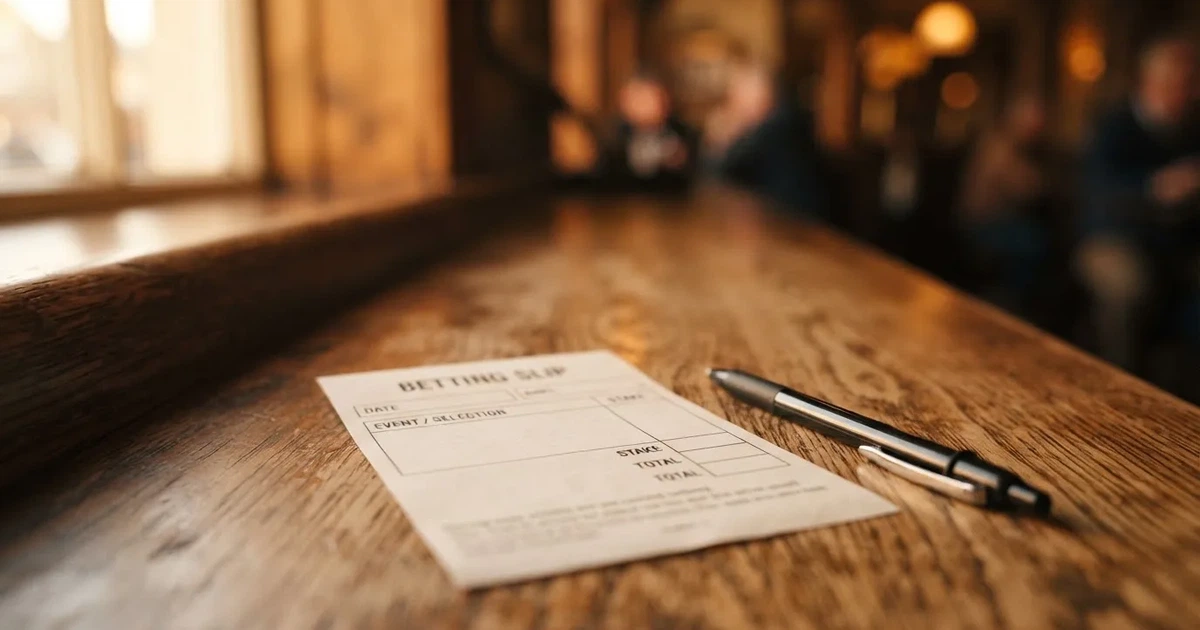
Licence categories matter to an over/under customer because they shape what shows up in the betting slip. The categories in play here are remote general betting standard (real events) for normal sports, remote general betting standard (virtual events) for computer-simulated fixtures, and remote pool betting for pool-style products such as Tote. Remote betting intermediary is the category for betting exchanges; a back-and-lay total is settled under that licence. There is no state-set cap on stakes, on the number of licences, or on which sports may carry an over/under market. What may not appear is whatever an operator’s own terms exclude, and those vary widely across the brands reviewed below.
The minimum age is 18, and identity checks happen before a customer can deposit or place a bet, including with a free bet or bonus offer (since 7 May 2019). That means anonymous play is not available at any GB-licensed site, and a first-time customer will be asked for name, address and date of birth before a stake moves. For higher spend the operator’s source-of-funds questions follow the money-laundering rules — these are not the income checks of the press, they are publicly verifiable record checks.
Player Protection: GAMSTOP, Deposit Limits and the 10x Bonus Cap
GAMSTOP is the national multi-operator online self-exclusion scheme and a mandatory licence condition for online operators in Great Britain since 31 March 2020. Self-exclusion periods are six months, one year, five years, or five years with auto-renewal; after the minimum period the exclusion stays in force for a further seven years unless the customer asks GAMSTOP to remove it. GAMSTOP covers online sites and apps; the high-street betting shops use a separate service. Every GB-licensed online operator takes part in GAMSTOP, so opting in once blocks access to all of the brands in this guide for the chosen period.

The Commission’s deposit-limit regime (RTS 12) requires operators to offer a gross deposit limit on a fixed time frame. The first phase has applied since 31 October 2025; a second phase was postponed to 30 September 2026 and whether it is in force is not established. There is no state-set ceiling for deposits or losses — limits are a customer’s own choice, but the operator must surface them and let them be set or changed. The financial vulnerability check (LCCP condition 3.4.4) applies when a customer’s net deposits across a rolling 30 days exceed £150 (in force from 28 February 2025); it is a public-record check such as a bankruptcy or county-court judgment, not a credit check or an income check. A second layer, financial risk assessments — what the press calls “affordability checks” — was announced on 7 July 2026 in a staged plan, with no start date set; this guide treats them as announced rather than in force.
On bonuses, the promotion rules in force since 19 January 2026 cap wagering requirements at 10x: a £10 bonus that asks for 50x wagering needs £500 of qualifying bets; under the cap no more than £100 may be asked. Mixed-product promotions — an offer that demands gambling on two or more product types (betting plus casino, for example) — are banned. Free bets with no wagering condition and any cap on the money value of a bonus are not addressed by the published rule; describe each offer by what its own terms say. No promo or voucher code appears anywhere on this page, because codes are a route into a promotion, not a property of what the promotion is worth.
Tax, Payments and What Offshore Looks Like
The player pays no tax on betting winnings in Great Britain. General Betting Duty is the operator’s tax on gross profits at 15% under current law; from 1 April 2027 a new remote betting rate of 25% applies within the duty, while remote bets on UK horse racing, self-service betting terminal bets in licensed premises, pool betting and in-person betting stay at 15% (HM Government policy paper of 26 November 2025). Until that date the remote rate remains 15%. Whether operators pass duty on through shorter odds is not established; never write that the player pays duty, and never write that operators do not. Spread betting on financial instruments is regulated by the Financial Conduct Authority, not the Commission, and losses can exceed deposits in that product.
For payment methods the only hard rule is that credit cards are banned for gambling in Great Britain since 14 April 2020 (LCCP condition 6.1.2), and that includes credit-card-funded e-wallet top-ups. Debit cards and bank-based payments are not covered by the ban. There is no British list of permitted payment methods and no rule for or against cryptocurrency deposits at licensed operators; each brand sets its own rails.
Offshore is a different picture. A GB licence is compulsory at the point of consumption; providing gambling facilities in Great Britain without the licence the Act requires is an offence under section 33 of the Gambling Act 2005. The offence is aimed at the operator (on summary conviction up to 51 weeks’ imprisonment, a fine up to level 5, or both; six months in Scotland). No offence aimed at a customer who merely bets on an unlicensed site was found in the statute. The cost of using an unlicensed site is the loss of protection: no GAMSTOP coverage, no Commission complaints route, no approved dispute-resolution body, no British consumer redress if funds are withheld, and the operator is not bound by the 10x bonus cap or the £150 vulnerability check. Enforcement is disruption and not blocking: cease-and-desist notices, search-engine referrals, work with registrars, hosts and payment providers; the Commission has been given, or is about to receive, court-order DNS blocking powers, but ISP blocking is not in operation.
Responsible Gambling in the Over/Under Market
Over/under markets are not categorically riskier than any other market, but they attract a specific kind of punter behaviour that is worth naming. A total sidesteps the question of who wins — the bettor is not picking a side — and the statistic the line measures is often a count of goals, points or games. That makes totals the natural home of two patterns: high-frequency betting on short-form events, and live betting on lines that move after each goal or break of serve. Both patterns move money through the bookmaker’s margin faster than a once-a-week football single does. The arithmetic is the same as anywhere else on the site; the cadence is the difference.
The protection frame is the same as elsewhere. GAMSTOP is the route for a self-exclusion that covers all GB-licensed online operators in one step, with periods from six months up to five years plus seven. GamCare runs the National Gambling Helpline. GambleAware funds treatment and education. NHS gambling clinics operate in several regions. Gamblers Anonymous runs peer-support meetings. Deposit limits, time-outs and reality checks are operator-level tools that each brand must surface; a customer who sets a £50 weekly deposit limit on one site has set it on that site, not on the whole market.
The £150 net-deposit vulnerability check is the rule that tends to bite an over/under punter first, because totals tend to be settled quickly and the same customer often places several stakes in a sitting. Once the rolling-30-day net crosses £150, the operator runs a public-record check. This is not a soft credit search — it leaves no footprint on the customer’s credit file — and it is not a refusal of business by default. It is a check that the operator is required to run. The honest framing is that the check exists, the threshold is £150 in net deposits over 30 days, and what the operator does with the result sits in its own terms.
Self-exclusion does not unwind an open bet. A free bet that was unlocked before the GAMSTOP registration is settled under the operator’s rules as written, and a withdrawal request that was already in flight when the exclusion took effect is processed under those rules. The exclusion covers the next stake, not the last one.
The Mobile and App Picture for Over/Under Punters
Over/under markets moved to mobile faster than most bet types, for a structural reason: the line moves with the score, and a phone is where the live score is. The brands reviewed below each publish an iOS app and most publish a Google counterpart. App Store ratings give a rough signal — the apps carrying a 17+ age rating are listed on this page; ratings of 4-plus stars are common, and a 3-star cluster reflects the same complaint every betting app gets (session timeouts, geolocation prompts, free-bet credits that vanish on push). Bet Builder features, in-play tabs and acca builders are the parts of an app an over/under punter feels first; cash-out, where offered, sits on the live-tab side of the bet slip.
Mobile browsers are not a fallback. They are an alternative for customers who cannot or will not install the app, and every reviewed brand’s mobile site carries the same market depth as the desktop. Push notifications are how a bookmaker tells a customer that a line moved, and the opt-in sits in the app settings rather than the account settings — a small but consequential detail for a punter who wants the alert without the marketing.
Where the App Helps and Where It Hinders
The app helps where the in-play market is dense and the lines move quickly — football over/under 2.5 goals, NBA totals, tennis game totals in a live set. The bet slip updates inside the app without a refresh, and cash-out offers show up next to the open bet rather than in a separate tab. The app hinders where the user wants to think: a small screen is a poor place to compare lines across bookmakers, and the most disciplined pre-match over/under work — looking at team news, the referee’s card history, expected goals per 90 — happens on a desktop or a tablet. The honest use of the app is as a placement tool, not a research tool.
Predictions and Strategy in an Over/Under Market
The literature on over/under strategy runs from match-level modelling down to single-game line-shopping, and the literature is consistent on one point: no model beats the closing line often enough to be a public claim of edge, and every public tipster who claims otherwise is selling something the maths does not support. What the maths does support is process — what to look at, in what order, before the stake is placed.
The base rate is the starting point. A bookmaker’s line is a market consensus shaped by sharp money and by square money; the punter who can locate where the closing line settles and compare it to the price they took has the cleanest available signal of whether their bet beat the market or rode it. For football totals, expected goals per 90 (xG) is the most worked predictor: teams that concede a lot of shots concede a lot of goals, and teams that take a lot of low-quality shots underperform their shot count. For NBA totals, pace is the lead variable — possessions per game drive the points — and team-specific offensive and defensive ratings refine it. For tennis totals, hold percentage on serve and break percentage on return drive game totals within a set.
The four-step frame that holds across sports:
- Pick the statistic the market measures. Football over/under 2.5 goals is a goals market. Football over/under 0.5 goals at half-time is a different market on a different statistic. Same label, different bet.
- Locate the base rate. League average goals per game, average points per game, average games per set on the surface being played. The line is the market’s estimate; the punter’s estimate is the comparison.
- Apply the team-level adjustment. Injuries, suspensions, weather, surface, referee — each shifts the base rate a little. A wet pitch on a Tuesday night in the Conference moves the goals-per-game estimate downward more than the same fixture on a dry August afternoon.
- Shop the line. Two bookmakers posting 2.5 at 1.85 and 2.5 at 1.91 are offering the same bet at different prices; the 0.06 difference is the bookmaker’s margin difference between the two, and it is money on every winning stake.
The frame does not promise a win. It promises that the bets the punter does place are placed on a defensible basis rather than on a hunch, and that the closing-line comparison is honest rather than selective.
Bankroll and the Cost of the Margin
Bankroll management for over/under punting follows the same rules as bankroll management anywhere: a flat stake of one to two per cent of the bank per bet, a stop-loss that ends the session when the bank drops a pre-set percentage, and a record that names every bet, the line, the price and the closing line. The record is what makes the process honest, because it shows whether the closing line was beaten across hundreds of bets, not the seven the bettor remembers.
The margin is the silent cost. A 5% margin on a market is, on average, 5p of every £1 staked across many bets; on a single bet the cost is hidden inside the price. The page’s own calculation, set out below, shows what a 5% margin looks like on an illustrative 1.90 / 1.90 line, and the same arithmetic applied to a real-world line is how a punter reads any bookmaker’s offer.
Bet Types, Odds and the Mechanics of a Totals Bet
An over/under bet is built around a line — a single number that splits the statistic into two sides — and around a price on each side. The line moves in the run-up to the event as money arrives, and the price on each side moves with it. The most common statistics are the combined score of both teams in a match (NFL, NBA), combined goals (football), total games in a tennis match, total runs in a cricket innings, total points in a rugby match. Less common but standard for a GB bookmaker are corner counts, card counts, shots on target and player-specific totals over a season.
The odds format in Great Britain is fractional by custom (5/1, 11/4, evens) and decimal in the online product (6.00, 3.75, 2.00). The conversion is decimal = a ÷ b + 1, where a/b is the fractional form. A 5/1 price in decimals is 6.00; 11/4 is 3.75; evens (1/1) is 2.00. This guide uses decimal odds throughout because they are the form the calculation takes and the form most UK-facing products display by default.
A push is the third outcome. If the final number lands exactly on the line, the bet is a push and the stake is returned. A push is not a loss, and a push does not count toward a free-bet rollover. Bookmakers handle the edge cases differently: some offer whole-number lines that produce a push (2, 3, 4), some offer half-lines that cannot push (2.5, 3.5), and some offer quarter-lines that split the stake between the nearest half-lines (2.25, 2.75) — a £10 over bet at 2.25 splits into £5 over 2 and £5 over 2.5. The punter reads the line in the bet slip before placing the bet.
Combination Bets and the Multiplication of Margin
A single over/under bet carries one bookmaker’s margin. An accumulator (acca) carries the margin of every leg multiplied together, because the price of an accumulator is the product of the prices on each leg. Three legs each at 1.90 (margin 5% on each) combine to 1.90³ = 6.859, and the combined margin is meaningfully higher than 5% because the bookmaker’s edge compounds the same way the price compounds. This is the structural reason a five-leg acca pays more than five singles but is harder to win: the price compounds up, and the probability of every leg landing compounds down, and the margin sits in the middle.
A bet builder combines markets from one event into a single bet. Football over/under 2.5 goals combined with both teams to score combines two markets from the same fixture into one price. The price is again the product of the prices on each leg, and the margin compounds. bet365’s Bet Builder+ is the named example on the App Store listing; the same construction is offered, under different names, by most of the brands in this guide.
Cash-out is the bookmaker’s offer to settle an open bet before the event ends. The offered cash-out figure carries its own margin, which is on top of the margin already in the original bet’s price. A punter who cashes out a £10 over 2.5 goals at half-time for £14 is being offered a price that includes the bookmaker’s margin on the cash-out itself. Cash-out is not a free option; it is a market in its own right, and the offered figure reflects the bookmaker’s view of the remaining outcome probabilities plus its own edge.
Sports, Tournaments and the Way Totals Are Settled
Football is the largest market for over/under betting in Great Britain, and the settlement rule that catches first-time customers most often is the timing rule. Over/under 2.5 goals is settled on 90 minutes of play including referee-added stoppage time; extra time and penalty shootouts are excluded unless the market states otherwise. A 1-1 draw that finishes 2-1 after extra time is settled as under 2.5 goals — the extra-time goals do not count. The Premier League, Champions League, La Liga and the EFL are the heaviest fixtures; the Championship is the most-traded league below the Premier League and carries the deepest set of alternative lines.
The NFL and NBA carry over/under on the combined score, with the Super Bowl the highest-profile single event. The famous Super Bowl XXXIX line — most books opened at 46.0 — settled under when the combined score was 45, and the line became a teaching example for the push rule: a 46.0 line on a 45-point final is an under, not a push.
Tennis totals are settled on games within a set or across the match. Over/under 9.5 games in the first set of a best-of-three match is the standard format; the line moves based on the pre-match price of each player and the surface. Tie-breaks push game totals upward in a way that bookmakers price in — a match between two big servers on a fast indoor surface carries a higher games total than the same matchup on clay.
Cricket totals run on runs per innings in the longer formats and on the match total in T20. Rugby carries total points. Horse racing carries over/under on the number of runners, on the total race distance, and on a small set of in-race markets at certain bookmakers; ante-post markets are settled when the race runs, not when the bet is placed. American football carries the combined-score total alongside a deep set of derivative totals — team totals, quarter totals, player totals — that most GB bookmakers replicate in their NFL section.
In-Play Over/Under and the Moving Line
In-play over/under is the live version of the same market: the line updates with the score and with the time left, and the price on each side updates with it. A 2.5 goals line that sat at 1.91 pre-match moves to 2.5 / 1.50 over and 2.5 / 2.50 under after the first goal, and a 1.5 goals line appears underneath. The bookmaker’s margin on the in-play market is typically higher than the pre-match margin because the in-play market is harder to bet into — the punter cannot see the next goal as fast as the bookmaker can.
In-play over/under is also where the £150 net-deposit vulnerability check bites most often. The bettor who places several in-play stakes in a session moves through £150 in net deposits faster than the once-a-week pre-match punter does. The check kicks in at the £150 rolling-30-day threshold and is not optional for the operator.
How an Over/Under Bet Works, From Selection to Settlement
The mechanics are the same for every totals bet, and walking them once is enough to settle most of what comes up.
Step-by-Step: Placing and Settling a Totals Bet
- Open the event. Pick the match or the game from the bookmaker’s sportsbook. Football, NFL, NBA, tennis and cricket are the default landing pages.
- Pick the market. Open the totals tab. The bookmaker shows the line — 2.5 goals, 46.0 points, 9.5 games — and the price on each side.
- Pick the side. Over or under. The bet slip shows the side, the line, the price and the stake field.
- Enter the stake. The decimal price multiplied by the stake is the total return if the bet wins; the stake is the loss if it does not. The slip updates live.
- Confirm the bet. The bet is placed at the price shown. Most bookmakers honour the price shown at the moment of confirmation even if the line moves a fraction of a second later; a tiny number of operators reserve the right to void a bet placed at an outdated price.
- Wait for settlement. The bet settles when the event ends and the statistic the line measures is final. A push returns the stake; a win pays stake × price; a loss pays nothing.
The settlement timing varies by sport. Football settles inside an hour of the final whistle. NFL settles as soon as the game ends. Tennis settles on completion of the match. Cricket settles at the close of the innings or the match. Horse racing settles on the result of the race, with non-runner and Rule 4 deduction rules applied per the operator’s terms.
What a Winning Bet Returns
The arithmetic below demonstrates how the bookmaker’s margin is calculated and how it affects the potential return on any stake.
A winning bet at decimal odds d returns the stake multiplied by d: return = stake × d. The net profit is the stake multiplied by d − 1: profit = stake × (d − 1). A £10 stake at 1.91 returns £19.10 — the £10 stake plus £9.10 of profit. A £10 stake at 6.00 returns £60.00 — £10 stake plus £50.00 of profit.
The return is the only number the bettor sees from the bet slip. The bookmaker’s margin sits inside the price and is not shown to the customer; the next section shows how to see it.
How the Margin Hides Inside the Price
The bookmaker’s margin (also called the overround) is the share of every pound staked that the bookmaker keeps on average across many bets on the market. On a two-way market with decimal odds 1.90 / 1.90, the payout share is 1 ÷ (1/1.90 + 1/1.90) = 1 ÷ 1.0526 ≈ 95%, and the margin is 1 − 95% = 5%. A 1.85 / 1.85 line gives 1 ÷ 1.0811 ≈ 92.5% payout share and a 7.5% margin. The shorter the price, the higher the margin, all else equal.
This is an estimate, not a guarantee. The margin is the average cost of betting on the market across many bets; on any single bet the punter either wins the price shown or loses the stake. The £0.05 of margin on a £1 stake at a 5% market is the long-run cost to the punter; over hundreds of bets on the same market it is the difference between breaking even at true probability and losing 5% of total stakes to the bookmaker.
The illustrative 1.90 / 1.90 line at a 5% margin is the cheapest commonly-seen two-way price. Real-world totals often carry a higher margin — 6% to 8% on Premier League football, 4% to 5% on the deepest NBA and NFL markets, more on smaller leagues and on in-play. The calculation below shows the margin the punter can expect from a clean example; the same arithmetic applied to any line the punter sees is the practical skill the page is teaching.
The 2026 Over/Under Field: Ten Licensed Bookmakers Reviewed
Every brand in this section holds a Gambling Commission remote general betting standard licence for Great Britain and offers over/under markets on at least the major UK football, the NFL and the NBA. The licence number is on the Commission’s public register against each licensee and is the only test of who holds one. The order is not a ranking; no single brand is “the only” licensed one. The comparison table below names the licence holder and the account number the register records, then the operator’s own statement on what over/under punters can expect.
The Landscape: Licence and Market Coverage | ×
| Field | Licence | Operator’s terms on totals |
|---|---|---|
| Betfred | Betfred — Petfre (Gibraltar) Limited, Betfred.com — remote general betting standard (real events) | Betfred’s app lists Bet Builder, Sub Switch, Racing Post data, Extra Places, live casino and bingo; over/under markets sit inside the standard sportsbook. |
| bet365 | bet365 — Hillside (UK Sports) ENC, Bet365.com — remote general betting standard (real events) | bet365’s Bet Builder+ combines markets from one event into a single bet, available pre-match and in-play; Super Boosts, Winnings Boosts on Bet Builders and selected singles, and daily Bet Boosts run alongside. |
| Tote | Tote — TDCO Limited, tote.co.uk — remote general betting standard (real events) | Tote runs pool betting alongside fixed-odds sports; over/under is on the standard sportsbook with pool products on horse racing. |
| Hollywoodbets | Hollywoodbets — Hollywoodbets International UK Limited, hollywoodbets.co.uk — remote general betting standard (real events) | Hollywoodbets’ sports welcome offer pays a free bet of up to £30 on a first qualifying losing accumulator (stake £10+, 3+ legs, odds of 4/1 or greater, settled within 7 days); one free bet per customer. |
| BetUK | BetUK — LeoVegas Gaming PLC, Betuk.com — remote general betting standard (real events) | BetUK’s free bets exclude virtual sports, esports and non-UK/IE horse racing; minimum odds apply. |
| Lottoland | Lottoland — EU Lotto Limited, lottoland.co.uk — remote general betting standard (real events) | Lottoland’s app combines casino, lottery betting, sports betting and scratchcards; over/under sits inside the sportsbook. |
| Fitzdares | Fitzdares — Fitzdares Limited, Fitzdares.com — remote general betting standard (real events) | The Fitzdares app offers cash out, accumulators, Lucky 15s, specials and antepost markets on horse racing, football, tennis, rugby, cricket, golf and American football, with in-play live odds. |
| Fitzwilliam Sports | Fitzwilliam Sports — SBKI Limited, Fitzwilliam Sports — remote general betting standard (real events) | Fitzwilliam Sports bases prices on Oddschecker’s average price for each selection and provides Apple and Google mobile apps. |
| London Bet | London Bet — Thistle Bet Limited, London.bet — remote general betting standard (real events) | London.bet is published by Thistle Bet Limited and states it is licensed and regulated in the UK; the app carries a 17+ App Store age rating. |
| Copybet | Copybet — Copybet UK Limited, Copybet.com — remote general betting standard (real events) | Copybet offers Best Odds Guaranteed all day, every day on all UK and Irish racing, and pays first past the post on horse racing even if the winner is later disqualified. |
The table carries the same information a punter needs before opening an account: the licensee (which is the legal entity the Commission’s register names, not always the trading brand), the licence category (which is the same across the set — remote general betting standard for real events), and the operator’s own statement on what its product does at the totals line. Every brand here is GB-licensed, every brand verifies over 25, and every brand is on GAMSTOP. The brands differ on price — which the closing-line comparison is the only honest way to read — and on the bookmaker-level features (cash-out, bet builder, price boosts) that sit around the market rather than inside it.
Betfred
Betfred’s app lists Bet Builder, Sub Switch, Racing Post data, Extra Places, live casino and bingo, and the over/under line sits on the standard sportsbook for football, NFL, NBA and tennis. The licensee is Petfre (Gibraltar) Limited under Gambling Commission account 39544. Betfred’s strength at the totals line is the depth of its football coverage: Premier League, Championship, the four Scottish divisions and the European club competitions all carry alternative goal lines, and the in-play product is dense enough to offer a half-time over/under on most fixtures. The weakness is the brand-level product mix — a customer who wants a casino app alongside the sportsbook gets one bundled product rather than a focused sports experience. Betfred is well-suited to a punter who wants to combine totals betting on UK football with horse racing coverage.
bet365
bet365’s Bet Builder+ combines markets from one event into a single bet, available pre-match and in-play, and the Super Boosts, Winnings Boosts on Bet Builders and selected singles, and daily Bet Boosts run alongside the standard markets. The licensee is Hillside (UK Sports) ENC under Gambling Commission account 55148. bet365’s strength at the totals line is the in-play depth — football, NFL, NBA and tennis each carry an in-play tab dense enough that a punter can find a half-time line within a minute of the whistle — and the Bet Builder product, which is the cleanest same-game-multi on the GB market. The price is the same price every GB bookmaker offers on the deepest markets; the edge bet365 offers is the product around the price. For a punter who wants the deepest in-play product and the cleanest bet builder, bet365 is the in-play choice.
Tote
Tote runs pool betting alongside fixed-odds sports, and over/under is on the standard sportsbook with the pool products on horse racing. The licensee is TDCO Limited under Gambling Commission account 54779. Tote’s strength at the totals line is the pool product — a Tote bet on a horse race is a pool share rather than a fixed-odds bet, and the payout is set by the pool’s total stake minus the takeout — and the brand recognition in British horse racing. The weakness is the sportsbook depth outside horse racing. For a punter whose primary interest is pool betting on UK horse racing with a secondary interest in football totals, Tote is the pool-betting choice.
Hollywoodbets
Hollywoodbets’ sports welcome offer pays a free bet of up to £30 on a first qualifying losing accumulator (stake £10+, 3+ legs, odds of 4/1 or greater, settled within 7 days); one free bet per customer. The licensee is Hollywoodbets International UK Limited under Gambling Commission account 53028. Hollywoodbets’ strength at the totals line is the South African racing product that sits alongside the UK and Irish sportsbook, and the depth on international football. The weakness is the thinness of the brand’s UK-facing product marketing — Hollywoodbets is a familiar name in South African racing and a less familiar one in GB sportsbooks, and the welcome offer’s qualifying-bet terms are the practical entry point. Hollywoodbets appeals to the punter prioritising international football markets and an accumulator-focused welcome offer.
BetUK
BetUK’s free bets exclude virtual sports, esports and non-UK/IE horse racing; minimum odds apply. The licensee is LeoVegas Gaming PLC under Gambling Commission account 39198, the same licensee that runs BetMGM UK. BetUK’s strength at the totals line is the casino product that sits alongside the sportsbook — a customer who wants the betting slip and the slots on the same login gets that — and the price on Premier League and Championship football, where BetUK tends to sit close to the best price on the market. The weakness is the same as Hollywoodbets’: a brand that is not the household name in GB sports. BetUK offers a strong mix for customers who prefer managing their football totals and casino play in one place.
Lottoland
Lottoland’s app combines casino, lottery betting, sports betting and scratchcards, and the licensee is EU Lotto Limited under Gambling Commission account 38991. Lottoland’s strength at the totals line is the lottery product that sits alongside it — a Lottoland customer can bet on the Irish Lotto, the EuroMillions and the sportsbook from one wallet — and the brand’s reach into customers who came for the lottery and stayed for the sportsbook. The weakness is the sportsbook depth outside football and the major US sports. Lottoland is an option for punters who enjoy lottery-style betting but want integrated access to a standard sportsbook.
Fitzdares
The Fitzdares app offers cash out, accumulators, Lucky 15s, specials and antepost markets on horse racing, football, tennis, rugby, cricket, golf and American football, with in-play live odds. The licensee is Fitzdares Limited under Gambling Commission account 400, the smallest account number on this list and a marker of how long the brand has been licensed. Fitzdares’ strength at the totals line is the premium positioning — a smaller customer base, a higher-touch service and a sportsbook that covers the sports the brand lists rather than every sport on the global calendar. The weakness is the price, which tends to sit a fraction above the market average on the deepest lines because the customer base is not chasing price. Fitzdares distinguishes itself by providing a premium service level that pairs horse racing and football markets with dedicated support.
Fitzwilliam Sports
Fitzwilliam Sports bases prices on Oddschecker’s average price for each selection and provides Apple and Google mobile apps. The licensee is SBKI Limited under Gambling Commission account 48760. Fitzwilliam Sports’ strength at the totals line is the price — a bookmaker that prices to the Oddschecker average is a bookmaker whose price is, by construction, at or near the market median — and the focus on the Irish and UK racing product. The weakness is the brand recognition outside horse racing and the lack of the casino product that most GB-licensed brands bundle. Fitzwilliam Sports positions itself for the punter who values market-average pricing primarily within the horse-racing sector.
London Bet
London.bet is published by Thistle Bet Limited and states it is licensed and regulated in the UK; the app carries a 17+ App Store age rating. The licensee is Thistle Bet Limited under Gambling Commission account 66162. London Bet’s strength at the totals line is the casino-and-sports bundle under a single London-facing brand. The weakness is the sportsbook depth outside football and the lack of the racing product that the more established GB bookmakers carry. For a punter whose interest is a London-facing brand with a casino product on the same wallet, London Bet is the London-bundled choice.
Copybet
Copybet offers Best Odds Guaranteed all day, every day on all UK and Irish racing, and pays first past the post on horse racing even if the winner is later disqualified. The licensee is Copybet UK Limited under Gambling Commission account 53774. Copybet’s strength at the totals line is the racing product — BOG all day is a meaningful edge for a punter who takes a price the night before and the price drifts — and the social-betting feature the brand is named for, which lets customers copy the bets of named tipsters. The weakness is the social-betting feature itself, which is a separate product from the sportsbook and does not change the price on the totals line. For a punter whose interest is horse racing with BOG all day and a social-betting product on the side, Copybet is the social-betting choice.
Over/Under in the Round: What the Field Looks Like in 2026
The ten brands cover the major UK football, the NFL, the NBA and the major tennis events, with horse racing carried by Betfred, Tote, Fitzdares, Fitzwilliam Sports and Copybet at the front of the product. Bet Builder is offered by bet365 and Betfred as a named feature and is available under different names at most of the others. In-play over/under is offered by every brand in the set, with bet365 and Betfred running the densest in-play tabs. Cash-out is offered by most of the set, with the bookmaker’s margin on the cash-out figure sitting on top of the original bet’s margin. Best Odds Guaranteed on UK and Irish horse racing from 8 AM on the day of the race is offered by William Hill and by Copybet (all day, every day, on all UK and Irish racing); the other brands in the set run a smaller racing product and the BOG window varies brand by brand.
The closing-line price comparison is the only honest way to read the price spread across the set. A 2.5 goals line on a Premier League fixture at 1.91 / 1.91 is the cleanest price available; the same fixture at 1.85 / 1.85 is the same market at a higher margin. Oddschecker and the equivalent comparison sites carry the price across the bookmakers in real time; the punter who shops the line on a Saturday morning is the punter who keeps the margin difference.
What This Page Does Not Cover
This page does not name a winning bet, does not name a sure thing, and does not name a tipster whose picks beat the closing line. No tipster has been shown to beat the closing line over a sample size that survives scrutiny, and any page that names one is selling the reader something the maths does not support. The page also does not print a bonus code, a promo code or a voucher code. Codes are routes into a promotion, not properties of what the promotion is worth, and the terms the operator publishes are the test of what the offer pays.
The page does not give a tax breakdown. The player pays no tax on betting winnings in Great Britain; General Betting Duty is the operator’s tax on gross profits. A professional gambler should ask HMRC or an adviser; this guide is general information, not tax advice.
Frequently Asked Questions
How does a bettor bet on tennis over/under?
Tennis over/under bets are settled on games within a set or across the match. The most common line is over/under 9.5 games in the first set of a best-of-three match; the line moves based on the pre-match price of each player and the surface. A match between two big servers on a fast indoor surface carries a higher games total than the same matchup on clay, and a tie-break pushes the games total upward in a way that bookmakers price in. Over/under bets on total aces, total double faults and total games at the match level are offered by most GB bookmakers alongside the set-level line.
What is an over/under bet?
An over/under (or total) bet is a wager in which the bookmaker sets a number for a statistic in a game and the bettor backs whether the actual figure will be higher (over) or lower (under). The most common statistic is the combined score of both teams in a match. If the final number lands exactly on the line, the bet is a push and the stake is returned. Over/under is offered on football, NFL, NBA, tennis, cricket, rugby and most other team sports.
What does over/under mean in betting?
Over/under means the bettor is backing a side of a line set by the bookmaker, not picking a winner. The line is a number for a count of something — goals, points, games, runs, corners — and the bet is whether the count ends higher (over) or lower (under) than the line. A push returns the stake. The price on each side carries the bookmaker’s margin, the same way it does on any other market.
How can a bettor check that a bookmaker holds a Gambling Commission licence?
The Gambling Commission’s public register is the whole test. It can be searched by business name, trading name, domain or account number, and lists every licence category the licensee holds. The register is at www.gda.gov.uk — a registered brand is a brand with a current licence on the register. No other test of “licensed” exists, and a brand that says it is licensed without appearing on the register is not licensed in the GB sense.
How is the return on a bet worked out from the stake and the odds?
A winning bet at decimal odds d returns the stake multiplied by d (return = stake × d). The net profit is the stake multiplied by d − 1 (profit = stake × (d − 1)). A £10 stake at 1.91 returns £19.10 — the £10 stake plus £9.10 of profit. The return is the number on the bet slip; the margin inside the price is not shown to the customer and is read from the price using the calculation in the section on margin.
What is the bookmaker’s margin and how can it be seen in the odds?
The bookmaker’s margin is the share of every pound staked that the bookmaker keeps on average across many bets on a market. On a two-way market with decimal odds 1.90 / 1.90 the payout share is 1 ÷ (1/1.90 + 1/1.90) ≈ 95% and the margin is 1 − 95% = 5%. A 1.85 / 1.85 line gives a 7.5% margin. The shorter the price on each side, the higher the margin, all else equal. The margin is an estimate of the long-run cost to the punter; on any single bet the punter either wins the price shown or loses the stake.
Bet types & in-play – Accumulator
Content created by the «Accumulator» team
