
Online water polo betting in Great Britain
 Available in US
Current as of 26 October 2026 — operator licence data checked against the Gambling Commission’s public register.

Water polo sits in the margins of British sports betting: a niche event market with thin coverage, few dedicated fixtures pages, and odds that show up only at the bigger names. That is not because the sport is obscure. A World Championship has been held at most every two years for half a century, men’s water polo has been on every Olympic Games programme since Paris 1900, and the women’s event has been Olympic since Sydney 2000. The thin coverage is a choice each bookmaker makes inside its own licence, and it decides what a bettor in Great Britain actually sees on a Wednesday evening in season.
This page works out what is on offer, who is licensed to offer it, and what the numbers do once a price appears. The cluster order follows consequence — what follows from the betting landscape and when it shows — and each section leaves a bettor with something to act on, not just something to read.
Water polo as a betting market: fixtures, tournaments, the calendar
Water polo betting in Great Britain runs on the international calendar because the domestic game is small. A men’s World Championship has been held every two to four years since 1973 inside the World Aquatics Championships, and women’s competition has joined it since 1986. The Olympic tournament runs every four years between World Championships, with continental championships and the World League filling the gaps. World Aquatics, the highest governing body of the sport, schedules the whole show.
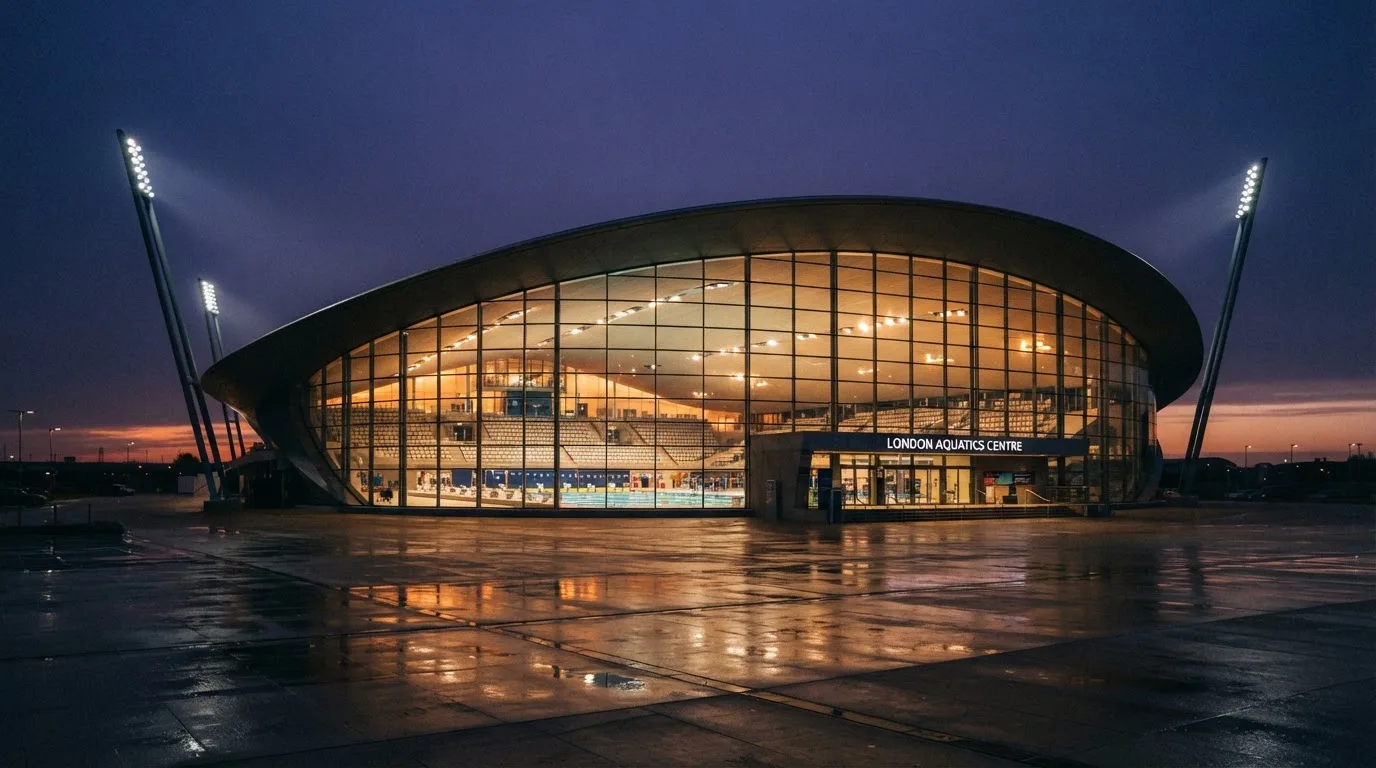
That calendar matters because it is when fixtures appear on British apps. The week of a World Championship quarter-final, every major bookmaker opens a moneyline, a handicap line and a totals market for the next four days. The week after the final, the same apps drop water polo back to “outright” or remove it altogether. A bettor looking for water polo on a Tuesday in February is working with outright futures on the next major tournament, not with a live match.
The shape of a match is fixed by the rulebook: seven players in the water per side (six field players and one goalkeeper, with up to six substitutes), four quarters of play, a pool deep enough that no one can touch the bottom. That rulebook decides which markets settle. A two-way moneyline sits behind every fixture because a match always ends with one team winning or the match going to a shootout — water polo draws in regulation time are not a separate listed outcome at most British bookmakers, and the result market tends to be settled on the outright result, including any shootout, after regulation finishes. Totals work off the regulation scoreline. Handicaps work off the regulation scoreline with the same shot clock as the player. None of this is hidden in the rules; it is just not printed on the betting slip.
The British betting market treats water polo as an event market, not a league market. There is no Premier League to anchor a season-long bet; there is a tournament, a knockout bracket, and an outright winner. The bettor who wants a bet on every fixture of a season follows the international club calendar (the Champions League, the European cup competitions run by the European Aquatics federation and LEN, the regional leagues in Hungary, Spain, Italy, Serbia, Croatia and Montenegro) rather than a domestic British league. Few British bookmakers price those club fixtures regularly. The Champions League quarter-finals and the World Championship knockouts are where the market sits.
A few practical points follow from that shape. Outright markets on World Championships and Olympics settle when the tournament finishes, not when the bettor places the bet, so a price taken in March pays out — or does not — in July. Tournament outrights are usually one bet per outcome; an accumulator on water polo outrights is unusual at British bookmakers but not impossible, and the legs multiply into one price at the slip. In-play markets depend on the bookmaker’s data feed: events shown with live scores tend to settle quickly, events shown without live scores can be slow to settle.
The fixtures the bettor can actually bet on, then, are dictated by the international calendar and by the willingness of each bookmaker to staff the page with a moneyline, a handicap and a total for a sport that does not drive volume. A short list of brands underwrites most of what a British bettor sees on a water polo event — and that list is what the rest of the page is about.
The ten UK-licensed bookmakers reviewed here
The list below comes from the Gambling Commission’s public register of remote licence holders; every brand named here holds a Commission licence covering real-event betting. It is not a ranking and not a recommendation — a place on the list is not a licence, and the order reflects the size of the public presence, not the size of a winning account.

The page reviews:
| Brand | What sets it apart on a water polo page |
|---|---|
| Fitzwilliam Sports | A Dublin bookmaker with capped membership and a high-stakes welcome for accounts that meet its compliance criteria. |
| Spreadex | Combines fixed-odds and spread betting in one app, with cash-out, Bet Builder and live streaming on UK and Irish racing, tennis, NFL and selected football. |
| Coral | Ladbrokes-Coral group, with a £40-in-free-bets welcome on a £20 qualifying bet at minimum odds 2.0 and Best Odds Guaranteed on UK and Irish racing. |
| Betfair | The betting exchange runs under a separate intermediary licence; the sportsbook offers Bet Builder, live streaming and the 90 Minute Payout market on football. |
| BetVictor | Best Odds Guaranteed on UK and Irish racing, enhanced live race streaming, BetFinder for racing and Smart Stats on the football side. |
| QuinnBet | Best Odds Guaranteed on UK and Irish racing from 10:00 with a £150-per-race cap per customer. |
| Geoff Banks | A boutique bookmaker with ante-post prices on future events and live in-play prices; published by GB Sports Advisors Limited. |
| NetBet | Daily Boosts, Profit Boosts and a Bet Builder with instant dynamic odds on selected football. |
| Kalooki Sportsbook | A small, focused sportsbook operated by Kalooki Sportsbook Limited (company number 12938274), GAMSTOP member, identity-checked at sign-up. |
| BetMGM | A four-free-bet welcome on a £10 deposit and qualifying sports bet within seven days, with two football accumulators and two sports multiples on the issue. |
What none of these brands offers is a dedicated water polo hub. The market is event-led: a tournament appears, the big brands open a moneyline, the tournament ends. The bettor looking for water polo between major events sees fewer pieces of this list because the liquidity has moved on. The next sections work through what each brand actually puts on the slip — and what it costs the bettor when the price appears.
How a bet pays: the mechanics of a water polo wager
A bet pays out the stake times the price when the bet wins. A £10 single on a moneyline at decimal odds of 2.50 returns £25 — the £10 stake back, plus £15 of profit. The slip says £25 because the return carries both. British bookmakers quote odds in fractional form on racing and in decimal form elsewhere; water polo markets tend to be quoted in decimal because they sit on the football-style slip rather than the racing slip. The conversion is fraction (a/b) → decimal (a ÷ b + 1), so 1/1 is 2.00 (evens), 5/1 is 6.00, 11/4 is 3.75.
Combination bets multiply the legs into one price. A double at 2.00 and 3.00 has a combined price of 6.00: a £10 stake returns £60 if both legs win, and returns zero if either loses. Each leg has to win on its own; one push, one void, one loser, and the whole bet is gone. That is the basic shape of an accumulator (“acca”): the legs multiply, the risk compounds, the bookmaker’s margin sits inside every leg. A four-fold at 2.50, 2.50, 2.50 and 2.50 has a combined price of 39.06; a £5 stake returns £195.30 if all four legs win, and the £5 is gone if any one of them loses. A Trixie is four bets (three doubles and one treble) from three selections; a Patent is seven (three singles, three doubles and one treble); a Lucky 15 is fifteen bets (four singles, six doubles, four trebles and a four-fold accumulator); a Yankee is eleven, a Canadian is twenty-six, a Heinz is fifty-seven, a Goliath is two hundred and forty-seven. The unit stake is multiplied by the number of bets in the system — a £1 Lucky 15 costs £15 — and any single stake win or loss settles independently.
Each-way bets are two equal-stake bets: one on the win, one on the place. The stake doubles and the place terms vary by sport and operator; water polo outrights are usually settled each-way at bookmaker terms rather than at a race-style fraction. Each-way is built for horse racing and carries over to other sports only where the operator has printed terms.
Bet Builder — sometimes called a same-game multi — combines markets from a single event into one bet. The legs have to come from the same match; the price is calculated by the bookmaker and shown on the slip. A water polo Bet Builder that combines a handicap leg with a totals leg is rare because most brands do not open enough markets on a water polo event to feed a builder. The brand’s football builder is the shape the bettor sees; the water polo version, where it exists, is a stripped-down version of the same product.
Cash out closes a bet before the event settles. The price at cash-out is the bookmaker’s own valuation of the current state of the bet — it is not the price the bet was struck at, it is the price the bet would close at if the bettor placed it now. A bet that has moved into a strong position can be cashed out for more than the stake; a bet that has drifted can be cashed out for less; a bet that has lost its value sits at a small fraction of the stake. Cash-out margins sit inside the cash-out price and the cash-out price is not the same number as the win price. Read the slip.
Worked example: a moneyline at 1.90 / 1.90
The simplest illustration of a margin is a perfectly priced two-way market at 1.90 / 1.90 (fractional 9/10). The payout share is the reciprocal of the implied probabilities summed across outcomes. 1 ÷ (1/1.90 + 1/1.90) = 1 ÷ (0.5263 + 0.5263) = 1 ÷ 1.0526 = 0.9500 — a 95 % payout share. The bookmaker’s margin is 1 − 0.9500 = 0.0500, or 5 %. Over many bets on this market at this price, the bookmaker keeps roughly 5 pence of every pound staked and pays back roughly 95 pence in winnings.
On an outright at decimal odds 2.10 (fractional 11/10), the implied probability is 1 ÷ 2.10 = 0.4762, or 47.62 %. The bookmaker’s implied probability is a touch above 50 %. The gap is the overround: the sum of implied probabilities minus 100 %. Where the two-way market above sums to 105.26 %, the overround is 5.26 %, and the margin is the same 5 % once the two-way sum is normalised to 100 %. The two numbers say the same thing from two sides.
A market margin of 5 % means the bookmaker keeps 5 pence of every £1 staked across the whole market over a long run. On a £10 single at 2.50, the expected payout is £10 × 2.50 × 0.95 = £23.75; the stake returned is £10; the expected profit is £13.75 — but a single bet pays what it pays, not what it is expected to pay. The margin is a property of the market, not of any single bet.
Where water polo can legally be bet on in Great Britain
In Great Britain, the Gambling Commission licences the whole commercial betting market under the Gambling Act 2005. Northern Ireland is outside the Act and has its own older law, so a “GB-licensed” bookmaker is licensed for England, Scotland and Wales — not Northern Ireland, and a GB licence does not reach a customer in Belfast. Since the Gambling (Licensing and Advertising) Act 2014, an operator whose remote facilities are used in Great Britain needs a Commission licence wherever it is based: a Curaçao, Maltese or Gibraltar licence is not a substitute, and a non-GB brand taking bets from a postcode inside GB is breaking section 33 of the 2005 Act. The Commission’s public register is the test of who holds a licence; it can be searched by business name, trading name, domain or account number, and any licence number cited on this page has been checked against it.
No statutory list of permitted sports or markets exists. A bookmaker serving GB customers holds a licence for a category — remote general betting standard (real events) is the typical category for a sportsbook — and decides which markets to open under its own licence. Water polo sits inside “real events” because it is a real sport on a real calendar. The bookmaker can choose to price it or to leave it unpriced; the licence does not compel either. There is no statutory cap on stakes, no state monopoly, and no rule that water polo cannot be priced; the limits are the operator’s own.
The minimum age is 18, and since 7 May 2019 every licensed remote operator verifies a customer’s name, address and date of birth before the first deposit — including with a free bet or bonus. The bettor cannot deposit anonymously at a licensed site. The bettor can deposit at an unlicensed site, but a site that is unlicensed for GB is not a place a bettor is protected in: no GAMSTOP coverage, no Commission complaints route, no approved dispute-resolution service, no British consumer redress if funds are withheld, not bound by the 10x bonus cap or the £150 financial vulnerability check. The bet is on, but the wrapper is not.
The financial vulnerability check itself (LCCP condition 3.4.4, in force since 30 August 2024) applies to licensed remote betting once a customer’s deposits minus withdrawals exceed £150 in a rolling 30 days, and has been enforced since 28 February 2025. It is a public-record check (bankruptcy or county court judgments, for example), not an income check and not a credit reference check. Financial risk assessments — the “affordability checks” of the press — were announced in a staged plan on 7 July 2026 with no start date, and should be written as announced, staged, no start date, not as in force. Credit cards have been banned for gambling in Great Britain since 14 April 2020 (LCCP condition 6.1.2), including credit-card-funded payments through an e-wallet. Debit cards and bank-based payments are not covered by that ban. Cryptocurrency deposits are not addressed in statute: each operator’s terms state what is accepted.
General Betting Duty is the operator’s tax on gross profits, currently 15 % across the remote book. From 1 April 2027 a new remote betting rate of 25 % applies within it, while remote bets on UK horse racing, bets on self-self-service betting terminals in licensed premises, pool betting and in-person betting stay at 15 %. Spread betting has its own rates (3 % financial, 10 % other). The player pays no tax on betting winnings in Great Britain — a professional gambler should ask HMRC or an adviser, but a recreational bettor does not. Whether operators pass duty on through odds is not established; never write that the player is charged duty.
The licensed/unlicensed line is a real one for the bettor. Licensed means checks, limits, GAMSTOP, bonus cap, the ASA-bounded marketing the operator runs, and the dispute-resolution route. Unlicensed means none of those protections and the chance of losing funds if the operator decides not to pay out. Neither is “the safe choice” by default. The bettor decides which trade-off they are making, and that decision should be made on facts rather than on what the operator’s homepage says.
Responsible gambling and the British safety net
Every GB-licensed online operator takes part in GAMSTOP, the national multi-operator online self-exclusion scheme. A bettor can exclude themselves for six months, one year, five years, or five years with auto-renewal. After the minimum period, the exclusion stays in place for a further seven years unless the customer asks GAMSTOP to remove it. GAMSTOP covers online sites and apps; betting shops use a separate service. The bettor who has signed up to GAMSTOP cannot open a new account at any GB-licensed online bookmaker until the exclusion period ends — and opening an account in someone else’s name to get around the exclusion is an offence under the Gambling Act 2005.
The Commission’s social responsibility code (within the Licence Conditions and Codes of Practice) requires licensed operators to offer deposit limits, time-outs, reality checks, session reminders and self-exclusion. The Remote Technical Standards (RTS 12) require operators to offer a gross deposit limit on a fixed time frame; the first phase of changes applied from 31 October 2025, and a second phase was postponed to 30 September 2026, with no confirmation in the register of whether that second phase is live. Limits are the customer’s choice — there is no state-set ceiling, and the operator’s default is the minimum the customer sets at sign-up. The bettor who wants a hard ceiling sets one; the bettor who wants a soft cap sets that; the bettor who wants no cap at sign-up has to revisit the limits page later if they want a cap. Each operator offers different granular controls (daily, weekly, monthly) and different minimums.
Help is available outside the operator. GamCare runs the National Gambling Helpline. GambleAware funds treatment and education across Great Britain. The NHS runs gambling clinics in several regions. Gamblers Anonymous runs peer-support meetings. The licensed operators link to these on the safer-gambling pages of their sites — Fitzwilliam Sports links to GambleAware, GamStop and Gamblers Anonymous, for example — and the bettor who is concerned about their play should read those links before they look at the bonus page.
The financial vulnerability check — the £150 rolling-30-days public-record check — is a backstop for licensed operators, not a substitute for the bettor’s own limits. It flags accounts where the betting pattern has changed, but it does not stop a bettor from betting; it triggers a conversation. The bettor who has set a deposit limit at the operator level has already done what the check would have done.
Bonuses, free bets and what an offer really costs
A “free bet” is a token the operator credits to the account after the qualifying condition has been met. Coral’s sports welcome offer is the standard shape: get £40 in free bets when you bet £20, with a deposit and sports bet of £20 or more at minimum odds of 2.0 (1/1), £40 in free bets issued within seven days and expiring seven days after issue, for new GB customers who opt in. BetMGM’s sports welcome offer for new UK customers is four £10 free bets — two football accumulators of four or more selections, two sports multiples of two or more — issued on a £10 deposit and a sports bet placed within seven days, with minimum odds and an opt-in, valid for seven days from issue. QuinnBet’s Best Odds Guaranteed applies to Irish and UK horse racing from 10:00 am on the day on singles, multiples and system bets, with a maximum benefit of £150 per customer per race. William Hill’s Best Odds Guaranteed applies to UK and Irish racing from 8 AM on the day of the race, on singles and multiples, not on ante-post, tote or pari-mutuel bets. Each offer reads as a promotion; each promotion has a clock and a condition.
The shape of an offer has tightened since the rules tightened. Wagering requirements on bonuses are capped at 10x under the Commission’s promotion rules in force since 19 January 2026 — a £10 bonus at 50x wagering used to need £500 of qualifying bets, and that is no longer legal at a licensed bookmaker. Mixed-product promotions — an offer that requires gambling on two or more product types such as betting, casino, bingo and lottery — are banned outright. The bettor who is offered a “bet on football to get free spins” offer is being shown an offer from an unlicensed operator, because that shape is no longer lawful at a licensed site.
The £40-in-free-bets offer above is a worked example. The stake is £20 at minimum odds 2.0; the qualifying bet has to win (or each-way place, depending on the offer’s terms) for the free bets to issue. The free bets expire seven days after issue, and the stake on a free bet is usually not paid back with a win — the win on a free bet at decimal odds of 3.00 on a £10 free bet is £20 of profit, not £30 of return. The free-bet value, where the market margin on the underlying market is 5 %, is free-bet amount × (odds − 1) ÷ odds × payout share: a £10 free bet at 3.00 on a 95 % market is £10 × 2.00 ÷ 3.00 × 0.95 = £6.33 of expected value. That is the offer’s worth on average across many bets at that price, not a guaranteed return on any single bet. A £40 welcome package has an expected value somewhere below £40 once the qualifying condition, the minimum odds, the expiry and the stake-not-returned shape are all carried through.
The free-bet stake is usually not paid back with a win. A “risk-free” bet is usually refunded as a free bet, not as cash, and the refund carries the same stake-not-returned shape. An “enhanced odds” offer is a price boost on a single event — the operator lifts the price for new customers, and the bet settles at the boosted price if it wins and at the standard price (or voids) if it loses. An accumulator insurance refunds the stake as a free bet if one leg of an accumulator loses; a cashback offer refunds a percentage of net losses over a period; a price boost is a one-shot enhancement on a named event. Each offer is a different shape, and the bettor who treats them as interchangeable has missed the detail.
The bettor who wants to know what an offer costs should read the terms. The wagering factor is the headline number: a £10 bonus at 10x requires £100 of qualifying bets. The minimum odds decide which bets count: minimum odds of 2.0 means a bet at 1.80 does not contribute. The expiry decides how long the bettor has to clear the bonus: a seven-day expiry on a £100 turnover requirement means the bettor has to find time to place the bets in a week. The market the qualifying bets are placed on decides the cost: a £100 turnover at a 10 % margin costs £10 in expected loss; a £100 turnover at a 5 % margin costs £5. The offer’s headline price is the gross; the turnover, minimum odds, expiry and qualifying market are the net. The bettor who reads the small print sees the offer; the bettor who reads the headline sees the marketing.
A bonus-gated deposit package stays deposit-gated, and the rollover is calculated on the bonus or on the bonus plus the deposit — each offer names its base, and the rollover is base × factor. A “100 % up to £100” welcome at 10x rollover on the bonus plus the deposit, with a £100 deposit, requires £2,000 of qualifying bets at the minimum odds, at the market margin, in the qualifying window. The expected cost of that welcome is turnover × margin; the expected value of the bonus is the bonus amount minus the expected cost. Where the expected cost exceeds the bonus, the welcome is worse than its headline.
The bettor who reads offers in that frame — turnover, minimum odds, expiry, qualifying market, bonus base — sees what the offer really costs. The bettor who reads the headline sees what the operator is selling. The difference is the wagering requirement itself.
Odds, markets and what the bookmaker’s margin costs
A water polo match opens a moneyline, a handicap line and a totals line at most British bookmakers. The moneyline is two-way: home win or away win, with the regulation result including any shootout. The handicap is a one-goe or two-goal spread that prices the favourite by subtracting goals from its score. The total is over/under on the regulation goals scored by both teams combined. Some bookmakers open a half-time / full-time market, an outright winner market on the next tournament, and a group winner market on the World Championship or Olympic pool. Few open a player markets page on water polo because the data feed does not cover player-level scoring.
The bookmaker’s margin sits inside every price. On a two-way moneyline at 1.90 / 1.90, the implied probabilities are 52.63 % each, summing to 105.26 %; the overround is 5.26 %; the margin (the bookmaker’s take as a fraction of the market) is 5 %. On a one-way outright at 2.10 (fractional 11/10), the implied probability is 47.62 %; the true probability is below 47.62 % because the price carries the margin. The bettor who compares prices across bookmakers is comparing margins because the price minus the margin is the closest the bookmaker comes to a fair price.
The margin compounds across a combination bet. A four-fold at 2.50, 2.50, 2.50 and 2.50 has a combined price of 39.06; the implied probabilities at each leg are 40 %, summing to 160 % on the four-leg accumulator; the accumulator margin is roughly 37.5 % — a quarter of the stake kept on average, three quarters paid back in winnings. The bettor who builds a four-fold of 2.50 legs is paying a margin of 10 % per leg and a combined margin of nearly 40 % across the bet. An accumulator of short-priced legs — a six-fold at 1.30, 1.30, 1.30, 1.30, 1.30, 1.30 — has a combined price of 4.83; the implied probabilities at each leg are 76.92 %, summing to 461.5 % on the six-leg accumulator; the accumulator margin is over 78 %. The short-priced accumulator is a higher-margin bet than the long-priced one, and the payout on a winner is smaller. The bettor who backs long shots is paying a different margin than the bettor who backs favourites, but the bookmaker keeps more of the stakes on the favourite-heavy accumulator.
The comparison across markets is a comparison of margins. A 5 % margin on a moneyline is a 5 % take of the market; a 10 % margin on a totals market is a 10 % take. The two markets cost the bettor different amounts per pound staked. The bettor who wants the closest price looks at the moneyline first because the major bookmakers tend to open the moneyline with the lowest margin, and the bettor who has a model on totals looks at totals because the margin on a totals line is higher but the model has an edge there.
The best-odds-guaranteed terms on UK and Irish horse racing are a separate shape: the operator pays the starting price if the starting price is greater than the price the bet was struck at. That is a racing product, not a water polo product, and it does not appear on water polo markets at British bookmakers. The bettor who wants price certainty on a water polo outright has to take the price at the time of the bet because there is no SP and no BOG on the sport.
The bettor who reads the slip sees the margin. The bettor who reads the margin sees the price. The two are the same number from two sides, and the slip is where the work happens.
Operator reviews: what each of the ten bookmakers puts on a water polo slip
The ten reviews below cover the brands named in the comparison table. Each review closes on a verdict — what the brand is worth on a water polo page, for whom, and against what. The facts are the facts; the verdicts are the page’s own.
Fitzwilliam Sports
Fitzwilliam Sports describes itself as a Dublin bookmaker with capped membership; its welcome is a “High Stakes Welcome” subject to compliance criteria, and the bettor who fits the criteria gets a high-stakes welcome, the bettor who does not gets the standard welcome or no welcome. The site offers instant deposits, fast withdrawals, timeouts and deposit limits, and links to GambleAware, GamStop and Gamblers Anonymous. The licence is the Gambling Commission remote licence 048760-R-335434-009 (Commission account 48760), held by SBKI Limited.
Fitzwilliam’s water polo presence is light. A high-stakes welcome is built for accounts that stake heavily on a thin list of sports, and water polo is not on the thin list at most boutique bookmakers. The capped membership means the brand is small by design, and the bettor who wants a deep water polo market is likely to be redirected to a bigger bookmaker for the event. The bettor who wants a tight account with a Dublin bookmaker, fixed at a manageable size, gets that here; the bettor who wants liquidity on a Champions League quarter-final gets it elsewhere. Verdict: a bookmaker for accounts that know what they want and stake within the cap; not a water polo hub.
Spreadex
Spreadex combines fixed-odds and spread betting in one app, with one-click, auto and partial cash out, Bet Builder across fixed odds or spreads, and live streaming of UK and Irish horse racing, greyhounds, tennis, NFL and selected football. The fixed-odds book is regulated by the Gambling Commission; the spread book is regulated by the FCA, and Spreadex states that spread betting losses can exceed the deposit. The licence is Gambling Commission remote licence 008835-R-104580-022 (Commission account 8835), held by Spreadex Limited.
Spreadex’s water polo presence depends on the same event-led calendar as the rest. The combined book is unusual: a bettor can take a fixed-odds line on the moneyline and a spread line on the goal spread from the same app, and the Bet Builder covers fixed odds or spreads. The bettor who knows what spread betting is — and what it costs — has an extra product on water polo; the bettor who does not should not be opening a spread book on a sport with thin liquidity. Verdict: a product for the advanced bettor who wants spread markets alongside fixed odds.
Coral
Coral’s sports welcome offer is “Get £40 in Free Bets when you bet £20” — a deposit and sports bet of £20 or more at minimum odds of 2.0 (1/1), with £40 in free bets issued within seven days and expiring seven days after issue, for new GB customers who opt in. Coral is part of the Ladbrokes-Coral group, with both brands licensed under LC International Limited. The licence is Gambling Commission remote licence 054743-R-330863-014 (Commission account 54743). Best Odds Guaranteed applies to UK and Irish horse racing.
Coral’s water polo presence is event-led: a moneyline, a handicap and a totals line during the major tournaments, with outright winner futures on the World Championship and Olympics. The welcome offer is standard for the group, and the rollover — the qualifying bet at minimum odds 2.0 — runs at the top of a thin active market during the off-season. The free bets expire seven days after issue, so the bettor who is qualifying for the welcome has to find an active event to use them on. Verdict: a standard event-led bookmaker; water polo is a market to check only during major tournaments.
Betfair
Betfair’s sportsbook offers in-play betting, Bet Builder, free live streaming of events such as UK and Irish horse racing and football within the app, and a 90 Minute Payout market on football. Betfair also runs the betting exchange, which operates under a separate betting intermediary licence. The licence is Gambling Commission remote licence 039439-R-319330-013 (Commission account 39439), held by PPB Counterparty Services Limited. The exchange and the sportsbook are two different products at one operator.
Betfair’s water polo presence is the dual presence: the sportsbook prices the event market with the rest of the major bookmakers, and the exchange lets the bettor back or lay a position if there is liquidity. Water polo liquidity on a UK-licensed exchange is thin, and the bettor who lays a position at the exchange on a World Championship quarter-final is laying against a thin book. The sportsbook side is a normal major-brand event-money sportsbook; the exchange side is a specialist product for the bettor who knows what a lay is. Verdict: a dual-platform bookmaker where the exchange offers liquidity on major events, albeit at lower volume than popular sports.
BetVictor
BetVictor offers Best Odds Guaranteed on UK and Irish horse racing, enhanced live race streaming and a BetFinder feature for finding racing bets, alongside Smart Stats. The licence is Gambling Commission remote licence 039576-R-319370-028 (Commission account 39576), held by BV Gaming Limited. The brand is racing-led at the marketing layer.
BetVictor’s water polo presence is event-led and minor. The racing-led product line does not translate directly to water polo; the bettor who wants Smart Stats on football gets those, and the bettor who wants a BetFinder on racing gets that. Water polo is a market that opens during the World Championship and the Olympics and closes between them.
QuinnBet
QuinnBet’s Best Odds Guaranteed applies to Irish and UK horse racing from 10:00 am on the day on singles, multiples and system bets, with a maximum benefit of £150 per customer per race. The licence is Gambling Commission remote licence 061011-R-335683-004 (Commission account 61011), held by QuinnBet (Gibraltar) Limited. The brand carries an Irish-facing racing product.
QuinnBet’s water polo presence is event-led and minor. The £150 cap on the Best Odds Guaranteed benefit is the headline racing term, and the bettor who is not on racing does not see that product. Water polo opens during major tournaments and closes between them, and the Irish-facing product line is not built around water polo.
Geoff Banks
Geoff Banks’ app is published by GB Sports Advisors Limited and offers live in-play prices and ante-post prices on future events. The licence is Gambling Commission remote licence 054095-R-330366-010 (Commission account 54095), held by GB Sports Advisors Limited. The brand is a boutique bookmaker.
Geoff Banks’ water polo presence is ante-post-shaped: the brand tends to price outright winners on the next major tournament rather than a moneyline on the next match. The bettor who wants a price on the World Championship winner nine months out gets that here; the bettor who wants a moneyline on tonight’s Champions League quarter-final does not, because there is no Champions League quarter-final tonight and no moneyline on the next one. Verdict: a specialist bookmaker for ante-post and futures betting.
NetBet
NetBet Sport offers Daily Boosts, Profit Boosts and free bet offers, a Bet Builder with instant dynamic odds, and sports stats for major leagues. The licence is Gambling Commission remote licence 039170-R-319343-032 (Commission account 39170), held by Netbet Enterprises Limited. The product line is promotion-led.
NetBet’s water polo presence is promotion-shaped: Daily Boosts and Profit Boosts sit over selected events, and the bettor who finds a boosted water polo outright sees the boost at the slip. The brand’s strength is its football and racing promotion stack, and water polo is a small corner of that stack. Verdict: a promotion-led brand that offers value only when specific boosts are active.
Kalooki Sportsbook
Kalooki Sportsbook is operated by Kalooki Sports Book Ltd (company number 12938274), licensed by the Gambling Commission under account number 57730, and is a GAMSTOP member. The identity check runs at registration. The licence is Gambling Commission remote licence 057730-R-333396-005 (Commission account 57730), held by Kalooki Sportsbook Limited. The brand is small, focused and KYC-strict from the first deposit.
Kalooki’s water polo presence is event-led and thin. A small sportsbook tends to open moneyline, handicap and totals on the major tournaments and not price the smaller club fixtures. The bettor who wants a clean account with a strict sign-up process and good knowledge of who they are betting with gets that here; the bettor who wants liquidity on a Champions League quarter-final gets it elsewhere. Verdict: a boutique sportsbook focused on KYC-verified accounts and major tournament coverage.
BetMGM
BetMGM’s sports welcome offer for new UK customers is four £10 free bets — two football accumulators of four or more selections, two sports multiples of two or more — issued on a £10 deposit and a sports bet placed within seven days, with minimum odds and an opt-in, valid for seven days from issue. The licence is Gambling Commission remote licence 039198-R-319450-029 (Commission account 39198), held by LeoVegas Gaming PLC. The brand is LeoVegas-backed in the UK.
BetMGM’s water polo presence is event-led and minor. The welcome’s two football accumulators and two sports multiples are football-shaped, and the bettor who wants to clear the welcome on football can do that, but the bettor who wants to clear the welcome on water polo has to find a multiple market on a water polo event — and water polo multiples are unusual at British bookmakers. The free bets expire seven days after issue, so the bettor has to find an active event in the window. Verdict: a bookmaker for the bettor who bets on football and racing; water polo is a side market, not a focus.
Comparison table: licensing, holder and water-polo-facing terms
The table that follows carries what research holds for each operator. Where research carries no figure for the water-polo-facing column, the cell carries the article-language no-data marker — the absence is the point, and a sentence around the gap is not added.
| Brand | Gambling Commission remote licence and holder | What the operator’s own terms state for water polo bettors |
|---|---|---|
| Fitzwilliam Sports | 048760-R-335434-009 (account 48760), SBKI Limited | no dedicated water polo terms found; event-led coverage during major tournaments |
| Spreadex | 008835-R-104580-022 (account 8835), Spreadex Limited | no dedicated water polo terms found; fixed-odds and spread markets open during major tournaments |
| Coral | 054743-R-330863-014 (account 54743), LC International Limited | no dedicated water polo terms found; moneyline, handicap and totals during major tournaments |
| Betfair | 039439-R-319330-013 (account 39439), PPB Counterparty Services Limited | no dedicated water polo terms found; sportsbook event markets plus exchange liquidity when present |
| BetVictor | 039576-R-319370-028 (account 39576), BV Gaming Limited | no dedicated water polo terms found; event-led coverage during major tournaments |
| QuinnBet | 061011-R-335683-004 (account 61011), QuinnBet (Gibraltar) Limited | no dedicated water polo terms found; event-led coverage during major tournaments |
| Geoff Banks | 054095-R-330366-010 (account 54095), GB Sports Advisors Limited | no dedicated water polo terms found; ante-post outrights on the next World Championship and Olympics |
| NetBet | 039170-R-319343-032 (account 39170), Netbet Enterprises Limited | no dedicated water polo terms found; event-led coverage during major tournaments |
| Kalooki Sportsbook | 057730-R-333396-005 (account 57730), Kalooki Sportsbook Limited | no dedicated water polo terms found; event-led coverage during major tournaments |
| BetMGM | 039198-R-319450-029 (account 39198), LeoVegas Gaming PLC | no dedicated water polo terms found; event-led coverage during major tournaments |
The pattern across the table is the pattern the rest of the page has been building toward: water polo is an event market at every GB-licensed bookmaker reviewed here, none of them prints a dedicated water polo terms page, and the bettor who wants a deep market on a World Championship quarter-final sees the same three legs (moneyline, handicap, totals) at every major bookmaker. The differences are in the surrounding product — the welcome offer, the Bet Builder, the Best Odds Guaranteed, the ante-post depth — not in the water polo market itself. The bettor who chooses a bookmaker for the welcome is choosing a bookmaker for the welcome, not for the water polo. The bettor who chooses a bookmaker for the water polo is choosing whichever bookmaker has the sharpest line on the match they want to back. Each bookmaker’s slip at the event carries the price; the bettor compares prices there.
The cluster’s angle: what the consequence is
The angle here was consequence — what follows from the betting landscape and when it shows. The water polo market is event-led because the calendar is event-led. The licensed bookmakers price the events during major tournaments and step back between them. The welcome offers, the free bets and the Best Odds Guaranteed terms sit over the racing and football markets, where the volume sits, and water polo is a side market at the same operators. The bookmaker’s margin sits inside every price, and the margin on an event moneyline is smaller than the margin on a multi-leg accumulator, which is the shape of every bet the welcome offer incentivises. The bettor who wants to bet on water polo picks a bookmaker for the slip, opens the event, and reads the price.
The consequence for the bettor is this: water polo is a thin market, the welcome offers are built for football and racing, the rollover applies at the bankroll, and the price on the event is where the work happens. The bettor who treats water polo as a side market at a racing-or-football-led bookmaker sees the market for what it is. The bettor who treats water polo as a hub at a major bookmaker is looking for a hub that is not there.
The bettor who reads the small print sees the offer; the bettor who reads the headline sees the marketing. The bettor who reads the slip sees the margin; the bettor who reads the margin sees the price. The two are the same number from two sides, and the slip is where the work happens.
Frequently asked questions about online water polo betting in Great Britain
How can it be checked that a bookmaker holds a Gambling Commission licence?
The Commission’s public register is the test of who holds a licence. It can be searched by business name, trading name, domain or account number; every licence number on this page has been checked against it, and the licence holder named is the holder on the register. A licence number printed on a brand’s own homepage is not the test; the register is the test.
How is the return on a bet worked out from the stake and the odds?
Return = stake × odds. On a £10 single at decimal odds 2.50, return = £25 (the £10 stake back plus £15 of profit). On a combination bet, the legs multiply into one price: a double at 2.00 and 3.00 is 6.00, and a £10 double returns £60 if both legs win. Return is what the slip pays when the bet wins, not the expected return over many bets.
What is the bookmaker’s margin and how can it be seen in the odds?
The margin is the slice of every pound staked the bookmaker keeps on average over a market. On a two-way market at 1.90 / 1.90, the implied probabilities sum to 105.26 %; the overround is 5.26 %; the margin is 5 %. The lower the margin, the sharper the book. The margin is a property of the market, not of any single bet.
How do fractional odds such as 5/1 convert to decimal odds such as 6.00?
Decimal = (numerator ÷ denominator) + 1. Fractional 5/1 is 5 ÷ 1 + 1 = 6.00; fractional 1/1 (evens) is 1 ÷ 1 + 1 = 2.00; fractional 11/4 is 11 ÷ 4 + 1 = 3.75. The British fractional form is read as “numerator-to-denominator” and the decimal form is read as “multiplier of the stake”.
Which tools for controlling play does a licensed bookmaker have to offer?
Deposit limits, timeouts, reality checks, session reminders, GAMSTOP self-exclusion (six months, one year, five years, or five years with auto-renewal) and access to help services (GamCare’s National Gambling Helpline, GambleAware, NHS gambling clinics, Gamblers Anonymous). The £150 rolling-30-days financial vulnerability check is a backstop, not a substitute for the bettor’s own limits.
Are betting winnings taxed in Great Britain, and who pays General Betting Duty?
No tax on betting winnings for the recreational bettor in Great Britain; a professional gambler should ask HMRC or an adviser. General Betting Duty is the operator’s tax on gross profits — currently 15 % across the remote book, rising to 25 % from 1 April 2027 on remote betting outside UK horse racing, SSBTs in licensed premises, pool betting and in-person betting. The bettor does not pay duty; the operator does. Whether operators pass duty on through odds is not established.
US & other team sports – Accumulator
Content created by the «Accumulator» team
